Blog Archives
Change Your Destiny And Return To Power

Return to Power tells your inspirational story of overcoming adversity and stepping out from the background after years of feeling insignificant. Why was this an important book for you to write?
I wrote this book because I wanted to give those who feel like they are stuck in the background a voice. To those wonderful people who, even with success in their lives, have for whatever reason been relegated to the background or are once again voiceless, those are the ones I want to help EMPOWER. I want them to feel their power and be on TOP of their game, becoming their most authentic selves.
I appreciated the candid nature with which you told your story. What was the hardest thing for you to write about?
The hardest thing to write about was the painful memories of feeling alone and not fitting in with all my classmates. My shyness held me back from pursuing my dreams. I wanted to be a journalist but without the proper support from my teachers it took me in a different direction. I settled for whatever was comfortable for me because I didn’t think I was good enough to do anything significant.
What were some ideas that were important for you to share in this book?
Some of the ideas I wanted to share in my book were of confidence, self-love, and compassion. Even though I went through a lot of challenges in life, I always hoped that one day I would conquer my demons feeling confident enough to prevent that negative inner voice from taking over. I did not grow up in a family that hugged so it was hard to feel love in that tactile way. When my dad told his friends my sister and I were not beautiful, I took that literally. For most of my life I felt shame and embarrassment when people complimented me because I couldn’t accept it. Having great teachers and mentors who were loving people helped me realize that I had to love myself first before I could love others unconditionally. If they weren’t compassionate and didn’t see potential in me, I would not have been able to see potential in others. This compassion brought me wisdom, gratitude, and an abundance of love to pursue my dreams, contribute to great causes, and pay it forward.
What is one thing you hope readers take away from your book?
The one thing I hope readers will take away from my book is to practice self-love and self-care daily so they can feel empowered to do anything their heart desires. I invested a lot of time and money into self-development so I could pursue my dreams. It took me many years. It is important to learn how to grow from a place of hurt, scarred by negative epithets, into the great human being you were meant to be by finding that inner love, removing the walls that have protected you for so long. No matter where you started in life, you can course correct and change directions any time to change your destiny and Return to Power!
Author Links: Facebook | Website
Our Greatest Spark
That Sucked. Now What? is a self-help and motivational book that offers readers a practical strategy to normalize chaos when then things go wrong. What were some ideas that were important for you to share in this book?
The idea that sometimes our fall can be our greatest spark to fly forward in life, no matter what challenges, obstacles, or setbacks come up and to fully embrace it.
Also, a 4 step life- curriculum as I’ve used in my own life come out of hard times with grace, even after awful painful losses, and the bounce factor is just one of several tools – that I wanted readers to have access to as it’s helped myself, my students, and clients transform their lives.
What is one piece of advice someone gave you that changed your life?
As a little girl, my dad would always say they, beta keep saying yes to new adventures, whether its in the form of books, teachers, and wise elders, as it adds depth and appreciation of others in a big way. He was right, it set me off to 60 countries and counting consistently leaning into curiosity as my guidepost.
What do you hope is one thing readers take away from your book?
To be brave at sucking at something new. To be okay with the ‘falls’ that will come and to use it as a sign that change is beautiful, in fact can give rise to the magic that’s already on its way.
To be unapologetic and intentional in your own version of resiliency: tough and soft, and gentle and compassion, and loving and stretching you in ways to add to your human experience.
Author Links: GoodReads | Twitter | Facebook | Website
You know those awful, terrible, sucker-punch moments in life? The ones that knock you down, burn you up, or make you cringe so hard you wish it was all a bad dream? Probably–because we all do. These epic, messy, oh-no-oh-crap moments of chaos are just part of life–yet, as Dr. Neeta Bhushan shows us, they’re also beautiful opportunities for change.
As co-founder of the Global Grit Institute, a mental health training platform for leaders and coaches, co-founder of the Dharma Coaching Institute, training thousands to live their best lives, and a thriving coach in her own right, Neeta Bhushan has helped thousands of people move past their heartbreaks, failures, and disappointments. And after years of research into human behavior, observing people in their worst and best moments, being a mother of two small children, and failing more than a few times herself, Neeta knows what it takes to get back up no matter what bowled you over.
That Sucked, Now What? is a real-talk guide to personal growth that draws on and embraces the suck–and helps you break through to lasting, audacious resilience. You’ll learn why it’s so hard to get back up when stuff goes down, how four core components of your life shape your individual Bounce Factor, and how to navigate the five stages of the Fly Forward framework through Falling, Igniting, Rising, Magnifying, and on to Thriving. Along the way, Neeta shares successes and failures of her own, from the wonderful to the WTF, in an indispensable book to pull off the shelf whenever life serves up a setback, no matter the size.
Behaviors That Got Us Stuck

No Plaid Suits: How Not to Have a Boring Normal Life is a unique approach to self-help that shares life skills that will improve a person’s quality of life in practical ways. Why was this an important book for you to write?
No Plaid Suits grew out of a desire to share what I’ve learned about personal resilience, finding joy, and creating a life of adventure and freedom with a broad audience. I’ve always been most interested in helping people experience the world in new ways, whether through making art, learning to move in yoga and breathing practices, or seeing new perspectives and options through the coaching and workshops I offer.
The book is a series of essays that began as daily blog posts. I’d write in the local coffee shop for a few hours each morning. Occasionally I’d get stuck for a topic so I’d ask the person next to me, “What is one thing you’d love to know by the time you go to sleep tonight?”, and I’d write about that. In asking the question, it opened the door to some wonderful conversations and to my growing awareness that my professional life has been, what one person termed, “a portfolio career”. When I laughed and asked what that actually meant, she said that I had tried my hand at so many things and created overlapping work in divergent areas, all while being willing to move around the country in search of a place that felt like home.
To many people, this sounds either brave or stupid. For me, it’s always been about looking hard at what is not working well and releasing it. Sometimes that’s a job, a relationship, or where I’m living. Other times it’s habits or patterns of my own behavior that I see are holding me back. So I ditch them and figure out what action I need to take next. That’s really what all change is about for each of us—and sometimes that change is harder to make by yourself, so that’s why I coach and why I wrote the book.
I really want people to understand that there are always choices in life. Every minute we have a choice of what action to take next. Often we gloss over the habitual actions we take and they pile up until we find ourselves stuck in jobs or relationships or places that don’t feed our souls. In those moments it can be impossible to see what the chain of actions was unless we take some time to dive deep inside ourselves and be totally honest about how we got here. That’s where good self-development books, or a great coach or coaching workshop, can help. They can each help us see our blind spots, and once we recognize them for ourselves, we can change the behaviors that got us stuck in the first place.
I appreciated the candid nature with which you told your story. What was the hardest thing for you to write about?
The hardest parts were the memoir sections because I don’t tend to think of my life as all that extraordinary. To me, it was just what I did, or where I lived and what I learned from each experience, but I kept hearing from people that my life is remarkable in many ways and that I should share not only what I know, but how I gained that knowledge in the first place.
I tend to be fairly shy about myself so it was definitely a challenge for me to step outside myself and imagine what I would want to read from an author. What would I want to know about the person who was offering this information? What would help me understand and trust what I was reading and that it would actually help me? I started from that place in writing the four more personal essays and did my best to write them as conversations I was having with an individual reader.
I love it when I can imagine an author’s voice speaking to me. Like hearing Brené Brown, Salman Rushdie, or Jhumpa Lahiri’s voice when I am reading their essays. I hope that readers feel welcomed into the conversation as I do when I read these kinds of writers.
What were some ideas that were important for you to share in this book?
Well, you can tell from the sections that I range from the simple and mundane, like how to set up a pantry or make your house feel like a home, or what to learn to change a tire, to the “harder questions” such as dealing with grief and death and ending relationships. All these are situations that we encounter in life and often think of them as individual events.
There are two levels that feel important to me. First, I want to give readers really practical know-how. Practices and techniques that I have learned through doing a lot! Second, I want to invite readers into a deeper exploration of their own habits and assumptions, because this is where real change takes place. You’ll see this in several of the essays where the object I’m writing about might be something simple like a tire or an eggplant or an origami swan, but the deeper investigation is about increasing one’s resilience or creativity or grit. So it’s that practical, I-want-to-change-the-world-for-the-better aspect that is really the most important for me to share with my readers.
What is the next book that you are working on and when will it be available?
Great question! So… if you’ve ever written a book, or tried to, you’ll know that most often as you sit to write the one you think you’re working on…other books show up clamoring to be written first. You have to be kind to each one of these. You sit with each of them for a few minutes, tell it how much you love the ideas and how you’ll write down the gist so you don’t forget them and you swear up, down, and center that you’ll return after you have finally finished this first book and would they please stop interrupting because if you don’t get this first book finished, you’ll get stuck and then none of them will get out into the world where they can be read! Sometimes they listen and let you go on with what you’re working on. Other times, they just take over and write themselves even when all you intended on doing was a five-minute set of notes.
Next up is a series of three kids’ books, though my writer’s group tells me they are actually parables about the universe and humanity. I literally set out to jot a couple of notes down and each time one of the books took over and I found myself, cramp-handed after four hours of writing, with a fairly complete story. So those are next up. The stories are linked, each main character goes on a journey taking them through the world and inviting them to discover something held deep within themselves. They show my naturalist tendencies and beliefs that stories of nature combined with a willingness to open our imaginations can help us return home to our hearts.
They are stories or parables that I hope will help people of all ages find something that brings them hope, joy and a renewed sense of connection to self.
Not sure of the publication dates yet, but keep your eyes peeled!
Author Links: GoodReads | Amazon
In this sparkling how-to guide, accomplished life and career coach Amrita Rose gives you the low-down on everything from how to schedule your time or create a meal from “nothing”, to ending any relationship and dealing with grief. Easy exercises, inspiring tales and humorous advice from someone who’s been there, helping you to:
Build resilience, feel confident and laugh a whole lot more.
Discover the kind of home and career that makes your heart sing, right NOW.
Experience adventure, laughter and fun in life while creating true success.
That Sucked. Now What?
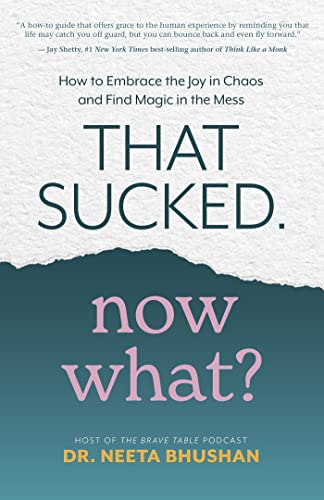

That Sucked. Now What? by Dr. Neeta Bhushan is a journey of resilience, hope, and renewed faith in life. The author reassures her readers that it’s okay to hit rock bottom, as life is no walk in the park, and we all face challenges. She offers warmth in her words, and there is inspiration and passion in her tone. It’s the type of book that will engross readers within the first few pages.
The book centers around the author’s very eventful life, beginning with her childhood, where she grew up in a loving home, the experience of tragic loss, and embarking on a career, marriage, and a path to wellness. It’s a perfectly written book, where every story and experience becomes a valuable lesson shared by the author in a gentle manner. As an individual who endured loss, Dr. Neeta Bhushan is an exceptional storyteller who does an exceptional job of weaving memories and reflections on life with personal experiences.
While the author doesn’t dwell on hypothetical situations, she shares anecdotal experiences and realities. When she discusses tragedy, the author shares helpful tips on how to overcome difficult situations and achieve success and uplifting words to instill renewed confidence in the reader. I found the balance of topics discussed by the author done in a balanced way so as not to lean too heavily on tragic experiences but just enough to guide readers through helpful, practical advice. Dr. Neeta Bhushan’s writing style is excellent.
I found the book resourceful and gained a lot from the author’s lessons and how people can embrace life, despite difficult situations, including tragedy. The author brilliantly shares how you can get yourself out of misery and rise again to a satisfying life. While not all the stories are relatable to everyone, the author has a way of conveying a message that will give readers an understanding where she is coming from and concepts that a wider audience can digest, such as privilege versus entitlement.
That Sucked. Now What? by Dr. Neeta Bhushan is an exceptional read. It’s a fantastic book that gives readers a sense of empowerment over past traumatic experiences and how to overcome these situations with impressive results. I strongly recommend this book.
Pages 288 | ASIN B0B4ZF99PS

The Gift in Gratitude


K P Weaver’s The Gift in Gratitude will make you find new meaning in life and appreciate the little things the universe offers. The author has extensively written about gratitude as a virtue, dealing with successes and failures, and how human beings process thankfulness. Does gratitude have a formula? The author writes about the formula of gratitude, which may appear simple but, in reality, has its complexities. K P Weaver describes a winning gratitude formula as gratitude plus emotion bundled together with focused intentions and aligned action. The tone applied by the author throughout the book is affirmative and encouraging. K P Weaver uses moving words that get the reader in the moment and makes one reflect on how they show gratitude to themselves, others, and the universe in general.
K P Weaver is an excellent author and does not complicate the text in the book; rather, she uses words and phrases that are easy to digest. K P weaver also discusses finding joy, which was one of my favorite parts of the book. The author encourages readers to prioritize joy as much as possible. The world we are living in can be depressing, and as an individual, it is your duty to look for ways of making yourself happy without external input. K P Weaver will get you to focus on the constructive aspects of your life and be contented with what you have. The text in the book is simply transformational.
The use of diagrams in the book is praiseworthy. The author uses charts and figures when she wants to explain a difficult subject in the most simple of ways. K P Weaver’s diction and sentence structure are other astounding elements of her writing. The various topics tackled in the book are helpful to the reader as an individual and valuable to society. The author is making everyone ponder on ways of showing gratitude and the impact it has on souls.
Some of the most remarkable topics in the book for me were gratitude and money, the science of gratitude, grateful parenting and relationships, gratitude in business, being grateful even when you are not feeling it, and finding gratitude in procrastination. Each of these chapters was exceptionally written, with life-changing content. I like how the author ended the book with gratitude through moving stories. This section of the book is significant and even more intriguing as she tells personal stories from different people to make the point home.
The major takeaway from ‘The Gift in Gratitude’ is that showing gratitude and being appreciative will bring you joy, happiness, and fulfillment. To summarize, the book, The Gift in Gratitude, can be described as perceptive and heartwarming. The stellar writing displayed by the author is one of the many excellent things about this book.
Pages: 154 | ISBN : 978-0-6455205-8-3
I Learned The Hard Way

Pay The Price provides practical advice and wisdom readers will need to find entrepreneurial success through any setbacks. Why was this an important book for you to write?
I thought my business was a no-brainer. I had done all the research, the training. Identified the market need. Launched it straight after business school. But after 10 years of slugging it out without a single pay check and enduring all sorts of challenges from near bankruptcy, humiliating chronic illness, 2 car crashes where the cars were so damaged they had to be written off, moral failure and losing 2 members of my close family, I was on the brink of giving up and sticking to my 9-5 job. But I didn’t, and after a decade, I signed my very first million dollar deal. It turns out that 90% of entrepreneurs face the same challenges but end up giving up too soon. And I felt an indescribable pain every time I walked past a closed small business, or read another story of a business going bankrupt, or met another failed entrepreneur. It sounds like a cliché but I felt deep down I had to do something about it, and this book is a result of that pain, that feeling, that ‘’calling”.
What is one trait that you think any successful entrepreneur must possess?
Resilience. If you believe in your honeymoon period, i.e your dream, your purpose and your passion, success does not come automatically. You need to have the grit, the diehard attitude to stick it out. As I say in the book, its crucial to stick with it if you believe in it.
What is one thing about entrepreneurship that you learned the hard way and how can others do it differently?
The one thing I learned the hard way? Pain. Its inevitable. I dedicated almost a quarter of the book talking about it – even to the extent of devising a brand new Pain Response Model. In that model, I show that there is a part of pain you can minimize or completely eradicate to make the journey a bit easier, to make the price to pay a bit cheaper – the pain of self-sabotage, what I call Red Flag Pain in the book. This is so simple, so ”common-sensicall” that it hardly needs saying. But it’s the one thing that trips up so many entrepreneurs even after they have succeeded. You need to know what yours is, be self-aware and take drastic steps to kill its growth before it kills you and your business in the end. My path to success would have been much smoother, but then I may not have had the ammunition to write this book!!
What research did you undertake to complete your book?
I researched using literally hundreds of books and academic papers, first hand interviews with entrepreneurs across the world, top rated podcasts, my own journals, social media feeds, and articles from dozens reputable websites such as the BBC.
Author Links: GoodReads | Twitter | Facebook | Website | LinkedIn
Starting a business is tough. It’s even tougher building one with strong ethical foundations. Up to 90 percent of UK and US startups fail by the 10th year. This trend is even worse in developing countries such as in Africa, which incidentally is the most entrepreneurial continent in the world.
Strong foundations are impossible without going through the mill. The process. Highs and lows, shame and pain. This dark side of entrepreneurship is not highlighted enough in the literature, possibly contributing to these high failure rates.
There are plenty of business books about success out there. There aren’t nearly enough business books about failure—and how sustained perseverance through pain and repeated setbacks is often the prerequisite for true, lasting success.
This book is different.
You’ll learn how Passion, Pain, Time and Purpose are vital keys to succeed—with plenty of pioneering insights from unusual sources: music, poetry, chemistry, sport, and stories. It even has its own dedicated Spotify playlist.
In here, you’ll discover:
The Five Principles of Ethical Entrepreneurship
The Three Universal Phases of Entrepreneurship: the Honeymoon, the Formative and the Legacy.
How starting with who, NOT why is crucial for building a successful, enduring, ethical business
Overcoming the FOUR kinds of pain that lead to entrepreneurial failure with a brand new Flag Response Model.
Validating Your Business Model and Partner using real theories in Chemistry.
Earning the best Legacy type, the Pathfinder, out of the FOUR available options and much, much more.
ACTing Now: A New Approach to the Old Techniques of Acting
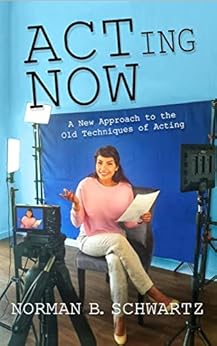
ACTing Now by Norman B. Schwartz is an enlightening book that provides guidance that will help actors prepare for the demands of the contemporary acting world. The content of this book provides advice on topics beyond acting and includes areas such as commercials, film, and even television. The techniques highlighted in this book are not mere postulations and conjectures as Norman Schwartz has experience as an actor, director, film editor, and teacher of creative writing and he brings that experience to bear in this informative book and shares key principles that will help budding actors get and keep an acting job.
The chapters of this book are grouped into three parts – Acting Then, Acting Now, and Acting Next. This organization is essential as it helps guide the reader, and future actor, on what acting used to be, what it is today, and what it will be in the future. Beyond the keen insights, I enjoyed the historical evolution shared here.
In Acting Then, Schwartz covers some of the techniques that theater actors used as far back as the 1920s such as the Strasberg method which leaned on some of Stanislavski’s writings. Stanislavski is one of the first to offer formal training in theater acting. When the first generation who studied at the American Laboratory Theatre began their study of acting, they also based their variations on the Stanislavski system.
Thus, the system evolved to the present form where there is little accommodation for improvisation to performing monologue exercises, being mindful of camera angles and self-taping. Schwartz covers all these old techniques and suggests new ones that embrace the old ones but also better prepares the actor for the new reality of modern acting with lots of multimedia coverage.
One of the outstanding qualities of this book is that it is as expository as it is suggestive. It focuses on the history that has driven acting to where it is today. For instance, Stella Adler’s disagreement with Strasberg’s methods and teaching of tapping into emotions from one’s personal life as opposed to one’s imagination helps one glean some lessons on how best to trigger an emotional response while on stage.
ACTing Now is a must read book for any aspiring actor as it contains actionable advice that can help their career. This is an illuminating book that will also appeal to performing art students who are interested in the evolution of acting and the industry.
Pages: 163 | ASIN: B0BFPP1N2S
The Big Picture
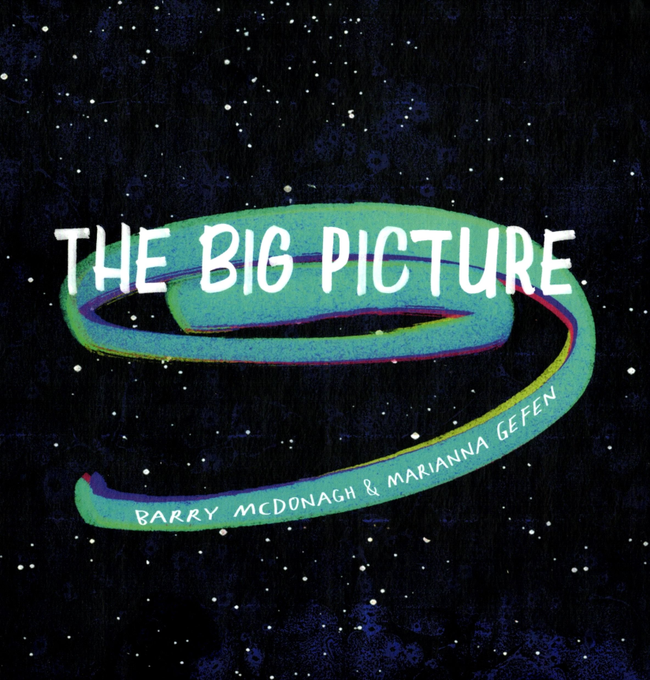
The Big Picture is a thought-provoking picture book that asks readers to reflect on their life. The book starts with The Big Bang. Because of the way the book started, I thought this was going to be an educational book about space, but with a few questions and the turn of one page, this short book turns into a contemplative journey that will inspire self-reflection and have readers wondering if they’ve lived their best life.
Every page in this colorful book is wonderfully illustrated; well, all pages except one black page that is surprisingly potent for being blank. The journey through the birth of the universe and the beginning of humanity does a fantastic job of setting the stage for the profound questions that will follow. The author helps readers see just how small we are in the universe, but also how lucky we are to be alive.
This is a picture book, so I had assumed this was going to be a children’s book. While you could read this to children, as I think they will be able to understand what’s happening and understand the questions as well, I think this book is just as powerful and moving for adults.
The Big Picture is a profound and intellectually-invigorating book that accomplishes so much in so few pages. It’s educational with its few science facts, it’s a meditative experience with the way it draws you in and makes you focus on an idea, and it’s a bit of a self-help book as well. This book is perfect for anyone that is struggling to find satisfaction or meaning in life.



 LITERARY TITAN