Blog Archives
Below the Fold
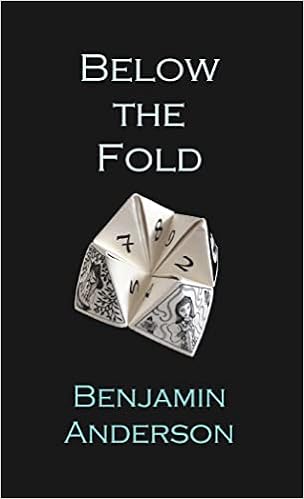

Prepare to embark on a thought-provoking journey filled with diverse essays, stories, and musings. Below the Fold is a unique book that invites readers to interpret its content in their own way. Amidst seemingly random dialogues and mad speeches, there are deep philosophical reflections and talking points on topics ranging from conspiracy theories and politics to history, language, and education.
Author Benjamin Anderson’s cryptic writing style pushes the boundaries of traditional literature, delivering a highly varied collection of ideas that will keep readers engaged and intrigued throughout the book. Whether it’s conversations with an alarm clock, jokes by Cro-Magnon men, or a child’s destructive behavior, Below the Fold guarantees to keep you on your toes, and boredom is not an emotion you’ll experience.
This book is anything but conventional. As Anderson admits, it’s intentionally designed to frustrate readers by building upon an idea and then suddenly shifting in the opposite direction or ending the chapter altogether. However, each part of the book provokes deep contemplation and intrigue, and it’s impossible to predict what could happen on the next page or even the next sentence. Anderson’s writing is backed by his pointed criticism of the English language and the concept that language is nothing more than a human invention. While the book raises many thought-provoking questions, there are some parts where readers may feel lost and struggle to find a metaphorical thread. An author’s note to explain the book’s purpose could have been helpful in this regard.
Below the Fold is an interesting read for those seeking a departure from traditional storytelling and who enjoy questioning the unexplained. Book clubs might find it particularly engaging, as each reader will likely analyze the book differently and arrive at their own conclusions. Finally, I recommend Below the Fold to those who enjoy unconventional books, as it’s definitely worth exploring if you’re up for a challenge.
Pages: 104 | ISBN : 1736901958

Search For Enlightenment

Struth! follows three men with different philosophical beliefs who contemplate the universe and its meaning. I think this original idea is intriguing. How did you come up with this idea and develop it into a story?
Actually, it’s two men and a women, but that’s not important here. The idea originally developed from my own search for some understanding of life and the world around us. I have always had an interest in science, which has provided mankind with some wonderful insights into the workings of nature and still continues to do so on an almost daily basis. However, being empirical in nature, it can never hope to answer those fundamental questions as to why things happen, only the what, where and how. In many ways science is still in its infancy and has to create unknown “dark forces” to allow observations to align with theories and established physical laws. It will even tell you that death is our final destination and there is no purpose to life. That seemed irrational to me, so I then turned towards religion. Coming from a non-religious background, with only a sprinkling of religious knowledge, I knew very little of the many different and distinct faiths. However, with over 4000 individually recognised religions in the world, which one holds the truth? They can’t all be right, and you could spend your whole life searching and still end up empty handed at the end. In frustration, I turned to philosophy for answers, that academic discipline for generating conceptual ideas. But even here, few understand the logic and rationale derived, and philosophers have never agreed on a single proposition. The only option I had left was to start from scratch and develop a sort of personal religion based on truths that I had already accepted.
Authors that have previously trodden this path have chosen to base an approach either on personal insights (if they happen to be a mystic or had the misfortune to suffer a near death experience), or on religious grounds by reinterpreting scripture. For others, fantasy provides unlimited boundaries where witchcraft and magic can evoke the impossible. When you analyse all of these options in detail, however, none provides that solid foundation necessary to create a truly believable hypothesis. “Struth!” takes a different approach, with the plot centred on a model of existence at its core that has been inferred from our own history. In our past, numerous pivotal events have aided our species’ rise to dominance and shaped our lives. These are not disputed, so become fixed points within the model. Furthermore, if you believe that life does have meaning, then these events could not simply have happened by chance; they too had purpose and must be connected in some way. With the minimum number of initial assumptions, and with elements borrowed from science, religion and philosophy, common threads can be found to create the links and plug the gaps. By joining all the dots, a bigger picture is revealed that can then be used to explore the natural and supernatural worlds in a defendable framework. It provides some plausible answers and thought-provoking ideas that can be easily understood and, in many ways, unify the conflicting ideas found in science, religion and philosophy alone.
I decided to write “Struth!” in my retirement, first to give me something to keep my mind active and occupied, but primarily because I wanted to share these ideas in the hope that others would find some connection and aid their own search for enlightenment.
2. What was your approach to writing the interactions between characters?
If you have already found a religion, no matter what that may be, then the path to enlightenment is already well trodden and is straight and well lit. If you are still searching for that “truth” then you become an explorer and the path is unclear as it meanders and branches all along its length. When you reach a fork in the path you have to decide which direction to take. To do this rationally and objectively, you need to keep an open mind and consider all ideas, no matter how unlikely and contradictory they may seem. As an engineer by profession, I approach writing in a similar way, so you will find that all the workings that went into solving a dilemma are openly out on display. The three main characters were specifically chosen to represent these opposing views, not just philosophically but also religiously, sexually and socially. It was therefore very easy for the characters to interact to express their own views, and in the end, I found a compromise solution which contains elements of truth from all viewpoints.
3. What were some themes that were important for you to explore in this book?
In many ways I gave my own mind free-range when it came to developing the story. It started by making just one assumption – Life does have meaning. If you believe that, then numerous questions are immediately raised and it starts you on a journey in search of answers. The end result is that the book has to almost develop a theory of everything in order to fully explain the how, what, where and, most importantly, – why.
If I have to pick a few highlights, then they would probably be: the nature of God, creation and the structure of the universe, how mysticism and the paranormal work, why we have such diversity in sexuality, and what role Earth and mankind play in the bigger picture.
Although initially unintended, it was also interesting that the structure of the universe proposed aligns with Douglas Adams “Answer to the ultimate question of life, the universe and everything”, postulated in the “Hitchhiker’s Guide to the Galaxy”. It seems that many of the answers to life’s mysteries can be found in 42.
4. Will there be a follow-up novel to this story? If so, what aspects of the story will the next book cover?
I have only just started. “Struth!” was conceived as a trilogy, and the second book in the series is already well advanced. The first book is really an adventure story where the leading characters go in search of life’s meaning and to understand the world around them. In the second book “Struth Mate!” the journey of discovery continues from where the first ended, and we look into the future and what destiny holds for us all. We encounter Gaia, or Mother Nature if you prefer. Who or what is she? What is her connection with God? Is she really able to influence life on Earth, changing our environment, or even altering the course of evolution? We also learn that the end of the world is fast approaching. Here the Book of Revelations and the returning Messiah take on greater significance and are brought startlingly into focus. We also discover what 42 signifies.
Author Links: GoodReads | Amazon
♥ “This is a very interesting book if one keeps an open mind. I rate the book 4 out of 4 stars.” – Official review, Online Book Club.
♥ “Struth! isn’t your traditional novel. Instead, it’s an unconventional blend of scientific propositions, theological musings, and philosophical reflections all wrapped into one highly innovative package. It will have readers pondering their beliefs, laughing out loud, and questioning the universe.” – Literary Titan.
“Struth!” is a thought provoking philosophical fiction novel aimed at those still searching for some meaning to life and existence. It follows the life and death of three friends who hold very different views on life, but who are brought together and then murdered in mysterious circumstances. Their subsequent journey of discovery takes them into an unfamiliar spiritual world, where nothing makes much sense. Only as they travel on will the nature of reality start to reveal itself and the truth behind their lives exposed.
At the core of the novel is a model of existence derived from a fusion of history, science, religion and philosophy. This unified theory is used to provide plausible answers to many of those previously unanswered questions that have long eluded mankind: What is the meaning of life, the universe and everything? How was life created? Who is God? What killed the dinosaurs? Are there really aliens out there? … Why do the Germans consider themselves the master race?
“Struth!” is not irreligious or hostile to individual established religions, but draws upon all sources of knowledge, keeping an open and logical mind to arrive at compelling explanations that can be understood by everyone.
WARNING: This product may challenge your existing beliefs.
The Rule-breaker’s Gender

Only Prince Charming Gets to Break the Rules is an analysis of over 200 folktales and fairy tales from around the world showing the inequality of treatment between men and women. Why was this an important book for you to write?
Following the 2020 presidential election, I became curious about who is permitted to break the rules. I turned to traditional fairy tales for insight, wondering if they reveal any gender bias in terms of rule-breaking. Fairy tales and folktales are integral parts of every culture, carrying messages for both children and adults. I thought it was possible they might contain implicit messages about rule-breaking, punishment, and reward for different genders.
What were some ideas that were important for you to share in this book?
Our research has revealed a significant finding: male characters make up two-thirds of all rule-breakers, whereas female characters make up only one-third. Furthermore, although male rule-breakers often go unpunished or are rewarded, female rule-breakers are predominantly punished. These implicit messages in fairy tales and folktales can be harmful, as they reinforce gender stereotypes and encourage one gender to break rules while the other should obey. Interestingly, other research has found a correlation between rule-breaking and career success, with individuals who break rules tending to achieve higher income and greater success than those who adhere to rules. This finding suggests that some level of rule-breaking may be associated with personal and professional growth.
How much research did you undertake for this book and how much time did it take to put it all together?
I conducted extensive research over several months, beginning with the identification of 200 fairy tales and folk tales from different regions of the world. I read through hundreds of stories to identify instances where rules were broken, ensuring a balanced representation from North America, South America, Asia, Africa, and Europe. After gathering an equal number of stories from each region, I analyzed them thoroughly and cross-checked my findings with another researcher to ensure consistency. Each story was analyzed in terms of the rule-breaker’s gender, whether they were punished, and the severity of the violation and punishment.
What is one thing that people point out after reading your book that surprises you?
The consistency of our findings across geographic regions comes as a surprise to many who read the book; they expected to see significant differences. In addition, they are particularly surprised by the severity of punishment for female characters who break the rules. Shockingly, almost one-third of the female characters who break the rules in stories are executed!
Author Links: GoodReads | Twitter | Facebook | Website
Proceeds from this book will be donated to Empowering Girls for Life (EGFL), a nonprofit organization dedicated to creating the female leaders of tomorrow by empowering girls today. EGFL is located in Lombard, IL.
The Eloquence of Effort
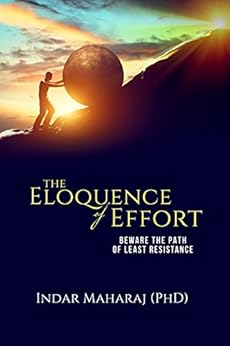

The Eloquence of Effort: Beware the Path of Least Resistance by Indar Maharaj is a highly intellectual read, perfect for readers who enjoy deeply complex pieces that feed the mind. The intention is to assist in acknowledging the necessity of prioritizing ‘purposeful effort’, to view it as the source of healing, achievement, and long-term well-being for all.
Maharaj uses the lives of successful individuals, particularly their methods of work and the morals and values they lived by to show how a person’s overall nature is a direct influence on their accomplishments during their lifetime. By also including figures such as Robert ‘Iceberg Slim’ Beck, Bruce Reynolds, and Bernard Madoff who were known for their poor behavior and dark leadership styles (those venturing to criminal or anti-social behaviors), Maharaj has created a trustworthy judgment between praising certain figures, whilst ostracizing the lives of others. It is done so intentionally without force or haste, but so evidently it cannot be argued.
The use of figures such as Gandhi, Mother Teresa, and Albert Schweitzer was a brilliant cipher for how the willingness to forego personal pleasures in lieu of the greater good – through healthcare, socio-political movements, and the environment – can manifest differently, but are all factors which have been possessed commonly by world leaders because they sought to serve selflessly. The three felt a supreme calling to identify with the needs of their fellow man. Maharaj’s analysis of these figures independently followed by a dual and triple comparative analysis marks a transparent maxim: leaders must be the instruments of change, for service which is rendered without joy helps neither the servant nor the served.
The Eloquence of Effort by Indar Maharaj contains a message for readers that is straightforward: just as work demands effort, effort demands work. This book is for readers wanting an enlightening and thought-provoking read with factual recounts of historical figures and world events, wrapped in a highly intellectual blanket that is done tastefully and tactfully.
Pages: 543 | ASIN: B0784XWJBX
A Guide for Aging Heroes
A Guide for Aging Heroes: Owning the Second Half of Life in 30 Days by Randolph Harrison with Erica Schwarting is a journey of self-discovery with this insightful and transformative guide to living an authentic, mindful, and happy life. Harrison aims to help readers say goodbye to negative thoughts, procrastination, and self-doubt, as he helps readers learn to become the aging hero of their own story. With a detailed day-to-day plan, this book is an excellent guide that will help you navigate through your fears and harmful thought patterns using powerful strategies from cognitive behavior therapy and personal experiences shared by the author.
This philosophical guide encourages readers to become active players while accepting their reality. At the same time, the author emboldens readers to never give up on the eternal journey of learning as an individual. Courage doesn’t mean fearlessness, but it means pushing toward a goal, despite setbacks and fears. The book is packed with motivational messages, inspiring quotes from great personalities, and enlightening ideas to develop inner courage and take positive action.
I enjoyed discovering the transformative power of this book, with short exercises at the end of each chapter. The signposts will lead you on a spiritual journey and help you overcome life’s challenges with renewed confidence, ease, and grace. The author connects with his readers by sharing personal anecdotes, life trials, tribulations, and life-changing events that he experienced while offering an actionable roadmap to managing your moods, emotions, and perception of a fulfilling life.
A Guide for Aging Heroes: Owning the Second Half of Life in 30 Days by Randolph Harrison with Erica Schwarting will help readers take control of their life. It’s a beautiful guide that will show you how to live a life of purpose and meaning.
Most Famous Short Film of All Time
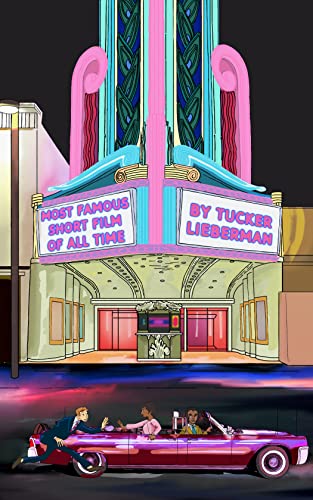
Literature such as this is needed in today’s world. This is a unique and thoughtful book that conveys several messages that are important in contemporary society. A cross between literary fiction and philosophy, this is a wholly unique experience that will leave readers pondering well after they put the book down.
The first thing I’ll say about Most Famous Short Film of All Time is that it is an extraordinary piece like no other book that I have read. The story jumps around over a few years with a variety of circumstances unfolding over the timespans. The format of the book will ensure readers are engaged throughout as it has an unusual structure. While the book is a bit scattered I think that once readers have immersed themselves in the book they will start to see a pattern emerge and they will appreciate the story, which is about a person going through a profound transformational journey.
This was an enlightening book with thoughtful observations on life and insight into being transgender. Author Tucker Lieberman has done a marvelous job of bringing the transgender experience to light. As the story unfolds through this “metafiction” tale, it gives even the most closed-minded of readers an inside look at what goes on in the lives of people who make a choice in life that they feel inwardly drawn to make. While at the same time giving the reader a peek into the minds of people that actually drives one to make said choice.
Most Famous Short Story Ever can seem long from the number of pages, but this may be a result of the formatting so don’t let that turn you away. This is a good book that will open your eyes and mind to a subject that many are still uninformed about.
Pages: 922 | ASIN: B0B6Q9F19V
The Fate of Humanity is Already Decided

The Story of Humanity: Ecology & Consequence follows the natural history of humanity, from emergence to demise, and provides readers with a saga of misadventure from a remarkably adaptable creature. What inspired you to write this book?
I am long a student of history. All of my Spokes books are laden with history stories. I wanted to encompass humanity’s experience as a creature with a destiny, addressing in holistic perspective the how & why of that destiny.
What is a common misconception you feel people have about technology today?
While appearing to many as a boon, technology has proven a detriment to humanity’s survival. One of my favorite quotes in The Story of Humanity: Ecology & Consequence is by British war commander & prime minister Winston Churchill: “What might now shower immeasurable material blessings upon mankind may bring about its total destruction.”
What were some ideas that were important for you to share in this book?
Humans are an ape in thrall to tools. Rather than exercise prudence & discipline – and learn from the wise among us, the Collective of humanity have blithely followed their biological urges. Women were key to humanity’s wellbeing. Their subjection sorely dimmed the prospects of societies in the areas of education, economics, the arts, justice, and social balance. Rather than cooperate, man’s inclination to individualism, materialism, and dominance of others have been the powerful forces which set humanity’s destiny. As I wrote in The Story of Humanity: “Though taken as natural, the original sin of men was laying claim to what belonged to all. The idea of ‘owning’ Nature ultimately doomed humanity.” As a political economy and cultural folkway, plutocracy has been the kiss of death.
What do you hope is one thing readers take away from your book?
The major takeaway to The Story of Humanity: Ecology & Consequence is that the fate of humanity is already decided. The end times now are simply a culmination of world civilization. There is no possibility of hurriedly altering that vector.
Author Links: Website | Twitter
The Story of Humanity: Ecology & Consequence

The Story of Humanity: Ecology & Consequence is a fascinating read that will make you ponder your life and that of other beings. Author Ishi Nobu gets the reader in a state of mind where one reflects on human activity and the consequences of our actions. Can man preserve the earth until the end? Will extinction happen gradually? What are some of the past events that have made the world to be the way that it is? Through this thought-provoking book readers get answers to some questions while they ruminate about others. The Story of Humanity is a book about human existence and extinction, the state of the earth, animal and human relations, and nature. Reading about the universe and our ecology has never been more fun.
The book has five engaging chapters which tell various stories. The chapters are titled ‘A Fateful Ape’, ‘The Reign of Thought’, ‘The Evolution of Civilization’, ‘The Toll of Industry’, and ‘An Inevitable End’. Each of these chapters appear individually, but are still related in some way. The connection between chapters is revealed to keen readers and shows how much care the author has put into writing this book. Reading through the chapters was a pleasurable experience. The question the author poses, his style of narration, his diction and the vocabulary in the book are all excellent.
What happens after human extinction? After reading The Story of Humanity, questions of that nature will linger on your mind. As you read about the story of humanity, evolution of hominids, past and current trends, and issues like capitalism and politics, readers will reflect on the human experience and think about the universe from a different point of view.
What I enjoyed most about this book were the stories in each chapter. Even when discussing serious subjects Ishi Nobu tells the stories in a manner that even young readers would enjoy. Nothing too complex for the average reader, rather, the author applies words that are familiar to many.
This book is a stimulating read for readers that love indulging in subjects about human experience, the world, nature and civilization. The Story of Humanity: Ecology & Consequence is a stimulating and intellectually invigorating book that will inspire readers to think bigger.
Pages: 252 | ASIN: B0BGMQ9KKQ


 LITERARY TITAN