Blog Archives
Reacting to the Reality of Lowell

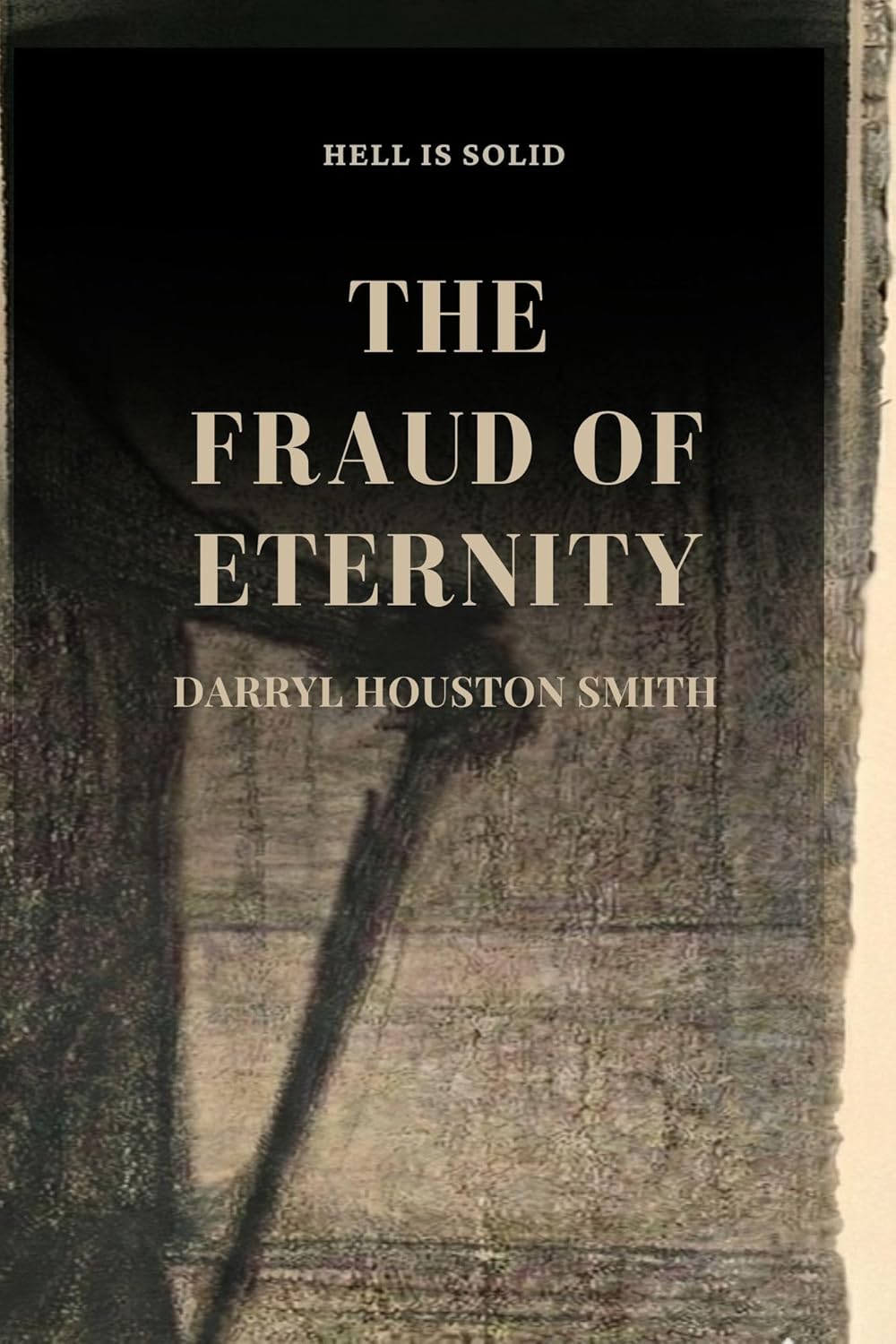
Q: The Fraud of Eternity is a compact, bleakly beautiful collection of poems that circles death, suffering, and spiritual exhaustion in the industrial landscape of Lowell, Massachusetts. Was this always intended as a thematic collection, or did it evolve organically?
Darryl Houston Smith: Honestly, it started from the ground up—literally. I didn’t sit down with some grand master plan to write a bleak treatise on spiritual exhaustion.
It was just me, reacting to the reality of Lowell. When the cold brick of the mills surrounds you, the gray teeth of the Merrimack, and that heavy quiet in the cemeteries, that kind of everyday decay gets into your blood.
At first, I was trying to capture that visceral darkness with as much raw honesty and sharp imagery as I could muster.
But as the pieces started piling up, all that chaotic emotion needed a cage. That’s where the thematic unity really took over. I found myself leaning heavily into strict ABAB and ABCB quatrains, using really dense, hyper-metric lines to rein it all in.
The project naturally evolved into an obsession with dualities—the tension between the sacred and the rotten, the living and the dead. So, while it absolutely began as an organic reaction to my surroundings, enforcing that rigid structure is what ultimately hammered it into the thematic foundation for the rest of the trilogy.
Q: Was there a specific emotional progression you wanted readers to feel?
DHS: Absolutely. The whole point was to make them feel the crushing weight of the oncoming reveal. I didn’t want to offer a gentle, healing arc—it had to feel like a slow, suffocating build. From the very first line, I wanted the reader to experience a creeping dread, a visceral sense that the floorboards of their faith are rotting out from under them.
It’s an emotional progression anchored tightly in those dualities I constantly return to.
You’re pulling the tension tighter and tighter between the sacred and the profane, between the living and the dead, until it simply snaps. By the time that final reveal hits, I want the reader to feel completely, physically exhausted—as if they’ve been dragged through the same heavy, industrial dark that birthed the poems in the first place.
Q: Were there any poets or other writers who influenced your work on this collection?
DHS: Oh, without a doubt. You can’t write about the rot of the modern soul without standing on the shoulders of the masters. Baudelaire and Rimbaud were constantly in my head—they understood how to drag unflinching truth and terrible beauty out of the gutter, which is exactly what I was trying to pull from the industrial ruins here in Lowell.
Then there’s Blake. He is the ultimate architect of dualities, that vicious tension between heaven and hell, which feeds directly into the dyads and strict structures I use to lock my poems together. Poe, naturally, gave me the blueprint for that creeping, psychological dread—the slow, suffocating build toward the dark reveal we just talked about.
And, of course, Jim Morrison. His influence is the bleeding edge of it all, bridging raw, visceral chaos with deliberate poetic intent. Since this collection is the bedrock of the entire trilogy, Jim’s shadow was always going to stretch across these pages. I wanted to take their collective darkness and compress it into something heavy, metric, and entirely my own.
Q: What does the phrase “fraud of eternity” mean to you personally?
DHS: To me, the ‘fraud of eternity’ is the great, comforting lie we’ve all been sold about salvation. We are taught to quietly endure the suffering of the present—the cold, the grit, the spiritual exhaustion of the daily grind—in exchange for the promise of some peaceful, golden forever. But it’s a scam. Eternity isn’t a transcendent afterlife; it’s the dirt of the cemetery. It’s the cold brick of the mills outlasting the flesh of the people who bled into them.
That phrase is about confronting the duality between the lie of heaven and the visceral truth of the grave. People want the romanticized comfort of the divine, but as a poet, my job is to look at the rot and call it what it is. The ‘Fraud’ is the false hope we use to numb ourselves to the present darkness. This collection is about stripping that hope away and forcing the reader to sit with the unflinching reality of our own decay.
Author Website: darrylhoustonsmith@gmail.com
Readora From BookTropolis, The Literary Superhero, ABCs in Sports


Readora From BookTropolis is a lively alphabet book that introduces children to sports from archery to zorb through brief haiku-style verses, framed by the larger fantasy of Readora, a reading superhero from the story-filled world of BookTropolis. The book opens by casting reading itself as a kind of magic, with Readora gaining her powers through words and then using them to spark curiosity in children. From there, it moves through the alphabet one sport at a time, pairing simple, rhythmic descriptions with bright illustrations and a cheerful sense of movement. It’s part concept book, part sports sampler, and part literacy pep talk, all filtered through an upbeat, child-friendly imagination.
What I responded to most was the book’s sincerity. It really wants children to feel that reading and play belong together, and that idea gives the whole thing a warm, encouraging pulse. I liked the way it doesn’t stay with only the most familiar choices. Baseball, football, soccer, and tennis are here, of course, but the inclusion of orienteering, quad skating, cross-country skiing, and zorb gives the book a slightly wider horizon. It tells a child that the world is bigger than the handful of sports they already know, and that discovery can be playful rather than intimidating. I also found BookTropolis itself rather charming. It adds a storybook glow that keeps the book from feeling purely instructional.
I admired the attempt to carry the whole alphabet in haiku form, because that constraint gives the book a distinct texture and a gentle musicality. Some of the lines land neatly, especially when they capture a sport in one swift image, like the football pass into the end zone or the tactile sequence in volleyball of bump, set, and spike. The book makes language memorable, not merely functional, and for a young reader that instinct has real value. The illustrations help carry that intention beautifully, keeping the pages animated, diverse, and inviting.
This is a generous, good-hearted children’s book with an imaginative core and a clear belief in what words can do. It has genuine charm, and its combination of literacy, motion, and encouragement gives it a sweetness that feels earned. I’d especially recommend it for young children who are learning letters, beginning to read independently, or already obsessed with sports and action-filled picture books. It would also work well for parents, teachers, and librarians who want something a little more spirited than a standard alphabet book. Overall, I found it earnest, colorful, and easy to like.
Pages: 32 | ISBN : 978-1665785839
Unconventional Narrative

All Told gathers a lifetime of poems shaped by place, memory, travel, politics, and aging, offering a wide-ranging portrait of one life lived across the American South, distant countries, and the quiet rooms where reflection settles in. Did you view the book as a kind of life story while putting it together?
Yes, in a sense, it’s a life story, or at least a story of my last 55 or so years on Earth. I think of it, along with Rites of Passage, as a personal legacy created from a large backlog of work reaching back to the 1970s. It’s a compendium of my poetry that I would like to live on after me, even if it lacks a wide circulation and serves only as a means of preserving a significant amount of my work for anyone who enjoys reading poetry and might find it interesting. It also gave me an excuse to dig through the whole body of unpublished work I’d saved over the years and organize it in a way that I felt would be aesthetically pleasing and offer its readers a perspective on my life and my struggle to create a sort of unconventional narrative that would reflect the changes in my life and my development as a poet.
Your poems often use plain, conversational language. Why does that style appeal to you?
I think the sort of plainspoken style of much of my work came about firstly through the influence of such modernist poets as Ezra Pound, H.D., e.e. cummings and William Carlos Williams, and the post- modernists, especially those in the New York School — O’Hara, Koch, Ashbery, Ignatow, et al. — who were attempting to break away from strictly metrical verse and traditional forms and appeal to readers who were highly literate but not necessarily steeped in literary history or the kind of verse taught in most university English courses back then. On the contrary, I followed many other poets of the time in taking the lead of Ezra Pound, who, around the beginning of the last century, envisioned a new style of writing that “will be as much like granite as it can be, its force will lie in its truth, its interpretive power… I mean it will not try to seem forcible by rhetorical din, and luxurious riot. We will have fewer painted adjectives impeding the shock and stroke of it. At least for myself, I want it so, austere, direct, free from emotional slither.” Secondly, when I moved to Türkiye in 1993, I soon discovered a school of poetry that illustrated this modernist dictum in the movement called “The First New,” headed by Orhan Veli Kanık, who dreamed of writing a poetry so stripped down that it even “dumped words.” This movement arose most significantly as a result of the change of the Turkish script from Arabic characters to the romanized alphabet most commonly used in Europe and the Americas. It also brought European influences into the sphere of Turkish writing, with translations by Veli and other poets of foreign poetry, such as that of the Surrealists. Along with my reading of 20th-Century Turkish poetry that followed The First New, I became aware of the provincial nature of American poetry, which showed little influence of Surrealism and other important developments in Europe that had strongly influenced contemporary Turkish poets. So my view of modern poetry changed radically after I moved to Türkiye, and my own writing began to reflect this change as well. I was elated when the poet Güven Turan, who edited my bilingual collection Galata’dan: the View from Galata, noted on its back cover that I was really as much an Istanbul poet as Orhan Veli, even though I wrote my poems in English. This direct, conversational style of writing came to define my own work, even as I tried to incorporate other aspects of modernism and postmodernism into the poetry I was writing then.
Many poems reflect on aging and reflection. How has your perspective changed over time?
I’ve tended to measure the course of my life in phases. This can be seen as well in the course of my poetic experience, wherein the dominant “themes” change from one phase to the next. For example, in my twenties the principal idea that directed my writing was that of a “Muse,” gleaned largely from the writings of Robert Graves, and this idea changed, or evolved, into a Jungian vision of psychic forces that replaced the Muse figure with a spiritual “you” that for several years animated my poems and infused them with a “meaning.” Other phases reflected my discovery of Taoism and Sufism, philosophies whose main principles I’ve adopted and tried to apply to all aspects of my life. I found that I could trace the movement of my life through these phases that have determined the nature of my development as a human being and writer. I can’t clearly articulate the phase I’m in now except to say that it seems to concern my present role as an elder in my “tribe” and involves a further consolidation of the ideas and experience that form the basis of the ongoing questioning and quests in my work and life.
Looking back over this collection, what surprises you most about your own journey?
I’m newly surprised almost every day by my incredible luck at being who I am and to have survived and, for the most part, enjoyed my life’s journey up to this point. I think the poems in All Told express this feeling in both direct and indirect ways. I’m not religious in a conventional sense, but I can’t help feeling that I’ve somehow been guided and protected by forces that exist somewhere beyond my individual perception or understanding.
Author Links: GoodReads | Amazon
Genetic Testing

The Killing Gene follows a genetic research team as they discover the gene pattern they believe is linked to violent tendencies and serial killers. Where did the idea for this book come from?
My niece was getting IVF, and I overheard that she had selected certain characteristics, eye, hair, skin, and educational background. Then I recalled my son’s genetic testing for Down Syndrome and cystic fibrosis, and it made me think about the pro-life/pro-choice issue. I wondered–and it’s in no way related to my niece’s child–after seeing parents being taken to court for the crimes their sons committed in a school shooting. What if there is a serial killer gene that is passed along to the children, which is triggered, apart from the nature vs. nurture theory?
Can you share a little about the research process required to put this book together?
First, I had to find other illnesses found in genes that are passed from grandparents, skip a generation, and affect the grandchild. I finally found a disease like cancer that affects the whole family or a gender only. I did not want to write a science book, but I had to mention basic genetic testing and technology like CRISPR that can identify genes and order.
Many characters are described as relatable and even flawed. Was that intentional to mirror the complexity of the book’s central question?
Yes, I went with the simple answer with triggers to activate the “killing gene,” a violent sexual act towards the grandfather, Malcom Lynn. The lead geneticist, Tatiana Mirzo, also had a sexual trigger that is kept silent but shows up during the act. The journalist, Maggie Rally, had old-school determination and limited time to solve the murders and was not afraid of getting too close.
Can we look forward to more work from you soon? What are you currently working on?
Yes, I have a new book, and I have about 90% done, but I had an accident and have trouble typing fast enough to finish. The new book is called The Suicide Council, inspired by Kurt Cobain’s suicide. I always wanted to know why, especially when the victim does not leave a note. So this is a fantasy, I do not know if it is classified as a thriller because it involves a Spiritual Council of saints and prophets who visit the victims just before they commit the action. They record why, but they have rules. They cannot change their mind because of free will. And close ones can find out why it happened only when they reach heaven. They can look up the files of the victim’s life filed by the Suicide Council. So I have a collection of stories about victims, different situations, and characters.
Author Links: GoodReads | Website | Amazon

From current choices for parents to make about what their babies will look like. In the near future, parents will be able to find a gene that will show a psychopathic tendency leading to violence. The parents will be able to decide on the birth of a child with Down syndrome. With characters involved with the geneticist’s background and suspecting colleagues, and a report that connects the dots on an ongoing Serial killer investigation with the help of the Main geneticist
Raw and Meaningful

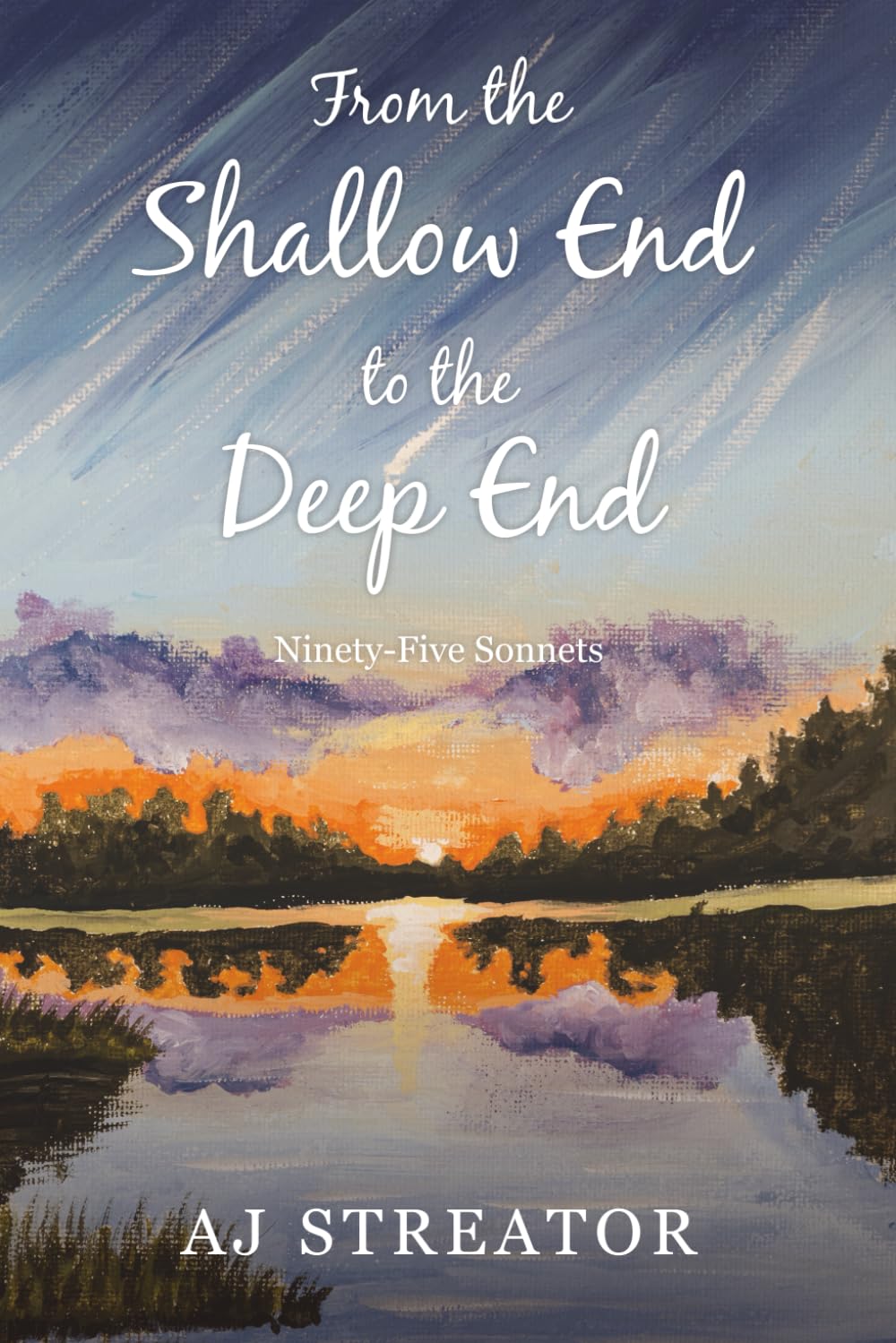
From the Shallow End to the Deep End is a rich and personal collection of 95 sonnets that moves through childhood memories, family histories, heartbreaks, faith, despair, and redemption. What inspired you to write this particular collection of poems?
I have written poetry as a hobby and emotional release for my entire adult life, but very little of it has ever been shared with anyone. After fifteen years of marriage, I was informed I would be getting a divorce and needed to move out of our house, We were able to quickly enter into a shared custody agreement for our children, but the divorce itself was not as smooth and my new “environment” consisted of a small empty house, a bed, a computer, and the clothes on my back. This, of course, was underscored by the absences of my children from my life for days at a time. So I started writing poetry like never before. I wrote about my most vivid memories that brought me to the unexpected life circumstances that had just been thrust upon me. Eventually, as I wrote the poems, I realized this time the story needs to be told, and the poems would be published in a book (my first). When my daughter, a young student studying art, learned of my endeavor, she asked to do the book’s cover and illustrations for me. This collaboration was instrumental in allowing my daughter and me to stay connected and engaged during my divorce from her mother. Finally, as we talked together about the evolution of our book, we agreed that we wanted to do something “different” that avoids mainstream contemporary poetry while simultaneously presenting an artistic challenge for both of us. As a result, we decided to follow the strict format of the Shakespearean sonnet in the poetry, but apply this rigid structure to raw and meaningful material in a manner that remains simple to read. My daughter crafted the book’s cover and illustrations accordingly.
Were there any poems that were particularly difficult to write? If so, why?
The poems about my relationship with my father are troublesome to me. I wish I could remember him differently, but he was a difficult person to love. I also struggled portraying my relationships with my brothers. They left home when I was very young, and I never really knew them growing up, and I blamed them for not being around when I could have used their guidance.
On a separate note, I felt that I should include a tribute to Shakespeare if I am to write a book of poems following the format he championed over 400 years ago. Sonnet No. 51, entitled “My No. 18,” is my attempt to pay him the honor and respect he deserves by providing a modern rendition and twist on one of his most famous sonnets. It is one of the poems that I spent the most time writing and attempting to perfect. I’m not sure it reaches its intended mark, but I tried.
Finally, in direct answer to your question, Sonnet No 75, entitled “Darkest Times,” is the one poem I still cannot read aloud today. It reveals a part of me that I didn’t think existed, took me to a place I never thought I would go, and the mere thought of that poem smacks me in the face and takes me right back to it all. Even now, in writing this response, I grow teary-eyed thinking about it.
Did you write these poems with a specific audience in mind, or was it a more personal endeavor?
Both. The book was highly therapeutic for me as an emotional release during my divorce, and the collaboration with my daughter certainly enhanced the experience. Beyond that, however, the book is also biographical in nature. Someday, hopefully, I will have grandchildren and great-grandchildren who want to know who I was as a person. Hopefully, a good read through this book can answer a lot of questions they might have.
How has this poetry book changed you as a writer, or what did you learn about yourself through writing it?
Anyone who writes a book should feel a sense of victory and satisfaction. I am no different. The change is that now I feel a calling. I am already working on my next three books!
Literary Titan Book Award: Poetry

The Literary Titan Book Award recognizes poets who demonstrate exceptional artistry and proficiency and push the boundaries of language and expression. The recipients are poets who excel in their technical skills and evoke deep emotional responses, challenge thoughts, and illuminate new perspectives through their work. The award honors those who contribute to the literary landscape with their unique voices and powerful words.
Award Recipients





Poetry to Ponder: Joy in the Morning—Hope on the Horizon by Joy Steward
Visit the Literary Titan Book Awards page to see award information.
Everlasting Time
Triskele is a dreamlike collection of sensory poems where childhood memories resurface in fragments, inviting readers to linger in the quiet glow of memory and meaning. Did the collection begin with a theme or with individual poems?
The collection began when my rock covers band (as a drummer) folded with a bereaved member (my late wife). I had a stack of my original lyrics and decided to try a hand at poetry using some of my works, going through the stages of grief, and then finding a second chance and remarrying has opened up a new world in my word play, I now understand that if you experience something dramatic, then you can write about it with a true feeling to it.
How did the number nine shape the creative process?
The ‘ennead’ was a group of nine deities in Egyptian mythology; in poetry it refers to a set of nine poems. With no logic to it, it just happened that I grouped each chapter into nine. To be aware the poems are in the same order as were written with no rhyme (pun) or reason as to the order of appearance, they are in the books just how they fell from the grey matter, mostly unabridged, and as they were originally penned.
What fascinates you about memory’s persistence?
I have a poor memory (due to a head injury when young). When something pops into my head, an idea, a poem, a lyric, if I don’t write it out immediately, it is soon lost in space forever.
I’ve captured many an idea in the middle of the night, at work, and when that happens there comes a hankering to add to it until it is finished, the poems mostly spontaneous, don’t ask me why or how these come about, they just appear.
An occasional snipped of my childhood returns when I see a picture, or someone mentions something, that may be the clue to the persistence, to discover more of the missing past.
I took unusual liberty to add explanations to the poems as many people taking them at face value (which is great), may not get author’s intent, or understand in my whacky sense of humour of what they are about.
Why choose the title Triskele? What does the spiral symbol mean to you?
A triskele is a symbol of ‘everlasting time’, the pattern when followed repeats back onto itself, I love the graphic of it and wear a Celtic style bracelet with a triskele on it instead of a watch ( no batteries), so in my sense of humour, if anyone asks the time, I can point to it saying, “Everlasting”.
A hope that it is, however, the reality of life one discovers that we are all mortal, and this indeed has inspired some of the poems.
The collection of Triskele never stopped, to follow have come more books in similar format titled ‘Mousanisms’, ‘Thrice’, ‘A Fifth of Four’, ‘Sarah in Dippidy’, and currently coming together is ‘Rhyme to Pass Thyme’.
It has been a lot of fun, a hope that someone else enjoys them when starting a fire.
When the Light Is Mine
When the Light Is Mine is a raw, messy, and relatable collection of poems about growing up poor, tangled in fundamentalist religion, and tangled inside your own head. Chaz Holesworth moves through shame, faith, politics, love, self-loathing, and music, talking to God, to America, to exes, and to himself, often all at once. The book feels like a long late-night monologue where the speaker keeps circling the same wounds, trying to get them to finally bleed clean.
The poems lean into repetition, riffs, and a kind of rambling rhythm that feels very close to song lyrics. The intro even calls out that influence, and I could feel it in pieces that read like verses in a track that never quite resolves. The language is blunt and sometimes crude. Religion and American culture get hit hard, with jabs at whitewashed Jesus, televangelist greed, the KKK, and lazy patriotism. At the same time, the voice turns on itself just as sharply, poking at OCD habits, body image, sexual shame, and the urge to disappear. I liked that refusal to let anyone off the hook, including the speaker. It gave the collection an honest, slightly scorched tone that stuck with me.
I also found moments of softness peeking through all the yelling, and those were the ones that hit me the most. When the poems shift toward love and connection, the voice loosens, gets playful, even hopeful. The pieces about music and favorite songs feel like little altars, the one place where belief is allowed without sarcasm. I felt a real ache in the tension between wanting to burn everything down, and wanting to be held, to be seen as beautiful, to believe that there is a version of life that is not just trauma on repeat. Sometimes the book leans into rant and self-mockery that I felt the emotional impact blur under volume. But there are many lines and images that land hard, and when they do, they feel earned.
This is not a neat or balanced collection, and I don’t think it wants to be. It’s chaotic, angry, funny in a bitter way, and often uncomfortable, especially around faith and sex. If you live with religious trauma, class struggle, or obsessive self-talk, and you like work that spills its guts without cleaning the floor first, this book will likely feel familiar in a deep, strange way. I would recommend When the Light Is Mine to readers who love lyric, stream-of-consciousness poetry, who do not mind strong opinions about religion and politics, and who are looking for company in the darker corners of their own thoughts.
Pages: 128 | ASIN : B0FPZHK1VR



