Blog Archives
Army of Three


Army of Three follows the Fassbinder brothers through a life shaped by loss, love, violence, and the weight of impossible gifts. The story opens small and personal, then builds into something that stretches across decades, worlds, and even versions of reality. It starts with two young men chasing criminals at night and grows into a tale about loyalty, grief, and destiny. Along the way we meet Azrael, a mysterious and powerful woman whose bond with Axel becomes the heart of the book, and later we see how her death fractures everything the brothers knew. By the time I reached the final pages, the story had folded back on itself in ways that felt both surprising and strangely right, and the letter from Karl brought a quiet and emotional sense of closure.
The writing is straightforward, yet it carries a sincerity that makes the emotional moments land with real weight. Scenes like Axel holding Azrael after the attack shook me. His heartbreak felt blunt and unfiltered. The author is not afraid to lean into big feelings, and the story benefits from that. I liked how the quieter moments in forests or diners or rooftops created space for the characters to breathe. Those scenes let me sit with them, and I grew to care about them, even when they made choices that frustrated me. There is an earnestness to the prose that makes the chaos of superhuman fights and government conspiracies feel grounded.
I also found myself surprised by how much the book weighs in questions of fate and identity. Axel’s struggle to figure out what kind of man he wants to be resonated with me. The story plays with the idea that heroism is not clean or noble, and sometimes it is just two broken people trying to survive what life handed them. Karl’s evolution unfolded cleanly and was emotionally potent as well. Watching him carry the burden of protecting his brother and then eventually writing that final letter made him feel painfully human. Even the supernatural touches, like Azrael’s powers and the strange forces lurking in the dark, worked best when they mirrored the characters’ inner fears. Sometimes I wanted the pacing to slow a bit so I could sit longer with those moments, but the urgency of the plot has its own appeal.
The story closes in a way that honors its emotional core, and it left me thinking about sacrifice and second chances. I would recommend Army of Three to readers who enjoy character-driven science fiction and action stories that are fueled by emotion as much as spectacle. It is a good fit for anyone who likes tales about brothers, unlikely heroes, and love that changes the course of a life.
Pages: 219 | ASIN : B0G26F47K1

Bluring the Line

The Perfect One follows a formidable District Attorney accused of murdering her affair partner, who, with the help of her Sheriff husband, tries to prove her innocence. What was the inspiration for the setup of your story?
I wanted to explore the paradox of a woman who prosecutes the truth for a living, yet finds herself entangled in a lie so personal it blurs the line between guilt and innocence. The affair wasn’t just a plot device, it was a way to examine vulnerability in someone who is otherwise formidable, disciplined, and untouchable in the public eye. I wanted to explore the human emotions and unveil the vulnerability to show readers how imperfect we are even when we seem perfect to the outside world.
I feel that your characters are the real stars of your mystery; they are intriguing and well-developed. Who was your favorite character to write for?
Emma was my favorite character to write.
What drew me to her was the balance she embodies, strength without arrogance, empathy without blindness, and loyalty without submission. She’s deeply capable, but she never shuts off her instinct to question, especially when something doesn’t add up. That internal tension made her feel incredibly real to me.
Emma doesn’t move through the story assuming she’s right; she’s willing to pause, reflect, and reassess, even when it’s uncomfortable. That willingness to question herself, rather than blindly defend a narrative, is what gives her moral depth. She listens as much as she acts.
In many ways, Emma represents the best of what we can be when we choose integrity over convenience. She’s proof that strength doesn’t require hardness, and that empathy doesn’t mean weakness. Writing her felt like writing toward an ideal, someone who leads with conscience, remains open to truth, and refuses to ignore the quiet voice that says something isn’t right.
How do you balance story development with shocking plot twists? Or can they be the same thing?
I don’t see story development and plot twists as opposites; they’re most powerful when they’re the same thing. A shock for the sake of surprise never lasts, but a twist that grows organically out of character and theme deepens the story rather than derailing it. At times what the characters reveal is a shock to me as well.
For me, development comes first. I spend a lot of time building motivation, relationships, and emotional stakes so that when a twist happens, it feels both unexpected and inevitable. The best twists don’t introduce something new, they reveal something that was already there, hiding in plain sight.
What is the next book that you are working on, and when can your fans expect it to be out?
I am working on What Lies Next Door- Release Date is June 8, 2026.
What Lies Next Door
In this neighborhood, appearances matter, but reality is often hidden.
Seeking a quiet life, Sophia and Josh Miller moved to Edgewood Estates, known as one of the safest neighborhoods in Virginia Beach. With manicured lawns, a pristine cul-de-sac, and welcoming neighbors, it seemed ideal for starting a family.
Across the street, the Patels were polite but reserved. Next door, the Wilsons appeared ideal, especially Hana, who always arrived with fresh-baked cookies and cold lemonade. Yet behind Hana’s perfect smile, something unsettling remained.
Soon, unusual events occur.
Shadows appear outside the Millers’ windows. Doors open unexpectedly at night. Someone, or something, is watching.
Accusations arise, and neighbors turn against each other. Long-buried secrets begin to surface, leading to serious consequences.
When Josh’s co-worker and secret mistress disappears, suspicion falls on the Millers. Matters escalate when Hana’s husband, Brian Wilson’s body is discovered in his own backyard.
The once-tranquil neighborhood becomes a full-blown crime scene, with detectives circling like vultures and neighbors whispering behind drawn curtains. Sophia can’t shake the feeling that they were never truly welcomed in Edgewood Estates.
Someone wants to get them out of the neighborhood. But why?
How do you fight back when you don’t know who — or What Lies Next Door?
On the surface, Lyla and Jack Peterson are the golden couple. He, the respected Virginia Beach Sheriff, and she, the formidable District Attorney. But behind closed doors, their marriage is built on dangerous secrets.
When Lyla’s lover, a charismatic defense attorney, turns up dead, suspicion slams down on her. She was the last to see him alive, and every shred of evidence points her way. Then, a darker secret erupts: the body of her stepfather resurfaces after fifteen years, threatening to destroy what’s left of her world.
As Detective Aiden Blackwood untangles a web of betrayal and buried grudges, Lyla and Jack are forced into a deadly game to prove her innocence. Every ally could be an enemy. Every lie could be a weapon. And the deeper they dig, the more one truth becomes terrifyingly clear— Someone is setting her up… and they won’t stop until she’s behind bars for good.
Thank God For The Sinners

Thank God for the Sinners follows Rick Price through a chaotic life shaped by violence, lust, trauma, and the constant pull of self-destruction. The book opens with Rick in a seedy Chinese hotel, where a sexual encounter spirals into a death that sets the tone for everything that follows. His past and present crash into each other as he traces the roots of his darkness through childhood injuries, family dysfunction, rage, and addiction. The narrative swings between his time abroad, entangled with corrupt businessmen, and his early life on Long Island, where pain and fear molded him into someone who can’t decide if he’s cursed or simply wired wrong.
The writing hits hard without trying to be fancy. It’s blunt, messy, and weirdly charming in parts because Rick is both awful and strangely human. I felt uncomfortable many times. I also laughed a little because the voice is so honest that even the worst moments feel like confessions from a guy who knows he’s a walking disaster. The early scenes, like the baby nurse incident and the diaper accident with his brother, stuck with me. They’re told with this eerie calm that made me feel like I was sitting across from Rick while he casually unpacked a lifetime of bruises.
I also found myself reacting emotionally to how the book explores shame. The scenes in China are wild and reckless, yet the real punch comes from how Rick narrates his loneliness and fear right underneath all the bravado. The book doesn’t soften him or try to redeem him. Instead, it lets him expose his scars in his own voice. I caught myself rooting for him even though he’s digging himself deeper into chaos. The whole thing feels like reading someone’s secret diary that was never meant to be found.
I’d recommend this book to readers who enjoy dark, confessional stories that don’t pull any punches. If you like memoir-style fiction that feels like a whirlwind of bad choices, trauma, humor, and raw honesty, this book is worth your time. This book reads like a harsher, more chaotic cousin to Fight Club, trading sleek rebellion for something messier and more personal. It also carries the bruised honesty of A Million Little Pieces, only with fewer apologies and a lot more bite.
Pages: 348 | ASIN : B0F9BQMF9Z

BLOATER

BLOATER delivers a dark crime thriller built around a string of shocking murders that leave victims grotesquely inflated and displayed like macabre parade balloons. The investigation falls to FBI agents Camby and Lanquist, who slowly uncover a connection between the killings and the victims’ histories of cruelty and bigotry. Alongside this, the novel follows the psychological collapse of Dr. Jeremiah Nowak, a neurosurgeon devastated by his wife’s sudden death. These narrative threads pull together into a grim exploration of vengeance, morality, and the terrifying lengths a disturbed mind might go to when fixated on the idea of consequences for unkindness.
I found the story vivid and unsettling in a way that held my attention even when the scenes made me squirm. The writing moved quickly and often felt cinematic, especially during the forensic sequences. The author had a knack for describing grotesque details with a strange mix of matter-of-fact precision and emotional punch, which made the book feel alive and twitching under my hands. Sometimes the tone veers into almost playful banter between the agents, which gave me a moment to breathe, then the next chapter plunged me back into grisly territory. I liked that rhythm. It kept me alert. It kept me guessing whether I should laugh, grimace, or look away for a second.
The victims were not random. They were people who had spent their lives spreading cruelty, and the killer seemed obsessed with correcting what he saw as a moral imbalance. That idea rattled me. The story poked at the question of whether words can wound deeply enough to trigger monstrous retaliation, and I appreciated that the author let the ugliness of that question sit there without softening it. A few moments felt a bit on the nose, but the emotional force carried the story and made those moments feel raw rather than preachy.
BLOATER left me with a mix of shock, curiosity, and an odd sympathy for characters who were messy, flawed, and sometimes unbearable. I would recommend this book to readers who enjoy crime fiction that leans boldly into horror, to anyone who likes investigative banter paired with stomach-turning forensic scenes, and to those who are comfortable questioning the line between justice and obsession.
Pages: 322 | ASIN : B0G1BJNDM3
A 360-Degree View

Dream Me Dead follows a dead woman watching her husband’s trial for her murder, who tries to leave clues for the living as to what happened to her. What was the inspiration for the setup of your story?
As living people, we only know what we are told, or what we assume to be true, but if the story is told through the eyes of a deceased person, they are able to have a 360-degree view of the world, and there is no more room for speculation. Peggy Prescott knows exactly what happened to her and how it happened, but she only reveals bits and pieces of her story so that the reader can begin putting the pieces together until they make sense. If she revealed everything at once, it would not be exciting. When someone has to work for the reward, the goal is that much more exciting and fulfilling. The reader feels challenged to put their mind to work as the clues accumulate. The reward, therefore, is worth the effort. Peggy knows her life on earth was valuable, and wants the readers to appreciate her trials and tribulations, making her life, and death, more meaningful. Hopefully, it gives the reader the idea that everything we do, everything that happens to all of us, will one day make sense.
What intrigues you about the paranormal that led you to explore this direction in your psychological thriller novel?
I have always questioned the paranormal, believing that we can only know what we know, but that is not the entire story. I believe in unseen entities, good and bad, who guide us along the way, preparing us to make better choices, be fearless, love deeply, and know that when someone dies, they are still with us. Those whose death was unexpected need for those left behind to make sense of things, and to dig deeper for clues that finally are revealed. Timing is everything, especially for those who search for answers. When I look up at the sky, I see endless possibilities, other lifetimes, souls who have moved on, souls who have remained for a while to keep their loved ones safe. It is an endless cycle of love and possibilities, that intrigue me the most. We have miracles all around us if only we look for them.
What was the most challenging part about writing a mystery story, where you constantly have to give just enough to keep the mystery alive until the big reveal?
The most challenging part of writing a mystery/psychological thriller is to ask the reader to be part of the story, to immerse themselves in the richness of the characters, and to follow the clues as they appear. This cannot occur if the reader becomes bored with the story, or finds that they cannot relate to the characters, so my job was to create characters who come alive, who the reader wants to root for, or despise, but cares about deeply one way or the other. The clues have to be available, but hidden, and can be found just beneath the surface if the reader looks hard enough. For me, the characters in Dream Me Dead are taking the reader on a journey and asking them to believe that they exist, if only on the pages, but remain in our hearts as real people.
Will there be a third book in the Dream Me Home series? If so, what can readers expect, and when will it be available?
Yes, there will be a third book, entitled Dream Me Gone, which will challenge the reader to take a stand, knowing that just as in life, each person can view the same problem differently, depending on their own personal experiences. I know what the ending is, of course, but that’s because I am a believer that anything is possible. Being an optimist and hopeless romantic, I will determine that the ending comes from a place of love, but others, those who are realists, who employ logic as their first language, are welcome to view an ending that makes sense in a realistic world. In other words, just as the readers will align themselves with specific characters, they will also stand firm on a logical conclusion. Everyone should feel that the time they put in to reading the Dream Me Home series was time well spent.
Author Links: Website | Book Trailer | Amazon | Barnes and Noble
The Perfect One
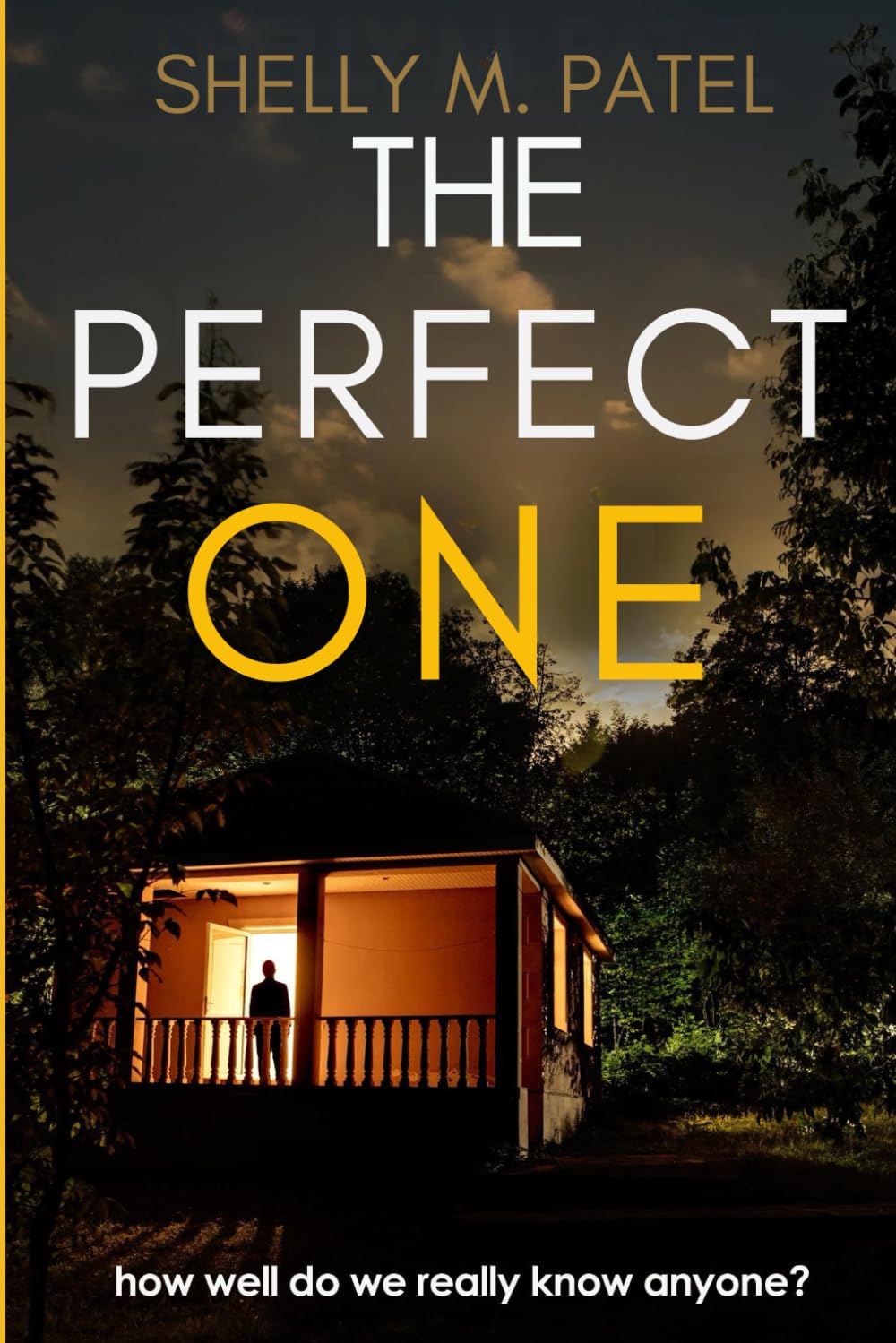
The Perfect One pulled me in right away. The opening sets the tone for a dark and twisting story built on secrets, obsession, and the fragile edges of relationships. The book follows several characters whose lives intersect around a brutal murder in a secluded cabin, and the story unfolds through shifting perspectives that slowly reveal old wounds, hidden affairs, and long–buried resentment. It reads like a slow burn that keeps tightening, chapter after chapter, until every character feels like both a suspect and a victim.
Some chapters felt intimate and tightly drawn, the kind that keep you leaning closer because the emotions feel raw and too real. Other moments felt almost playful, like the author knew exactly when to pull back before things got too heavy. I liked that mix. It made the pacing unpredictable in a good way. I also enjoyed how the book handled tension. It did not rush, and it did not give easy answers. Instead, it let scenes breathe with quiet detail that sometimes made me uneasy. I appreciated that slow drip of dread. It made the world feel lived in and messy, which fit the characters perfectly.
What surprised me most was the emotional twists. I kept catching myself feeling sympathy for characters I had sworn I disliked ten pages earlier. Then the story tossed in another reveal, and my feelings flipped again. I love when a book does that. It makes me feel like I am part of the mess rather than just watching it. The ideas beneath the plot lingered with me, too. The story pokes at pride, loyalty, and the ways people hide things even from themselves.
Everything came together in a way that made sense for the world the author built, even when the truth was painful. I would recommend The Perfect One to readers who enjoy psychological thrillers, character–driven mysteries, or stories where the emotional stakes matter just as much as the plot. If you like books that take their time and let you sit in the characters’ minds while feeding you tension bit by bit, this one will be a great fit.
Pages: 360 | ASIN : B0FM1F3QKW
Carnage in D minor

Carnage in D Minor follows Leeza Allen’s rise from a prodigious Southern piano talent to a battle-hardened military veteran who is struggling to hold herself together while trauma keeps dragging her back into the dark. The novel blends psychological suspense with a deeply personal story about survival, family, fear, and the brutal tug of the past. From childhood recitals in Beaufort to the nightmares she carries home from deployment, the book moves between tenderness and terror with an intensity that caught me off guard. The story paints a heroine who is gifted and broken and stubbornly alive. It builds a world where beauty and violence keep brushing up against each other in quiet but devastating ways.
I found myself pulled in by the voice of the book. The writing swings sharply between raw emotion and calm precision. I liked that. It made me feel as if I was inside Leeza’s head even when I wanted to reach out and steady her. The scenes around her childhood are vibrant and warm. Then the tone shifts when the story lands in adulthood where PTSD, addiction, and grief turn everything jagged. That contrast shook me a little, and honestly, that is what made the book memorable. The author seems to understand trauma from the inside out. The panic attacks. The sudden triggers. The numbing habits that pretend to help but only make the ground softer under your feet. Those moments felt painfully real. The writing has a rhythm that matches Leeza’s state of mind. Sometimes measured. Sometimes chaotic. Sometimes barely holding onto structure at all. I felt myself riding those waves with her.
I also found myself reacting strongly to the ideas the book brings up about responsibility and the human mind. The novel keeps circling back to the question of why people break the way they do. It shows trauma not just as an event but as a rewiring of a person’s internal world. I appreciated that the story never treats addiction or homelessness or depression as simple problems with simple solutions. There is frustration in Leeza’s voice. Anger too. And a fierce compassion that pushes her to believe she can fix the unfixable even while her own life is slipping through her fingers. At times, her determination feels reckless. At other times, it feels heroic. I found myself rooting for her even when she made choices that scared me.
The novel is gripping and emotional and often uncomfortable in ways that feel purposeful. I would recommend Carnage in D Minor to readers who enjoy psychological fiction that digs into trauma without sugarcoating it. It is also a strong pick for anyone drawn to stories about gifted women trying to rebuild themselves after the world has already taken too much. If you want a book that feels honest and relatable and a little bruising in all the right ways, this one is worth your time.
Pages: 265 | ASIN : B0G1CN78FG



 LITERARY TITAN