Blog Archives
Making Neuroscience Engaging & Intuitive

Baby Senses: A Sensory Neuroscience Primer for All Ages shares with readers the world of nervous systems and how they have developed into the senses we have. Why was this an important book for you to write?
Thank you for this great question! I’ve always been passionate about making science engaging, relatable, and accessible to the interested lay audience. As an artist, I’ve also found the actual forms in biology incredibly complex and beautiful. As a tutor with Reading Partners, I wanted to share my love of neuroscience, art, and reading with the kids I was tutoring, but a search of the existing neuroscience books for children left me disappointed in the lack of truly engaging neuroscience content for beginning/emerging readers. And there a germ of an idea was born – to illustrate and write a children’s neuroscience book with accurate visual representations of sensory systems. I wanted my book to also impart fundamental principles of the scientific endeavor, for example, to convey that knowledge is built over time, with many researchers from diverse backgrounds working together (or apart) to gather facts in small steps. Related to this was my desire for Baby Senses to be a stand-alone educational resource for classrooms and families laid out in a scientific format. I think than an early introduction to how diversity in nature makes all animals special is important to encourage an appreciation of our ecosystem and why its delicate balance needs to be conserved. This was coupled with the intent to spread the subtle message that what makes us different is often our strength and neurodiversity is to be celebrated.
How much research did you undertake for this book, and how much time did it take to put it all together?
As an auditory and visual neuroscientist, I was already very familiar with several sensory systems before I decided to write Baby Senses. Some of the facts included in the glossary are in fact inspired by my doctoral dissertation. There were some systems I was less familiar with before writing my book, and for these I read several research articles and textbooks to gain a deeper understanding of each of these systems. I then condensed them down into narratives and ‘fun facts’ to highlight, as well as how contemporary research into these areas relate back to the lay audiences’ daily lived experiences.
The idea of writing Baby Senses really crystallized for me during the COVID-19 global pandemic. I’d been working on creating a series of neuroart paintings since 2018. The realization that I’d created a series of paintings that tied together into a narrative about the beauty and complexity of the many ways in which brains have evolved to do extraordinary things, coupled with the realization that there are not many neuroscience books available to early readers, really motivated me to sit down and start working on this project. I took about 8 months to finish my first draft of the book including the expanded glossary, the rhyming dialogues, and all the illustrations. I then spent several months researching publishing options and timelines, choosing my publisher, revising my book, and working on the cover images. Overall, it took a year and 5 months for my book to be published from when I started working on it.
What were some goals you set for yourself as a writer in this book?
In my experience, children are easily inspired or discouraged from pursuing further learning in topics based on demographics and gender, as well as how scientific topics are taught. An important goal for me was to make neuroscience engaging and intuitive so that children are inspired to pursue it, regardless of gender or demographics. When I take a step back to look at the bigger picture, the challenges facing neuroscientific endeavors are complex and large. To solve them requires team-science efforts, new ideas, collaboration within and across diverse teams, and an open-science, data sharing approach. All of these require that people from diverse backgrounds are drawn to and remain in research careers, and in the long-run, I hope that Baby Senses will contribute to that goal.
Another major goal for me in writing Baby Senses was to use multi-modal ways to engage diverse minds (neurotypical and neuroatypical), and of all ages. I wanted to maintain the balance between writing an engaging and relatable narrative while not shying away from scientific terminology. To do so, I used subtle cues like the parent-child bond as the context of these question-and-answer conversations to make the content relatable. More scientific choices like including the full references list were also deliberate. A related goal for me was to dispel scientific misconceptions, such as the all-pervasive idea that humans only have ‘5 senses’ and that having a ‘6th sense’ was somehow an anomaly. As humans, we have more than 5 ways to sense our internal and external environments, with research still ongoing to better characterize all the ways in which we sense our environment; for instance, how our gut microbial environment influences our brains through the gut-brain axis is an active area of research.
What is the next book that you are writing, and when will that be published?
I would certainly like to write more – I’ve a couple of ideas I’m playing around with right now. As a first-time indie author, I’ve learned a lot about the publishing process and am still learning so much with Baby Senses, so I am not ready to completely move onto the next project yet. I also have ideas about further expanding the reach of Baby Senses by for example, turning it into a sing along project. A lack of ideas has never been an issue for me so stay tuned for updates on my website https://babysensesbook.com/, where you can also sign up to receive my newsletter with events and updates or follow me on social media platforms!
Author Links: GoodReads | Twitter | Facebook | Instagram | Website
Space-Based Umbrella
The Specter of Psyche follows an NYPD detective who is offered a job in space exploration that turns into a multi-murder investigation in space. What was the inspiration for the setup of your story?
The primary activity in the story is solar-system space development or exploitation, not space exploration. The Psyche asteroid is real. NASA is about to send a probe there because the increasingly rare and essential metallic minerals potentially contained in the asteroid could be worth quadrillions of dollars…if the ore can be successfully and economically mined. I propose some food for thought on a possible mining method, one not without considerable risk and astronomical upfront investment. I never try to make light of technical challenges in my books. I try to explain them in layman’s terms. Perhaps I will lose a few viewers along the way. But I hope others will enjoy the ‘hard’ science and engineering, and perhaps build on my ideas. Because I think we could very well need to find a way to mine a metallic asteroid if we are to save and further evolve our industrial-based civilization.
When creating Detective Kelly Seamus, did you have a plan for development and character traits, or did it grow organically as you were writing the story?
I started out with a fair idea of the character of Seamus Kelly. He is a street-smart cop, but a highly intelligent guy with a big heart. He makes sincere friendships, and that helps him crack some tough cases in a very challenging environment.
What were some themes that were important for you to explore in this book?
The book is the sequel to ZONT-2 and Beyond. It, too, was thought to be a bit too technical by a Literary Titan reviewer. But it proposes a design for a space-based umbrella for combatting climate change. And the challenges it details are just as daunting as those posed by trying to economically mine a metallic asteroid. And I hope that book will also be food for thought because unfortunately, it looks increasingly likely that we will need a space umbrella of some sort. To make technical aspects more digestible, if you will, I try to involve interesting but believable characters, with a few sidebars like a love story or a detective story.
Will there be a follow-up novel to this story? If so, what aspects of the story will the next book cover?
Yes, there will be a sequel to make a three-book series. Readers will note that intelligent aliens seem to also covet the mineral wealth in the Psyche asteroid. Who are they, and will they be willing to share? Stay tuned…
Baby Senses: A Sensory Neuroscience Primer for All Ages
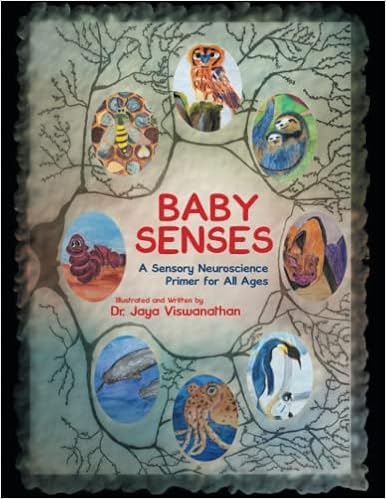

Baby Senses: A Sensory Neuroscience Primer for All Ages is an illuminating book by the creative mind of Dr. Jaya Viswanathan, an author whose passion for unraveling the intricate workings of the human brain was ignited at the remarkably young age of 14. Throughout history, the enigmatic complexities of the human brain and those exhibited by our fellow creatures have been the subjects of ceaseless fascination. Thanks to remarkable strides in scientific understanding, we stand on the precipice of delving ever deeper into the labyrinthine mechanisms governing the nervous system and the human brain itself.
In the pages of Baby Senses, a mesmerizing tapestry of creatures, from serpents to lemurs, penguins to worms, are unveiled to illuminate the 16 systems emerging from the bedrock of our five fundamental human senses: vision, hearing, touch, taste, and smell. This extraordinary odyssey unfolds through the lens of young animals inquisitively engaging their elder counterparts, who bear exceptional attributes such as night vision and reaping enlightening revelations in return.
One facet that conspicuously distinguishes this work is the inclusion of an all-encompassing glossary nestled at its conclusion. Personal encounters with sensory organ descriptors had left me grappling with their essence and role. The addition of this invaluable glossary not only demystifies these terminologies but also bestows an enriched grasp of their functionalities. The vivid and visually compelling graphics interwoven within the narrative further elevate the reading experience.
Baby Senses by Dr. Jaya Viswanathan is a wellspring of education. Beyond inspiring wonder and curiosity, this book stands as a repository of indispensable educational wisdom.
Pages: 74 | ASIN : B0C36NXZJ2

Biomechanics of Your Body: A Simplified Way to learn Human Movement and Muscles
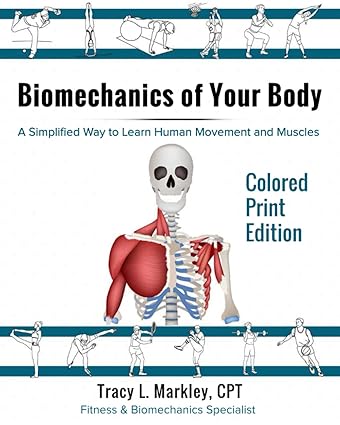
Biomechanics of Your Body – A Simplified Way to Learn Human Movement and Muscles, penned by certified personal trainer Tracy L. Markley, CPT, is an engaging and highly educational text that probes the enthralling universe of human motion and muscular structure. Leveraging her extensive expertise, Markley presents a user-friendly avenue to comprehend the intricate science of biomechanics.
From its outset, the book charms readers with its dynamic prose, making it a suitable study for beginners and those with a preliminary understanding of anatomy. The author masterfully dissects convoluted theories into digestible components, fostering a learning environment where readers can absorb the content without a hint of intimidation. The text is meticulously organized, sequentially advancing from rudimentary aspects of human motion to sophisticated subjects, enabling readers to methodically construct their knowledge.
A distinguishing attribute of this book is the lucid and succinct elucidation of anatomical jargon and concepts. By adopting colloquial language and tangible examples, Markley transforms the understanding and visualization of the human body’s workings into an effortless endeavor. The incorporation of vibrant illustrations and schematics further boosts the educational journey, aiding readers in visualizing the myriad muscles, bones, and joints engaged in various motions.
Biomechanics of Your Body shines with its pragmatic application of the conveyed knowledge. The text is peppered with actionable tips and exercises, inviting readers to implement their learning and interact with the content actively. The book is an indispensable resource for athletes, fitness enthusiasts, and those merely inquisitive about human body mechanics, providing priceless insights with real-world applicability.
The informative and articulate nature of this book is evident throughout its content. It provides an accessible introduction to biomechanics, adhering to the author’s objective to streamline complex subjects for a broad audience. While it might not delve into exhaustive depths of the field, it successfully strikes a balance between simplicity and detail, thereby making it a beneficial read for those taking their first steps in exploring biomechanics.
I endorse this book as a superb reference for individuals aiming to decipher the basic principles of human motion. It’s lucid, inviting, and serves as a captivating initiation into the realm of biomechanics. Whether you are a fitness devotee, scholar, or just intrigued by the human body’s mechanics, Markley’s book is a meritorious contender for a spot on your bookshelf.
Pages: 112 | ISBN : B09ZGQQJWP
Nurse Florence®, What is Arthritis?
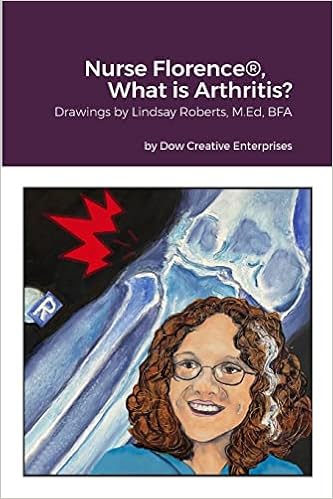
Nurse Florence®, What is Arthritis? by Michael Dow, offers a captivating and educational reading experience that is sure to intrigue young minds, fostering a genuine interest in scientific exploration. The narrative follows Jean, Condi, and Sonia as they engage in an enlightening conversation about their science class when serendipitously, they encounter Nurse Florence in the cafeteria. Curious to understand arthritis and its impact on our bones, the girls turn to Nurse Florence for answers. With great expertise and compassion, Nurse Florence delves into the complexities of arthritis, shedding light on its effects, various treatment approaches, and the demographics most prone to this condition.
Author Dow once again delivers a thought-provoking and highly enlightening literary work. The series succeeds in stimulating young readers to inquire about the intricacies of the human body, demonstrating that science can be both enjoyable and intriguing. Despite its concise length, the book effortlessly imparts a wealth of knowledge. While some vocabulary may prove challenging for younger readers, the author mitigates this concern by including a comprehensive glossary at the book’s conclusion, accompanied by a pronunciation guide at the beginning. Furthermore, the deliberate choice to portray the main characters as girls is commendable, as it addresses the underrepresentation of women in the scientific field.
The illustrations in the book possess a remarkable artistic quality, adding aesthetic appeal to the overall reading experience. The wealth of information provided by Nurse Florence is genuinely fascinating, leaving readers like myself craving further exploration of arthritis. The Nurse Florence series serves as an ideal entry point for young readers, gently nudging them into the fascinating world of science. Undoubtedly, this book would be a valuable addition to educational institutions and libraries alike, inspiring young minds and fostering a love for scientific inquiry. I eagerly anticipate the forthcoming installments in this exceptional series.
Pages: 117 | ISBN : 1312775211
Understanding The Humanity Of Humans
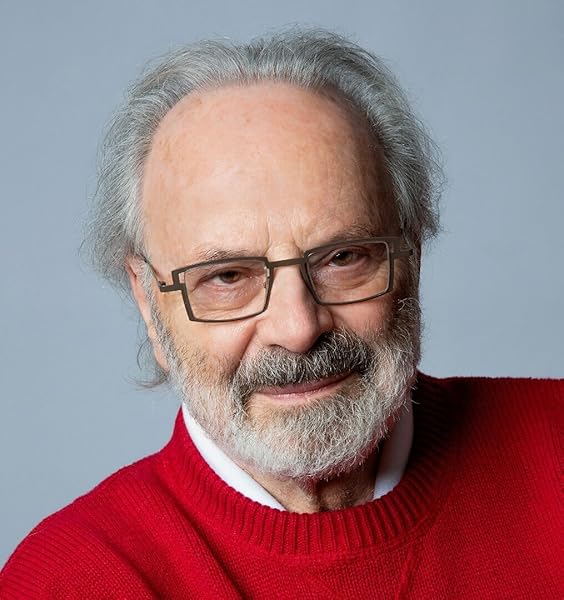
This book helps readers understand the workings of the human body as a series of interdependent physiological relationships. What was the idea, or spark, that first set off the need to write The Embodied Mind?
In 1981, in my book The Secret Life of the Unborn Child, I hypothesized that there were two memory systems. The first was the cortical system in the brain that we are all familiar with. The other functioned on a cellular level and began to operate at conception. At the time of writing The Secret Life of the Unborn Child, the research did not exist to support what was then a binary theory of memory.
In The Embodied Mind I provide an overview of current evidence-based research in many areas of science that, collectively, validates a unified theory of memory.
What sparked my determination to write this book was that I read about a 44-year-old French man who in July 2007 visited a hospital complaining of a mild weakness in his left leg. The resulting scans of his head led scientists to question our long held biological perspective on the nature of consciousness – because, despite living a relatively normal life, this patient was missing 90% of his brain.So, I asked myself – how is this possible?
What were some ideas that were important for you to share in this book?
Scientific emphasis on the brain has been baked into our culture for millennia. The Western world even before the Greek civilization, has been patriarchal, giving rise to a hierarchical social structure. The same vertical system has been unconsciously adopted in medicine. Doctors and scientists think of this system as strictly one way, mostly top-down, rarely bottom up. The latter is usually perceived as negative, as when you have a duodenal ulcer or a heart attack. Add to this the Church’s jaundiced view of the genitalia and you hesitate to spend too much time contemplating your lower chakras.
My book is a journey into the fully embodied nature of mental life, reviewing the cutting-edge science showing how the body responds to and encodes experience into its structure and function; how our feelings, thoughts, and memories are shaped by physiological functions beyond those of our head-encased brain.
It is the existence in our bodies of an interconnected, unified, multilevel, homeostatic, cellular memory system that allows us to be fully functional human beings with an Embodied Mind and not just an enskulled mind.
Materialism and reductionism are science’s Tweedledum and Tweedledee. The Embodied Mind challenges the prevailing concept of reductionism and emphasizes the need for a more holistic and spiritual approach to understanding the humanity of humans.
How much research did you undertake for this book and how much time did it take to put it all together?
I spent 7 years reading and making notes of 5,000 plus bookstand scientific papers.
What were some goals you set for yourself as a writer in this book?
Replacing the enskulled mind with the Embodied Mind and Everything is Connected
We understand the workings of the human body as a series of interdependent physiological relationships: muscle interacts with bone as the heart responds to hormones secreted by the brain, all the way down to the inner workings of every cell. To make an organism function, no one component can work alone. In light of this, why is it that the accepted understanding that the physical phenomenon of the mind is attributed only to the brain?
In The Embodied Mind, internationally renowned psychiatrist Dr. Thomas R. Verny sets out to redefine our concept of the mind and consciousness. He brilliantly compiles new research that points to the mind’s ties to every part of the body.
The Embodied Mind collects disparate findings in physiology, genetics, and quantum physics in order to illustrate the mounting evidence that somatic cells, not just neural cells, store memory, inform genetic coding, and adapt to environmental changes—all behaviors that contribute to the mind and consciousness. Cellular memory, Verny shows, is not just an abstraction, but a well-documented scientific fact that will shift our understanding of memory.
Verny describes single-celled organisms with no brains demonstrating memory, and points to the remarkable case of a French man who, despite having a brain just a fraction of the typical size, leads a normal life with a family and a job. The Embodied Mind shows how intelligence and consciousness—traits traditionally attributed to the brain alone—also permate our entire being. Bodily cells and tissues use the same molecular mechanisms for memory as our brain, making our mind more fluid and adaptable than we could have ever imaged.
Nurse Florence®, What is Atrial Fibrillation?
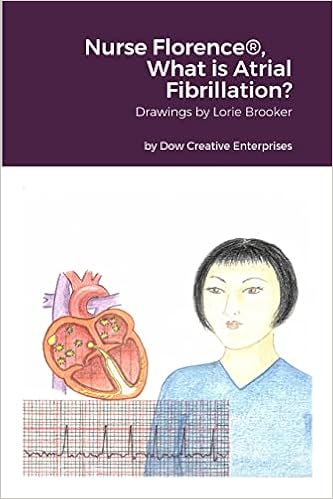
What is Atrial Fibrillation? This question is asked by students in this edition of the Nurse Florence series. A group of students see the school nurse at lunch and ask if they can sit with her; once they are all settled, Nurse Florence asks what they want to learn about today. One girl says that a family friend has just been diagnosed with Atrial Fibrillation and wants to know what that means. This leads to an in-depth discussion about what one is, how it can be caused, what this means for the person with it and things that can be done to prevent getting one. The girls learn a lot of science and medical terminology and have a great discussion on things to do to keep one’s body healthy.
Nurse Florence®, What is Atrial Fibrillation? written by Michael Dow, is written about a fictional nurse, but all the information in the story is based on facts. Dow uses correct medical terminology to explain things, and while this may be daunting at first, there is a glossary to look up the term. As an adult, I learned a great deal from this book, so I am positive that this would benefit children interested in science and medicine. The illustrations done by Lorie Brooker are done in colored pencil drawings. This allows younger children to look at things like blood pumping through the heart without being too graphic for sensitive readers. It is a great way to introduce these concepts in an approachable manner.
For children with an interest in medicine or teachers wanting to expand students’ interest in STEM, Nurse Florence®, What is Atrial Fibrillation? is a fantastic book to introduce to kids. This easy-to-follow children’s book teaches readers about A-fib and helps them understand how it is diagnosed, how it occurs, and what can be done to treat and prevent it.
Pages: 119 | ISBN : 1329376684
A Fresh Look At Living Forever

A Fresh Look At Living Forever by Donald L. Thomas is a book he put together after decades of restless research, first and foremost, to give himself answers to some of the world’s most asked and never answered questions.
Thomas was a college student when he was faced with Darwin’s theory of evolution; this led him to his decades-long quest to answer the biggest question out there: Are we here by chance or by plan? In other terms, are we here thanks to billions of years of evolution, or were we created by a creator? Thomas mentions that the probability of life existing merely by chance is 1. A planet with water, just the right amount away from the sun, with oxygen, and simple organisms that have evolved into what they are today. How does nature know that we need a nose to breathe or eyes to see? How does nature know that feet are for walking and fins are for swimming? These are just a few of the questions Thomas asks.
A huge focus in this book is indeed God or a Creator, whatever that might be for the reader. Thomas does not hide that he was raised in a religious family, which impacted him and his beliefs. He also mentions that we believe in the existence of God primarily because we believe our existence has a purpose and that he has found that many people will believe in their religion no matter what.
What I really appreciate about this book as a reader is that even though the author clearly has a viewpoint that he firmly believes in, he does not in any way say anything that would dismiss other people’s beliefs. Rather it is about if we are here thanks to evolution or a creator. Furthermore, he mentions different religions and historical figures such as Jesus, Moises, and Mohamed, official religious texts, and more to support his theory.
In addition to that, even though the book tackles subjects that are extremely abstract and muddled in day-to-day life, the tone in which it is written is remarkably friendly and luring. As a result, you will find yourself reading and feeling like you are having an intense and meaningful chat with a friend.
The great thing about A Fresh Look At Living Forever is that it doesn’t matter if you agree or disagree with the author’s beliefs. They are presented in a manner that is nonconfrontational and will leave the reader with much to think about. It is really interesting to read about all of these topics and see these questions answered and backed up by science and history. I recommend this book to any curious soul out there who has a few hours to spare for a genuinely good book.
Pages: 102 | ISBN : 1949813231


 LITERARY TITAN