Blog Archives
Quiet Doubts
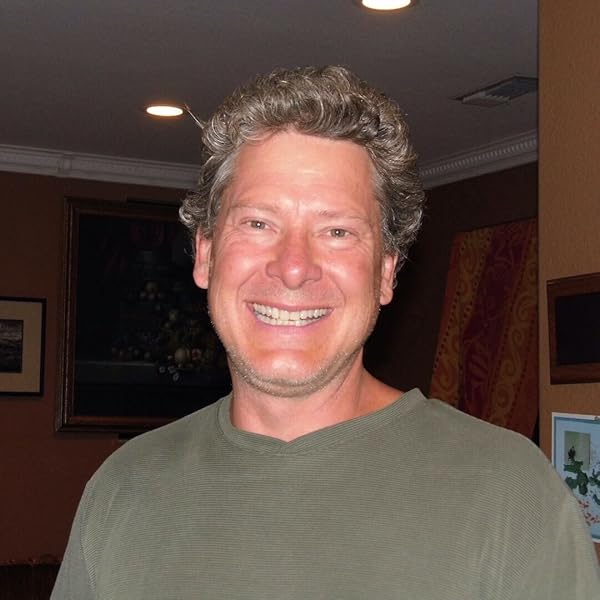
The Infinity Within tells the story of Gabe, a man haunted by strange, otherworldly experiences from childhood through early adulthood. This seems like a very personal story for you. How hard was it to put this story out in the world for people to read?
In many ways, it was one of the hardest things I’ve ever done—and also one of the most necessary. The Infinity Within may be written as Gabe’s journey, but much of what he experiences mirrors my own. To put those truths—those quiet doubts, soul-piercing questions, and hard-earned awakenings—onto the page was like pulling threads from the deepest parts of myself. It’s vulnerable. But I believe vulnerability is sacred, and if there’s even one person out there who finds themselves in these pages and feels less alone, more seen, or more empowered… then it’s worth every moment of discomfort. Sharing this story was never about telling people what to believe—it was about offering a mirror. One I wish I’d had during my own darkest nights.
What were some ideas that were important for you to share in this book?
At the heart of The Infinity Within is the idea that fear, doubt, and emotional heaviness aren’t signs that we’re broken—they’re sacred signals inviting us to remember who we truly are. I wanted to challenge the mainstream narrative that healing is about fixing yourself. What if nothing is broken? What if the pain is part of the awakening?
It was also important for me to explore the concept that life isn’t random—it’s a soul-designed journey. One of remembering, not achieving. Through Gabe’s dialogue with Elias, I wanted readers to feel invited into their own inner conversation, where their intuition could guide them more than any external doctrine ever could.
Lastly, I wanted to help dissolve the illusion of separation. Between self and Source. Between what we’ve been told is real and what we quietly feel to be true. If I could offer even a moment where someone says, “I’ve felt this too,” then I’ve done what I came to do.
What is one piece of advice someone gave you that changed your life?
“Stop trying to win the game—remember you designed it.”
That one sentence stopped me in my tracks. It reframed my entire perspective. I had spent years pushing, striving, fixing… believing life was something to conquer. But those words helped me realize that the obstacles, the fears, even the breakdowns—they weren’t punishments. They were invitations. Designed by me, for my own awakening.
That advice didn’t just shift how I lived—it became the foundation of The Infinity Within. It’s not about controlling life. It’s about remembering the deeper intelligence that’s always been guiding it.
What is one thing that you hope readers take away from The Infinity Within?
That they are not broken—they are remembering.
We live in a world that constantly tells us we need fixing, healing, or improving before we can be whole. The Infinity Within offers a different message: what if everything you’re going through is not a detour, but part of a sacred design calling you back to your true self?
If readers walk away with just one thing, I hope it’s this:
You already have the power. You already hold the map. And the moment you stop running from your fear and instead listen to it, you’ll find it was never the enemy. It was the doorway.
Author Links: GoodReads | X (Twitter) | Facebook | Website | Amazon
Break Through Fear, Trust Your Inner Power, and Create a Life That Reflects Who You Truly Are
Have you ever felt the faint pull of something larger than day-to-day routines—like an invisible current stirring in your gut, urging you to see beyond the grind? What if that pull wasn’t a dream, but a call to remember you’re far more than you’ve been told?
In The Infinity Within, you’ll join Gabe on a journey that shatters the illusion of limitation. From an eerie childhood moment when a toy train appeared weightless in his hands, to a near-fatal car crash where time bent and fate reversed, Gabe keeps stumbling into events that defy logic. Again and again, these flashes whisper: Reality is malleable—fear and doubt alone keep it fixed.
Desperate for clarity, Gabe tests the boundary between “impossible” and “everyday,” venturing at dawn into a quiet orchard. Under a hush that silences his busy mind, he attempts small but audacious acts—summoning a cardinal by sheer intention, almost teleporting across the grass—and glimpses cosmic teachers, from ancient spiritual icons to modern disruptors like Elon Musk. Each one demonstrates how unwavering faith outsmarts “that can’t be done,” hinting that a single moment of pure trust can shift the universe to meet us.
Yet The Infinity Within isn’t a catalog of miracles; it’s a map for releasing illusions. Gabe’s leaps of faith peel away layers of doubt, revealing the quiet truth that we all harbor a spark of the divine. This isn’t about gaining power to show off, but reclaiming the essence we lost behind fear and social conditioning.
You’ll see:
Near-Death Expansions where crisis ignites improbable survival
Orchard Illusions tested in a tranquil field at sunrise, proving how quickly the “impossible” crumbles
Real-World Parallels in teachers like Jesus, the Buddha, Eckhart Tolle, and even Musk—each boldly brushing aside limits in different domains
Practical Steps to cultivate your own orchard hush, dissolving doubt and empowering you to co-create the life you truly want
By the final pages, Gabe’s story intersects with yours: the illusions that once caged him are the same illusions blocking your next transformation. As you read, you’ll discover how to break through fear, trust your inner power, and craft a reality that aligns with who you really are—in your work, relationships, and personal calling.
Ready to taste life free of self-imposed walls? With each chapter, illusions recede, revealing an infinite spark inside you that’s always waited to shine. Gabe’s journey will nudge you to question every “I can’t,” forging a fresh perspective where possibility opens at every turn. The Infinity Within calls you to see past the illusions you’ve carried too long, urging you to step forward, awakened and alive, into a future of your own making.
Open these pages if you’re ready to challenge your limits, tap the hush of dawn in your own heart, and claim the boundless capacity that’s always been yours. Your leap begins now. Let the orchard hush guide you and watch your world transform as illusions unravel and your infinite self stands revealed.
When Your Partner Dies: Moving Forward and Finding Love and Happiness Again


Millard Hiner’s When Your Partner Dies is part memoir, part guidebook, and part gentle pep talk for anyone who has lost a spouse. Drawing from his own experience after the death of his wife Sharon, Hiner walks the reader through the raw early days of loss, the unpredictable stages of grief, and the tangle of emotional, social, and financial changes that follow. The book blends heartfelt personal stories with practical checklists, self-assessments, and ideas for honoring a partner’s memory, before gradually turning to the delicate subjects of moving on, dating again, and even blending new families. His message is clear: grief is unique to each person, but with time, care, and honesty, life can hold joy again.
I found the writing deeply personal and refreshingly unpretentious. Hiner doesn’t hide from the messy truths of widowhood, like how anger, guilt, and even relief can mix together in ways that feel wrong but aren’t. The prose is simple and warm, and the anecdotes carry a weight that advice alone never could. At times, the practical sections, especially the financial checklists, feel almost jarring next to the raw emotional passages, but in a way, that contrast mirrors the reality of loss: you’re mourning one moment and calling the insurance company the next. His ability to offer comfort without slipping into cliché struck me as one of the book’s greatest strengths.
While some themes, such as allowing yourself to feel or seeking support, are revisited, this repetition can serve as gentle reinforcement for readers who may need to hear those ideas more than once. I also found myself wishing for a bit more exploration of the emotional complexity involved in finding love again, as it’s such a delicate and layered subject. Even so, his warmth, kindness, and faith in second chances come through clearly, and the sincerity behind his words is never in question.
I felt as if I’d been guided by a friend who’d walked the path before me, pointing out both the potholes and the places where wildflowers still grow. When Your Partner Dies is for anyone supporting a grieving friend, or even for those years past a loss but still carrying the ache. It would especially resonate with people who need both the heart-level reassurance that they aren’t alone and the practical road map to manage the chaos that follows a partner’s death.
Pages: 140 | ASIN : B0CWMDKVQS

An Alternative to Believing in Nothing


SD Hagen’s An Alternative to Believing in Nothing is both a personal journey and a public invitation to explore the philosophy of Deism, a belief in a non-intervening Creator, grounded in reason, nature, and science rather than organized religion. Hagen introduces Deism as a third path for the spiritually curious who are disillusioned with traditional religion but not ready to settle for atheism or agnosticism. Through a blend of memoir, history, and practical guidance, he presents Deism as a meaningful alternative for modern seekers, especially those among the “nones,” the fast-growing segment of religiously unaffiliated adults in the U.S.
I was taken in by the honesty of Hagen’s storytelling. He opens up about loss, fatherhood, and the spiritual vacuum left by a nonreligious upbringing. There’s a gentleness to how he lays out his path toward Deism. There’s no lecturing, no dogma, just a guy trying to make sense of things. It felt genuine. His curiosity is contagious. I appreciated how he didn’t shy away from emotion, and the way he wove historical facts about figures like Jefferson and Paine into his story gave his ideas more weight. At times, I found myself highlighting entire paragraphs, not because they were particularly poetic, but because they were refreshingly clear and grounded.
The section on religious survey data, while informative, slowed the momentum. I understand why it’s there though, it builds the case that there’s a large audience who might connect with Deism, but I wanted to get back to the philosophy and personal insights because I found them to be the most interesting aspects of the book. The writing style is conversational and accessible, which works well overall, though occasionally it leans into a presentation deck tone. Still, Hagen’s passion for reason and spiritual openness kept me flipping pages.
I found this book to be a thoughtful and hopeful read. It’s ideal for people who feel adrift spiritually but aren’t ready to give up on meaning altogether. I’d recommend it especially to late bloomers, people going through big life transitions, or anyone raising kids and wondering how to pass on values without dogma.
Pages: 212 | ASIN : B0FF3N4LG5
Chasing Rescue: Surviving Narcissistic Abuse
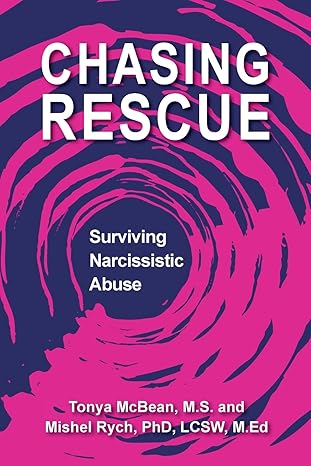
Chasing Rescue is a heartfelt guide to understanding, surviving, and healing from narcissistic abuse. Written by Tonya McBean and Dr. Mishel Rych, the book combines intimate storytelling with therapeutic insights. McBean recounts her own harrowing experience of living with a narcissistic partner, from the early love-bombing to the eventual unraveling of her life, while Dr. Rych offers clinical context and coping strategies to help others navigate similar abuse. Together, they provide not only validation but also a structured path toward reclaiming one’s identity, self-worth, and peace.
McBean’s writing is vulnerable and bold. Her story of enduring emotional, financial, and psychological abuse is gripping, and at times, it made me angry, heartbroken, and fiercely protective of her and her children. The strength it must’ve taken to survive, let alone write about it so openly, is staggering. There were moments I had to set the book down just to sit with the heaviness. But then I’d pick it back up, because she also writes with hope. She shows us what healing looks like. It’s not a smooth climb, but a jagged, stubborn trek with bruises and breakthroughs. That authenticity made it impossible not to root for her.
Dr. Rych’s sections are where the light really comes in. Her insights explain the patterns and psychology behind narcissistic behavior and how it messes with a person’s mind and soul. She breaks down clinical terms in a way that feels like a friend gently guiding you through a storm. The blend of practical advice, spiritual encouragement, and psychological framing helps the book land its punches without leaving you hopeless. I especially appreciated the call to action, that healing is our responsibility, not our fault. That resonated with me.
This book is not just a memoir, and it’s not just a self-help guide. It’s a lifeline. I’d recommend Chasing Rescue to anyone stuck in the confusion of an abusive relationship, to those recovering from one, or even to people supporting someone through it. If you’ve ever doubted your reality or felt alone in your pain, this book will show you that you’re not crazy, and you’re not alone. It’s messy, it’s painful, and it’s real, but it’s also full of strength and redemption.
Pages: 134 | ASIN : B0F9BBK62J
KNOWLEDGE AND WISDOM: SUBLIME THOUGHTS TO ELEVATE YOUR LIFE
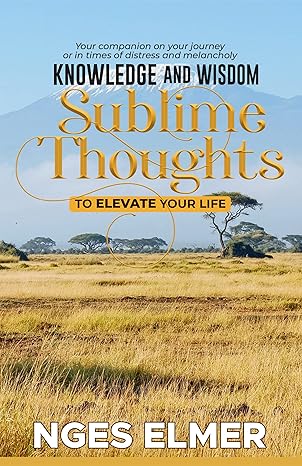
Knowledge and Wisdom: Sublime Thoughts to Elevate Your Life is a pocket-sized collection of over 300 quotations arranged alphabetically by subject, compiled by Nges Elmer. It draws from a wide range of historical and contemporary figures like philosophers, writers, leaders, and anonymous voices alike. The book presents bite-sized pieces of wisdom meant to inspire reflection, action, and growth in everyday life. Topics range from ambition and change to prayer and resilience, with each quote centered around themes such as education, love, forgiveness, success, and character. Designed to be carried easily, it’s positioned as both a spiritual and practical companion for personal development and social living.
Reading this book felt like walking through a garden of timeless truths. Some quotes struck me deeply, like William Wordsworth’s musing on the value of small acts of kindness or Emerson’s call to greet each day afresh. I appreciated that Elmer included reflections from diverse cultures and centuries, making the book feel universal in its intent. It’s not a narrative journey but a mosaic of ideas. I sometimes longed for more context or commentary to link them together, but maybe that’s the point: let the reader draw their own connections.
Stylistically, the book leans heavily on structure over storytelling, but it does what it sets out to do. Elmer’s choices are thoughtful, occasionally surprising, and clearly personal. I liked how he mixed sacred and secular wisdom without pushing an agenda. There’s a gentle, humble spirit throughout the compilation that makes it feel like advice from a wise friend rather than a lofty lecture. While not every quote felt equally strong or relevant, I found myself pausing to reflect more often than I expected.
Sublime Thoughts is a book I’d recommend for readers who like to sit with an idea and turn it over in their mind. It’s perfect for morning meditation, journaling prompts, or just flipping through when life feels noisy. Teachers, preachers, and writers looking for inspiration will likely find this a handy resource.
Pages: 114 | ASIN : B09JWRVMLK

I’ve Lived It

Stoic Empathy is a sharp and heartfelt exploration of how two seemingly opposing traits, stoicism and empathy, can be merged into a potent tool for influence, resilience, and personal growth. Why was this an important book for you to write?
Because I’ve lived it. I’ve had to. I grew up in war-torn Tehran, navigating missile strikes and ideological oppression, and then started over as a refugee in Canada. Years later, I was leading high-stakes negotiations in sleek boardrooms as a corporate lawyer in America. Through it all, I found myself constantly reaching for two tools: my ability to stay calm and principled under pressure (stoicism), and my deep desire to understand and connect with others (empathy). People often see these as opposites, but in my life, they were partners—my survival tools, my leadership compass, my parenting strategy. I wrote Stoic Empathy because I wanted to offer a roadmap for others who are trying to live with power and integrity at once, in a world that often tells them they have to choose.
What were some ideas that were important for you to share in this book?
One was that self-control is not about suppression—it’s about clarity.
The other was that empathy doesn’t have to make you soft; it can actually make you sharper.
I wanted to challenge the misconception that empathy is merely emotional absorption. In truth, it can be tactical, discerning, and fierce. I also wanted to speak to people who feel deeply but don’t know what to do with that depth—especially those in leadership positions. And lastly, I needed to share the idea that influence doesn’t require dominance; it requires alignment—between who we are, what we believe, and how we show up.
Did you find anything in your research of this book that surprised you?
Yes—how many ancient philosophers were deeply attuned to what we now call emotional intelligence. I expected to pull heavily from modern psychology and neuroscience, and I did, but what surprised me was how relevant the writings of Epictetus and Marcus Aurelius felt when filtered through the lens of human connection. I also discovered fascinating neurological evidence that validated what I’d experienced instinctively as a survivor of oppression and war, but also as a lawyer and a mother—that our brains are wired to both mirror and regulate emotions, and that mastering that dance is what gives us real power.
What is one thing that you hope readers take away from Stoic Empathy?
That strength and sensitivity are not at odds. In fact, our most effective leaders, partners, and creators are often those who can feel deeply but act with discipline. If there’s one thing I hope readers take away, it’s this: You are allowed to feel everything—but you don’t have to do everything those feelings suggest. Power lies not in shutting down or giving in, but in standing calmly at the center of it all, discerning what matters, and choosing how to move forward with grace.
Author Website
Stoicism combined with empathy may sound like a contradiction in terms. But when these seemingly opposing forces are harnessed together, they have the power to change your life.
From surviving missile attacks and political oppression in Iran to leading high-stakes legal teams and negotiations in corporate America, Shermin Kruse’s journey fuels her mission to merge empathy and stoicism as tools for navigating power, justice, and human connection in every facet of life. In this eye-opening book, she offers you this radical perspective shift—anchored in up-to-the-minute research—to help you navigate life’s challenges with power and principles.
We often think of empathy as an emotional stance: we feel what someone else is feeling. But Kruse outlines a form of empathy that’s based in cognition, not emotion—a way for us to understand what the other person is thinking and feeling while keeping a distance from their feeling state—and shows us how we can strategically maneuver our level of engagement from “emotional empathy” to “cognitive empathy” in different circumstances. Then she utilizes Stoic philosophy and modern science to outline the how of emotional regulation and control. The bridge she builds between Stoicism and empathy gives us the knowledge and discipline we need to:
Calmly assess the power dynamics of any situation
Understand and manage our own emotions as well as the emotions of others
Defuse danger and turn conflict into connection
Skillfully steer a challenging conversation toward the result we want
Whether you’re a leader striving to succeed in your role with integrity, an educator seeking to guide curious minds with compassion, a parent nurturing resilience in your children, or simply facing a personal or professional crossroads, Stoic Empathy is an essential toolkit for negotiating success in every area of your life.
Stoic Empathy: The Road Map to a Life of Influence, Self-Leadership, and Integrity
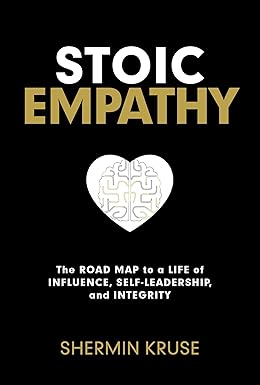
Shermin Kruse’s Stoic Empathy is a sharp and heartfelt exploration of how two seemingly opposing traits, stoicism and empathy, can be merged into a potent tool for influence, resilience, and personal growth. The book mixes personal history, ancient philosophy, neuroscience, and practical advice to introduce the concept of “Stoic Empathy,” the intentional blend of emotional awareness and emotional control. Kruse breaks down cognitive and emotional empathy, offers techniques from both domains, and delivers them through compelling stories, case studies, and reflections from her own turbulent journey from Iran to North America. The message is clear: you can be strong without being cold, and kind without being soft.
What struck me right away was Kruse’s voice. She doesn’t hide behind academic detachment or preach from a mountaintop. Instead, she lays her life bare—stories of war, immigration, trauma, injustice, love, and ambition. And she does it in prose that is raw but composed, often poetic but never indulgent. I felt moved, more than once, not just because of what she lived through, but how she translated those scars into strength. Her writing is both precise and deeply emotional, a difficult balance she pulls off with skill. Kruse somehow made a guidebook feel like a memoir.
Now, in terms of the ideas, some of them hit like a lightning bolt. The way she differentiates cognitive and emotional empathy, then teaches you when to use each, is flat-out brilliant. I’ve read plenty of books on leadership and emotional intelligence, but few are this actionable and easily understood. She doesn’t just give you theory, she shows how it plays out in hard rooms with high stakes. There’s pain in this book. There’s injustice. But Kruse doesn’t wallow. She’s honest about the ugliness in the world, but relentless in her belief that we can navigate it ethically, if we keep both a cool head and a warm heart.
I’d recommend Stoic Empathy to anyone who leads, whether that’s in a boardroom, a classroom, a household, or a movement. It’s especially relevant for folks juggling high-pressure decisions with a desire to stay kind and ethical. But more than that, it’s for anyone who’s ever felt torn between being tough and being tender. Kruse shows you how to be both, and more importantly, how to use that combination to change your world.
Pages: 288 | ASIN : B0D3YVPRX6
The Keys to the Kingdom
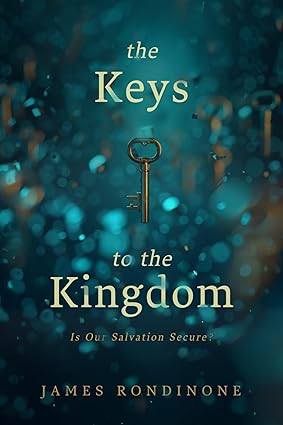
James Rondinone’s The Keys to the Kingdom is an exhaustive exploration of the question that quietly haunts many believers: Is salvation a permanent gift or a fragile prize? Through an uncompromising dive into Scripture, personal reflection, and theological comparison, Rondinone breaks down differing views on salvation—particularly the debate between works-based and grace-based doctrines. The book travels from his early religious upbringing to a detailed scriptural defense of the irrevocability of salvation, all while tackling complex theological terms with a conversational tone that invites even the uncertain reader to engage.
What I liked most was Rondinone’s willingness to pull back the curtain on his own journey. He doesn’t hide behind academic distance. In Chapter One, for example, he shares how disillusionment with ritual-based religion pushed him to seek a personal connection with God, not just a checklist of behaviors: “I needed a God who would become personal, i.e., my best friend”. That moment resonated deeply—it’s raw, vulnerable, and speaks to a yearning so many of us wrestle with but rarely say aloud. His later explanation of Ephesians 2:8-9, emphasizing salvation as a one-time, grace-given gift and not something that can be earned or lost, is powerfully clear: “These believers received the reality of being saved because they accepted grace at a point in time in the past with present continual results…”. That kind of clarity gave me peace.
Rondinone is passionate but there were parts, especially in the middle chapters, comparing theological interpretations, where the repetition of scriptural exposition started to feel a bit heavy. That said, the inclusion of contrasting views (like those of Catholicism, Mormonism, and Buddhism) was enlightening. It helped me see how widespread and diverse the interpretations of salvation truly are. I also appreciated the real-world cautionary tale of the “miracle car” scam. It was jarring, sad, and served as a necessary reminder of how spiritual vulnerability can be exploited—even in God’s name.
The Keys to the Kingdom challenged me, encouraged me, and made me reexamine what I thought I understood about salvation. I would recommend this book to Christians who feel unsure about where they stand in their faith—or who want to better understand why others believe what they believe. It’s not an easy read in terms of length or emotional weight, but it’s sincere, Scripture-rich, and deeply personal. If you’ve ever laid awake wondering whether God’s grace really holds, this book might be exactly what your heart needs.
Pages: 137 | ASIN : B0F1DD2JH4



 LITERARY TITAN