Blog Archives
Intention and Action
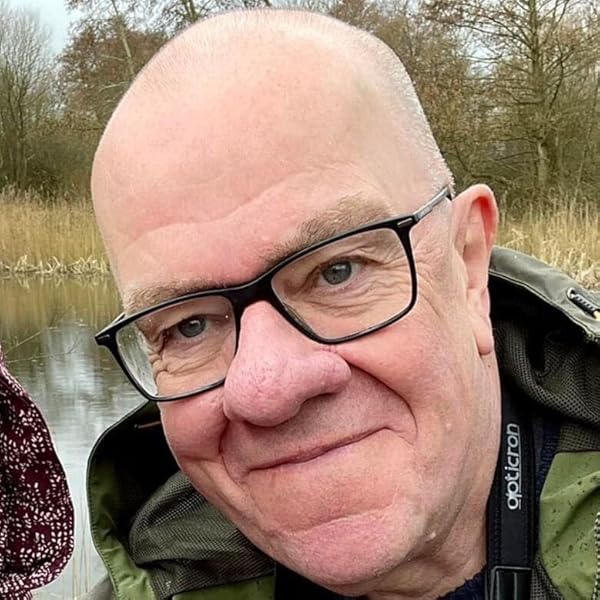
Where The Winds Blow follows the rise of Path Finder, a grassroots movement born from grief and idealism, while powerful governments, criminal networks, and ordinary people collide around it. What was the inspiration for the original and fascinating idea at the center of the book?
The inspiration for Path Finder came during the COVID crisis, while I was cleaning out my garage for the third time in a week. I suddenly imagined finding the UK’s prime minister hiding in there – someone who’d simply decided he couldn’t cope any more. That image stuck, and I started writing, using it as a focal point.
It led to a simple but unsettling thought: for all their bombast and posturing, governments have only limited control over what actually happens within their own borders. The responses to the 2008 crash, COVID, and countless regional crises revealed not grand strategists, but leaders who were overwhelmed, reactive, and often out of their depth.
Lies, distraction, and obfuscation disguise their weakness and uncertainty – skills that modern power structures have perfected. Meanwhile, real influence increasingly sits with billionaires, technocrats, and the vague, unaccountable entity we call “the markets,” all of whom operate with little responsibility to the societies they shape.
Across much of the world, there’s a simmering resentment paired with helplessness – a frustration that’s often misdirected toward convenient scapegoats rather than those truly responsible. What feels missing is a spark: something that turns anger and despair into constructive action rooted in honesty, humanity, and hope.
I don’t pretend to know how that spark might happen in real life, although I believe it will. In the Path Finder series, I’ve created a world only inches removed from our own, where readers can enjoy the humour and drama in the story, recognise familiar institutions and personalities, and perhaps imagine a different future – for themselves as much as for society as a whole.
History is full of ordinary people doing extraordinary things, often accidentally or without understanding where their choices might lead. This series begins with one man deciding he’s had enough of pretending to be something he isn’t and disappearing. Three books in, even I’m not entirely sure where that decision will ultimately take him or Path Finder. I just know it’ll be fun finding out!
What are some things that you find interesting about the human condition that you think make for great fiction?
What fascinates me most about the human condition is the gap between who we think we are and how we actually behave when things stop going to plan. We like to believe we’re rational, principled, and in control, but pressure, fear, love, grief, and ambition have a habit of knocking those ideas sideways. That gap – between intention and action, certainty and doubt – is where great fiction lives.
I’m also interested in how ordinary people respond when they’re swept up in events far bigger than themselves. Most of us don’t set out to change the world, break systems, or become symbols of anything. We’re just trying to get through the day, protect the people we care about, and make sense of the noise. Yet history shows that it’s often these accidental participants – people acting from love, stubbornness, guilt, or hope – who trigger the biggest consequences. That tension between small, human decisions and vast, unpredictable outcomes runs through the Path Finder series.
Finally, there’s the absurdity of it all. Humans are capable of extraordinary kindness, bravery, and resilience, but we’re also unwittingly brilliant at self-delusion, tribalism, and panic. Put those traits under stress – mix them with power, money, ideology, or blind faith – and you get situations that are by turns terrifying, ridiculous, and darkly funny. Satire lets me explore those contradictions honestly, without pretending we’re either heroes or villains. We’re usually just flawed, emotional creatures doing our best… sometimes making an almighty mess of it… occasionally doing something amazing.
What is one thing that you hope readers take away from Where The Winds Blow?
More than anything, I hope readers come away feeling that the time they spent with Where The Winds Blow was time well spent. I want them to have been entertained – laughing at the absurdity, caught up in the momentum, and maybe a little breathless at times – but also quietly validated in the way they see the world.
If there’s a deeper takeaway, it’s the reassurance that confusion, doubt, and frustration aren’t personal failings; they’re rational responses to a chaotic system. The characters in the book don’t have grand plans or neat answers – most of them are muddling through, reacting, improvising, and occasionally getting things spectacularly wrong. And yet, meaning still emerges from those imperfect choices.
I also hope the book leaves readers with a sense that individual actions matter, even when they seem small, accidental, or misdirected. Change doesn’t always come from heroes or leaders; it often starts with ordinary people deciding to stop pretending, to care a little more honestly, or to take one step they didn’t think they were capable of taking.
If readers finish the book feeling entertained, understood, and perhaps a little more open to the idea that hope can exist without certainty, then I’ve done my job.
I hope the series continues in other books. If so, where will the story take readers?
The series will continue. As for where the story will take the reader, who knows?! I’m currently writing shorter pieces for my Path Finder newsletter subscribers that fill in some of the character back stories. One of those pieces became a major plot line in Where The Winds Blow, and I have no doubt that one or two of my current works in progress will do the same in the fourth novel.
Author Links: GoodReads | Threads | Facebook | Website | Amazon
The Path Finder movement has gone global. Millions of followers. Endless headlines. Oceans of cash.
Only one tiny snag: the founders still have no idea what the movement actually is. Now the powerful want answers – and they’ll do anything to keep control.
Meanwhile, an ex-soldier from Afghanistan crosses continents and the Mexico-US border, desperate to reach his family before the authorities catch him or local vigilantes do even worse.
Elsewhere, Simon and Pippa Pope are chasing storms, blissfully unaware that their late wedding gift could unleash consequences for humanity, the planet, and a whisky-soaked Scotsman on a collision course with destiny.
Fast, funny, and ferociously sharp, Where The Winds Blow skewers the powerful and the absurd in equal measure.
It’s the third and wildest instalment in The Path Finder Series, following Paths Not Yet Taken and Good for the Soul. Each offers satire with bite, stories with heart, and storms of every kind.
Trolling in Social Media

BLOATER follows a neurosurgeon devastated by his wife’s sudden death who experiences a psychological collapse and makes it his mission to enact justice on the world by killing off sinners. What was the inspiration for the setup of your story?
I felt it would be interesting to weave a tale of retribution for those who use social media platforms to spew hate and prejudice upon innocents. My intention was to create a deranged vigilante to exact vengeance. I spent many years in the operating theater as a surgical device representative for several Fortune 500 medical manufacturers, so a medical setting felt comfortable.
Dr. Jeremiah Nowak is a fascinating character, watching him transform and justify his killings. What scene was the most interesting to write for that character?
I endeavored to subtly display Nowak’s increasing obsession with killing, and the satisfaction he derived from it. My favorite scene to write was the finale, where we witness his lust for mutilation and murder, but then ride along as it all comes apart.
I felt that BLOATER delivers the drama so well that it flirts with the grimdark genre. Was it your intention to give the story a darker tone?
Yes. It was important for me to help the reader understand that although trolling in social media is hurtful and can be harmful, it pales in comparison to a maniacal quest for blood.
What is the next book that you’re working on, and when can your fans expect it out?
I am writing a sequel that delves into another Camby and Lanquist investigation. I hope to complete the book by March of 2026. My original plan was to develop a series of three novels for the duo, but I am open to more depending upon the response from your readership.
Author Links: GoodReads | Website | Amazon
The man who once repaired the human brain begins to dissect the human soul… one sinner at a time.
His victims don’t just disappear.
They float—bloated, ballooned, grotesquely smiling—left drifting like obscene warnings across the city skyline.
Each murder is a flawless surgical performance.
Each body a message carved in flesh.
Each kill more daring than the last.
And Nowak tells himself it isn’t vengeance.
It’s justice.
You Write What You Know

Reservations follow a gifted FBI profiler with psychological insight whose mentor dies while working on a serial killer case, leaving her to pick up where he left off. What was the inspiration for the setup of your story?
First, I have to start with a backstory. In 2017, I was having a difficult time in my life; ending a 28-year marriage, leaving a job I was unhappy in, selling my house, and in need of a life overhaul. One day, I woke up and demanded a do-over from the Universe. Several nights later, the dreams started, and the books began. This book, Reservations (originally under a different title), was written in less than a month, followed by six more in a period of six months. I dreamt every night and wrote every day. The dreams were a visceral guide, with me filling in the blanks. A lot of stops and starts, but eight years later, here we are.
Samantha Wright is as real a character I could write because she is all of us. She is me. The story is about losing those who are close to us, who have made us who we are, and when they are lost to us, how we move on and try to make them proud with our attempt, we try to make things better. Sam has a career at the FBI, dealing with death while trying to find justice for the victims of the heinous things people do to each other. In this world, we all deal with what Sam does, just in a more unnoticed way. Just as Sam is trying to learn to live with everything she witnesses and is surrounded by daily, so are we with the very personal stories we all have to tell about how we live within the 24-hour news cycle and the reality we all see. I needed Sam to be many things, and she could be those things if her job had leverage to it.
I enjoyed Samantha’s character; she is engaging, intelligent, and complicated, not at all predictable. What was your inspiration for Samantha Wright’s character, and how did you craft her outlook on life?
They say you write what you know, and there is a lot of subconscious memory that is a treasure trove of bits and pieces that surface once they are awakened. Samantha Wright is a culmination of women I’ve known over the years that made a difference in me and my thinking, and by morphing those qualities and remembrances – well – Samantha was born. Once I had Samantha Wright and the dreams, I pieced the puzzle together. I’ve worked for attorneys as a paralegal, and that brought connections to stories of people and situations that made sense of the dreams and enabled me to weave a story together anchored by this amazing woman, Samantha Wright. Sam’s outlook is one of despair backed by hope. Strength of conviction, but willing to be weak, with not always knowing what to do. A yearning for love, but knowing her responsibilities will always color any relationship she would have. Again, Sam is us. I write with first and third person – I want the reader to know at all times all the characters in the scene and what they feel, think, and say, even when Sam isn’t part of the scene.
What were some themes that were important for you to explore in this book?
I have always had a connection, an affinity to Native culture, having lived in the Western state of Colorado. I’ve been drawn to the sense of Tribe and the rich history since I was young. I’ve also lived in situations that brought abuse, addiction, strength through fear, cultural divides, and love, of course, in my life and the life of those I know. I try to slowly bring themes into the plots, without being preachy or making it stand out – themes don’t have to stand out; they just have to be absorbed by the reader as part of the story. I want the reader to think back and see layers in what they’ve read.
Is this the first book in the series? If so, when is the next book coming out, and what can your fans expect in the next story?
The series has seven books – the first, Reservations: A Samantha Wright Crime Series, the second, The Last Profile, which just launched on Amazon, continues the core characters that are so integral to the plots and the important stories they bring forward. The Last Profile has Samantha following a case on and off the reservation, three plots going on at the same time, leading her through a maze of lies and betrayal by the very people her life centers around. If you love Will Little Bear, he helps Sam work the case that is supposed to finally free her from the FBI, so they can have the life they yearn for. Five more books follow; manuscripts finalized, waiting in the wings to be launched every six months. Plots that you may never have read before, characters that attach themselves to you, and relatable stories that resonate with the reader. The books are about people who have a family life and a work life – they figure out how to make it work, and in Sam’s case, her family, her tribe, is her foundation that gives her the ability to do her most difficult job, finding justice and a voice for those who can’t speak for themselves.
Author Links: GoodReads | Website | Amazon
When Special Agent Samantha Wright’s mentor dies while profiling a disturbing serial killer case known as “The Reservations Case,” she’s left to pick up the pieces—and finish what he started. Young Native American boys are being abducted, sexually assaulted, and murdered across multiple states, and the trail leads deep into the heart of the American West.
Sam is no ordinary profiler. Gifted with an uncanny psychological insight and a darkly self-deprecating sense of humor, she sees patterns others miss. But as the case grows more complex—and culturally sensitive—she’ll need more than sharp instincts to bring the killer to justice.
With help from her commanding yet complicated boss, Special Agent Charlie Falken, and a skilled Cheyenne tracker, Will Little Bear, Sam must navigate the perilous intersection of federal law, reservation sovereignty, and cultural trauma. As tensions rise and bodies pile up, alliances deepen—and so do emotions.
RESERVATIONS is a gripping crime thriller that blends psyc
Between Eros


When I first picked up Chris Neo’s Between Eros, I thought I was stepping into a straightforward love story, but it opened up into something bigger. The book follows Aris, an older, seasoned man juggling a collapsing marriage, unpredictable friendships, and a dangerous ocean voyage that turns into a survival fight. What begins as a romantic adventure quickly spirals into storms, sabotage, and tangled emotional loyalties. The story blends romance, action, and psychological tension, giving it the feel of romantic adventure fiction tinged with thriller energy.
As I read, I found myself reacting as if I were listening to a friend tell me wild stories over coffee, pausing every so often to say, “Wait… what?” The writing leans into momentum rather than subtlety. Neo moves quickly through conflict, argument, seduction, and danger, rarely lingering on inner reflection. The fast pace kept me turning pages. I didn’t expect the mix of interpersonal drama and near disasters at sea to feel as chaotic as it did, but it fits the book’s emotional landscape. Aris is constantly pulled between desire, responsibility, ego, and fear, and the writing mirrors that turbulence.
Aris is written as both admirable and deeply flawed, and the women around him range from seductive to volatile to tender. The tone sometimes slides into melodrama, but in a way that feels intentional for the genre. What stood out most to me were the moments when characters dropped their masks. A single line of vulnerability from Kay, or a burst of insecurity from Uri, did more for me than some of the larger plot swings. The book seems to ask whether love is a force of destiny, a psychological illusion, or something we build through trial, error, and sheer stubbornness. It doesn’t hand you a tidy answer.
By the time I closed the book, I had the sense that Between Eros would appeal most to readers who enjoy high drama, fast movement, and a blend of romance and danger. If you like romantic adventure fiction that leans into passion, betrayal, big emotions, and bigger twists, this one delivers exactly that. It is bold, emotive, and unafraid to swing for the fences.
Pages: 390 | ASIN : B0D6BTYFNZ

Guiding Principles

Aries I – The King of Mars follows a 13-year-old boy who, after his mother’s death, ends up part of the Mars colony, leading him on a journey of self-discovery and understanding of what survival really means. What were some of the emotional and moral guidelines you followed when developing your characters?
When developing my characters, I followed emotional and moral guidelines rooted in loss, survival, and empathy. The death of my son last year fundamentally changed how I understand pain, resilience, and what it truly means to endure. Grief stripped away any interest I had in shallow motivations or easy answers. From that point on, I felt a responsibility to write characters who carry weight, who hurt, adapt, and keep moving forward, not because they are fearless, but because stopping isn’t an option.
One of the strongest guiding principles was an understanding that all life is engaged in a constant struggle to survive. Whether human, animal, or even systems we build to sustain ourselves, survival is never abstract; it is physical, emotional, and moral all at once. I wanted my characters to reflect that truth. Their choices are often imperfect, driven by fear, love, guilt, or hope, but always grounded in the instinct to protect what remains and to find meaning in continuing on.
Emotionally, I allowed characters to be shaped by loss rather than defined by it. Grief does not disappear; it changes form. I tried to honor that reality by letting characters carry their wounds quietly, sometimes awkwardly, and sometimes in ways that create conflict. Morally, I avoided clear heroes and villains in favor of people making the best decisions they can with the tools they have at that moment. Survival, after all, rarely allows for clean moral lines.
Ultimately, these characters exist because I believe survival itself is an act of courage. Every living thing fights to breathe, to belong, to matter—even in hostile environments. Writing from that place, shaped by personal loss, became a way to acknowledge pain without surrendering to it, and to recognize that continuing forward, however imperfectly, is one of the most human acts there is.
What were some themes that were important for you to explore in this book?
At its core, this book is centered on a single idea: life fights to survive. Everything else grows out of that truth. My experience with loss helped me to see survival, not as something dramatic or heroic, but as something constant and relentless. Life persists even when it is broken, even when it is exhausted, even when it has been reshaped by loss. That realization became the emotional foundation of the story.
I wanted to explore survival in all its forms, not only the physical struggle to stay alive, but the quieter, harder fight to keep going emotionally and morally. Every living thing is engaged in that struggle, adapting to hostile conditions, scarcity, fear, and uncertainty. In the book, survival demands resilience, cooperation, and sacrifice, whether the challenge comes from an unforgiving environment or from the weight carried inside a person’s heart.
The idea that life continues forward also shaped how I approached legacy and responsibility. Survival isn’t only about the present moment; it’s about protecting what remains and making space for what comes next. Even after loss, life pushes forward through memory, through purpose, and through the act of building something that can endure.
Ultimately, this story is about the stubborn persistence of life. It doesn’t deny pain or minimize grief, but it recognizes that choosing to continue—to breathe, to build, to hope—is itself an act of survival. Life may be fragile, but it is also determined, and that determination is what drives the heart of this book.
Where do you see your characters after the book ends?
When Aries I: The King of Mars ends, the story is really just beginning. The characters may have survived the first and most dangerous step, arriving and establishing themselves, but survival is only the opening chapter of a much larger journey. Mars is not a destination that stays still; it pushes back, changes the people who live on it, and forces them to evolve.
Aries, in particular, is only at the beginning of becoming who he will be. By the end of the book, he has proven he can survive, adapt, and contribute, but leadership, identity, and consequence are still ahead of him. Mars will demand more than intelligence and resilience; it will test his values, his relationships, and the kind of future he believes is worth fighting for.
The other characters follow similar arcs. What starts as cooperation for survival will grow into conflicts over control, legacy, and what it truly means to claim a new world. Some characters will rise in unexpected ways, others will fracture under pressure, and alliances that seem solid at the end of this book won’t remain untouched by time or hardship.
In many ways, Aries I is the foundation stone. The next chapters explore what happens after survival, when building, ruling, and protecting a world brings new dangers that are no longer purely environmental. This story was always envisioned as a trilogy, and the later books dig deeper into the cost of leadership, the weight of inheritance, and how far people will go when Mars is no longer just a place to live, but something worth fighting over.
Author Links: GoodReads | X (Twitter) | Facebook | Website | Amazon
At first, Mars is just another hostile frontier, a place for scientists, soldiers, and survivors. But when disaster strikes and no one listens to the boy who knows the colony best, Aries must choose: follow orders or forge his own path.
What begins as rebellion becomes legend. Alone among the wreckage, Aries discovers that survival means more than oxygen and water, it means leadership, courage, and the will to challenge Earth itself.
In a world where every breath is borrowed, one boy dares to claim a planet.
How Not to Behave

How to Host a Unicorn: A Tale of Hospitality and Manners follows a unicorn that enjoys structure and quiet, who visits his bear friend that has a drastically different idea of fun and has to learn how to be a good host. What was the inspiration for your story?
There’s a funny and quirky backstory. I was working on a scene for one of my nonfiction projects. In the late 1950s, Soviet Premier Nikita Khrushchev invited UN Secretary-General Dag Hammarskjöld to his villa at Sochi. Khrushchev behaved rather boorishly, and I thought to myself, “In a different context, this could actually be a good teaching moment. How not to behave with a guest. How not to host a unicorn.” And so, Nick the Bear and Dag the Unicorn have an experience with manners and hospitality that neither will soon forget.
What were some educational aspects that were important for you to include in this children’s book?
I think in Western society, extroversion is still seen as the “norm,” as the “desirable way of being.” Introverts and HSPs, particularly children, can feel left out or ostracized if they don’t wish to yell, stomp, get loud, perform sociability, etc. So one thing I wanted to do with Dag the Unicorn is to show that it’s perfectly fine to enjoy solitude, tidiness, a quiet afternoon with a book, and so forth.
From the hospitality perspective, I also wanted to show that when you host a guest, you must consider their feelings, too. Hosting doesn’t mean bringing someone into your space and forcing them to do all the things you want to do. You must be conscientious of the other person. For instance, Nick thinks a boisterous, wild surprise party is a lot of fun. Dag doesn’t. As a host, you can ask the guest, “Do you enjoy parties? Would you like a large group of people to talk to, or would you prefer a quieter night to watch a movie?” As an introvert myself, the quiet night of movie-watching would always be my top pick!
What scene in the book did you have the most fun writing?
The scene where Dag is in the bathtub. He discovers all of the water is cold, the soap is basically unusable, and the towel is the size of a handkerchief. I had a similar experience once when I stayed with a friend who told me I needed to buy my own towels and washcloths (and a bathmat, too). Then we have Nick jiggling the knob impatiently and lurking in the hallway. It’s a reminder that even though someone is a guest in your home, they still need a modicum of privacy—and basic necessity items.
Is this the first book in the series? If so, when is the next book coming out, and what can your fans expect in the next story?
Yes, it’s the beginning of the How to… with a Unicorn series. The next book, How to Christmas with a Unicorn, will release in November 2026, in time for the gift-giving season. Dag goes home to visit his parents for Christmas. His brother and sister-in-law arrive with their three wild children, who proceed to go nuts in the house: pulling the cat’s tail, trying to tear down the Christmas tree, yelling, and banging the piano keys while Dag tries to play. It’s highly relatable for any introvert or HSP who’s gone home for the holidays and found the experience chaotic and entirely too noisy.
Author Links: GoodReads | Facebook | Website | Amazon
Nick is a bear who… doesn’t.
When Nick invites Dag for a visit, he means well—but his idea of hospitality includes stomach-churning boat rides, chaotic surprise parties, and a bath towel the size of a handkerchief.
Dag does his best to stay gracious. Nick tries to show a good time. Somewhere between the fish feasts and the chandelier-spinning owl, Nick discovers what it really means to be a good host—and a good friend.
How to Host a Unicorn is a cozy, gently funny picture book about mismatched personalities, mutual respect, and the quiet strength of thoughtful souls. Within these pages, you’re invited inside a world with wit, wry humor, and plenty of fun.
Rendered in hand-drawn, imperfect illustrations that celebrate character over mechanical polish, the art honors the heart of the story itself: that real beauty lies in sincerity, not perfection.
Ideal for sensitive kids, introverts, and the adults who were once that kind of child, this story celebrates kindness and friendship without noise, unicorns without glitter, and emotional intelligence without preaching.
Bound in Flames

Bound in Flames follows Cleo, a young woman trapped in a brutal life until her long-buried magic erupts in a moment of fear and fury. Her escape pushes her into a violent world shaped by prejudice, power, and ancient conflict, and her path soon crosses with Dex, an orc chieftain who is far more dangerous and far more compelling than she expects. The book blends dark fantasy with intimate character work, vivid trauma, and a slow-burning bond that blossoms amid cruelty, captivity, and war.
I was pulled into Cleo’s pain in a way I didn’t expect. The writing hits hard. The author doesn’t flinch from the ugly parts of Cleo’s life, and that honesty hooked me right away. The scenes of abuse are raw. What kept me going was the spark beneath it all. Cleo’s voice has this stubborn edge that refuses to die, and I found myself rooting for her even in the worst moments. The worldbuilding unfolds through emotion rather than long explanations, and I liked that. It felt natural. It felt lived in. And the moment her magic breaks free felt huge.
The introduction of Dex adds a shift in tone that I didn’t know I needed until it arrived. The banter between them carries a bite. It feels risky and strangely warm at the same time. Dex has this mix of humor, menace, and quiet conviction that drew me in fast. Their chemistry doesn’t rush. It simmers. The writing leans into that slow build, balancing danger with curiosity in a way that made me grin even as the situation around them stayed grim. I liked how the story lets them challenge each other. There is a sense of two people learning their power in a world that wants them crushed. Some moments made me laugh. Some made my chest tighten. The blend felt messy and human and honestly pretty addictive.
I walked away thinking about the bigger ideas running under the story. Power that comes at a cost. Survival in a world built to break you. The strange tenderness that can bloom between two people who have every reason to mistrust each other. The writing doesn’t hide its darkness. It leans right into it. But it also offers hope in these sharp, glowing little shards. I felt that more strongly than I expected. It made the whole experience land with a weight that surprised me.
If you enjoy dark romantic fantasy with emotional depth, brutal stakes, and complicated characters who fight for themselves even when the world tells them not to, this book will hit the spot. Readers who like morally gray heroes, slow-burning tension, trauma-to-power arcs, and a world that feels rich with conflict will get the most out of it. It is intense, bold, and highly recommended.
Pages: 366 | ASIN : B0F16V46X6
Convey Emotion

Tracking Ariana follows a legally documented Afghan immigrant mother torn from her family by ICE, and the desperate race by her husband and unlikely allies to uncover the truth behind her disappearance. What was the inspiration for the setup of your story?
A common question for many authors is “How do you come up with Ideas to write about?” For this book, it was the topic of news reports that had raised my awareness and ire. Witnessing unfairness triggers emotions in most of us, at least it does me. Those emotions were my motivation for Tracking Ariana.
How did you balance portraying political systems with keeping the emotional core grounded in family and character?
Something I’ve had to learn as an author is to convey emotion to my readers. Writing is not just telling a story, it’s giving the readers a reason to become invested in the story. I’m getting better at it, I hope. In the case of Tracking Ariana, the political aspects were just the vehicle to take them there.
Ariana’s internal fear and self-blame feel especially intimate. What guided your approach to writing her interior life?
I think all parents share a love for their children, and it is this love that makes us question our actions when caring for them—to do better. In Ariana’s case, she realized, too late, that by wearing a hijab in the United States, she had endangered her family. Reflecting on that, she uses prayer to regain her footing.
What do you most hope readers carry with them after finishing Tracking Ariana?
I’d hope they find empathy for those having their human rights taken away from them. As Mia said in the book, “You know, we’re all orbiting the sun together on this tiny blue ball. We should be trying to get along, not hating one another.”
Author Links: GoodReads | Facebook | Website | Amazon
When Ariana Wilkinson—a lawful U.S. resident and Afghan-born wife of an Air Force Colonel—is wrongfully detained by ICE during a religious festival in Westchester County, her disappearance sets off a desperate search that exposes the darkest corners of American immigration enforcement.
Returning home from deployment, Colonel Joseph Wilkinson finds his house empty and his wife and children missing. When he learns that Ariana has been taken into custody, he turns to attorney Seth Bodner for help. Together, they fight to get his children back—but Ariana vanishes before her immigration hearing ever takes place.
Enter Dan Burnett, a seasoned private investigator with NYPD roots. As Dan and Seth track Ariana through a labyrinth of detention centers from New York to Florida, they uncover a covert federal program of deportation—erasing them from the system before anyone can intervene.
Meanwhile, Ariana must survive the terror and uncertainty of detention, clinging to faith, memory, and the love of her family. But as her captors move her closer to deportation, time is running out—and the truth threatens to ignite a national scandal.
Told from multiple perspectives, Tracking Ariana is a gripping legal and investigative thriller about one woman’s fight for freedom and a family’s battle against a corrupt system. Fans of John Grisham, Scott Turow, and Lisa Scottoline will be riveted by this story of courage, justice, and the power of love in a nation divided.



 LITERARY TITAN