Blog Archives
The Famine
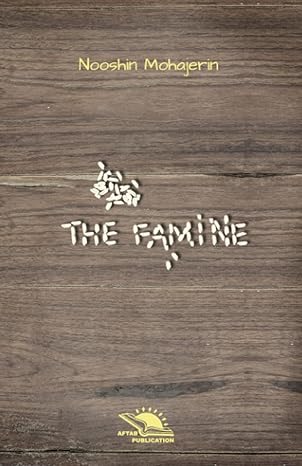

Famine by Nooshin Mohajerin is a striking collection of short stories that delves deeply into the complexities of human suffering, resilience, and the endless quest for meaning. Each narrative reflects a kind of personal or collective famine—whether it’s the hunger for love, peace, or purpose. Mohajerin masterfully creates a world where her characters bear the crushing weight of war, displacement, and emotional deprivation, all while striving for stability, connection, and peace.
The collection is imbued with a profound sense of loss—whether it’s the loss of home, loved ones, or a sense of self. Mohajerin’s prose is hauntingly vivid, painting stark portraits of war-torn landscapes alongside the inner turmoil of her characters. The stories explore a delicate balance between hope and despair, with characters often standing on the brink of emotional collapse yet pushing forward in a world that feels relentlessly unforgiving.While the collection offers rich thematic depth and introspection, there are moments where the pacing falters. At times, the prose, though undeniably poignant, can feel repetitive. Certain stories lean heavily into abstract symbolism, which, while intellectually stimulating, may occasionally distance the reader from the emotional heart of the narrative. Despite these minor drawbacks, Mohajerin’s portrayal of human resilience is powerful, particularly in her nuanced depiction of individuals wrestling with the aftermath of trauma. Where Famine truly excels is in its evocative, atmospheric descriptions that draw readers into a world of both physical and emotional devastation. These stories force the reader to confront uncomfortable truths about suffering and the often futile attempts to escape it. An undercurrent of tension runs through the collection, creating a palpable sense of unease as the characters face their own limitations and the larger forces that shape their lives.
The Famine stands out for its emotional intensity and atmospheric richness, making it a compelling exploration of the human condition. Mohajerin’s work lingers in the mind long after the final page, leaving readers with a deep sense of both loss and resilience.
Pages: 94 | ASIN : B0C2S5NC3N

Joy in Sorrow, Hope for Tomorrow: Homecoming


In Joy in Sorrow, Hope for Tomorrow, Vonnetta Mayo tenderly reveals the brutal reality of slavery in America. With a sensitive yet compelling approach, Mayo crafts a narrative that highlights the innate human desire for freedom and the pivotal role of religion as a beacon of hope for those enduring desperate circumstances. The book is concise and accessible, aiming to shed light on the inhuman treatment faced by slaves. Central to the story is Betsy, a cheerful young girl who shares her days with her three brothers, her mother, and her mother’s three friends. Despite the harsh realities of their existence, the children find solace and distraction in each other’s company, while the adults toil under oppressive and abusive conditions on a plantation. Through unwavering faith and constant prayer, they cling to hope, trusting in God’s plan and longing for the day they will be free.
Mayo’s straightforward and easy-to-read prose draws readers into the daily lives of the plantation’s inhabitants. Each chapter lays bare the grueling labor and the systemic oppression they endure. As the narrative unfolds, readers are gripped by a sense of foreboding about the future of these individuals, yet the innocence and resilience of the children provide a glimmer of hope. This hope is sustained by the recurring theme of prayer, imbuing the story with a sense of faith that persists even in the bleakest of situations. The structure of the book reinforces the monotony and inescapability of the slaves’ routine, characterized by scarce resources and distant dreams of freedom. Despite these harsh conditions, what unites and sustains this small community is their unwavering faith in God. The narrative invites readers to ponder whether their fervent prayers will ever be answered, and whether they will finally attain the freedom they so ardently seek.
Joy in Sorrow, Hope for Tomorrow stands as a moving short story that humanizes the experiences of those subjected to the atrocities of slavery, while simultaneously celebrating the resilience and spirit of Black communities. Mayo brings to light the harsh truths of American history, while also revealing the profound beauty found in family, hope, faith, and religion. This book not only illuminates the past but also underscores the enduring power of faith and the unbreakable spirit of those who, despite facing unimaginable hardships, continued to dream of a better tomorrow.
Pages: 32 | ASIN : B09VWR3S4K

It Started with a 1968 Impala

Automobilia is an anthology of short stories and poems that use automobiles as a central motif to explore a tapestry of human experiences. What was the inspiration for the original and fascinating idea at the center of the book?
I’ve loved automobiles since the day my father bought a new 1968 Impala from a dealer and drove it home. I was seven years old. He pulled into the driveway with the shiny, big car and it was a huge moment of excitement for the family. I still have that car today. In my early years of writing–when I was learning how to write a good story or poem–I had experiences related to automobiles that made me write about them. One was a poem I wrote about a high school acquaintance who was killed in an automobile crash just a few years after our graduation. A few years later I had a dream about someone killed by an automobile. And then I read a poem in a copy of Modern Maturity magazine that featured a writer’s memory of being a boy riding in the backseat of the family car, watching the moon following along on the ride. Those three things made me think that assembling an anthology of stories (and poems) by others featuring the automobile might be a cool idea that some readers might enjoy.
What were some goals you set for yourself as the editor of this book?
I wanted to assemble a collection of stories featuring automobiles as an integral part of the plot from famous or established authors like Matheson, Finney, and Nolan, along with newer writers. I also included some poems because the first professional sales I made as a new writer were poems to a couple science fiction and horror magazines. Stories from all genres were welcome in the anthology — from mainstream to science fiction to ghost stories — since the automobile is such an influential technology on the planet. Just about every perspective for a possible story can be connected to an automobile.
What was the process you used to collect the stories and poems for this collection and then narrow them down?
First, I set about looking for stories from known writers I might be able to buy reprint rights from. Each of those authors–or their agents for those no longer living–were very accommodating. I cannot thank them enough. Then I issue a call-for-submissions to the major writer’s markets listed on the internet, like Duotrope. I believe in paying writers (since I’m a writer too) a fair wage for their work. So, I offered the Science Fiction Writers Association per-word minimum at the time, which was eight cents per word and a dollar a line for poems.
I hope the series continues in other books. If so, where will the next anthology take readers?
Thank you for that good hope! There were so many GOOD stories featuring automobiles I could not get the rights to or include in a single volume I plan to publish two more anthologies featuring autos to make a trilogy. Right now, however, I already have a call for submissions out for the next two thematic anthologies. One is ALIENS AMONG US and the other is TRAIN TALES. I’m open for submissions for those until November 30, 2024. I’m paying a little more this time: 10 cents per word and $2 per line for poems. Publication for both books is planned for the first quarter of 2025.
Author Links: GoodReads | Facebook | Website
41 stories • 9 poemsSince the first automobiles rolled down a street, the range of human emotions attached to these machines has run from love to hate, humor to horror, joy to sadness. This book is a sampling of how fiction writers have viewed the automobile, from yesteryear to tomorrow.
Famous writers, experienced story tellers, and new literary voices are mixed together between these covers.
Automobilia is the first in a trilogy of stories and poems featuring that one machine that has changed the face of the earth, for the good and for the bad…the automobile.
Authors include: Jack Finney, George Clayton Johnson, Richard Christian Matheson, Richard Matheson, J. P. Seewald, Bruce Boston, Marge Simon, Kevin David Anderson, Katherine Tomlinson, James S. Dorr, William F. Nolan, Dean Wild, Sarah Key, Robbie Sheerin, and J.R. Hayslett, among many others.
Automobilia


Automobilia, compiled and edited by Jason J. Marchi and Jeffery L. Buford Jr, is an intriguing anthology that interweaves short stories and poems, using automobiles as a central motif to explore a tapestry of human experiences. This collection skillfully spans multiple genres, including thriller, drama, and horror, providing a varied literary landscape.
In this anthology, vehicles are not merely background elements but pivotal to the narrative structure. For instance, “Duel” is a gripping tale where protagonist Mann faces off against a relentless truck driver in a high-stakes road chase to San Francisco. “Passages” delves into the poignant story of Beth, grappling with the loss of her boyfriend Rick and his Mustang in a tragic accident. Meanwhile, “Homeless” introduces us to Max, whose late-night walk leads to an unexpected encounter at an accident site.
The stories in Automobilia are characterized by their exploration of themes such as loss, grief, resilience, redemption, courage, and the bonds of friendship. Each narrative offers a unique perspective on life’s complexities, enhancing the reader’s appreciation of the human condition. A standout feature of these stories is their unpredictability, which injects a sense of excitement and keeps the reader engaged. The use of automobiles as a unifying theme is not only original but demonstrates remarkable creativity. The stories are crafted with skill, demonstrating a keen eye for detail and a flair for capturing the reader’s imagination. While the anthology presents a rich variety of stories, a broader cultural context in some narratives could have offered an even more diverse and enriching experience. The writing throughout is concise and compelling, making each story a satisfying read.
Automobilia contains mature themes and hence, is more suitable for an adult audience. Readers who appreciate an inventive approach to storytelling and the exploration of human emotions and experiences will find this book particularly engaging.
Pages: 299 | ASIN : B0CVPZY4QV
A Flavor of the Totality of My Writings

The KEAK Anthology is a unique collection of your writing covering genres from mysteries and thrillers to nonfiction pieces and offers readers a peek into your previously published books. What inspired you to offer readers this anthology?
I enjoy reading different genres and to experiment in writing short stories or flash fiction of different genres. My goal in writing The KEAK Anthology was to offer my readers the same experience in one book. In addition I thought that compiling all my works in one volume, thereby the creation of the anthology, would provide my readers a flavor of the totality of my writings. I found from the reviews that my readers enjoyed the mixture of different genres. Each reader had their favorite story and enjoyed the diversity of genre and format offered.
Do you have one story among your short stories and flash fiction pieces that resonates with you?
I would say that my favorites are ‘Times Past’ and ‘Patient Zero’. The first story, Times Past, is my experimentation with writing a crime thriller. I was particularly interested in using my knowledge of forensic science without boring my reader. The story was well received. The second story was written while I was in the hospital for a sudden medical issue. I felt I had lost the element of control in my life, not unlike my protagonist in the story. It was my first science fiction story. ‘We The People of Earth’ was the next one to be written. I am currently writing another science fiction story on ‘Time Travel’ entitled ‘Time and Time Again’.
You are adept at writing in a variety of genres. Is there one that comes more naturally to you than the others?
Actually, that is a difficult question to answer. I hear a phrase, a word, or a saying and a story gets formed in my mind. I do not select the genre, just the content. I immediately write the story and then determine where it fits, its genre. I would say that science related fiction would be most likely my favorite genre.
What can fans look forward to seeing from you next? Are you currently working on a new release?
Yes, I am working on a memoir of my worldwide travels as a young scientist called ‘The Ardent Traveler’ and a treatise about ‘Our Changing Times’. The latter is about a lifetime of changes from technology to political and social changes. In addition, I am beginning a Children’s Fantasy Nonfiction series called ‘Dr. K’s Time Portal’ for ages 8-12. It is a chapter book. It teaches young minds about scientific principles, inventions, discoveries, through time travel and visits to the scientist responsible for work. For example, Book #1 is about Galileo, his life and his work as an astronomer, particularly his discovery of the first 4 moons of Jupiter, the phases of the Moon and Venus, and his confirmation of the heliocentric model of our Solar System. Book # 1 and Book # 2 about Madame Curie are finished. Their teacher’s guides and parents’ science primers are also finished.
Author Links: GoodReads | Twitter | Facebook | Website
Dive into the vibrant tapestry of the KEAK Anthology, where author Katherine Korkidis collaborates with her father, Artemios Korkidis, to weave a collection that spans genres and generations.
1. Short Stories: A Kaleidoscope of Genres
Explore sixteen captivating short stories, ranging from literary fiction to mystery, thriller, historical nonfiction and fiction, romance, science fiction, and realist literature. In “Patient Zero,” witness the delicate balance between utopia and dystopia, while “Times Past” entangles you in a web of sudden deaths and hidden intentions. “We The People of Earth” transcends our known space, and “The Battle of Crete” recounts the gripping memoir of witness Artemios Korkidis during the 1941 invasion.
2. Flash Fiction: A Symphony of Brief Narratives
Under the pseudonym Katherine Elizabeth Ann Bell, the author delves into the realm of flash fiction. These succinct narratives, averaging 360 words, peel back layers and progress stories with precision. From the dysfunction of “The Blind Man, the Blind Woman” to the power of closeness in “The Hug” and the importance of self-confidence in “The Performance,” each piece is a snapshot of emotion and movement.
3. Excerpts from Published Works: Glimpses into Worlds
Journey through excerpts from five novels, including “Josette,” “Daniel,” and “Josette and Daniel” from “The Story of Josette and Daniel” Trilogy. Carefully selected chapters invite readers into the minds and experiences of the protagonists, Josette and Daniel, offering a taste of the rich narratives that unfold across these published works.
Start Communicating Again
In If I Could Wish, a teenager’s final suicide letter reveals the personal struggles and immense anguish leading up to their suicide. Why was this an important story for you to share with readers?
I would say it’s always important to discuss how us humans handle and react to situations and or chains of them. However, it is far more important to me to discuss suicide as it is a very prominent issue in our world. I feel like this topic can be seen as taboo or unacceptable to talk about where it really mustn’t be: these are human lives we’re talking about, mental states, families. How can we just sit back and turn a blind eye to the issue all because it can be seen as too gloomy or depressing? I say we should take these dark & depressing subjects and create an open dialogue about them so we can make progress and help each other instead of becoming more isolated with the world. Many of my teenage peers are falling victim to mental health issues due to an abundance of reasons, I am Scottish, and we are very lucky to have our own national health service which covers mental health too, but the way the UK is being run is leaving our NHS with no adequate funding and therefore, we have a crippled NHS. So if we can’t fund services, if we can’t afford services, then we should at least change our international or national mindsets on the matter and start communicating again. Not through our phones, but through our humanity.
What is one thing that you hope readers take away from If I Could Wish?
I personally hope that readers are able to take away the fact that stories like these aren’t too far off from reality and we need to start being communal again rather than plainly individualistic. We really do need to speak up on this matter and speak to people who may be struggling, even people who we don’t think are struggling very well could be. We ought to look out for one another more often, we really never know how far that goes.
What is a common misconception you feel people have about mental health, especially as it relates to teenagers?
I think that the common misconception about teenagers’ mental health issues is that it’s ALL due to social media. It’s really not. Today’s teenagers are in a predicament of the likes our species has never seen before. Personally, I even say that we have progressed too fast without thinking about the effects. However, although some of the issues stem from social media and digital use, the other issues stem from social situations, economic situations, and national attitudes towards teenagers. I’ll break them down a bit more. Social situations meaning a workplace or school, friends even. Sometimes we’re not always in the healthiest relationships with our schools or workplaces or friends. Economical situations meaning the state of the country’s economy: if the nation isn’t financially strong then how will one seek the help one deserves? How will one get the job one needs? How will one see the light? And national attitude meaning how other age groups view teenagers, most of the time in UK media recently: it’s not great. There needs to be realisation that these issues of the digital world are unprecedented, and the real world affects everything. 2 worlds conflicting, 1 mind trying to manage both.
Can readers look forward to more stories from you soon? What are you currently working on?
Oh absolutely! More stories with variety are on their way. At the moment I believe I have 5 currently being fully conceptualized. However, I am a third of the way through working on a new short story I’ve named: Burning Memory. I won’t get too much into it but just know it is another philosophical perspective on life. I plan to write short stories for a while, I’m not entirely sure how I would handle a full novel but I have 2 ideas for them which I will eventually finish: but as for the moment, short philosophy will be my niche.
Author Links: Goodreads | Amazon
Peer into the downfalls of the human condition and the gloom that follows you. Ponder the bigger picture, ask the questions of purpose, learn from the life of despair. But most importantly: how will you help your fellow humans?


