Blog Archives
Zen and the Art of Navigating College: An Inquiry into the True Nature of Education and the Power of Self-Discovery
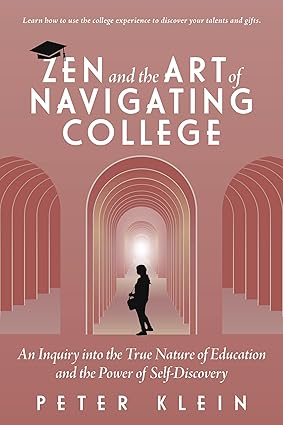

Zen and the Art of Navigating College, penned by Peter Klein, is a definitive guide that aims to not only optimize your college experience but harness it as a transformative journey. It offers a profound exploration of two overarching themes: the process of selecting an ideal college and the multifaceted nature of life on campus.
Klein supplements his discourse with an array of real-world examples, facilitating a richer comprehension of how higher education can be a transformative springboard. He provides an insightful critique of the college system while proffering valuable advice for students to unlock their potential.
Klein disseminates an abundance of knowledge essential for all prospective college students. He examines diverse college types and their distinct admissions approaches while imparting wisdom on how to transcend the traditional college experience. This includes aligning one’s choice of college with their personality type, leveraging the role of academic advisors, and contemplating internships. He also offers an authentic depiction of the challenges that freshmen face, comparing it to the magnitude of relocating to a foreign country.
One of the most compelling elements of Klein’s book is his candidness. He does not shy away from admitting that despite its numerous benefits, the college experience is far from perfect. Klein poses the question, ‘Is a college education worth the investment?’ and provides the reader with thought-provoking insights in response.
Initially perceived to be a handbook of college tips, it evolves into a comprehensive primer for college life and the world that awaits thereafter. It equips readers with the right mindset to confront college and the career landscape. This book transcends its obvious audience and extends to professionals considering a career pivot, offering valuable career insights.
Its practical guidance can significantly benefit potential students, current college attendees seeking to amplify their educational experience, and even graduates still on the hunt for a fulfilling job. In essence, it provides the third group with a compass to navigate their career path and instills in them the courage to persevere. Zen and the Art of Navigating College is an indispensable guide that transcends the college landscape, resonating with readers at various stages of their career journey.
Pages: 193 | ASIN : B0C6YGCZ6Z

Surviving Freshman Year

In Surviving Freshman Year by Gregory Jones, a group of students forge new connections and make important decisions during their first year of college. The chapters in the book include Bible excerpts, discussion questions, and thought-provoking concepts. The book begins with Brandon having to determine which student clubs to join. In another part of the novel, Daniel, who is stuck in his residence hall due to a snowstorm on Thanksgiving weekend, mulls over his future steps after graduating. Finally, Lauren must decide how she wants to serve in the coming academic year. Surviving Freshman Year offers a variety of circumstances that one can encounter throughout their first year of college.
This engaging book has the feel of a compilation of short stories featuring the same setting and cast of characters. Each chapter takes a new turn and focuses on a different character, providing just enough about their backgrounds and goals to allow the reader to identify with and understand them. For example, Austin, one of the book’s protagonists, is said to go to church on Christmas and Easter but not regularly. He reminds me of a college acquaintance of mine. The cast of characters shows diversity in their engagement with organized religion, but they are still believers. This makes the book accessible to even those that may feel that just because they do not attend services each week, this is not for them, but in reality, this book is for all people.
These captivating stories are well-complimented by the thought-provoking questions that follow them. Together, they provide an imaginative and practical method of comprehending incredibly valuable and beneficial Bible lessons. I particularly liked the chapter on spiritual talents, which offers introspective questions about discovering one’s gifts. The author gently leads the reader to reach their own conclusions by posing probing questions that help them understand various concepts, including generosity, hospitality, stereotypes of Christians, temptations, volunteering, modest clothing, and others.
Surviving Freshman Year will be both enjoyable and educational for young adults and readers entering college. Its lessons are skillfully structured to assist the reader in making informed decisions based on the teachings of the Bible.
Pages: 160 | ISBN : 195735416X
How to Manage Food, Booze, Stress, Sex, Sleep, and Exercise on Campus

The Greatest College Health Guide You Never Knew You Needed provides readers with health tips and information they’ll need to manage the obstacles they face in college. Why was this an important book for you to write?
Taking care of yourself in college can be difficult because there’s no training for it! Most students are better prepared to pick their major or talk to strangers than they are to put themselves on a sleep schedule or navigate the dining hall three times a day. We both struggled with our health in college because we had no idea what to expect, which meant we couldn’t be proactive and didn’t know what to do when things got hard. Furthermore, the bad habits we developed in the early years of college were difficult to break! After a group of my senior runners (I’m a HS XC coach) expressed concern about the survival of their current good habits in the campus setting, Dave and I felt compelled to help them prepare.
What is a common misconception you feel people have about their health?
The biggest health concern many college students have before they get to campus is the “Freshman 15.” While weight gain can be a byproduct of unhealthy habits, taking care of yourself is so much larger than a number on a scale. A variety of factors can negatively affect the way we feel – stress, stagnation, lack of sleep, toxic relationships, overconsumption of alcohol – and it’s too limiting to assess how you’re faring in the college (or any) setting based simply on whether or not you can still fit into the pants you packed when you left home. Rather than focusing on how to change a number on the scale, students should be focusing instead on figuring out what routines and practices make them feel good physically, mentally and emotionally.
What were some ideas that were important for you to share in this book?
We wanted to make it clear that “being healthy” isn’t a level you reach in life. Feeling good is fluid. Sometimes you’ll be able to prioritize yourself and other times you won’t. At various points and for various reasons, your health will get put on the backburner. And that’s OK! It’s NORMAL. We argue that getting off track and feeling physically, mentally, or emotionally terrible at some point is to be expected, but that also it’s also completely possible to turn things around when you’re there. It’s even easier when you have the tools. We wanted to offer college students tips for getting back back on track while also communicating the idea that starting again is nothing to be disappointed about or surprised by. In fact, learning how to course correct can help build your self-esteem and will ultimately become easier over time.
What was the writing collaboration process like with author Dave Henry?
Writing this book together definitely added a new dynamic to our marriage. To start, we have very different work styles. Dave is a creative right-brained thinker who likes to see the big picture before proceeding. I’m an A-type left-brainer all the way, so I work best on a rigid schedule. We struggled at times because of those differences, but the final product benefited tremendously from our respective strengths. For instance, Dave’s ability to patiently finesse sections improved the writing in many areas, and I made sure that we stayed on schedule and covered all of our talking points as we went. While we are opposites in a lot of ways, we are similar in that we both tend to bring an enormous amount of passion and energy to everything that we do – we met coaching sports after all! When we’re fired up, it’s hard to stop the train. This project was fueled by our love for the material and for the students who inspired it. It’s been life-changing getting to work together. Every exciting new development is ours to celebrate, and every disappointment is an excuse to eat ice cream and get over it. And frankly, whatever happens from here is just a bonus. We both feel like we’ve already won – we’re so proud of this book and are thrilled to have finished this race together.
Author Links: GoodReads | Twitter | Facebook | Website
Every fall, around eight million young adults crash into college fired up for the best four years of their lives, ready to experience campus life, take classes about things they’re interested in, and meet people from all over the world. Most students, however, are better prepared to pick their major or talk to strangers than they are to take care of themselves in the college setting. College students today are more depressed, anxious, and stressed than previous waves of students; they’re also more sedentary, not really exercising, and living in a meal-plan limbo supplemented with ramen and coffee.
In this comprehensive field guild, high school coaches Jill and Dave Henry break down the facts and deliver doable, no-BS strategies for managing physical and mental health on campus. In addition to helpful, interactive graphics, the coaches share their relatable true stories—ranging from the ridiculous to the serious—to discuss the five biggest health obstacles students face in college. On top of research-backed tips, The Greatest College Health Guide You Never Knew You Needed also features raw and personal advice from current students on college campuses across the country.
While simply figuring out what to eat and how to exercise can be completely overwhelming, this guide goes beyond a basic crash course on how to be healthy. Jill and Dave cover everything from crucial time-management skills to the complex sensitivity of self-doubt, sexual assault, and depression with humor, humility, and heart. The Greatest College Health Guide You Never Knew You Needed is a complete road map for how to take care of your mind and body that will not only set students up to crush the next four years, but will also provide a foundation they can carry with them for the rest of their lives.
The Greatest College Health Guide You Never Knew You Needed
![The Greatest College Health Guide You Never Knew You Needed: How to Manage Food, Booze, Stress, Sex, Sleep, and Exercise on Campus by [Jill Henry, Dave Henry]](https://m.media-amazon.com/images/I/51EDKFItMwL.jpg)
The Greatest College Health Guide by authors Jill and Dave Henry is a resourceful health guide that will help readers maintain their physical and mental health during their college years. When students enter college life it becomes easy to lose yourself in your studies, and the parties, and forget about your health. With a crazy study schedule, long nights, early morning, fraternities, parties, and a poor lifestyle how can you make health a priority? This book breaks through all those barriers by providing simple but effective information and tips to help you stay happy and healthy. This guide to health will provide readers with healthy habits that will help them in college, and as adults.
Authors Jill and Dave Henry wrote this book to build health-awareness that students lose after awhile. A lot of the bad habits that are mentioned in this book are some that I myself have grown accustomed to during my time in college. These tips are helpful because they can eliminate a lot of stress that you have or will experience in college. The tone of this book is casual but is still perfect for someone to easily understand and take seriously.
I dove deep into the chapter about stress because I didn’t nurture my mental health until later on in my life. If I read a book like this during my time in school, I’m sure I would’ve saved myself from numerous panic attacks. Using healthy mental health practices is extremely important no matter what stage you are in your life. This chapter featured candid personal stories as well as handy stress management tips. These tips are useful because they’re simple and effective, perfect for the on-the-go student.
This health guide also touches on the effect that relationships have on a student’s mental health. From friendships to sexual relationships, this chapter explains why evaluating relationships are important. A lot of relationships that we’ve treasured in the past become meaningless in the future because we can only see people for who they are when we are no longer in a relationship with them. The authors write about relationships in a way that feels insightful yet conversational.
The Greatest College Health Guide delivers sagely advice with a bit of humor and lots of facts. This is a very handy guide that will ensure you live a happier and healthier life. Download it on your Kindle, keep it handy, and reference it often.
Pages: 264 | ASIN: B08BZWBRBR



