Blog Archives
Overcoming Fears and Self-Doubt

Rage Against the Machine follows a celebrated filmmaker who explores the dangers of filming and research when she finds herself deep within a world that combines faith and science fiction. What was the inspiration for the setup of your story?
Great question. I always found faith in God and science interrelated because both are sought after in search of truth, understanding why we’re here, with hope for the eternal life while discovering unknown mysteries of God, science, and the universe. I wanted to create a storyline that would weave these forces together and thought science fiction may be an avenue to explore the human struggle of faith and the technological world we live in and have yet to discover.
What do you think is the key to successfully blending spiritual elements within a science fiction plot?
Given this is my debut novel, I’ve learned a lot from my editors and trusted their input. Having said that, I believe too many spiritual elements would actually work against the science fiction plot. The spiritual aspects of the book should be subtle but prolific and nourishing to the soul. The science fiction elements should catch the reader off guard, be impactful, and thought-provoking, leaving the reader wanting to know more.
What were some themes that were important for you to explore in this book?
I thought it was important to highlight overcoming fears and self-doubt and finding inner strength through faith, and forgiveness. Given that A.I. is becoming more integrated into our lives whether we accept it or not, it’s not going away. I felt it was important to recognize the pros and cons of what direction advanced technology may be heading.
Can you give us a glimpse inside the second book in this trilogy? Where will it take readers?
I haven’t started writing the second book of this trilogy yet, but plan on beginning shortly. The outline is completed and is subject to change with a series of drafts before it’s perfected. The second book will delve deeper into the supernatural realm, off-world entities, greater challenges of faith, galactic battles, and bleeding-edge technology that hopefully will startle readers.
Author Links: GoodReads | Website | Amazon
Amid the challenges and dangers of research and filming, Hunter Barraclough, Roare’s biological father, enters her life for the first time. When Roare reaches her breaking point, help comes from an unlikely source, Sloane McInerney, Roare’s bodyguard. Sloane has his own reasons to join forces with Roare to unmask a malevolent AI lab whose CEO plots to destroy human souls through AI and other-worldly technology. As she battles demonic forces, Roare uses fear and anger to her advantage. But how long will she last before she questions her own survival?
Rage Against the Machine


Rage Against the Machine is the kind of novel that grabs you by the collar and doesn’t let go. It’s book one in the Given Path Trilogy, and it kicks things off with serious momentum. We follow Roare Murdock-Galloway, a celebrated filmmaker with a complicated past, as she gets pulled deeper into a world that blends faith, science fiction, and real-world tech anxiety. There’s an eerie urgency to the themes, AI, transhumanism, spiritual warfare, and the plot weaves personal trauma with a global threat. It’s got action, heart, and a lot of soul.
The author’s writing style is rich, vivid, and surprisingly intimate. The dialogue feels raw, like you’re eavesdropping on real people grappling with pain and purpose. The opening chapter throws you into Roare’s world, a tense TV interview where she’s trying to hold her ground against a nosy host, and right away, you feel her vulnerability. That scene where she storms off the set (and then curls into her husband’s arms afterward) really hit me. It showed her strength and her limits, and I appreciated that balance. She’s not perfect.
The spiritual thread in this book isn’t subtle; it’s front and center, but it’s not preachy. That’s a rare balance. Roare’s faith journey is full of doubt, frustration, and flashes of divine connection. Her therapy session with Dr. Galletti, where she breaks down over her past and her father, was beautifully written and emotionally brutal. I loved how scripture was organically folded into conversations and it didn’t feel forced, just part of the characters’ world.
And then there’s the sci-fi twist. It sneaks up on you. The transition from personal healing to global intrigue is seamless. I actually got chills when Roare discovered the note referencing Dr. Stanley Monteith and started down the rabbit hole of transhumanism. It’s wild but grounded enough to feel plausible. That’s what makes it creepy, in a good way.
I’d recommend Rage Against the Machine to anyone who likes thrillers with a pulse and a purpose. It’s perfect for readers who enjoy Christian fiction but want something bolder, darker, and more urgent. If you’ve ever asked big questions about faith, technology, or the direction our world is headed, this one’s for you.
Pages: 360 | ASIN : B0DNWGXLJT

The Price of Freedom
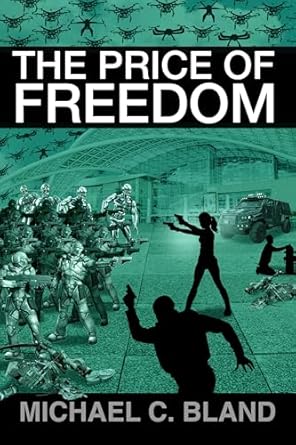
Michael C. Bland’s The Price of Freedom grabs you by the throat from the very first sentence and doesn’t let go. It’s a futuristic thriller that weaves technology, government control, and rebellion into a high-stakes story of survival. Dray Quintero, once an engineer responsible for a nationwide surveillance network, is now the most wanted man in America. The government he helped strengthen has twisted his creations into tools of oppression. Branded a traitor, hunted, and broken, Dray fights to reclaim his family and the truth. The novel spans years of technological advancements and political manipulation, leading to a world where implanted neural tech controls everything, including people’s very thoughts. Dray’s story is one of regret, defiance, and an unyielding need for justice.
Bland’s writing is gripping, filled with gut-punch emotions and relentless action. The opening pages make it clear, this isn’t just another dystopian novel. The way Dray is mentally and physically tortured, forced into mind-altering simulations, and stripped of his agency is brutal. It’s not just the world-building that’s impressive but the raw humanity beneath it all. The author manages to weave David vs. Goliath moments into the narrative that make you want to cheer. Bland nails the emotional weight of a father’s guilt and love, making every desperate choice hit that much harder.
The tech-driven oppression in The Price of Freedom feels terrifyingly possible. The government has weaponized implants, rewriting reality for its citizens while tracking every thought. Bland’s world-building is seamless, never bogging down the story with unnecessary exposition. Instead, he lets the horror of the surveillance state unfold naturally, making it all the more disturbing. The way the book handles moral dilemmas is another highlight. Dray isn’t some untouchable hero; he’s made big mistakes. He faces internal struggles that add layers to his character, making him more than just a rebel leader.
What makes this book stand out is its pacing. The action doesn’t let up, but it’s not just about explosions and fight scenes; it’s the tension, the feeling that every decision could be the wrong one, and that betrayal is always around the corner. Even minor characters have weight. Kieran, the cold and brutal Agent who torments Dray, isn’t just a stock villain. There are moments when you sense something deeper, something unresolved. Then there’s Zion Calloway, the man at the top, the former friend turned dictator. His conversations with Dray are dripping with the kind of restrained menace that makes you hold your breath. The book keeps you second-guessing, keeps you hoping Dray can find a way out, even when it seems impossible.
The Price of Freedom is for readers who love near-future thrillers packed with action, high emotional stakes, and a protagonist who refuses to break, no matter how much the world tries to shatter him. If you’re into books like 1984, Brave New World, or modern sci-fi thrillers like The Peripheral, this one’s right up your alley. It’s intense, it’s smart, and it leaves you questioning just how far technology and government control could go. Highly recommended.
ASIN : B0DSSVL8MQ
THE LAST BATTLE AT STALANGER FJORD: The finale of the Silver Helmet Trilogy


At its heart, The Silver Helmet: The Last Battle, by George Lyttle, is a dramatic tale of Viking resilience, leadership struggles, and the delicate balance between war and peace. The story follows Magnus, a wise and conflicted advisor, as he attempts to steer a defeated Viking clan toward a peaceful future, only to face opposition from the ambitious and violent Ragnold. With the mystical seeds gifted by a former enemy offering hope for prosperity, the story unravels in a clash of ideals, as Ragnold stokes the embers of war to reignite Viking glory, all while supernatural elements linger ominously over their fate.
The imagery of the defeated Viking flotilla returning to Stalanger Fjord is both vivid and poignant. The community’s mix of exhaustion, hope, and uncertainty set the tone beautifully. Magnus, a man burdened by past mistakes yet hopeful for redemption, is a character you want to root for. His interactions with Aasta, who herself is recovering from years of abuse under her late husband Stenfeld, are tender but never overdone. The symbolism of the golden box of seeds, a weapon turned into a tool for peace, is powerful, though I feel occasionally heavy-handed. At times, I wished the pacing matched the emotional intensity of these moments, as the first few chapters brimmed with potential.
The book shines in its characterization, though Ragnold’s arc felt a bit too archetypal for my taste. His rise to power, complete with loyal warriors and intimidation tactics, follows a predictable trajectory of youthful arrogance and unchecked ambition. His moments with the god Tyr and the supernatural elements lent an eerie weight to his character. While Magnus wrestles with inner demons and the fallout of his advice to Stenfeld, Ragnold comes across more as a caricature of brute force. His intentions are clear, but I found myself craving a more nuanced exploration of his motivations.
The tension in the final chapters escalates masterfully. The ritualistic scenes are atmospheric and gripping. The use of Tyr as a divine figure looming over their actions was an effective touch, though the god’s somewhat enigmatic instructions sometimes felt repetitive. I appreciated how the book questions the cyclical nature of violence and revenge, but I found the dialogue occasionally overly expository. Ragnold’s dramatic speeches, while fitting for his character, lacked the subtlety that made Magnus’s quiet resilience so compelling. Still, the broader themes of legacy, leadership, and community resilience were thought-provoking.
The Silver Helmet: The Last Battle leaves you both satisfied and unsettled. It’s a story of a community caught between past and future, war and peace, and leaders who represent both hope and destruction. The book’s themes resonate deeply. If you enjoy tales of Viking lore, moral dilemmas, and a touch of Norse mythology, this is worth a read. It’s a gripping story for fans of historical fantasy, though its deliberate pacing and weighty prose may not be for everyone. I came away feeling reflective and slightly haunted by the choices these characters made, which is always the mark of a good book.
Pages: 197 | ASIN : B0DTHGGS37
D.O.L City Lights Part 1
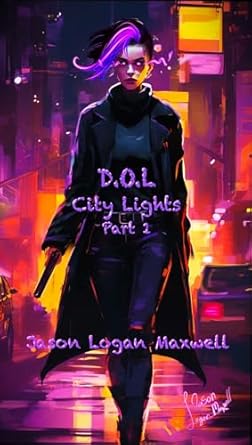
Set in 1998 Queens, DOL City Lights follows 17-year-old Lilly Lamberton, an asexual, sharp-witted martial artist with a past that grows darker by the day. She wants nothing more than to blend into the background, quietly navigating high school without drawing attention. But fate has other plans. Unwillingly thrust into a world of crime and mystery, Lilly soon realizes that staying invisible is no longer an option. Armed with her sarcasm, combat prowess, and a relentless spirit, she faces a reality where the stakes are higher than she ever imagined.
What sets DOL City Lights apart is Jason Logan Maxwell’s distinct and immersive writing style. His storytelling is bold, compelling, and brimming with personality. Maxwell’s true strength lies in his character development, particularly with Audrey. Her dialogue, rich with natural cadence and an unmistakable accent, feels authentic, adding depth that makes her voice stand out. His humor is another highlight sharp, effortless, and perfectly timed adding a layer of charm that keeps the story engaging and immersive. More than just telling a story, Maxwell infuses it with energy, making each page a pleasure to read.
Lilly embodies teenage defiance, yet beneath her tough exterior lies an instinct for self-preservation. She has spent years fortifying walls around herself, resisting connection at every turn. Vulnerability, to her, is a liability. Her refusal to seek help isn’t rooted in arrogance but in fear an all-too-relatable human response. Watching her struggle to accept support makes her character feel raw and real, capturing an emotional depth that lingers long after the page is turned.
Joe’s compassion toward Lilly is striking. His kindness isn’t just a passing gesture—it’s a force of change. For someone who has spent so long keeping others at arm’s length, Lilly’s tentative acceptance of help is more than just a moment; it’s a transformation. Seeing the cracks in her armor, even briefly, underscores the profound impact of genuine care. It’s a beautifully executed character shift, a testament to how even the most guarded hearts can be reached.
Both DOL City Lights Part 1 and Part 2 deliver an enthralling, uniquely crafted experience. Fans of crime dramas with a distinctive edge will find much to love, from gripping action sequences to deeply layered character arcs. Part 2 masterfully sets the stage for an even more thrilling continuation, and I eagerly anticipate what lies ahead for Lilly in Part 3.
Pages: 290 | ASIN : B0CR8RN8D9
Limitless Reach and Resources

In Gone to Ground, a high school senior fights to keep his brother from falling victim to the dangers of gang life while battling a developer bent on completing a devastating urban renewal project. What was the most difficult scene to write in this book?
Developing a romantic bond between Javier and Leslie was a challenge – most of the spark came from Leslie, and Javier is often making excuses to go work when anything with emotional weight comes up, “pushing rope” when it came to knowing how he felt and how to share his tightly wrapped inner world. I now read suspense with an eye toward the way suspense writers weave in a romantic thread which I think readers appreciate. I once wrote a more nuanced short story about Javier and Leslie detailing their first encounter when they were both elementary age. Javier was both observer and participant as he is Gone To Ground, though in much greater measure. By the time he is in high school, Javier’s sense of romance and adventure has been eclipsed by his family and future. I saw an article recently titled something like “What It’s Like Texting With a Man,” and I didn’t need to read it. I can imagine Leslie texting whole pages and getting one or two lines back from Javier.
Does writing a thriller energize or exhaust you?
I am energized when I find the kernel of action that will drive a scene, the tension, the twist, and an antagonist like George Jones with limitless reach and resources is fun because deep in my lizard brain this is all wish fulfillment. My favorite scene to write was Alex at the drop with Chuco because I got to not only have the guns come out but we got to look into Alex’s head and his sudden realization that he’s out of his depth. There are sections you write quickly and play out cinematically in your head, and in one sense, Gone To Ground is a collection of set pieces sewn together with some exposition. The parts that I constantly have to rework and rework and rework is the stuff in between – the character development, the collection of small moments that give the reader a fuller and more intimate knowledge of characters. My favorite authors like Richard Price, Tara French, and Dennis Lehane make it look effortless.
Can you give us a peek inside the second book in this trilogy? Where will it take readers?
Book two is a critique of the increasing role our custodians of the public trust abet the ultra-wealthy. The opening scene is actually a military op that foreshadows the role of this back-stage affair between these gazillionaires and the elected officials as they chart their own course with no consideration of public interest. We fast forward seven years from the conclusion of Gone To Ground. Javier is working for a financial consulting group that specializes in mergers and acquisitions which sounds dull and tedious, but he is more than he appears. The first body that drops is Betzaida’s friend Letty who is found with two in the chest and one in the head, so we have one plot thread from the same streets of Los Angeles featuring Betzaida and another that gets into the political machinations of water in the Colorado River Basin where “Whiskey’s for drinking, and water’s for fighting.”
Author Links: GoodReads | X (Twitter) | Facebook | Website
Gone To Ground

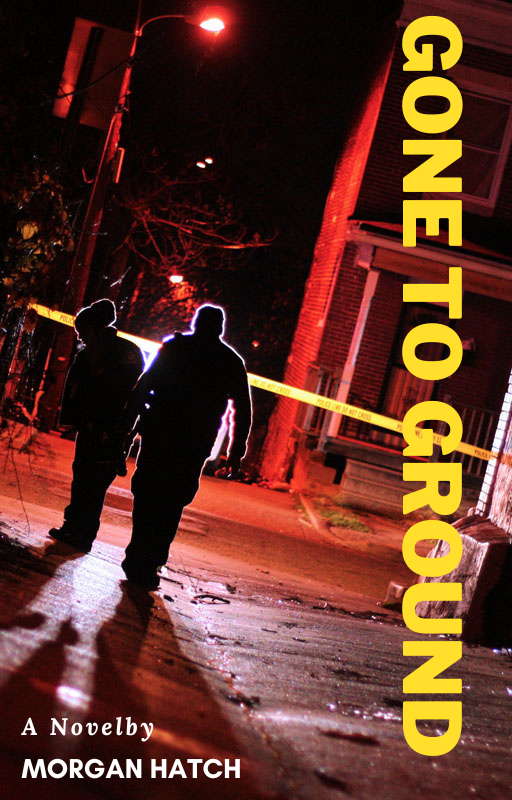
Gone to Ground, by Morgan Hatch, is an intricate tale of life on the edge, weaving together the lives of a high school student navigating familial and community pressures, a political operative balancing ambition and scandal, and shadowy figures pulling strings behind the scenes. Set against the gritty backdrop of East San Fernando Valley, the story unfolds through sharp prose and a cast of characters as diverse as the urban sprawl they inhabit. From Javier’s fraught attempts to keep his younger brother Alex from the clutches of gang life, to the machinations of power players like Jones, the novel paints a vivid and unflinching portrait of contemporary struggles.
Hatch’s writing is a highlight of this novel. The dialogue feels so real you can almost hear it echoing through a high school hallway. The humor is dry but frequent, as seen in moments like Javier’s sardonic observations about his economics teacher, Mr. Patel, who “recaps markers more than he teaches.” Jones, the principal antagonist, is a chillingly effective character. His calculated ruthlessness feels simultaneously inhuman and disturbingly relatable, making him a formidable force. Despite the overwhelming odds, Javier and Gio—an especially standout character—refuse to back down. Their determination and grit resonate deeply, keeping readers invested and rooting for their success.
Family loyalty versus personal ambition is a recurring theme, as Javier sacrifices his own future to protect Alex, whose flirtation with gang life is portrayed with chilling realism. The journey is harrowing, and the struggle often feels insurmountable, yet the emotional stakes are what drive the story forward. Readers are drawn into the desperate hope that the characters will prevail. Gone To Ground is a story that lingers long after the final page.
Gone to Ground is an engrossing read for anyone who appreciates layered storytelling with heart and edge. It’s a gritty, honest look at life in Los Angeles that doesn’t flinch from the darker realities but also finds moments of hope and resilience.
You Don’t Know What You Have Till it is Lost

Unearthing Worlds follows a colonel and his team struggling to survive after an asteroid collision leaves them stranded in unfamiliar surroundings. What was the inspiration for the setup of your story?
The setup was inspired by my desire to explore the dynamic between the brothers, Allen and Brice, on a deeper level. In order to fully develop their reconciliation, they needed to be separated again. Until something is lost, you often don’t realize what you truly have. In book one, the brothers come back together and start to rebuild their relationship, but their reconciliation isn’t complete. I wanted to put them in situations where each faced their own unique challenges while feeling the absence of the other. This gave me the opportunity to close that part of their character arcs in a meaningful way.
How long did it take you to imagine, draft, and write the world your characters live in?
Many months. As a hard science fiction writer, I put a tremendous amount of thought and research into any world I create. My worlds are all grounded in known science, which makes the process both time-consuming and rewarding.
What was your favorite character to write, and why? Was there a scene you felt captured the character’s essence?
Marcus is my favorite character to write because he’s like an onion—there’s always more to uncover with him. One scene that really captures his essence is the dinner scene with him, Brice, and the others. It’s a moment where his layers show brightly, revealing his complexities in subtle but powerful ways.
Where will the final book in this trilogy take readers?
We’ll be revisiting the Roman Sol Empire. Readers can expect a return to this richly imagined world, along with new challenges and revelations.
Author Links: GoodReads | BlueSky | Website | Book Review
After vanishing during a high-risk mission on an uncharted world, Colonel Brice Messman and his team must find their way back through the keyholes—mysterious portals capable of bridging dimensions. Meanwhile, Dr. Allen Messman relentlessly searches for his brother, knowing that every delay could leave Brice’s team stranded in the unknown forever.
Each keyhole opens to an unpredictable world, where dangers hide in strange landscapes and new threats lie in wait. With allies growing uncertain and time running out, Brice must rely on hard-won instincts and the fragile trust of his crew. Every step forward risks disaster—one wrong move could leave them trapped on the wrong side of reality, with no way back.



 LITERARY TITAN