Blog Archives
Silas on Stage


Silas on Stage follows a theater-loving child who dreams of being the sparkling angel in a Christmas pageant, only to be cast as a shepherd instead. At first, Silas is crushed, but as rehearsals unfold, they begin to notice all the quiet helpers who make the show possible. When the chosen angel panics right before curtain, Silas steps into the role they were given in the most generous way, helping Max feel brave enough to go onstage.
I really liked how gentle this story is with disappointment. I recognized that little ache in Silas right away, the feeling of wanting the shiny part and having to sit with the less glamorous one. The writing doesn’t scold Silas for wanting to sparkle, which I appreciated. It lets that desire be real, then slowly widens the idea of what shining can mean. The repeated focus on helpers gives the story a steady, comforting rhythm, and the payoff feels earned because Silas doesn’t simply “learn a lesson.” They act from it.
The artwork has a soft and expressive warmth that fits the story beautifully. Silas’s slumped shoulders, Max hiding in the closet, the glitter floating under the stage lights, all of those details carry emotion without needing much explanation. I especially loved the contrast between the big theatrical moments and the quieter backstage ones. The illustrations make the church pageant feel cozy and communal, not overly polished, which gives the book a lived-in sweetness. There’s also a lovely inclusiveness in the cast of children and adults that feels natural rather than pointed.
By the end, what stayed with me most was the idea that sparkle isn’t something you have to win, wear, or be assigned. Sometimes it comes from noticing someone else’s fear and choosing tenderness. Silas on Stage is a warm, thoughtful picture book with a big heart, and I’d recommend it for children who love performing, kids working through disappointment, and families looking for a gentle story about empathy, teamwork, and finding your place in the spotlight without needing to stand there alone.
Pages: 28 | ISBN : 978-1-957833-23-1
Theatre History

Play! follows two cousins and their eccentric neighbor as their outing to see Peter Pan takes them on a time-traveling adventure through theatre history. What was the inspiration for the setup of your story?
As a young theatre professional, I worked often with Birmingham Children’s Theatre, and I spent a lot of time in audiences full of schoolchildren and the brave teachers trying to remind them, just before the curtain rose, that this was not quite the same thing as recess. I remember thinking how helpful it would be if there were a fun way for children to learn a little theatre etiquette before they ever set foot in the playhouse.
Later, while I was teaching theatre at Samford University, I wrote an early picture-book version of Play! and had an art professor colleague illustrate a few pages. We came tantalizingly close to publication, but the editor who was championing the project moved to another company that didn’t publish children’s books. Then life did what life often does: my artist friend and I both hit stretches of personal upheaval, and the manuscript sat quietly on a shelf for quite a while, trying to be patient.
A few years ago, a school librarian encouraged me to return to it, and I sent it to Sheila Booth-Alberstadt of SBA Books in Daphne, Alabama. She loved the idea, but wisely suggested that instead of a picture book for younger children, I turn it into a chapter book for middle graders. Once I made that shift, the story opened up in all sorts of exciting ways. I found a wonderful illustrator, Jarrett Rutland, and we worked on the book for about a year. After several rounds of editing and design, Play! is now heading out into the world, which is both thrilling and slightly surreal.
As for the setup itself, I wanted two children because I liked the idea of a boy and a girl responding differently to what they were seeing. And since I wanted them to travel through important eras in theatre history, they clearly needed an adult guide. At that point, an eccentric professor more or less materialized, tapped me on the shoulder, and informed me that he intended to be in the book. It is generally unwise to argue with someone named Dr. Dante Marlowe Browne, so I let him in.
Why did you choose Peter Pan as the event that launches the adventure?
I have always admired J. M. Barrie. Peter Pan is one of those rare children’s stories that is full of delight and theatrical fun, while also carrying something deeper and more wistful underneath. It turns childhood into myth, but it also tells the truth about it: that it is radiant, reckless, imaginative, and already shadowed by loss.
The story captures both a child’s fear of growing up and an adult’s longing for the vanished world of childhood. Peter represents freedom, adventure, and the intoxicating idea that no one can make you do arithmetic ever again. Wendy, on the other hand, brings story, tenderness, order, and the first stirrings of maturity into Neverland. I love that balance. Barrie gives us both the wild freedom of childhood and the ache of knowing it cannot last forever.
But Peter Pan also seemed the perfect launching point for Play! because it is such a glorious theatrical experience for children. Characters fly, a crocodile ticks, pirates swagger, fairies interfere, and the whole thing is drenched in stage magic. Nana is portrayed by an actor in a dog suit, and Mr. Darling and Captain Hook are traditionally played by the same actor, which is exactly the sort of glorious stage nonsense children ought to encounter early in life. It is a play that invites young audiences not only to watch, but to fall in love with the sheer imaginative mischief of theatre itself.
How did you balance historical accuracy with storytelling and humor?
Having worked in theatre for nearly sixty years, I know the history pretty deeply, so I wasn’t starting from scratch. I certainly wanted the historical material to be accurate, but I never wanted it to feel like children were being marched through a lecture with a few jokes scattered on top as a reward for proper behavior.
The good news is that theatre history is wonderfully cooperative in this respect, because it is already full of larger-than-life people, ridiculous mishaps, flamboyant personalities, and moments of sheer absurdity. In other words, it comes with its own humor built in. I didn’t have to manufacture too much of that. I simply had to let the children and the professor stumble into it.
So my goal was always to make the story feel alive first. I wanted young readers to have the sense that they had slipped backstage into the past and found it still bustling along, with everybody in costume and nobody entirely behaving.
What can young readers learn from live performance that they can’t learn elsewhere?
Live theatre is one of the richest gifts parents and teachers can give children. Reading is, of course, foundational and wondrous. It shapes language, imagination, attention, and a lifelong love of learning. But theatre offers something reading alone cannot: an immediate, communal, multi-sensory encounter with story.
In a theatre, children are not simply being told that a character is frightened, brave, selfish, lonely, or kind. They are watching those emotions and characteristics unfold in real time through voices, faces, bodies, music, silence, scenery, and the electric presence of living actors only a few feet away. They learn empathy because they can feel an entire audience leaning toward the same moment together. They learn attention because theatre asks them to listen, watch, and imagine all at once. And they learn that stories are not abstract things trapped in books; stories can breathe right in front of them.
Theatre also teaches children how to be an audience, which is no small thing. It teaches patience, curiosity, concentration, and respect for a shared experience. It says, in effect, “For the next little while, let us all agree to enter another world together.” In an age of constant distraction, that may be one of the most valuable lessons of all.
Author Links: GoodReads | X (Twitter) | Facebook | Website | Instagram | Amazon
“Barbara Sloan has written a charming book that will make kids and grown-ups alike fall in love with the history and the magic of live theatre. Through the magic of their friend Professor Browne, cousins Violet and Collins are transported across time and distance to experience what it was like to be everything from groundling at the Globe Theater, to a part of the Chorus in Ancient Greece— and why maybe it’s not a good idea to throw rotten apples at actors in any age!”
Roger Day is an award-winning children’s songwriter and performer known for his witty, literate lyrics and music that delights kids without talking down to them.
“Time travel through theatre history from Ancient Greece to a Medieval Village in York to Commedia dell’arte to Shakespeare himself at the Old Globe, and all the way to the contemporary Sizzlepop Theatre, Barbara Sloan has created a theatrical romp through the ages in PLAY. With such real characters in Collins and Violet, best friends and cousins, who journey with Uncle Marley in the world of storytelling and plays, this is a story of comedy, tragedy, theatre etiquette, and everything in between. The gorgeous illustrations of Jarrett Rutland and the beautiful language of Sloan masterfully raise the curtain to inspire, teach, and invite young readers to explore the world of theatre through characters, masks, lyres, costumes, and spectacular adventures.”
Kerry Madden-Lunsford is an acclaimed children’s and young adult author celebrated for her lyrical storytelling and deep compassion for young people finding their voices.
Play!: Professor Dante Marlowe Browne’s Wonderfully Marvelous Amazing Historical Book of Playgoing Manners With Adventures and Anecdotes by His Friends Collins and Violet

Play! follows Collins, his visiting cousin Violet, and their delightfully eccentric neighbor Professor Dante Marlowe Browne, as a simple trip to see Peter Pan turns into a time-traveling tour through theatre history. Along the way, they visit ancient Greek drama, medieval pageant wagons, commedia dell’arte, Shakespeare’s Globe, Molière’s France, a rowdy nineteenth-century American theatre, and the Savoy, learning not just what audiences used to do, but why modern theatre manners matter. By the time they finally reach the Sizzlepop Theatre, etiquette feels less like a list of rules and more like a way of caring for the magic happening onstage.
What I enjoyed most was the book’s sense of abundance. It’s packed with history, but it doesn’t feel cold or textbookish. The writing has a lively, old-fashioned sparkle to it, full of bustle, theatrical detail, and small comic moments, especially Collins’ endless hunger and Professor Browne’s grand, slightly chaotic energy. The book trusts children to make connections. It lets them see that audiences have always been part of the performance, sometimes beautifully and sometimes badly, and that good manners are really about attention, respect, and shared wonder.
The artwork gives the book a soft, timeworn charm that suits the subject beautifully. The illustrations feel like theatre sketches mixed with storybook history, sometimes delicate and sometimes wonderfully busy, with costumes, streets, stages, curtains, wagons, and crowds carrying a lot of the atmosphere. I found myself lingering over the scenes because they make each era feel distinct without overwhelming the story. The book is denser than many picture books, with a lot of historical information and a long journey to follow. For younger children, I’d probably read it in sections. For curious older kids, though, that richness is part of the pleasure.
By the end, I felt genuinely fond of this odd, theatrical little adventure. It has the heart of a manners book, the curiosity of a history lesson, and the warmth of a story told by someone who deeply loves the stage. The ending is satisfying because the children don’t just memorize rules; they understand what it means to be part of an audience. I’d recommend Play! for theatre-loving families, classroom read-alouds, homeschool arts units, and kids around seven to eleven who enjoy history, performance, and stories with a wise, whimsical grown-up leading the way.
Pages: 100 | ASIN : B0H34QK7XY

The Leading Role
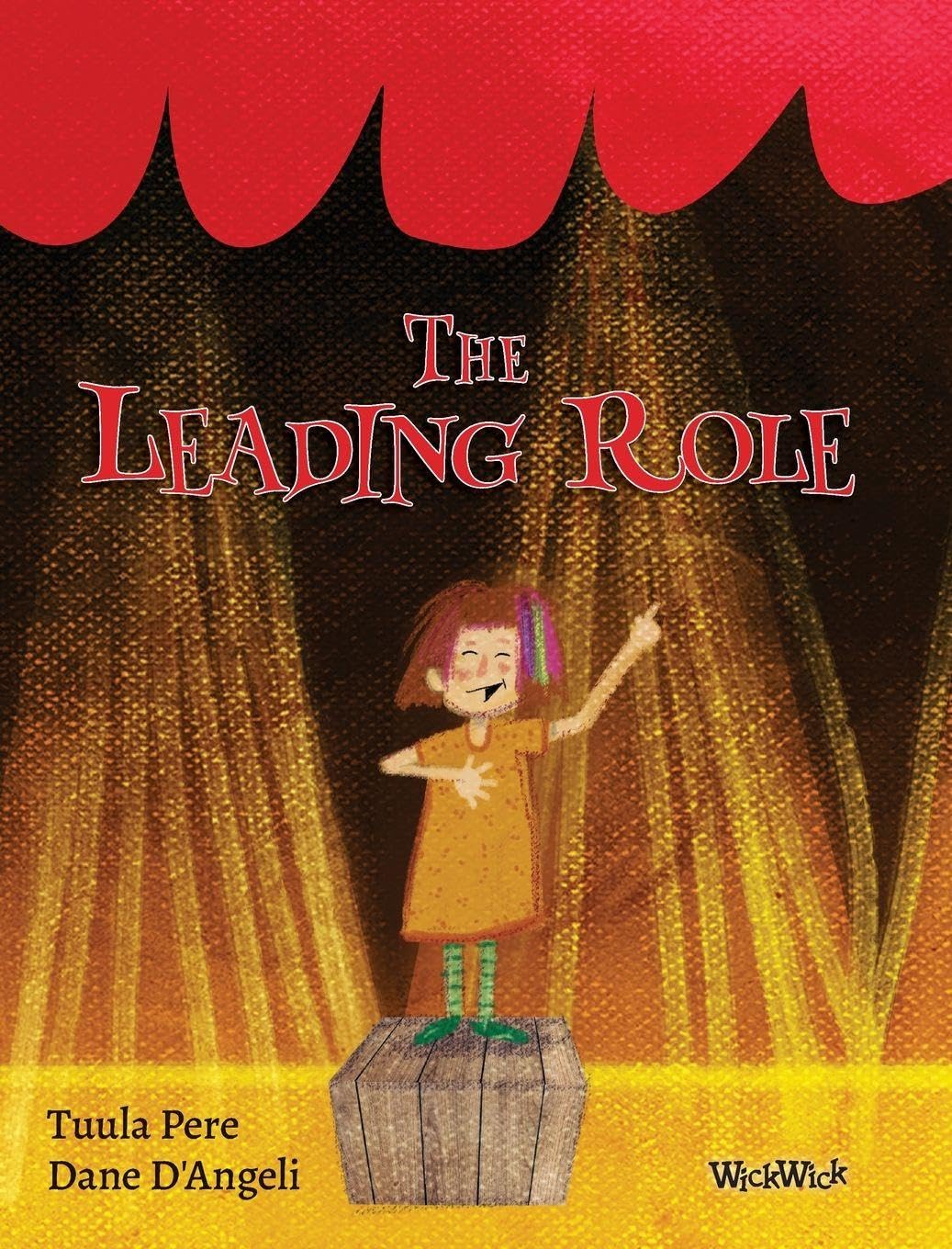
The Leading Role, by Tuula Pere, is a heartwarming children’s book that really understands how big childhood projects can feel. Emma’s idea of turning her attic into a little theater is instantly charming, and the story does a nice job of showing how excitement, creativity, and teamwork can turn an ordinary space into something magical. I liked that the book doesn’t just focus on performing, but on all the different jobs that go into putting on a play. That gives the story an inclusive feel, as if every child reading it can imagine a place for themselves in the Attic Theater.
What makes the story especially engaging is the way it shifts from Emma’s confident leadership to Lily’s quieter journey. Lily begins as someone who would rather stay out of the spotlight, helping from the side as a prompter, and that makes her eventual moment of courage feel earned rather than forced. Anthony’s lost voice creates the perfect bit of drama before the premiere, and the resolution is both satisfying and encouraging. The message comes through clearly without feeling heavy-handed: sometimes the person least eager for the leading role is exactly the one who can rise to it.
The illustrations are a big part of the book’s appeal. Illustrator Dane D’Angeli gives the attic scenes a cozy, theatrical glow, especially in the spreads with the curtain, stage lights, and warm reds and golds. I liked how the artwork makes the attic feel both homemade and magical at the same time. The characters have expressive faces and simple, child-friendly designs that make their emotions easy to read, and the stage scenes in particular have a dramatic, storybook quality that fits the theme perfectly. The illustrations truly sell the excitement of rehearsal and performance.
Pere’s book is a lovely conversational read-aloud for kids who enjoy pretend play, theater, or stories about finding hidden confidence. It’s gentle, positive, and easy to follow, with a message about cooperation and bravery that feels genuine. I’d recommend it especially for younger readers who may see a bit of themselves in Emma’s enthusiasm or Lily’s shyness. The Leading Role feels like a celebration of creativity and the idea that every child has something important to bring to the stage.
Pages: 32 | ISBN : 978-9528202523
DANCING ON COALS: A Memoir of an Overperformer
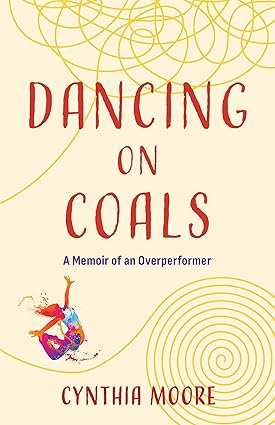

Cynthia Moore’s Dancing on Coals is a raw and riveting memoir chronicling her lifelong chase for approval, identity, and peace. From an uprooted childhood in the Bahamas and Swiss boarding schools to a theater-obsessed young adulthood filled with grueling performances, cult-like communes, and painful love affairs, Moore’s journey is one of constant striving. She captures the endless loop of seeking love through overachievement, shedding layers of artifice as she gropes her way toward authenticity. The book moves through decades of experiences from adolescence drenched in loneliness to womanhood edged with rage and revelation, painting a vivid portrait of a woman who’s learned to stop dancing for others and instead listen to herself.
What hit me hardest in Moore’s writing was how deeply personal it felt without veering into self-pity. Her voice is funny, whip-smart, and fierce even when recounting gutting experiences. Being shipped off to a “finishing zoo” in Switzerland, her mother’s clinical detachment, or performing theater under a sadistic Belgian director. The prose sparkles and burns, often in the same paragraph. She doesn’t pull punches, not with herself and not with the people who failed her. Still, there’s a strange grace in how she carries the pain, folding it into her voice without letting it define her. I found myself laughing in places I didn’t expect to, and aching with her in the next sentence. It’s a rare memoir that feels both deeply literary and emotionally honest.
This book left me stirred up, disoriented, and even a little angry. And that’s what makes it good. Moore doesn’t feed the reader polished wisdom; she invites you into the mess. Her reflections on womanhood, ambition, and the illusion of being “enough” hit close to the bone. She captures what it’s like to exhaust yourself trying to be wanted. And she names, in bright flashing letters, the insidious toll that takes.
If you’ve ever tried too hard, loved too much, or felt like you had to earn your spot in the room, Dancing on Coals will find you. This book is for readers who aren’t afraid to feel deeply, laugh through the tears, and question what we’ve been taught about success and self-worth. It’s especially meaningful for artists, perfectionists, and women raised to please. But really, it’s for anyone ready to quit performing and start living.
Pages: 198 | ASIN : B0D8RFNHJL

The Psychopath Next Door

In Rendezvous With Evil, a woman who has survived multiple traumas and fights for justice for those who cannot defend themselves finds herself embroiled in a mystery. What was the inspiration for the setup of your story?
This story actually came from book 1 in the series, Out of the Shadows. It began as a subplot there and grew too big for the book. So it spilled over to book 2. I have re-titled it, A Dance with the Devil because the villain is a classic psychopath masquerading as a human. Socio/psychopaths lead everyone into a macabre dance with evil and Crispin is beautiful, as every respectable devil aspires to be. I have always been intrigued by socio/psychopaths since the first one I met when I was a psychiatric nurse. He was a very young man who was attractive, charming, extremely manipulative and totally without a conscience. What more could a writer want in a villain?
Who is your favorite character to write for and why?
Clearly Hannah but I adore Gloria. I love all my characters and why not? They tell the story, not me. But I really enjoyed Crispin, the villain this time. It’s not always possible to use one of these sorts of psychopaths. Often those portrayed are too extreme and one sided to be believable. But Crispin is a respected (?) barrister working in a respected (?) profession amongst respected people. He is literally, the psychopath next door, (see Martha Stout’s book, The Sociopath Next Door.)
What were some themes that were important for you to explore in this book?
My fascination with socio/psychopaths and their impact on society that is often hidden behind their manipulative charm is something I’ve had for a long time. These people, who lack the basic attributes that distinguish us from other animals, empathy and conscience, are found across all levels of society. Many are in jail, but many are not and they leave a trial of destruction, wreaking havoc in people’s lives, as Crispin does to his wife, Celia.
Dealing with them is very difficult as they have an uncanny skill of recognising people’s inner weaknesses which they ruthlessly use against them. For instance Crispin finds Hannah’s ambivalence about the violence in herself and turns it against her. The full fallout from this is explored in the next book, The Spider Waits.
Hannah’s usual hang-ups regarding Justice and intimacy are continued here as well.
Can readers look forward to more from you soon? Will they see Hannah in a second installment?
Rendezvous with Evil (A Dance with the Devil) is the second in the Hannah Tree Detective Series. Book three is already available and book four is with an editor as we speak. Notes already exist for book five.
Author Links: Facebook | Website

A DISPOSABLE WIFE

A Disposable Wife, by Deirdre Oliver, offers a compelling exploration of theater, mystery, and the intricacies of human emotion. The author adeptly crafts a narrative that immediately immerses readers, painting scenes with a clarity that almost leaps off the page. Central to the book’s appeal is the masterful character development. The protagonist, Hannah, is introduced with a depth that vividly captures her inner conflicts and emotions, drawing the reader into her complex journey.
The book’s dialogue stands out for its authenticity and dynamism, contributing significantly to character development. Conversations flow naturally, subtly revealing characters’ traits and motives and enhancing the overall narrative. The story’s pacing is a notable achievement, skillfully balancing moments of tension with introspection, maintaining momentum while allowing for character and plot development. This careful pacing is integral to the book’s engaging quality.
Intricately plotted, A Disposable Wife is a testament to the author’s narrative finesse. The story unfolds with unexpected twists, yet its complexity never overshadows its readability. This balance makes the book not only intriguing but also broadly accessible.
A Disposable Wife is particularly recommended for enthusiasts of mystery genres and those with an interest in theater and drama. Its rich setting and thematic depth will resonate with this audience. The book stands as an engrossing example of storytelling excellence, characterized by vivid descriptions and engaging dialogue. It is, indeed, a testament to the author’s ability to weave immersive tales that resonate deeply with its readers.
Timeless Pages

Timeless Pages, by Eddie Sullivan and co-authored by Nancy Sullivan, is a well-crafted narrative that intricately explores themes of love, loss, and the journey of self-discovery. The narrative centers around Diana, a character who delves into her history, navigating through a sea of memories and emotionally charged experiences. Central to her story is her relationship with Michael, a soldier, and the challenges his absence poses. Set against the backdrop of the Holiday House and infused with the theme of photography, a passion shared by Diana and her mother, Madalena, the book vividly captures various stages of Diana’s life.
Sullivan’s writing style is distinguished by its rich descriptive language, which skillfully crafts a visual experience for the reader. The adept use of similes and metaphors enhances the vivid portrayal of settings and characters, adding a profound depth to the narrative. The development of characters in Timeless Pages is notably thorough and layered. Each character is presented as a fully realized individual with distinct emotional landscapes and histories. The portrayal of Diana, for example, is particularly striking. Her emotional struggles, including loneliness and discontent, are effectively communicated through her interactions with music, offering a window into her inner world. Furthermore, Sullivan’s use of dialogue is critical in revealing the characters’ personalities and dynamics, advancing the plot, and elucidating their motivations.
Timeless Pages is a poignant and deeply human story that delves into the complexities of emotions and relationships. Through Sullivan’s lyrical prose and rich character development, the book emerges as an engaging read that resonates deeply with readers who appreciate stories of love, loss, and the intricacies of the human condition. This novel stands as a tribute to the enduring impact of storytelling in capturing and conveying the multifaceted nature of human experiences.
Pages: 345 | ASIN : B0CNYHHYHT


