Blog Archives
The Arbiters


The Arbiters by Brook Lenker is a coming-of-age adventure set in eastern Pennsylvania in 1975 and 1976, where the pleasures of being young gradually collide with a much bigger question about who gets to decide what happens to the natural places people love. Reily Watters and his friends spend their time fishing, hiking, swimming, chasing romantic interests, getting into trouble, and exploring the Mannequin Creek watershed. When a proposed pumped-storage hydroelectric project threatens to transform that landscape, their familiar woods and water take on new importance. The environmental storyline grows naturally from Reily’s attachment to the creek, so the book’s interest in conservation feels personal. It’s as much about young people discovering what matters to them as it is about saving a place.
One of the book’s most enjoyable qualities is its ensemble of characters. Reily is the emotional center, curious about nature, girls, friendship, and the person he’s becoming, but the supporting characters develop lives and ambitions of their own. Wil’s dry wit and interest in writing give the group a different kind of intelligence, while Boom’s scientific curiosity becomes especially important as he and Cindy investigate the snakes living near the proposed reservoir. Eddie may be the biggest surprise. His rough, impulsive personality sits alongside a genuine artistic talent and a growing confidence that gives him more depth as the story progresses. Even Merle Darkes, the developer pushing the hydroelectric project, gets his own chapters, allowing the novel to show how ambition and self-interest can shape the way someone sees a landscape. The shifting viewpoints make the story feel less like one teenager’s crusade and more like a community of people moving toward choices that reveal who they are.
Lenker also has a strong affection for the texture of the 1970s, and the novel is packed with music, television, cars, clothes, food, slang, and other period details. Those references create a lived-in world. Just as important, the landscape itself becomes one of the book’s most memorable presences. Fishing holes, waterfalls, forests, quarries, farms, and creeks accumulate meaning because the characters keep returning to them. The plot can be leisurely and episodic, particularly when it follows romances, school life, sports, and the group’s everyday escapades, but that spaciousness serves the coming-of-age story. By the time the fight over the dam reaches its resolution, the reader understands exactly what could be lost. The government’s eventual rejection of the project therefore lands as more than a bureaucratic victory. It’s the preservation of the physical world in which these friendships and discoveries have taken shape.
I recommend The Arbiters most to readers who enjoy character-driven coming-of-age fiction, outdoor adventures, environmental themes, and stories with a strong sense of place. It should have particular appeal for people who remember the 1970s, since they’ll recognize plenty of cultural touchstones, but younger readers interested in conservation and friendship can connect with its central concerns just as easily. The book understands that learning to care about something often happens before a person knows what to do about it. Reily and his friends begin with fishing, swimming, crushes, jokes, and afternoons that seem endless. They come away with a clearer sense that the places they love can be vulnerable, that their own talents can have a purpose, and that speaking up can matter. That combination of youthful adventure, friendship, humor, and environmental stewardship gives The Arbiters its distinctive identity.
Pages: 231 | ASIN : B0DS6BN31G

Saving Moses


Steve A. Twitty’s Saving Moses is a coming-of-age adventure built around one unforgettable summer in 1961. The novel follows Milty Marshal and his three friends, Mark, Davy, and Floyd, as they roam the woods, canals, and abandoned dumping grounds surrounding their South Florida mill town. What begins with bike rides, a tree house, neighborhood pranks, and clashes with local bullies grows into a plan to protect Moses, a huge alligator the boys discover in Black Creek Canal. The story is framed by the older Milton returning to the remains of Dillardtown with his daughter and grandchildren, finally ready to explain the event he’s carried for decades. The author describes the book as fiction based on actual events in South Miami, which gives the boys’ world a lived-in quality even when the adventure becomes larger than life.
The book’s greatest strength is its detailed sense of place. Twitty fills Dillardtown with terrazzo-floored company houses, backyard swimming pools, rattling model trains, comic books, bicycles, banyan trees, coral rock, afternoon storms, and the constant presence of the sugar mill. These details do more than establish the early 1960s. They show how completely the boys belong to their surroundings. The wilderness isn’t just scenery to them. It’s their private country, with its own landmarks, rules, hideouts, dangers, and legends. Twitty also spends time inside each boy’s home, so their behavior makes emotional sense. Milty’s nervousness comes from living with a bitter, gambling father. Floyd’s need to prove himself is tied to insecurity and a lingering disability. Mark’s confidence and Davy’s inventive curiosity grow out of more supportive households. Even Randy, the neighborhood bully, is given a painful family history that helps explain his anger.
Readers who enjoy Stephen King’s The Body, better known through the film Stand by Me, will recognize a similar mix of friendship, danger, humor, and adult hindsight. Both stories follow boys whose casual summer expedition leads them into experiences they aren’t emotionally prepared to handle. Twitty, like King, understands how childhood friendships can be affectionate and cruel in the same conversation. The boys tease one another, compete for status, make reckless promises, and then risk themselves when a friend is genuinely threatened. Saving Moses has a sunnier, more adventure-driven rhythm for much of its length, with plans involving alligator food, scavenged raft materials, stolen paddles, and homemade engineering. That playful energy makes the later violence land harder because the reader has spent so much time sharing the boys’ excitement.
Saving Moses is a story about the way children assign themselves adult responsibilities before they understand adult consequences. The boys believe they can tame danger through loyalty, ingenuity, and a good plan, whether they’re confronting a bully or attempting to save an alligator. When their adventure ends in tragedy, Milton turns one terrible moment into a lifelong judgment of his own character. The present-day chapters give the novel its emotional purpose, as his friends help him understand that memory has preserved his guilt more faithfully than it preserved the truth. Twitty’s storytelling is direct, visual, and often shaped like a screenplay, with plenty of action and sharply staged scenes. The result is an earnest, bittersweet novel about friendship, responsibility, and the stories people must finally tell before they can forgive the children they used to be. I recommend Saving Moses to readers who like heartfelt coming-of-age stories about friendship, difficult choices, childhood adventures, and the lasting impact of the memories we carry.
Pages: 254 | ASIN : B0B218STTK
Tales From the Texas Timberlands, Volume 2

Tales from the Texas Timberlands Volume 2, by J. Andrew Rice, is a fiction anthology rooted in East Texas life, family memory, faith, work, and community. Across five stories, Rice moves from a postwar sawmill and a woman’s unexpected wrestling career to city management, football coaching, and church ministry. The book has the feel of stories passed down on a porch, where personal history, local color, and moral reflection all sit side by side.
What stood out to me most was the book’s steady affection for ordinary people doing hard things. Rice writes with a clear respect for builders, teachers, coaches, public servants, church members, and family elders. The stories are often direct, sometimes almost plainspoken, but that plainness works with the material. It gives the book an unvarnished quality. I felt like I was listening to someone who knows these towns, these arguments, these little rituals, and these long memories. The writing doesn’t rush to impress. It takes its time.
I also appreciated the way Rice lets each story carry a lesson without making the whole book feel like a lecture. That balance isn’t always easy. At times, the themes are stated openly, especially around faith, leadership, character, and perseverance, but the best moments come when those ideas rise naturally from the characters’ choices. Mattie’s strength in “Red Hammer Body Slammer,” Guy’s principles in “Sawmill,” Kent’s public service in “The City Manager,” Gary’s mentorship in “Coach,” and the narrator’s church life in “When We All Get To Heaven” all point toward the same belief: people are shaped by work, place, faith, and the stories they inherit. That idea really resonated with me.
As Southern historical fiction and a regional short story collection, Tales from the Texas Timberlands Volume 2 will appeal most to readers who enjoy character-driven stories with a strong sense of place. I would recommend it to anyone who likes reflective small-town fiction, family-centered storytelling, faith-inflected narratives, and books that treat local history as something alive rather than dusty. It’s warm, sincere, and grounded. Readers who enjoy stories about legacy, grit, and community will find a lot to appreciate here.
Pages: 171 | ASIN : B0H2DKDV3Y
Recipe for Murder (A Pine Cove Mystery)

Marla A. White’s Recipe for Murder, a Pine Cove Mystery, follows ex-LAPD officer turned B&B owner Mel O’Rourke as she is pulled into a suspicious death far from home. In New Orleans, Jackson Thibodeaux discovers his friend Kaya Woods dead at a culinary school; moments later, someone knocks him unconscious, and when he wakes, the crime scene has been scrubbed clean. Back in Pine Cove, Mel must sort through Jackson’s claim of staged suicide while juggling a struggling inn, a snarled romantic triangle, a nosy but formidable family, and a mystery with more heat than any cooking-school rivalry.
I liked the book most when it let Pine Cove be gloriously, inconveniently alive. The mystery has sharp elbows, but the town is the real seasoning: Grandma O’s filthy one-liners, Poppy’s theatrical Britishness, Gregg’s prickly lawman energy, Jackson’s wounded charm, and Mel’s exhausted competence all crowd the page in a way that feels deliberately noisy. White understands that a cozy mystery doesn’t need to be soft; it can have bite, vinegar, and a little smoke under the sweetness.
Mel makes a satisfying narrator because she isn’t merely “spunky,” that exhausted label often slapped on women with sarcasm and a gun. She’s brave, but not tidy about it; funny, but often as a defense mechanism; capable, but still porous to fear, jealousy, and old damage. The romantic tension occasionally threatens to steal the wheel from the murder plot, yet I found that messiness part of the book’s appeal. The story is at its best when danger, desire, plumbing disasters, and small-town gossip all arrive at once, like a dinner party where every guest brought a weaponized casserole.
The target audience is readers who enjoy cozy mysteries, small-town fiction, romantic suspense, and humorous mysteries with an ensemble cast and a heroine who can trade insults while chasing clues. Fans of Joanne Fluke’s food-centered mysteries may recognize the genre pantry, though White’s tone is sassier, more kinetic, and closer at times to Janet Evanovich’s chaos-with-a-body-count verve. Recipe for Murder is a lively whodunit that proves comfort reading can still be thrilling.
Pages: 288 | ASIN : B0GTRJ24MV
The Pebble in the Pond

The Pebble in the Pond is a work of fiction, and it reads to me like Southern women’s fiction with a strong small-town family drama at its core. It follows Miriam Llewelyn, who arrives in Stuarts Landing, Virginia, after bankruptcy and grief have knocked her life off balance, only to find herself pulled into old local loyalties, class tensions, women’s power struggles, and the long shadow of her grandfather’s past. What begins as a story about starting over gradually opens into something larger: a novel about reputation, memory, belonging, and the way one person’s arrival can unsettle an entire community.
What stayed with me most was the book’s steady interest in women as they actually are, not as symbols. Author Suzanne Groves gives us Miriam, Louise, Emma, Bitsy, Pearl, and the Webster sisters with enough room to be difficult, wounded, funny, controlling, generous, petty, and surprisingly tender. I appreciated that. The writing has an easy, readable flow, and it often feels as if you are being quietly let into the social life of Stuarts Landing rather than formally introduced to it. I also liked how Groves builds tension through everyday moments: a church luncheon, a grocery store encounter, a tense conversation in a parlor. The drama comes from pride, history, and the thousand little ways people test one another. That felt true.
I was especially interested in the author’s choice to center class, status, and female friendship without sanding off the rough edges. Louise, in particular, is written with enough sharpness that she could have become a caricature, but she never quite does. That is one of the book’s strengths. Even when I found her maddening, I could still see the fear and conditioning underneath the polish. Miriam, on the other hand, gives the novel its moral warmth, though I think what makes her work is that she is not naive in a flimsy way. She absorbs a lot, she missteps, she keeps going. The title ends up feeling earned too. The book is interested in ripples, in the way old secrets and fresh acts of courage move outward through a town that pretends it cannot change.
By the end, I felt I had spent time somewhere real, with people I could argue about on the drive home. That is usually a good sign. I would recommend The Pebble in the Pond most strongly to readers who enjoy character-driven fiction, Southern-set novels, and stories about women navigating family history, social pressure, and reinvention. Anyone who likes novels where the emotional stakes matter more than speed, and where a town can feel almost as alive as the cast, will probably find a lot to appreciate here.
Pages: 420 | ASIN : B0GQCNB5VW
A Christian Perspective

Blue Jeans and Lavender Gowns follows two teenagers growing up in different circumstances who, over the years, struggle with faith, failure, broken marriages, and small-town judgment, for a chance and at love. Where did the image of “blue jeans” and “lavender gowns” come from?
The inspiration for this story came from a combination of personal experience, observation, and imagination. Some of the events in the book are based on real-life experiences, particularly things like the study hall scenes. I have become increasingly aware of young girls who were physically abused by their fathers, and later, by their husbands. Some of them were close friends, and their stories were tragic. That gave the basis of the story and, to a certain extent, a what-if scenario of how I might have responded to them had I been aware of their circumstances.
How important was the 1970s Midwest setting to the heart of the story?
Having grown up in the 1970s, it was easier to place things in that time setting. The window dressing of 8 tracks, school dances, small town attitudes, etc., helped shape a story that is quite relevant to any time and place, but gives it a ring of authenticity.
The story includes abuse, infidelity, and divorce. Why was it important not to shy away from these?
I wrote to emphasize these issues. Far too often, they are swept under the rug or ignored. The goal was to address these issues from a Christian perspective without being preachy. How should a Christian address these issues in real life, not from some lofty theological perspective? That was the goal. I hope that, at least to some extent, I achieved it.
What do you hope readers take away about faithfulness in ordinary life?
Real life is filled with people who are hurting, sometimes in private and unseen. Christians should open their eyes and recognize those who are hiding their scars and bruises with blue jeans or whatever else they might find. Responding compassionately and with God’s love can transform that hurting person into the beautiful person in the lavender gown, reflecting the glory of Christ.
Author Links: GoodReads | Facebook | Website | Amazon
Terry Deitz is fascinated with her the moment she walks into his life. She has dark-brown hair, and eyes—a beautiful smile and fair complexion. There is an artless grace about her. There’s only one problem; he has no idea who she is.
Debbie Douglas is bright, funny, and has a kind, quiet nature. But something is wrong, something Terry can’t quite put his finger on.
Debbie doesn’t understand Terry. Why is he determined to go to college to get a degree in history? Why does he insist on going to church four times a week? Does he look down on people like her?
Blue Jeans and Lavender Gowns promises laughter, tears and joy as it explores the relationship between two people who’ve grown up in different worlds. One world filled with love and happiness, the other with pain and suffering. Can their worlds ever come together?
Dollartorium

Ralph earns his living in a modest Kansas shop, frying corndogs that are undeniably good and reliably popular. The work keeps him afloat for a while. It offers routine, modest comfort, and a sense of pride. Eventually, though, the numbers stop working. Sales stall. Bills pile up. Stability slips away.
At that moment of strain, Ralph’s wife introduces him to “Dollartorium,” a tantalizing promise discovered through an infomercial. The course offers bold ideas and glossy solutions. At first, it feels like salvation. New business concepts suggest a way out, maybe even a breakthrough. Then the foundation collapses. What seemed like an opportunity quickly unravels, leaving Ralph to reckon with the fallout. With the help of his daughter, Stella, he is forced to retrace his steps and search for a more realistic way forward for his family.
Dollartorium, by Ron Pullins, is a work of fiction that probes capitalism, hustle culture, and the pressures these forces place on families. Humor runs throughout the novel, but it never fully softens the sharper insights beneath the surface. The comedy entertains; the implications linger.
Pullins shows a clear awareness of how precarious financial life has become for many people. Ralph’s anxiety feels earned. His frustration resonates. The sense that the system is tilted against ordinary workers gives the story its urgency. The Dollartorium scheme itself feels uncomfortably familiar, echoing countless real-world programs marketed to those already struggling. These promises prey on desperation, and Pullins does not shy away from exposing their ethical rot.
Stella emerges as the novel’s moral and intellectual anchor. She tempers Ralph’s desperation with reason and clarity. Her perspective restores balance and nudges the story toward resolution. Yet even as the family regains its footing, the larger problem remains unresolved. The system that cornered them still stands. Pullins underscores this truth with restraint, allowing the message to land without sermonizing.
The novel closes on a note that is satisfying, though far from idyllic. That choice feels intentional. Pullins has more to say than a neat ending would allow. Through his characters, he gives voice to frustrations that have become commonplace, about inequality, exploitation, and the illusion of easy fixes. The odds remain stacked against the little guy, and the allure of grand, risky schemes proves hard to resist. Dollartorium captures that tension with clarity, humor, and an undercurrent of quiet anger that makes it linger after the final page.

Opportunities in Brittany
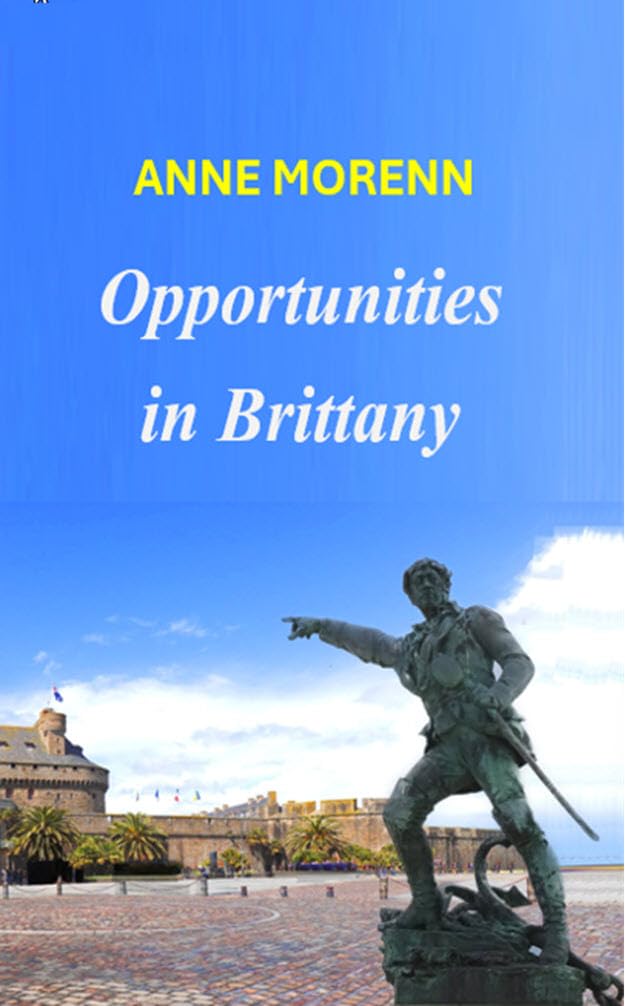

Opportunities in Brittany is a contemporary romance novel that follows a wide cast of characters whose lives intersect across Brussels, London, and, most vividly, Brittany. It begins with Félix Lemestre helping a mysterious young woman on a Eurostar platform, and from there the story branches into intertwined arcs: Eleanor escaping her controlling family, Yasmin fleeing an arranged marriage, and the many members of the Lemestre and Cavendish families whose histories, choices, and secrets gradually come together. The novel moves through travel, family intrigue, marriage negotiations, career shifts, and cultural crossings, eventually landing its characters in Brittany, where futures open, relationships deepen, and long-awaited opportunities finally take shape.
The writing is patient, almost procedural at times, as if the author trusts the reader to follow each careful step. It made the characters’ decisions feel grounded rather than dramatic for the sake of drama. When Félix helps Yasmin cross the border, the scene unfolds with a surprising amount of detail, but I found that detail comforting because it showed how much thought the characters give to each other’s safety and dignity. The same tone carries into the later chapters set in Brittany, where homes, rooms, and meals are described with a kind of affectionate precision.
What struck me most was how intentional the author is about choices. Eleanor’s backstory, for example, is not rushed. Her decision to escape her family carries weight because we’ve watched her strategize for years. Yasmin’s storyline works the same way: her flight from her father’s plans is not impulsive but careful, painful, and hopeful at once. Even secondary characters, like Agnès and Mathieu in Corseul, are given enough texture that I understood their influence on everyone around them. I also enjoyed the quieter cultural notes woven into the book, especially the sense of community in Brittany and the way the region feels both inviting and rooted in its own identity. By the time weddings, job offers, and new beginnings unfold near the end, the emotional payoff feels earned.
This is a romance novel, but one built more on steady interpersonal changes than on sweeping melodrama. If you like stories where relationships develop through trust, competence, and small acts of loyalty, this will likely speak to you. It’s also a good fit if you enjoy ensemble narratives, slow-burn connections, or settings that feel lived-in. Readers looking for fast conflict or high-tension twists might find it too gentle, but for anyone who enjoys thoughtful characters finding their place in the world, Opportunities in Brittany is a warm and satisfying read.
Pages: 390 | ASIN : B0DJF9JQ82



