Blog Archives
Challenging Myself and Readers

Disconnected is a genre-blending collection of speculative stories, surreal sketches, poems, and philosophical reflections exploring identity, loneliness, belief, technology, political power, and the search for belonging. What inspired you to create this collection?
There were two main sources of inspiration. Firstly, I had just joined a band with a couple of mates. I wanted to write lyrics for songs; taking most of my inspiration from John Lennon’s Plastic Ono Band and Imagine Album’s. This is the main reason for the more political poems and some of the more intimate poems. Why I wanted to write lyrics, I’m still not sure. It was a compulsion of sorts. Some unknown force was driving me to write. Secondly, Kafka and Pessoa. When I first discovered Franz Kafka and Fernando Pessoa as writers, they blew my mind. These two persons were effectively nobodies in their time but they had such great insight into society through social observation. I found instant relatability and attraction in their work; I wanted to emulate it. From these two sources of inspiration, I set out to challenge myself into exploring society through various angles, asking questions about everything and allowing the reader to think for themselves about the answers.
Why is loneliness such a persistent concern throughout the collection?
I don’t think It was ever the intention to write about Loneliness, it just happened as a result of what I was trying to achieve. I wanted to question society from various angles. This often meant writing characters as outsiders who were able to question the society they were placed in. Although it can also be said, I am a lonely individual. I am sad and lonely, Like Kafka and Like Pessoa, this came through in my work whether I intended it or not.
How important are recurring characters and ideas to the architecture of Disconnected?
I would argue they make up the backbone of Disconnected. It might be a collection of fragmented stories, poems and dreams but I do feel It is one book. Disconnected not unconnected. That is there is a wholeness to it. Like most of the characters being Disconnected from the worlds around them as outsiders. The book is itself disconnected from itself. This is first established in From Emit to Time, which sets up the idea that things might not necessarily be in order. I wanted to use this broken/disconnected structure to emphasize the broken nature of the characters’ minds and their disconnect from society in a more unique manner.
What are you working on now, and how might it build on the ideas explored in this collection?
Since writing Disconnected, I have completed a sequel, Heads & Tales, which will also be published with Atmosphere Press on October 20th, 2026. The Sequel explores the same themes as Disconnected but in a more grounded manner. It’s darker and explores the political systems and stages that cause the very disconnect in Disconnected through the life of Charlie Braeburn.
Author Links: GoodReads | Instagram | Facebook
This anthology of short stories, nonsense poetry, and surreal social critiques explores isolation, identity, and the tyranny of time in worlds both magical and unsettling. Meet Chronos, the dictator of time, whose rigid ideology is challenged only by the imagination. Follow Mr. Preston, a man who literally becomes mist; Connor, a musician driven to madness by forces beyond control; and Charlie Braeburn, whose desperate search for connection transforms him forever.
From a dystopian collective consciousness to a city of discarded elders, these tales skew reality with biting humor, melancholy, and uncanny twists. Disconnected is a celebration of dreams, rebellion, and the strange poetry of human existence—a collection that reminds us that sometimes the only escape from the circus of life is through stories themselves.
Disconnected


Vivian Herkes’s Disconnected brings together speculative stories, surreal sketches, poems, and philosophical reflections about people trying to find a place in the world. Time, identity, loneliness, belief, technology, and political power recur throughout the book, giving its varied pieces a common center. Images of mist, clouds, masks, mirrors, and driftwood turn disconnection into something almost physical. The result feels like a tour through one restless imagination, with ideas and characters resurfacing in unexpected forms.
The short fiction contains the collection’s most developed ideas. “The Old Skoolgie” imagines a future collective consciousness that offers companionship at the cost of individuality, while “The Ghettold” follows a young man into a city where elderly people have been segregated and abandoned. “Faceless” is especially important because it connects Charlie Braeburn to the mysterious Mr. Preston from an earlier story, revealing how a desire to understand everyone can erode a person’s own identity. Herkes often builds these stories like fables, using grotesque twists, dark jokes, and literalized metaphors to examine isolation and institutional cruelty.
The poems give the book a more intimate feel. Pieces such as “For My Friend with Depression,” “Ghost,” and “Uncertainty” speak openly about affection, grief, insecurity, and the fear of losing oneself. Others, including “The Notion of I, in the Nation of We” and “Hell Is a Circus,” turn toward class, nationalism, violence, and political manipulation. The language is energetic and deliberately repetitive, with rhymes and recurring images creating the sensation of thoughts circling inside an anxious mind. Herkes’s hand-drawn illustrations complement that personal, homemade quality, while the self-satirizing “A Critical Review” shows an author willing to place his own doubts inside the collection.
The collection can be blunt, funny, tender, and disturbing, sometimes within the same piece. That emotional volatility suits a book concerned with minds that won’t remain comfortably settled. I’d recommend it most to readers who enjoy experimental small-press writing, speculative social satire, surreal fables, and poetry that values candor over polish. It’ll also speak to anyone interested in how loneliness shapes identity, or how the longing to belong can make individuals vulnerable to lovers, communities, ideologies, and technologies promising connection.
Pages: 101 | ASIN : B0HCT9VZNN

The Ripple Effect

Born of Dirt & Dust is a collection of short fiction stories ranging from social horror to feral love and tales of survival in a broken world. What draws you to write speculative flash fiction?
Writing speculative flash fiction ignited for me when I sat inside a tattoo studio in Lahaina, along the west coast of Maui, in May 2023, a few months before the horrific wildfire scarred the land and the many, many families affected by the tragedy. At the time of having a beautiful sea turtle tatted on my arm, I learned about the artist working on me. A young woman, approximately in her late twenties, who came to Maui to escape years of marriage with an abusive husband. I could see in her shadowed eyes, her flinching body language, the deep bruised color of her dyed hair, and the violent tattoos inked on her body, the degradation she felt. I could see her need for a portal, an escape, to a very different existence—a world beyond the pain and suffering inflicted upon her. She found that temporary reprieve in the warmth, beauty, and embracing culture of Lahaina. Yet, after only a few months, Hell broke loose, and she lost herself again. This time, in the fire that raged upon her world. It was that moment, seeing the devastation broadcast on the news, feeling the heartache, thinking about her, that I knew I had to write about bending space and time, about churning our world differently in order to find a place where we belonged, where we could—and would—survive, no matter how broken we felt inside. No matter how threatening or violent our environment. In writing speculative fiction, I wanted to capture the worst of what we faced, illustrate the blood we shed, and explore the rising of our spirit to become more than the shrinking ways our world defines us. I wanted to prove that human kindness and resilience win in the end.
Were there any personal experiences or observations that influenced the themes in this collection, and how did they shape the characters or stories?
Two stories in the collection specifically focus on the young life of a boy. “Henry Didn’t Have A Chance,” and “Stuck At A Dead End.” The premise behind the stories came to me from articles I heard on PBS NewsHour while driving to work. The first is about a toddler boy who died at a very young age. Local authorities arrested his mother and her boyfriend on suspicion of murder. The other story aired as a documentary about children of parents who served in the military and returned home with PTSD—how the traumatic affliction affected their children. I knew at this point in writing the stories for Born of Dirt & Dust that I wanted to open a lens for readers to fully experience the character’s world, how trapped they felt, how they chose to move forward, and the ripple effect of those choices. As human beings, we are connected in so many ways. I truly believe that every action and every reaction triggers a ripple effect that touches each of us. Most often in a very minuscule, microcosmic way. Yet it breathes upon us. A tiny molecule. It hits us. No matter how quickly we forget.
Which character in the collection was the most challenging or rewarding to write, and why?
I’m one of those writers who thinks the last story or chapter I’ve written is the best yet. The one that counts. The most brilliant of all. Of course, it’s wishful thinking that comes to light when I re-read what I’ve written a week later and spot the obvious corrections needed. In the case of Born of Dirt & Dust, I favor the story, “Hands That Make A Man.” I have a weak spot for wanting to see the best circumstances for young children in which they grow up to feel loved, secure, and happy. Although my stories tend to lean towards horror, sci-fi, and fantasy, I want the best for my characters. A type of freedom they never thought they would experience. No matter the deepest cuts to their heart and soul. The young boy in “Hands That Make A Man” adores his father, and when Dad is no longer alive, the boy takes something—stitches it to his own young body—and knows full well his life without his father will turn out all right. No matter the loneliness he may feel or the environment where he resides. He gains confidence and feels that he will do right in life.
What is the next book that you are working on, and when will it be available?
There are three books in which I’ve completed first and second drafts—a middle grade book about a young girl who adores space travel and yearns to be a scientist when she grows up; a young adult book about an otherworldly character who hides and survives in the bodies of the recently dead; and an adult thriller about a teenager gaslit by her parents who continue to bury the truth about a family member’s suspicious death. All three books still need another round of editing. The goal (fingers-crossed) is to have them published in the coming year.
Author Links: GoodReads | Facebook | Website | Amazon
Coal Dust on Purple Asters: A Trilogy of Short Fiction
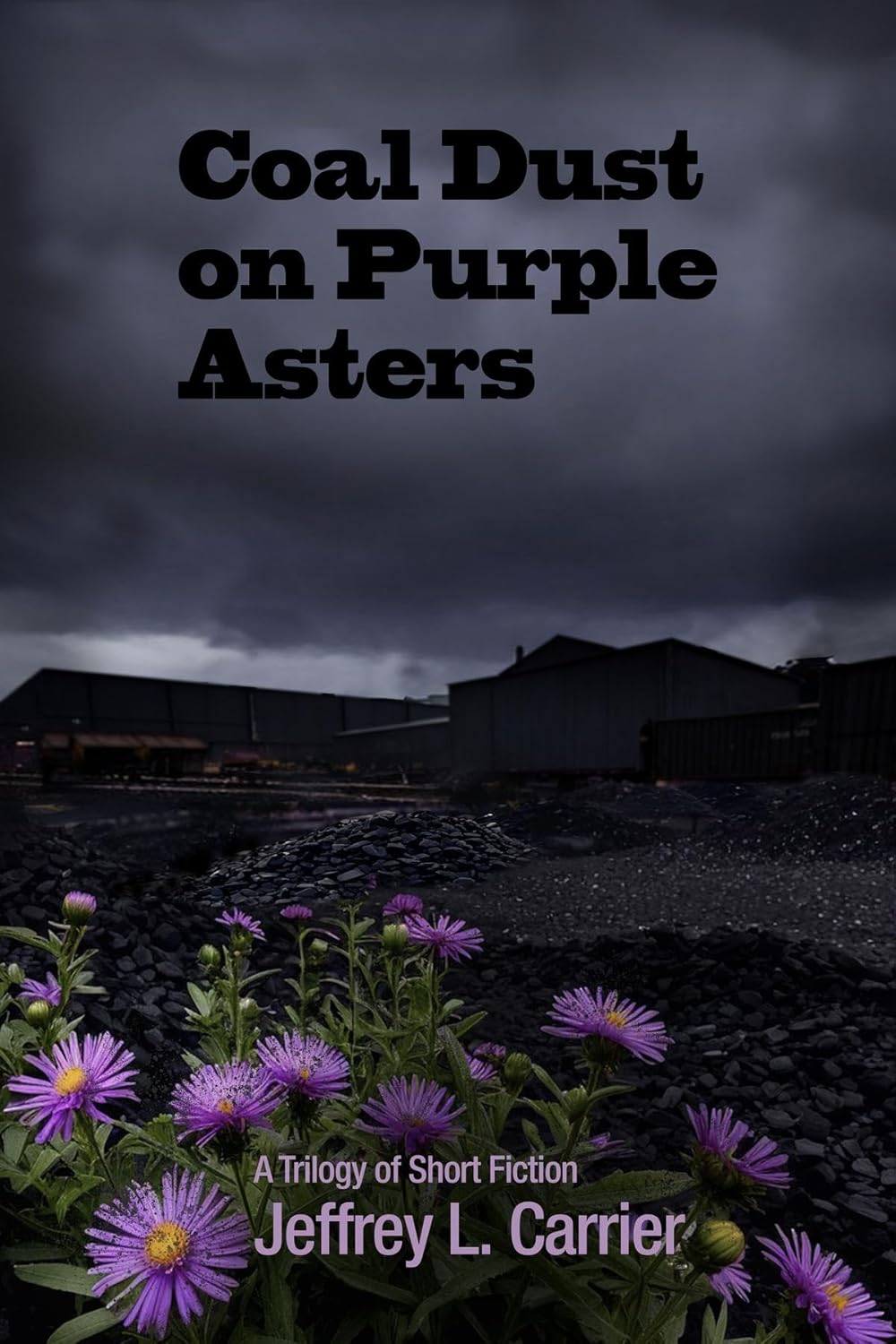
Coal Dust on Purple Asters is a linked trio of stories set in a small Kentucky coal county, framed by a brief, personal introduction from the author about his own mountain family and the memories that shaped him. We follow Vergie Hicks and her girls as a cheating husband, a sudden flood, and an act of sacrifice tear their home apart. Then we move into the Depression years with May and Zeke Owens, their hungry boys, two wild outlaw brothers, and a house fire that burns away more than old boards yet leaves a stubborn core of hope. In the final story, the focus widens to miners like Clarence Gibson, his friend Estill, and the schoolchildren in Jip Creek, and we see how coal, danger, and pride wrap around several generations in the same valley. Across all three pieces, the book keeps circling the same things: coal dust and purple asters, hard work and tiny bright bits of beauty. The result feels like one long family album, even when the characters change.
I felt the writing land in a very sensory way. The pages are full of simple images that linger, like hens clinging to rafters while floodwater rises, or a child hanging to a branch above churned mud, or a Purple Heart medal turning up in warm ashes beside a few cracked teacups. The scenes are clear in my head, almost like I watched an old film instead of reading a book. I liked how the dialogue keeps the Appalachian speech patterns without turning the characters into jokes. The rhythm of that talk feels loving and careful. Sometimes the descriptive passages run a little long for my taste, and the similes stack up, so a scene can feel heavy when the emotion is already strong. Even then, I never felt lost. The pacing in the flood chapter in particular stays tight, so the dread just builds and builds until the house finally goes. By the time Wiley dives back into that mess to reach his family, I was rooting for him and dreading what I knew was coming.
What I really liked, though, were the ideas underneath the stories. There is a hard look at men who drink, drift, and hurt the people who love them, but there is also room for them to be brave and soft in their last moments. Wiley is both the man who cheats and the man who saves. Zeke is the father who cannot keep steady work and also the man who stands in front of his burned-out house and says they will build again. I liked how the book never lets poverty turn into a simple tragedy tale. The people bend. They scheme. They do questionable things to keep food on the table and keep danger away from kids. May’s decision to set her own home on fire so her brothers will stay away is wild and a little shocking, and I could still feel the tight knot of fear that pushes her there. I also enjoyed the way the last story steps back and talks about mining itself, about pride in the work and the pull to leave for the sake of your lungs and your children. Hearing Clarence talk about coal like faith while Estill talks about coal like a slow death gave me that uneasy feeling you get when two truths sit side by side and both sound right.
The book would be a strong fit for readers who enjoy regional fiction, family sagas in short form, or historical stories about working people and small towns. If you like character-driven plots, clear scene-setting, and stories that do not flinch from trouble but still reach for grace, this will likely work for you. I would recommend Coal Dust on Purple Asters to anyone who wants to spend time in a vivid place with flawed, stubborn, loving people and to anyone curious about the human cost behind those old coal seams and mountain stories.
Pages: 89 | ASIN : B0G8RX9NV8
Born of Dirt & Dust
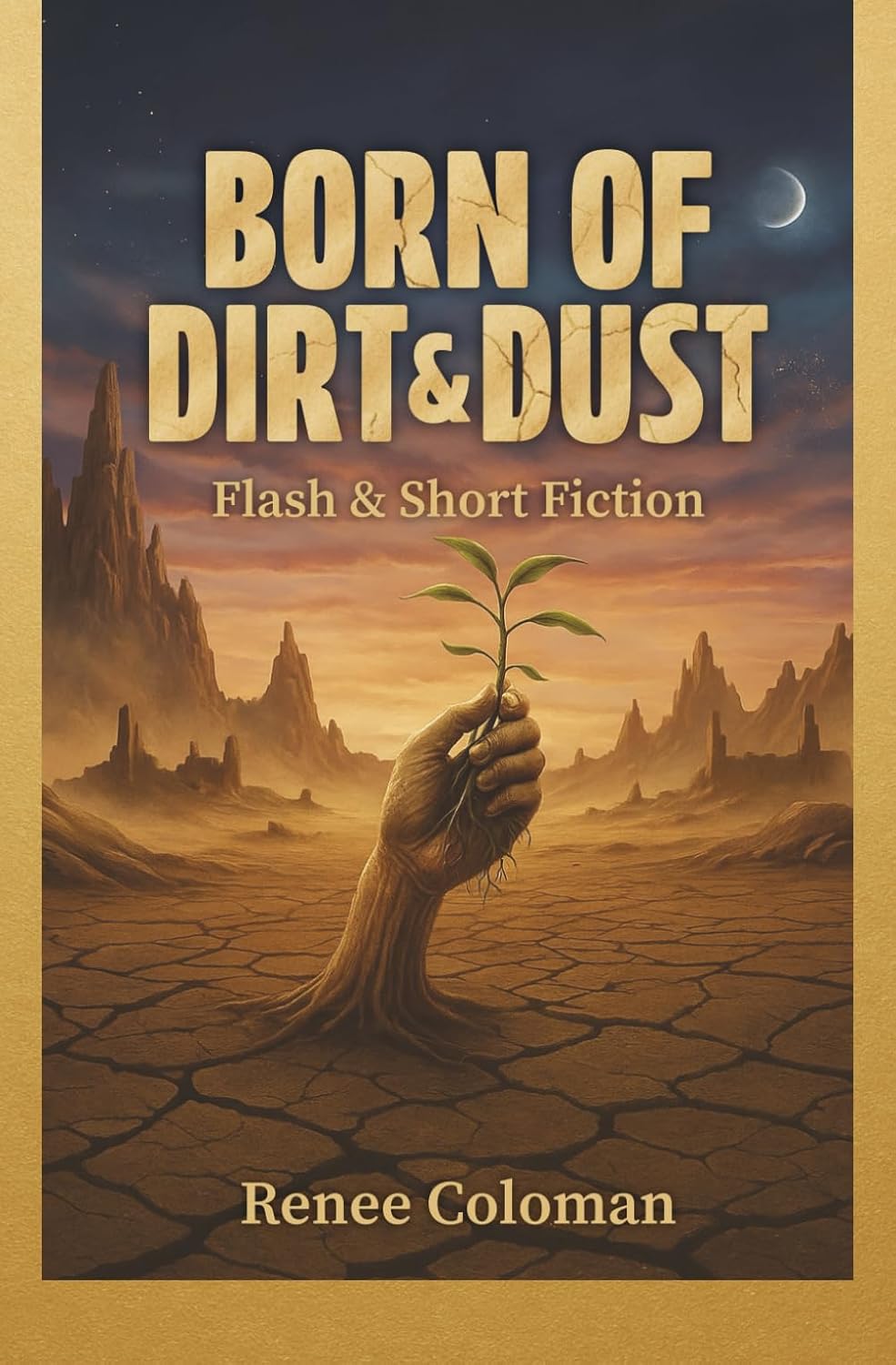
Born of Dirt & Dust is a sharp-edged collection of speculative flash & short fiction that keeps changing masks from urban dread, grief-myth, social horror, bruised fairy tale, while staying faithful to one obsession: what people do to survive when the world won’t stop chewing. Across stories like “Smokin’ with Death,” “Pretending,” “The Last of Our Kind,” and the title piece, Renee Coloman drops me into intimate, first-person rooms where love is feral, hope is conditional, and the aftertaste is usually smoke.
What hit me first was the voice: immediate, unvarnished, and weirdly tender even when it’s being crude. In “Smokin’ with Death,” the narrator sizes up Katelyn, pink hair, tattoos like warnings, a body already half-ghosted by addiction, and the dialogue snaps like a lighter: transactional, defensive, heartbreakingly ordinary. The story doesn’t ask me to approve of anyone; it asks me to recognize them, which is harder and more bracing.
As I kept reading, the book’s recurring textures started to feel intentional rather than merely intense: cigarettes as countdowns, bodies as battlegrounds, love as a dare. “The Last of Our Kind” is a brutal little poem of devotion, an oxygen tank, a warning label, and a woman who can’t stop reaching for flame anyway, as if self-destruction is the last language she and her husband share. And in “Born of Dirt & Dust,” Coloman leans into mythic framing, Adam’s rib, inherited venom, a woman trying to outgrow the “dirt and dust” she’s been assigned, turning family damage into something almost ritualistic. Sometimes the prose repeats or swells on purpose, like a chant you can’t quite step out of; for me, that worked more often than it wobbled.
Coloman’s collection is for readers who want speculative fiction, flash fiction, horror, dark fantasy, magical realism, stories that move fast but leave residue, stories willing to be ugly in the service of truth. If you’ve loved the bite-sized dread and emotional torque of Carmen Maria Machado, you’ll recognize the same appetite for turning private pain into a blade with a shine on it. Born of Dirt & Dust is a small book of big hauntings, each story a matchstrike in the dark.
Pages: 215 | ASIN : B0FZLMZR77
The Righteous Place In Light and Shadow

The Righteous Place in Light and Shadow, by R. Groff, is an outstanding short story collection that delves deep into the realms of horror and sci-fi, delivering a series of imaginative and unsettling short stories. Within these pages, readers will encounter a variety of close encounters with the unexplained, the unknown, and the unknowable. In one gripping tale, a World War II survivor finds himself inexplicably linked to a string of bizarre crimes while another story presents the collapse of society in a manner that defies all expectations. Elsewhere, an alien artifact holds the key to cosmic horrors, and in the violence-torn streets of 1990s Compton, a computer game unleashes a demonic entity that threatens to drive a young boy to madness. As you navigate through this collection, be prepared to enter a realm where fantasy and reality blur, and cosmic terror lurks at every turn.
Groff’s collection echoes the eerie atmospheres found in Ray Bradbury’s The October Country and Stephen King’s Nightmares and Dreamscapes. Some of these stories delve into pure horror, while others venture into the speculative territories of science fiction. What ties them all together is the recurring theme of unsuspecting protagonists who stumble into situations where the very fabric of their reality is shattered, revealing a world far more sinister than they could have imagined.
A unifying thread throughout this collection is the idea that humans are most vulnerable when they believe their world is easily defined and categorized. The stories remind us that unspeakable evil and insidious threats often lurk closest when life appears most mundane. Standout stories include The Undead of Greenwood, which poignantly explores the hopelessness of addiction, and Jacob’s Game, which draws inspiration from the Tron movie series to craft a tale of technological horror.
The Righteous Place in Light and Shadow is a must-read for fans of both horror and sci-fi. Groff’s ability to craft tales of genuine nastiness and cosmic dread will undoubtedly resonate with aficionados of the genre, evoking the mastery of storytellers like Clive Barker and Robert Bloch. This collection is a treasure trove of short fiction that will both unsettle and captivate, making it an essential addition to any horror or sci-fi enthusiast’s library.
Pages: 688 | ASIN : B0D61BJC4Z
Queering My Religion
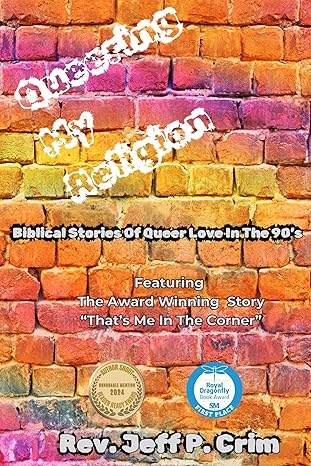

Queering My Religion by Rev. P. Crim presents a thought-provoking collection of short stories that reimagine biblical narratives through a queer perspective. This collection stands out for its modern twist on familiar tales such as “Joseph and his Coat of Many Colors,” “David and Jonathan,” and “The Centurion and his Servant,” among others. Set against the vibrant era of the 1990s, these stories delve into the intricacies of identity, love, and belonging, offering a unique window into the queer experience within the context of well-known biblical stories.
The book’s strength lies in its ability to breathe new life into these traditional narratives. Each story is carefully crafted to establish a connection with the queer community, challenging readers to embrace ambiguity and celebrate the diversity of human experiences. By urging readers to question their preconceptions, the book facilitates a rediscovery of history through an inclusive and fresh perspective. Drawing inspiration from works like Clarence Jordan’s Cotton Patch Gospels and P.K. McCarey’s Black Bible Chronicles, Queering My Religion adds to the rich tradition of reinterpreting religious texts.
The collection’s standout feature is its bold reinterpretation of biblical stories, providing insight into the lives of characters as they grapple with their identities and relationships. From the journey of self-discovery in “Joseph and his Coat of Many Colors” to the exploration of deep connections in “David and Jonathan,” each narrative resonates with contemporary audiences, bringing a new layer of understanding to these age-old tales. At its core, the collection challenges traditional heteronormative interpretations, highlighting the diverse spectrum of human experiences. Themes of love, acceptance, and resilience are woven throughout, reflecting not just the struggles and triumphs of the 90s but also presenting a timeless message of inclusivity.
Queering My Religion distinguishes itself by sparking discussions about inclusivity, representation, and the transformative power of storytelling. Appealing to fans of biblical narratives, queer literature, or immersive storytelling, this collection invites readers into a world of exploration and reflection, leaving a profound and lasting impact.
Pages: 97 | ASIN : B0CV9K3D61

Pick Up a Plate & a Book
Sweet Emotions is a collection of poetry inspired by your mother’s cooking and her love of sharing it with others. Why was this an important book for you to write?
My mother’s passion for cooking & ability to create mouthwatering dishes always fascinated me. Her food brought people together, creating unforgettable moments filled with love & happiness. I wanted to capture those emotions & share them with others through my writing. Sweet Emotions is a way of honoring her legacy & preserving those cherish memories.
What is the one thing you hope readers take away from the book?
Above all, I hope that readers find a deep connection to the emotions & memories that food & words can evoke. I want them to recreate the warmth that my mother’s cooking brought into our lives. Also, I hope that readers are inspired to explore their own culinary passions, experiment in the kitchen, & create memorable moments with loved ones, just as my mother did. And keep seeking my words.
What were some ideas that were important for you to share in this book?
Sweet Emotions is not just a poetry book. It’s a poetry book based on my heartfelt tribute to my mother’s legacy. The things she stood for & lived for every day. God, family, food & books. That poetry book with cooking because we love food so much that when I write, you will find elements of food that I decided to put a recipe. God, food & words brought people together. Through the pages of Sweet Emotions, I aim to inspire readers to infuse their own dishes with love & passion. Cooking is not just about nourishment but also creating everlasting memories. Pick up a plate & a book. Preferably my book.
What is it about food that you think brings out an emotional response in people?
Food has the power to evoke a range of emotional responses in due to several reasons. First & most important… nourishment & survival. We need it to carry on in life. The fact it tase good adds more.
Cultural & social significance… it brings many in touch with their history & different cultures together through leaning & happiness. Sharing meals promotes a sense of belonging & an emotional connection.
Comfort & satisfaction during difficult time having food together ease the pain.
Overall, the emotional response to food is deeply ingrained in our biology. It has the power to create joy, comfort, nostalgia & social connections. Making it highly sought @ times which I wish for my words. They won’t have the same sensory experience you wont smell, taste or feel the texture. But once you see & read my words you will get the emotional rush as they trigger memories.


