Blog Archives
Bridging the Gap

In Youth Truth, you reflect on the students you encountered as a school resource officer, the crises they faced, and the adults who reached out to them. Why was this an important book for you to write?
This book was never just a book for me—it was a responsibility.
As a School Resource Officer, I saw kids carrying far more than they should have to—those slipping through the cracks, those acting out because they didn’t have the words, and those who looked fine but were struggling in silence.
What stayed with me is this: it’s rarely the big interventions that change a life—it’s one adult, one moment, one question asked the right way.
But I also saw good parents, teachers, and mentors who cared deeply and still didn’t feel equipped to reach these kids. Conversations were being missed—not from a lack of care, but a lack of confidence and tools.
That’s why I wrote Youth Truth: Engaging in Conversations That Can Change Lives.
I wanted to bridge that gap—turn real, front-line experiences into something practical people can actually use when it matters most.
Because I’ve lived this truth: connection heals what correction can’t.
And too many moments are being missed—sometimes with consequences we can’t take back. This book is about helping more adults show up in those moments, because one brave, genuine conversation doesn’t just change a moment—it can change, or even save, a life.
Stories like Jon’s imagined meal or Jane’s struggle with addiction are deeply affecting. How did you choose which stories to tell?
Those stories stayed with me long after the moment passed—that was my first filter.
I chose stories that represented patterns I saw over and over again: youth feeling unseen, unheard, or carrying pain they didn’t know how to express. I also chose ones that reflected different kinds of struggle, so more readers could see a piece of someone they love—or themselves—in those pages.
And I was intentional about this: every story had to serve a purpose. Not just to move people emotionally, but to help them understand what’s really going on beneath the surface and how they can show up differently.
Because these aren’t just stories—they’re windows into moments where the right response could change everything.
Did you ever feel tension between letting stories speak for themselves and explaining their lessons?
Absolutely—there was a real tension there.
The stories are powerful on their own, and I never wanted to over-explain or take away from their truth. But I also knew that if I left them without guidance, some of the most important lessons could be missed—especially for adults who are already unsure how to navigate these moments.
So I was intentional about both: letting the stories be felt, and then giving just enough insight and practical takeaways to help readers actually use what they just experienced.
Because for me, this book wasn’t just about telling stories—it was about making sure those stories lead to action, better conversations, and real connection when it matters most.
What did you most want readers to understand about youth in crisis?
More than anything, I wanted readers to understand that youth in crisis aren’t trying to be difficult—they’re trying to be understood.
What looks like anger, withdrawal, or defiance is often pain, fear, or confusion they don’t have the words for yet. And too often, we respond to the behavior instead of the need underneath it.
If adults can pause, get curious, and lead with connection instead of correction, everything shifts.
Because at the core of it, most youth in crisis aren’t pushing people away—they’re quietly asking, “Will someone see me, hear me, and stay?”
Author Links: Facebook | Website
This gripping book delves into the raw, unfiltered world of today’s youth. Their lives are way more complex than most realize. It is a compelling and poignant exploration of the challenges faced by young souls, bringing to light the often overlooked and misunderstood battles they fight.
In Youth Truth, discover the essential guide to navigating the tough conversations that matter most to today’s youth. This compelling narrative empowers parents, educators, and mentors to approach sensitive topics with empathy and understanding, creating safe spaces where young voices feel valued and heard. From the haunting realities of suicide and bullying to the silent battles of eating disorders, this book unveils the raw struggles faced by a generation yearning for connection.
Written by a retired law enforcement officer and School Resource Officer, Youth Truth is more than just a collection of stories; it is a clarion call for compassionate dialogue. Learn the right questions to ask and how to engage meaningfully with the youth in your life. By fostering open conversations, you can profoundly impact their lives, helping them navigate their challenges with resilience and strength. Join the movement to bring understanding and compassion to the forefront of youth engagement.
Youth Truth: Engaging In Conversations That Can Change Lives


Youth Truth is a compassionate and story-driven work of nonfiction in which author Carlamay Sheremata, drawing on her years as a school resource officer, reflects on the lives of young people standing at the edge of crisis and the adults who either reach them or fail to. The book moves through a series of case-based chapters on suicide, addiction, sexual coercion, identity, abuse, eating disorders, self-harm, and bullying, always circling back to one central claim: a life can change when a young person feels truly heard.
What stayed with me most was the book’s insistence that intervention rarely begins with brilliance. More often, it begins with a question, a hunch, a small act of care, like noticing a boy’s hollow face and handing him a cafeteria card, or recognizing that a teen who has nowhere left to go still knows which office feels safe enough to enter.
I enjoyed the book’s emotional candor. Sheremata doesn’t write from a great height, and that matters. She writes close to the ground, inside school hallways, cramped kitchens, ambulances, offices with doors half shut, the ordinary places where unbearable things are quietly carried. Jon’s imagined waffle breakfast, so painfully vivid because he’s starving, is the kind of detail that lands with a thud. So is Jane clutching the last cigarette before returning to rehab, or Cameron, tangled in gang expectations, coming alive at the possibility of working with food. These moments give the book its pulse. I felt, again and again, that Sheremata understands something essential about young people in distress: they are often dismissed as dramatic when they are being most truthful. The book is strongest when it trusts those intimate particulars and lets them do their work.
The book’s deepest strength is its moral clarity. Sheremata is not coy about what she believes. She believes adults should show up, listen better, speak more honestly, and stop mistaking control for care. I respected that conviction. At the same time, I did fee that the writing can be a bit repetitive, and the reflective passages sometimes spell out lessons that the stories have already made beautifully obvious. But even there, I understood the impulse. This is not a detached literary exercise. It’s a book written by someone who has seen too much suffering to hide behind polish. The prose is straightforward, yet it carries real feeling, and the ideas feel urgent because they’ve been earned in lived encounters.
Youth Truth is moving, sincere, and unsettling in the best way, because it asks whether the young people around us are less unreachable than we claim and more neglected than we admit. I finished it thinking not only about the youth in these pages, but about the adults around them, and how often salvation arrives in the form of patient attention. I’d recommend this book especially to parents, teachers, counselors, coaches, and anyone who works closely with adolescents, though I think it could also reach careful teen readers who want to feel less alone. It’s heartfelt, useful, and humane, and that combination makes this book highly recommended.
Pages: 121 | ASIN : B0DJ7M94GW

Keeping The Stethoscope, Hanging Up The Uniform!: The Curse of Combat Disability Retirement


Keeping the Stethoscope, Hanging Up the Uniform! is a raw and forceful memoir that follows Steven Wayne Davis as he moves from the intensity of military medical service into the equally demanding world of civilian emergency care. The book blends personal history, frontline trauma scenes, and a fierce critique of how the United States treats its combat-disabled veterans. In simple terms, the story traces what happens when someone who gave everything comes home and finds the system stacked against him. The result is part autobiography, part social commentary, and fully grounded in the lived experience of a combat-disabled veteran trying to stay afloat.
The writing is direct. Sometimes weighty. Sometimes almost poetic in how it describes exhaustion, anger, and purpose. Davis doesn’t dance around his trauma or the trauma he’s witnessed. The early chapters drop you straight into the ER, and those scenes throb with the same frantic rhythm he lived through. What struck me most was how he uses the language of medicine and combat not to impress but to show us what’s at stake. The choices he makes as an author feel intentional. He lets certain moments sit in silence, and he lets others crack open with frustration. It works. You can feel the emotion in the pauses.
What I also liked was his honesty about the bigger system. He talks about disability offsets, homelessness, suicide, and the empty ritual of “thank you for your service” with a mix of weariness and fire. It’s a tough blend, but he pulls it off because he’s writing from within the problem, not looking at it from the outside. The ideas in the book aren’t polished arguments. They’re lived realities, and they’re delivered with the kind of clarity that comes from surviving things most people never see. At times I found myself nodding along. Other times, I felt a lump in my throat. The memoir genre is full of reflection, but this one feels like someone opening a door they’ve held shut for years.
By the time I finished, I felt grateful that Davis chose to write this at all. The story isn’t trying to be perfect. It’s trying to be honest. And that honesty is what gives the book its strength. Readers who appreciate memoirs rooted in service, healthcare, mental health, and social justice will find a lot here to sit with. If you’ve ever wondered what happens to the people we send to war after the uniforms come off, this book doesn’t just answer the question. It challenges you to care about the answer. A powerful memoir that refuses to stay quiet, speaking the truth that so many veterans live but rarely share.
Pages: 192 | ASIN : B0G1L9FM6F

A Story of Self-Reflection

Blood Flow is a raw, unfiltered memoir that stitches together decades of family trauma, personal ambition, health battles, and the relentless search for meaning. Why was this an important book for you to write?
I believe that almost all people endure a significant trauma at least once in their lives. Mine was the suicide death of my father, soon after I turned thirteen years old. Parent loss is trauma, especially to the young, who may lack the information or understanding of why such tragedies happen. In my case, I began interviewing family and obtaining three sets of hospitalization records when my dad was admitted for severe depression and suicidal ideation. I traveled to Trieste, Italy, where he was stationed as an army doctor, and to the Eastern European town where he was born and emigrated from with his family when he was three years old, already fatherless himself. This decades-long search provided a deep understanding of my dad’s history and an appreciation that he was in my life as long as he was.
What were some ideas that were important for you to share in this book?
Sometimes, people need to make a concerted effort to overcome trauma and see life as a great gift. It’s good for adult children to learn what they can about their parents because that knowledge will inform their understanding of their childhood. As a writer, I think that a memoir should not just be a story of victimhood and blame, but rather a story of self-reflection and knowledge, realizing that most people do the best they can with what they have.
What was the most challenging part of writing your memoir, and what was the most rewarding?
The most challenging part of writing my memoir was twofold. One was trying to stay objective while remaining compassionate and emotionally attached to events that radically changed my life. Two was repeatedly redrafting and revising the writing until I found a narrative structure, voice, pacing, and succinct narrative style to engage readers.
How has writing your memoir impacted or changed your life?
Completing my memoir and having it published brought closure to a writing project that took me decades to “get right.” Revisiting the traumatic events and aftermath of my father’s suicide eventually helped me understand and practice compassion, love, and a full appreciation of life.
Author Links: GoodReads | Facebook | Website | Amazon
The Suicide Prevention Family Handbook
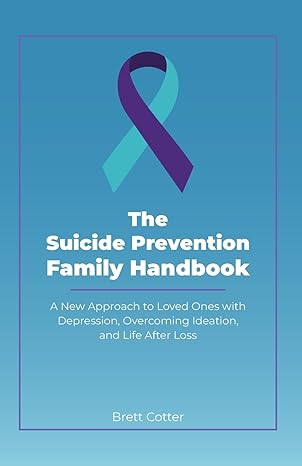
The Suicide Prevention Family Handbook, by Brett Cotter, is a deeply compassionate and practical guide for those facing the realities of depression, suicidal ideation, and grief. The book serves as a roadmap for families and individuals navigating these challenges, offering step-by-step techniques to provide support, regain emotional balance, and rebuild life after loss. While it does not replace professional medical or psychological treatment, it complements traditional approaches by focusing on mindfulness, emotional release, and effective communication strategies.
One of the most powerful aspects of this book is its emphasis on the role of emotional pain in suicidal ideation. Cotter explains that emotional pain is seeking to be “seen, heard, and loved.” This perspective shifts the focus from simply preventing suicide to addressing its emotional root causes. The techniques he provides, such as the 5 Prompts, which encourage open-ended, compassionate listening, are practical and immediately useful. His step-by-step breakdown of how to hold space for a loved one, particularly the sections on body language and tone, make this guide stand out. It’s not just about what to say but how to be with someone in pain, and that nuance is essential.
Cotter’s personal anecdotes make the book feel intimate and real. His description of working with veterans struggling with PTSD and suicidal ideation, along with his own past experiences with emotional pain, add authenticity to his methods. The story of how he guided someone out of suicidal ideation in 2003 by simply listening, grounding himself, and asking, “Please tell me more,” is a striking example of how small shifts in approach can make a life-saving difference. It’s one thing to discuss theories of emotional healing, but Cotter’s book is packed with real-life examples that prove the effectiveness of his techniques.
Another strong point is his approach to grief. He acknowledges that loss, especially from suicide, can be overwhelming, but he doesn’t offer empty platitudes. Instead, he provides tangible exercises, like the Letting Go with Love Visualization and Calling Loved Ones Into Our Dreams, which allow people to continue their relationship with lost loved ones in a meaningful way. His insight that guilt after a loved one’s suicide is a natural survival mechanism, rather than an indicator of personal failure, is a revelation that could provide comfort to many struggling with loss.
The Suicide Prevention Family Handbook is for anyone who has a loved one struggling with depression, those dealing with their own suicidal thoughts, and individuals grieving a tragic loss. It’s not just for mental health professionals; it’s written for everyday people who want to learn how to truly support those in pain. Cotter’s writing is clear, heartfelt, and filled with empathy, making it an accessible and invaluable resource. If you’re looking for practical tools to help yourself or someone you care about, this book is well worth the read.
Pages: 58 | ASIN : B0DPJKWXDT
Journey With Grief and Healing

Invisible Sun follows a man grappling with painful memories as he reels from grief following his brother’s suicide. What was the inspiration for the setup of your story?
I lost a brother to suicide many years ago and was intrigued by the way everyone, including myself, who was impacted by his death, managed the incident differently. Often, it’s only when we are confronted with death that we stop to consider life. Invisible Sun is a conversation about the perspective of what life is and less about death.
I enjoyed the depth of the main character, Ian. What was your process to bring that character to life?
While this story is NOT autobiographical, I did reach into my own history for inspiration. I needed Ian to be a flawed but curious human who digs deep to ask difficult questions about his existence. I jokingly told a friend that Ian was my whipping boy. I constructed a dark, heavy, almost impossible world with extreme situations for him to explore in this novel. I asked him to make hard decisions and choices that were the opposite of what I would choose in my life. In the process of writing Invisible Sun, I learned a lot about my own journey with grief and healing.
Are there any emotions or memories from your own life that you put into your characters’ lives?
Vulnerability. While this is not an emotion per se, it is a state of emotional exposure that involves a willingness to accept the risk that comes from being open and willing to give and accept love.
What is one thing you hope readers can take away from Invisible Sun?
In the novel, a homeless man on the bike tells Ian, “Don’t waste your life! It’s a gift.” Life is not complete without its ups and downs, but learning to find contentment in this life is the most important thing we can do.
Author Links: GoodReads | Twitter | Facebook | Website | Amazon
In Invisible Sun, Andrew H. Housley probes mental illness and the painful consequences of choice. He questions brotherly bonds, belief systems, and interconnectedness with profound intricacy, immersing readers in a world where reality blurs. Housley’s storytelling peels back the human psyche, exposing raw emotions. This haunting tale captivates as a broken soul seeks solace and understanding, diving deep into a reflection on resilience and choices.
Will Ian find the truth he seeks, or will he be consumed by the shadows that threaten to swallow him whole?
Start Communicating Again

In If I Could Wish, a teenager’s final suicide letter reveals the personal struggles and immense anguish leading up to their suicide. Why was this an important story for you to share with readers?
I would say it’s always important to discuss how us humans handle and react to situations and or chains of them. However, it is far more important to me to discuss suicide as it is a very prominent issue in our world. I feel like this topic can be seen as taboo or unacceptable to talk about where it really mustn’t be: these are human lives we’re talking about, mental states, families. How can we just sit back and turn a blind eye to the issue all because it can be seen as too gloomy or depressing? I say we should take these dark & depressing subjects and create an open dialogue about them so we can make progress and help each other instead of becoming more isolated with the world. Many of my teenage peers are falling victim to mental health issues due to an abundance of reasons, I am Scottish, and we are very lucky to have our own national health service which covers mental health too, but the way the UK is being run is leaving our NHS with no adequate funding and therefore, we have a crippled NHS. So if we can’t fund services, if we can’t afford services, then we should at least change our international or national mindsets on the matter and start communicating again. Not through our phones, but through our humanity.
What is one thing that you hope readers take away from If I Could Wish?
I personally hope that readers are able to take away the fact that stories like these aren’t too far off from reality and we need to start being communal again rather than plainly individualistic. We really do need to speak up on this matter and speak to people who may be struggling, even people who we don’t think are struggling very well could be. We ought to look out for one another more often, we really never know how far that goes.
What is a common misconception you feel people have about mental health, especially as it relates to teenagers?
I think that the common misconception about teenagers’ mental health issues is that it’s ALL due to social media. It’s really not. Today’s teenagers are in a predicament of the likes our species has never seen before. Personally, I even say that we have progressed too fast without thinking about the effects. However, although some of the issues stem from social media and digital use, the other issues stem from social situations, economic situations, and national attitudes towards teenagers. I’ll break them down a bit more. Social situations meaning a workplace or school, friends even. Sometimes we’re not always in the healthiest relationships with our schools or workplaces or friends. Economical situations meaning the state of the country’s economy: if the nation isn’t financially strong then how will one seek the help one deserves? How will one get the job one needs? How will one see the light? And national attitude meaning how other age groups view teenagers, most of the time in UK media recently: it’s not great. There needs to be realisation that these issues of the digital world are unprecedented, and the real world affects everything. 2 worlds conflicting, 1 mind trying to manage both.
Can readers look forward to more stories from you soon? What are you currently working on?
Oh absolutely! More stories with variety are on their way. At the moment I believe I have 5 currently being fully conceptualized. However, I am a third of the way through working on a new short story I’ve named: Burning Memory. I won’t get too much into it but just know it is another philosophical perspective on life. I plan to write short stories for a while, I’m not entirely sure how I would handle a full novel but I have 2 ideas for them which I will eventually finish: but as for the moment, short philosophy will be my niche.
Author Links: Goodreads | Amazon
Peer into the downfalls of the human condition and the gloom that follows you. Ponder the bigger picture, ask the questions of purpose, learn from the life of despair. But most importantly: how will you help your fellow humans?
When You Go Through Dark Times

A Study in Terminal follows a young man who has faced many hardships and is forced to realize that life won’t always follow the path you laid. What was the inspiration for the setup to your story?
One inspiration was working with at-risk youth when I was just out of high school. I particularly remember watching this fifteen year old boy who was basically a father to his younger siblings. And it hit me that there weren’t many YA books for him — a boy who was forced to grow up early and was faced with adult situations at a young age.
Another inspiration was personal mental health battles in my own life and realizing how life is hard and dark and broken, but there is still light and the brokenness still has a chance to become beautiful.
Sean Brogan is an intriguing and well developed character. What were some driving ideals behind his character’s
Development? First off, thank you for being so kind! I love Sean. He’s my baby. I wanted him to come to terms with facing his own humanity but realize he wasn’t alone in the first place. When you go through dark times you can be deceived into thinking you’re alone — which is so far from the truth. There’s a moment in ASIT when Sean is hit with the realization there was someone who was walking alongside him, and it was a very powerful moment for me personally. I’m always writing to answer my own questions, and that’s what happened with Sean’s character — to direct a broken character who has felt alone all his life to suddenly realize that there was someone who understood.
What were some themes that were important for you to explore in this book?
You are never alone. That there is beauty in brokenness. That healing is possible. That sometimes you have to let people meet you in your darkness. Oftentimes we hide our brokenness out of shame or fear, and I wanted people to realize that to heal sometimes means admitting how human we are.
What is the next book that you are working on and when will it be available?
Haha, I wish I knew. Life has been insane for me, but I’m working on two different books — one being the second book following ASIT. So we shall see…
Author Links: GoodReads | Twitter | Facebook | Website
He plans to slip into the sleepy town of Lake Fort, West Virginia as quietly as he did ten years before, but his life has never gone as planned. Sean never expects to see Rina, the blue-haired sister of his childhood best friend who makes it her mission to rescue the lost things. A hopeful dreamer who sits on the roof and watches the sunset, she represents all the things that he has lost. As Sean spends time in the lakeside town that has haunted his dreams since he was a little boy, he has no choice but to face the pain that he buried from a life cut off too soon. In the blink of an eye, with a gun to his head, Sean is forced to confront what it means to fight for the will to live when your world has gone dark.
An anthem for those of us who have been left behind, A Study in Terminal is a vulnerable story about the human condition that reminds us that to beat your past, you first must turn around and face it.


