Blog Archives
The Last Missioner


John Paul Russo’s The Last Missioner is an ambitious scriptural fantasy that blends science fiction, theology, adventure, and post-apocalyptic worldbuilding into one unusually detailed story. Russo imagines Earth long after a catastrophic event called Uri-Bin, when humanity’s surviving “Remnant” has lived for a thousand years under the rule of the Primary. The world is divided into distinct cultures, including the priestly Jurans, the technologically gifted Lewans, and the nature-centered Noochi, all of whom depend on one another through the Universal Communion. Russo describes the novel himself as a fantasy inspired by Revelation 20:1-3, and that biblical foundation shapes nearly every part of the book.
At the center of the story is John Micah Leers XIV, a twelve-year-old Juran whose life is already mapped out for him. He’s supposed to train for the priestly League of the Thousand Drones, but strange voices, visions, and encounters begin pulling him toward a very different calling. His curiosity makes him a good guide through a world where almost everyone else has accepted the rules of the Constancy as permanent. Once he leaves Atalan Jur, the story opens into a much larger journey involving the Noochi rebellion, political maneuvering in Lews, Exer dissidents, dangerous expeditions through Meric, the mysterious Orlen, the White Elders, and eventually a mission into the frozen darkness of the Shol-hemis. The book has the structure of a quest story, but the quest keeps expanding until John Micah’s personal calling becomes tied to the survival and spiritual future of the entire Remnant.
The worldbuilding is probably the novel’s most distinctive feature. Russo doesn’t simply put biblical names onto a conventional science-fiction setting. He builds an entire social and physical order around sacrament, covenant, interdependence, and spiritual gifts. Quantum arts function almost like a scientific vocabulary for abilities associated with mysticism: Jurans manipulate light and practice inner locution, Lewans shape matter, and Noochi “sire” living organisms. The Universal Liturgia is both religious ritual and the mechanism through which the population receives nourishment, so a theological idea becomes part of the world’s actual economy and biology. The glossary makes clear just how extensively Russo has worked out this system, from quantum arts and the three charisms to the Remnant’s geography and institutions. That density asks for some patience, especially early on, but it also gives the novel a strong sense that its civilization existed before the reader arrived.
Russo’s approach reminded me most of C. S. Lewis, particularly the way Lewis uses speculative fiction to make theological ideas concrete. Like Lewis, Russo is comfortable letting spiritual realities become literal parts of the plot. Angels, demons, grace, temptation, sacrifice, and divine providence aren’t metaphors hovering behind the action. They’re active forces in the characters’ world. Russo, though, works on a much larger systems level than Lewis usually does. He spends more time explaining institutions, histories, technologies, genealogies, rituals, and political relationships. There’s also a stronger swashbuckling streak as the novel progresses, with pursuits, flying craft, hostile landscapes, imprisonment, demonic armies, and a final conflict that draws together threads planted hundreds of pages earlier. Readers who enjoy Lewis for the meeting of Christianity and imaginative fiction will recognize some common interests here, but Russo’s version feels more encyclopedic and more openly apocalyptic.
What stayed with me most was the way The Last Missioner gradually turns John Micah’s desire to understand his strange experiences into a story about vocation and trust. His mission requires him to move farther and farther beyond everything his society considers familiar, right up to the final sacrificial act that gives the book its title. The ending brings the imagery of sacrifice, manna, the mercy seat, darkness, and returning light together with satisfying symmetry. Even the altered world begins moving again, and the final sunrise feels earned because the book has spent so much time establishing what a motionless sun meant to this civilization. Russo has written a large-scale religious fantasy with a remarkably specific cosmology, and its strongest moments come when all that theology and invented history narrow down to one young person having to decide whether he’ll follow a calling he can’t fully explain.
Pages: 440 | ASIN : B0HBRN4QHV

The Eleventh Messiah

The Eleventh Messiah is a post-apocalyptic speculative novel with strong religious thriller elements, following journalist Sarah B. Wells as she travels through a ruined America to find Elijah, a man some call the eleventh Messiah and others call a fraud. What begins as an investigation into one possible false prophet becomes something more personal and unsettling. Sarah knows Elijah from before the war, and through him, she is pulled into a world of broken cities, desperate believers, armed followers, rival preachers, and people searching for meaning in the wreckage. The book asks a big question in a battered setting: when the world has fallen apart, do people need truth, faith, comfort, or simply someone who will look them in the eye and see them?
Sarah is sharp, profane, funny, wounded, and observant in a way that makes the ruined world feel lived in rather than staged. She notices the smell of smoke, the absurdity of people charging money to see a broken TV screen, the old habits that survive even after civilization has cracked. I liked that the book doesn’t make her reverent too quickly. She comes in with skepticism, which gives the story its pulse. Elijah might be holy. He might be damaged. He might be something science has not learned how to name. Sarah keeps circling that uncertainty, and because she does, I trusted the novel more than I would have if it simply demanded belief from me.
The author makes a bold choice by blending blunt, street-level narration with heavy spiritual and philosophical questions. The novel is interested in God, consciousness, miracles, war, language, propaganda, trauma, and the strange hunger people have for someone to tell them what their suffering means. Caleb, as Elijah’s opposite, gives the book a strong dramatic engine. He understands performance, certainty, and fear. Elijah, by contrast, resists language even as everyone around him tries to turn him into a symbol. I found that tension compelling. At times, the book’s ideas are direct, but the stronger moments are the quieter ones, when a touch, a look, or a small act of mercy says more than a sermon could.
I would recommend The Eleventh Messiah to readers who enjoy post-apocalyptic fiction that is more interested in belief and human nature than in survival mechanics alone. It’ll appeal to people who like speculative novels with a philosophical edge, religious thrillers that question faith instead of simply affirming it, and character-driven stories about what people cling to after catastrophe. It’s messy, searching, angry, hopeful, and at its best, deeply human.
Pages: 172 | ASIN : B0H43KCBM9
Shadow Walkers
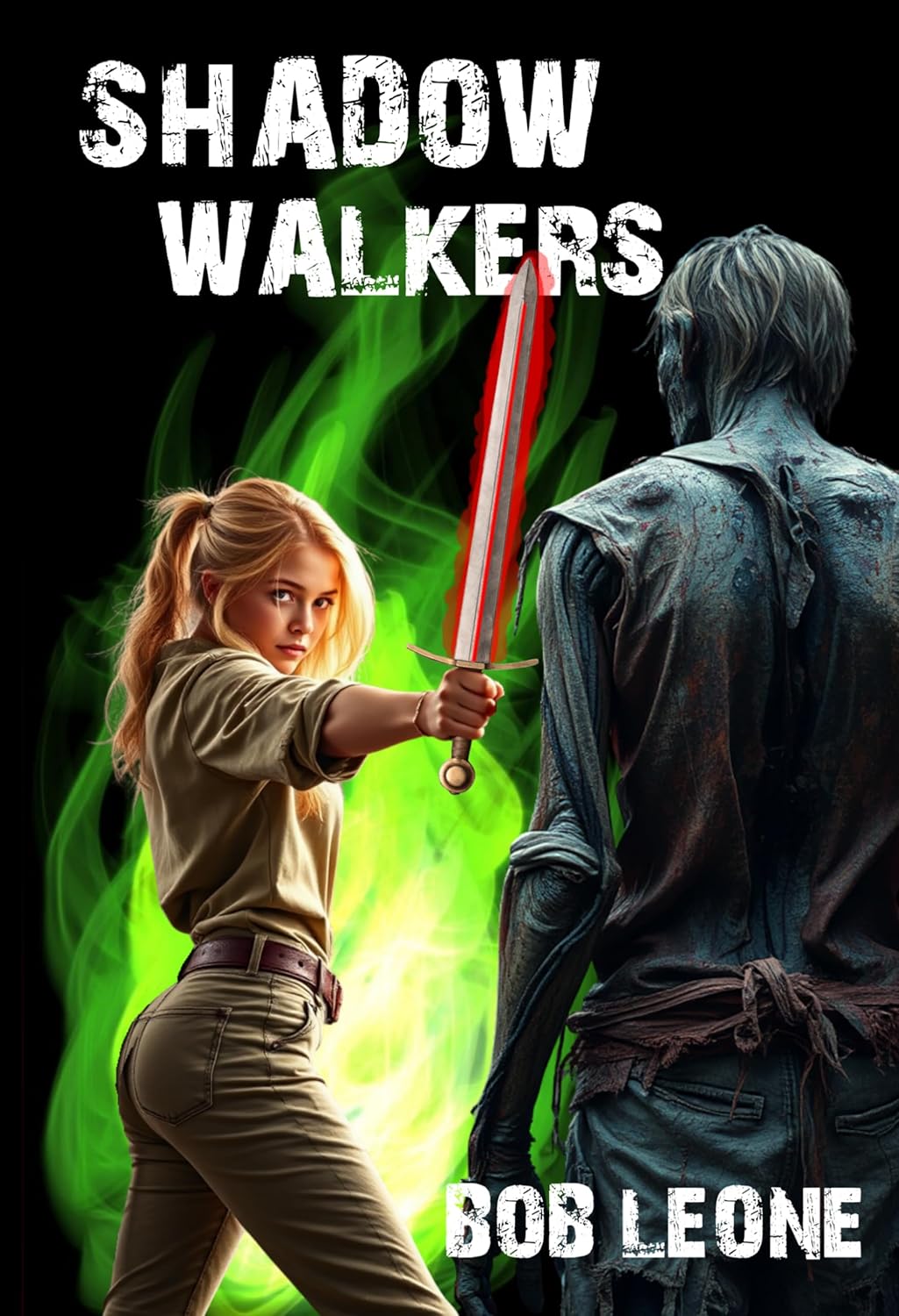
Shadow Walkers is a Christian supernatural fantasy thriller that follows Lisa and Jason, a married couple pulled into a hidden spiritual war where gifted women and their paladin partners hunt demons, confront possession, and answer to an old sacred order. This mission starts with a gathering at Fletcher Mansion, where the team learns that something in their usual pattern has gone wrong, their gifts have not gone dormant, and a far larger battle is coming. The story then opens out into a dangerous campaign involving demon law, possessed people, undead forces, and a mission in Haiti that feels bigger than a single assignment and more like the start of a wider storm.
The book’s tone is intense, but it also makes room for warmth, teasing, and domestic tenderness, especially in the way Lisa and Jason talk to each other. Their banter gives the novel a human center, and at its best, it keeps the story from becoming all lore and combat. I was drawn to Lisa as a lead because she isn’t written like a fearless action machine. She worries. She hesitates. She carries the strain of leadership in a way that feels personal rather than theatrical. That choice gave the book a grounded pulse. Some scenes land with real momentum, while others repeat emotional beats or overexplain. Even so, I kept feeling the author’s sincerity on the page, and that counts for a lot.
I was also interested in the author’s wider choices. Bob Leone builds the book around spiritual hierarchy, ritual, duty, and moral tension, not just around monsters, and that gives the fantasy elements a distinct identity. The friction between Lisa and Magdalana adds real texture because it turns leadership into more than a title. It becomes a live question. Who should lead, and what kind of person should lead when the rules are old but the danger keeps changing? I thought the Haiti mission, the bokor, and the undead raised the stakes in a way that pushes the story into darker and broader territory. Sometimes the book feels like it’s carrying a lot at once, romance, action, theology, team drama, military-style planning, supernatural lore, but there’s also something compelling about that ambition. It reads like a story that genuinely believes good and evil are not abstract ideas. They’re close enough to touch.
I would recommend Shadow Walkers to readers who enjoy faith-infused supernatural fiction, especially people who like demon-hunting stories with a strong relationship at the center and a clear moral framework. Readers who value heart, conviction, and a fast-moving spiritual warfare premise will likely find a lot to appreciate here. It feels best suited for fans of Christian speculative fiction, paranormal thrillers, and team-based fantasy adventures that care as much about calling and loyalty as they do about the next fight.
Pages: 340 | ASIN : B0GFY8MPYR
The Second Coming: Divine Deception
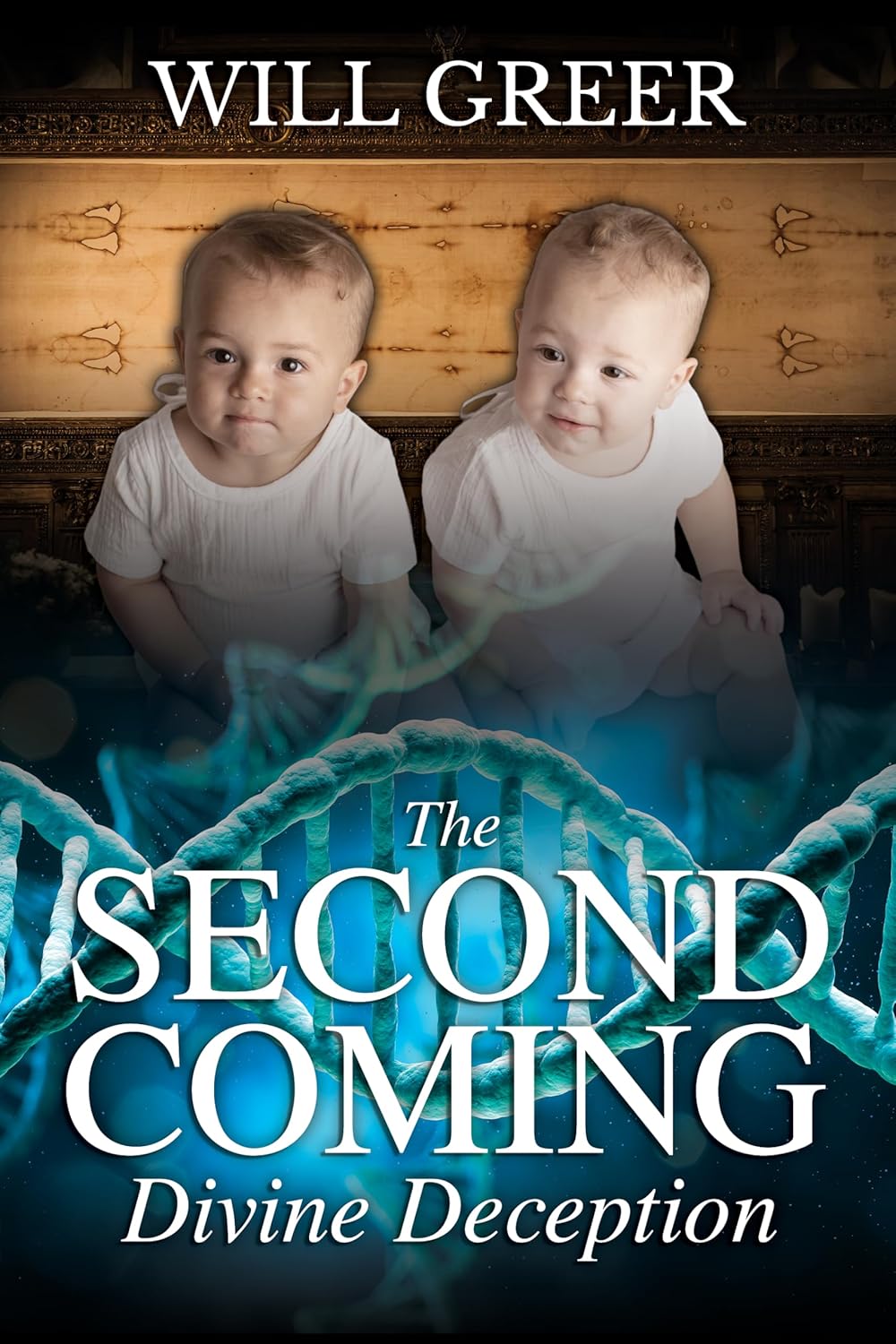
In this religious science fiction thriller, the Vatican secretly launches Project Genesis, using DNA from the Shroud of Turin to create a child they hope will be the new Messiah. At the exact same time, in Nazareth, a struggling young woman named Rachel miraculously conceives a son of her own. The lab-grown boy, Michael, is raised in a hidden Swiss facility and slowly groomed into a global spiritual superstar, while Joshua grows up poor, loved, and quietly gifted, healing people in back alleys and shelters. The novel follows both of them from birth toward a foretold showdown at thirty-three, moving from Vatican back rooms to “New Rome” in Switzerland and refugee camps in Jerusalem as the world decides which “second coming” it believes in.
What I liked most about the writing is how straightforward it is. The opening in the cold Turin lab is tight and visual, and the book keeps that almost cinematic style as it jumps between Sarah in the Vatican project, Rachel in Nazareth, and later Joshua and Michael as they age. The pacing is very much in a thriller mode: short chapters, scene breaks that end on a hook, time jumps that move you from embryo to child prodigy to viral press conference without getting stuck in the weeds. The tech and theology are kept pretty simple. You get just enough genetic jargon to buy the premise, then the story goes back to people in rooms making scary choices. Sometimes the dialogue is a bit on the nose, but this is a book that wants you turning pages, not dissecting sentences.
Where it got interesting for me was in the author’s choices around the two “messiahs” and the whole obsession with proof. Michael, the lab child, is polished and almost inhuman from the start, his miracles wrapped in spectacle and data and political theater. Joshua, the boy from the shelter, is messy, kind, and often unsure of himself, his “powers” showing up in subtle moments like sitting with a dying woman or patiently talking a selfish kid into sharing. Watching the Church, governments, and media fall for Michael’s controlled displays while Joshua refuses to market himself felt uncomfortably close to how we treat charisma and certainty in real life. I liked that the book keeps circling that tension: faith versus proof, love versus control, free will versus “certainty.” At the same time, the moral lines can feel very clean, although you do get flickers of regret and doubt that hint at something more complicated under the surface.
By the time the story moves into the later chapters, with New Rome rising around Michael’s empire and Joshua building a much smaller, scrappier movement in Jerusalem, the book starts to feel less like a standard thriller and more like a long parable about what kind of power we actually want shaping us. The religious science fiction frame lets it play with mind control, viral media, and miracle tech in a way that feels familiar without needing real-world brand names spelled out. I found myself thinking about algorithmic feeds, personality cults, and our cultural hunger for “certainty” while Joshua insists that truth does not need to shout or trend to be real. The ending is hopeful, more about the legacy of ordinary courage and love than about who can throw the biggest miracle, and that choice left me with a warm feeling.
I’d recommend The Second Coming: Divine Deception to anyone who enjoys religious thrillers but wants something a bit more heartfelt than puzzle-box conspiracy stories, and to readers of soft science fiction who like their big ideas wrapped in very human stakes. If the idea of an Antichrist born in a Vatican lab squaring off against a quiet healer from a homeless shelter sounds intriguing, and you are curious about how faith, science, and power might collide in a hyperconnected world, this novel will give you a lot to think about while still being a fast and engaging read.
Pages: 101 | ASIN : B0F7K3JQ5V
The Eternal Bridge


The Eternal Bridge is a fantasy parable about a world healed on the surface yet still aching inside. The story begins three years after Geshriel becomes a living bridge that joins two once-hostile shores. People trade, marry, feast, and rebuild, and life looks whole again. Then small tremors shake the land, crops wither, and feasts feel thinner, and the community senses a deeper break between earth and heaven that no wooden span can fix. The book follows families like Fidel and Verita, Liberta and Dathan, and many others as they wrestle with grief, restlessness, and hope while they wait for Geshriel to return and complete the work he began. In the final movement, the bridge turns into a vertical path of light, the dead are raised, a radiant city descends, and the people find their true home in the presence of the Lamb and the Maker, in a union that feels final and yet ever deepening.
I felt pulled in first by the tenderness of the relationships. The marriages and families feel warm and lived in, and I cared about them very quickly. The scenes of simple daily life on the bridge, the artisan work, the trade, the shared meals, all carry a quiet glow. When the cracks appear in that paradise, the emotional punch hits hard, because the book has already convinced me that this community matters. The later reunions with lost children, spouses, and elders hit an even deeper nerve. The big theological ideas turn very personal there, because the hope of resurrection shows up not as an abstract promise but as a mother getting her baby back, or a couple finally freed from decades of guilt.
The prose leans lyrical and earnest, and sometimes it worked for me. The symbols are very clear, and the story rarely hides what it wants to say. The bridge, the orchard, the feast, the tremors, every image points to a spiritual theme. That clarity will comfort some readers. The early chapters linger on peaceful life on the bridge, and a few of those sections felt long, while the cosmic finale races by in a rush of visions, reunions, and worship. I enjoyed that ending.
I would recommend The Eternal Bridge to readers who love clear, heartfelt Christian allegory and who enjoy stories in the vein of C. S. Lewis’s The Great Divorce or classic devotional fiction. If you are hungry for a story that talks openly about loss, longing, reunion, and eternal hope, and if you like the idea of seeing big doctrinal themes lived out in ordinary families, this novel will likely move you.
Pages: 223 | ASIN : B0G4NYKT9J

Longing, Loss, and Waiting

The Broken Bridge tells the story of two communities united by their faith in the Great Bridge and the intense fear and dread that follows its catastrophic collapse. What was the inspiration that drove the development of the world the characters live in?
The story began with a single image in my mind: a great, living bridge holding two communities together—until it falls. I’ve spent years walking with people through conflict, loss, and reconciliation, and I wanted an allegory that shows both the terror of separation and the costly beauty of restoration. The world of The Broken Bridge is built around that question: when what we’ve trusted collapses, which “bridges” do we run to—and which one can actually bear the weight of our hopes?
I felt this story was very well-written. What’s your experience as a writer?
Thank you. I’ve been writing for over two decades—first Bible studies, devotionals, and discipleship courses through our ministry, and then a number of nonfiction books. Fiction became a natural next step for me because a story reaches the heart in ways instruction alone can’t. The Broken Bridge drew on those years of pastoral ministry and teaching, but it let me weave truth into a narrative that invites readers to feel as well as think.
What were some themes that were important for you to explore in this book?
Unity and division: how easily communities fracture—and what it truly takes to reunite them.
Counterfeit vs. true solutions: many “fixers” promise quick repair; only one path restores the heart.
Sacrificial love: the kind of love that stands in the gap and pays a cost for others.
Pride and humility: the danger of self-reliance and the freedom that comes from surrender.
Hope through suffering: how longing, loss, and waiting can become the doorway to deeper healing.
What is the next book you are working on, and when will it be available?
Two follow-ups are on the way. The Living Bridge is due out in October 2025—it continues the allegory by exploring how trust is rebuilt and what kind of bridge can truly hold. The trilogy concludes with The Eternal Bridge, scheduled for January 2026, which lifts our eyes to the ultimate reunion and the promise of forever.
Author Links: GoodReads | Amazon
Seven years ago, an earthquake separated Fidel from Verita the day before they were to be married. Now, as they exchange nightly lantern signals—an old watchman’s code Verita learned from her uncle—the churning waters of the Vitae River still separate them, but their light signals speak across the dark divide.
Six builders arrive, each promising to rebuild the bridge. They each represent some aspect of humanity’s attempt to heal what’s broken—through law obedience, knowledge, religion, servitude, charisma, and self-transformation.
When the seventh builder arrives—an ordinary carpenter with extraordinary compassion—everything begins to change. Geshriel speaks of a different kind of restoration, one marked by humility, love, and a mysterious costly sacrifice.
As darkness closes in, will Fidel dare to trust a path that seems weaker than all the others—but somehow feels truer? After seven long years of lantern signals across the raging river, will Fidel and Verita finally be reunited?
This is a story of ache and heartbreak, of longing, of desperate attempts to be reconnected. It speaks of love and loss, of yearning to be reunited.
A story of separation and reunion, sacrifice and redemption—and the bridge that love builds when all else fails.
The Broken Bridge

Mike Cleveland’s The Broken Bridge is a sweeping allegorical tale about unity lost and the sacrificial love that alone can restore it. The story begins in a vibrant and harmonious world where two communities are joined by the Great Bridge. More than just stone and mortar, it’s a living heart that binds people together. Fidel and Verita’s love is set to be sealed at the bridge’s center, but a sudden and catastrophic collapse shatters both the structure and the people’s trust. As the physical chasm grows, so does the spiritual and moral divide, giving way to fear, selfishness, and grief. Various figures, each embodying different philosophies and approaches, arrive to offer their versions of repair, but only one path leads toward true restoration. Through vivid scenes and a layered cast of characters, Cleveland builds an allegory of the human condition, the Fall, and the atonement.
The imagery is lush but never indulgent; the bridge itself is practically a character, breathing with history and meaning. Cleveland’s gift lies in his ability to make a symbolic world feel tangible. I could smell the bread from the communal kitchens, hear the lapping of the Vitae River, and feel the stone vibrate under the feet of a united people. When disaster struck, the grief was palpable. He writes loss in a way that made my chest ache. And yet, there’s a steady thread of hope woven in, even through the darker passages, that kept me turning pages long after midnight.
The book isn’t just a pleasant walk through metaphor. It has sharp edges. The portrayal of human frailty, how quickly love can curdle into self-preservation, hits uncomfortably close to home. I found myself frustrated with characters who gave up too soon, and pained by those who clung to impossible ideals, hurting others in the process. There were moments I wanted to shout advice into the pages. But that’s a credit to Cleveland’s storytelling; his people aren’t cardboard saints or villains. They’re complex, flawed, and deeply human. At times, the moral symbolism is overt, but it never feels like a sermon being read to you. It feels like a mirror being held up.
The Broken Bridge left me with that rare mix of satisfaction and longing. The sense that the story had resolved, but that its truths would keep echoing long afterward. It’s a tale for readers who enjoy their fiction with meaning baked into every scene, who don’t mind being made uncomfortable on the way to being inspired. I’d recommend it to fans of allegorical works like The Pilgrim’s Progress or Hinds’ Feet on High Places, as well as to anyone wrestling with themes of reconciliation, grace, and the cost of true unity.
Pages: 183 | ASIN : B0FH365HJT
Boy of Heaven
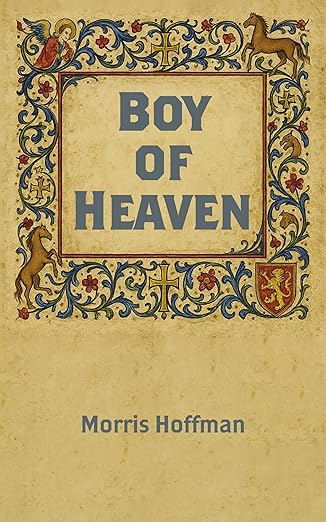
Boy of Heaven, by Morris Hoffman, tells the story of an orphan boy in 17th-century Milan who discovers a fading mural, Leonardo da Vinci’s The Last Supper, hidden in what has become the stables of a Dominican priory. As the boy labors among horses, he has named after constellations; he alone sees the painting’s slow return to clarity. What unfolds is a lyrical meditation on suffering, faith, grief, and vision. Hoffman’s novel blends historical fiction with a mystical edge, threading deep emotion through a richly imagined world.
Reading this book pulled something quiet but insistent from me. Hoffman’s writing is unusual, almost liturgical in rhythm. It doesn’t always make for an easy read, but it makes for a rewarding one. There were passages I reread just to feel them again. The boy’s interior world is raw and lonely, but never melodramatic. There’s very little action in the conventional sense. Instead, the story unfolds through daily labor, small kindnesses, and sacred echoes. And yet, I found myself emotionally swept up in the boy’s grief for a horse, his awe at a fresco, his quiet yearning to be seen.
I feel the book drifts at times. There were sections where the pace slowed, where there were long descriptions of the priory or repeated imagery. Everything is so reverent. Still, what the book lacks in momentum, it makes up for in heart. The blend of the sacred and the mundane, the way the horses become mythic, the mystery of the fresco, that’s where it shines. It doesn’t explain itself, and that made it feel more honest and more relatable.
Boy of Heaven isn’t just about art or faith or even memory. It’s about seeing what others miss and holding on to what shouldn’t be forgotten. It’s a quiet book, but it left a loud feeling. I’d recommend it to anyone who loves poetic writing, historical fiction with a spiritual bend, or stories where nothing much happens on the outside but everything changes on the inside. This is not a book to speed through. It’s one to sit with, one to cherish in silence.
Pages: 90 | ASIN : B0F7C4BSRP


