Author Archives: Literary Titan
American Insomniac: Reflections on the future of a dying democracy


American Insomniac is a restless, wide-ranging collection of essays, op-eds, and personal reflections that circles around one big worry. American democracy feels like it is slipping away. Author Jim Smith moves through three big territories. First, he pulls apart the health of democracy and freedom in the United States and ties it to capitalism, inequality, and political polarization. Then he turns to culture, from a gripping story about Argentina’s “Dirty War” to feminism, consciousness, and the way modern life sells us “experiences” as products. Finally, he dives into explicitly philosophical explorations of thinkers like Vine Deloria, Lukács, and Gregory Bateson and uses them to ask what a more humane, sane society might look like. All of it sits inside one frame. An insomniac citizen who lies awake at three in the morning, trying to make sense of a country that feels both familiar and broken.
The opening autobiography of carnival life instantly hooked me. The details about flat stores, grab joints, rock o planes, and a childhood spent as “other” among carnies and then “other” again back in a small town, give his later anger and skepticism real roots. That early outsider lens never really leaves the page, and I found myself trusting him more because of it. When he goes after Congress, the Supreme Court, Trump, Montana’s legislature, or the hollow language of nationalism, it feels less like a partisan rant and more like the long view of someone who has watched the same bad habits play out in different costumes. The tone swings between dry humor, exasperation, and real grief. I caught myself laughing at his jokes about both parties and then, a page later, feeling that heavy, sinking sense that he might be right about how fragile things have become.
Stylistically, the book is a bit of a mixed bag, and I mean that in a good way. Parts of it read like newspaper op eds, quick and punchy, rooted in specific Montana fights and court cases. Other sections feel like seminar papers, thick with references and theory, especially when he gets into consciousness, reification, or Bateson. Those more academic stretches slowed me down, and at times I wished he had trimmed or translated the theory a bit more for general readers. On the other hand, that density also signals how seriously he takes ideas. This is not a collection of hot takes. It is the product of years of teaching, reading, and arguing with the world, and I appreciated that he did not talk down to me. Even when some statistics or political references feel a little dated, the core worries about authoritarian drift, commodified life, and the erosion of public trust still hit hard, maybe even harder now.
The book makes a convincing case that “natural stupidity” and bad faith politics are not going anywhere on their own. I was encouraged, though, because Smith never fully gives up on the idea that ordinary people can organize, think clearly, and push back. I would recommend American Insomniac to readers who already pay attention to politics and culture and want something more honest and personal than a standard textbook. It will work especially well for folks who enjoy critical essays, progressive political writing, and memoir woven together and who do not mind doing a bit of intellectual heavy lifting in return for an honest, insomniac tour of a “dying democracy” that is still fighting to stay alive.
Pages: 308 | ASIN: B0FNQSH73Y

SACRED SEXUALITY: Grace and Truth Revealed in a Culture of Confusion
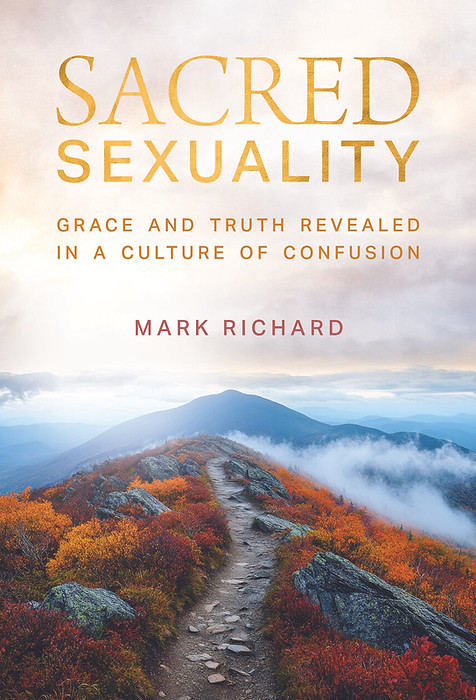

Sacred Sexuality is a straightforward and deeply personal exploration of biblical sexuality told through the lens of Mark Richard’s own journey out of what he describes as deception, confusion, and sexual brokenness. The book blends teaching and testimony, moving from his years in a same sex relationship to his eventual break with that life as he embraced what he believes is God’s design for sexuality. Throughout the chapters, he lays out a consistent argument: Scripture is the unchanging authority on sexuality, culture has drifted far from it, and believers must return to a life shaped by holiness, repentance, and obedience. The book weaves his story with biblical passages, devotional sections, and practical steps meant to guide readers toward what he calls sacred sexuality.
The sincerity of the author is undeniable. His emotional honesty, especially in the preface and his retelling of leaving behind a relationship of many years, comes through with force. There were certain moments that were thoughtful and moving, like when he described falling to his knees with Scripture open, wondering what it must have felt like to have your whole sense of self cracked open by a single passage. The writing carries an intensity that sometimes made me feel like I was sitting across from someone who desperately wants you to grasp what he grasped. That passion can be stirring. His voice is pastoral, urgent, and deeply convicted. Whether one agrees with every interpretation or not, it is clear he has lived every word he wrote, and that kind of vulnerability will resonate with readers.
The book leans on long blocks of Scripture and strong declarations about sin, judgment, and identity. There were moments when I wanted more nuance, especially when he addressed topics like same sex relationships, temptation, or modern cultural norms. His certainty is absolute, which can feel steadying for some. I would have liked more stories from people he has ministered to. The book’s frame of reference is clear, sharp, and unwavering, which offers readers clarity.
The book has a solid sense of purpose, and it delivers exactly what it promises. Readers who long for strong biblical arguments about sexuality, or who want a testimony of radical life change, will likely find this both challenging and encouraging. Pastors, parents, and believers who feel lost in cultural debates might also appreciate the book’s firm convictions and practical steps. If someone is already inclined toward a traditional Christian sexual ethic, this book will feel like a roadmap and maybe even a lifeline. If someone is questioning, searching, or carrying pain around sexuality, they may find honest reflection and heartfelt hope.
I would recommend Sacred Sexuality to readers who want a bold, earnest, Scripture-centered approach to sexuality and identity. It is best suited for those who appreciate direct teaching and personal testimony woven together. The emotion in these pages is raw, and the message is clear, and for the right audience, it could be deeply impactful.
Pages: 120 | ISBN 13: 979-8-89804-030-7
Harriet Hates Lemonade

Harriet Hates Lemonade follows Harriet Henderson, a rigid and lonely widow in Bozeman, Montana, who breaks her ankle after a showdown with a neighbor’s off-leash dog and suddenly cannot outrun her own life anymore. Stuck at home with her beloved dog Bibbo, she clashes with new neighbor Robyn and Robyn’s young daughter, then slowly notices that something is very wrong inside their house. As Harriet gets pulled into their struggle with an abusive husband and into group meetings at Harmony House, she starts to recognize patterns from her own marriage to Les and the ways she has buried those memories. The story tracks Harriet’s halting attempts to help Robyn find safety, her growing bond with Audrey, and her reluctant softening toward community, small kindnesses, and even a few messy surprises. Underneath the neighborhood gossip and petty HOA battles sits a clear through-line about the cycle of emotional abuse and the work it takes to break it.
I really loved how the writing lets me sit deep inside Harriet’s prickly head. The narration stays close to her thoughts and habits, so her sharp comments about neighbors, librarians, and lemonade stands made me laugh even when she was objectively being awful. Scenes like the humiliating hospital pickup, the underwear-in-the-grocery-bag mix-up, and the crusade against the off-leash dog feel both funny and sad at the same time. The prose itself is clean and unfussy, and the humor feels natural, not forced. I also appreciated the sensory details around aging and the house, from the cave-like wood paneling to Harriet’s irritation with her own body, because they grounded the story in a very tangible midlife reality.
The ideas in the book hit me harder than I expected. The sessions at Harmony House walk through the cycle of narcissistic abuse, love bombing, devaluing, and hoovering, and the explanations are clear without turning the novel into a pamphlet. I found myself wincing as Harriet initially resists the word “abuse” and defends Les with religious language and talk about old-fashioned vows, because that denial felt painfully believable. The story shows how emotional abuse hides inside “rules,” jokes, and backhanded remarks, and why leaving is not a simple act of will. I liked that Robyn’s journey does not follow a neat straight line and that Harriet’s support is clumsy and sometimes controlling, since that messiness mirrors real life. The book also nudged me to think about community and neighborliness, how easy it is to hide behind privacy and routine, and how risky it feels to butt into someone else’s marriage even when every instinct screams that something is wrong.
Harriet Hates Lemonade will suit readers who enjoy character-driven contemporary fiction, small-town settings, and complicated, not-always-likable women who have to unlearn a lifetime of bad lessons. If you have liked books in the vein of A Man Called Ove or Olive Kitteridge, or if you are interested in stories that unpack domestic abuse with compassion and plain language, this novel is a strong pick for you and for book clubs that like big feelings and big discussions.
Pages: 330 | ASIN : B0G2YPGWHV
Terra Lux

Terra Lux, by Jessahme Wren, follows a tight-knit little family on Dobani right as life starts to crack. Pearla is pregnant and running her shop during the Festival of Light, Phoenix is doing his best “steady dad” thing, and Sev is trying to act grown while still feeling like a kid in all the worst ways. Then the mood flips fast. Soldiers show up, a curfew settles over town, checkpoints pop up, and normal routines turn into fear math. The family gets swept into an “evacuation” to Kedros, a place Dobani used to treat like a dump, and the story slides into camp life, forced work, and separation. Sev reconnects with Soren in Kedros, a doctor she knows from earlier, and that reunion becomes a lifeline in a brutal place.
The writing leans hard into touch and sound and small routines. Fried bread. Moonlight. A hand on a belly. Then it pivots into boot grit, broken glass, and that awful sense of being watched. That contrast worked for me. It made the danger hit harder. The point of view shifts also helped. I stayed close to each character’s fear. I also felt the love in the gaps. Phoenix, in particular, got me. He has this gentle, stubborn warmth. It is corny in the best way. A few scenes run long, and some beats repeat. Panic, regroup, panic again. I kept turning pages because I quickly came to care about the characters. To me, that matters more than perfect pacing.
The ideas landed with weight, not with lectures. The book looks straight at what power does to regular people. It shows how fast a safe town can turn into a trap. It also shows how kindness stays alive in ugly places. A ration shared. A quiet favor. A small “I see you” moment in the middle of the mess. The found family thread is the real engine. Sev, Phoenix, and Pearla feel earned. Soren adds a softer kind of strength. He listens. He holds a line without acting like a hero poster. I loved the light motif too. Festival lanterns at the start. Kedros twilight in the middle. Then warm sun at the farmhouse after the storm. It reads like a promise. Darkness is real. Light still shows up. It is worth noting that I did wish a bit for sharper edges on the “system” side. More texture. More messy motives.
I recommend Terra Lux for readers who want character-first science fiction with a lot of heart. It fits people who like survival stories with tenderness, not nonstop grit. It also fits anyone who likes found family, gentle romance energy, and healing after harm. Expect stress and fear, plus moments that feel cozy and hopeful in the same breath. I would hand it to book clubs, too. Plenty to talk about. Power, home, loyalty, and what “safe” even means after everything changes.
ASIN : B0GDQZD128
The 7 Universal Laws: The Hidden Rules Behind the Mind, Emotions, and the Architecture of the Universe

The 7 Universal Laws lays out a framework that blends psychology, physics, personal development, and storytelling. Monica Ion and Stefan Irimia explore seven core principles that they believe govern both the universe and human behavior. These laws include duality, reflection, transformation, synchronicity, eristic escalation, order, and fractals. Each law is illustrated through real client cases and personal stories, showing how perception shapes emotions, decisions, and outcomes. The book positions these laws as tools for resolving inner conflicts and creating meaningful change.
I was pulled in by the mix of scientific language and simple, emotional storytelling. The authors lean on the idea that perception is the root of human experience. I like how they frame events as neutral until the mind assigns meaning. Their examples feel authentic and honest. Sara’s transformation while traveling through the mountains, for example, stirred something in me because of how quietly powerful it was. The writing style is clear and patient, and it feels like the authors genuinely want the reader to walk away with a new way of seeing the world.
The laws are presented as universal truths, yet some explanations feel more metaphorical than scientific, which I didn’t mind. I also enjoyed how they weave in history, philosophy, and neuroscience, and while some simplifications are bold, they make the book more approachable. What impressed me most was how the real stories are used. They are vulnerable and detailed enough to feel authentic. They show how messy people are and how quickly things can shift when the mind reframes meaning.
By the end, I felt a mix of curiosity, calm, and an urge to test some of these laws myself. I kept thinking about how much of my own life has been shaped by hidden assumptions and unexamined fears. That is where this book shines. It invites reflection without preaching. It offers structure without demanding belief. I walked away with a deeper appreciation for how perception shapes reality, and I felt a gentle push to rethink how I label my own experiences.
I recommend The 7 Universal Laws to readers who enjoy personal development, psychology, or spiritually influenced frameworks that are grounded in practical storytelling. If you like books that make you rethink your emotional patterns and give you tools to shift them, this will land well for you. It is especially good for anyone who wants a fresh perspective on why they feel stuck and how to create meaningful internal change.
Pages: 321 | ASIN : B0FPRPNBFK
Mistress of Bees

When I picked up Mistress of Bees, I expected a playful romp through a world of magic and mischief, and that’s exactly what I got, but with a lot more teeth than I anticipated. The book follows Lady Maris Goselin, a foul-mouthed, bee-wielding, sharp-witted sorceress who narrates her own adventures with a mix of biting humor, lustful candor, and raw honesty. Through her eyes, we stumble into necromantic disasters, awkward entanglements with past lovers, dangerous pacts, and more than one horrifying monster fight. It’s a collection of linked tales, each brimming with irreverence, peril, and a constant tug-of-war between desire, regret, and survival.
What struck me first was the voice. She’s crude, hilarious, sometimes cruel, but always human in a way that feels oddly relatable. I found myself laughing one moment and wincing the next. Author Bernie Mojzes writes her like someone you might meet at a bar, the kind of person who overshares and insults you in the same breath, yet you can’t walk away because the stories are just that good. There’s a rhythm to the prose that pulls you along, rough and jagged at times, almost tender at others, and always with the sense that Maris is whispering in your ear, daring you to judge her.
For all its bawdy humor and sly jokes, there’s a heavy weight behind the stories. Maris is haunted. She’s angry, lonely, bitter, and still carrying scars from every betrayal and every battle. The way she faces down horrors, both monstrous and personal, feels raw and almost painful. I didn’t just read about her struggles, I felt them. And yet, the book never wallows. It snaps back with snark, with sex, with bees buzzing through the chaos. That mix of tragedy and comedy made it unpredictable and addictive.
By the time I finished, I knew this was the sort of book I’d want to recommend to readers who crave fantasy that doesn’t play nice. If you like your adventures messy, your heroes deeply flawed, and your magic tangled up with lust and rage, this is for you. Mistress of Bees is loud, brash, sometimes shocking, and often moving in ways you won’t expect. I’d recommend it to fans of dark fantasy, lovers of irreverent narrators, and anyone who wants a story that feels alive, buzzing, and just a little dangerous.
Pages: 416 | ASIN : B0FJGBBR4S
The Incredible Adventures of Casper the Cat Who Got Lost in Africa: Book 5 – The Lions

This children’s book was a fun ride. Casper wakes up under a tree surrounded by a whole crowd of head-bobbing guinea fowl, then spends the rest of the story stumbling into new friends and new dangers as she keeps trying to get home. She helps orphaned squirrels. She faints in front of a lion. She ends up teaming up with lions, a giant spider named Bertrand, an antlion general with the longest name on Earth, and an army of scorpions to outsmart some trophy hunters. The ending is this wild mix of chaos, teamwork, and justice that somehow still feels warm and funny.
I really enjoyed how the writing balances humor with heavier stuff. One moment, I was laughing because Casper freaked out at an eight-eyed spider. The next moment, I felt a weird swell of pride as all these animals worked together to protect each other. The dialogue has this bouncy, chatty rhythm, and the author leans into absurd moments in a way that feels natural. I also liked that Casper never fully stops being scared. She is tiny. She is lost. She knows it. And she still tries to help anyway. I found that pretty sweet.
What surprised me was how much heart there is behind the silliness. The lions aren’t just big dramatic characters. They care deeply about their families, and that gives the story a real emotional center. Casper’s fear of crocodiles made me laugh and also made me feel protective of her. And the idea of every creature working together to chase off people who hurt animals for fun hit me harder than I expected. It was satisfying. And the tone never turns mean. It stays focused on bravery, kindness, and standing up for each other.
The illustrations throughout the book are adorable. They’re done in these soft, warm colors that make the whole world feel gentle even when the scenes get wild. The characters are expressive in that big clear way kids instantly understand. Each picture adds a little spark to the story, almost like a pause that lets you feel what the characters are feeling before diving back into the chaos.
I would absolutely recommend this children’s chapter book to kids who love funny adventure stories, talking animals, or anything with a lot of heart. It’s great for anyone who enjoys a quick, charming read that mixes giggles with good messages about empathy and courage. This book provides young readers with a good time.
Pages: 80 | ISBN: 1923356216
Everyone Deserves a Home

Baer Charlton’s historical fiction novel, Everyone Deserves a Home, traces the intertwined lives of Walter Humphrey, Leatha, Betsy Turner, and eventually Hannah Mariah Rose Humphrey. It begins in the American South of the mid-1800s, moves through New Orleans, crosses the ocean to England, and follows a family shaped by secrets of race, identity, and survival. From the first chapters, the story lays out a complicated inheritance: hidden parentage, passing as white, the legacy of enslavement, and the formation of a chosen family built not by blood but by loyalty. Even early on, you see how Hannah’s future as a surgeon grows out of this unconventional household where medicine, language, theater, and resilience are all part of daily life.
The writing moves with an intimate, memoir-like rhythm, especially in the prologue, where adult children recount their mother’s hidden Black heritage and how she “became white” at five years old. That moment alone sets the tone. It’s direct, a little painful, and strangely gentle. Scenes stretch out with detail you can almost smell or touch. Then, suddenly, a sentence snaps short and lands like a stone in the gut. I liked that mix. It mirrors the characters themselves. Walter’s voice, in particular, blends clinical precision with emotional restraint. Meanwhile, Leatha’s chapters feel grounded and visceral, as if she’s speaking while chopping vegetables or tying on an apron. And Betsy’s early chapters shimmer with that mix of bravado and fragility found in a teenager who has survived too much too young.
What surprised me most was how the novel lets relationships carry the ideas. Topics like passing, racial identity, gender, sexuality, and bodily autonomy are present, but they arrive wrapped inside the everyday details of meals, births, surgeries, and whispered conversations over kitchen tables. The story never lectures. It just unfolds. Sometimes I found myself pausing, not because something dramatic had happened, but because a small detail shifted my understanding of a character. A hand on a shoulder. A joke in sign language. A quiet refusal to leave someone behind. These moments gave the book a warm undercurrent even when the history it leans on is harsh. And although the novel spans continents and decades, its emotional center always comes back to the home this unconventional family creates together.
By the end, I felt like the title wasn’t just a claim but a philosophy that the book keeps proving. The story champions people who carve out belonging in a world determined to deny it to them. It’s historical fiction, yes, but it reads with the intimacy of family lore and the clarity of someone finally ready to tell the whole truth. I would recommend Everyone Deserves a Home to readers who enjoy character-driven historical fiction, stories about identity and chosen family, and novels that blend emotional honesty with rich, lived-in detail.
Pages: 263 | ASIN : B0FL13PG6X



 LITERARY TITAN