Category Archives: Book Reviews
The Crow’s Ring


The Crow’s Ring is a middle-grade adventure mystery that follows Brandon and his friends as they try to save Captain Hodges’s beloved old tugboat, the Maryanne, from being scrapped, only to get pulled into a long-buried robbery tied to Stony Creek, a missing ring, and Brandon’s sharp-eyed pet crow, Ralph. What starts as a summer restoration project turns into a kid-led investigation full of hidden clues, family history, and plenty of chaos, with the tugboat itself feeling almost as important as any person in the story.
I liked how readable and alive the book feels. The voice is direct, funny, and easy to settle into, and it keeps moving. I could feel the authors leaning into cliffhangers, comic timing, and the energy of a close-knit friend group, and for the most part it works. Brandon is a likable guide through all of it, and the supporting cast each gets a clear shape fast, especially bold Penny, unpredictable Josh, and of course Ralph, who is not just a cute detail but a real engine for the plot. I also liked the way the book lets Captain Hodges be more than a gruff old eccentric. His attachment to the Maryanne, and the way the tug carries his grief and memory of his wife, gives the story a warmer, deeper current under all the antics.
What stayed with me was the book’s sense of place and its belief that kids can matter. Riverside, the marina, the creek, the rooftop with Ralph’s stash, all of it gives the novel a lived-in feel that keeps the mystery grounded even when the plot gets wonderfully busy. I was especially drawn to the way restoration and investigation mirror each other. The kids are not just fixing up a wrecked boat. They are also piecing together a damaged story, and in doing that they help give Captain Hodges a future again, especially once the old case starts opening doors and the Maryanne’s survival begins to look possible. That idea lands well without getting preachy. The book sometimes piles on the coincidences and broad comic beats, still, the warmth carries it.
I’d recommend The Crow’s Ring most to readers who enjoy middle-grade fiction with adventure, humor, friendship, and a mystery that feels old-fashioned in a good way. It has the pull of a summer caper, the structure of a clue-driven detective story, and just enough heart to make the whole thing feel grounded. I think it will especially click with younger readers who like ensemble casts, lively pacing, and stories where community, loyalty, and curiosity do real work. It feels like the kind of book you hand to a kid who wants excitement, but also wants to care.
Pages: 334 | ASIN : B0GHZM4DMT

And It Only Took 100 Years…

And It Only Took 100 Years… is, on its face, a show business memoir, but it’s really the story of a life slowly claimed from fear, class anxiety, secrecy, ambition, and time itself. Alan Shayne begins with a lonely, yearning boy in Falmouth, watching the world through shop windows and trying to understand his own desire, then carries us through acting, television, Broadway, casting, production, Hollywood power corridors, and finally into the long, durable companionship of his life with Norman. The book moves from furtive early encounters and humiliations to rooms full of stars, from the sting of his grandmother telling him his nose is too big to the strange dignity of growing old enough to look back and say, with some hard-earned calm, that work and love were the real architecture of his life.
What I admired most is how unvarnished Shayne is about loneliness. That early material has a bruised, searching quality I found very affecting. The scenes with Dudley, Lenny, Roger, and the antique dealer Dave Garland aren’t presented as neat awakenings or tidy milestones. They’re confusing, charged, half-understood, and often sad. That felt true. So did the social texture around them, the bad meals, the grandmother’s cluttered shop, the humiliating hunger to be seen, the way a beautiful room or a handsome stranger can seem to promise an entire future.
Later, when the memoir opens into theater and Hollywood, the book never loses that earlier ache, and I think that’s why the celebrity material lands. The stars are there, yes, but they don’t swallow the man telling the story. Even when he’s writing about Bette Davis, Helen Hayes, Barbra Streisand, or the mechanics of Warner Brothers, the deeper subject remains the same: what it costs to make a self, and what it costs even more to keep one.
I also found myself responding to the book’s ideas, which are wiser and less glib than the title might lead you to expect. Shayne is not peddling a “life lessons at 100” pose. In fact, one of the book’s strengths is its resistance to easy wisdom. He keeps circling back to effort, luck, erotic secrecy, professional endurance, and the odd mystery of survival. I liked that he can describe casting Cicely Tyson, watching blacklisted actors slip back into work almost by accident, or helping shape television careers, and still end up talking not about triumph in some grandiose sense, but about responsibility, taste, loyalty, and stamina. His prose isn’t always polished in a high literary way, but it is vivid, direct, and alive with remembered detail. When it works best, it has the crispness of someone who spent a lifetime noticing entrances, voices, rooms, and timing. There are stretches where the pace becomes brisk and episodic, especially once career anecdotes begin to stack up, but even then I felt the pulse of a real consciousness behind it, amused, wounded, vain, observant, generous, and finally very tender.
What stayed with me wasn’t any single famous name, though there are plenty, but the through-line from the frightened boy who sensed “some mystery” in the world to the old man who can finally name the cornerstones as work, love, and the mystery that carries them. I found that moving and unexpectedly grounding. I’d recommend And It Only Took 100 Years to readers who like memoirs with both cultural history and emotional candor, especially anyone interested in queer lives across the twentieth century, old Hollywood, television, and the slow making of a shared life.
Pages: 328 | ASIN : B0GCVCMSWC
Mud, Microbes & Medicine

Mud, Microbes, and Medicine is a memoir of reinvention, but it never feels neatly prepackaged. Elizabeth Aden begins with the rupture of an early, stifling marriage and follows that break into graduate school, fieldwork in what was then the New Hebrides, painstaking hepatitis B research on Malo, and eventually a striking rise through biotech and global pharma leadership. What gives the book its shape is not simple career ascent, though, but the way curiosity keeps dragging her forward into harder and stranger terrain. A scene as comic as her arrival in a “Safari Barbie” outfit on a remote island sits beside the slow, exacting labor of gathering blood samples and behavioral observations, work that eventually helped explain how chronic HBV infection was being transmitted in infants through intimate, ordinary caregiving behaviors.
Aden writes with a brisk, unembarrassed clarity that lets the absurdity of life show itself without much coaxing. She’s funny in a dry, self-implicating way, especially when she recounts her own naïveté, whether she’s blurting out the wrong thing on arrival, imagining Pacific fieldwork as a sun-drenched fantasy, or learning business, contracts, and drug development on the fly. That candor makes the book feel lived rather than curated. I also liked that the memoir resists the usual triumphalist glaze. Her progress comes with loneliness, bad judgment, professional bruising, gendered disrespect, and the kind of fatigue that success stories usually airbrush away. Even when she rises quickly in biotech and pharma, the tone stays grounded, as if she still can’t quite believe where saying yes, and sometimes refusing to behave as expected, has taken her.
The author makes a persuasive case that science without cultural attention is half blind. Her HBV work is the clearest example. The breakthrough does not arrive as abstract lab brilliance alone, but through patient attention to who holds a child, who feeds a child, who sleeps beside a child, and how everyday life carries risk in ways a cleaner, more conventional hypothesis could miss. That interplay between anthropology and epidemiology gives the memoir real intellectual voltage. I found the chapter-end lessons explicit. The lived material is often richer than the distilled takeaway, and I trusted the story more than the summary. This is a book written by someone who has spent a lifetime extracting meaning from mess, and there’s something moving in that habit.
I found Mud, Microbes, and Medicine invigorating precisely because it is not only about achievement. It’s about learning how to move through bewilderment without becoming smaller, and how a life can be built from nerve, improvisation, intellect, and a refusal to accept the script handed to you. I closed it feeling I’d been in the company of a mind that is restless, capable, sometimes bruised, often funny, and unmistakably alive. I’d recommend it especially to readers who like memoirs with real intellectual substance, to women in science or business, and to anyone drawn to books about fieldwork, medicine, and the unruly ways a life can unfold.
Pages: 352 | ASIN : B0FD43F4X8
The Name and the Key
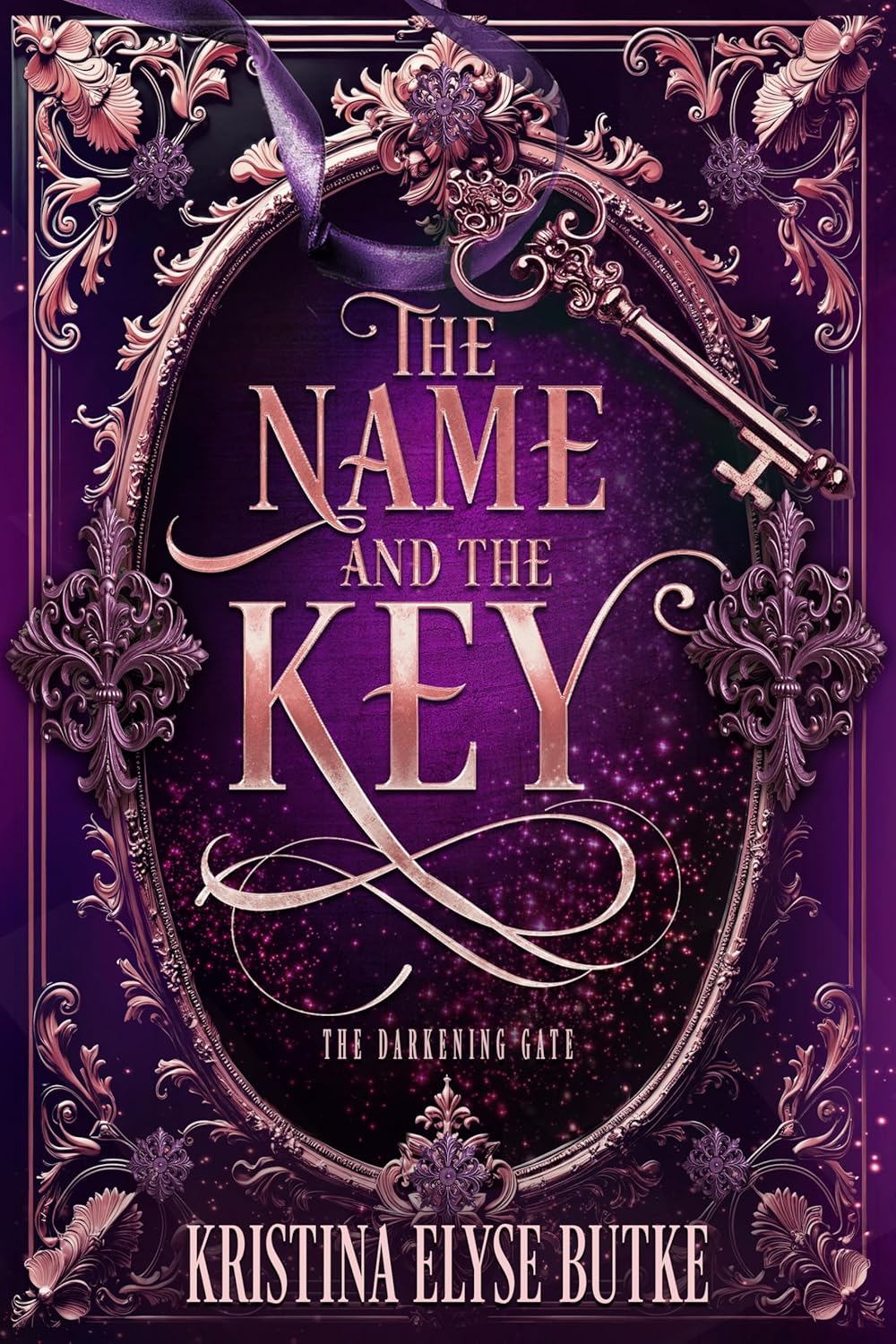
Kristina Elyse Butke’s The Name and the Key is a fantasy novel with a strong gothic streak, and it opens like a haunted coming-of-age story before widening into something darker and stranger. It follows Lily Bellamy after her mother disappears into the woods and is found dead, an event that leaves Lily grieving, marked by visions in mirrors, and pulled toward a hidden magical world tied to names, doors, demons, and her bond with her childhood friend Andresh. What I liked right away was how the book grounds all that big fantasy machinery in personal loss first, so the magic never feels like decoration. It feels like grief changing shape.
Lily’s first-person narration has an earnest, intimate quality that made me feel close to her even when the plot moved into more elaborate fantasy territory. The early sections are especially strong. The discovery in the marsh, the mirror hauntings, the smell of death she cannot wash away, all of that lands with real force because Butke lets the horror feel physical and emotional at the same time. I also liked that the book is not in a hurry to sand Lily down into a polished heroine. She is frightened, stubborn, curious, and sometimes overwhelmed in ways that feel believable. That gave the story a human center I could hold onto.
I also found myself interested in the author’s choices, even when they made me pause. The book blends fantasy, gothic horror, romance, and a bit of alchemical and occult imagery, which gives it a distinct texture. Sometimes that mix really works. The ideas about true names, mirrors as thresholds, and magic as Word, Deed, and Will gave the story a mythic feel without losing its emotional thread. There were moments when I felt the book was reaching in several directions at once, and I could feel the scaffolding of a larger series underneath it. Since this is the first book in a trilogy, some developments read less like a full stop and more like a door opening into the next room. I did not mind that, but I think readers who want every thread tied off in one volume may feel that incompleteness more sharply.
I’d recommend The Name and the Key to readers who enjoy fantasy that leans intimate rather than epic, especially if they also like gothic atmosphere, haunted family secrets, and a coming-of-age story wrapped around romance and dark magic. I think it will work best for someone who wants to sit with a book’s mood as much as its plot, and who does not mind following a story that begins in sorrow and keeps reaching toward deeper mystery. For me, the strongest parts were the rawness of Lily’s grief and the eerie beauty of the world behind the mirrors. That was enough to make me curious about where the trilogy goes next.
ASIN : B0GHZTX2FX
The Island of Mystics

The Island of Mystics is a young adult fantasy that leans hard into emotion, family tension, and the ache of feeling out of place. It picks up with characters already carrying real damage, and that matters. The book opens with grief, moves into separation and escape, and then widens into a story about love, duty, guilt, and belonging. What stood out to me most is that it isn’t built around a single quest so much as a web of relationships under strain. That gives it a more intimate feel, even when the setting gets larger and stranger.
What really gives the book its shape is the way the author lets emotional pain drive the plot. Lucas is crushed by guilt and convinced the people around him would be better off without him. Audrina is trying to hold onto love while living under royal expectations. Gertrude gets pulled between devotion and self-erasure in a way that feels painfully sincere. None of that reads like background decoration. It’s the engine of the story. Even a line as simple as “Nothing lasted” carries weight because that fear keeps echoing through the book in different forms.
I also liked how the fantasy world is presented. The island setting, the mermaids, the unusual birds, the castle details, and the sense of hidden history give the novel a colorful, storybook surface. The book keeps bringing things back to character. It’s less interested in showing off lore for its own sake than in asking what a magical world feels like when you’re scared, heartsick, or trying to choose between love and responsibility. The setting feels vivid, but it never pushes the people out of the center.
The writing has a sincere, openhearted quality that fits the material. Sometimes it’s earnest to a fault, but more often that directness helps. The book is at its best when it lets characters say exactly what they fear, want, or regret. One of my favorite lines comes near the end: “This is not goodbye. This is only until we meet again.” It’s romantic, a little defiant, and very much in tune with the novel’s belief that separation doesn’t have to mean erasure. That same spirit runs through the whole book.
The Island of Mystics is a heartfelt fantasy that cares deeply about its characters and takes their feelings seriously. It’s a book about wounded people trying to find one another, trying to forgive themselves, and trying to imagine a future that isn’t already chosen for them. I came away thinking of it less as an adventure story with emotional stakes and more as an emotional story told through fantasy. That ends up being its real strength. It knows what it wants to be, and it commits to it.
Pages: 236 | ASIN : B0GT26F94N
There’s a Rhinoceros in My House

There’s a Rhinoceros in My House! is a playful picture book built around a wonderfully simple misunderstanding. A sleepy mom, stumbling through the house without her glasses, becomes convinced a rhinoceros has invaded the kitchen, only to discover that the supposed beast is really her husband, noisily making breakfast, flipping pancakes, vacuuming the rug, and clattering through the morning routine. The book turns that small domestic mix-up into a comic little adventure, then lands on a family-table ending that feels affectionate rather than merely punchline-driven.
What I liked most is how fully the book commits to its premise. It doesn’t overcomplicate anything. Instead, it trusts the delicious absurdity of a half-awake mind trying to make sense of thuds, crashes, and splashes. That trust pays off. The repeated rhythm of Mom blinking, squinting, and misreading the chaos gives the story a satisfying bounce, and the reveal works because the book has already made the rhinoceros feel real enough for a child to believe in it for a few pages. The humor is warm. The joke is rooted in family life, in the strange exaggerations that happen when we’re tired, annoyed, or not yet fully in the day.
I especially appreciated how the language leaves room for the wonderful illustrations to carry part of the joke. The book’s ideas are gentle and young readers will be able to recognize them. Every page is filled with colorful, lively artwork that gives the story its energy, with expressive scenes and playful visual details that make the household chaos feel funny, inviting, and easy for children to follow. I especially liked the character sketches at the end, which offer a fun glimpse into how the artwork was created. They add an extra layer of charm to the book, and I think children will love trying to draw the characters on their own. It’s a lovely touch that could easily inspire budding young artists.
I came away from this story smiling. It’s an easy book to imagine reading aloud, especially with relish for the sound effects and the slow, teasing build toward recognition. In the end, what stayed with me wasn’t just the joke of the rhinoceros, but the fondness underneath it, that sense of a family translating everyday racket into story. I’d recommend this picture book to young children who love silly visual misdirection, for families who enjoy read-alouds with a theatrical streak, and for anyone partial to picture books that turn ordinary mornings into something slightly magical.
Pages: 25 | ASIN : B0GNJ3CZ63
The Shards of the Conduit


The Shards of the Conduit is a military science fantasy novel that knows exactly how it wants to introduce its world: at a sprint, under pressure, with one soldier dropped into a nightmare and forced to improvise his way through it. The book opens with Malek, call sign Specter, heading into a mission gone horribly wrong, and that opening gives the novel its identity right away. It’s tense, tactile, and deeply invested in how fear feels inside the body. One of the smartest things author Sarah Yusuf does is give Malek a simple recurring line, “Don’t lose your head,” and turn it into a window into his trauma, discipline, and survival instinct. That line tells you a lot about the book as a whole. It’s interested in action, sure, but it’s even more interested in the cost of action.
What makes the novel work for me is that it’s not just built on combat set pieces. It’s built on a volatile political and emotional landscape. The mission starts as a hunt for a Fireborne attacker, but it quickly becomes a story about uneasy alliances, inherited hatred, and the dangerous meaning of the shard everyone wants. Malek begins the book with a hard, almost reflexive view of the Elemnai, shaped by military training and old prejudice, and the story keeps pressing on that worldview. The epigraph, “None of us are free, until all of us are free,” feels less like decoration and more like the book quietly telling you where its heart is. Beneath the firefights and covert ops, this is a story about empire, fear, and whether people raised inside a brutal system can learn to see each other clearly.
The book’s center of gravity is Malek, and Yusuf gives him enough rough edges to keep him interesting. He’s capable, sarcastic, stubborn, and often one bad decision away from disaster, which makes him a good anchor for a story that depends on forward motion. His dynamic with Kei is especially strong because it develops under fire rather than in safety. Their banter never feels like it wandered in from a different book. It feels earned by exhaustion, injury, and necessity.
I also liked how confidently the book commits to scale. It gives you the sense of a much larger world without stopping every few pages to lecture about it. The map, the different Elemnai groups, the Alliance structure, the languages, the shifting borders, and the references to past wars all help Eiden feel inhabited rather than assembled. By the time the novel moves toward its later setup, with Malek being pushed into a new command and a new hunt involving the Earthborne and another shard, the story has already earned that expansion. It feels like the natural next step for a series opener, not a trailer for a different book. The shift into a broader mission works because the first part has already established that every shard carries political consequences, not just mystical ones.
The Shards of the Conduit is a sharp, fast-moving series opener with a strong sense of atmosphere and a clear emotional core. It’s a book about soldiers, but also about memory, identity, and the slow cracking open of inherited certainty. Yusuf writes action with urgency, but the book’s staying power comes from the way it ties that action to character and ideology. By the end, it feels less like one mission completed than a world pried open. I came away thinking that this book’s biggest strength is its conviction. It knows the story it wants to tell, and it tells it with heat, momentum, and enough moral tension to make the next installment feel worth following.
Pages: 313 | ASIN : B0G4XTRRKM
The Radiant Word: Reflections in the Orthodox Tradition


V.K. McCarty’s The Radiant Word is less a conventional theological study than a gathering of lived sermons, meditations, and keynote reflections that move through the Orthodox liturgical year while lingering over Scripture, icons, saints, hymnody, and patristic sources. The book begins in light, with the Transfiguration and the idea that Christ’s radiance reaches into “the complicated corners of our lives,” then widens into reflections on the Theotokos, desert mothers, Mary Magdalene, the Prodigal Son, the Jesus Prayer, Kassia’s hymn, Pentecost, Basil, and finally love and beauty in pandemic life. What binds it all together is McCarty’s desire to make ancient sources feel not archival but immediate, devotional, and warm.
What I admired most was the book’s intensity of attention. McCarty doesn’t write about doctrine as an abstract system. She writes as someone who has spent time with icons, stood in candlelight, listened hard, and let texts work on her over time. The most arresting pages for me were the ones on the Mandylion icon, where her encounter with the face of Christ becomes almost physically unsettling: tired, dirty, painfully alive, even a little repellent before it turns mesmerizing. That passage has real voltage. It’s intimate, vulnerable, and odd in the best way. I also liked the way she reopens familiar material through unexpected angles, as when the Prodigal Son becomes a question about “Prodigal Daughters,” or when the Dormition meditation frames Mary not as a static emblem but as a figure of action, stillness, assent, and eschatological hope all at once. At her best, McCarty has a tactile, sensuous prose style that can make theology feel inhabited rather than explained.
McCarty’s voice is ardent, recursive, and devotional, and that makes the book can feel luminous for long stretches, but also rhetorically saturated. The imagery is often beautiful. I respected the seriousness of the vision. She is trying to restore a scriptural and patristic imagination she thinks modern Christians have thinned out, and the argument lands most powerfully when she centers women whose authority has often been reduced or sidelined. Her pages on the Desert Mothers, on Mary Magdalene, on Kassia, and on early Christian women at prayer give the book a distinctly generous moral texture. Even the closing reflection on pandemic life, with its idea of the Church as an “Arc of Safety” and its insistence that strange online intimacies could become occasions of grace, carries a tenderness.
The Radiant Word is a personal book disguised as a collection of sermons, and that personal quality is what gives it its pull. I never doubted the depth of McCarty’s reading or the sincerity of her spiritual imagination. This is a book for readers who want theology with incense still clinging to it, who don’t mind being asked to feel as much as think, and who are open to finding beauty in the old, the liturgical, the icon-filled, and the unabashedly reverent. For readers drawn to Orthodox spirituality, sacred art, women saints, and reflective devotional prose, I’d warmly recommend it.
Pages: 176


