Category Archives: Book Reviews
Aimed & Ready
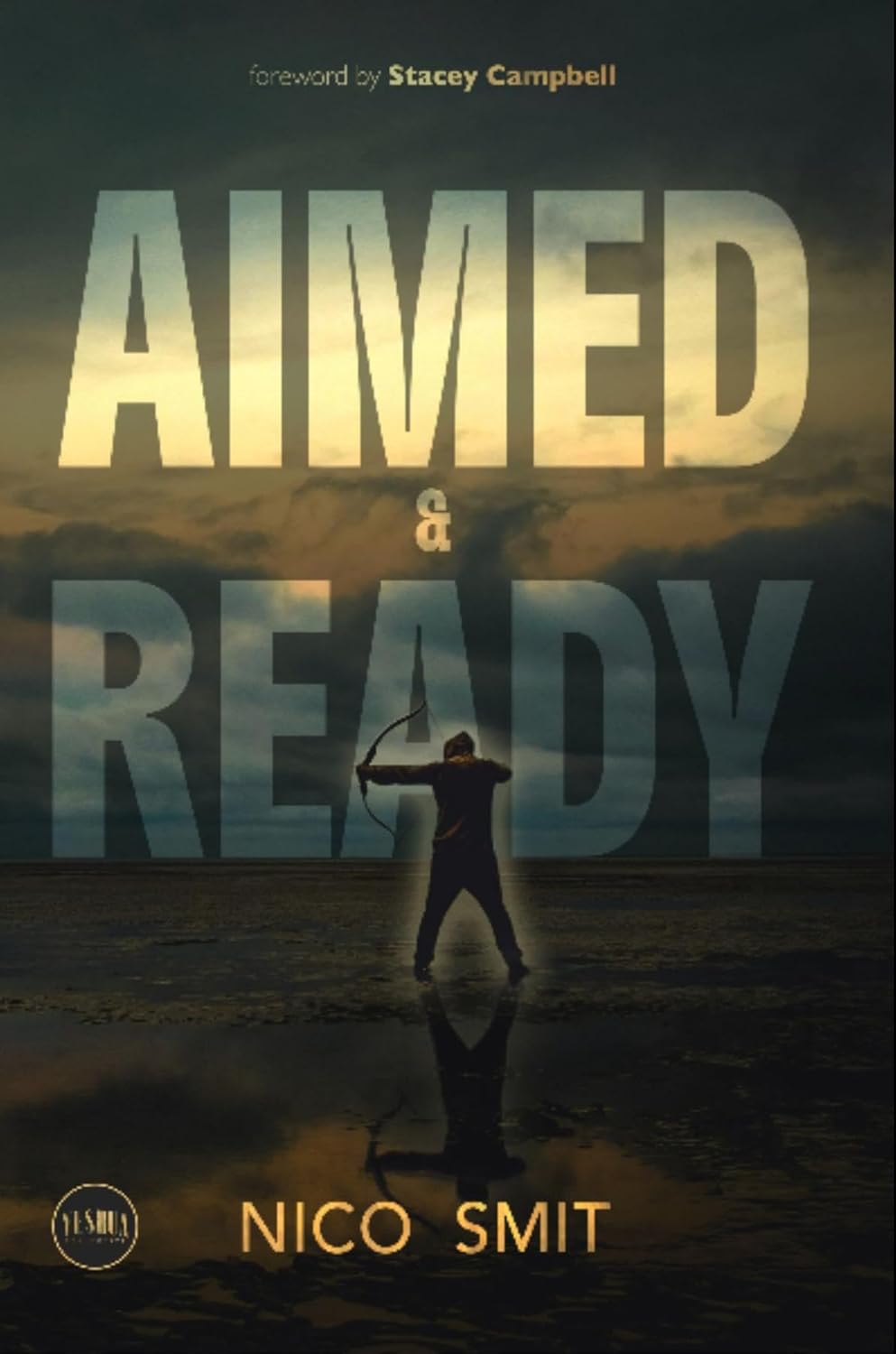

I found Aimed & Ready to be a spiritually focused book about how seasons of delay, silence, loss, and apparent backward movement can actually be forms of divine preparation. Author Nico Smit’s central image is the bow and arrow: the life that feels pulled back is not abandoned, but being aimed. From there, he builds a sustained meditation on surrender, waiting, spiritual alignment, and eventual release, moving through ideas like the “holy hush,” the reset that becomes a re-aim, David’s devastation at Ziklag, and the insistence that hope is not sentimental optimism but evidence that God is still at work. It’s a book written for readers who feel stalled and bruised, and it keeps returning to the same steady conviction that what looks like burial may be the first stage of resurrection.
What stayed with me most was the emotional steadiness of the book. Smit writes with the urgency of a preacher, but also with a pastoral tenderness that keeps the message from feeling harsh or abstract. I liked the way he lingers over images until they start to feel lived in. The bare fruit tree, the buried seed, the rowers facing one way while still moving forward, the ruined city of Ziklag, all of it feeds the same argument from slightly different angles, and that repetition gives the book a kind of devotional pulse. At its best, the writing has real lift. There are passages that feel genuinely bracing, especially when he reframes pressure as alignment and refuses the easy language of defeat. I also appreciated that he opens by reminding readers that this book is not Scripture and shouldn’t replace Scripture. That note of humility matters, and it gives the book a better spiritual proportion than it might otherwise have had.
Smit is so committed to the pullback/comeback framework that nearly everything gets absorbed into it. For readers already attuned to prophetic Christian language, that will probably feel clarifying and consoling. I admired the conviction. The prose can also swell into exhortation. Still, even when I felt the book pressing too insistently on one note, I couldn’t deny the sincerity behind it. Smit clearly believes these ideas down to the bone, and that kind of belief gives the book warmth, gravity, and a persuasive emotional center.
The book gives discouragement a shape people can actually work with. Smit turns spiritual exhaustion into something legible through the bow-and-arrow metaphor, the “holy hush,” and the Ziklag section, so a reader in a hard season can feel less lost inside their own experience. A lot of encouraging books tell you to hold on, but this one tries to explain what holding on feels like from the inside. I think that interpretive quality is one of its real strengths.
I found Aimed & Ready earnest, vivid, and often moving. It’s a book that wants to steady the heart, reframe suffering, and call the reader back into trust. I’d especially recommend it to Christians who are living through a season of disappointment, transition, spiritual fatigue, or long waiting, and to readers who respond to devotional writing that leans on metaphor, exhortation, and hope. For the right reader, this will feel less like a lecture than a hand at the shoulder, firm, warm, and convinced that the story isn’t over yet.
Pages: 168 | ASIN : B0GK9NMGRY

The mc : THE MEDITATIVE CONTEMPLATIONZ

The Meditative ContemplationZ feels less like a conventional book than a staged interior performance, a gathering of aphorisms, prose-poems, meditations, and lyrical monologues arranged around spirituality, adversity, love, wisdom, death, Blackness, and legacy. What held me all the way through was the sense that zO-AlonzO Gross isn’t trying to build a neat argument so much as a lived atmosphere. He moves from compressed lines like “time leaveZ stretch marks” to longer pieces that open into memory, social critique, and testimony, as in the barber shop vignette “They call me speak easy,” with its grief over gentrification and lost Black community, or the recurring insistence that art, suffering, faith, and self-knowledge are bound together. The book’s visual dimension matters too. The paintings and photographs don’t feel ornamental. They reinforce the sense that this is a collaborative, almost theatrical object, one that wants to be seen as much as read.
Gross writes with a seriousness that can be hard to pull off, and here it works because the conviction is real. When he says the artist has to love the work past indifference, bad turnout, family doubt, and years of invisible labor, I believed him. The same goes for the passage comparing fighters and artists, where the body blows of one life meet the psychic blows of the other. That idea could’ve landed as a slogan in weaker hands, but here it has bruises on it. I also liked how often the book risks tenderness without getting soft. A line about love arriving as “a cold bottle of water next to her bed at 3 am” is so simple, so unshowy, and because of that it lingers. Even the spiritual passages, which lean grand and incantatory, have a searching quality rather than a smug one. The book keeps returning to the thought that to know God, or truth, or purpose, you have to strip away performance and get closer to the self beneath it.
This is a book whose force comes with rough edges, and I mean that as praise. The diction can be florid, the capitalization and stylization relentless, and some pieces hit with more depth than others. There were moments when the aphoristic mode flattened complexity into a pronouncement. But even then, the voice felt urgent, personal, and proudly self-fashioned. The sections on Blackness especially gave the book another register, sharper and more satirical, turning wit toward racism, stereotype, and the humiliating absurdities of public life. Those pieces widened the book’s emotional field. They reminded me that Gross is not only meditating in private but answering the world, sometimes with sorrow, sometimes with laughter, sometimes with a line sharpened like a blade. The artwork and photographs throughout fit the pieces beautifully, and they add a thoughtful, provocative visual layer that deepens the book’s reflective mood.
I found The Meditative ContemplationZ uneven in the way many deeply personal books are, but also vivid, memorable, and unmistakably alive. I came away feeling I’d spent time inside a singular mind, one that believes art should console, provoke, testify, and leave a mark. I’d recommend it most to readers who like poetry-inflected nonfiction, spoken-word energy on the page, and books that care more about voice, spirit, and emotional truth than formal restraint. It’s a book for people who don’t mind a little intensity if the feeling behind it is earned, and here, more often than not, it is.
Pages: 140 | ISBN : 978-1088058848
ILLEGITIMATE: A Daughter’s Search for Truth in the Shadow of Lebensborn


Illegitimate is a memoir about Maddie Lock’s search for her biological father and her family’s buried ties to the Lebensborn program in Nazi Germany. What starts as one shocking family confession turns into a long, personal hunt for truth, identity, and some kind of peace. Lock moves between childhood memory, family research, wartime history, and late-life discovery as she pieces together how silence, shame, and war shaped several generations of her family. This is a book about wanting to know where you come from, and what that knowledge can cost.
I found the writing vivid and deeply felt. Lock has a gift for small details that stick in the mind. A garden, a window, a stairwell, a face, a silence at the table. Those moments give the memoir real heart. The book takes its time in certain passages. Readers will appreciate that because it lets the emotional weight really sink in and keeps readers engaged. What hit me hardest was the way she writes about being a child who feels unwanted and unclaimed. That ache feels real. It’s not dressed up or forced. It just sits there and hurts, and that honesty gave the book a lot of power for me.
What I admired most was the book’s moral seriousness. Lock does not chase family truth for drama. She chases it because not knowing has shaped her whole life. I liked that the memoir does not flatten people into heroes or villains. Her mother, grandmother, father, and aunt all come through as messy, wounded, limited human beings. That made the book stronger and sadder. I also think the book handles its big ideas well. It asks hard questions about shame, belonging, inheritance, and whether truth heals or just rips old wounds back open. For me, the answer here is both. That tension gives the memoir its bite. It made me feel angry, tender, and reflective all at once.
I would recommend Illegitimate to readers who like memoirs that mix personal history with larger historical fallout, especially books about family secrets, postwar identity, and the long shadow of trauma. I would also hand it to anyone who has ever felt cut off from their own story. I came away moved, unsettled, and grateful that Lock wrote it. This isn’t a light read, but it’s a worthwhile one.
Pages: 269 | ASIN : B0G5PD7LX8
Sacred Geometry for Healing: MANTRAS AND MANDALAS FOR MEDITATION

The concept of the mandala has appeared across cultures for centuries, carrying with it a long tradition of symbolism, reflection, and spiritual focus. Mandalas are intricate works of art, rich in detail and visual harmony. More than decorative images, they are designed to evoke expansive, universal ideas and invite contemplation. To study a mandala is to enter a quieter mental space, one where negative thoughts recede and more restorative, life-affirming ones can take root.
When meditation joins with sustained focus on a mandala, the effect can feel deeply renewing. Add the repetition of a simple mantra, and the practice becomes even more centering. Together, these elements create room for reflection, sharpen concentration, and help restore a sense of inner balance. They encourage the mind to return to what matters most.
In Sacred Geometry for Healing: Mantras and Mandalas for Meditation, Adria Chalfin presents a nonfiction collection devoted to that very experience. The book features a series of mandalas, each paired with an explanation of its intended purpose and a short mantra for meditation. The format is accessible. The effect is immersive.
The appeal of the mandala lies in its elegant simplicity, even as the artwork itself remains highly intricate. Each design reflects the idea of sacred or universal geometry, the belief that certain shapes carry a transcendent quality. These forms are not merely beautiful. They are meant to focus attention, deepen awareness, and awaken a sense of connection that feels larger than the self.
Chalfin’s collection draws on this tradition with care and intention. Her mandalas represent themes such as aura, nature, holy light, and more. Some carry clear Christian associations. Others feel open-ended and nondenominational, making the book accessible to readers from a range of spiritual backgrounds.
Skeptics may not accept the healing power often attributed to mandalas or mantras, yet that does not diminish the book’s value. Belief is not the only point. The real benefit may lie in the practice itself: choosing an image that resonates, sitting with it, breathing deeply, and allowing the mind to settle. In that stillness, readers may find clarity, calm, and a renewed sense of energy.
That may be this book’s greatest strength. In a culture dominated by technology, immediacy, and material distraction, the act of stepping away becomes more than refreshing; it becomes necessary. Sacred Geometry for Healing offers a simple means of doing exactly that. It provides a space for pause, for inward listening, and for temporary escape from the noise. For readers seeking a meditative aid or a gentle spiritual reset, Chalfin’s book offers both beauty and purpose.
Pages: 114 | ASIN : B086Q7T2PB
To Say Goodbye Again

To Say Goodbye Again is a short but emotionally wide-ranging collection that moves through grief, memory, love, masculinity, work, faith, family, and trauma with a striking lack of self-protective distance. Author Jac Winters writes in a mode that is part confessional poetry, part personal testimony, and part manifesto, so the book feels less like a curated sequence than a life speaking in bursts. It begins in mourning, circles through pieces about childhood, parents, romance, trucking, and the death of a beloved dog, and culminates in “Princess,” a devastating autobiographical account of childhood abuse that recasts much of the book in a harsher, sadder light. What stayed with me most was the sense that Winters is trying, again and again, to turn private pain into language sturdy enough to carry it.
There’s very little irony here, and almost no cool detachment. Winters writes as someone who means every line, and that sincerity gives the collection its force. “To Say Goodbye Again” and “Please Remember Me” ache with a plainspoken fear of loss and disappearance, while “Big Ben,” about the sudden death of a dog, is so direct in its grief that it almost disarms criticism. Even “No Matter Where I Go,” with its return to the childhood block, has an unguarded tenderness that I found genuinely affecting. I believed the emotional stake in nearly all of the poems. The book’s warmth comes not from polish but from exposure. Winters is willing to sound earnest, wounded, grateful, furious.
Winters often reaches for grandeur, piling image on image, and sometimes that intensity lands beautifully. Even when the phrasing grows ornate, the ideas underneath are clear: love dignifies us, work hardens and defines us, grief rearranges the soul, and survival demands that a person stop hiding. I found “Fueled My Drive” especially revealing in that respect because it frames self-acceptance not as branding or self-help, but as a hard-won moral act. And once I reached “Princess,” the whole collection changed shape for me. Its lyrical approach to such unbearable material won’t work for every reader, but I found it haunting precisely because it preserves the confusion of a child’s memory alongside the adult voice trying to name what happened.
I came away feeling that To Say Goodbye Again is vulnerable and deeply felt, which is also why it resonated with me. I think its greatest strength is emotional candor, the feeling that someone is finally saying the thing they’ve carried too long in silence. I’d recommend it to readers who value autobiographical poetry, reflective writing about grief and endurance, and books that care more about truth-telling than literary neatness. This is the kind of book that doesn’t ask to be admired so much as it asks to be felt.
Pages: 52 | ASIN: B0G4S75CW1
A Time for Us

A Time for Us is a historical romance with a strong reincarnation thread, and it opens by splitting its heart across two eras. In 1987, Deborah Brown, a married waitress in small-town North Carolina, meets Pauli Giovanni and feels an immediate, unsettling recognition she cannot explain. In 1947 New York, Jeannette James, a Black seamstress with dreams of college and teaching, is drawn into a risky romance with Mario Leonetti, a white man, in a world shaped by open racial tension and real danger. As the novel unfolds, those two love stories begin to mirror each other and point toward a bond that seems to outlive one lifetime.
I liked how earnestly the author writes about recognition, longing, and the strange feeling that some connections arrive already carrying history. The book does not play coy about emotion. It leans into it. Sometimes that gives the story a soap-operatic intensity, but I mean that in a positive way. Author Rachel Anthony clearly wants the reader to feel first and sort things out second, and I found myself going along with that because the central pull between these characters is so immediate. The 1947 sections especially worked for me. Jeannette and Mario’s first meeting in the rain, followed by that mix of charm, caution, and social danger, gives the novel a real spark. Their romance feels warm, but never fully safe, which gives the sweetness some weight.
I also appreciated the author’s ambition. This isn’t just a love story. It’s a love story that wants to ask whether love can survive history, prejudice, memory, and even death. That’s a big reach, and I respected the book for going there without trying to sand down the harder edges. The author’s note makes clear that the novel includes violence, death, self-harm, and racial conflict, and those themes are not decorative here. They’re part of the book’s moral weather. The reincarnation angle could have turned flimsy, but the author treats it with real conviction, and that conviction gives the novel its shape. I think readers will need to be open to heightened dialogue and dramatic turns, because this book doesn’t aim for cool restraint. It aims for sincerity. It wants your heart before your distance can settle in.
A Time for Us will appeal best to readers who enjoy historical romance that is emotional, fate-driven, and a little metaphysical. If you like love stories that cross eras, wrestle with social barriers, and ask you to believe that some people find each other again and again, this will be your kind of book. For anyone who wants a heartfelt, old-fashioned, high-stakes romance with a speculative twist, I think this one has something real to offer.
Pages: 373 | ASIN: B0G4WBV9KB
Jackdaw Affliction

Jackdaw Affliction is a literary novel with the sweep of a family saga and the bruised intimacy of psychological drama. It follows Billy from a rough-edged childhood in 1980s England through grief, family damage, love, illness, and the slow tightening grip of ataxia, while also circling the lives of Becks, Susan, and Will in ways that make the family feel less like a cast and more like a weather system that keeps changing around him. What stayed with me most is how the book moves from youthful freedom, bikes, music, and sibling closeness into something darker and more fragile, until survival itself becomes the central struggle.
Hyde writes in a way that feels unpolished in the best sense of the word, as if Billy is not performing pain for the reader but just trying to get it said before it slips away. That gives the novel a blunt force that I found hard to shake. Some scenes land because they are so matter-of-fact, even when what is happening is shocking or sad. The early sections especially have that mix of memory and menace, where a summer day, a pub garden, a family dinner, or a bike ride can turn in an instant. I also liked how music runs through the book like a private radio station in the background, giving the story texture without feeling gimmicky.
What I found most interesting, and at times most unsettling, was Hyde’s willingness to let the story stay messy. This is not a neat novel, and I do not think it wants to be. The family bonds are loving, warped, tender, and destructive all at once. Later, when Billy’s world narrows under disability and humiliation, the book becomes less about plot in the usual sense and more about endurance, dignity, resentment, and the strange loneliness of being trapped inside a body that no longer lets you move through the world the way you once did. That material could have turned preachy or sentimental, but it mostly doesn’t. It feels authentic. Candid. Sometimes ugly. And sometimes very moving.
I would recommend Jackdaw Affliction most to readers who like literary fiction that takes risks, especially books about family damage, class, memory, and chronic illness that are more interested in emotional truth than polish. Anyone looking for a clean, comforting read may bounce off it. I didn’t always find it easy, but I did find it memorable, and that counts for a lot. It feels like a novel for readers who can sit with discomfort and still listen for the human voice underneath it.
Pages: 286 | ASIN: B0GN47WWPZ
Broken Shields

Broken Shields opens with Internal Affairs detective Kat Booker being called to Dry Dock 4, where the murdered officer turns out to be Jesse Martinez, her friend and one of the few people in the department she still trusts. From there, the novel widens from a homicide into something nastier: a network of buried evidence, civic corruption, real-estate predation, and old wounds tied to the same dock years earlier. Author Elliot Stone builds the story around grief as much as detection, so the investigation never feels abstract; every clue is attached to a human cost, whether that is Jesse’s family, displaced homeowners, or Kat’s own long-stored sense of failure.
What I liked most is that the book understands a mystery is not just a machine for revealing facts. It’s also a pressure chamber. Kat is convincing because she is not polished into some superhuman sleuth; she is angry, burdened, stubborn, and occasionally held together by thread. Her grief has weight. The early scenes after Jesse’s death, especially the visit to Rachel and the return to Jesse’s empty desk, give the novel a bruised emotional register that keeps the procedural elements from turning sterile. Stone also has a good eye for atmosphere: Tideview feels damp, compromised, and morally mildew-struck, the kind of place where public language and private rot have been living together for years.
I also found the book appealing in the way it keeps shifting suspicion without becoming gimmicky. The planted evidence, Morrison’s unease, sealed files, old explosions, and the sense that Dry Dock 4 is less a location than a recurring infection give the plot momentum. The novel’s real engine is Kat’s refusal to accept the convenient answer. That refusal gives the story its moral voltage. The book occasionally enjoys its conspiratorial layering so much that it skirts melodrama, but even then, it remains readable because the emotional spine is sturdy. I kept turning pages less to “solve” the puzzle than to see whether Kat could force some kind of justice out of a system built to mulch it.
I would hand this to readers who enjoy crime fiction, police procedurals, mystery thrillers, neo-noir, and corruption-driven suspense with a strong female lead and a personal stake in every revelation. Fans of Michael Connelly or readers who liked the institutional grit of The Night Agent’s broader paranoia may find a similar pleasure here, though Stone’s book is more intimate and raw-edged. Broken Shields is for people who want a murder mystery with civic poison in its bloodstream and grief in its lungs.
Pages: 401 | ASIN: B0GHZVBNM3


