Blog Archives
The Enemy of My Enemy is My Friend

Change—Restoration follows a woman who has survived enslavement on a swamp world and is ready to take on a corrupt corporation that is set to plunder the last of Earth’s resources for its own greed. What was the initial idea behind this story, and how did that transform you as you wrote the novel?
Back in the late 80’s I wrote my first and second novels out in full, on paper, over a period of 6 weeks. It just seemed to come out onto the paper as I wrote. Over the next 20 years I was a bit busy, but I kept on re-writing the first novel as and when I could. The story was originally going to be one book. But I realised if I didn’t publish the first part when I did – then I’d probably procrastinate for another decade and work on the second part of the story would never get done.
In the first book: CHANGE – the idea was, what would happen if two people from our world, were suddenly abducted and plunged into a sophisticated interstellar civilisation. A civilisation where off-world Corporations utilise the output of slave labour camps situated in inaccessible regions, much as ours do on our world – allegedly – today. That is what happens to Paul and Bernadette. In an instant, everything they knew and loved is gone.
All this happens against a backdrop of dynamic instability and insurrection within a vast interstellar Imperium, on the brink of civil war. Patricea Markiss and the Royal Party are forced to flee the usurper Emperor Ral Karjeck, as the hegemonic glue which binds civilisation in that region of space, unravels and falls apart.
The central plots of both novels remained the same throughout the writing process, but as the characters evolved, so did the situations taking place around them, up to and including the final, final re-write.
In the second book: CHANGE – RESTORATION, Paul and Bernadette, have been rescued from the slaver camp, by an interstellar NGO – The Carmine Heart [CH] Foundation. For the CH Foundation, Direct Action means just that. But interference has its costs. On Earth, the Interstellar DI-LAN Corporation liberated the planet from the grip of the slavers, and are now in the process of stripping the planet of its remaining resources. The CH Foundation equip and train the indigenous people they rescue, to return to Earth to challenge DI-LAN Corp. On Earth, mayhem ensues as the fates of the rescued humans, and the Royal Party converge.
Bernadette is a woman with strength. What do you think makes her a valuable and worthy heroine?
Bernadette is a strong woman, but there are times when she hasn’t got it together at all – as happens to us all. What makes her a valuable and worthy heroine is that she’s human, she’s capable and keeps on going through adversity, no matter who or what gets in her way. Surviving the horrors of the slaver planet Es-Ra, and her mission for the CH Foundation, has given her purpose. Accidentally obliterating a deserted city might make some of us pause to reflect on our life choices, momentarily – but that’s not Bernadette. Yes, she’s flawed, but in a good way. She’s loyal, driven, street wise and will do whatever she has to, to save the day.
What were some themes that were important for you to explore in this book?
We are the dominant civilisation on the planet, but what would happen to our understanding of our place in the universe, if an alien civilisation actually arrived. And what if that alien civilisation was as flawed and exploitative as we are – their mission being to extract and export our remaining resources, all the while hiding behind a disarming smile? What could we do, unassisted, to take our planet back? Not a lot I expect. Which brings us to Bernadette’s involvement with the CH Foundation. She has doubts and questions about them. But after her ordeal on Es-Ra and the DI-Lan Corporation’s role in facilitating her abduction – she falls back on the old adage that the enemy of my enemy is my friend.
All this takes place during a period of upheaval and insurrection within an interstellar Empire far from Earth. Where decades of order and stability are rapidly being overturned. What if the fate of that Empire was to be decided, not on the home battlefield, but on our primitive backwater world?
Where does the next book in the series take the characters?
The next book in the Change Odyssey takes us on a journey from the court of the exiled Old Emperor, to a battlefield on a strategic war-torn world. It takes us to Inferno – the New Emperor Ral Karjeck’s prison planet, and from there, to the Dark Mirror universe, from which Ral Karjeck initially emerged.
Author Links: GoodReads | Website
The organisation follows a Prime Directive, to discourage and ameliorate cultural contamination caused by off-world incursions, affecting Class III cultures and below. The Foundation maintains a paramilitary wing. The activities of which, are not well documented and little is known.
Liberated by the Foundation from the slave planet of Es-Ra, Bernadette completes her paramilitary training, with her companions, on the ice planet of Medval. Things may not go according to plan… She leaves for Earth to challenge the newly arrived DI-LAN Corporation, which is intent on plundering the Planet’s remaining resources, no matter what the cost.
Meanwhile…
Forced to flee the usurper Emperor Ral Karjeck, following the assassination of the Imperial Heir designate, Major Patricea Markis and the Royal Party emerge from stasis, aboard their crippled hyperdrive vessel, within the Sol system.
At the behest of the DI-LAN Corporation, Dr Mendal embarks on a perilous project which may jeopardise civilisation as we know it, both on Earth, within the Greater Imperium and beyond.
The fate of our world and the Imperium will be decided by the actions of a few, as the battle for the Empire rages on.
Cinnamon Soul
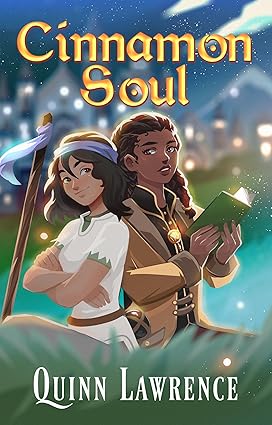

Cinnamon Soul is a vibrant fantasy mystery that follows the quirky and sharp duo of Hokuren, a former City Watch captain turned private investigator, and her barefoot, bolt-catching assistant, Cinna. Set in the magical, lively city of Velles, the story kicks off with the thrilling capture of the infamous Master Thief, Maxwell Barnaby, and quickly pivots into a high-stakes search for a missing princess. What follows is an investigation tangled with royal secrets, ominous knights, and lots of banter. It’s part buddy-cop, part classic whodunit, and it’s got a cinnamon-sweet heart running through all the grit.
Quinn Lawrence knows how to make dialogue pop, and the chemistry between Cinna and Hokuren is honestly the soul of the book. That first scene where Cinna casually catches a crossbow bolt mid-air? I was hooked right then. She’s scrappy, hilarious, and kind of terrifying in the best way. Meanwhile, Hokuren’s got this tired but determined energy that makes her both lovable and sharp. It’s impressive how Hokuren maintains her composure and sharpness, even while managing her assistant during tense moments, such as when she calmly redirects Cinna amid the emotional breakdown of a key witness and still extracts vital information. Their dynamic adds energy and warmth to the narrative, elevating even the story’s quieter moments.
But it’s not all jokes and clever quips. There’s some genuinely unsettling mystery stuff here, especially around Julien Davenport, the Captain of the Guard. The man might be a myth; he never takes off his armor, there’s no underwear in his wardrobe, and his voice is always “next to you”? Creepy. The whole palace has this weird vibe, like something’s off and no one’s saying it out loud. Hokuren and Cinna navigating all that with such different energy , the calm investigator and the chaotic brawler, makes the palace scenes tense in a great way.
The pacing dips here and there, especially in the middle when they’re gathering intel and poking through rooms, but honestly, I didn’t mind too much because the characters carry the story. Anne, the lady-in-waiting, ends up being more complex than expected, and her breakdown when she spills secrets about Nyana and the prince? Heavy stuff. You start to feel like something darker’s going on under the surface, and even when the book plays it light, the edges are sharp.
Cinnamon Soul is for anyone who loves smart, character-driven fantasy with a strong mystery at its core. If you liked The Dresden Files, Veronica Mars, or even The Witcher but wish it came with more charm and less grimdark, this one’s for you. I’m absolutely picking up the next book in the series. I want more of Cinna’s antics, more of Hokuren’s stubborn brilliance, and definitely more of whatever weird secrets are lurking in Velles.
Pages: 310 | ASIN : B0DVRT19T9

As Long as We’re Alive, Problems Will Arise

Pandora’s Box follows a 14-year-old boy who discovers he is a demigod like his late mother. His life has become a whirlwind of magical schools, ancient mythologies, and adventure while he tries to prevent evil from taking over the world. What was the inspiration for the setup of your story?
My son was my inspiration. When I became a mother, a new fear was unlocked: what will become of my child if I am not here tomorrow? I wanted to write something that could speak to him, nurture him, and entertain him, while leaving him with the values I hope I will have the time and support to instill in him.
The MC’s name is my child’s name: Liam. His mourning is built on my biggest fear.
The chaos the MC faces is nothing but the chaos of life. We tend to think our problems are the biggest in the world—and for us, they are. But it’s important for children to see that everyone has problems, which, to them, feel just as big. As long as we’re alive, problems will arise, and that will be true for everyone. The realization of this fact gives them a sense of belonging, helping them step out of the victim mentality and see problems for what they really are: opportunities for solutions and growth. I was careful to reflect that on each and every page.
I find the world you created in this novel brimming with possibilities. Where did the inspiration for the setting come from and how did it change as you were writing?
My inspiration comes from the books I grew up with. I’m a huge Star Wars fan, which is why you’ll see a mix of Sci-Fi and Fantasy in my work. I also love The Lord of the Rings and The Hobbit, and I read a lot of Agatha Christie and Sherlock Holmes as a child—this helped me develop my approach to building suspense, planting clues, and leading characters (and readers) toward discoveries.
Role-playing games have also been a major influence. I spent years as a Game Master for Vampire: The Masquerade and Dungeons & Dragons, which shaped my multi-perspective storytelling, worldbuilding, and rule-setting for magic and power. RPGs also helped me focus on character growth, much like players leveling up through campaigns.
Brazilian folklore played a big role in my childhood—it was mandatory in school and deeply woven into our culture. This sparked my curiosity about other mythologies, particularly Nordic folklore. Beyond that, I have a very poetic way of describing emotions, which comes from my younger years when I wrote poetry, competed in poetry contests, and attended poetry events as early as 12 years old.
On top of that, I love Greek mythology, Egyptian history, and the original versions of the stories that Disney adapted—many of which were quite dark in their European roots before being softened for children. That’s probably why my writing naturally leans toward darker themes.
Honestly? My writing style hasn’t changed much while writing. What has changed is my awareness of how readers perceive my published works, which influences what I choose to emphasize or tone down in future books. Since I haven’t read anything published in the last 20 years, my writing style remains uninfluenced by modern trends—it’s purely shaped by the stories I love.
What were some themes that were important for you to explore in this book?
Self-discovery, the concept of character (discerning good from bad), cause-and-effect (accountability for our choices), and inner power were all central themes. I wanted to show that having flaws doesn’t make you incapable of achieving great things—nor does it automatically turn you into the villain. It’s important for teenagers to develop a fair sense of self rather than viewing themselves through extremes of “good” or “bad.”
Faith in something bigger also plays a key role. Throughout the trilogy, I touch on difficult topics, even taboos like suicidal thoughts, in hopes of helping young readers recognize that the voice telling them they’re not enough doesn’t come from them—and that they can (and should) break free from it.
Can you tell us more about where the story and characters go after book one?
Without giving too much away—because surprises are half the fun—the second and third books take the characters much deeper into the prophecy hinted at in Pandora’s Box. Relationships will evolve, secrets will come to light, and the stakes will grow far beyond what they imagined. You’ll see characters like Liam, Ada, and others struggle with even more challenging situations, both magical and personal. Also, expect to see new realms, powerful antagonists, and the consequences of choices made in book one. It becomes a story not just about stopping evil, but about understanding yourself and the cost of standing for what you believe in.
Author Links: GoodReads | X | Facebook | Website | Trilogy Website
Liam Hale gets a posthumous gift from his late mother, Bree, on his 14th birthday. It’s a holographic message that turns Liam’s life upside down: According to a projection of Bree, Liam is a demigod (as Bree had been), will attend a magic school, and will take over his mom’s role as keeper of the Seven Wonders (Earth and six other dimensions).
He will have to be “initiated” before claiming the keeper’s throne within 90 days, or the resultant fight for the position will trigger an intergalactic war (“It’s too much power”). As if that weren’t enough pressure, Liam must also complete Bree’s mission of finding “the Pandora’s Box,” an artifact that will restore the balance between good and (currently rising) evil. Luckily, he’s got help: His allies include his best friend Ada, mage student Benji, and perpetually bickering witch-twins Zac and Zoe.
With mythological creatures, a magic school, and dimension-hopping adventures, Liam and his friends must uncover the secrets of The Pandora’s Box before darkness takes over.
Wishes and Choices, Mythral’s Wish

This book is a wild, layered ride through parallel realms, ancient magic, and the heavy weight of choice. Narrated in part by a clever, time-hopping feline named Cat, the story follows the intertwined destinies of Mythral, a powerful yet emotionally walled-off wizard; Kit, a teenage girl aching for purpose and adventure; and MorKano, a dark wizard with revenge in his veins. The Realms are split into three, each with its own rules, power structures, and secrets, an attempt to keep dark magic in check.
What hooked me right away was the voice of Cat in the prologue. It’s cheeky, philosophical, and just a little smug. But in a good way. The book immediately signals that it’s going to toy with time and ripple effects like they’re ingredients in a magical stew. The nonlinear timeline and concept of the Time-Path was mind-bendy, but the kind of bend I enjoy. It reminded me of those “what if?” moments we all have but raised to a cosmic level. And yet, this isn’t just high-concept fantasy. It’s also deeply human. Mythral’s loneliness, especially his regret over not taking on an apprentice sooner, made him more than just your typical “wise old wizard.” He’s flawed, proud, and sometimes a bit of an idiot, in a good way.
Kit absolutely stole my heart. She’s smart, a little stubborn, and full of questions that hit home. Her diary entries feel raw and real, like a teen on the cusp of something big, with no idea just how big it’s about to get. She doesn’t come from magic. She doesn’t know her past. But she walks into this magical bookshop and takes that leap anyway. Her dry wit and fierce independence reminded me a bit of early Hermione Granger, if Hermione had been way more annoyed about not having an adventure yet.
The writing itself has got this whimsical edge to it, like a fairy tale told by someone who’s lived through a few too many of them. There’s a bursty rhythm to the storytelling, jumping between realms and characters, sometimes even doubling back in time. At first, it’s a lot. But once you’re in the flow, it works. One moment you’re reading Mythral brooding in a cold underground chamber, the next you’re watching a blue-gray cat manipulate the fabric of fate with an exasperated sigh. And MorKano is your classic megalomaniac with daddy issues, and yet there’s a calculated patience to him that makes him genuinely chilling. He’s not the cackling type, he’s the slow-burn villain, the kind who would rather humiliate you before destroying you.
Wishes and Choices is more than just a magical adventure, it’s a meditation on responsibility, consequences, and whether we’re brave enough to make the hard call when it counts. The story dances around the idea of fate and free will, but it doesn’t drown in its own philosophy. Instead, it gently nudges you to ask, “What would I do?”—without giving you the easy answer. I’d recommend this to fantasy lovers who enjoy stories with heart, brains, and a talking cat that may or may not be a god. Especially great for fans of His Dark Materials, A Wrinkle in Time, or early Harry Potter, but with a slightly older, more introspective twist.
Pages: 264 | ASIN : B0DP2X8RKM
The Mutant and The Mule
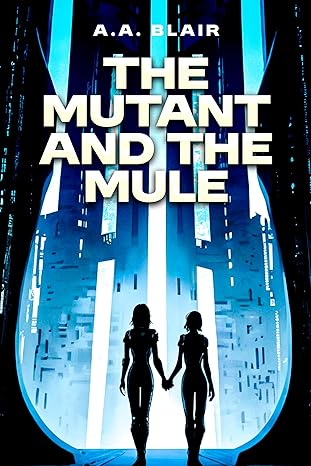

The Mutant and the Mule is a dystopian sci-fi tale wrapped in rebellion, identity, and unexpected friendship. It follows Helia, a Mutant trained for infiltration, as she dives deep into the oppressive Norm society to sabotage it from within. Things go sideways when her mission contact vanishes, and she’s forced to team up with Ari, a snarky, hard-drinking Mule who has zero illusions about the world she was born into. Together, they dodge government thugs, make questionable plans, and form a bond neither of them saw coming.
One of the strongest things about Blair’s writing is how real the world feels. It’s dark and suffocating—domed cities, oppressive governments, and class systems etched into skin tones and uniforms. In the opening chapter, the tension is so thick you feel it crawling up your neck. Helia’s nerves as she sneaks into the Norm compound are palpable, her inner conflict sharp. Blair doesn’t just build a world—he throws you into it, head first, with no map and a lot of heart.
The characters are the lifeblood. Ari stole the show for me. She’s messy, sarcastic, and painfully relatable. Her introduction, waking up in a puddle of her own vomit and annoyed someone’s being loud enough to interrupt her hangover, is peak character work. And then bam—she’s saving Helia from a brutal beating by a Department of Sanitation thug. Her loyalty is messy too, driven more by a gut sense of justice than some grand ideology. That made her feel real.
As much as I liked the action (and the matter blast scenes are wild), what stuck with me most was the quiet stuff. The awkward bonding. The little bits of humor in a bleak world. Blair nails the rhythm of human connection without overplaying it. These characters are absurd and brave in equal measure, and their choices matter because we care. While I enjoyed the story, I felt that some parts of the world-building could have used a somewhat lighter touch. There were moments when the exposition got a bit thick, but it never dragged for too long. The pace always snapped back thanks to some smart dialogue or a sudden twist.
The Mutant and the Mule is for readers who love sci-fi that punches hard but still has heart. It’s gritty, emotional, and sometimes downright funny. If you’re into found-family stories, rebellion against oppressive systems, or just want to watch two unlikely allies stumble their way toward hope, pick this one up. If you enjoy authors like Pierce Brown, Veronica Roth, or Octavia Butler, The Mutant and the Mule will feel like familiar territory—but with its own sharp bite.
Pages: 200 | ASIN : B0DCP4MGWC
Sixty Years of Adventure

Icy the Iceberg follows a snowflake-turned-iceberg who goes on this long emotional journey through the water cycle. What was the inspiration for your story?
My wife and I were on an Alaskan boat cruise. I enjoyed sitting on the deck looking at the scenery. I watched the beautiful shoreline, the amazing mountain peaks, and the wildlife—both animals and fish. As I watched the mountain peaks, I remembered a trip we took to the Athabasca Glacier in Alberta Canada. While we were walking on the glacier, it started snowing. It amazed me that little snowflakes could form a glacier. The cruise ship we were on was a smaller one, so it was able to sail close to the Mendenhall glacier. While we were there, a huge portion of the glacier broke off (calved) and crashed into the ocean water. There was a very loud crack when it fell. The splash when it hit the water was enormous. The iceberg was very large and a beautiful blue color.
The whole experience amazed me. Several days later, I went to the boat’s library and wrote the story.
What were some educational aspects that were important for you to include in this children’s book?
I felt that all the things I observed while walking on a glacier and watching from the ship would be educational to young readers. The snow falling on the glacier, the compacting of the snow into ice, the intense pressure as the ice continued to compact, the entrapment of the oxygen in the ice forming a beautiful blue color, the huge piece of ice calving forming an enormous floating iceberg, etc. I developed the character of “Icy” so he would be part of all these events.
The art in this book is fantastic. What was the art collaboration process like with the illustrator Sidney “Mindy” Makis?
After writing the story, I was visiting my sister, Mindy, in Binghamton New York. I showed her the story. I did not know at that time that she had taken many art classes while she was in college. I left the story with her. She called me later and said she had developed the characters. In the book. With the help of Brian Behling, we put the story and characters into a book.
What is the next book that you are working on, and when can your fans expect it to be out?
My wife and I have had almost sixty years of adventure together. We tell people the story of how we met and got married after two months. We had very little money because I was still in college. We lived on Nancy’s income. We lived in a farmhouse with an outhouse for a bathroom and a coal-burning stove in the kitchen for heat, for two years. The bedrooms were freezing in the winter. Our first child was born while we lived there. As the years passed, we became more and more successful. During that time, we had many very interesting stories. Everyone to whom we tell the stories says that we should write a book about them.
One of the dreams I had all my life was to own a log house. I also wanted to have a bedroom where I could look at the stars. About twenty-five years ago we moved to Libertyville IL. We purchased a log house on five and a half acres of land. We have made considerable improvements to the property during those years.
Several years ago, I decided to start writing a book about our life. I am going to call it FROM OUTHOUSE TO LOGHOUSE.
It is a work in progress. I am in the process of selling my business. Hopefully, I will have more time to devote to writing with the ultimate goal of finishing it within the next year.
I also have a few more ideas about two more children’s educational books.
Author Links: GoodReads | Amazon
An illustrated tale of resilience and wonder, Icy the Iceberg invites readers to explore the mysteries of the natural world and the cycle of life through the eyes of unforgettable traveler.
Will Icy’s adventure ever truly end? Or is this just the beginning?
How Myths Form

The Borealis Queen follows a resilient young woman marked by a mysterious prophecy who embarks on a perilous journey that intertwines survival, destiny, and the forging of unexpected bonds. What was the inspiration for the setup of your story?
The setup came from wanting to tell a story that felt ancient but emotionally intimate; something that would resonate across time. I was drawn to the idea of a young girl facing the collapse of everything she knows and being forced to survive, not because she’s chosen, but because she’s clever, resourceful, and refuses to break. The prophecy element isn’t about fate in the traditional sense: it’s more about how people interpret strength, especially when it threatens the established order. (A future installment—told as a prequel—will reveal the true origin of the prophecy.)
I wanted to explore how myths form around ordinary people who do extraordinary things. Nin’s journey is perilous, yes, but at its heart, it’s about a girl learning who she is in a world that tries to define her. The bonds she forms (with animals, with her memories, even with silence) came from my belief that survival isn’t just physical. It’s also emotional. And sometimes, it’s the unexpected relationships, even with wild creatures, that save us.
I find the world you created in this novel brimming with possibilities. Where did the inspiration for the setting come from and how did it change as you were writing?
The inspiration for the setting of The Borealis Queen came from a mix of bedtime storytelling, my fascination with prehistory, and a desire to build a world that feels both ancient and mythic—but still grounded in nature and human emotion. I used to tell stories to my kids at night, creating episodes on the fly, and over time, these tales evolved into the foundation of this world. I wanted a setting that didn’t rely on magic or modern tropes, but still felt epic, dangerous, and full of wonder.
The Ice Age gave me that—a time when humans lived closer to the edge when survival depended on wits, instincts, and bonds with animals. The world itself became a character. As I wrote, the setting changed from a backdrop into something almost primal. The wilderness sharpened Nin’s growth, and the creatures—like the Urbaraks and Shadow—took on symbolic weight. It started as a harsh world, but over time, I began to see its beauty and subtle order, just as Nin does. That shift really deepened the emotional core of the story.
What were some themes that were important for you to explore in this book?
ANSWER: I wanted to explore what happens when a person is pushed to the brink—how survival, identity, and resilience take shape in a world that feels hostile, ancient, and raw. One of the most important themes for me was the power of connection—not just between people, but between humans and nature, especially the bond between Nin and the animals she encounters. I was also interested in legacy and mythmaking: how stories about a person can become larger than life, and how that shapes not only how others see them but how they see themselves. Another key theme is agency—Nin is not waiting to be rescued or chosen. She’s crafting her path, sometimes painfully, sometimes defiantly, in a world that would rather crush her than acknowledge her power.
Is this the first book in the series? If so, when is the next book coming out, and what can your fans expect in the next story?
I’m already writing the sequel. The theme is actually hinted at in the final paragraph of Chapter 24, at the end of the book:
‘Word of the tale of the girl slave adorned with beautiful marks on her skin, who rose to become a queen, spread like the fastest birds, soaring across the land and beyond. It traveled all the way to the distant Australis lands, where it caught the attention of an ambitious young king, driven by dreams of world domination…’
That final line opens the door to a larger world and deeper conflicts. It shifts the story from one girl’s survival and rises to something even more expansive—how her legend begins to echo far beyond her homeland, drawing the attention of powers she doesn’t even know exist yet. The theme of how myth and reputation can reshape history is something I’m really excited to keep exploring.
I expect to finish it by early next year. The sequel builds on everything that came before, but with a much wider lens: new lands, new rulers, and greater threats. It explores how one girl’s rise can spark fear, admiration, and ambition across distant lands. I’m enjoying the challenge of expanding the scope while staying true to the emotional core of the first book.
Author Links: GoodReads | Website | Amazon
For readers of Brandon Sanderson and Clan of the Cave Bear—this is not the fantasy of knights and castles, but of raw survival, ancient beasts, and a legend forged in snow and blood.
She was never meant to survive. Nin is the last of her people—captured, scarred, and dragged across the frozen wilds by brutal enemies. But in a land where beasts are dreaded and winter never forgives, she discovers that survival is more than endurance—it’s transformation.
With nothing but a sling, her instincts, and the loyalty of a mysterious saber-toothed Smilodon, Nin must carve a path through ice, blood, and betrayal. As legends rise and clans clash, she becomes more than a girl on the run—she becomes the storm they cannot contain.
The Borealis Queen is a sweeping Ice Age survival fantasy about resilience, instinct, and the powerful bonds between humans and the wild. Perfect for fans of character-driven epics, elemental worldbuilding, and heroines who don’t just fight—but endure.
If you’re seeking a bold, action-packed epic fantasy with emotional depth and cinematic storytelling, this is the adventure you’ve been waiting for.
Safe Space
Eastlanders’ Fall is a tale of ancient evil rising again, powerful cults seeking domination, and unlikely heroes trying to stop the world from crumbling—literally. What was the inspiration for the setup of your story?
I drew inspiration from the real world and used my fantasy setting as a safe space for an unbiased reflection on current issues.
I find the world you created in this novel brimming with possibilities. Where did the inspiration for the setting come from and how did it change as you were writing?
In the 90s, I served in the Brazilian military. When cartel violence spiraled out of control, Rio’s governor requested federal troops, and my unit was one of those deployed to assist.
For several months, in between missions, to avoid dwelling in the violence and bleakness, my mind took off. Fantasy books and role-playing games came to the rescue, and the continent of Ananthia was born.
To be in a place where evil and injustice could be fought and defeated—unlike in the real world—was like a drug, so I never left. All the mind space I could spare went into world-building, and seventeen years later, with no plan or ambition, I began laying it down.
The RPG campaign setting I wrote had such an elaborate backstory that I was entreated to tell it all. Eastlanders’ Fall began taking form, and a decade—and eight countries—later, A Drying World trilogy was completed.
Ananthia was so deeply developed in my head that it needed no change to accommodate the story – it was the story.
What were some themes that were important for you to explore in this book?
Bias, hubris, and blind ambition—and how to beat them.
Where does the story go in the next book, and where do you see it going in the future?
Eastlanders’ Fall is the first book of a trilogy. In book 2 (Two Storms), the children of the protagonists, born at the end of the book, take the lead, assisting their whistleblower uncle who’s on to Darvis Talsdrums second phase plans but struggles for decades to prove it. In book 3, the heroes take the fight to the lich.
In the future trilogy, I take the reader to Central Ananthia – the region where the desertification started, now under the sand. It will be told in two parallel timelines: the present, featuring the surviving protagonists, and the past, telling the story of how it all began.
Author Links: GoodReads | X (Twitter) | Facebook | Website | Amazon
The land of Ananthia is dying. Its once-prosperous heart has turned to sand, swallowing Empires and burying faiths. But a darker shadow looms—Darvis Talsdrum, a warlock whose cunning strengthens his demon lord’s grip on the continent.
Talented as he is reckless, veteran wizard Milendil’s mistakes could seal the fate of Ananthia, when bitterness bids him to tip the scales for tragedy.
Air ranger Solostamir never asked to be a hero. Burdened by a family rift and torn between two powerful women—Keera, the elven noblewoman who shares his past, and Lilyanna, a prodigy human archer whose fire reignites his hope—he walks a razor’s edge between love and duty.
When war drives them apart, Lilyanna’s fate becomes entwined with Soraya’s, a battle-hardened warrior whose growing bond defies expectation.
As ancient magic stirs and loyalties splinter, these fractured heroes must unite what’s left of Ananthia before darkness consumes it all. But love is as dangerous as war—and not every heart will survive the fire.
Eastlanders’ Fall is a sweeping epic of sacrifice, redemption, and love tested at the brink of ruin—perfect for fans of high fantasy with heart, grit, and consequences.



 LITERARY TITAN