Blog Archives
Dying to Live
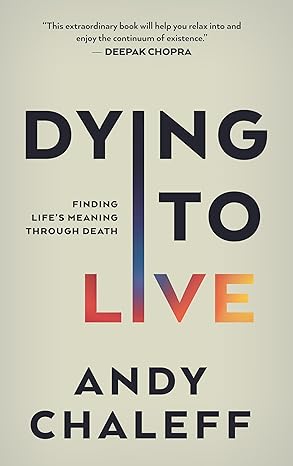

Andy Chaleff’s Dying to Live is part memoir, part meditation, and all heart. With the tone of an honest friend and the vulnerability of someone who’s walked through fire, Chaleff invites readers into an intimate, sometimes raw conversation about death and, maybe more importantly, about how thinking about death helps us actually live. This isn’t a book that preaches answers. Instead, it’s a meandering, deeply personal journey through loss, fear, letting go, and making peace. From the death of a childhood dog to the gut-wrenching loss of his mother, and on through reflections on identity, legacy, and even sex and silence, Chaleff wrestles openly with life’s biggest unknown.
What struck me first was how disarmingly simple and powerful the writing is. Chaleff doesn’t try to impress with fancy language. He speaks like someone who just wants to be understood. He writes about the death of his dog, Apricot, when he was six, and how that loss introduced him to what he calls the “gray zone,” a numbing fog that returns every time grief visits. His ability to recall that moment without filtering it through adult logic gives the story a punch of realness. And when he says, “Buying this toy is just a way to bring a little joy back into your life, not a reward for your grief,” I teared up. It reminded me of how often we try to patch grief with distractions and don’t realize we can feel two things at once, sad and grateful, broken and hopeful.
One of the most impactful chapters, for me, was Chaleff’s account of learning about his mother’s death in a car accident, a moment that irrevocably altered the course of his life. He connects this devastating event to the parable of “The Farmer and the Horse,” suggesting that it is often impossible to immediately discern whether a moment is truly good or bad. That kind of spiritual patience is rare and difficult to cultivate, yet Chaleff communicates it with quiet clarity. It’s this calm, unembellished insight that elevates the book beyond memoir; it becomes something closer to healing.
Another particularly striking section is when Chaleff reflects on the profound shift that occurs after the loss of both parents, the realization that he now stands closest to death. While the subject is inherently somber, his description of sorting through old boxes and choosing to let go of long-kept mementos carries a quiet elegance. “It wasn’t about erasing the past,” he writes, “but making space for the present and future.” That sentiment lingered with me. It prompted me to consider the things I’ve held onto, not out of necessity, but because they anchor a sense of identity. Chaleff’s exploration of detachment is neither rigid nor emotionally distant; it is sincere, deeply personal, and quietly resonant.
Dying to Live is not so much a book about death as it is a meditation on how to live with greater presence and depth. It speaks to those who have experienced profound loss, who find themselves quietly wrestling with mortality in the still hours of the night, and who carry unresolved grief just beneath the surface of daily life. It is especially meaningful for readers who yearn to live more intentionally but may not know where to begin. I would recommend it to anyone prepared to pause, reflect deeply, and perhaps be moved in unexpected and lasting ways.
Pages: 198 | ASIN : B0FKN9P16L

The Miracle Morning After 50: A Proven Path to Joy, Vitality, and Purpose for Aging Adults

The Miracle Morning After 50 is a self-help guide aimed at those navigating the second half of life. The book builds on the original “Miracle Morning” framework and adapts it for older adults. At its core is the S.A.V.E.R.S. routine: Silence, Affirmations, Visualization, Exercise, Reading, and Scribing, combined with practical wellness strategies. Hal Elrod and Dwayne J. Clark argue that aging doesn’t have to mean decline. Instead, mornings can become a launchpad for a life rich in energy, purpose, and joy, even past age 50. The book blends personal stories, actionable advice, and a strong motivational tone to encourage readers to reshape how they approach their mornings and their lives.
The writing is upbeat and often emotional, particularly when Hal talks about his car crash, cancer diagnosis, and personal rebirth through morning routines. Dwayne adds wisdom from his years working in senior care, grounding the advice in lived experience. I appreciated that the book didn’t sugarcoat the realities of aging but refused to surrender to them. The book promotes the Miracle Morning community, app, and movie, but the heart of the message stayed strong throughout.
I liked how doable the advice felt. I expected lofty speeches or complex systems, but the routine was shockingly simple and flexible. The authors don’t insist on a rigid schedule or superhuman willpower. They seem to get that someone over 60 isn’t trying to hustle like a startup founder. They offer gentle encouragement, not guilt trips.
If you’re over 50, feeling a little stuck, or just wanting to inject more energy into your days, this book could be the nudge you need. It’s not magic, but it will help you wake up feeling a bit more alive. I’d recommend it for anyone curious about building better habits later in life, especially those who feel like personal growth is a young person’s game. Turns out, it isn’t.
Pages: 304 | ASIN : B0DV6GPSJL
The Courage to Begin Again: Resilience, Courage, and Reinvention
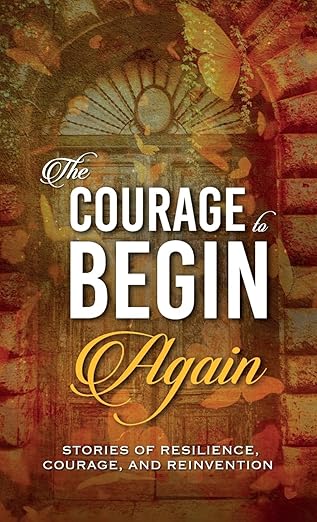

The Courage to Begin Again: Stories of Resilience, Courage, and Reinvention is an anthology of deeply personal stories from women who moved to Mexico and rebuilt their lives in unexpected ways. Each chapter explores a different perspective on starting over: the shock of cultural change, the struggle of loneliness, the bittersweet weight of leaving old lives behind, and the surprising joy of discovering new strengths. The voices range from lighthearted accounts of food and music to raw admissions of fear, loss, and self-doubt. What holds it all together is a theme of reinvention and resilience, showing that change, while often painful, can also be liberating.
Reading it, I found myself caught between admiration and empathy. The writing isn’t flowery or overly polished, which actually works in its favor. It feels honest. The women share their failures and embarrassments with as much detail as their triumphs, and that kind of vulnerability is hard to look away from. At times, I felt like I was eavesdropping on a conversation, with all the warmth and awkward pauses included. Some stories hit me hard, especially the parts about loneliness and feeling invisible in a crowd. I could almost feel the ache in my own chest. Other sections lifted me, like the small wins like finding a supportive friend, learning enough Spanish to laugh at a joke, or sitting at a long lunch surrounded by a new community.
What surprised me most was how much energy these women poured into reshaping themselves. Some leaned into self-care and spirituality, while others threw themselves into work, art, or friendship. At times, I thought the pacing of certain stories slowed as it circled the same lessons. But then again, maybe that’s the point. Starting over is messy. It’s not a neat arc, and this book doesn’t try to make it one. I respected that choice. By the time I reached the final pages, I felt a mix of exhaustion and inspiration, like I had traveled alongside them through the highs and lows.
I’d recommend The Courage to Begin Again: Stories of Resilience, Courage, and Reinvention to anyone standing at a crossroads, whether they’re moving countries or just moving into a new stage of life. It’s especially powerful for women who’ve had to leave something behind, be it a career, a home, or even a version of themselves.
Pages: 144 | ASIN : B0F7YM8QPL
I Finally Have the Smoking Hot Body I Have Always Wanted (having been cremated)

Barb Drummond’s memoir is a wildly honest, heartbreakingly funny, and beautiful tribute to her late mother, Sybil Hicks. Sybil became a viral sensation thanks to an obituary that managed to make people laugh and cry in the same breath. The book traces the week following Sybil’s passing, from the family’s chaotic flights to funeral arrangements, peppered with hilarious letters from Sybil, childhood stories, family reunions, and a deeply moving eulogy in the works. It’s about memory, grief, and humor as survival, all centered around a daughter’s love for the mother she was slowly losing to Alzheimer’s long before she passed.
Reading this book felt like getting dropped into a boisterous family gathering where laughter sits shoulder-to-shoulder with grief. The writing is candid and snarky and sometimes downright chaotic, but that’s what makes it so relatable. I found myself laughing at the airport “wet sock” story and the naked hotel room mix-up, then getting blindsided by moments of raw grief, like the upside-down book or the sound of Sybil’s piano in a quiet care home. Barb’s voice is refreshingly real. She doesn’t try to pretty up death or sanitize her feelings. She writes like someone who’s had the rug pulled out but still knows where to find the jokes in the tumble.
The most touching part of the book for me was the way it paints Sybil. Not as a saint, not just a victim of Alzheimer’s, but as this whip-smart, sharp-tongued, wildly talented woman who threw pies in people’s faces and taught sewing classes in her basement. You can feel Barb’s love, guilt, and admiration all tangled together, which makes the letters and memories hit even harder. The book also shows how laughter, even the ugly snort-laugh kind, is a kind of armor. It doesn’t try to be wise or poetic. It just tells the truth. And that’s what makes it matter.
If you’ve ever lost someone slowly to something like Alzheimer’s, this book will break your heart and then wrap it in a quilt of memories, stitched together with sarcasm, warmth, and just enough swearing to keep it real. I’d recommend it to anyone who’s grieving, especially adult children trying to make sense of a complicated, funny, maddening, unforgettable parent.
Pages: 159 | ASIN : B0DJFRLSQ3

Gratitude, Resilience, and Perseverance

Rooted: A Wildlife Tree’s Journey follows an aging tree who can no longer transport nutrients from his roots due to damage from oak beetles and learns that just because he is growing older, doesn’t mean he has no purpose. What made you write a story about this topic? Anything pulled from your life experiences?
I have great respect for those who have gone before me. As some of my dearest family and friends approached death, they continued to inspire and encourage. I hope to be like them!
What were the driving ideals behind the character’s development throughout the story and the series?
Growth through all stages of life is a commonality throughout the “Rooted” series. By focusing on aspects such as gratitude, resilience, and perseverance, I aimed to encourage readers to reflect on their own life experiences.
What was the most challenging part of writing this part of your Rooted series, and what was the most rewarding?
The most challenging part of Rooted: A Wildlife Tree’s Journey was ending my protagonist’s life, and bringing the series to a conclusion. However, it was rewarding to show how much wildlife (elderly tree) contributes to the lives of others.
What do you hope is one thing readers take away from your story?
I want readers to realize the impact they have on others. I want them to understand that people in all stages of life matter and have much to offer.
Author Links: GoodReads | Facebook | Website | Amazon
Fight the Battle with Faith

Welcome to My World offers a deeply personal exploration of the often-misunderstood condition of Dementia, drawing from your own journey to illuminate the path for others and offer practical insight and emotional support. Why was this an important book for you to write?
I have seen how families and even society treat Dementia as a disease and this prompted me to write this book, to think otherwise.
What were some ideas that were important for you to share in this book?
Important is family acceptance and treating the family member’s illness as normal, as by so doing the condition may be stable.
I appreciated the candid nature with which you told your story. What was the hardest thing for you to write about?
The hardest part was that my father-in-law passed on not due to dementia, but multiple heart attacks, which I feel can be prevented. We were told to accept that breathlessness is due to the ageing process, which is WRONG. If only I didn’t believe.
What is one thing that you hope readers take away from Welcome to My World?
You are not alone. Some may experience family members having advanced stages. We need ask ourselves if we want to give up hope or to fight the battle with faith.
Author Links: GoodReads | Facebook | Website | Amazon
Welcome to my WORLD – is DEMENTIA the END OF THE WORLD for the patient and family members?
Family members must accept and journey along with their loved ones and try to understand their “NEW WORLD”
Community should not categorize and brand people with DEMENTIA but attempt to understand their WORLD.
LOVE and COMPASSION is the “KEY” for us to understand and embrace this NEW WORLD,
ARE WE READY?
Welcome To My World


Dementia disrupts lives with a quiet ferocity, altering routines, straining relationships, and reshaping entire family dynamics. In Welcome to My World, Dr. David Soh Poh Huat offers a deeply personal exploration of this often-misunderstood condition, drawing from his own journey to illuminate the path for others. With practical insight and emotional resonance, the book serves as both a guide and a companion through the uncharted terrain of dementia care.
From the outset, Dr. Soh recounts his own experience supporting a loved one through the progression of dementia. The narrative doesn’t shy away from uncertainty; instead, it leans into it, portraying the disease as a landscape where familiarity gives way to confusion. Yet, even in this unpredictable world, the author maintains a tone of steady compassion. His words offer reassurance, urging readers to hold onto hope, to remain steadfast, and above all, to never forsake those caught in dementia’s grip.
Rather than overwhelm, the book simplifies. Its accessible language and brief format make it an ideal starting point for anyone seeking to understand the condition, whether affected personally, supporting a loved one, or preparing for the unforeseen. It demystifies the experience, reminding readers that they are not alone. Across the globe, countless others are navigating similar struggles and learning invaluable lessons that can ease the emotional burden.
Though not exhaustive in scope, Welcome to My World succeeds in what it sets out to do: introduce the emotional and practical realities of dementia with sincerity and clarity. Dr. Soh invites readers to dig deeper, to continue their exploration beyond the book’s pages, and to begin building a mental and emotional framework equipped for caregiving.
At its core, this book is a gentle yet firm reminder that empathy, preparedness, and presence are essential tools in the fight against dementia. Warnings, affirmations, and grounded advice are delivered with consistency and care, making the work not only informative but genuinely comforting.
Dr. Soh’s contribution arrives at a time when awareness around dementia is more urgent than ever. Welcome to My World is not just a book; it’s an invitation to begin understanding, a call to action to support those whose lives have been forever changed. In learning more, we become better equipped to offer the dignity, patience, and love that every person touched by dementia so deeply deserves.
Pages: 29 | ISBN : 978 981 94 2733 8
Changing Shoes: Staying in the Game with Style, Humor, and Grace
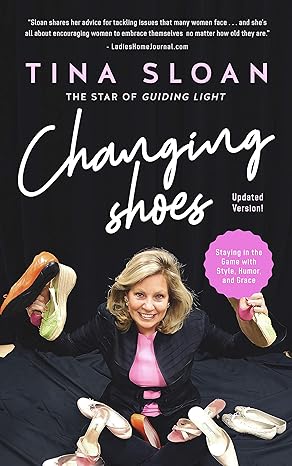
Changing Shoes: Staying in the Game with Style, Humor, and Grace by Tina Sloan is an engaging, heartfelt exploration of aging, life’s transitions, and the power of reinvention, all told through the lens of an actress’s glamorous yet relatable life. Using shoes as a metaphor, Sloan recounts her journey through youth, middle age, and beyond, detailing her career, family, and personal revelations with humor and vulnerability. She encourages women to embrace the inevitability of change with style, grace, and self-respect.
What struck me immediately was Sloan’s candid voice. Her storytelling feels like a warm conversation with an old friend. In the first chapter, she describes a jarring realization in a Manhattan coffee shop: younger women, not her, were the center of attention. Her vulnerability in admitting feelings of invisibility resonates deeply. She reflects on her glamorous past while candidly confronting aging’s physical and emotional realities. Her balance of humor and poignancy here is nothing short of inspiring.
The book’s structure, woven with personal anecdotes and life lessons, is another strength. One particularly touching moment is her memory of Aga Church, a Parisian mentor who taught her to live boldly and stylishly. This tale about shoes as symbols of life’s chapters, some for fun, some for seduction, and others for practicality, adds a whimsical yet profound layer to the narrative. It reminded me of how objects, like shoes, can carry emotional weight and personal history.
Sloan’s honesty about the challenges of aging in a youth-obsessed culture is refreshing. Whether discussing her rejection of plastic surgery or her heartbreak over letting go of youthful clothes, she never sugarcoats. I loved the scene where she reluctantly sends her favorite dresses to her niece after realizing they no longer suit her body. Her wit shines here as she laments, “Watching the UPS man haul my youth away felt like losing a part of myself.”
By the end, Sloan’s message is uplifting: aging doesn’t mean fading away. It means finding new ways to shine. Her advice to “wear your own shoes” to embrace your individuality and authenticity feels both empowering and timeless. Her ability to transform deeply personal struggles into universal lessons makes the book a gem.
I’d recommend Changing Shoes: Staying in the Game with Style, Humor, and Grace to women navigating midlife and beyond or anyone who enjoys reflective yet humorous memoirs. It’s a delightful mix of wisdom, self-deprecation, and inspiration. Sloan reminds us that aging, while challenging, can be a stylish, fulfilling adventure if you wear the right shoes.
Pages: 225 | ASIN : B086BLBFF6


