Blog Archives
The Experiences of One Man

Indian Billy Ice shares the true story of your great-great-great-grandfather and how he survived being taken by a nomadic Native American tribe in the 18th century. Why was this an important book for you to write?
As the last member of the Ice family line, I felt a profound responsibility to share the incredible life story of my ancestor, Billy Ice. My book was initially a screenplay that garnered significant acclaim, winning 28 writing contests worldwide, including two in Russia. Despite Hollywood’s recognition of my writing talent, the screenplay never made it to the big screen. However, the book has allowed me to reach a wider audience and help people understand the challenges faced by 18th-century frontiersmen.
What were some ideas that were important for you to share in this book?
In recent years, the colonial period has been scrutinized more critically, often through the lens of political correctness and historical revisionism. While it’s undeniable that atrocities occurred on both sides, my book offers a unique perspective by focusing on the experiences of one man, Billy Ice.
Did you find anything in your research of this story that surprised you?
I was astonished by how an eight-year-old boy could endure 11 years of unimaginable hardship without his spirit being broken. Billy was an extraordinary individual who survived indescribable horrors.
What is one thing that you hope readers take away from Indian Billy Ice?
I often remind friends and acquaintances to “honor your ancestors because history matters.” My hope is that history will once again become a key component of the educational process.
Author Links: GoodReads | Amazon
As he matures, the young man becomes a formidable force on the frontier, dispensing his own brand of justice to those who cross his path. Along the way, he finds himself embroiled in the conflicts of the time, serving in every war that marks his era. Despite the turmoil of battle, he never forgets his ultimate goal: to reunite with his family and carve out a life of his own.
Eventually, fate leads him back to his kin, and with them, he establishes a wilderness community, a sanctuary in the untamed lands he has come to call home. Through hardship and triumph, he remains steadfast in his commitment to protect his loved ones and uphold the values of his rugged existence.
This is the true story of my great-great-great-grandfather, William Galloway “Indian Billy” Ice.
God Does Love LGBTQ+ People
Sin and I is a poetry collection that delves into the themes of identity, faith, and the complexities of the human experience from your perspective as a queer man. Why was this an important book for you to write?
It’s important because people still very often equate homophobia with God, to the point that they feel like you can’t believe in God without believing in homophobia. That pains me to witness people acting as though bigotry is some kind of sacrosanct deity on the same level as God himself. It felt vital to me to draw attention to the fact that homophobia is a part of religion (hopefully a dwindling part) but not a part of God. Religion is a human institution that exists to commune with and worship the divine, but since it’s made up of flawed human beings, it unavoidably encapsulates human failings. But people are led to believe that God shares those failings when they think that God would ostracize them and “other” them because that’s what human beings who have presented themselves as emissaries of God in one way or another are in the habit of doing. I want to make sure, at the same time, that people…LGBTQ+ people in particular…are shown also that religion isn’t JUST it’s failings…that there’s a diversity in Christianity, and that more and more, it’s those forces that have oppressed gay and trans people that are being recognized as truly being something other than God. Time after time, Jesus is proven to stand up for the people in society who are looked down upon and abused when they’re in need of and deserving of being embraced without reservation. Jesus would never stand AGAINST those people. The fact that LGBTQ+ people keep being born the way we are, and that all the various forms of attacks and abuse our community absorbs haven’t been able to “minister gayness out of existing” more or less proves that we’re right with God. It’s God fortifying our resolve to be honest about who we are, and our knowledge that this is just who we innately are no matter how many people try to convince us to lie about it is God given wisdom. Ultimately, “Thou shalt not lie” is one of the 10 commandments, but “thou shalt not be gay” or “though shalt not be non-binary” is not. So Christianity, even with all the faults in how its been lived out, is still on the record as being in favor of gay people being themselves and opposed to the lie that there’s even any other option. We could lie about it, but we don’t want to, and luckily for us, God would never want us to lie about it either. It’s very important not to cede Christianity or religion in general to the voices that use fear-mongering and bullying to argue in favor of dishonesty and oppression. Stuff like that has nothing to do with God and I believe God is hurt by and angry about that sort of thing so often being laid at His doorstep.
I appreciated the candid nature with which you told your story. What was the hardest thing for you to write about?
Some of the more graphic verses, such as in “Hunger Under Cover”, even though they’re necessary to tell the story, are challenging to employ. I want to make sure I’m being clear, for example, when I’m talking about men who are fully grown and can’t rationally admit any gayness in themselves even while they’re acting exactly according to the definition of what the word “gay” means, but I don’t want to descend into “sexing it up” just for shock value. So it’s just a challenge I try to be sure to rise to when it comes to being graphic enough to leave no doubt about the level of denial I’m depicting but not employing blunt descriptions of gay sex beyond whatever levels clarifies the message of the poem instead of distracting from it. However, when something’s been maligned and banned, like any depiction of gay sex has traditionally often been, it’s also important, in some ways, to have it be freely and openly elucidated on to the same extent that straight people’s sex lives always have been, whether the rest of us care to hear about them or not. So there’s also the aspect of not allowing myself to be censored just because certain readers might be squeamish about sexual content, especially if it’s gay. I write for adults, and sex is part of adult life, but it’s not ALL of adult life. Anytime I encounter poetry or song lyrics that either steer completely clear of sex or get hung up on JUST sex, I feel like that’s a very immature form of self expression. Sex should be addressed in love poems and other places when relevant to the themes of the poem. And since LGBTQ+ people keep getting discriminated against for reasons that ultimately are about sex…the kind of sex we’re actually having and the kinds straight people obsessively imagine us having and then look down on us for…it’s challenging in an overly onerous way for gay writers to address sexual themes in organic ways while still being tasteful, mature adults, and also having to face down the possibility that some heterosexuals who feel like their squeamishness should be deferred to will certainly vocally, excessively trash anything that depicts homosexual acts without giving them what they feel is a proper trigger warning somehow. And of course, some people think the only appropriate level to depict gay sex at is none at all. Gay people have been made responsible for straight people’s hang ups about gay sex for so long that it’s hard not to consider hetero sensitivities even when we really shouldn’t have to. So that’s difficult, for sure.
What were some ideas that were important for you to share in this collection?
In the poem “Things You Can’t Have” there’s the line about God’s OCD making everything “tic”. That detail was important to me; the idea that we have so often misappropriated and misread and misjudged God that, at this point, I wouldn’t be surprised if we have given this imperfect, infallible being mental health issues to match our own. The question of whether we can actually do harm to God when we present Him as being eaten up by human bigotries that run contrary to the fact that we’re called upon to love everyone. And then God has to keep going to greater lengths to reach us with that indispensable part of His divine truth. How frustrating that must get even to an infinitely patient being, I imagine. How can God not have some kind of visceral reaction to the petty, bigoted, small ways so many of His own followers insist on seeing Him no matter what He does?
Then in the poem “Always Within Us”, it ends with the line “You know your rights, what’s the law got to do with it?”, and that sentiment is important to get across, too: the fact that even in places where the law hasn’t caught up to the reality of human rights, gay people still absolutely DO have the right to live and love freely and safely, with full equality, even though the law may incorrectly think it has any right to outlaw that. That sort of thing has never actually been something the law has any right to ban. Laws stem from people, so to my mind, on a basic level, laws that steamroll over our fundamental autonomy render themselves null and void. Ultimately, law gets a lot wrong and when laws don’t serve certain essential functions that make things better, we have the right and maybe even the obligation to disobey those laws. Human rights are not something the law ever has the right to take away from anyone even if the law is able to get away with it for a time. It’s important to make the distinction that LGBTQ+ people aren’t just advocating equality, we’re demanding it, because it’s already ours by rights anyway.
What is one thing you hope readers take away from your poetry?
God will not hold it against you if you actually conceptualize and embrace His sweeping, radical, unflagging love for and acceptance of you. God will not create you just the way you are and then expect you to lie about being that creation. What dismays God is when we try to convince ourselves and each other that God’s love and acceptance is difficult to attain and easy to lose. God isn’t shallow and petty, and He actually knows what His purpose is for each of us being who He made it us to be. He knows why LGBTQ+ people are just as important as anyone else. He doesn’t want to be rid of us. If God had a choice between people transgressing against religion or transgressing against love, He would rather us transgress against religion. Because a love that defies human understanding is God’s whole mission statement, and religion has a track record of being so poorly lived out that people can’t even tell it was ever even supposed to be based on love in many cases. And that’s not to minimize the very real fact that a lot of religious people absolutely do live out their faith in the right way, in accordance with God’s vision, to the best of their ability. But religion has also failed God’s children in innumerable ways, and will continue failing them if we can’t acknowledge that. And when religion fails God’s children, it fails God, too. Never conform to religion at the expense of loving each other and yourselves, because that’s the same as failing to love the God who made each of us in His image. No exceptions. There’s no one God is in favor of oppressing. Oppression is hostility towards God.
Author Links: GoodReads | Website
Employing free verse, kwansabas, pantoum, and haiku, Hupp takes us on another journey that encompasses anger and despair over the personal and the political, but ultimately leads to faith, hope, and abiding love.
Elevating the Standard for Insight


Finding Insight explores the transformative power of understanding human behavior, demonstrating how deep insights into relationships can enhance personal interactions and professional strategies. Why was this an important book for you to write?
MS – For a marketer, insights are critical to understanding consumers. However, insights are not limited to marketing. We would argue insights are foundational to any relationship between people. However, we are not formally taught how to uncover insights. This seemed like a glaring gap in the market.
MT – The word “insights” is one of the most abused and overused terms in marketing today. From our viewpoint, the term “insights” has been used so much that it has become colloquial. In doing our research before writing the book, we saw there had only been a handful of books authored on the topic with a primary focus on the “what” and “why” of insight discovery. The goal of our book is to elevate the standard for what a true insight is, provide individuals with the “how” and the level of thinking needed to employ when it comes to the discovery and activation of an insight.
Can you share a personal experience that highlighted the importance of understanding human behavior, which you discussed in the book?
MS – This is why we used personal stories to set up each chapter and section. Insights are about people. The story that has had the most “energy” from our readers for me is “someone is quitting on Monday” which kicks off Chapter 5. This is my story about making the transition from employee to independent consultant/business owner. Second to getting married, it is probably the most important decision and transition I have made to date. This decision was deeply emotional and relatable to so many of us that are balancing work and life. In hindsight I can connect it to the content in the chapter, but at the time I was living and “feeling” it rather than following a process. In reality, we can have processes and tools, but insights are usually felt. I hope this story continues to resonate with others on a personal level.
MT – It’s hard for me to pick just one personal experience. The first story in the book is about my obsession with Mercedes Benz. My loyalty to the brand is rooted in a childhood experience and my belief as a marketer in the importance of delivering an exceptional customer service. I like this story because it illustrates how understanding and addressing specific pain points can lead to lifelong brand loyalty. Another personal experience for me is the story I tell at the beginning of Chapter 6 which is about the importance of gaining others perspectives. “Let’s Get Real” is a story about my faith which again started in my childhood and has largely shaped how I view and interpret the world and human behavior around me. Being paired to co-facilitate a men’s Bible study with someone else who could not be more different than me from a demographic, education, and race perspective really allowed me to see the world and my faith from a different perspective. Remaining in our own shoes to interpret someone else’s world means we will never understand another’s perspective. Rather, we will be stuck in our own judgment, assumptions, and biases. I hope this story will encourage others to let go of their own personal biases and assumptions through seeing the world from the other person’s perspective.
How do you believe your findings can impact the way professionals approach marketing and customer service?
MS – I think we are getting pushed to believe insights are going to come from more analysis and rigor with the advancements of AI and machine learning. While I believe this to be somewhat true, we also need to apply context and interpretation to these findings. AI and machine learning will find patterns—but as we described in the book there are other elements of insights like pain points, perspectives and perplexities. I hope we have given marketers the tools to be critical thinkers in the context of advancements in technology and analysis.
MT – I could not agree more with Melinda’s response here. The challenge with these new forms of data when it comes to finding insights is they tend to be more observational and based on model assumptions. Often, a body of data can create an image or picture of a situation, a person, or a customer, but it does not provide the full texture and context of why the behavior is occurring, so our imaginations or the machines fill that in. In addition, the media and the digital world have a huge influence and greatly contribute to shaping our images, impressions, and stereotypes of others. We live in an age today where we want instant answers and are quick to “google” or search the internet for information, often leading us to biased sources that may not reflect reality or the truth. All these things can lead to a lack of curiosity if one is not careful which Melinda and I believe is a key enabler for finding insights. I would hope that readers of our book will recognize that discovering insights is both an art and a science and it requires elevating one’s level of critical thinking to do it well.
What is the next book that you are working on and when will it be available?
MS & MT – Good question. We are gathering information from our current readers for Finding Insight to see where the need is in the market. Readers, we want to hear from you!
Author Links: Facebook | Website | Instagram
This valuable guide is for anyone seeking to comprehend the motivations behind human behavior. Unlike previous works which explored ‘what’ and ‘why,’ Finding Insights uniquely illuminates ‘how,’ equipping people with the analytical tools and mindset necessary for unveiling and utilizing insights effectively.
Employing personal narratives, practical examples, and interactive exercises, Finding Insights makes complex concepts accessible and engaging, all while adding a dash of humor. From marketers aiming to decode customer behavior, to coaches inspiring teams, journalists investigating subjects, politicians resonating with constituents, or simply individuals wishing to better understand those around them, Finding Insights caters to all. Its purpose is to enhance critical thinking skills and provide a new perspective on how we interpret and react to the world around us.
Sophie and the Swans
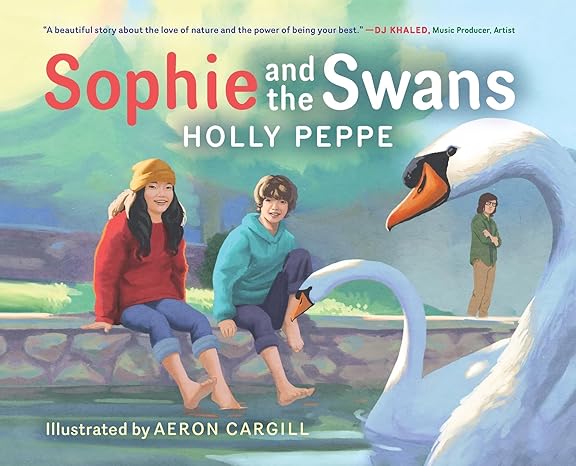

Sophie and the Swans, written by Holly Peppe and illustrated by Aeron Cargill, is a beautiful and meaningful children’s book that will leave a lasting impression on readers of all ages. This book follows a young and compassionate girl named Sophie who lives on Fernwood Lake and enjoys watching and feeding the swans there. Sophie has created a bond with the pair of swans she has named Romeo and Juliet. One day, she sees Romeo in distress and rushes to see what is wrong, only to find a strange boy on the shore throwing rocks at them. She stands up to the boy, telling him that swans do not like bullies. Later she meets a nice boy about her age and discovers the bully is his brother and her new neighbor.
This children’s book provides readers with facts about swans and teaches children how they can deal with bullies in an empathetic and positive way. Standing up to a bully is hard, but Holly Peppe has shown that it can, indeed, be done and done in a way that fosters understanding and compassion, teaching children that just because someone is rude or a bully does not mean they are not deserving of help and kindness.
Holly Peppe has written a story that shows people are capable of change when others model kindness and compassion despite negative behaviors and attitudes. Cargill’s vibrant illustrations allow younger children who cannot yet read to follow the story and grasp the message while bringing out the beauty of swans.
Sophie and the Swans is a valuable educational story for both children and adults. It shows the good in people and their ability to change. Peppe’s story empowers readers to stand up to bullies and defend those who cannot defend themselves, whether it be children or animals. This lovingly-penned children’s book would make the perfect addition to a school or home library.
Pages: 36 | ISBN : 1947187147

New Tomorrows: Love – Courage – Hope

New Tomorrows: Love – Courage – Hope, by Ann Heap, is a heartwarming tale of love, resilience, and community. Jon and Allie, both recovering from the trauma of 9/11, cross paths almost a decade later in the Virginia Appalachian Mountains. As their feelings for each other grow, they must overcome numerous obstacles before they can fully commit. This story is not just about two individuals finding love; it also chronicles the efforts of Jon, Allie, and the Hidden Valley residents as they create a domestic abuse advocacy program and shelter.
Charming, quaint, endearing, and peaceful are just a few words to describe this lovely book. The clean, slow-burn romance between Jon and Allie and the evolving sense of community among the Hidden Valley residents offer much to adore and revel in. Heap’s writing style is particularly noteworthy. Her vivid imagery immerses the reader in the story, making it come to life. In the opening crash scene, for instance, the disorienting yet eerily calm emotions Allie experiences are palpable, as if watching a movie unfold. The dialogue is another strong point, characterized by a realistic quality that avoids the overly sentimental tone often found in clean romance stories. Interactions between characters feel authentic, whether in simple morning conversations or in the sharing of thought-provoking memories. Heap skillfully captures the essence of human interaction. The pacing of New Tomorrows is also commendable. While the romance develops slowly, the story itself moves at a well-measured pace. Every word is carefully chosen, contributing to a smoothly flowing narrative.
If you are looking for a novel filled with heart and hope, New Tomorrows: Love – Courage – Hope, by Ann Heap, is a fantastic, cozy, and entertaining read. It is highly recommended and well-deserving of a spot on your TBR list.
Pages: 286 | ASIN : B0CHLFXCT8
Georange Horange’s Storange

Georange Horange’s Storange by Ryan Tait, illustrated by Julie Tait, is a delightful and imaginative children’s book that introduces readers to Georange Horange, a unique student at Sunny View School. This special school features a talented toy doctor, Dale, who creates custom toys to cater to its diverse student body. When Georange, a little orange, realizes no word in the English language rhymes with “orange,” Toy Doctor Dale steps in to lift his spirits. She invents an incredible sensory machine and names it after Georange. However, their journey doesn’t end there—they must now work together to get their invention’s name added to the dictionary.
The story of Georange and Toy Doctor Dale is a heartwarming tale of collaboration and innovation. Young readers will be captivated by the determined orange and the resourceful toy doctor, rooting for their success. Ryan Tait delivers a powerful message about teamwork, perseverance, and tackling challenges head-on. Georange Horange’s Storange is not only an engaging narrative but also a fantastic teaching tool that highlights diversity. Tait’s vibrant and expressive illustrations enhance the story, making it visually appealing and perfect for read-aloud sessions. The rhyming scheme throughout the book adds to its charm and accessibility for young readers. This story is an excellent addition to an elementary guidance counselor’s curriculum, offering valuable lessons in patience and determination.
I highly recommend Georange Horange’s Storange to parents and educators seeking inclusive and uplifting stories for their children. Ryan and Julie Tait have created a charming and inspiring book, and I eagerly anticipate more releases from this talented duo.
Pages: 38 | ISBN : 1990700411
Future Unfolds


Future Unfolds, by J. L. Yarrow, is a captivating sci-fi novel that delves into the complexities of advanced time travel, weaving together multiple storylines that intersect in intriguing ways. Among the diverse cast of lead characters, Hunter emerges as the protagonist, grappling with the consequences of his time-travel escapades. Accompanied by his AI companion, Comperi, Hunter embarks on a series of time jumps to uncover the truth behind the Time Forward Project and his pivotal role in shaping the future of the world.
Yarrow’s writing style is engaging, drawing readers into a meticulously crafted time-traveling world where even the villains have richly-developed timelines and stories. The narrative is filled with twists and turns and brilliant action sequences that keep readers on the edge of their seats. The intertwining timelines add a complexity that invites readers to engage deeply with the story. While I believe it may require some back-and-forth reading to fully grasp, this intricacy is balanced by the fast-paced action, which provides constant excitement and motivation to continue.
One of the many standout aspects of the book is the character of Chen-Yi, who elicits strong emotions from the reader—a testament to Yarrow’s skill in character development, especially in the sci-fi genre where such emotional engagement is often rare. The novel’s depiction of planets and colonies is vivid and immersive, with genetic advancements, cohabitation with aliens, and advanced AI contributing to the rich atmosphere of a futuristic world. The central theme of time travel is explored in depth, highlighting the complexities and far-reaching consequences of tampering with time. The interplay between the present, past, and future is skillfully handled, showcasing the ripple effects of the characters’ actions.
Future Unfolds offers a fresh and thrilling take on the time travel genre. Sci-fi enthusiasts, particularly those who enjoy time travel plots, will find Hunter’s journey through time a compelling and exhilarating ride.
Pages: 320 | ISBN : 1611883962



 LITERARY TITAN