Blog Archives
Redemption on a Cosmic Scale
Quantum Genesis follows a scientist on a distant planet whose experiment brings the planet to life, and reveals that an asteroid will destroy all life in ten months, and he must find a way to save everyone. What was the inspiration for the setup of your story?
The inspiration for Quantum Genesis came from my fascination with the intersection of science, consciousness, and the environment. I’ve always been intrigued by the idea that a planet itself could possess awareness and agency—what if the very ground beneath us could respond to our actions? That idea, combined with concerns about ecological balance and humanity’s responsibility toward nature, became the foundation for Ghia and its relationship with Ode. The story evolved into a what-if scenario about creation, consequence, and redemption on a cosmic scale.
One thing that stands out to me in your novel is the creativity embedded in this world. What was your inspiration for creating such an imaginative world?
I wanted to create a world that felt both alien and familiar—a reflection of Earth’s potential future if we continued down a path of unchecked experimentation and environmental strain. The planet Ghia is a canvas for exploring how life might adapt and evolve under extreme conditions, blending advanced technology with an almost spiritual symbiosis between humanity and nature. The visual and atmospheric elements of Ghia were inspired by a mix of astrophysics, quantum theory, and my love for cinematic world-building, similar to how films like *Avatar* or *Interstellar* immerse audiences in otherworldly yet believable settings.
What were some themes that were important for you to explore in this book?
Several key themes run through Quantum Genesis—sacrifice, faith versus fear, and humanity’s fragile relationship with its environment. I wanted to explore what happens when science reaches a point where it begins to blur with spirituality, and how people respond when their entire existence is threatened. Ode’s journey from scientist to reluctant savior mirrors a larger story about growth, humility, and trust in something greater than oneself. Ultimately, it’s a story about survival, connection, and the cost of both progress and redemption.
Will there be a follow-up novel to this story? If so, what aspects of the story will the next book cover?
Yes, *Quantum Genesis* kicks off this trilogy. The second book, *Quantum Mind*, is out now (https://www.books2read.com/quantummind). The third, *Quantum Entanglement*, is in the works, and will delve further into the future. The Quantum Guild of Planets is constantly pushing the boundaries of universal mysteries, and they encounter an alien race intent on severing the bond between planets and their dominant species. The Guild thrives on mutual cooperation, growing through the exploration of differences and individuality. This all culminates in a final showdown that could forever reshape the quantum limits of mind, matter, and destiny.
Here is a pretty good description of the books that are part of the Quantum Genesis Series. https://www.amazon.com/dp/B0CZLNJZN5?binding=kindle_edition
Author Links: GoodReads | X | Facebook | Website
With the clock ticking, Ode must rally humanity and guide them into subterranean caverns where stasis chambers offer their only hope of survival. Empowered by Ghia’s gift—quantum-infused stones with the power to heal, teleport, and manipulate the quantum fabric of reality—Ode faces impossible odds as he races to save his people. But with fear and faith dividing the population, and the planet’s very survival on the line, Ode and Ghia must work together to overcome the impending cosmic destruction.
As the asteroid approaches, the only certainty is this: if you want to survive, you need to go underground.
For fans of sci-fi thrillers filled with high stakes and unexpected twists, “Quantum Genesis ” is a must-read. If you enjoyed books like “The Martian” and “Enders Game,” then you’ll love this gripping tale of survival and sacrifice.
The Savior and the Shadow Queen: A Fantastical Tale Told Through Sequential Poems


The Savior and the Shadow Queen is a story told through poetry, unfolding in layers that mix fantasy and raw human emotion. It begins as a mythic tale of Eselli and Nabseatsi, two friends who set out to defeat a terrible enemy called the Shadow Queen. Their world feels ancient and mystical, full of prophecies, weapons, and dark magic. But as the story progresses, that fantasy begins to fade, and the truth emerges. Eselli is Leslie, a young woman living in the real world, grappling with grief, guilt, and the haunting weight of loss. The Shadow Queen becomes something much deeper than an external enemy; she is the darkness inside us all, the reflection of our pain and self-hatred.
McAfee writes with such openness that it’s hard not to feel what Leslie feels. Her pain, her confusion, her desperate hope for healing, it all comes through in the rhythm of the poems. The fantasy world works beautifully as a metaphor for mental illness and self-discovery. I loved how the story shifts from myth to memory, from sword and prophecy to hospital rooms and recovery. That transition hit me hard. The writing itself is simple, almost deceptively so, but it carries deep emotion. It’s the kind of poetry that doesn’t need fancy words to make you feel something, it just does. The pacing feels natural, the imagery vivid, and the emotions raw enough to make you pause and sit with them.
I could feel the compassion in McAfee’s voice. The book doesn’t wallow in sadness, even though it’s born from it. It offers forgiveness, for oneself, for others, for the past. I appreciated that McAfee didn’t sugarcoat the pain, yet she gave it meaning. The real-world sections are written with quiet strength. There’s hope tucked between every line, and I found myself rooting for Leslie as if she were someone I knew. The author’s choice to end the book with a direct message to the reader was perfect. It felt intimate, like a friend reaching out to say, “You’re not alone.”
I’d recommend The Savior and the Shadow Queen to readers who loved The Alchemist by Paulo Coelho. Both books explore inner transformation through journeys that seem external at first but reveal themselves as deeply personal. Like Santiago’s search for his treasure, Leslie’s quest to defeat the Shadow Queen becomes a metaphor for finding meaning after loss. But where Coelho’s story leans on destiny and spiritual discovery, McAfee’s feels more grounded in real emotion like grief, guilt, and the slow rebuilding of self-worth.
Pages: 102 | ASIN : B0CH411ZSP

Take Meaningful Steps

A Father’s Presence follows a boy growing up with a father who is physically present but emotionally distant, who decides to break generational cycles and learn how to be present and emotionally available to his own son. What was the inspiration for your story?
My middle name is Curtis. This book is loosely based on my life. My father did not meet his father until he was a teenager. This had a significant impact on not only his life but ours as well (I.e., my mother, sister, and brother). My father took lessons from the military and life in general to model his approach for fatherhood; however, that foundation wasn’t there due to his own father’s absence. To him, being there was the most important thing a father could do. I was able to build off of what my father did. This is what inspired the book. I wanted to a way to convey to men and children that may have grew up without a father that they are not destined to repeat that cycle. If they are determined to heal their traumas and seek council, they can take meaningful steps forward which can repair the damage caused from the past absence.
What were some ideas that were important for you to share in this book?
I am a visual person. I wanted to show positive men, black love, effective communication, vulnerability, generational trauma, and generational healing. It was important these elements were in this book. I didn’t want the book to be preachy though. I added subtle details throughout the book. For example, in the book when Curtis is at the dinner table with his son and wife, there is a wedding picture in the background. This is a minor detail some may miss, but subconsciously it is received.
The art in this book brings the story to life and has a strong emotional impact that children can relate to. What was the art collaboration process like with the illustrator Salar Seif?
Before starting this project, Salar and I had a talk. He had done some cover art work for some of my other projects, so I was confident in his work. However, during this talk I wanted to make it clear how important this project was not just for me but for black people everywhere. It could not come across without class. My people had to be shown with dignity and care. He understood the importance and potential impact.
What is one thing that you hope readers take away from A Father’s Presence?
While we cannot change our past traumas, we are responsible for healing from them. That is not easy, but it can be done. I believe this book shows a way, and I am sure there are other ways. Additionally, I want this book to be conversation starter, and it has been. Some of my friends told me they’ve had some very insightful conversations with their children after reading it. Discussions around what it means to truly be present and how they can show up better in their lives.
Author Links: Facebook | Instagram | TikTok | Amazon
The story follows three generations:
Curtis’s grandfather: Absent, leaving a wound
Curtis’s father: Present but distant, trying to heal without the tools
Curtis: Present AND emotionally available, completing the healing
Core themes include:
Breaking generational cycles through intentional growth
The difference between being there and being present
How children learn emotional skills wherever they can find them
Building the kind of father you wish you’d had
A Father’s Presence is a gentle, powerful story about how love can grow across generations when someone has the courage to learn what they weren’t taught, creating a new legacy of connection and emotional healing for their family.
Perfect for fathers and children to read together, sparking conversations about feelings, presence, and the daily work of building strong family bonds.
AmerAsian: My Journey to Becoming Whole as a Mixed Korean-American

Kimberly McAfee’s AmerAsian is a heartfelt collection of poems that moves through childhood pain, cultural confusion, and the long climb toward self-acceptance. The book unfolds in three sections: The Beginning, An Emotional Journey, and Sweet Self-Acceptance. Each poem reads like a small window into McAfee’s soul. Through vivid imagery and references to Korean folklore, mythology, and family memories, she traces her path as a biracial woman learning to embrace both halves of herself. The voice is deeply personal, sometimes tender, sometimes raw, always honest. By the end, what began as a record of struggle becomes a love letter to identity, belonging, and transformation.
Some poems stung with their simplicity, like Monsters Within and My Collection, which capture the ache of growing up different in a world that craves sameness. Others, like A Bittersweet Return and Dokdo, filled me with quiet awe, showing how home can be both a place and a feeling. McAfee’s words don’t hide behind complexity. They’re plain, heartfelt, and striking because of that. The mix of personal reflection and mythological imagery made me pause more than once.
What stayed with me most was her voice. It’s gentle yet unflinching. She doesn’t pretend the road to self-love is easy. She admits to doubts, to shame, to hoping that a plane ride to Seoul might fix what was broken. It didn’t, and that honesty hit hard. When she finally finds peace in her own identity, the relief is contagious. I loved that she never forces resolution. Instead, she lets acceptance come quietly, like a sunrise after a long night. The rhythm of her poems felt natural, unpolished in the best way. There’s a vulnerability in that, a truth that can’t be faked.
I’d recommend AmerAsian to anyone who’s ever felt like they didn’t fit anywhere. Mixed-race readers, immigrants, or anyone searching for self-understanding. It’s a mirror for people who’ve lived between cultures, between expectations, between who they were and who they’re becoming. McAfee’s writing may be simple, but her emotions run deep.
Pages: 60 | ASIN : B0BZSK5W6F

To Be Content

The Grass May Not Be Greener follows a little bunny bored with being a rabbit who is granted a wish from a fairy to become different animals for a day and learn what life is like for them. What was the inspiration for your story?
I’ve always loved the proverb “The grass may not be greener.” It’s something we can all relate to, no matter our age. For a kindergartener, it might be as simple as thinking someone else’s toys look more exciting or their lunchbox seems more delicious.
It’s not always easy to be content with what we have—especially in a world where ads and social media constantly show us what everyone else is doing or buying. That’s why I believe it’s so important to teach children, from a young age, not to keep looking over their shoulders at what others have. Instead, we can help them focus on their own journey and appreciate the wonderful things already in their lives. When we learn to be grateful for what we have, we build a deeper sense of happiness and confidence that lasts.
I wanted to share this message in a way that children would truly enjoy and understand—and what better way than through a story full of magic, animals, and imagination?
I found the lesson in your story valuable, not just for children but also a great reminder for adults. What were some ideas that were important for you to personify in your characters?
I chose animals that children already know and can easily relate to. It’s easy to imagine how wonderful it would be to soar high in the sky, swim freely like a fish, or be so big and powerful that other animals run away in fear. I wanted young readers to understand why the rabbit longed to be these exciting, fascinating creatures who seemed to live such extraordinary lives—rather than just a busy bunny who spends his days munching carrots and caring for all his little ones.
Children learn best through stories, and my hope is that these tales bring each proverb to life in a way that’s fun, meaningful, and memorable—stories they’ll carry with them and maybe even share with their own children one day.
What scene in the book did you have the most fun writing?
I’ve always loved writing the endings of my stories most of all. I enjoy adding a fun twist that children don’t see coming—something that surprises them or makes them laugh. In The Grass May Not Be Greener, the rabbit uses his final wish to become himself again. After using his wishes from the fairy to try life as other animals, he realizes that his own life is actually his favorite. The others might have looked more exciting, but in the end, he discovers that being himself is the best thing of all.
What story are you currently in the middle of writing?
I’ve just finished writing Fear of the Unknown is the Greatest Fear of All, which will be released in December. Like all my books, this story uses animals to share a moral lesson. It’s set in the jungle, where a lion goes for his morning stroll and discovers a large hole with a mysterious, frightening creature inside. Curious and cautious, he asks the other animals to help figure out who or what it is—and why the creature won’t come out when he asks it to.
So often in life, we feel afraid when we face something new. Whether you’re a child starting a new school or a parent going through big changes, not knowing what’s ahead can feel overwhelming. Our imaginations run wild, and we often picture the worst.
Through this story, I hope to help children see that when we ask questions and take small, brave steps forward, the “unknown” starts to feel less scary—and with understanding often comes relief. And, like all my books, it ends with a funny twist that I hope makes the message stay with readers, leaving them smiling as they learn.
Author Links: GoodReads | Facebook | Website | Instagram | Amazon
Being a bunny is frightfully tough!
I’d love to change just for one day,
To see the world in a different way.”
Uplifting, humorous and full of surprise, “The Grass May Not Be Greener” is a charming tale about a rabbit who learns to accept himself as he is and enjoy it. Lawrence teaches the important life lesson that even if other people’s circumstances seem better than our own, in reality this is often not the case. This empowering adventure is sure to entertain and enrich young learners of all ages and be a firm bedtime favourite!
Bunny has had enough of his boring life.
Good fortune is bestowed upon him when he bumps into a fairy who helps him transform into a bee, an elephant, a snake and a fish for a day.
What do you think he discovers?
100% of profits from “The Grass May Not Be Greener” go to children’s charities. We support KidsOR, who save children’s lives in the world’s poorest countries, and The Reading Clinic, who help children with dyslexia and dyscalculia. Thank you for helping us to sustain this must needed work.
The Best Worst Christmas Ever
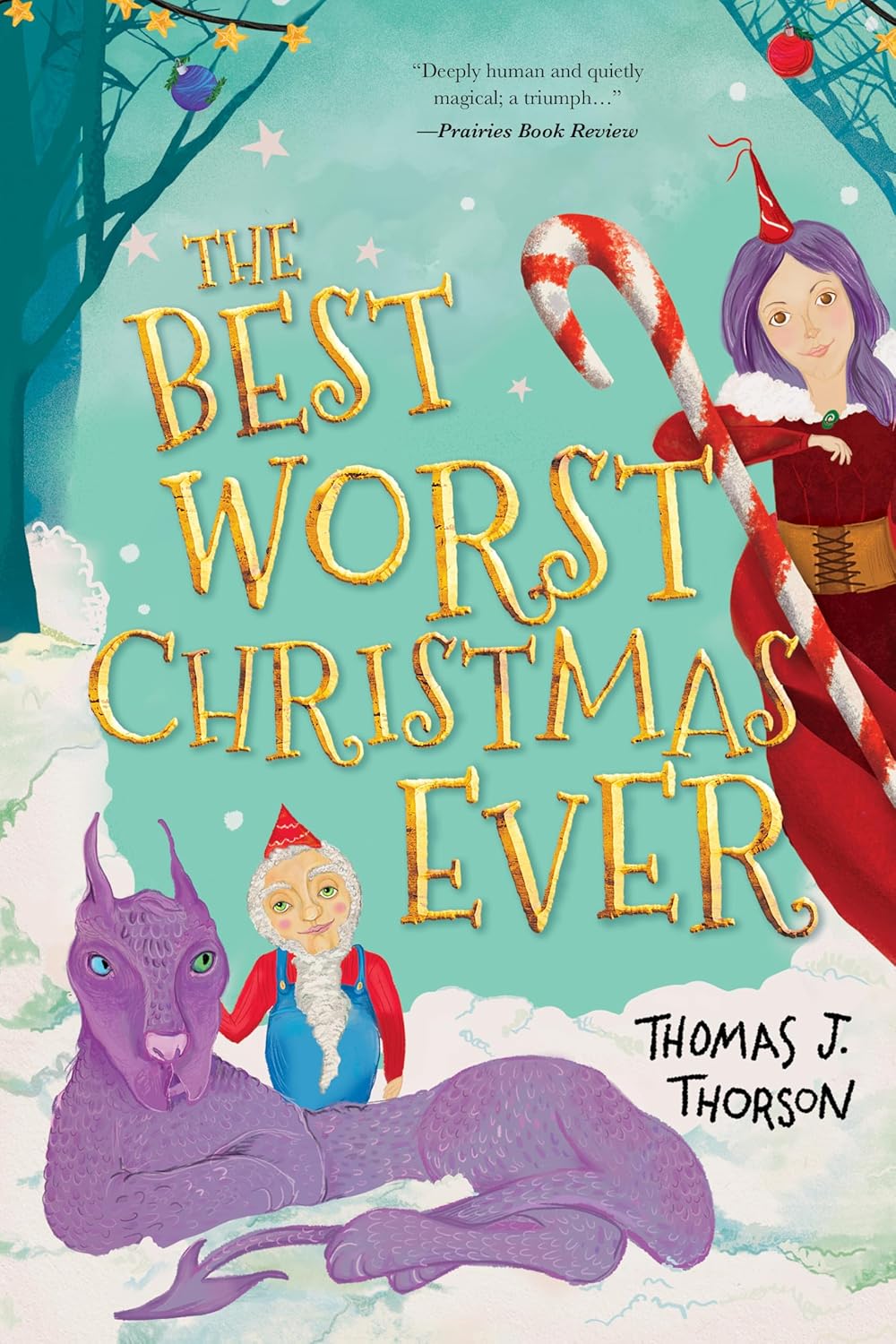
Thomas J. Thorson’s The Best Worst Christmas Ever begins as a simple snowbound family story and unfolds into something much more. Part adventure, part fairy tale, and part rediscovery of wonder. It starts with a family trapped by a blizzard on Christmas Eve, stripped of their digital comforts and forced to reconnect. A father and his three children, Parker, Candace, and little Lily, turn an ordinary night into an extraordinary one through shared imagination. What begins as storytelling by candlelight transforms into a magical journey involving Santa, fairies, lost treasures, and lessons about love, courage, and the true meaning of Christmas.
This book felt like it should be read by a warm fire while the world outside howled with snow. Thorson writes with a gentle humor and sincerity that caught me off guard. The story within a story, the family inventing a Christmas adventure together, reminded me of my own childhood, of times when imagination bridged every gap. The characters felt real, especially the father trying to keep the holiday spirit alive amid chaos. His patience, the kids’ bickering, and the messy dinner they invent, all felt honest and familiar. I liked how the writing never rushed. Each moment had room to breathe.
But what really surprised me was how emotional it became. There’s whimsy in the magic and humor in the dialogue, but there’s also depth. The story nudges you to think about connection, about how the simplest acts like sharing stories, and helping one another can turn a night of disappointment into one of wonder. I felt nostalgic, and a little wistful, reading it.
By the end, I found myself smiling. The Best Worst Christmas Ever isn’t flashy or cynical. It’s a small, heartfelt book that believes in kindness, family, and imagination. I’d recommend it to anyone who loves cozy stories with a touch of fantasy, parents reading aloud to kids, readers who still believe in a bit of Christmas magic, or anyone who just wants to feel good for a while.
Pages: 164 | ASIN : B0FM8HYSG1
Chaos from the Cosmos


Chaos from the Cosmos is a sweeping, cinematic novel that weaves space technology, politics, and human ambition into a fast-moving geopolitical thriller. The story begins with Jackie Jill, a firebrand from rural California who rockets from small-town scandal to the U.S. vice presidency, and follows her alongside the cold genius President Bradford, the haunted astronaut Kiril, and the global powers manipulating events from behind the scenes. As nations battle over control of satellites, quantum computing, and the invisible systems that run our world, the book explores how space, a realm we often view with awe, has become the new front line of human conflict. It’s both speculative and alarmingly real, painting a future that feels close enough to touch.
The author writes with a crisp, cinematic eye for detail, making every scene, from backroom deals in Washington to drone swarms over Taiwan, pulse with tension. His prose is tight but not cold, and he has a knack for slipping big ideas into everyday moments without turning the story into a lecture. I liked that he doesn’t shy away from politics or human messiness. Jackie Jill, in particular, felt alive, loud, funny, damaged, and unapologetically herself. I found myself rooting for her even when she made questionable choices. Bradford, on the other hand, unnerved me. He’s brilliant but hollow, a mirror of our own age of clever leaders who mistake intellect for wisdom. The book never lets you relax. Every comfort in technology feels like a ticking bomb.
What struck me most was how human the book remains despite its cosmic scale. The tech and strategy are grounded in real science, but the real story is about people. Loneliness, pride, fear, ambition. I could feel the tension between progress and control, wonder and destruction. There’s a dark humor running through it, too, especially in how people justify madness as “innovation.” Sometimes I laughed, sometimes I felt sick, and sometimes I had to pause and just sit with what it said about us. The writing has a rhythm that keeps you hooked, shifting from sharp political dialogue to lyrical descriptions of space and silence. It’s smart without being pretentious, and heavy without being hopeless.
Chaos from the Cosmos hit me as both thrilling fiction and a warning. I’d recommend it to anyone who likes their science fiction tangled up with politics and human drama, or to readers who enjoy the sharp realism of Tom Clancy but crave more emotional depth. It’s not just for sci-fi fans, it’s for anyone curious about where our dependence on satellites, AI, and global systems might really lead. This book doesn’t just show chaos from the cosmos; it shows the chaos inside us, reflected right back from the stars.
Pages: 228 | ASIN : B0FCSM42MT



 LITERARY TITAN