Blog Archives
Introducing Lovecraft to Children

Cats of Ulthar: A Tale Reimagined follows a family of cats on the eve of returning home, where a father recounts to his children the tale of their grandfather, which begins as a bedtime story and becomes a dark memory of captivity, vengeance, and rebirth. What inspired you to reimage the famous H.P. Lovecraft story?
I have been a graphic novelist for over twenty years. The majority of my work has been reimagining Lovecraft for a new generation; largely introducing Lovecraft to children. It started with Howard Lovecraft and the Frozen Kingdom. That story spawned two other books in the series and three animated movies from them. My latest book before “Cats”, introduced children to Lovecraft’s character Herbert West. I’m honored to state that my work has been featured in the Chicago Tribune and Rue Morgue magazine.
What intrigues you about the horror and paranormal genres that led you to write this book?
Horror has intrigued me since I was young. It touches on the most primal, darkest side of humanity. I wrote Cats of Ulthar because I loved the original story, but also because it allowed me to delve into modern-day themes that the original did not. This story, wrapped in a bedtime story, deals with questions over modern-day authority, the line between freedom, and what we call “a pitchfork mob”.
What scene in the book did you have the most fun writing?
Honestly, the final scene. This is a bedtime story, but the young cubs never hear what truly happens because they fall asleep. The father reveals he would never tell them the ugly side of this story because he wants to protect them from the ugliness of the world. It rang true to me as a natural protective moment coming from a parent, but that parent also wishes to unburden himself as an adult and relieve himself of some of the ugliness in the world.
What is the next book that you are working on, and when can your fans expect it to be out?
I just finished a futuristic short story about A.I. It defines comfort as a prison. It was inspired by seeing people turning to A.I. to make their lives easier. Slowly watching society turn to A.I. for the “comfort”, or an easy way to create “art”, or even book a vacation, haunts me deeply because I do not see it ending well. I also am fleshing out a graphic novel that is most definitely horror. I can’t predict when the next book will be released because creating stories in this form takes many people, but being a graphic novelist has been my passion for many decades, and I will never stop creating.
Author Links: Amazon | GoodReads
Deadly Vision
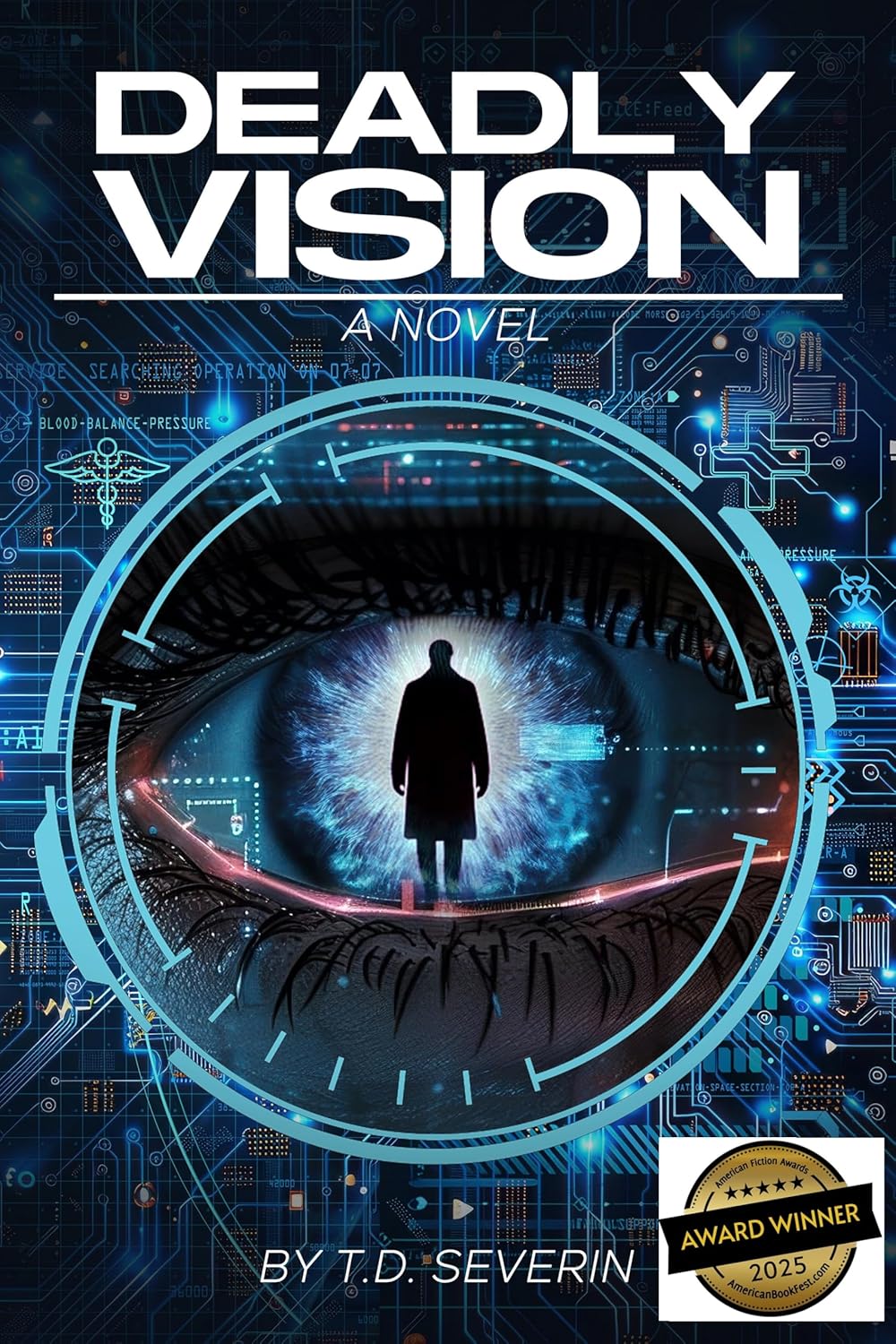

Deadly Vision starts like a high-tech thriller but unravels into something much deeper and darker. It follows Dr. Taylor Abrahms, a driven ER doctor whose research into virtual reality medicine collides with political greed, corporate secrets, and moral decay. From a Silicon Valley conspiracy to a presidential campaign in chaos, author T. D. Severin stitches together the worlds of science, power, and human frailty with an eerie sense of realism. The story opens with a murder and keeps up a relentless pace, jumping between operating rooms, campaign dinners, and backroom plots. At its heart, it asks one big question: how far would we go in the name of progress?
Severin’s writing has a cinematic quality. Scenes move like quick cuts in a film, filled with blood, urgency, and political swagger. The dialogue feels authentic, sometimes clinical, other times sharp enough to draw blood. The medical details are vivid and intense, almost uncomfortably real, and the moral tension keeps you off balance. Abrahms is compelling, but he’s also hard to love, too focused, too numb from exhaustion. And that’s the point, I think. Severin doesn’t romanticize science or heroism. He shows their cost.
What struck me most wasn’t the tech or the politics but the fear under it all. The fear of losing control, of letting machines replace human touch, of progress turning against its maker. The book hums with that dread. It’s ambitious and messy and alive. The villains feel terrifyingly real because they believe they’re doing the right thing. And Severin has a knack for making every ethical question feel personal. There’s a sadness that lingers after the last page, the kind that stays with you longer than the plot itself.
I’d recommend Deadly Vision to readers who like their thrillers with brains and bite, people who enjoy Michael Crichton’s scientific tension or Robin Cook’s medical intrigue but want something a bit grittier. It’s not a light read, and it doesn’t hand you easy answers. But if you like stories that make you squirm, think, and wonder what’s really possible when science meets ambition, this book will grip you from start to finish.
Pages: 468 | ASIN : B0DZ3JWVYX

Sam and His Amazing Flying Crib
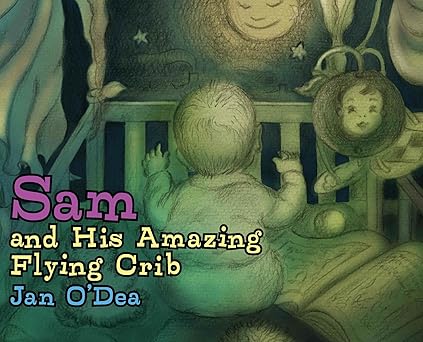
Sam and His Amazing Flying Crib follows a little boy named Sam, who decides one night that he can visit the magical island from his favorite bedtime book. He ties blankets to his crib, turns it into a flying ship, and soars into the night. Along the way, he meets angels who give him moon dust, and he lands inside his story where he befriends two children living in a camp. Together, they face misunderstood “beasts” who turn out to be enchanted creatures in disguise. With a sprinkle of magic and kindness, Sam helps reveal their true forms, the Unicorn and the Dragon, and learns about hope, friendship, and compassion before returning home.
I loved how this story mixed dreamlike adventure with real emotion. It’s whimsical in the way only a child’s imagination can be, but it also has this gentle message about displaced families that hits differently once you realize who Jennah and Naitham are. The writing feels soft, like a lullaby, and the pictures paint such cozy chaos. It’s got that genuine childlike wonder that feels authentic.
What really stayed with me was how the story blends fantasy and empathy. The magical parts are fun, sure, but what really makes it special is the kindness at its core. You feel the ache of kids far from home, yet the story never gets heavy, it keeps this bright, hopeful tone that says, even in strange places, magic and goodness can still find you.
The illustrations have such a wonderfully warm and nostalgic feel, like a scene pulled directly from a classic children’s book you’d cherish forever. The soft, textured art style and muted colors create a cozy, dreamlike atmosphere that’s instantly comforting. I particularly loved the scene early in the book where the baby is staring at the moon. It lets us share in the quiet moment of wonder as they gaze at the friendly, smiling moon. All the little details, like the teddy bear companion add so much charm and story to the piece, making it feel magical.
I’d recommend this picture book to parents, teachers, or anyone reading to a child who loves adventure but also needs gentle reminders about kindness and hope. It’s perfect for bedtime, because it’s magical enough to dream about but meaningful enough to talk about after. It’s a sweet and heartfelt little journey that young readers will enjoy.
Pages: 48 | ASIN : B0F8FWS4RL
Byline Budapest
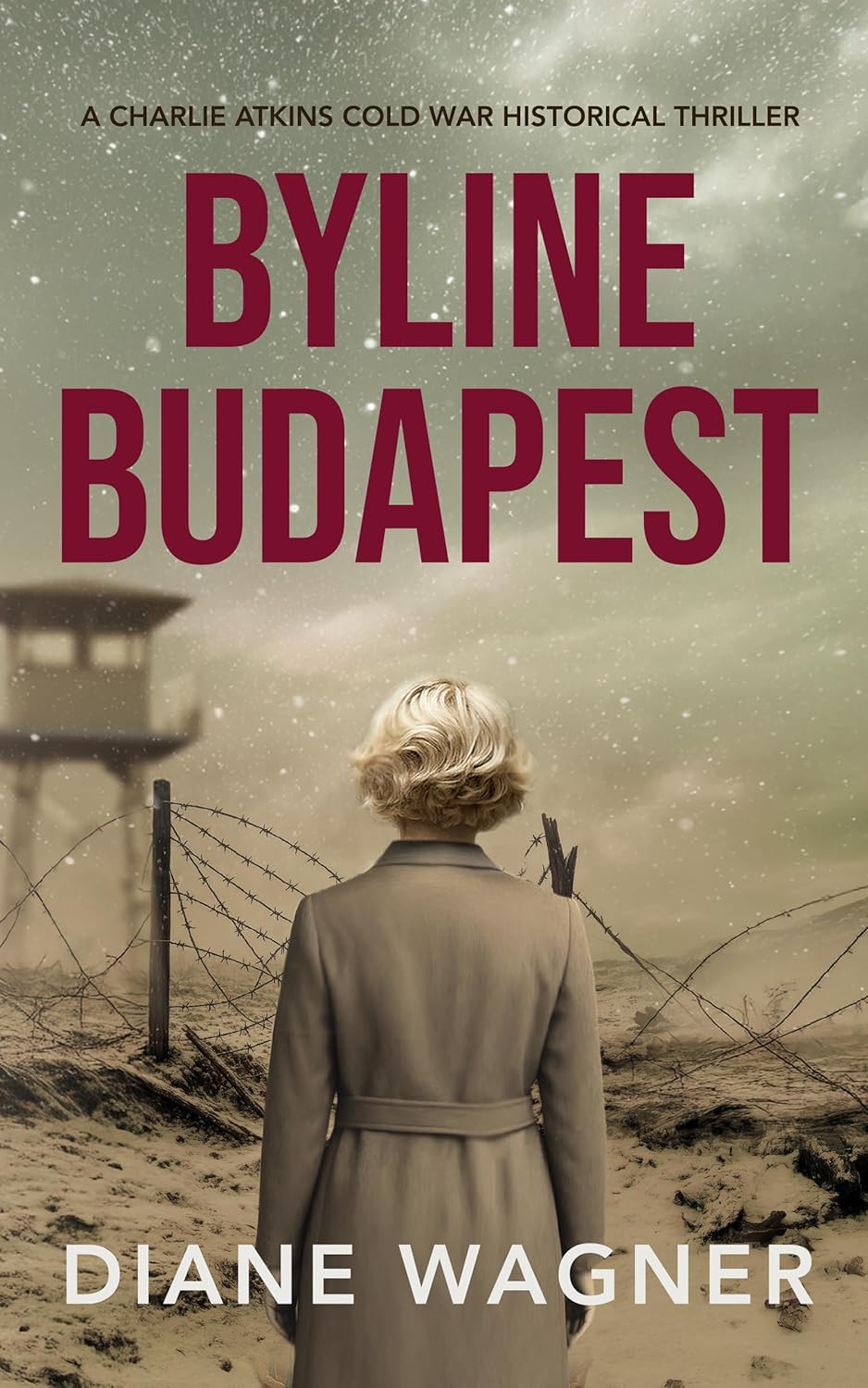

Byline Budapest follows Charlie Atkins, a young American woman determined to become a war correspondent in the 1950s, even as the men around her dismiss her. Through the backdrop of Radio Free Europe and the Hungarian uprising of 1956, Wagner weaves together espionage, politics, and personal ambition. It is both a historical thriller and a coming-of-age story, with Charlie’s persistence as the thread holding it all together. The novel explores themes of truth, hope, and the cost of war, told through the eyes of someone who refuses to be silent or sidelined.
I loved Charlie from the very first page. She’s stubborn, restless, and vulnerable in a way that feels so real. The writing pulled me in fast, with short, sharp sentences and scenes that burst alive in my mind. At times, it was almost cinematic. I could see the moonlight on the balloons, hear the chug of the generators, smell the cabbage stench of the hydrogen tanks. Wagner’s style is vivid without being heavy. She doesn’t drown you in history lessons, though you come away learning plenty.
There were a few times when the dialogue was overly polished, almost like lines in a play rather than everyday conversation. And every now and then, the pace slowed as the story dug into background details about institutions or politics. But those stretches never lasted long. The moment I began to drift, the narrative shifted back to Charlie, pressing against the limits around her, refusing to be contained. That rhythm of slowing down and then surging forward kept me turning pages well past bedtime.
Byline Budapest is a riveting read. It’s a book about courage, about the danger of false hope, and about the people who insist on telling stories even when the world would rather silence them. I’d recommend it to anyone who enjoys historical thrillers with a strong, driven heroine at its core. If you like novels that balance grit with heart, or if you’ve ever wondered what it might feel like to stand at the edge of history with a notebook in hand, this book is for you.
Pages: 360 | ASIN : B0FTWLZ5HG
Not Yet Your Time
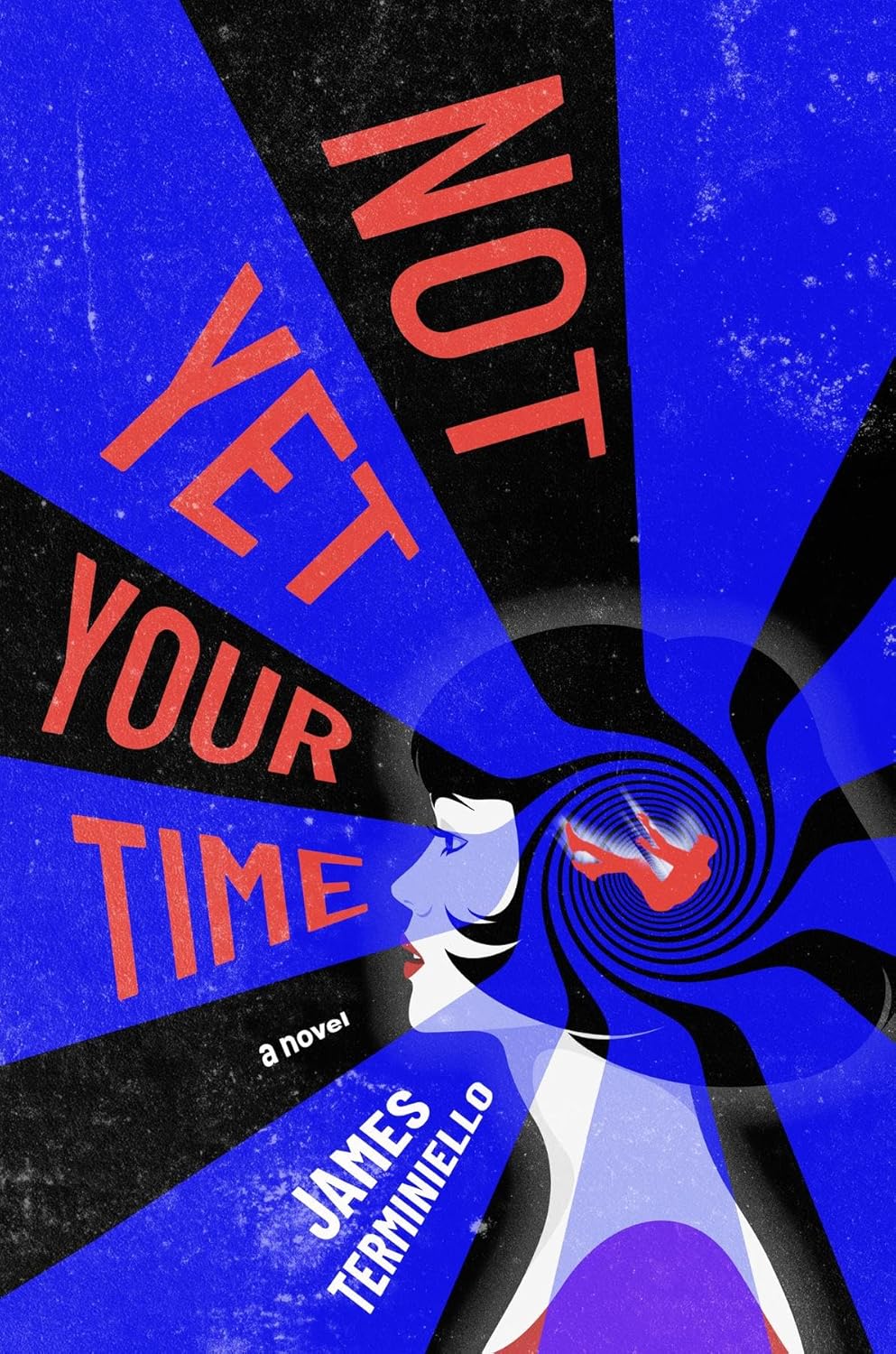
James Terminiello’s Not Yet Your Time is a strange, sharp, and funny novel that refuses to play by any ordinary rules. The story follows Titus Carneades, a self-deprecating office worker whose mundane New York life derails after a near-death encounter with a mysterious woman he dubs the “Benevolent Pumpkin.” What begins as a simple act of rescue spins into an absurd web of government agents, terrorist dance troupes, cultish believers, and philosophical riddles about time, fate, and faith. The tone flips easily between satire and suspense, and the plot lurches forward with a cinematic kind of chaos that somehow always lands on its feet.
Reading this book felt like falling down a rabbit hole built by Kafka and decorated by Mel Brooks. The dialogue snaps with dry wit, and the narrative voice never takes itself too seriously. Terminiello clearly enjoys skewering bureaucracy, politics, and the media, and he does it with a mix of intelligence and goofiness that’s both refreshing and exhausting. Some scenes stretch on like fever dreams full of bureaucratic jargon and absurd acronyms, but that’s part of the joke. Beneath the humor, though, there’s a weird tenderness. Titus, for all his bumbling and sarcasm, starts to feel like an everyman trying to locate meaning in a world so absurd it can only be laughed at. The book made me laugh, then think, then laugh again because I realized how close the nonsense hits to home.
The writing style took me a while to settle into. The sentences wander, full of digressions and witty detours, but there’s a rhythm to it, like jazz. The story moves in bursts, then slows to reflect on life’s ironies, then speeds up again in a flurry of chaos. I liked how Terminiello uses humor to talk about big ideas without sounding preachy. The world he builds feels surreal but eerily plausible, and that combination stuck with me. Sometimes I wanted a breath, a quiet moment without a punchline. But then again, that’s life in Titus’s head, too much, too fast, and too real to pause.
In the end, Not Yet Your Time is an absurdist romp with a beating human heart underneath all the noise. I’d recommend it to readers who enjoy satire with teeth, or anyone who’s ever felt trapped in the grind and wondered if the universe is just messing with them for sport. It’s witty, weird, and surprisingly soulful. If you like your fiction bold, funny, and a little philosophical, this one’s worth your time.
Pages: 186 | ASIN : B0FMHB61S5
Will Humans Become Obsolete?

100 Years to Extinction follows two sisters and their cousin who are caught in a world of chaos where pandemics, gun violence, climate change, and political division all overlap, and they make a pact to do something to save humanity’s future.
I found the science in the novel to be well-developed and engaging. What kind of research did you conduct to ensure you got it right?
My research, combined my knowledge, books on space exploration and AI, help from a fellow physicist on speed of light space travel, advice from a physician on medical issues, use of Google search for articles and the Google AI function, and advice from a NASA expert on the magnetic field for Mars.
What were some themes that were important for you to explore in this book?
The main theme is a world threatened by the Tyranny of Technology and dysfunctional politics. My three young Gen Z protagonists, Liz, Aster, and Milo, want a better world for everyone. The subthemes are the threats from global warming, nuclear security, unchecked AI, and misused genetic engineering. The cover image is a future that my protagonists fantasize: Genetic engineering creates a super-humanoid species that wipes out humans only to be eliminated by robots. All with the background of melting glaciers.
I find a problem in well-written stories, in that I always want there to be another book to keep the story going. Is there a second book planned?
Yes. My three protagonists, a little older now, are living in what is called the AI Singularity, predicted to occur in 2045. It is at this point that Artificial Intelligence becomes as intelligent and as powerful as humans. What will occur then? Will humans become obsolete? My three protagonists use their skills, intelligence and experience to ensure that humans and AI live together in harmony for mutual benefit.
My new novel, 12 YEARS TO AI SINGULARITY,follows Liz, Aster and Milo as they cope with the new reality. It is coming out in the spring of 2026.
Author Links: X | Facebook | Website
When EMT Liz Arvad is shot while saving a life, her recovery sparks a deeper awakening. Maybe the world isn’t just chaotic, it’s unraveling. Alongside her genius sister, Aster, and politically charged cousin, Milo, Liz makes a vow—do something, anything, to help save humanity. It starts with a promise in a sunlit room, and becomes a mission that could change everything.
In 100 Years to Extinction, physicist and award-winning STEM author Peter Solomon, Ph.D., blends heart-pounding fiction with scientific foresight. Inspired by Hawking’s dire warning that humans may face extinction by 2117, this gripping novel explores the runaway threats we can no longer ignore: climate collapse, pandemics, war, gene editing, AI, disinformation, and more.
But this story isn’t just about what’s going wrong—it’s about what we can still do. Backed by decades of experience founding clean-tech companies, leading multimillion-dollar government research, and writing 300+ scientific papers, Solomon brings unmatched clarity and urgency to the question: Can we still save ourselves?
With characters who feel heartbreakingly real and science that hits close to home, 100 Years to Extinction is both a wake-up call and a rallying cry. It dares readers to imagine a better future … and to fight for it.
Will you join the Earthling Tribe?
Pick up your copy today—and take the first step toward making Earth great again… before it’s too late.
About the Author: Blending heart-pounding fiction with clear, accessible science, physicist and award-winning STEM author Peter Solomon, PhD, explores the runaway threats we can no longer ignore—climate collapse, pandemics, nuclear war, genetic engineering, artificial intelligence, disinformation, and more. Solomon offers unmatched clarity on the question: Can we still save ourselves, and how might we do it?



 LITERARY TITAN