Blog Archives
Forged in Fire: Grief, Purpose, and Devotion of a Woamn at War


Robert L. Gangwere’s Forged in Fire tells the true story of Blanche Barnes, a young Midwestern woman who joins the American Red Cross’s Clubmobile program during World War II. Through her eyes, we witness the war from an unusual vantage point, one shaped not by combat but by coffee, doughnuts, and determination. Blanche’s journey is full of heartbreak, resilience, and unexpected adventure. She faces devastating personal loss, brushes with death, and the realities of war’s chaos, while also encountering generals, spies, and musicians. What begins as an ordinary life of music and marriage transforms into a remarkable testament to courage, purpose, and survival in the face of global upheaval.
I was struck by how alive Blanche felt on the page. The writing doesn’t just record her story, it breathes with it. Some passages are quiet and tender, while others hit hard with sudden violence or grief. I found myself laughing at her boldness, then minutes later, my throat tightened as she endured unimaginable loss. Gangwere manages to capture both the sweep of history and the tiny, intimate details that make it real. The prose is clean and direct, which kept me moving, but it also left room for my own emotions to rise up and spill over.
What stayed with me most was Blanche’s spirit. She was not painted as flawless or untouchable, but as relatable. She doubted, she stumbled, she hurt, and she kept going anyway. That stubbornness felt familiar and comforting. I also appreciated how the book didn’t shy away from the darker truths: the Red Cross’s policies, the ever-present danger for women, the moral compromises of war. It reminded me that history isn’t tidy. It’s messy, layered, and often unfair. And yet, through Blanche’s story, I felt a surge of pride and gratitude for the ordinary women who chose to step into extraordinary circumstances.
Forged in Fire left me both heartbroken and inspired. It is a book that stays with you, one that makes you think about resilience and the quiet forms of heroism that often get overlooked. I would recommend it to anyone who enjoys World War II history told through a personal lens, especially readers drawn to stories of women who found strength in unexpected places. It’s not just for history buffs. It’s for anyone who believes in the power of ordinary people to do extraordinary things when the world demands it.
Pages: 324 | ASIN : B0FFN4HKHP

The Last Ghost
The Last Ghost tells the story of Joshua Stewart, a boy who loses his parents in a tragic fire in Thailand and is raised by his aging grandparents in Toronto. What begins as a quiet, tender domestic story about loss and love evolves into a moving reflection on family, morality, and the strange intersection between faith and logic. It’s a coming-of-age story shaped by grief, education, and a world that seems to change faster than anyone can understand. The book carries Joshua from childhood through adolescence, from the safety of his grandfather’s theological certainty to the uncertainty of global chaos and financial collapse. In the background are ghosts, literal and figurative, the memories and moral lessons that cling to life long after the living are gone.
The prose is elegant but warm, never showy. Author D.E. Ring writes dialogue that feels alive, filled with pauses and silences that say more than the words themselves. The pacing is slow in the best way. I found myself caring deeply for Caleb and Marianne, those kind, weary grandparents trying to raise a boy while the modern world races past them. Joshua’s curiosity, his moral sense, and his grief are rendered so gently that when emotion hits, it hits hard. I caught myself tearing up more than once. The way Ring balances tragedy with moments of simple beauty, a walk by the lake, a child’s question about God, is fantastic. It’s literary without being pretentious, and it touches something primal about family and forgiveness.
That said, this isn’t a light read. The novel asks you to think. Some chapters stretch with patient detail about conversation or setting. The story builds a world that feels lived in. So much so that when the supernatural edges in, it feels believable. Ring doesn’t write jump-scares or gothic gloom. His ghosts come through in memory, regret, and the quiet ways people haunt one another. I loved that restraint. It’s the kind of ghost story that leaves you thinking rather than trembling. Still, I found myself haunted anyway, not by spirits, but by love, loss, and how time slips away no matter how much we hold on.
I’d recommend The Last Ghost to readers who love literary fiction with heart, people who appreciate family sagas, subtle hauntings, and moral reflection. It’s for those who like their ghost stories human, not horrific. I’d hand it to anyone who believes that real hauntings come from memory, conscience, and the ache of unfinished love.
Pages: 291 | ASIN : B0FS1W4T5Q

From Foie Gras To Jello
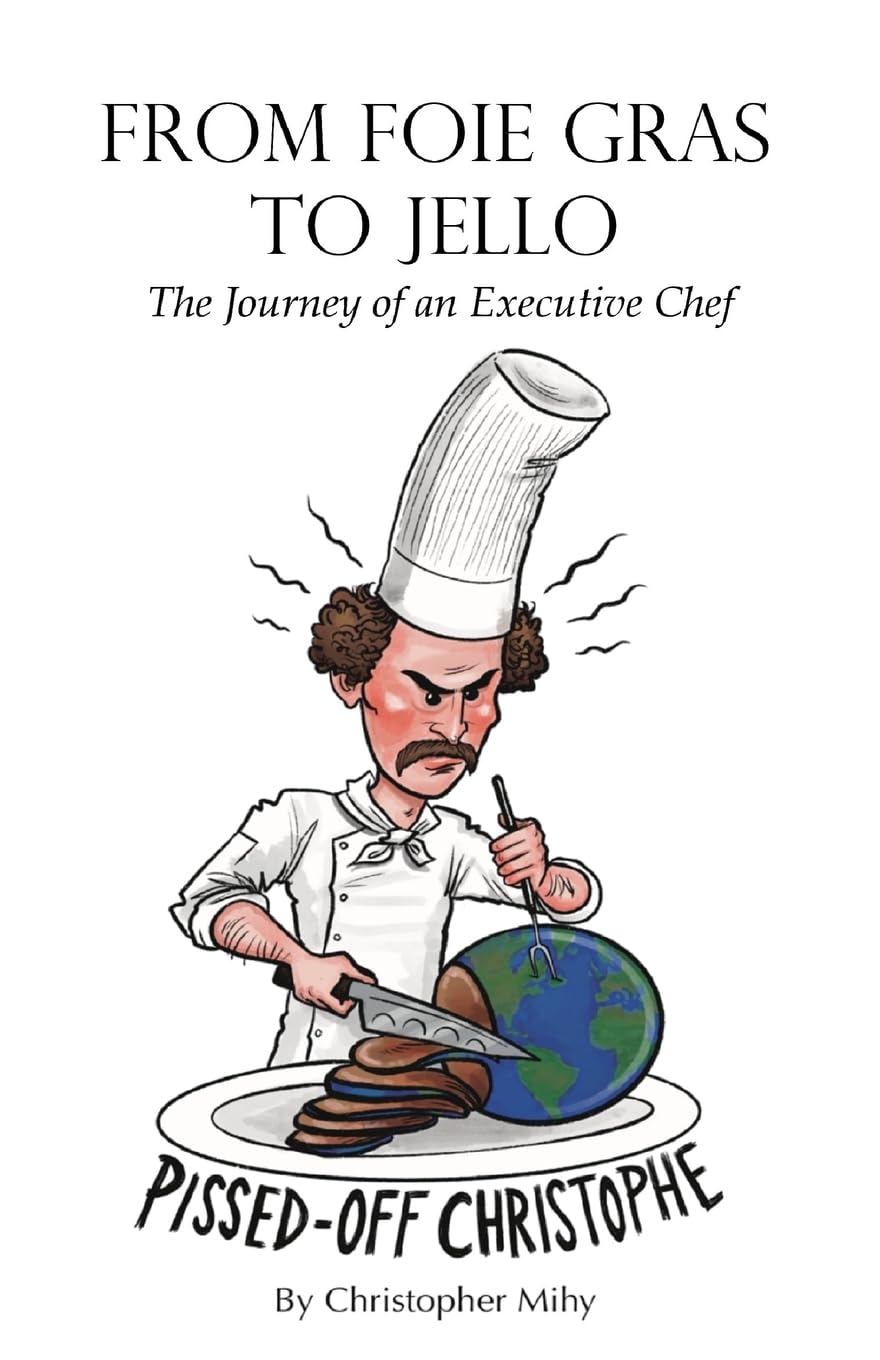
From Foie Gras to Jello is the raw, funny, and sometimes bruising life story of a chef who never stopped fighting his way forward. Christopher Mihy takes us from his childhood in the idyllic French town of Dieulefit to the blistering kitchens of Las Vegas. He recounts a life that swings between triumph and chaos, love and betrayal, hard-earned success and the relentless grind of the culinary world. The book reads like a casual conversation. It’s sharp and full of vivid moments that make you wince and laugh in the same breath. Mihy’s voice is direct, his humor dark, and his honesty disarming.
This book hit me harder than I expected. It isn’t polished like a typical celebrity memoir. It’s gritty, loud, and relatable. Mihy writes like a man who’s lived through a hundred lives and doesn’t care to sugarcoat a single one. His storytelling shines when he describes the kitchen, the smells, the noise, the violence of it all. You can feel the steam, the sweat, the bruised egos. And then there’s the vulnerability. He talks about heartbreak, humiliation, and redemption with a kind of humility that sneaks up on you. I found myself rooting for him, even when he was at his lowest, because he never stopped showing up. His pain feels real, his humor feels earned, and his victories, small or large, feel like yours too.
The pacing slows sometimes, but Mihy’s voice never loses its grip. It’s like hearing an old chef telling stories after a long service, when the knives are down and the whiskey’s out. There’s grit, but also grace in how he reflects on his mistakes. It reminded me that success in life isn’t about perfection. It’s about persistence, humility, and a bit of madness. His journey from “Foie Gras to Jello” isn’t just a metaphor for his career; it’s a statement on how far we fall and how hard we climb to get back up.
By the end, I felt both exhausted and inspired. Mihy’s story is not just for food lovers or hospitality folks. It’s for anyone who’s ever chased a dream and been knocked flat by it. If you’ve ever burned out, started over, or found yourself wondering why you keep fighting for something you love, this book will resonate with you.
Pages: 158 | ASIN : B0FQFJRVBX
The Magnet, The Method and The Machine

When I closed this book, I felt like I had just stepped out of a tough but eye-opening workshop. Author Rodric Lenhart sets out a clear roadmap for builders who want to escape the trap of being tied to every phone call, every client, every crisis. He calls it the three laws and nine levers, and it’s all about moving from an operator who scrambles to put out fires into a real owner who builds a company that runs on systems, structure, and strategy. The framework weaves through marketing, leadership, culture, and execution. Along the way, he shares blunt stories of burnout, chaos, and finally breaking free into a business that grows without devouring your life.
I found the author’s writing to be sharp, direct, and very down-to-earth. He makes his points with a mix of personal confession and practical advice, which makes the lessons stick. The metaphors, like being a lighthouse instead of a flashlight, or running a prison instead of a business, landed hard. At times, I felt like he was in the room, calling out excuses I’ve made myself. I was surprised by how blunt he could be, but then I’d stop and realize he was right. The book cuts through fluff, and that’s refreshing in a genre where too many authors hide behind buzzwords and theory.
Emotionally, I kept bouncing between frustration and relief. Frustration, because I recognized myself in the builder stuck in the mud, doing too much, chasing every lead, and losing freedom in the process. Relief, because Lenhart shows that it doesn’t have to stay that way. He gives real steps to take, like filtering clients, building a lead engine, and letting go of control so others can step up. His stories of transformation from other builders felt genuine and gave me hope. More than once, I thought, “I could actually do this.” That spark of possibility is rare in business books, and it’s what kept me hooked.
I’d recommend this book to custom homebuilders who feel trapped in their own success. It’s not for someone looking for motivational fluff or a quick fix. It’s for the owner who knows they’re carrying too much and wants a way out. If you’ve ever felt like your company owns you instead of the other way around, this book will hit close to home. And if you’re ready to make changes, it will give you a straight path forward.
Pages: 145 | ASIN : B0FPPYLY1D
The Black Wall Streets of America: Towards a Black Stock Exchange

This book takes the reader on a journey through the history of thriving Black business districts across the United States, from the Greenwood District in Tulsa to Sweet Auburn in Atlanta and Bronzeville in Chicago. Author Woody Clermont recounts their origins, their rise, and the deliberate forces that brought them down, whether through racial violence, redlining, or highway construction. Beyond its historical context, the book pivots toward the future. It lays out a detailed framework for rebuilding economic power, including the call for a Black stock exchange, the use of AI for empowerment, and policies to ensure wealth creation that can last. It is both a historical record and a forward-looking manual, blending storytelling with strategy.
I found myself deeply moved while reading. The writing has a clear rhythm, direct and unpretentious, almost like a conversation with someone who refuses to give up hope. The stories of Tulsa, Rosewood, Overtown, and Hayti broke my heart. These communities built so much from so little, only to see it wiped away. I could feel the injustice in my chest, but I also felt admiration for the resilience. Clermont’s framing of each city through metrics like business density, land ownership, and cultural vitality made the past feel real and measurable. It wasn’t just nostalgia; it was proof that prosperity was built, and proof that it can be built again.
The vision of a Black stock exchange is bold and inspiring. I caught myself wondering how much of this could really be implemented, given the political and financial climate of today. Still, the conviction in Clermont’s words carried me through those doubts. The chapters on AI as a leveling tool stood out. They challenged me to stop seeing technology as something distant or threatening, and to instead think of it as a weapon for independence. That shift in tone, from history to possibility, was what kept me turning the pages with real excitement.
I would recommend this book to anyone who cares about history, justice, and the power of ownership. It’s not just for economists or scholars. It’s for community leaders, young entrepreneurs, and even everyday readers who want to understand the depth of what was lost and the potential for what could be regained. If you’ve ever wondered how to make lasting change, this book offers both the reasons and the roadmap.
Pages: 204 | ASIN : B0FPB4HKHR
100 Years to Extinction
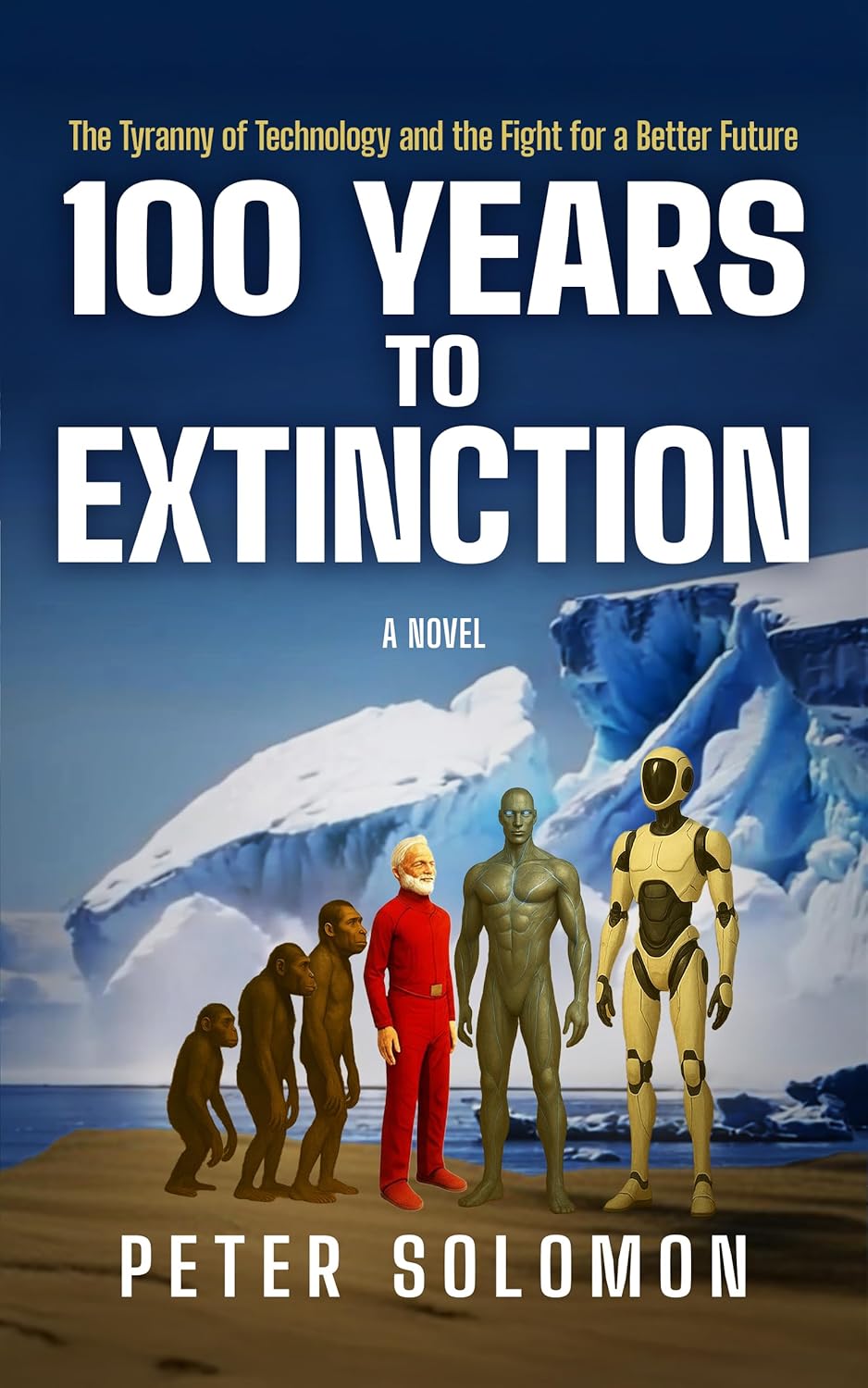

100 Years to Extinction follows Liz and Aster Arvad, two sisters caught in a world of chaos where pandemics, gun violence, climate change, and political division all overlap. Their family’s struggles are both personal and symbolic, from Liz being shot on an EMT call to the trio of Liz, Aster, and cousin Milo making a pact to “do something” about humanity’s future. The novel braids together near-future realism, speculative science, and the raw fears of Generation Z, asking whether we are truly on the brink of extinction in a century. It’s part survival story, part social critique, and part rallying cry.
The writing is sharp, fast, and emotional. There are moments when the dialogue feels like it’s been lifted from heated dinner-table debates, with characters rattling off facts about Stephen Hawking, artificial intelligence, and climate change. I liked that unfiltered energy. It made the book feel alive, like being thrown into a storm of voices where science, politics, and family pain collide. The rawness of Liz getting shot, the rage over conspiracy theories, and the quiet tenderness of sisters holding hands in a hospital room hit me hardest. Solomon’s sincerity is impossible to ignore. The story wanted me to care, and I did.
The weaving of real-world headlines into the story sometimes felt like the characters were vehicles for commentary. Still, there were passages where the mix worked beautifully. The contrast of cosmic wonder, Aster dreaming of the stars, against the blunt horror of school shootings or anti-vax violence made me feel both awe and despair in the same breath. That tension stayed with me, unsettling but real. The prose is straightforward, almost casual, but the ideas underneath are heavy. The combination created a rhythm I found hard to put down.
By the end, I felt the book’s true purpose wasn’t just to tell a story but to challenge me to think about the world I live in. Who is responsible for fixing this mess? Can young people make the difference their parents and grandparents didn’t? 100 Years to Extinction is a call to arms disguised as fiction. I’d recommend it to readers who enjoy speculative stories rooted in our very real present. It’s especially for young adults who feel overwhelmed by the crises around them and need to see their fears reflected and validated.
Pages: 438 | ASIN : B0FNX5VGY8
Dance Masters: Interviews with New York’s Dance Teachers

Dance Masters is a collection of interviews with legendary dance teachers from New York, spanning ballet, jazz, tap, and modern. Each chapter highlights the voices of masters like Jerry Ames, Mary Anthony, Phil Black, Brenda Bufalino, and Eugene “Luigi” Faccuito, among many others. The format is straightforward. We hear directly from the teachers as they share their histories, philosophies, frustrations, triumphs, and above all, their passion for dance. The book also weaves in the author’s own reflections, especially her personal journey through illness and recovery, and how dance became her lifeline back to wholeness. It feels both like an oral history and a love letter to the art form.
I found myself moved by the intimacy of the interviews. The voices come across as raw and real. Some passages carry the weight of nostalgia. Others pulse with the intensity of people who gave their entire lives to movement. I appreciated how unvarnished it all felt. Teachers didn’t just talk about success; they spoke about financial struggles, physical limitations, and disappointments. That honesty gave the book heart. Some interviews circle the same themes: discipline, passion, and sacrifice. Still, the personalities shine bright enough to keep things engaging.
What struck me most was the mix of grit and joy. Many of these teachers had been through personal and professional battles, yet they never lost the fire for dance. Their words made me think about resilience, about what it means to create even when the body fails or the industry changes. The anecdotes about Broadway’s ups and downs, the tap renaissance, or how students transform under guidance, all of it gave me a sense of history that felt alive. At moments, I caught myself smiling; other times, I felt a lump in my throat.
I’d recommend Dance Masters to dancers of any level, but also to anyone fascinated by the process of teaching and creating. It’s not a manual. It’s a record of lived experience, the kind that might inspire a young dancer to push through or remind a seasoned teacher why they started. If you care about the human side of art, the sweat, the doubt, the spark, this book will speak to you.
Pages: 410 | ASIN : B0D9TM6L17
On A Sundown Sea: A Novel of Madame Tingley and the Origins of Lomaland

When I first closed the final page of On a Sundown Sea, I sat with the feeling that I had been walking alongside Katherine Tingley, a woman caught between the raw struggles of the 19th century and her own restless visions of something more. The novel takes us through New York’s crowded tenements, the snowbound Great Blizzard of 1888, and finally into the swirl of spiritualism, social reform, and theosophy that defined her life. It is a story of Katherine’s yearning for justice, for connection, and for the dream of a golden city by the sea where harmony might prevail.
What struck me first about this book was how alive the writing felt. The historical detail pulled me in, yet it never read like a lecture. The voices of the poor at the mission, the creak of an empty bread cart, even the sound of a baby crying outside in the cold stayed with me. I admired the way author Jill G. Hall let Katherine be complicated, fierce and brave, but also vulnerable, flawed, and often unsure. The visions Katherine experiences could have been written as distant or mystical, but instead they felt immediate and human, even tender. I could sense her exhaustion, her longing to believe they meant something.
There were moments when the pacing slowed, especially when the story lingered on Philo’s inventions or the details of household frustrations. I found myself wanting to move back to Katherine’s work at the mission or her encounters with William Q. Judge, which carried a spark. Yet in a strange way, even these slower stretches made me feel more connected to Katherine, because life itself rarely moves in clean arcs of drama. It’s messy, filled with distractions, petty disappointments, and small betrayals, and the novel captured that truth.
I came away deeply moved by Katherine’s journey. Her search for meaning felt familiar to me, and I imagine it will resonate with many others who’ve ever wondered if they were meant for more than the roles life handed them. I would recommend On a Sundown Sea to readers who enjoy historical fiction rooted in real social movements, but also to anyone who loves a story about resilience and the desire to build a better world. It is a thoughtful, heartfelt novel, and though it is set in the past, it left me thinking about the present in fresh ways.
Pages: 384 | ASIN : B0DV6T8P8M



 LITERARY TITAN