Blog Archives
God’s Plants
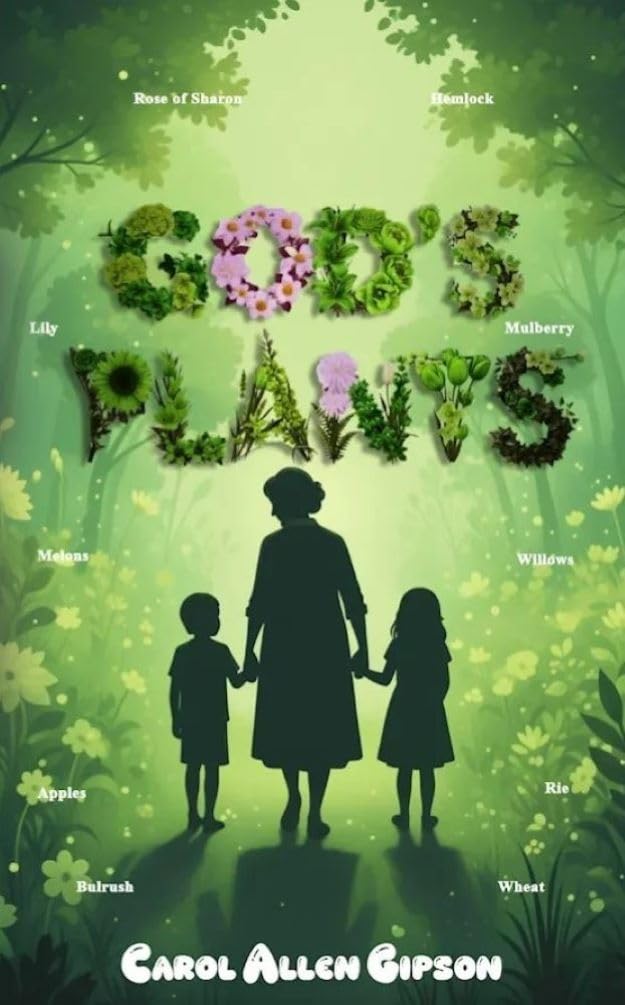

GOD’s Plants, by Carol Allen Gipson, follows three children, James, Marlene, and Robert, as they spend a sunny afternoon with their great-grandparents, Nana and Grandpa. What begins as a playful visit turns into a gentle backyard adventure when the children discover “biblical plant signs” placed among flowers, herbs, vegetables, and trees. Through their curiosity, Nana introduces them to the Bible, God, Jesus, prayer, and the meaning behind plants like mint, herbs, palm, and the Crown of Thorns.
There’s a sweetness in the way faith is presented through ordinary family time, not as a lecture but as a conversation that grows out of children noticing the world around them. I especially liked the garden setting because it gives the spiritual lessons something tangible to rest on. A child can smell mint, see a palm tree, touch a leaf, and then connect that sensory moment to a Bible verse. That idea feels thoughtful and memorable. The writing is warm and direct. The grandmotherly voice has a comforting quality, and I could feel the author’s desire to pass down faith, family memory, and a love of growing things.
The artwork gives the book a soft, welcoming atmosphere. The characters look kind and expressive, and the garden scenes have a glowing, storybook warmth that fits the tone beautifully. I was most drawn to the pages where the children explore among the herbs and signs, because those illustrations make the learning feel alive and playful. The Crown of Thorns section carries more emotional weight, and I appreciated that the book doesn’t avoid the seriousness of Jesus’ suffering, while still framing it gently for young readers. Some of the transitions can feel a little abrupt, especially when the story moves from plant hunting into deeper theology, but the tenderness of Nana’s explanations helps smooth that shift.
GOD’s Plants is a faith-centered picture book with a clear purpose and a deeply personal spirit. It’s best for Christian families, Sunday school settings, grandparents reading with grandchildren, or parents who want to introduce children to biblical ideas through nature and gardening. I’d recommend it especially for young readers who enjoy gentle family stories and hands-on connections between faith and the natural world.
Pages: 43 | ASIN : B0G5BQ1F9N

The Actual Experts

So You Want To Be A Toy Designer takes young readers inside the process of making the toys they love, from product testing to the teamwork and problem-solving required. What inspired you to write this nonfiction book for children?
Toys are the first objects in a child’s life designed entirely with them in mind, and I wanted to crack the magic open. Children deserve to see the hundred sketches behind the one toy, the prototypes that ended up in a drawer, the grown adults sitting around a table arguing about whether a teddy bear’s eyes might come loose. There is also something irresistibly humbling about a profession where one of the recurring occupational hazards is watching a child push aside the toy you spent six months on to play with the box it came in. A job that funny and that earnest deserved its own book.
A deeper reason is that kids are the actual experts on toys. They have spent every year of their lives studying the subject with total attention. They have opinions about which toys feel right in the hand and which feel cheap. They know exactly the moment a toy gets boring, and why. They have wished a hundred times that a particular toy did one specific thing differently. Those instincts are not preliminary versions of grown-up opinions — they are the real thing, and toy designers spend their careers trying to listen to children that closely. I wanted a book that handed that recognition back to the reader: you already know more about this than you think you do. The questions you ask about your own toys are exactly the questions designers ask. You are not preparing to enter the conversation. You are already in it.
I also wanted to dispense with the assumption that growing up means leaving toys (and fun) behind. The adults inside this profession are, in the most enviable sense, people who never stopped playing with toys. They build, sketch, prototype, play, and study play, and they get paid to do it. That isn’t a betrayal of adulthood; it is one of its better versions. Toy designers do work children take seriously, even when adults forget how to — and I wanted to take it seriously too.
The book is honest about the challenges of toy design, including failed ideas and redesign. Why was it important to show children that creativity involves trial and error?
Because the lie that good ideas arrive wholly formed and instantaneously quietly damages the children who can’t produce them on demand, which is all of us. The truth is, the thirtieth sketch is usually the good one. Toy designers fail in front of seven-year-olds for a living, and that isn’t a setback. That’s the job.
When a child learns that the toy they love was version fourteen, not version one, something loosens in them. They get permission to be on version three of their own thing and not feel behind. I wanted children to meet adults whose entire profession depends on being wrong, often, and in public — and to see that those adults love what they do. Iteration is not the obstacle to creativity. Iteration is creativity.
What kind of research did you do to show the day-to-day reality of toy designers?
I worked in three layers, because no single source could give me everything I needed.
The first was the historical record, which turns out to be one of the most charming bodies of biography in any industry. Ruth Handler watched her daughter give paper dolls adult roles and realized no toy let girls imagine themselves as adults. Barbie was the answer, named for her daughter Barbara. A navy engineer in 1943 knocked a tension spring off his workbench and watched it walk end-over-end across the floor; his wife named it Slinky. Eddy Goldfarb is 104, holds nearly 300 patents, and still walks out to his garage every morning to prototype on a 3D printer. These stories aren’t decoration. They are evidence of who toy designers actually are: curious, unembarrassed about play, often working at the edge of accident and intention.
The second layer was the present-day craft. I drew on industry reporting, accounts from designers at the major houses, the play-research literature, and — more interesting than it sounds — the ASTM F963 safety standard, which specifies the exact force a part must withstand before a small child can pull it loose. What struck me there was that constraint is not the enemy of creativity in this field; it is the medium designers actually work in.
The third layer was the texture of an actual working day, which neither history nor industry publication will give you. For that, I triangulated until I could build a composite that felt true: the morning safety lab report, the hour of fast sketching where forty-seven drawings get discarded, and three get pinned to the wall, the midday session behind one-way glass watching seven-year-olds pick up a prototype or — worst of all — get more interested in the box.
What I was reaching for, across all three layers, is what I reach for in every title: a portrait a working practitioner would recognize as their own.
What is the next book you are working on, and when will it be available?
The list is long — and continuing to grow! I tend to work on several titles at once and only release them when they feel finished, so the order is always evolving. Most recently, I was thrilled to publish So You Want To Be A Waterslide Tester and So You Want To Be An Astronomer & Exoplanet Hunter, which brings the series to thirty-seven published titles, and I am nowhere near slowing down.
The near-term lineup is one of the most fun stretches I’ve worked on. Several of the upcoming titles have what I think of as the “is that a real job?” factor — ice cream flavor inventor, candy scientist, professional taste tester — careers that delight children before they have even opened the book. I’ve also begun work on a fashion design title for near-term release, and my son is lobbying hard for me to move cryptographer and esports athlete (pro gamer) up the queue. He may well succeed. What I love about this stretch of the series is how wide it is reaching: from the timeless callings to the ones that reflect just how strange and wonderful the working world has become.
If I had to predict the next one to land based on where things currently stand, it would be So You Want To Be A Journalist. But new titles are rolling out continuously through the rest of 2026, and the full list — along with a sign-up for upcoming releases — lives at LindaSoules.com. I would love for readers to come find the one with their name on it.
Author Links: GoodReads | Website | Amazon
This is not a simplified, watered-down look at a fun job. It is a real, honest guide to what toy designers actually do — the years of industrial design training, the child development study, the materials engineering, and the iterative prototyping that happen long before a single toy reaches a shelf. You will discover how designers learn to see the world through a child’s eyes while solving complex engineering problems, and why that combination of imagination and technical skill makes toy design one of the most unique professions a young person can pursue.
Inside, you will follow the full design process from first sketch to working prototype to safety testing. You will learn how designers draw on child psychology to understand how play shapes learning at every age. You will see how teams of engineers, creative designers, and manufacturing specialists work together to turn an idea into something a six-year-old picks up, plays with for hours, and refuses to put down. And you will meet the visionary inventors whose toys became the defining objects of childhood for generations.
But this book goes further than most career guides for kids. It explores the real skills toy designers build — sketching, 3D modeling, materials science, understanding how small hands interact with objects — and shows what young readers can start doing right now to develop those same abilities. Whether you love to draw, build, tinker, or simply take things apart to understand how they work, this book helps you see how those instincts connect to a real profession.
Illustrated throughout with detailed, engaging artwork, this nonfiction guide treats its readers as equals. It brings the same depth and honesty that boys and girls ages 10-14 and up deserve when they ask a serious question about their future. No talking down. No sugarcoating. Just a clear, fascinating window into the craft behind the toys you grew up loving.
The toy that will define the next generation of childhood has not been designed yet. It is waiting for someone with the curiosity, the craft, and the joy to bring it into the world — and that someone might be you.
Meaningful Conversations

Aloe Vera’s Special Gift centers around an aloe plant who discovers that the very thing that makes her feel so plain is what allows her to care for others. What was the inspiration for the setup of your story?
The inspiration for Aloe Vera’s Special Gift came from my own childhood experiences and the time I spent with my grandmother. Some of my fondest memories are of being in her garden, learning about plants, listening to stories, and absorbing life lessons that were often shared through everyday moments.
Aloe vera was always present in our Cuban household. It wasn’t the showiest plant in the garden, but it was often the one we turned to when someone needed comfort, care, or healing. As I reflected on those memories, I realized aloe carried a powerful message about self-worth and resilience.
The story is also rooted in the idea of intergenerational learning—how wisdom, values, traditions, and stories are passed from one generation to the next. What began as memories of my grandmother eventually became a story I wanted to share with my own grandchildren and with children everywhere.
As an educator, I have seen how social-emotional learning helps children develop confidence, empathy, self-awareness, and a stronger sense of belonging. Through Aloe’s journey, I wanted children to understand that what makes them different may actually become their greatest strength and that they already have something valuable to offer the world.
The book explores feeling overshadowed by others. Why was this an important theme for you to address?
I think many children grow up feeling overshadowed at some point. Maybe they are quieter, more sensitive, more creative, or simply different from those around them. Adults experience this too. We live in a world that often celebrates being the loudest or the most visible, and it can make people question their worth.
I wanted children to understand early on that they do not have to become someone else to matter. Their uniqueness already has purpose.
Like many people, I have experienced moments of self-doubt and comparison. Over time, I learned that our differences are often where our greatest strengths live. That realization deeply influenced this story and the journey Aloe takes throughout the book.
My hope is that children walk away feeling seen and understood, while parents and caregivers are reminded of how powerful encouragement can be.
Are there any books or authors that influenced your writing style?
Some of my greatest inspirations comes from the storytellers in my own family, especially my grandmother. Growing up in a Cuban family, stories were woven into everyday life and often carried lessons about resilience, kindness, culture, and family. Those experiences shaped my love of storytelling and continue to influence my writing today.
I also draw inspiration from my background as an educator and my belief that stories can help children better understand themselves and the world around them. I am especially drawn to stories that create opportunities for connection, reflection, and meaningful conversations between children and the adults who care for them.
What kinds of conversations do you hope this book sparks between children and parents?
I hope Aloe Vera’s Special Gift opens conversations about self-worth, kindness, empathy, and the idea that everyone has something valuable to offer.
I would love for children to feel comfortable talking about moments when they feel left out, different, insecure, or unnoticed. Sometimes children do not yet have the language to express those feelings, and stories can help create a safe doorway into those conversations.
For parents and caregivers, I hope the book becomes an opportunity to remind children that who they are is already enough. I also hope it encourages families to talk about emotional healing, inner strengths, cultural traditions, and the importance of caring for others and ourselves.
At its heart, this story is about discovering that our special gift often lives inside the very thing that makes us unique.
Author Links: GoodReads | Facebook | Website | Instagram | Amazon
A heartwarming picture book about self-worth, kindness, and the hidden magic of aloe vera.
When Aloe Vera looks around the garden, she sees brilliant blossoms and dazzling petals—while she feels plain and prickly in comparison. No one seems to notice her… until a summer day brings sunburns, scrapes, and rashes—and Aloe steps in to help.
As Aloe uses her soothing gel to heal her garden friends, she begins to understand something powerful: what makes her different also makes her extraordinary.
“Aloe Vera’s Special Gift” is a beautifully illustrated children’s book that gently weaves together themes of self-acceptance, emotional resilience, and the real-life benefits of aloe vera plants. Perfect for ages 3–8, this uplifting story helps young readers recognize their own unique value—and reminds us all that true beauty isn’t always what we see on the surface.
Kids will learn:
Everyone has unique gifts that matter
Kindness and empathy make us strong
Nature is full of healing wonders
Being different is something to celebrate
Whether read at bedtime, in a classroom, or during a SEL (Social-Emotional Learning) circle, this book is a gentle reminder to bloom exactly as you are—and to see the beauty in every leaf, petal, and person.
Ideal for:
Children ages 3–8
Nature lovers and little gardeners
SEL and mindfulness programs
Classrooms, therapy sessions, and home libraries
Fans of “The Invisible String” and “What If Everybody Did That?”
🌸 Plant the seeds of self-love and healing—add “Aloe Vera’s Special Gift” to your bookshelf today!
Actually: A Story of Friendship and Patience

Tyler is excited for his class trip to the zoo, with his map in hand and a hopeful wish to see the baby giraffe, Tyler sets out for what he believes will be the best day ever. However, the trip becomes more than just a chance to see animals. Along the way, Tyler discovers that helping others, staying patient, and working through challenges can be just as important as reaching the destination.
Actually: A Story of Friendship and Patience, by Sara Brown, follows Tyler and his classmates as they explore the zoo, meet different animals, and learn interesting facts from the zookeeper. Young readers will enjoy the sense of adventure as the children move from one area of the zoo to another. The map adds an interactive element to the reading experience, giving children a chance to follow along and feel like they are part of the field trip.
One of the strongest parts of the book is Tyler’s character. He is excited about the trip, but he is also thoughtful and kind toward his classmates. His willingness to help a friend shows children how small acts of care can make a big difference. The zoo setting also gives the book strong educational value. As Tyler and his classmates encounter different animals, readers are introduced to fun facts that spark curiosity about wildlife. The giraffe information is especially enjoyable and may encourage children to learn more after the story ends. Parents and teachers will appreciate how the book blends storytelling with learning in a natural way.
The “Fun Facts about Giraffes” section gives children more information to explore, while the “Think About It” questions encourage reflection and discussion. These features help young readers connect the story to their own lives. They can think about how they solve problems, how they treat friends, and why some special moments are worth waiting for.
Actually is an engaging and heartwarming picture book that combines a zoo adventure with meaningful social-emotional lessons. It offers young readers animals to discover, problems to think through, and a kind main character to root for. This would be a wonderful addition to home bookshelves, classrooms, and libraries, especially for readers who are learning how patience, kindness, and helping others can turn an ordinary day into a memorable adventure.
Pages: 32 | ISBN : 978-1969483998
So You Want To Be A Coder (Computer Programmer)

So You Want To Be A Coder, by Linda Soules, introduces children to the world of computer programming in a thoughtful and expansive way. The book explains what coders do, where they work, the tools they use, the joys and frustrations of the job, and the qualities that make someone suited to it. Rather than treating coding as a flashy mystery, it presents programming as a patient craft built from problem-solving, curiosity, communication, and a willingness to keep trying when things break.
What I appreciated most was the book’s honesty. As a parent, I’m used to children’s career books that make every job sound shiny and effortless, but this one gives coding texture. It talks about failure without making it feel scary, and it explains that much of programming is reading, testing, fixing, asking better questions, and learning how to sit with not knowing. The writing has a calm confidence to it, and at its best, it makes coding feel less like a secret language for a certain kind of kid and more like a patient conversation between a curious mind and a machine.
The artwork gives the book a warm, almost storybook glow that softens a subject that could have felt dry. I liked the cozy desks, city windows, libraries, bedrooms, and team spaces, because they make the work feel relatable and lived-in. Some pages are more text-heavy than I’d expect for a traditional picture book, so younger children may need an adult beside them to slow the pace and talk things through. But that also gives the book substance. It doesn’t just skim the surface. It respects kids enough to explain real ideas, from debugging and version control to open-source communities and the quiet importance of writing clearly.
I found this to be a sincere, intelligent, and encouraging children’s book that treats children as capable thinkers. It’s a book to read together, especially with a child who likes puzzles, games, building things, or asking how everything works. I’d recommend it to curious elementary and early middle-grade readers, particularly those who might enjoy computers but need a clearer picture of what coding actually feels like.
Pages: 332 | ASIN : B0GX2ZQG3V
So You Want To Be A Waterslide Tester

So You Want To Be A Waterslide Tester, by Linda Soules, is an engaging and informative children’s nonfiction book that turns a dream job into a fascinating STEM lesson. At first, waterslide testing sounds like nothing more than riding slides all day, but this book quickly shows young readers that the job involves physics, engineering, careful observation, and a serious commitment to safety. Soules presents the work of waterslide testers as both exciting and important, helping kids understand that the fun they experience at a water park is made possible by people doing detailed behind-the-scenes work.
One of the book’s strongest qualities is the way it explains complex ideas in language children can understand. Readers learn about water flow, speed, surface friction, G-forces, hydroplaning, banking angles, and landing impact without feeling overwhelmed. The book also makes the science feel practical by showing how testers ride slides repeatedly, checking every curve, transition, and splashdown area to make sure the ride is safe for real kids and families. The day-in-the-life structure, from the morning briefing to the final safety report, gives the book a clear sense of purpose and helps readers see how much preparation goes into opening a waterslide to the public.
I’ve read many books in this series, and I always appreciate the inclusion of “The Hardest Parts of the Job” section because it shows that the book is honest about the challenges of each career rather than presenting only the fun parts. In this book, the line “Testing the same slide two hundred times is also as repetitive as it sounds” is a great example of how it balances excitement with reality.
The colorful illustrations add to the appeal and help keep the subject lively for younger readers. They make the technical information easier to follow while maintaining the playful energy of a book about water parks and slides. The glossary, fun facts, and hands-on activities are also valuable additions, especially for children who enjoy asking how things work or who are curious about building, design, and unusual careers.
So You Want To Be A Waterslide Tester is a wonderful choice for curious kids, especially those between the ages of 10 and 14 who enjoy science, engineering, theme parks, or learning about jobs they may never have imagined existed. It captures the fun of waterslides while emphasizing that safety and joy are connected, not separate. Parents, teachers, and librarians will appreciate how the book encourages curiosity, observation, and respect for quiet, careful work that keeps people safe. This is an entertaining and educational read that makes science feel adventurous, memorable, and fun.
Pages: 38 | ASIN : B0H29FGGFX
¿Me Dolerá el Corte de Pelo?
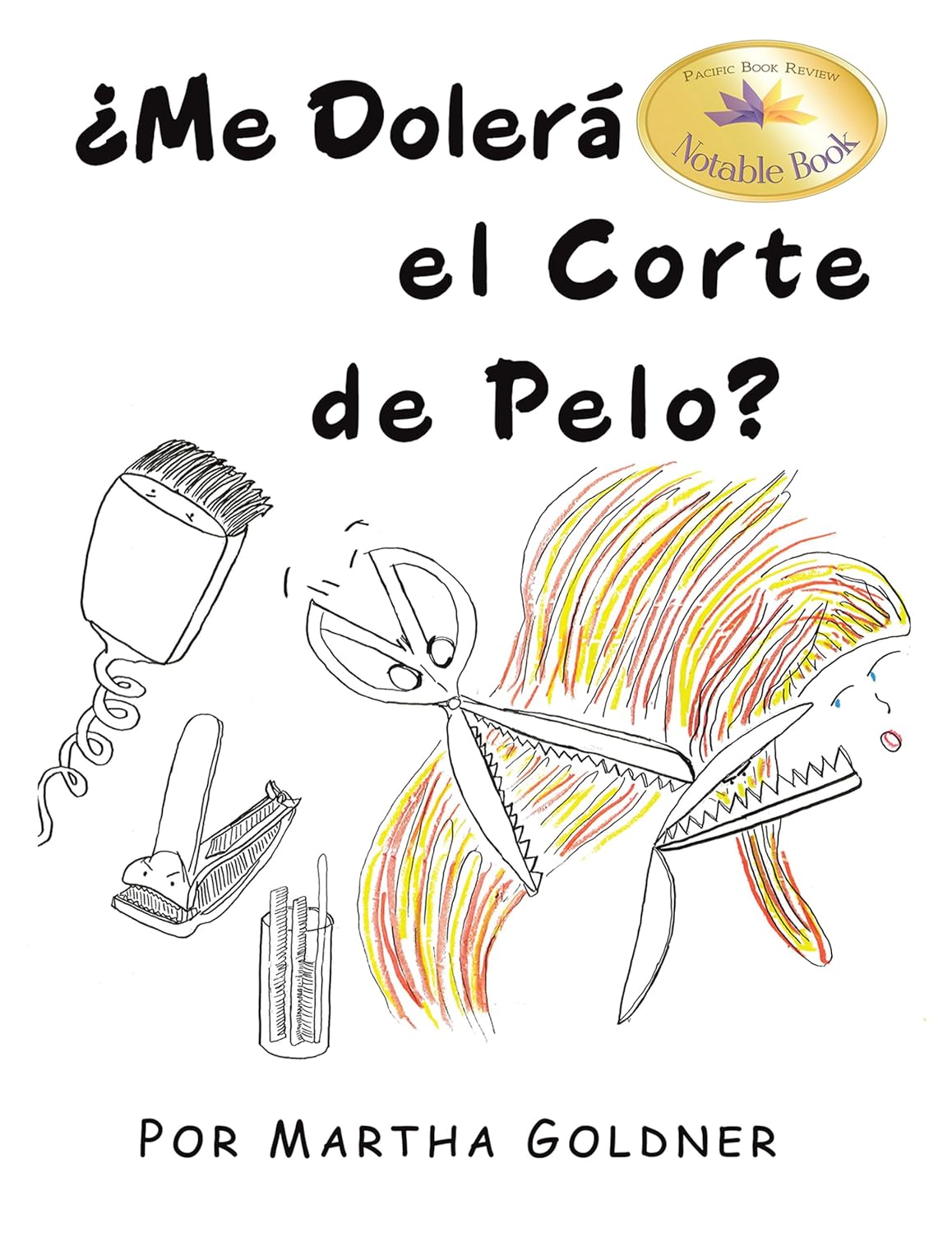

¿Me Dolerá el Corte de Pelo? narra la historia de un niño que le tiene pánico a cortarse el pelo e imagina todas las maneras posibles en que podría dolerle: desde vendas y puntos hasta picaduras de abeja, moretones y tirones dolorosos. A través de una conversación amena con su madre, el niño poco a poco deja atrás el miedo y la resistencia para dar paso a la curiosidad, fijándose en las divertidas sillas de la peluquería, los amables estilistas y el hecho de que nadie parece estar llorando. Al final, el corte de pelo deja de ser una amenaza para convertirse en un valiente primer paso.
Me pareció que la lógica emocional de este libro infantil reflejaba con gran fidelidad la forma de pensar de los niños pequeños. Los miedos del niño no son tanto «tontos» como vívidos y sinceros; y agradecí que la historia permitiera que esas preocupaciones ocuparan su espacio antes de ofrecer consuelo. Como padre, reconocí al instante esa espiral de asociaciones: las tijeras significan cortes, el zumbido significa abejas, el tirón de pelo significa dolor. La escritura es sencilla, repetitiva e infantil, un estilo que funciona a la perfección porque refleja la ansiedad dando vueltas una y otra vez en torno a la misma pregunta.
Las ilustraciones tienen un estilo artesanal, como si fueran hechas con crayones y lápices, lo que le da al libro una sensación íntima. Las expresiones de preocupación del niño, el cabello alborotado, las heridas imaginarias y las escenas en la peluquería se sienten inmediatas y personales. Algunos dibujos son divertidos de una manera peculiar y memorable, especialmente las escenas con cabellos exagerados y las imágenes de la maquinilla de afeitar. Las ideas cobran mayor fuerza cuando el libro se mantiene cerca del mundo interior del niño, donde los objetos cotidianos pueden volverse enormes y aterradores, para luego encogerse lentamente una vez que un adulto cariñoso les ayuda a ponerles nombre.
Me pareció que ¿Me Dolerá el Corte de Pelo? es un tierno libro ilustrado sobre el miedo, la imaginación y la paciencia que los niños necesitan al enfrentarse a algo desconocido. No presiona al niño para que sea valiente de inmediato —algo que me gustó—, y su calidez emana precisamente de ese desarrollo paciente de la historia. Lo recomendaría a niños de preescolar y de los primeros años de primaria que se sientan nerviosos ante los cortes de pelo, las visitas al médico, el aseo personal o cualquier nueva experiencia sensorial; especialmente si se lo lee un padre o una madre que pueda hacer pausas para conversar sobre cada temor con delicadeza.
Pages: 35 | ASIN : B0D49KCH5P
Aloe Vera’s Special Gift

Aloe Vera’s Special Gift is a gentle picture book about a plant that feels plain beside the bright, showy flowers around her, only to discover that the very thing she’s insecure about is what allows her to care for others. When the garden runs into trouble with sunburns, scrapes, and rashes, Aloe’s soothing gift becomes indispensable, and the story turns that simple plot into a tender lesson about self-worth. It’s an easy book to grasp on first reading, but it carries a real emotional undercurrent that gives it more staying power than many lesson-driven picture books.
Author Jeanette Gil doesn’t force the message or dress it up in noisy sentiment. She lets Aloe’s feelings of being overlooked settle in first, and that gives the eventual shift genuine weight. I could feel the ache in those early comparisons with the dazzling petals and admired blossoms, that small, private sadness of believing you have nothing beautiful to offer. Because of that, Aloe’s realization lands with real warmth. The writing has a nurturing, unhurried quality that feels especially right for young children, and I admired the way it frames usefulness not as a consolation prize, but as a form of beauty in itself.
Plenty of children’s books tell kids they’re special, but this one gets at something subtler and truer: sometimes your gift doesn’t look impressive until it’s needed. That’s a lovely, steadying idea for a child, and honestly, for an adult too. I liked that the story ties kindness and identity together, suggesting that self-acceptance often grows through connection rather than simple affirmation. The aloe vera concept works beautifully because the plant’s real healing properties deepen the metaphor instead of distracting from it.
The artwork on every page is eye-catching and full of adorable characters and lively plants that seem to spring to life. I especially loved the sweet little bees buzzing over the roses, which was easily my favorite scene. Though honestly, every character in the book is so charming and cute.
Aloe Vera’s Special Gift is genuinely sweet, and its message about difference, worth, and quiet strength feels earned. I’d especially recommend it for children ages 3 to 8, for classrooms or bedtime reading, and for any child who sometimes feels overshadowed by louder personalities or shinier things. This is the kind of picture book that offers comfort without talking down to its audience, and that’s a gift in itself.
Pages: 42 | ASIN : B0FW6XH6RG


