Blog Archives
15 Years of Study
City of God Stories is an abridgment of Mystical City of God, originally written by Venerable María de Jesús de Ágreda that shares with readers selected stories from her visions, recounting divine revelations about the life of the Virgin Mary, the birth and mission of Jesus Christ, and the celestial battle between good and evil. Why was this an important book for you to write?
The original 1657 Spanish publication “Mística Ciudad de Dios” was required reading for seminarians studying to be priests until many of them lost their minds and circa 1750 it was condemned.
When St. Pope Paul VI encouraged the Catholic Faithful to read it, I was excited to undertake his challenge. When I learned that these stories were told in 1622 to Venerable María de Jesús de Ágreda by Almighty God, St. Michael the Archangel and the Blessed Virgin Mary, then it was obvious to me that these stories should not remain in obscurity. Therefore, I dedicated 15 years of study and effort to compile these magnificent stories that are absent from the Bible.
How much research did you undertake for this book and how much time did it take to put it all together?
I first began reading my resource document, “Mystical City of God” which is the English translation of the Original 1657 Spanish publication Mistica Ciudad de Dios by Venerable Sor María de Jesús de Ágreda. The English translation was done from 1902 to 1914 by Fiscar Marison aka Rev Father George J. Blatter comprised of 4 Volumes of 8 books of 2,676 pages. In 1975, I could not get past page 35 which described the battle for Heaven by St. Michael the Archangel. In October 2010 I was forced into an early retirement and decided to utilize my time to read and understand these magnificent stories. It took me 8 hours every day for six months to complete my first entire reading. And another 8 to 12 weeks for each of the next six complete readings. During my seventh reading, I began selecting and extracting the most interesting and exciting stories which I compiled into 25 Chapters. I added my 24 pages of PROLOGUE which contains extensive factual evidence to authenticate that these stories were told by the Powers of Heaven.
What were some ideas that were important for you to share in this book?
I dedicated an entire chapter: “Chapter 26 – Lessons Learned” to highlight the special things that I learned such as:
- The Blessed Virgin Mary came first before the angels & man in the mind of God.
- The Last Secret of Faith
- God’s Humility is the astonishment of Angels.
- The Angels are dependent on Jesús and the Blessed Virgin Mary for their salvation as human beings are.
- In the Eucharist, the Eternal Father and the Holy Spirit are equally present with Jesus the Son.
- Majority of the human race will be condemned to hell.
- There are 3 heavens.
- The only disagreement to ever occur between the Father and the Son.
- What angers God the most.
What is the next book that you are working on and when is that book due out?
I am planning on publishing City of God Stories in 7 different languages.
Next Ciudad de Dios – Historias will be released in March. By June, the Portuguese version will be released. And then: the Italian, Polish, German, and French versions.
I intend to use my Amazon/KDP Royalties to produce a 30-minute Animated Movie based on Chapter 2 – Battle for Heaven.
Author Links: GoodReads | Amazon
The holy priest, Ven. Abbe Jacques Andre Emery said: “Only since I read the revelations (Ciudad de Dios) of Maria de Agreda do I properly know Jesus and his Holy Mother”.
IGNATIOUS, Bishop of Ratisbon, said: “Ciudad de Dios…will surely edify all readers and be the occasion of great spiritual blessings.”
INTRODUCTION For the enlightenment and salvation of souls: Almighty God, St. Michael the Archangel, and the Blessed Virgin Mary revealed and dictated to Sister Mary of Agreda explicit details of Creation, the Battle for Heaven, previously untold details of the lives of the Blessed Virgin Mary and Jesus, and the early days of the Church until the Edict of Milan 313 AD when the Church became secular. All this happened in 1622 in her Conceptionists Convent of cloistered Poore Clare Nuns in Agreda, Spain. It is not understood why Sister Mary of Agreda burned the original records. This angered the Blessed Virgin Mary very much. So, the Blessed Mother commanded Sister Mary of Agreda to rewrite everything. In order to accomplish this great task, the Blessed Virgin Mary sent two of her powerful Seraphim Angels to repeat everything word-for-word to Sr. Mary of Agreda. These Seraphim Angels of the Blessed Virgin Mary were very stern with Sister Mary making her rewrite every word they said, forcing her to work long hours. These powerful Angels stayed with Sr. Mary and hounded her constantly until all 8 books of 2,676 pages were published in 1657 entitled “Ciudad de Dios.”
“Ciudad de Dios” has been blessed by 12 Popes. St. Pope Paul VI encouraged the Faithful to read it and said: “Ciudad de Dios” contains nothing contrary to the teachings of the Catholic Church”. On November 16, 2023, in the Vatican Apostolic Palace, Pope Francis received in audience the participants in the Conference on the Venerable María de Jesús de Ágreda organized by the Pontifical International Marian Academy, to whom he talked about the holiness of Venerable María de Jesús de Ágreda. 360 years after her death the incorrupt body of Venerable Sister Mary of Agreda lies on display in her Church of the Conceptionists Convent in Ágreda, Spain.
In 1902 to 1914 Fiscar Marison aka Rev. George J. Blatter translated the original Spanish “Ciudad de Dios” into English entitled “The Mystical City of God” as 4 volumes of 2,676 pages published in 1914. The English translation “The Mystical City of God” and the Spanish original “Ciudad de Dios” consisting of 2,676 pages in 8 Books are extremely challenging to read and overwhelming for most people, which has resulted in these stories to be forgotten. These amazing stories are extremely profound and so exciting to contemplate, that everyone should read and become familiar with them. The importance of this information is manifested by the 17th century efforts of Almighty God, St. Michael the Archangel and the Blessed Virgin Mary to tell these amazing stories. In support of the Will of God, the purpose for publishing an abridged condensed version of selected stories is to provide an easy to read and comprehend format to encourage and propagate readership to make these magnificent stories known. Readers have said: “It greatly enhanced my rosary meditations.”
Daily Communication With God

God Is Speaking to You offers readers heartfelt encouragement for those seeking clarity in their exploration of Christianity. Why was this an important book for you to write?
Throughout my journey as a born-again Christian, I have often heard this question, ‘How do I know when God is speaking to me?” I knew in my spirit that this was a question that only through the Holy Spirit of God did I want to try my best to answer; and that way is based on my own personal experiences. I knew that it was not something that would happen overnight, but over time well spent with God. Which can only happen by reading the Word of God and daily communication (prayer) with God.
What was your biggest challenge in putting this guide together for readers?
I would say my biggest challenge in putting this book or any book (guide) together would be that I maintain accuracy as I relate my story to the Word of God. I always want to make sure that what I share is backed and followed up with scripture. I would tell anyone when it comes to the Word of God always do your own research. If you cannot find it in God’s Word then do not believe it and please do not follow it.
As Paul said in the scripture, 1 Corinthians 11:1, “Follow me as I follow Christ.”
What is one thing you hope readers are able to take away from your book?
The importance of having a personal relationship with the one and only true God of all Creation, and the importance and need to accept and receive the Lord Jesus Christ as their personal Lord and Saviour.
Can we look forward to more work from you soon? What are you currently working on?
First question, is yes and actually God Is Speaking to You, is my third book, I already have four other books that have been published and are available for purchase:
How Do I Know I Am Really Saved?
The Importance of Tithes and Offerings
God Is Speaking to You
Life after Death: Heaven and Hell Are Real Places
I currently have in publication my fifth book, which is titled – Focused for Purpose, and I hope to have this released by late Spring or early Summer.
Author Links: Goodreads | Website | The Importance of Tithes and Offerings | How Do I Know I Am Really Saved | Life After Death | Amazon
Throughout our life, we can see examples of God’s spoken Word that brought forth life to our dead situations, healing to our sick bodies, and restoration in our broken relationships. Even during some of our hardest and most difficult times of hurt, pain, disappointments, and devastation, we as children of God can testify that there is evidence where God still used something from that pain to turn it around for our good and in our favor (Romans 8:28).
In this book, God Is Speaking to You, I want readers to be open to hearing what the Spirit of the Lord is speaking to their hearts as it relates to their individual walk with God. God is always speaking to us in some way, and we want to be sensitive to recognize and know when it is the voice of God (John 10:4–5). When we spend quality time in His presence, there will be no doubt that we will be able to identify the difference between the voice of God and a stranger.
God Is Speaking to You


Jacqui D. Williams’ God Is Speaking to You is an earnest and deeply personal exploration of how God communicates with us through scripture, prayer, and personal experiences. The book serves as both a guide and an encouragement for believers who seek clarity in recognizing God’s voice. Williams emphasizes the importance of cultivating a relationship with God, surrendering to His will, and staying constant in prayer. The message is clear: God is always speaking—it’s up to us to listen.
One of the strongest aspects of this book is its emphasis on building a personal relationship with God. Williams doesn’t offer a formulaic, step-by-step guide to hearing divine direction, and I appreciated that honesty. Instead, she highlights the necessity of daily prayer and Bible reading, noting that true spiritual discernment takes time. She addresses the common frustration of believers wanting specific answers from God, only to realize that scripture doesn’t always spell out personal details. Her insight that “you will not find personal specifics in the Bible where it tells you to marry a person or take a particular job, but when you receive Jesus…you have something even better” resonated with me. The focus on deepening faith rather than demanding answers was refreshing.
Williams speaks with conviction, often sharing personal experiences to back up her points. She recounts a time when a minister prophesied over her, and she instinctively prayed for God’s protection. I found this anecdote powerful because it underscored the importance of discernment. The book does a great job emphasizing the need for caution when it comes to prophecy and spiritual guidance. The warnings about false prophets are valuable, and while the book takes a strong stance on being watchful, I think it could also highlight that spiritual discernment is a journey, one where learning from experience, including missteps, is part of growing in faith.
Chapter 5: You Are Forgiven tackles the difficulty of forgiving ourselves. This was one of the most impactful sections for me. Williams writes, “A lot of us still have a problem letting go of our past mistakes even though we know we can’t take them back.” Her reminder that God forgives us fully, even when we struggle to forgive ourselves, felt like a warm reassurance. The book shines when Williams offers these moments of heartfelt encouragement. She doesn’t just talk about faith theoretically; she speaks as someone who has walked through doubt and self-condemnation and found peace on the other side.
God Is Speaking to You is a solid read for Christians who are seeking reassurance that God is present and actively guiding their lives. It’s particularly suited for believers who are struggling to hear God’s voice or those who feel distant in their faith. If you’re looking for a book that both instructs and encourages, this is a worthwhile read.
Pages: 40 | ASIN : B0CXTBVNKV

Incredible Loss

Harpazo follows a cast of characters, all of whom are grappling with losing loved ones to sudden and unexplained disappearances. What was the inspiration for the setup of your story?
Harpazo, along with the other two books in the Trib Trilogy, are inspired by events described in the Book of Revelation in the Bible.
The sudden disappearance of a quarter of the world’s population that takes place at the beginning of Harpazo is inspired by the Rapture. The Rapture is not found in the Book of Revelation, but passages describing the Rapture—a sudden, future gathering up of the godly—are sprinkled throughout the Bible.
Wondering what it would be like to be left behind after the Rapture takes place, I wanted to explore as many permutations of this as possible. So, I tried to give several points of view, but all from average, hard-working, well-meaning people.
The loss of one-quarter of the world’s population causes severe consequences that each of my characters must find a way to come to terms with. I wanted to explore several ways an average person could respond to the incredible loss felt by all.
What draws you to write books in the apocalyptic fiction genre?
Every interesting story contains a problem that the characters must solve or find a way to live with. Apocalyptic fiction takes that to a much higher level. The problem is bigger, usually worldwide, but the principle is the same as for every story.
I think the danger with most apocalyptic fiction is that it gets lost in the grandiose nature of its story problems. Huge events tend to dwarf the characters and their responses to the events taking place.
I’ve always wondered what the consequences would be if the worst scenario happened. What would happen after the unthinkable? And what could be more unthinkable than one-quarter of the world population (including all the children) suddenly disappearing?
But I wanted to showcase this earth-shattering event—and the consequences that ensue—through the eyes of ordinary people. I wanted to present the changes that can occur due to the catastrophe on an individual level…the good, the bad, and the ugly. For that, I needed to approach the story from several perspectives.
What experience in your life has had the biggest impact on your writing?
This is a really difficult question to answer as there are so many life experiences that I could point to that I believe shaped my perspective. But if I had to narrow it down to one thing, I would have to say that becoming an active Christian has had the greatest impact on my writing…as it has for my whole life.
Can you give us a peek inside the second book in the Trib trilogy? Where will it take readers?
Sure, here is the synopsis for Charagma, Book Two of the Trib Trilogy:
The meteor showers that destroyed two major cities on the eastern seaboard of North America—and heavily damaged all others—have continued unabated for weeks. Not confined to North America, the meteors have rained down death worldwide, igniting old-growth forests in an inferno of epic proportions.
Now, at the beginning of the second year of the Tribulation, a much bigger meteor plummets into the Pacific Ocean…and plunges the world into the next series of cataclysmic events. Not least is the sudden, silent change in the world’s freshwater supply from potability to deadly poison.
Meanwhile, in geopolitics, a new hope dawns.
A leader, the likes of whom the world has never seen before, emerges out of obscurity to take command. The world’s population, desperate for solutions, clings to the new leader’s promise of renewed peace and prosperity.
While most of the world’s citizens believe in the new leader’s rhetoric some do not. Even after the new leader miraculously resurrects after being assassinated!
Only a few know who the new leader really is and how dangerous he is to everyone, everywhere, all over the world.
Through the eyes of ordinary people, Charagma tells the story of the middle years of the Tribulation—a time of growing political pressure to conform to the all-powerful forces shaping the world.
Each person is faced with a choice: Conform to the new leader’s demand for complete, unwavering loyalty to his one-world government, ensuring their short-term survival. Or decline to participate in his worldwide program, ensuring total exclusion from society and the world’s wrath.
Author Links: Facebook | Website

Literary Titan Gold Book Award: Nonfiction

The Literary Titan Book Award recognizes outstanding nonfiction books that demonstrate exceptional quality in writing, research, and presentation. This award is dedicated to authors who excel in creating informative, enlightening, and engaging works that offer valuable insights. Recipients of this award are commended for their ability to transform complex topics into accessible and compelling narratives that captivate readers and enhance our understanding.
Award Recipients

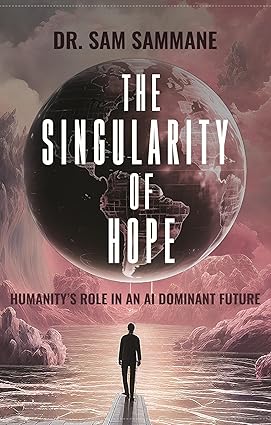

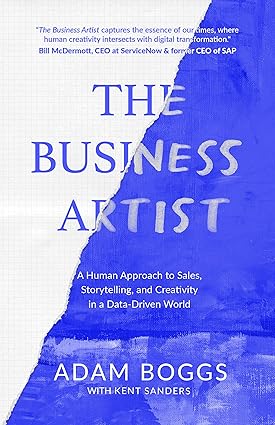


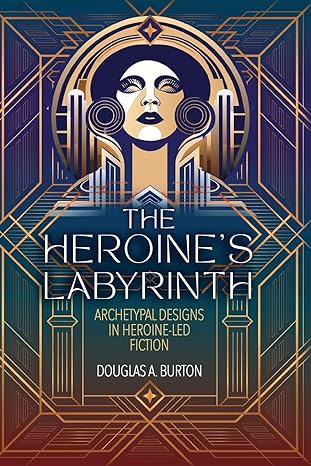










System Upon Systems in the Bible by William OuYang
Visit the Literary Titan Book Awards page to see award information.
SET FREE

The existence of God is a subject that has been, and likely always will be, the focus of ongoing debate. It’s a question that neither logic nor evidence can definitively answer, leaving room for endless discussion. Yet, attempting to persuade someone of either side often proves fruitless. Belief in God, for many, is rooted not in rational argument but in a profound, immovable conviction. It’s these true believers who often navigate life with a clarity and purpose that those without a connection to the divine may find elusive.
In SET FREE, Sharon Crick explores this very idea through her deeply personal and inspiring journey. As both author and protagonist, she opens up about the many trials she has faced, while also sharing the story of her husband, Brian, a central figure in her life for over forty years. Crick recounts Brian’s turbulent upbringing in apartheid-era South Africa, where he battled addiction, spent time in a reformatory, and had run-ins with violent gangs. Her own experiences, though different, have been equally fraught with challenges. While one might attribute their meeting to mere chance, Crick makes it clear that she sees their union as divinely orchestrated.
Though a relatively short read, SET FREE is filled with emotional depth. Crick’s story, and that of her husband, resonate with themes of redemption, faith, and resilience. The love they share and their unwavering connection to a higher power are the anchors that have guided them through life’s many hardships. Even for those who don’t share their beliefs, the narrative offers something universally relatable: the power of love, commitment, and the search for meaning.
In the end, Sharon Crick’s memoir transcends the boundaries of faith. A truly compelling story, as this one proves to be, speaks to readers regardless of their spiritual inclinations. SET FREE is one such tale—heartfelt, sincere, and undeniably moving.
Pages: 146 | ISBN : 978-1923087323
System Upon Systems in the Bible
System Upon Systems in the Bible, by William OuYang, offers a reflective and detailed examination of how the Bible connects various aspects of Christian life and thought through interconnected “systems.” The book spans multiple areas, from analyzing human rights in light of biblical teachings to exploring complex theological issues such as the shift in worship practices from the Old Testament to the New. Through scripture references, personal anecdotes, and practical applications, the author unpacks the systems that, according to him, shape both the divine and human experience. It is written in two parts, each exploring distinct biblical themes, with questions and outlines provided for group discussions, making it suitable for educational or study settings.
The writing presents a heartfelt exploration of various topics, though it covers a wide range of themes within each chapter. For instance, in Chapter 1, OuYang discusses Philippians 2 and reflects on how Jesus relinquished His divine rights out of love for humanity. This theme is significant, but the inclusion of a list of 39 human rights may seem broad compared to the central biblical text. Examples such as animal rights and capital punishment are introduced alongside the main theme, creating a diverse range of topics within the chapter.
The chapter on contentment stood out to me as one of the book’s strongest. OuYang contrasts contentment with the materialism and dissatisfaction that plague modern life, using vivid examples of famous individuals who, despite their wealth, lived discontented lives. I resonated with his mention of Amy Winehouse and other celebrities who tragically ended their lives despite apparent success. His blend of scripture and contemporary examples effectively communicated the timeless lesson that joy cannot be bought.
The concept of “systems” itself was a fascinating framework throughout the book. I often felt that the connections were implied rather than explicitly developed. The questions for reflection at the end of each chapter are helpful and guide the reader toward applying these insights in real life, which I found very effective.
Chapter 8 was intellectually engaging for me, as it explores the shift in God’s presence from the Old Testament to the New Testament in a way that felt both thought-provoking and insightful. OuYang’s explanation of how God’s relationship with humanity evolved was presented with clarity and depth. I enjoyed how the chapter traced these changes through scripture. It made me reflect on the continuity of God’s plan throughout the Bible. The blend of theology and practical application in this chapter was both enlightening and relatable.
I recommend System Upon Systems in the Bible to those looking for a contemplative study guide that weaves together theology, personal reflection, and practical lessons. I think it’s especially suitable for small groups or church study classes, where the open-ended discussions could make the abstract connections clearer. Overall, it’s a passionate work that presents biblical principles in a way that invites both introspection and discussion.



 LITERARY TITAN