Blog Archives
Leftwich Blues/Elfwitch Rules
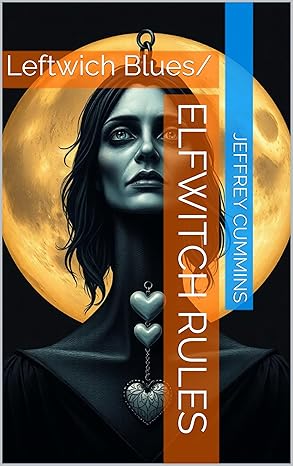

Leftwich Blues/Elfwitch Rules is a sweeping fantasy tale woven into the struggles of a fractured family. It starts in myth, with vows made under the moon and curses that shake kingdoms. Then it jolts into the present, landing in the Ozarks with two twins caught in the fallout of their parents’ broken marriage. From there, the story keeps folding back and forth between a mystical Realm of hunters, owls, and ancient metals, and the harsher modern reality of courtrooms, social workers, and family strife. The twin narratives eventually bleed together, blurring what is real, what is allegory, and what is memory.
The writing bounces between old-world fantasy language and down-to-earth small-town chatter. That clash can be jarring, but it also gives the book a unique energy. One minute I was caught up in quicksilver necklaces glowing under a full moon, the next I was listening to kids argue about video games and crackheads. Sometimes I found myself laughing at the dialogue, other times I felt weighed down by how bleak it could get. The swings were sharp, but they kept me reading.
What hit me hardest wasn’t the magic or the battles. It was the raw mess of family life. The fights between Mom and Dad felt too familiar, too close to real arguments I’ve overheard in my own life. The kids’ tug-of-war over which parent to trust felt honest, painful, and sad. The fantasy parts worked like a mirror, twisting those personal struggles into epic stakes. When the twins lost their footing in the “real” world, it was like the Realm itself was cracking apart. That connection between worlds gave the story its punch.
The sudden shifts might throw some readers. But for people who like fantasy mixed with real grit, who don’t mind faith and scripture tucked into the corners, and who can handle a story that cuts close to the bone about family, it’s worth the ride. I’d recommend it to readers who like their myths messy, their heroes flawed, and their stories willing to sit in both wonder and heartbreak.
Pages: 435 | ASIN : B09CD1D958

The Raven Moonstone

When I think back on The Raven Moonstone, the first thing that comes to mind is the mix of everyday teenage struggles colliding with sudden tragedy and then spiraling into strange, magical chaos. The story follows Noah Farmer, a lanky high schooler who loses his parents in a bizarre accident and stumbles into a world where ravens seem to watch his every move and dusty old books hold actual spells. Goats, clowns, bullies, and oddball townsfolk all swirl together as Noah tries to deal with grief, responsibility, and this creeping sense that his life is turning into something both terrifying and extraordinary. It’s a coming-of-age tale wrapped in fantasy, but grounded in small-town life and the pain of loss.
Some of the early chapters felt slow, almost like the story was meandering around Noah’s world. But then, the weirdness started seeping in, and I couldn’t look away. The librarian turning into a goat had me laughing, and the recurring image of ravens circling overhead gave me chills. What really hit me, though, was how raw Noah’s grief felt. The anger, the guilt, the numbness, they all rang true to me. I’ve read plenty of fantasy where characters lose people and move on in a page or two, but here the pain lingers. It weighs down the story, and that made me care about Noah in a way I didn’t expect.
Some passages soared, pulling me straight into Noah’s mind, and others dived into description or dialogue. Still, I kept turning pages. There’s a quirky charm in the way goats keep showing up as both comic relief and accidental victims of Noah’s magic. The book has that mix of dark and light that reminds me of small-town ghost stories told around a campfire. You know it’s a little ridiculous, but you’re hooked anyway. And the author isn’t afraid to let things get messy, whether it’s family tension, awkward friendships, or magic that never quite works the way Noah hopes.
The Raven Moonstone is entertaining. It’s full of heart, strangeness, and some genuine emotional punches. I’d recommend it to readers who enjoy young fantasy that doesn’t shy away from grief or from being a little weird. If you like stories where magic collides with everyday life, where humor and sadness sit side by side, this book will be right up your alley.
Pages: 291 | ASIN : B0BMZD2S2M

Self-Discovery

The Dryad’s Crown follows an orphaned wood nymph raised in a corrupt city and trained to be an assassin who finds a way to escape her violent past, only to be pulled back by a tragic death and seek revenge. What was the inspiration for the setup of your story?
As a kid, I loved epic fantasy, and I loved superhero stories. I was a huge Marvel Comics nerd. Still am! Originally, The Dryad’s Crown came to me from the perspective of the husband and him discovering that his wife had this whole past and an alter ego. She had these amazing powers. But as I was thinking about it, I decided to tell the story from the perspective of the wife and daughter. Yes, there’s still the alter ego aspect, but it became a larger story about self-discovery and healing. As a novelist, I can make my canvas as large as I want it to be. So, I became interested in telling a massive multi-generational saga about the fey and the gods living among us.
I find the world you created in this novel brimming with possibilities. Where did the inspiration for the setting come from, and how did it change as you were writing?
I spent about a year working on just the setting before I started writing the story. I wanted to create a fantasy world that felt immediately recognizable and required little explanation. Like Middle Earth, Westeros, the Continent, or the Six Duchies, the continent of Amon in Efre Ousel is all vaguely medieval and vaguely European. I’m not inventing anything new. Efre Ousel is a medieval world. Few of the comforts we associate with a more modern age exist. Nobles from coastal cities would have access to books, finer clothes, spices, and herbal medicine, but it’s an extravagance not available to everyone. No printing presses—only patient scribes with a quill and an inkpot. To me, it. came down to one guiding statement: “There are more secrets, wonders, and mysteries contained within these four continents and the seas between them than could be explored in several lifetimes.” I wanted a setting where I would never run out of stories to tell.
The goal was then to share rich details and nuance from the setting over the course of the first novel, to explore the history, mythology, and cosmology of this place. I wanted to delight readers with all the unique customs, common phrases, and distinctive art. My favorite part about a fantasy setting is when it has a “lived-in” quality. Not something that was invented, but explored. I can turn any corner, and I know there will be something there.
The setting didn’t change as I was writing. It was already fairly locked in. It just expanded as our characters traveled out from their home.
What were some themes that were important for you to explore in this book?
In The Dryad’s Crown, I wrote about family, self-discovery, healing, mercy, love, and much more. But as I understand theme, I think it’s the reader’s responsibility to decide what the themes are, i.e., what is being said about those subjects. You don’t want the author making declarations about such things, but they’re usually wrong. Maybe The Dryad’s Crown isn’t saying anything? I hope it is, but I’ll leave it to the reader. I will say this: Maricel’s story arc is one of my favorites, moving from being fairly helpless to quite capable and self-reliant. I think there’s something there. I also love Timon’s story. He’s a priest who hid away in his temple, and by the end, he understands his true calling. If you’re looking for themes, I think the “minor characters” also have a lot to say.
Where does the story go in the next book, and where do you see it going in the future?
The next book, War of the Hounds, is a novella interlude that tells the story of Bren Caius during the war. It’s based on Shakespeare’s Henry V. War of the Hounds is already published and available. People can download the ebook for free from my website. (Link below.) However, I’m currently writing the second novel in the main series. The Summer Sword should be available next year.
I gave some hints toward the end of The Dryad’s Crown about where the story was going. We find out about a promise made between a god and the Fey Court. That will have some repercussions. We also learn more about Mendal Caius and his ambitions. In The Summer Sword, we lose some important people. New characters are introduced, but don’t expect everyone to make it to the end. The Dryad’s Crown is fairly self-contained as a story. But once you get into The Summer Sword, we’re cutting the brake lines and going full speed. Jump out at your own risk!
Author Links: GoodReads | Facebook | Website | Amazon
Only one fae can keep them from waking.
Silbrey is an orphaned wood nymph, taken from her forest home and raised in the corrupt city of Penderyn. The fae child grows up unaware of who she is, what she can do, and the calling of her kind.
Under the control of a cruel guildmaster, Silbrey is trained as an assassin. As an adult, she escapes her violent past to start a new life and a family. But a tragic death brings her back to the familiar cobbled streets to seek revenge.
This dark path leads Silbrey to uncover an even darker secret: An ancient evil will wake the titans and break the world. Silbrey must travel with her daughter across a war-torn land to defeat that evil.
What begins as a fairy tale transforms into a multi-generational epic fantasy about love and loss—and a woman with a strange connection to nature.
The Dryad’s Crown is an emotional, coming-of-age fantasy debut. The first volume in a gritty saga, set in the immersive world of Efre Ousel.
Booklife describes the story as “a fantasy unlike any other.”
The Ruinous Curse: Apadora Rising

Apadora Rising follows Barrett, a young prince thrust into impossible battles and choices, wrestling with magic, loss, and the burden of leadership. Alongside a close-knit band of companions, he faces treachery, uncertain alliances, and forces greater than he can control. The book pulls readers through lands filled with dragons, sorcery, betrayal, and grief, all while exploring the cost of destiny and the question of what it means to be a leader.
This was an exhilarating coming-of-age fantasy novel. The pacing swung wildly from sharp, fast-moving battles to slow, emotional moments that lingered, and I found myself invested. The author’s style is bold and unafraid to lean into melodrama, though it matched the intensity of the world he built. I often admired the way he layered tension on top of grief, particularly in Barrett’s mourning of his father. Those passages hit hard. The banter often lightens the mood of this otherwise high-stakes adventure story.
I was surprised by how often I cared deeply for the characters. The fragile loyalty between friends, the burden Barrett shoulders, and the flickers of vulnerability woven into big, fiery scenes gave the story its heart. The dragons, too, were written with such presence that I caught myself smiling whenever they appeared.
Apadora Rising is a book best suited for middle-grade readers who crave high fantasy drenched in feeling, who don’t mind a bit of melodrama with their magic, and who want to lose themselves in a sprawling tale of loyalty, sorrow, and stubborn courage. Apadora Rising reminded me of Eragon by Christopher Paolini, with its mix of young heroes, dragons, and the weight of destiny pressing down on every choice. If you’re the kind of reader who wants dragons soaring, kingdoms falling, and friendships tested to the breaking point, this one’s worth your time.
Pages: 319 | ASIN : B0CDHHK6SR
The Dryad’s Crown


The story follows Piper, a girl who comes into the world under strange and magical circumstances, a child not born but found. She grows up pulled between care and cruelty, eventually falling under the rule of Dahlia Tulan, a guildmaster feared by all of Penderyn. Piper, renamed Silbrey, learns to fight, to kill, and to survive, carrying with her a mysterious staff that ties her to the forest and the gods. The book traces her journey from abandoned child to trained warrior to wife and mother, weaving in themes of love, power, abuse, and the weight of choices. It’s a tale about what it means to belong, and what it costs to escape.
Reading this book stirred up a mix of emotions. At times, the writing hit me hard with its blunt edges. Scenes of brutality were uncomfortable, but that discomfort made the story feel real. I caught myself holding my breath when Dahlia appeared, because the tension the author created around her was suffocating. The pacing sometimes slowed down with long descriptions, yet I didn’t mind, because it grounded me in the world. The tenderness between Silbrey and Callis was a much-needed counterweight to the violence. Their love felt believable, raw, and fragile. It gave me hope that even people shaped by cruelty can carve out something good.
What I found most striking were the ideas buried under the story. The book isn’t just about fantasy battles or guild politics. It’s about how trauma roots itself in people and how hard it is to pull free. Silbrey’s connection to her staff, to the trees, and the earth, reminded me of the ways we cling to something solid when everything else is crumbling. Hopkins doesn’t hand out easy answers. The gods don’t swoop in to save anyone. Instead, the book suggests that survival itself is sacred, and sometimes love, though messy and imperfect, is the closest thing to grace. That felt honest to me.
The Dryad’s Crown reminded me of Robin Hobb’s Farseer Trilogy with its mix of intimate character struggle, harsh mentorship, and the ache of trying to build a life in a world that feels both cruel and magical. I’d recommend The Dryad’s Crown to readers who like their fantasy with grit and heart, who don’t mind being unsettled along the way. If you’re drawn to characters who bleed, who fight, who love fiercely even while carrying deep scars, then this book will stay with you long after you set it down.
Pages: 569 | ASIN : B0C19R4FM5
My Life Story

The book follows Tess, a young woman moving through a world that feels half dream, half reality. From her childhood prayers beneath the stars to her adult wanderings through galleries, cafés, and shadowy streets, she is haunted by questions of love, loss, and meaning. Along the way, she encounters figures like Jules, Samuel, and Sara, each carrying secrets and desires that pull her deeper into a web of longing and reflection. The novel drifts between memory and the present, mixing photography, magic, and fleeting encounters with moments of aching stillness. The story is a meditation on how people search for beauty and truth in a fractured world.
I felt a tug in two directions reading this book. On one hand, the writing is lush and cinematic, clearly born from its origins as a screenplay. Scenes play out like film reels: light shimmering on water, footsteps echoing in an empty church, faces caught in camera flashes. That worked beautifully for me, giving the book a dreamlike quality that made me want to live in its world. On the other hand, the density of description left me craving more dialogue and more movement. Still, the mood was so strong that I let myself get carried by it.
What I really liked was how the novel handles its ideas. It’s not just a story of Tess and Jules or Samuel and Sara, it’s about the ways we carry grief and desire through our lives. The characters often feel like symbols more than flesh-and-blood people, yet that abstraction made the book feel universal. I found myself frustrated at times because Tess keeps drifting, Jules hides behind charm, and Samuel slips away into the shadows. But that frustration mirrored the characters’ own struggles. It left me unsettled, and I liked that.
My Life Story feels like a novel for readers who enjoy atmosphere more than plot, who don’t mind stepping into a story that blurs the lines between memory, fantasy, and reality. I’d recommend it to anyone who loves lyrical writing, who wants a book that feels like cinema on the page, and who doesn’t mind sitting with unanswered questions. It isn’t a fast read, but it’s a rewarding one if you let yourself drift in its tide.
Pages: 128 | ASIN : B0FCCBB2BG
The Haunted Purse

Kimberly Baer’s The Haunted Purse tells the story of Libby, a teenage girl who stumbles upon an old denim purse in a thrift store, an object that quickly proves to be anything but ordinary. What begins as a quirky tale about misplaced homework turns into a strange, emotional journey, blending the everyday struggles of adolescence with eerie, supernatural twists. The purse makes things vanish and reappear, leading Libby to uncover pieces of another girl’s life while also grappling with her own fractured family, fragile friendships, and the heavy weight of being far more responsible than a 15-year-old should be.
What I really liked about this book is the way Baer balances the supernatural element with the gritty realism of Libby’s life. Right from the first chapter, when her history report goes missing only to reappear later in the depths of her purse, I was hooked. The purse feels almost like a character itself, playful, mysterious, and sometimes cruel. But what kept me reading wasn’t just the magic. It was Libby herself. She’s sharp, sarcastic, and quietly hurting, and her voice feels completely authentic. When her mom breezes back into her life for a night of fake promises and cigarette smoke, the ache in Libby’s words made me want to both hug her and cheer her resilience.
Another standout for me was the friendship between Libby and Toni. It’s messy and complicated in exactly the way teenage friendships usually are. Toni is bossy, dramatic, and sometimes dismissive, like when Libby finally confides in her about the purse’s supernatural powers and Toni just laughs it off as “woo-woo crap”. Yet, despite all their friction, the bond is real. Their arguments over school dances and borrowed clothes feel so grounded, and it’s through these moments that the story explores deeper themes, loyalty, envy, and the fear of being left behind.
And then there’s the haunting itself. I loved how Baer keeps the paranormal subtle and slippery, never giving us easy answers. Objects vanish, like the bottle of perfume or Toni’s brand-new jeans, and sometimes they reappear, sometimes not. The uncertainty adds tension, but it also works as a metaphor for Libby’s unstable life. She’s constantly holding on to things, friends, family, dreams, that seem to slip through her fingers no matter how tightly she grips them. The purse is magical, yes, but it’s also heartbreakingly symbolic.
By the end, I was both unsettled and moved. The story never veers into outright horror, but it carries a steady undercurrent of dread, softened by the warmth of Libby’s determination to keep pushing forward. Baer’s writing is vivid but unpretentious, full of small, sharp details that make the characters and their world feel lived in.
I’d recommend The Haunted Purse to anyone who likes their coming-of-age stories with a supernatural twist. It’s perfect for readers who appreciate strong, flawed teenage voices, or for anyone who remembers what it felt like to navigate the messy in-between of adolescence, when friendships, family, and self-identity all feel like they could disappear at any second. For me, it was equal parts strange, sad, and hopeful, and that combination made it a book I won’t forget anytime soon.
Pages: 265 | ASIN : B0FLWK2DQM
Split
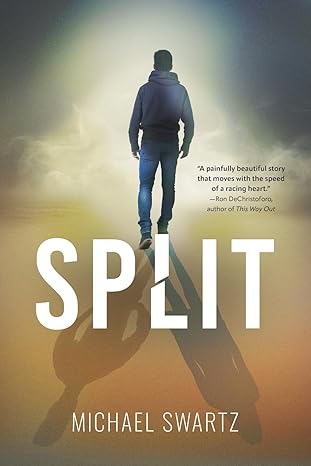
Split, by Michael Swartz, is a haunting story about Ethan, a boy born with genetic chimerism, carrying two sets of DNA and the confusion, pain, and strength that come with it. The novel follows him through a gauntlet of bullying, identity crises, and family wounds, all while his body betrays him with asthma, and his mind struggles with the fear of becoming like his violent father. Along the way, friendships bloom, love steadies him, and the truth of his condition forces him to question who he really is and who he wants to become. It is both a coming-of-age tale and a raw look at survival when the world tells you that you are broken.
The writing is sharp and urgent, with scenes that left me squirming in discomfort, not because they were bad, but because they were so brutally real. The cafeteria humiliations, the suffocating asthma attacks, the relentless bullying, all of it dropped me straight back into the shaky insecurity of youth. Swartz doesn’t soften the edges. He makes you sit with the pain, and in that pain, I found a strange kind of beauty.
At the same time, there’s a tenderness here that surprised me. Moments with Mo and Aia glowed like little lanterns in the dark, and those relationships kept the story from sinking into despair. I loved how the book didn’t give easy answers about identity or fate. Ethan’s split nature felt like a metaphor for all of us who feel divided between who we are and who we’re supposed to be. I kept thinking about genetics versus choice, destiny versus defiance, and it made me restless in the best way. I didn’t agree with every decision Ethan made, but I understood them, and that made the story hit harder.
I would recommend Split to readers who want more than just a story, to anyone who likes books that dig under your skin and refuse to let go. Teenagers who feel out of place, adults still wrestling with family scars, and anyone who has ever carried the weight of being different will find something of themselves in these pages.
Pages: 264 | ASIN : B0F9MWLMNY



 LITERARY TITAN