Blog Archives
Chaos and Fury

When The Actor Inspired Chaos and Bloodshed follows an up-and-coming actor who takes a job in a low-budget film where the lines between performance and real violence blur, and it’s a battle for survival. What was the inspiration for the setup of your story?
Years ago, I shared a draft of my thriller manuscript with George Powers Cockcroft, also known as Luke Rhinehart, the author of the cult novel The Dice Man. While he graciously agreed to read it, he candidly expressed that the story was not to his taste and lacked engaging characters. His critical feedback, although disappointing, proved invaluable, prompting me to rethink my approach to character development. I subsequently embarked on a new novel, reimagining those core characters, their identities, and their surroundings. By the summer of 2014, I completed a manuscript titled A Bullet for Silver Face, which eventually evolved into When The Actor Inspired Chaos and Bloodshed. I had read numerous articles and memoir extracts about the volatile relationship between Klaus Kinski and Werner Herzog and wanted to recreate that kind of sizzling tension between actor and director. For instance, Herzog once intended to set fire to Kinski’s house, but the actor’s dog thwarted his plan. Herzog also famously pulled a gun on Kinski during the filming of Aguirre, Wrath of God, threatening to shoot him when Kinski tried to quit the project. I drew inspiration from the chaos and fury underlying their working relationship, particularly during the making of that film.
I dedicated over a decade to refining my story, making changes based on feedback from multiple literary agents. While the core action and characters remained intact, I aimed to shape the narrative into a more conventional thriller. It proved to be much more challenging than I expected. I often wonder if George would have had positive feedback on the final version, especially considering he mentioned that most novels fail to hold his attention. Regardless, his early critique was instrumental in shaping a more compelling narrative, making me believe that the book is better for it.
What are some things that you find interesting about the human condition that you think make for great fiction?
Several elements stand out to me, particularly the complexities of obsession, power dynamics, and the interplay between fear and ambition. In When The Actor Inspired Chaos and Bloodshed, the relationship between Uruguayan director Ignacio Martinez and his lead actor, Dominic Graves, exemplifies the theme of obsession. Ignacio’s deep passion for his art drives him to creative heights but also risks leading him toward personal turmoil, and this delicate balance between artistic fervor and potential self-destruction captures the nuanced duality often present in human endeavors. Additionally, the dynamics of power and vulnerability within their collaboration reveal essential truths about human interaction. The way individuals navigate dominance and submission in creative partnerships reflects broader societal conflicts, and these intricate exchanges underscore the complexities inherent in human connections.
With this book, I tried to maintain an ever-present atmosphere of danger and tension on the set, spotlighting how fear can propel people toward extraordinary achievements or, conversely, contribute to their downfalls. Ignacio’s devotion to his artistic vision serves as a warning regarding the lengths to which directors will go in pursuit of their dreams, often at a substantial cost to their well-being or those around them. While the novel engages with these themes, it is the universal appeal of these aspects of the human condition that invites deeper reflection. Obsession, chaos, power, and fear are not just narrative devices; they resonate profoundly with our experiences, making them timeless subjects worth exploring in fiction.
I found this novel to be a cutting piece of satire. What is one thing that you hope readers take away from your novel?
Thank you for your kind words. The intense relationship between Ignacio and Dominic serves as a potent metaphor for the creative process, showing how passion can both spark brilliance and create chaos. My intention was to highlight the darker aspects of ambition and the sacrifices involved in the pursuit of artistic truth. I hope that through this narrative, readers reflect on the lengths they are willing to go for their craft.
What next book are you working on, and when will it be available?
I’m currently working on a crime novel set in the 1970s, as well as a thrilling office-based drama, although both projects may not be completed until 2027. In the meantime, I have a noir titled Hessman’s Necklace set to be released in late June. This story takes place in the 1950s and follows a skilled cat burglar named Ray Stokes, who a Chicago mob boss has assigned to retrieve an infamous piece of jewelry. Award-winning short story writer Robert Garner McBrearty described Ray as follows: “I pictured the anti-hero Ray as what a young Philip Marlowe might have been like, if Marlowe was hungover, had fewer moral scruples, and had turned his skills to crime instead of detective work.”
Author Links: GoodReads | X | Facebook | Website
When Dominic’s striking, svelte young co-star, Sofia Prodva, becomes enamored with the American actor, the palpable sexual chemistry between the two stars creates a toxic environment. It turns out that Sofia is the director’s mistress, and the moment Ignacio senses the betrayal, relations between the director and his principal actor take a turn for the worse.
The nightmarish movie-making experience is nothing compared to the actor’s exploits away from the film set, where jealousy, rivalry, and revenge stalk him to the final shoot, leading to chaos and bloodshed.
The Sekhet Saga book 4 – WHISPERS FROM THE GRAVE
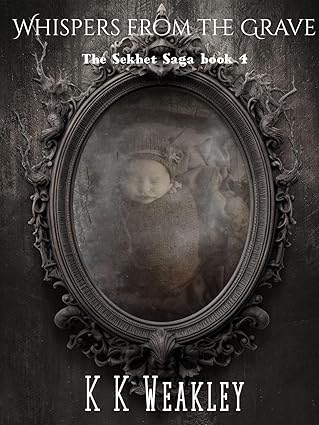

Whispers from the Grave is a fast-paced, supernatural crime thriller laced with magic, sass, and emotional gut-punches. It follows Molly Patterson, a black witch and half-demon, and her partner Joe Savage, a homicide detective with the gift of sight, as they navigate shootouts, demonic politics, and otherworldly threats—all while trying to raise a child and dodge emotional landmines. Packed with action and heart, this book blends dark fantasy with gritty crime drama, throwing in necromancers, spirits, jealous partners, and wisecracking dialogue for good measure.
One of the things I really loved about this book is the voice. It’s sharp, funny, and doesn’t take itself too seriously—even in the middle of chaos. The opening scene alone had me hooked. Molly in a literal gunfight, dropping protection spells like it’s a casual Tuesday, while arguing with Joe about Victor’s impending proposal? Gold. The banter never lets up, and it gives the story this great bounce of energy. The characters feel real—especially Molly, who constantly straddles this line between terrifying and tender. She’s got wings, powers, and a dry wit that cuts through the tension like a blade.
But beneath all the supernatural snark, there’s a surprising amount of emotional depth. The scenes with Victor and his daughter Aria really resonated with me. He’s this necromancer cop who talks to ghosts, but his most human moments are wrapped up in the guilt and love he feels for his little girl. That whole subplot about naming her—how he tricks Olivia into forgetting the name “Bridget” and swaps it for “Aria” with a spell—left me torn between laughing and wincing. The moral gray areas this book lives in are what make it compelling. Nobody here is squeaky clean, and it’s refreshing.
The book does get a bit chaotic at times. There’s a lot going on—Wisps, demons, secret spells, shape-shifters, Lucifer casually walking into a café and ordering coffee. Sometimes I felt like I needed a supernatural glossary just to keep track. But I didn’t mind. It felt like diving into a world that already existed before I showed up (this is book four in the series), and that’s the kind of immersive chaos I can vibe with. The relationships carry the story more than the plot, and the best scenes are when characters just talk—whether it’s Molly teasing Joe, or Olivia confronting Molly, or Lucifer being his smug, menacing self.
Whispers from the Grave is for readers who like their fantasy spicy, their dialogue smart, and their characters morally complicated. It’s especially great for fans of urban fantasy who want a story with strong female leads, messy emotions, and enough magical intrigue to keep the pages turning. If you like witchy vibes with a side of crime and chaos, this one’s for you.
Pages: 259 | ASIN : B0DNZBB81Z

The Mermaid Hunters
At an incredibly early age, Marcus and Matthew Owens lost their parents at the hands of vicious mermaids. The brothers grew up with a strong hate for all mermaids and vowed to avenge their parents’ death.
After their parents were murdered, Marcus and Matthew were adopted by a wealthy couple who trained them to run a business and hunt fish—particularly mermaids. For many years, they had little to no success in their hunt for revenge.
One night, Matthew meets a mysterious young woman at a club in downtown Fort Lauderdale. For him, it was love at first sight.
Matthew forgets about all his problems as he and the woman, Gabriella, get to know each other. But Gabriella has a secret. When Matthew finds out, he becomes conflicted, fearful that this secret could damage the relationship between him and his brother.
It is said that blood is thicker than water, but will Matthew choose water over blood?
The Vulnerable


Ed DeJesus’ The Vulnerable is a suspense thriller that weaves together a tangled web of crime, family drama, and societal corruption. The story follows multiple characters, but at its heart, it centers around Dan DeCosta, an environmental engineer caught in the crosshairs of powerful enemies. His father, Dick DeCosta, a former solar energy entrepreneur and author, is entangled in the fallout of exposing corporate gaslighting on climate change. Meanwhile, a series of violent crimes, personal betrayals, and ominous threats ripple through the lives of various interconnected characters, from single mothers trying to escape their pasts to law enforcement officers struggling with moral dilemmas. The book balances high-stakes action with intimate emotional struggles, making for a gripping read.
DeJesus doesn’t just stick to one storyline, he juggles multiple perspectives, each one adding another layer to the mystery. While I appreciated the depth, there were moments when the frequent shifts between characters felt overwhelming. At times, I found myself flipping back to earlier pages to keep track of who was connected to whom. That said, this ambitious storytelling approach kept me on my toes. The author has a knack for weaving together different threads into an intricate plot. Take, for example, the storyline of Robin O’Rourke, a woman trying to escape her abusive ex, only to find herself tangled in something even more dangerous. Her arc is particularly gripping and one of the novel’s strongest elements.
The writing style is punchy and straightforward, making the book easy to devour despite its complexity. DeJesus leans into dialogue-heavy scenes, which makes the characters feel more real. However, sometimes the exposition gets a bit heavy-handed. There were moments when the characters would explain things in a way that felt more like a news report than natural conversation. That said, when DeJesus lets the action speak for itself, like the intense confrontation scenes or the eerie moments of foreboding text messages, the tension is palpable. One standout example is when Dan receives threats from extremists after his father’s book on climate change stirs up controversy. These moments hit hard and elevate the suspense.
What I loved most about The Vulnerable was its social commentary. It’s not just a thriller, it’s a book that forces you to think. The novel touches on issues like climate change, political extremism, opioid addiction, and even corporate corruption. DeJesus doesn’t shy away from tough topics, and he presents them in a way that feels deeply personal rather than preachy. One of the most haunting subplots involves Dan’s wrongful termination and the underhanded tactics used against him. The way his downfall is orchestrated feels chillingly plausible, making it one of the book’s most compelling aspects.
The Vulnerable is a strong debut that delivers both suspense and substance. It’s a great pick for readers who enjoy thrillers with multiple viewpoints, morally gray characters, and a plot that mirrors real-world issues. While the shifting narratives can be a bit dizzying at times, the payoff is worth it. If you like books that keep you guessing while also making you reflect on society’s biggest issues, this one’s for you.
Pages: 374 | ISBN : 1644568098
My Story Evolved

The Water Carriers is a climate fiction novel that throws readers into a world ravaged by water scarcity, unrelenting heatwaves, and technological overreach. What was the inspiration for the setup of your story?
Over the past seven years, my family and I moved from California to Florida and then back to California. We experienced hurricanes, droughts, forest fires, and a global Covid lockdown. What stood out to me was that no matter how catastrophic a situation became, people always wanted to return to normalcy. As a result, my story evolved into a post-post-apocalyptic narrative.
During this time, I read more than a few news articles that said climate change would hit poor developing nations first and more severely than first-world nations. What if the opposite happened? I decided to bring the most powerful nations to ruin and handed all the power to two families; one in the Ivory Coast and one in Cambodia.
But In truth, the environment is simply the background in my novel. The world is portrayed as absurd, with all the water falling in only two countries, and yet, this is unnervingly plausible. After all, the earth has been known to do surprising things.
The real tension in the novel lies between two individuals who hold all the power in the world. This narrative encourages readers to reflect on the government duopoly we face in the US today. I want the reader to think about who wins when we are a divided nation.
What are some things that you find interesting about the human condition that you think make for great fiction?
In my novel, set in the near future, libraries exist without books. Characters use their AI companion to create personalized stories, music, and games. What will humans do when AI can create entertainment more easily than humans? This isn’t just a question for the future; it’s happening today.
If you’ve ever doom-scrolled through social media or TV channels, you’ve likely felt the dilemma of experiencing entertainment without a genuine connection. When you read a story written by a human author, you immerse yourself in their imagination for the period of that story. Books are unique in that they allow, and even encourage, you to pause and let your imagination explore different ideas before returning to the main storyline. It is this human connection that makes excellent fiction truly special.
What themes were important for you to explore in this book?
Many science fiction novels portray technology as a villain. We need to recognize that humans, not technology, often make poor and selfish decisions. I believe technology can be harnessed to bring us closer to nature and create a world that is less harmful to humanity. As Star Trek did for the mobile phone, I imagined the solution for a seemingly impossible task: ocean tankers powered by batteries.
Right now, AI and government are evolving more rapidly than we can comprehend. In the short term, this progress can lead to troubling outcomes, which worries me as a parent of young children. However, in the long run, we have the potential to achieve better outcomes for everyone, which gives me hope. As I mentioned earlier, people often seek a return to normalcy.
What is the next book that you are working on, and when will it be available?
The Water Carriers is the second book in a three-part series. My next project will be the start of a YA thriller more than 100 years in the future, exploring a more classic dystopian society theme.
My project name for The Water Carriers series is, quite understandably, Rain. I refer to the young adult series as The Grove. I am a dedicated plotter and have outlined all six stories using the Blake Snyder Save the Cat method. The first book in The Grove series is expected to be ready by 2026.
Author Links: GoodReads | X | Facebook | Website
Multiple Five-Star Reviews from Readers’ Favorite – A trusted source for top indie books.
When two parties control all the water in the world, how far will they go to stay in power?
In a future ravaged by climate catastrophe, water is no longer a human right—it’s a commodity controlled by two powerful families.
Kasemchai Seng grew up in luxury, the heir to a global water empire built on desperation and greed. But while his ruthless father expands their grip on the world’s dwindling resources, Kasemchai dreams of something different—a future where innovation, not exploitation, determines survival. When he meets Liv Anselm, a Dutch engineer developing solar-powered water tankers, he sees a chance to change the game.
But power is never surrendered willingly.
As Kasemchai pushes for a revolution in water distribution, he finds himself locked in a high-stakes battle with Angélique Labonne, the calculating heir to the rival water dynasty. While Angélique weaponizes faith and fear to cement her family’s rule, Kasemchai faces an impossible choice: uphold the status quo or risk everything—including his own life—to build a better world.
With vivid world-building and razor-sharp social commentary, The Water Carriers is a dizzying, dazzling depiction of a thirsty Earth (BlueInk Review). Fans of The Windup Girl and The Power will be captivated by this gripping, character-driven vision of a future where water is power—and those who control it will do anything to keep it.
Read The Water Carriers for free with Kindle Unlimited, or click Buy Now to dive into this gripping sci-fi thriller today!
The Legacy of Festotia

The Legacy of Festoria is a magical adventure that blends elemental fantasy with artificial intelligence in a way I’ve honestly never seen before. The story follows five gifted kids, Aria, Leo, Marina, Ember, and Sage who live in the enchanted village of Festoria. Each has a special connection to an element (shadows, wind, water, fire, or earth), and together, they’re called to seek out Solon, a mysterious sage who holds the key to balancing their ancestral powers with emerging AI technology. What starts as a mystical journey through a forest ends up being a high-stakes tale of self-discovery, friendship, and the blurred line between ancient magic and futuristic tools.
What I absolutely loved was the setting. Festoria feels like a place I could almost walk into; it’s lush, eerie, and alive. The magic isn’t just in spells and sparkles; it’s in the wind, the soil, the shadows. In one early scene, Aria sees a map form out of swirling darkness beneath a bridge. The writing brings nature to life in such a vivid, intimate way. Every kid’s bond with their element is distinct, and the environment reflects their emotions. Sage listens to the earth’s tremors, Marina reads ripples in a lake, and Leo actually hears messages in the wind. It’s lyrical without trying too hard, and I found myself wishing I could visit that forest.
I didn’t expect magic and machine to mesh so well, but it works here. Instead of making AI feel like a sci-fi intrusion, the author turns it into a spiritual amplifier. Leo uses AI to simulate weather patterns. Ember trains her fire manipulation through AI-guided meditation. Even Aria, who reads shadows, uses algorithms to interpret visions of past and future. There’s this cool moment where they operate on Marina using their AI tools, literal surgery with elemental help, which sounds wild, but it’s written in such a tense and raw way that I found myself holding my breath. It’s clever. It’s emotional. It makes you think: where’s the line between natural ability and enhanced performance?
Solon, the sage they’ve been chasing, turns out to be more morally gray than expected. His arrival throws a philosophical curveball that I didn’t see coming. He questions their use of AI, warning that dependence on it might weaken their true connection to nature. The twist made the story feel bigger than just a quest, it became a reflection on balance, on the risks of leaning too far into innovation while forgetting where you came from.
The Legacy of Festoria is one part coming-of-age tale, one part cautionary tech parable, and all heart. I’d recommend it to readers who love Avatar: The Last Airbender vibes with a side of Black Mirror-lite philosophy. It’s perfect for teens, educators, fantasy lovers, and even techies curious about AI’s place in future myths. It doesn’t preach. It doesn’t over-explain. It just tells a rich, weird, beautiful story.
Pages: 253 | ASIN : B0DZVCH3ZD



 LITERARY TITAN