Blog Archives
Anything Can Be Denied
Shaking the Trees follows Jake, an environmental activist, who is pushed to sabotage a coal rail line in a desperate act of protest that sets off a chain of events that can threaten his future. What was the inspiration for the setup of your story?
There were two inspirations: the first was climate change itself and specifically a coral reef scientist telling me how little time the Great Barrier Reef had to survive. The Reef has had a profound influence on me. That news sent me into a prolonged depression shadowed by both grief and anger. From there, the book’s initial scene of sabotage took hold.
The second was less an inspiration than an epiphany – I wanted a shadow story for the story of Jake and climate change. Out of some deep recess in my subconscious, I said, ‘The Siege of Sarajevo’. Literally, I stopped and said aloud, ‘but Jeremy, you don’t know anything about the Siege of Sarajevo.’ And that turned out to be, in good part, the point. It was a war ignored not only by those who could have stopped it, but those, like me, who thought I was paying attention. I began to realise that anything can be denied.
A significant amount of time was spent crafting the character traits in this novel. What was the most important factor for you to get right in your characters?
Two factors stand out: the need to integrate the political and the personal. Activists don’t see these as separate, for anyone. They are intimately linked even when they are not always easy to reconcile and even when the relationship between one’s personal life and political life isn’t always clear. Even withdrawal from the plethora of events in our lives that are political, is a direct and political response to a society that feels too brutal, ugly or cold.
The characters wanted to show me how much of what we face or are forced to face in the world is entangled not only in politics but in our own histories and even histories older than we are – family and community histories. Excavating these histories is not a simple or rapid task. Like an archaeologist who finds an object deeply buried, we must gently remove a lifetime of encrustations and then – equally hard – try to make sense of what this strange object from our past is, what it signifies, whether it is only a small part of a larger whole.
I began to realise that the characters, forced by circumstances and choices none of the characters could entirely control, were living out their psychological histories in new and often damaging ways. I had to listen closely to the characters, to explore how histories of love and lovelessness, trauma, fear, ambition, repression, denial were still alive in them as the story unfolded. I often had no idea what the characters would show me.
What themes were particularly important for you to explore in this book?
1 – The various faces and types of denial. Denial can be personal and a useful form of self -protection. Often, when the need for self-protection is gone the behaviour remains. Like an auto-immune disease the brain responds in destructive ways to news or information it desperately wants to be untrue. Sometimes, particularly, amongst our leaders denial has no excuse, no value except in serving the interests, usually pecuniary, of themselves or other members of their privileged class. I was particularly interested in how we – individually and as a society navigate between the necessary and the destructive? How do we face the reality that anything can be denied, just as anything can be believed? How to think about faith? Is it destructive, protective, or simply a kind of disappearing from the world? And is love, too, a kind of faith?
2 – I didn’t know when I started the novel how important the theme of love would be – its many faces, its profound power and profound capacity, if love is lost, to tear us from our moorings. I also didn’t know when I started that I would find the heart of the book to be the effort of Jake to try and reconcile his love for the planet and his love for Julie, loves perhaps too large for any single person to hold.
3 – Finally, I wanted to explore activism. How people choose to face conflicts that can radically subvert their ideas of democracy, community and shared ideals. How activists struggle with a life’s work primarily characterised by failure and in a system that at every turn makes activism and change harder. Watching a political system treat activists like criminals and corporate criminals like friends is the kind of stark reality that activists experience throughout their working lives. It’s confronting work. So many activists leave this work in order to do something more immediately rewarding and kind. That said, young activists keep coming into activism, with new energy, new ideas, and old ideas they think are new. They give of themselves in ways impossible not to admire.
What is the next book that you are working on, and when will it be available?
I am completing a last edit on a manuscript that was shortlisted in 2024 for the Dorothy Hewett award in Australia. The book is called Vanishment, the story of a young man who fights to protect a species threatened with extinction. It is loosely based on the true story of the extinction of the Christmas Island Pipistrelle and loosely based on Christmas Island, often called the ‘Galapagos of the Indian Ocean’ but also an island subject to a dismal history of misery industries – phosphate mining, a massive casino for high rollers from Jakarta and finally a detention centre carved out of the Island’s unique rainforest. Love and loss are the dominant themes and like Shaking the Trees, both those themes have many faces.
I don’t have a publisher yet so I’m not sure when it will be available, but I hope next year.
Author Links: GoodReads | Facebook | Website
When Jake, a passionate environmental activist, desperate for action on climate change, starts to take drastic action, he sets off a chain of events that threatens everything he holds dear—his freedom, his future, and the woman he loves. As the storm he ignited grows more violent, Jake loses control even over his own life.
Meanwhile, his father Ian—an aging academic and firm climate sceptic—faces a reckoning of his own. With the death of his wife comes the uncovering of long-buried truths, including a cache of unopened letters from his sister lost to war and trauma. Letters that speak of survival, betrayal, and a city under siege.
Spanning continents and generations, Shaking the Trees is a gripping novel about the legacies we inherit and the choices that shape us. It asks how far we’re willing to go for what we believe—and whether love can endure the fallout.
Becoming Sarah


The story follows Sarah, a girl born in Auschwitz, who grows up amid the ruins of war and memory. From her survival as a baby in impossible conditions to her complicated relationships with families, lovers, and the ghosts of her past, the novel stretches across decades. It is a portrait of a life shaped by trauma yet driven by the relentless pull of love, survival, and identity. The book traces how one woman carries both the horror and the humor of her history, and how those who come after her must reckon with what remains.
Reading this book was not easy, and I don’t think it was meant to be. The writing felt raw and startlingly alive. Sometimes the prose slowed me down with its density, but I kept going because every page had something sharp and true. I loved how the author wasn’t afraid to mix beauty with ugliness. She gave me moments of dark humor right after scenes that tore at me. The characters were flawed, sometimes unlikeable, yet unforgettable. Sarah, especially, lingered in my head long after I closed the book.
There were also times I felt overwhelmed. The shifts between past and present, memory and dream, tested me as a reader. But maybe that was the point. Trauma doesn’t follow neat lines. The way Botnick wrote mirrored the chaos of living with scars you can’t see. And when I let myself stop fighting the structure, I found myself swept into it. I laughed in places I didn’t expect, and I cried in places I thought I wouldn’t.
I came away from Becoming Sarah feeling both heavy and strangely hopeful. This isn’t a typical Holocaust novel. It’s about the long aftershocks, the way history worms its way into kitchens, bedrooms, and even jokes. I’d recommend it to anyone who wants to feel a story as much as read it, especially those who care about how the past seeps into family, motherhood, and love.
Pages: 347 | ASIN : B0DVCX64WV

The Manifestation of Evil: Part One – The Birth of the Antichrist


The Manifestation of Evil tells the story of Asya, a young girl whose seemingly ordinary life in Ankara slowly unravels under the weight of sinister visions, haunting figures, and a destiny tied to forces beyond her understanding. Her journey is both spiritual and terrifying as she faces abuse, betrayal, and visions of the Morning Star, who claims her as the bearer of a prophecy that could reshape the world. Intertwined with her narrative is the rise of Igor Alexander, a ruthless Russian leader whose political ambitions escalate into a global confrontation, setting the stage for a sweeping clash of faith, power, and prophecy. Together, these threads create a sprawling tale of innocence and corruption, of individuals caught in the machinery of evil and destiny.
The writing is vivid, richly descriptive, and often cinematic. At times, though, the descriptions lingered long in certain places, which slowed the pace when I was eager to know what would happen next. I admired how the author captured the small details of ordinary life and then shattered them with sudden dread. That contrast made the moments of fear hit even harder. Some passages carried a touch of melodrama, and at times I felt steered toward a reaction.
The ideas in the book are bold, unsettling, and often heavy. The blending of prophecy, political intrigue, and personal trauma was thought-provoking. The narrative dares to tackle immense themes like the nature of evil, the vulnerability of children, and the dangerous ambitions of nations. At times, the larger themes took center stage, giving the characters a more symbolic presence within the story. There were moments, especially when Asya confided in Imam Ali, when her courage shone and reminded me why I cared. Those were the passages that stayed with me even after I finished the book.
I would recommend this book to readers who enjoy apocalyptic fiction rooted in faith, political thrillers with spiritual overtones, or stories that wrestle with the darkest corners of belief and power. It often challenged me to reflect on how fear and hope can coexist. If you are drawn to intense, layered stories that blur the line between the spiritual and the political, you’ll enjoy this book.
Pages: 193 | ASIN : B0F8VVHSW7
Cats of Ulthar – A Tale Reimagined

The story in this riveting graphic novel follows a family of cats on the eve of returning home, where a father recounts to his children the tale of their grandfather. What begins as a bedtime story quickly becomes a dark memory of captivity, vengeance, and rebirth. Through a mix of folklore and horror, the grandfather’s story shifts from being a tale of survival to one of transformation, wrath, and liberation, ultimately leading to the cats’ uprising and the claiming of Ulthar as their own. It’s framed as a fable meant to soothe children, but the truth hidden beneath is haunting and violent.
I felt the writing carried a sharp edge. The narration had a mythic quality, but it didn’t feel distant. It gripped me with its bluntness, its willingness to hold nothing back. I found myself unsettled, yet strangely compelled. The pacing worked in waves. Quiet moments of family warmth gave way to gut-punch images of horror and then swelled into something almost triumphant. The ideas in the story were compelling. Comfort as a prison, freedom as something bought in blood, and vengeance as both a curse and a gift. Those thoughts stuck with me long after closing the book.
The art and writing played well together; each panel really captures the scene beautifully. I appreciated the artistic way it conveyed the sense of dread. What I really enjoyed about this book was the tone. It never preached, it never softened. Instead, it whispered through shadow and silence. The ideas about rage and justice made me uneasy, though in the best way. I felt torn, both rooting for the cats and recoiling at the brutality. The line between freedom and cruelty blurred, and that tension made the story more than just a horror tale. It made it human, even though it was about cats.
Cats of Ulthar left me shaken and thoughtful. I’d recommend it to readers who enjoy dark fables, horror, and fans of H.P. Lovecraft. It’s for those who want a story that claws at them a little, one that scratches the surface and digs into the tender parts beneath. If you like tales that balance beauty with terror, this graphic novel is for you.
Pages: 26 | ASIN : B0FMC1X9J1
Black Pearl

From the first page, Black Pearl sets itself up as more than just another political thriller. It follows Cody Musket Jr., his family, and their network of allies as they confront an unrelenting tide of child trafficking, terrorism, and political upheaval. The story is about family, blood and chosen, fighting to survive and protect the vulnerable. There are gun battles, high-stakes rescues, secret agents, and even quiet moments of faith that cut through the noise. The novel moves quickly between firefights in Puerto Rico, clandestine rescues, and tense personal confrontations, all while keeping the theme of courage, loyalty, and redemption alive.
This book was a wild ride. The action scenes are painted with raw intensity, the kind that keeps you turning pages even when your eyes are begging for rest. But what surprised me most wasn’t the explosions or the shootouts, it was the emotional weight behind them. The author doesn’t shy away from the uglier parts of humanity: abuse, betrayal, greed. At times it felt heavy, even bleak, but then a character would step in with an act of selflessness or an unexpected flash of humor, and it pulled me right back from the edge. I admired the way Miller balanced that darkness with hope, though I’ll admit there were moments when the dialogue felt a little too on-the-nose, almost sermon-like, when I wanted it to breathe more naturally.
The writing style kept me engaged throughout. The pacing is relentless, and the action sequences play out with a sharp cinematic eye that makes the story easy to picture. The prose moves between moments of beautiful simplicity and bursts of dramatic flair, creating a rhythm that adds energy to the read. I found myself deeply invested in the characters, especially the kids, and I often wished the narrative would linger longer with them before sweeping me into the next pulse-pounding scene. The insistence that love and faith can outlast evil came through with sincerity and left a lasting impression.
Black Pearl is a book I’d recommend to readers who love high-octane thrillers but also crave an undercurrent of heart and conviction. Black Pearl reminded me of the intensity of Tom Clancy’s political thrillers and the moral conviction found in Terri Blackstock’s Christian suspense novels. Like Clancy, Miller crafts action scenes that feel vivid and urgent, pulling you straight into the heart of danger. And like Blackstock, he isn’t afraid to weave faith and hope into the darkest corners of the plot. At the same time, his focus on family bonds and the resilience of children gives the story a warmth that sets it apart from more conventional thrillers.
Pages: 307 | ASIN : B08MDDZZJC

D.O.L Light Running in Afghanistan

The book plunges headfirst into a world of secret military projects, hidden powers, and tangled family ties. Lilly and Aurora, caught between loyalty and betrayal, navigate brutal battles, heartbreaking losses, and a storm of revelations about who they are and where they come from. The story moves with a wild energy, shifting from explosive action in New York to covert missions in Afghanistan, all the while threading in the complicated web of love, grief, and survival that binds its characters together. The book is about identity and the cost of power, wrapped inside high-octane scenes and sharp dialogue.
I found myself both entertained and unsettled. The writing has a raw pulse to it, like the author wanted every scene to bleed emotion or crackle with tension. Sometimes that worked beautifully. The fight sequences felt cinematic, and the dialogue between Lilly and Aurora was charged with anger, sorrow, and just enough dark humor to keep it human. But there were moments when the avalanche of detail threatened to bury the emotional core of the story. Even then, I couldn’t put it down, because there was always another twist, another confession, another blow waiting around the corner.
I also caught myself feeling torn about the ideas underneath the action. The story plays with big questions: what it means to be family, how much pain someone can carry, and how power both saves and destroys. The story also leans hard into chaos and violence, which keeps the energy high and the tension unrelenting, never giving the characters or the reader much chance to breathe. The author clearly loves his cast, though, and that affection comes through in the banter, the awkward humor, and the way even the most hardened fighters carry their scars like open wounds. It gave the book a surprising tenderness under all the blood and bullets.
Light Running in Afghanistan reminded me of the relentless drive you find in early James Patterson thrillers mixed with the emotional grit of something like Suzanne Collins or even Stephen King at his more chaotic. It isn’t neat or carefully buttoned up the way a Tom Clancy novel might be. Instead, it thrives on the jagged edges, the mess that makes its characters feel human. Readers who want a story that punches fast and doesn’t apologize will feel right at home here.
Pages: 364 | ASIN : B0F9TV3ZX2
Lord, Lord – a heavenly mystery
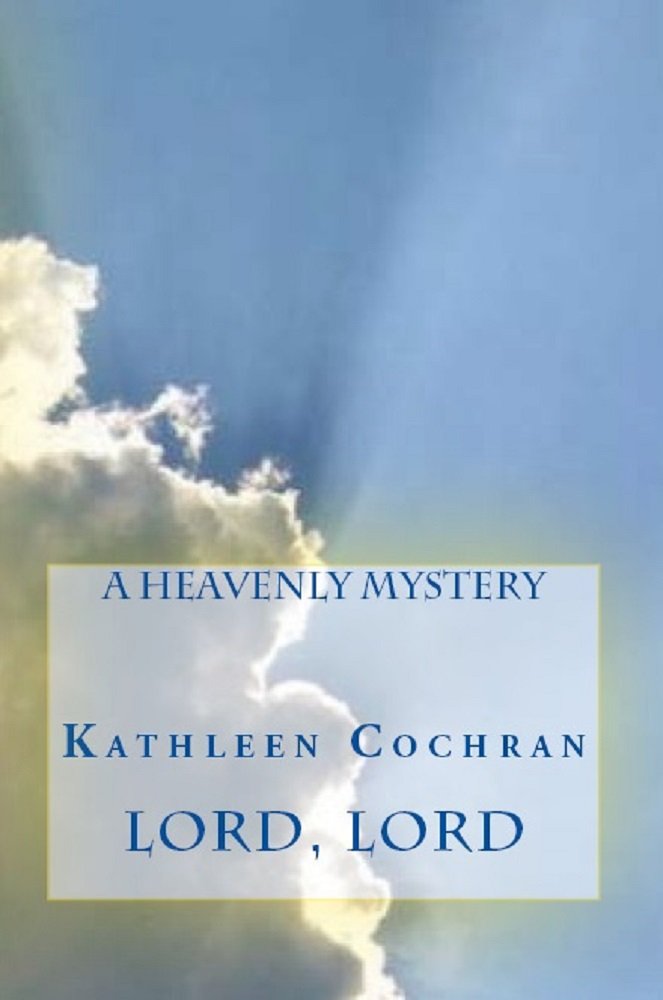
Lord, Lord – a heavenly mystery tells the story of Liza, a small-town reporter who suddenly finds herself in Heaven after her untimely death. What follows is not a harp-filled, cloud-floating afterlife but a layered, curious introduction to eternity where angels sip tea, Heaven looks like an Ivy League dean’s office, and “tourists” are given soft landings before judgment. Through conversations with Michaela, her welcoming angel, Liza begins to unpack her life, her choices, her loves, and her mistakes, all while navigating the strange mix of humor and gravity that this version of the afterlife offers.
Author Kathleen Cochran writes with a conversational ease, almost like sitting down with a sharp-witted friend who isn’t afraid to poke at your doubts and faith. The dialogue carried most of the story, and it was both quick and playful, though sometimes it wandered so much I caught myself rereading passages to stay grounded. Still, there were moments that stopped me in my tracks, like when Michaela explained the Bible as a kind of recruiting tool.
Liza’s questioning sometimes circled back on itself, and a few of the explanations felt a little more direct than I expected. Still, the story would then shift into a tender memory or drop in a line of humor that caught me off guard in the best way, and those moments made me appreciate the guidance rather than resist it. The balance between skepticism and belief felt real. I never doubted Liza’s cynicism because it sounded so much like my own inner voice when I wrestle with faith.
By the end, I felt like I’d been through both a lighthearted play and a quiet sermon. It isn’t a book for someone who wants tidy theology or a straight path to answers. It’s better suited for readers who like their mysteries with a side of laughter, who don’t mind Heaven being described with Persian rugs and Waterford lamps, and who want to explore faith without losing the messiness of doubt. I’d recommend it to anyone who enjoys thought-provoking fiction with a spiritual edge, especially if they don’t mind a story that feels more like a conversation than a plot-driven march.
Pages: 168 | ASIN : B0161ZHCWQ
Childhood’s Hour: The Lost Desert
Childhood’s Hour: The Lost Desert by E.E. Glass unfolds in a dark and unnerving world where memory, identity, and survival constantly collide. At its heart is Loste, a man who emerges from the mysterious Fray with no clear past, only fear and a desperate drive forward. He stumbles into a land of sapphire sands, uncanny creatures, and strange sentient companions like Nadhez, whose furred presence and bound loyalty blur the line between guide and hallucination. The novel draws heavily on the clash between what is real and what is illusion, blending cosmic dread with intimate moments of connection. Every page balances wonder against horror, and every encounter threatens to dissolve into the static haze of madness.
The prose is lush, almost dreamlike, yet it never lingers too long on beauty without reminding me of the lurking terror beneath. I felt caught in the same paranoia as Loste, scanning every moment for the telltale crackle of the Fray. That immersion was brilliant, though it sometimes left me exhausted, like I had trudged through the dunes alongside him. The rhythm of fear and relief, tension and stillness, worked on me in waves, and I admired how the author never let comfort last for long.
What I liked most was how human the book felt despite its alien setting. Loste’s fractured identity, his mistrust of others, and his fragile hope for connection all hit me in the gut. Nadhez, with his easy laughter and sharp teeth, became a figure I wanted to trust, even when I doubted his reality. The dynamic between them gave me flashes of warmth, then snatched it away with reminders of cruelty and despair. That tension felt real, and it left me questioning my own instinct to trust. I also appreciated the playful absurdity woven through, the honking seal pup, the comic relief of bodily mishaps, which gave the darkness a sharper contrast.
Childhood’s Hour is not a book for the faint of heart. For readers who enjoy strange, surreal fantasy that bends toward horror while still offering moments of raw human tenderness, it is unforgettable. I’d recommend it to readers who like their fiction unsettling and immersive, who don’t mind being disoriented, and who find beauty in the uncanny.
Pages: 550



 LITERARY TITAN