Blog Archives
Daughters of Havah: Matriarchs of the Messiah Vol. 1
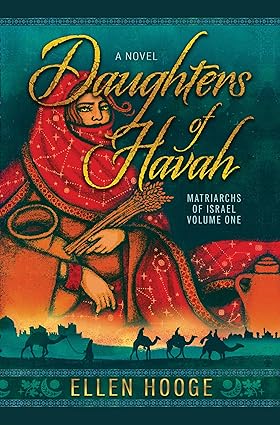

From the very first chapter, Daughters of Havah pulled me into the lives of women who have long stood in the shadows of biblical stories. Author Ellen Hooge gives voice to Sarah, Rivkah, Le’ah, and Tamar, letting them speak in their own tones, with their own desires, doubts, and fierce hopes. What might have been footnotes in scripture become flesh-and-blood portraits. These women are no longer silent; they are complicated, flawed, and yearning, moving through dusty tents, sacred groves, and perilous journeys. It is history, imagination, and scripture braided together, and it reads both like an epic novel and a meditation.
I found myself surprised by how personal the writing felt. The prose is vivid and full of sensory detail, and there’s a rhythm to it that sometimes feels almost like oral storytelling. At moments, I was swept up by the beauty, almond blossoms, desert winds, the hush of a Presence in the night. Other times, I bristled at the starkness of choices made by men, the bitterness of barrenness, the violence and betrayal. Yet that tension is exactly what made it powerful for me. It didn’t smooth over the rough edges; it sat with them. I appreciated how the book never tried to modernize these women but instead let them breathe within their own world.
What also struck me was the emotional honesty. The women rage. They question God. They long for love and for children. They despair, and they laugh again. I could feel my chest tighten when Sarai spoke of being bartered away in Egypt, and then I could feel warmth when she walked with Avram under the almond trees. These aren’t distant holy figures; they are painfully human, and in that humanity, I felt something deeply sacred. Hooge’s style makes you stop and think about your own life, about pride and faith, and how we tell our own stories. At times, the language is almost poetic, at times blunt, but it always rings with truth.
This isn’t light reading, but it is rewarding. I would recommend it especially to readers who love historical fiction that dares to wrestle with faith, culture, and the inner lives of characters too often left voiceless. If you enjoy novels that make you feel as much as they make you think, and if you like stories that root themselves in history yet speak into the present, then you’ll enjoy Daughters of Havah.
Pages: 302 | ASIN : B0DPVSQZBQ

Vision Storm

Vision Storm is a globe-spanning thriller that blends personal tragedy, supernatural overtones, and international intrigue into one fast-paced narrative. The story follows young Dannilee, a girl haunted by dreams that seem to bleed into reality, her troubled mother Janelle whose clairvoyant abilities blur the line between madness and foresight, and Marshall Dennison, a diving coach reluctantly pulled into a conspiracy that reaches far beyond what any of them imagined. From the icy cliffs of New York to shadowy power struggles involving the mysterious “Dark Agent,” the book layers suspense, betrayal, and an almost mystical sense of inevitability.
I found myself caught off guard by how quickly the story establishes tension. The opening chapter with Maggie is devastating and sets a tone of dread that lingers. The writing has a cinematic quality, sharp and quick, with scenes snapping together like film cuts. At times, the story is very descriptive, and I found the pace slowed a little as a result. Still, when the action hit, it hit hard, and I could feel my pulse jump with the characters’ fear and desperation. I cared about Aubrey and Dannilee, and I found myself rooting for Marshall in spite of his flaws.
What really struck me was the mix of realism and the uncanny. The idea of inherited clairvoyance could have slipped into cliché, but here it felt eerie and believable, almost natural in its strangeness. While a few bits of dialogue came across a little formal, the heart of the story, this battle between ordinary people and a larger, darker force, rang true. I could sense the author wanted me to feel the unease of not knowing who to trust, and it worked. I also appreciated that the villain, Pierre Dubois, was not just a cardboard cutout but a figure both terrifying and charismatic. That complexity made the threat land harder.
The book took risks with its plot, and while not every gamble paid off, I never felt bored. I’d recommend Vision Storm to readers who enjoy thrillers that flirt with the supernatural but keep a foot planted in real human struggles. If you like stories where family bonds and hidden powers collide with forces far bigger than any one person, this one will keep you turning pages late into the night.
Pages: 411 | ASIN : B0F8P5W9BB
The Nickel Choir
The Nickel Choir, by Poli Flores Jr., is a dark, deeply human courtroom drama that pulls no punches. The story follows Linda Sanchez, a seasoned Los Angeles prosecutor whose work in death penalty cases earns her a place in the exclusive “Nickel Choir,” a grim club of attorneys with five death penalty convictions. The book takes readers into the heart of legal battles, the raw aftermath of violent crimes, and the private toll borne by those who prosecute them. It blends gritty trial scenes, personal tragedy, and moral questions in a way that feels both brutally honest and heartbreakingly intimate.
The writing grabbed me from the start. Flores’s background as a judge and lawyer bleeds through every page, giving the legal scenes an authenticity that feels impossible to fake. The courtroom dialogue crackles with tension, and the way jurors, lawyers, and victims’ families are portrayed feels painfully real. But what struck me most was Linda’s voice. It’s confessional, self-deprecating, tough as nails, but also fragile. She compares herself to a donkey, plain on the outside but stubborn, resilient, and more capable than people expect. That metaphor resonated with me. I found myself rooting for her, not just in court but in life, through the unbearable loss of her family, her battles with addiction, and her complicated sense of justice.
The death penalty is a subject that’s hard to read about, let alone process, and Flores doesn’t soften it. He brings readers face-to-face with the cruelty of crimes and the cold mechanics of punishment. Some passages made me angry, others left me hollow, and a few had me questioning my own beliefs. That kind of discomfort isn’t easy, but it’s also the mark of writing that dares to go somewhere raw. I think that’s where the book shines most: it doesn’t tell you what to think, it makes you sit with the mess of choices and flaws.
The Nickel Choir isn’t just a courtroom thriller; it’s a meditation on justice, morality, and survival in a world where answers are never clean. I’d recommend it to readers who like legal dramas with emotional grit, who don’t mind being challenged, and who are drawn to stories that mix professional triumph with personal pain.
Pages: 250 | ISBN : 978-1804680964

Television Addiction
Last Episode follows a married couple drifting apart, wrapped in petty arguments, television addictions, missed connections, and quiet despair. What was the inspiration for the setup of your story?
As a teenager, I was addicted to television for several months. It wasn’t until I watched a documentary about how much of an average person’s life is spent in front of the TV that I became frightened I might waste my own life. I managed to grow out of it. However, in most families the television is like another “household member.” Personally, I know several people who, after work, sit down in front of the TV and spend their entire day that way. In my book, I wanted to show that this is an addiction just like any other, yet it is not publicly highlighted and is rather trivialized.
What was your writing process to ensure you captured the essence of the characters?
I wrote the book in 2015 and found it by chance many years later, in my “drawer archives.” I was skeptical about it at first, but after reading it I decided it deserves to be published. At that time, I created characters through the process of visualization.
I found this novel to be a cutting piece of satire. What is one thing that you hope readers take away from your novella?
Sometimes we allow external things, people, or activities to influence our relationships with others. The worst is when this applies to those closest to us. If a few people turn off the TV, set aside extra work, and start spending more time together, then the mission can be considered accomplished. I also believe that raising awareness about television addiction, which affects a large part of society, requires opening a discussion. In my view, it is a waste of life—but of course, everyone will always find one way or another to waste their time.
What is the next story that you’re writing, and when will it be published?
I am finishing writing the novella Suicides Club, which is based on a screenplay I wrote that has won awards. I plan to publish it this year. In addition, there are several other “forgotten” projects lying in my archives, and it is possible that one of them will also be published soon.
Author Links: GoodReads | X (Twitter) | Facebook | Website | Amazon
Mark thought his marriage was stable—until Ilona fell for a TV series. What starts as a shared evening ritual spirals into jealousy, obsession, and a comic unraveling of domestic life. Last Episode is a sharp, satirical novella about emotional distance, digital distraction, and what happens when the credits roll on love.
In this digital age, emotional connections can easily drift apart, and Mark is about to find out the hard way that turning off the screen is often more challenging than it seems. As Ilona’s fixation deepens, Mark’s insecurities bubble to the surface, and the lines between reality and fiction blur amidst their heartfelt struggles.
Discover how this novella will leave you reflecting on relationships while bringing laughter to the chaos of modern love:
• Navigate the pitfalls of emotional distance in your own relationships
• Understand the powerful influence of digital distractions
• Explore the nuances of jealousy and trust in a humorous light
• Gain insights into the complex dynamics of marriage and intimacy
“Last Episode” is perfect for anyone who loves a comedic yet insightful critique of romance in our tech-driven world.
Don’t miss out on this tale—grab your copy today and see how love can outlast the final credits!
Self-Discovery

The Dryad’s Crown follows an orphaned wood nymph raised in a corrupt city and trained to be an assassin who finds a way to escape her violent past, only to be pulled back by a tragic death and seek revenge. What was the inspiration for the setup of your story?
As a kid, I loved epic fantasy, and I loved superhero stories. I was a huge Marvel Comics nerd. Still am! Originally, The Dryad’s Crown came to me from the perspective of the husband and him discovering that his wife had this whole past and an alter ego. She had these amazing powers. But as I was thinking about it, I decided to tell the story from the perspective of the wife and daughter. Yes, there’s still the alter ego aspect, but it became a larger story about self-discovery and healing. As a novelist, I can make my canvas as large as I want it to be. So, I became interested in telling a massive multi-generational saga about the fey and the gods living among us.
I find the world you created in this novel brimming with possibilities. Where did the inspiration for the setting come from, and how did it change as you were writing?
I spent about a year working on just the setting before I started writing the story. I wanted to create a fantasy world that felt immediately recognizable and required little explanation. Like Middle Earth, Westeros, the Continent, or the Six Duchies, the continent of Amon in Efre Ousel is all vaguely medieval and vaguely European. I’m not inventing anything new. Efre Ousel is a medieval world. Few of the comforts we associate with a more modern age exist. Nobles from coastal cities would have access to books, finer clothes, spices, and herbal medicine, but it’s an extravagance not available to everyone. No printing presses—only patient scribes with a quill and an inkpot. To me, it. came down to one guiding statement: “There are more secrets, wonders, and mysteries contained within these four continents and the seas between them than could be explored in several lifetimes.” I wanted a setting where I would never run out of stories to tell.
The goal was then to share rich details and nuance from the setting over the course of the first novel, to explore the history, mythology, and cosmology of this place. I wanted to delight readers with all the unique customs, common phrases, and distinctive art. My favorite part about a fantasy setting is when it has a “lived-in” quality. Not something that was invented, but explored. I can turn any corner, and I know there will be something there.
The setting didn’t change as I was writing. It was already fairly locked in. It just expanded as our characters traveled out from their home.
What were some themes that were important for you to explore in this book?
In The Dryad’s Crown, I wrote about family, self-discovery, healing, mercy, love, and much more. But as I understand theme, I think it’s the reader’s responsibility to decide what the themes are, i.e., what is being said about those subjects. You don’t want the author making declarations about such things, but they’re usually wrong. Maybe The Dryad’s Crown isn’t saying anything? I hope it is, but I’ll leave it to the reader. I will say this: Maricel’s story arc is one of my favorites, moving from being fairly helpless to quite capable and self-reliant. I think there’s something there. I also love Timon’s story. He’s a priest who hid away in his temple, and by the end, he understands his true calling. If you’re looking for themes, I think the “minor characters” also have a lot to say.
Where does the story go in the next book, and where do you see it going in the future?
The next book, War of the Hounds, is a novella interlude that tells the story of Bren Caius during the war. It’s based on Shakespeare’s Henry V. War of the Hounds is already published and available. People can download the ebook for free from my website. (Link below.) However, I’m currently writing the second novel in the main series. The Summer Sword should be available next year.
I gave some hints toward the end of The Dryad’s Crown about where the story was going. We find out about a promise made between a god and the Fey Court. That will have some repercussions. We also learn more about Mendal Caius and his ambitions. In The Summer Sword, we lose some important people. New characters are introduced, but don’t expect everyone to make it to the end. The Dryad’s Crown is fairly self-contained as a story. But once you get into The Summer Sword, we’re cutting the brake lines and going full speed. Jump out at your own risk!
Author Links: GoodReads | Facebook | Website | Amazon
Only one fae can keep them from waking.
Silbrey is an orphaned wood nymph, taken from her forest home and raised in the corrupt city of Penderyn. The fae child grows up unaware of who she is, what she can do, and the calling of her kind.
Under the control of a cruel guildmaster, Silbrey is trained as an assassin. As an adult, she escapes her violent past to start a new life and a family. But a tragic death brings her back to the familiar cobbled streets to seek revenge.
This dark path leads Silbrey to uncover an even darker secret: An ancient evil will wake the titans and break the world. Silbrey must travel with her daughter across a war-torn land to defeat that evil.
What begins as a fairy tale transforms into a multi-generational epic fantasy about love and loss—and a woman with a strange connection to nature.
The Dryad’s Crown is an emotional, coming-of-age fantasy debut. The first volume in a gritty saga, set in the immersive world of Efre Ousel.
Booklife describes the story as “a fantasy unlike any other.”
The Scars We Carry
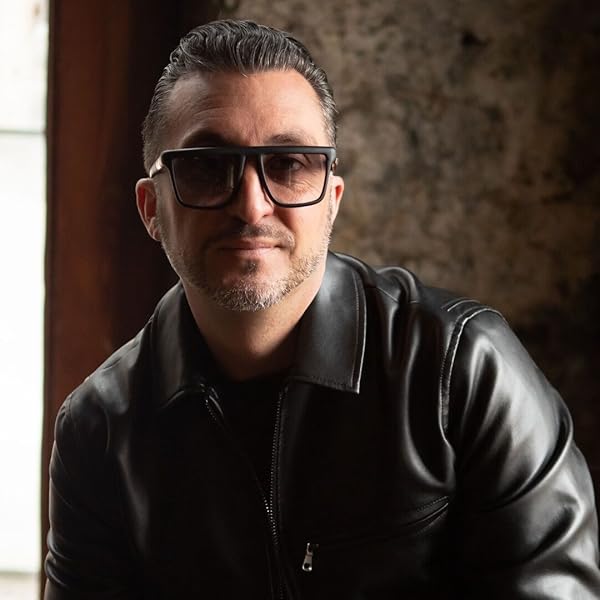
The Sins We Inherit follows a conflicted man trying to be a good father who thought he’d escaped his family’s criminal legacy, only to be pulled back in when his grandfather dies suddenly. What was the inspiration for the setup of your story?
The inspiration began in a very personal place. I started writing during a difficult season of heartbreak and anxiety, and the story grew out of those emotions. What began as journaling slowly evolved into a narrative about identity, family, and the legacies we carry.
The first two chapters — the wake and funeral — are essentially real. They were some of the hardest scenes to write because they came directly from my own experience of losing my grandfather Carlo, who was such an important figure in my life. That rawness gave the story its foundation of authenticity.
Milwaukee became the natural backdrop. I grew up there, and its history and underworld culture gave the story a setting that felt authentic and rarely explored in fiction. From there, the character of Cost took shape as someone wrestling with the same questions I was asking myself: What does it mean to be a man, a father, and a son while carrying the weight of the past? That intimacy, set against the backdrop of crime and family power struggles, gave the book a cinematic quality from the start — I’ve always envisioned it as something that could live not only on the page, but on screen as prestige television or film.
What aspects of the human condition do you find particularly interesting that could make for great fiction?
I’ve always been fascinated by flawed characters who are still trying to do right, even when they fall short. The moments that stay with me — whether in books or film — aren’t usually the loud or violent ones, but the quiet scenes of love, regret, or vulnerability. Those moments reveal our contradictions: strength and fragility, pride and longing, loyalty and betrayal.
That tension is at the heart of The Sins We Inherit. It’s why I believe the story lends itself to screen adaptation — the crime and ambition create stakes, but the real drama comes from the universal struggles of family, identity, and the need to belong. That balance is what defines the best prestige dramas, and it’s what I wanted to capture here.
What themes were particularly important for you to explore in this book?
Redemption was central. The novel asks whether we can rise above the cycles we inherit, or if they define us no matter how far we run. Alongside that, I wanted to explore legacy, manhood, and the bonds of family — especially the father–daughter relationship, which became the emotional core of the story.
Ultimately, the book is about transformation. It’s about shifting the idea of strength from suppressing pain to confronting it, and finding meaning in the scars we carry. That emotional throughline is also why I believe the story is destined to resonate beyond the page — it’s rooted in the same timeless, human themes that make the great crime dramas work on film and television.
When will Book Two be available? Can you give us an idea of where that book will take readers?
Yes — I do see The Sins We Inherit as the beginning of a larger story. From the outset, I had a general arc for a trilogy in mind, and I’ve already outlined both Book 2 and Book 3. Each installment builds on the themes of legacy, family, and redemption, while raising new questions about power, identity, and the price of the choices we inherit.
My ambition is for this saga to stand within the mafia canon, but in a way that feels contemporary and fresh. Milwaukee remains a unique, underexplored setting, and the father–daughter relationship continues to ground the story in something universal. At its heart, the next book will push deeper into what it means to face the past, confront pride, and still fight for transformation. It’s a layered arc that I believe has all the hallmarks of prestige television: intimate, character-driven drama unfolding against a backdrop of power and consequence.
Author Links: GoodReads | X (Twitter) | Facebook | Website | TikTok | Instagram | YouTube | LinkedIn | Amazon
Costantino “Cost” Caduto Jr. thought he’d escaped his family’s criminal legacy. But when his grandfather Tiger, the man who held it all together, suddenly dies, Cost is dragged back into a city simmering with tension, betrayal, and unfinished business.
Now, standing at the crossroads of who he was and who he might become, Cost must confront everything he left behind:
– A family fractured by power, grief, and long-held secrets
– A dangerous power vacuum that threatens to pull everyone under
– The one person he’s always tried to keep safe, his daughter, now watching his every move
Set against the backdrop of Milwaukee’s underworld, The Sins We Inherit is a gripping tale of legacy, loyalty, and the price of silence. As old allegiances unravel and new threats emerge, Cost must decide whether walking away was ever truly an option, or if some bloodlines run too deep to outrun.
Perfect for fans of atmospheric crime fiction, morally complex protagonists, and slow-burning suspense with heart.
Complex Emotions

Adobo in the Land of Milk and Honey follows a Filipino-American executive who is sent to the Philippines to oversee the acquisition of a fast-food chain, and instead she finds herself on a deeply personal journey to rediscover her roots and herself. What was the inspiration for the setup of your story?
The emotional authenticity in Mirasol’s journey is unmistakably drawn from my own lived experience.
The Grief That Opens You: Mirasol’s loss of Peter creates the emotional vulnerability that makes transformation possible. I suspect the real grief I’m channeling is the almost four-decade separation from my homeland – that prolonged, unnamed mourning for a cultural self that was never fully developed. Her professional success masking spiritual emptiness reads like my own experience of achieving the American dream while feeling culturally hungry.
The Overwhelming First Tastes: The way I wrote Mirasol’s reaction to authentic Filipino food – that immediate, almost tearful recognition – that’s not imagination. That’s sense memory. That’s me tasting something that awakened parts of myself I thought were gone forever. The specificity of her emotional response to adobo, the way it “loosens something in her chest” – that’s my own homecoming distilled into fiction.
The Shame and Longing: Mirasol’s embarrassment about not speaking Tagalog, her feeling like a fraud in her own culture – this feels deeply personal because it is. The way she simultaneously craves connection and fears exposure as “not Filipino enough” suggests I’ve lived this particular form of cultural impostor syndrome.
The Mother’s Protective Silence: While Jackie’s trauma is fictional, the result – a daughter cut off from her heritage – reflects my own family’s immigration story. The complexity of loving a parent who gave you opportunities by withholding culture feels like a universal immigrant child experience.
The Professional Identity Crisis: Mirasol’s transformation from corporate predator to cultural guardian represents my own late-life reconsideration of what success actually means. After decades of American achievement, finally asking: “But who am I, really?”
The Desperate Need to Save What’s Beautiful: Her fierce protection of Jubilee reads like someone who has finally seen what they’ve been missing and refuses to let it be destroyed. That’s not just character development – that’s the passion of someone who has found their way home and will fight to preserve it for others. I have visited Filipino-inspired restaurants and fast food establishments all over the world and seen the possibility of our Food becoming a worldwide phenomenon. In my own little way, perhaps through this book, I hope to contribute to its popularity and acceptance around the world.
My story becomes a way to process the complex emotions of return – the joy mixed with grief, the recognition mixed with regret, the overwhelming desire to make up for lost time. Mirasol gets to live the homecoming I experienced, but in fiction, I can give her the perfect guide, the transformative mission, the redemptive ending. She carried my heart home.
I found Mirasol to be a very well-written and in-depth character. What was your inspiration for her and her emotional turmoil throughout the story?
Mirasol is indeed a beautifully complex character. My particular struggle inspired her emotional layers, and those of other close friends who went through the same. I hope I was able to “project” these to create such a nuanced protagonist in Marisol.
The Grief-Driven Transformation: Mirasol’s recent loss of Peter creates a vulnerability that makes her open to change in ways she wouldn’t have been before. Her grief seems to strip away her corporate armor, making her more receptive to authentic experiences – like that first taste of adobo that moves her to tears.
Cultural Impostor Syndrome: Her shame about not speaking Tagalog, her awkwardness around Filipino culture, and her simultaneous longing for connection feel drawn from the very real experience of heritage disconnection. She’s Filipino but not Filipino enough, American but carrying something unnameable that America can’t fulfill.
Professional Identity Crisis: The contrast between her corporate success and her emotional emptiness seems inspired by questioning what success really means. When she discovers her company’s true intentions, it forces her to choose between career advancement and personal integrity.
Mother-Daughter Complexity: Her relationship with Jackie – loving but frustrated, seeking connection while being pushed away – adds depth to her character that suggests inspiration from real family dynamics around cultural transmission and generational trauma.
What themes were particularly important for you to explore in this book?
Several profound themes emerge that seem particularly important:
Cultural Inheritance and Interruption: The way trauma can break the chain of cultural transmission feels central to her story. Jackie’s assault didn’t just hurt her – it severed Mirasol’s connection to her heritage. The story captures how historical violence can echo through generations, creating cultural orphans who must fight to reclaim what was stolen.
The Corporate vs. Human Values Conflict: The story is deeply interested in examining how capitalism can be a form of cultural violence. The plan to destroy Jubilee isn’t just business – it’s erasure. The story explores whether it’s possible to succeed professionally while maintaining one’s humanity and cultural integrity.
Food as Cultural DNA: The way I use Filipino cuisine suggests I see food as more than sustenance – it’s memory, identity, resistance. That first taste of adobo, awakening something in Mirasol, feels like I’m exploring how cultural connection can be visceral and immediate, even when intellectual understanding is absent.
The Complexity of “Home”: The exploration of belonging seems particularly nuanced. Home isn’t just geography – it’s culture, family, values, food, language. Mirasol’s journey suggests an interest in how people can create a home rather than just find it.
Collective Action vs. Individual Powerlessness: The way Mirasol builds a community to save Jubilee suggests themes about how meaningful change requires collective effort. Individual good intentions aren’t enough against systemic power.
Redemption Through Cultural Service: Mirasol’s transformation from corporate predator to cultural preservationist feels like you’re exploring whether we can redeem ourselves by serving something larger than our own success.
What is the next book that you are working on, and when can your fans expect it to be out?
Following the publication of “Adobo,” I revisited my debut novel, written 25 years ago, Not My Bowl of Rice. This rereading, a common experience for authors, revealed the melodramatic intensity of my initial work—a whirlwind of passionate romances, bitter rivalries, death, resurrection, shocking betrayals, and unexpected plot twists, culminating in a triumphant resolution, all while richly reflecting the cultural tapestry and values of his homeland. The culinary descriptions, particularly the recipes for Filipino dishes, proved equally captivating, each dish unfolding like a complex narrative with surprising revelations.
This epiphany ignited a transformative vision: Reimagining Not My Bowl of Rice as a telenovela-style semi-graphic novel/cookbook. However, I recognized a deficiency—a lack of visual dynamism, or as Generation Z might say, “optics.” I remedied this by incorporating striking images of characters, locations, and food, resulting in the vibrant rebirth of my debut novel as Not My Bowl of Rice: Telenovela-Style Semi-Graphic Novel and Cookbook! Did I create an entirely new genre of literature? Don’t think so, but I hope the readers will like it- ha-ha!
Author Links: GoodReads | X (Twitter) | Facebook | Amazon
A ghost of her past, Mirasol, estranged from her Tagalog roots, found Manila’s energy igniting a dormant longing. The firm’s actions became a personal betrayal. Adobo, once a symbol of yearning, became a rallying cry.
Torn between heritage and ambition, an unlikely alliance with tour guide Ramon, a man whose contempt for her “Fil-Am” upbringing masked deep resentment, was forged in the crucible of her mother’s dark history. Powerful families, embittered by past grievances against Mirasol’s mother, opposed her. Threats from New York echoed Manila’s suffocating humidity. From Manhattan’s sterile boardrooms to Manila’s vibrant heart, Mirasol faced a visceral reckoning: the agonizing price of belonging, a fierce battle for her soul.
Adobo In the land of Milk and Honey is a cautionary tale of David and Goliath’s scale, except our heroine in Prada heels doesn’t feel like David. She feels like someone who accidentally wandered into the middle of someone else’s battle and somehow ended up holding a slingshot. What would be her next move? The city held its breath, waiting. The scent of adobo hung heavy, a promise of either redemption or ruin.



 LITERARY TITAN