Blog Archives
The Coldmoon Cafe


The Coldmoon Café is a strange and beautiful book. It’s part gothic fairytale, part fever dream, and part late-night forum thread from the ‘90s. The story follows a rotating cast of mourners, monsters, and misfits who stumble into a mysterious café that only seems to exist for the broken. There’s no central plot in the usual sense. Instead, it’s a collage of scenes, slow-burning conversations, poetic memories, and surreal moments of magic and grief, set against a backdrop of found family, old rites, and quiet hunger. The café, always watching, becomes more than a place. It’s a mood, a threshold, a ritual. And the people who gather there aren’t just characters. They’re ghosts of the internet age, wrapped in myth and melancholy.
The prose is lyrical, atmospheric, and at times so intimate it feels like eavesdropping. It drifts between styles like journal entries, script-like dialogue, and immersive third-person. What surprised me most was how emotional it got. Not loud, not dramatic. Just a steady ache. Like someone humming an old lullaby at the edge of a dream. The author manages to make the supernatural feel deeply human. There are vampires, shifters, witches, and magical scars, but what resonates the most are the quiet admissions of grief, of guilt, of wanting to matter to someone. Some parts made me tear up without warning.
The pacing is uneven, I think on purpose. Some chapters are full of action, others are just two people talking in a room for pages. There’s no traditional story arc, no tidy resolutions. And it leans heavily into its origin as a stitched-together roleplay with references, fragmented lore, insider nods that could leave some readers a little adrift. But for me, that was part of the magic. It feels like a digital séance. A love letter to forgotten usernames and forum ghosts who made stories when no one was watching. There’s a strange honesty in that. A kind of myth born out of message boards and memory.
I’d recommend Coldmoon Café to anyone who’s ever felt like a liminal creature. Folks who grew up online, who found solace in dark fantasy, who know what it’s like to carry sadness in your bones but still laugh with your friends at 3 a.m. It’s for people who miss LiveJournal, who remember the beauty of broken syntax and late-night confessions. This isn’t a book you read fast. It’s one you sit with. Maybe while it’s raining. Maybe while you’re a little heartbroken. Maybe while you’re ready to believe in something weird and beautiful again.
Pages: 583 | ASIN : B0FGW3YTJR

Woman in the Abbey
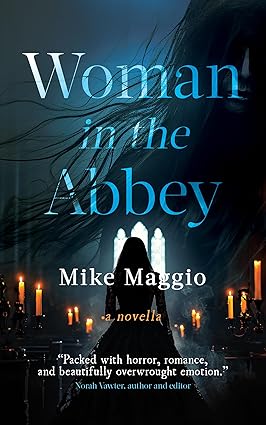

Woman in the Abbey is a rich and relentless gothic tale, told in a voice that’s both seductive and sinister. The novel spins a dark fable about temptation, regret, faith, and the blurred line between good and evil. The story is narrated by a voice we eventually come to recognize as infernal—Lucifer himself—who recounts a centuries-old cycle of suffering, fear, and tragic desire, all centered around a decaying abbey haunted by the sins of its cloistered inhabitants. Two women—Perdita and later Graziella—are pulled into the abbey’s clutches, and their stories unfold with dread, horror, and strange tenderness. The narrative is drenched in fire and shadow, full of rich, lyrical descriptions and emotional torment, while Lucifer himself wrestles with an aching, impossible longing for love and redemption.
The writing is intense—florid, poetic, deliberately archaic at times—and it works, because the story needs to feel like a fever dream. Maggio clearly delights in language, and he lets the sentences unfurl like dark ribbons, twisting into corners you didn’t see coming. I found myself rereading lines out loud just to let the rhythm hit. That said, the style won’t be for everyone. It’s indulgent, dense, and sometimes over-the-top, but honestly, that’s part of the fun. The narrator is a fallen angel who wallows in tragedy, so of course, he’s going to be melodramatic. But the emotional core, his longing, his regret, his unholy desire to be seen, is real and even moving. There were moments when I pitied him, hated him, and rooted for him, all at once.
What really got me was how Maggio managed to make this ancient villain feel heartbreakingly human. I didn’t expect to feel so much for a character that’s supposed to be the embodiment of evil. And Graziella—sweet, terrified, resilient Graziella—she felt like a candle flickering in the dark. Her struggle to escape, her confusion, her faith, all hit harder because we see it through the eyes of someone who both adores and threatens her. The abbey itself feels alive, crumbling and grotesque, a character in its own right. Sometimes the horror is physical, other times it’s spiritual or emotional, but it’s always there, pressing in. The book doesn’t give easy answers or tidy arcs. It leaves you rattled, unsettled, but also weirdly satisfied.
I’d recommend Woman in the Abbey to anyone who loves gothic fiction, horror with a heart, or stories that sit in your gut long after you’ve closed the book. It’s for readers who like to get lost in dark places—not just spooky ones, but the kinds lit by flickering candles and lined with grief. If you want atmosphere, emotion, and a narrator who’ll charm and repulse you in equal measure, this book will stick to your bones.
Pages: 134 | ASIN : B0DMNG21RT

Ghosts: The People That Melt in The Rain #2

Poor Laura, she has no choice but to accept her new life in the mysterious town of Deluge, where she now lives with her mother. In Ghosts: The People That Melt in the Rain #2, author Carolyn Watson-Dubisch throws Laura into a world where the strange becomes the everyday. From the moment she arrives, uncanny things begin to unfold. A neighborhood cat vanishes, yet its muddy paw prints persist. A woman trapped within a painting at the local library suddenly pleads for Laura’s help. The girl, overwhelmed by emotion, begins to cry, and with those tears, everything changes. What follows is a sharp twist in Laura’s story, one that pulls the reader into a world both eerie and imaginative.
Ghosts channels the nostalgic spirit of Goosebumps, where strange events unfold in a small town, but with a twist: everyone in this town already knows it’s strange. Rather than relying on mystery alone, the book leans into its own eccentricity, crafting a world where the bizarre is baked into everyday life. The inclusion of a “Previously in” chapter smartly reorients readers before plunging into the next segment, maintaining narrative momentum while making space for new developments.
The Traveling Show stands out as delightfully uncanny. Its peculiar charm held my curiosity, especially as the plot zeroed in on Laura and her fate. Her storyline, filled with quiet tension and unfolding mystery, made it impossible to look away. The illustrations are striking and evocative and add dramatic flair to every beat of the story, making emotional moments land with even more impact.
Chapter 4, The Storm, wraps the reader in an eerie atmosphere. Its sense of dread is palpable, yet subtle. From the first panel to the last, I was fully engaged. It’s easy to imagine kids gathered in dimly lit rooms, whispering this story aloud for maximum chills. Watson-Dubisch crafts a tale steeped in mood and originality. Her characters are vivid, multifaceted, and compelling. The pacing moves swiftly, keeping tension high.
Ghosts: The People That Melt in the Rain #2 is a captivating graphic novel that offers a mysterious, emotional, and highly original experience. With its memorable characters, compelling plot, and stunning illustrations, it promises to enchant readers well beyond its target age group.
Pages: 44 | ASIN: B0D8JPYPM2
Where Is My Blood Going?

Vampires in BC follows a man who has been partially transformed into a vampire as he grapples with his new identity and the moral questions he faces in this new form. What was the inspiration for the setup of your story?
I was in the hospital waiting for a delayed operation, so I caught up on reading. I decided to re-read Bram Stoker’s Dracula. It awakened a long-hidden fascination with vampires, and then, as my blood was being taken twice a day, I wondered what they were doing with it. The idea of vampires stalking the corridors emerged as we were a sitting target for bloodsuckers to take advantage of. At night in my ward, there were times when patients screamed, which awakened my creative side.
However, I have always been fascinated by the animal and human worlds from different standpoints. My dog’s perspective on life is very different from mine, and I wonder how an intelligent animal would react to what we have done to the environment. I wanted to bring that up, not to lecture about it but to introduce it as an idea for people to consider. Jude also faces a moral dilemma as Vampires in BC depicts the struggle between instinctive behaviour and human compassion.
Did you plan the tone and direction of the novel before writing, or did it come out organically as you were writing?
The first draft emerged while I was writing the book, but the characters created the novel’s direction. A lot of re-writing took place, and ideas surfaced as I was writing. As I said, the characters come alive and know how they behave. They develop, and for example, I’ve tried to show how Gav comes across as a wise-cracking, arrogant teen, but he has another side to him, and although Jude doesn’t acknowledge this openly, he benefits from Gav’s interventions.
What were some themes that were important for you to explore in this book?
The underlying sexuality in the book resonated with me. If you can shape change as Vampires do, what’s to stop you from becoming a woman, a man, or an animal? With vampires, their overwhelming need to survive is to feed on blood, and the most desirable blood comes from us. However, they have to attract humans, seduce and overwhelm them. You may notice that with those they want to turn, they ask permission first, but at other times, when they have a different objective, they don’t.
Transformations from human to vampire and the lure of longevity are fascinating topics to explore. Don’t we all want to live longer? The lure of wealth and unlimited power is bubbling under the surface of our psyche, which leads to the question: What are we prepared to do to achieve those aims? It’s the age-old dilemma of selling your soul to the devil for riches. Christopher Marlowe’s play Doctor Faustus explores this wonderfully.
The changes we are experiencing due to climate change because of human exploitation gave me a chance to look at it from another species’ point of view. Change, however, is frightening and has repercussions that may not always be positive. So, how does Jude try to balance his love for his vampire life with vestiges of his human empathy?
Can fans look forward to more books from you soon? What are you currently working on?
The first book scattered seeds that could be followed up in a sequel but are still in the embryo stages. I’ve also got an unfinished book waiting for me to return to. However, I found writing about vampires was a lot of fun, as you can create a fantasy worldview around them. In a potential sequel, I would like to concentrate on how vampires are similar to humans with complex characters. One of the younger vampires I’ve introduced could be developed, along with the mission Jude and Gav set for themselves. I also need to develop the roles of the Children of Sasquatch and the Canadian Special Forces. But I’d also like to get reactions from readers to get their perspectives.
Author Links: GoodReads | X | Facebook | Website | Instagram | Book Review
Although Jude loves the power of being a partial vampire, which includes shapeshifting into whatever he wants, he struggles with guilt over the harm his vampiric nature may cause. His human side clings to his past, but as a vampire he has access to a world of power, immortality, and liberation from human limitations.
Should he work to destroy the world he lives in and dominate the planet, or side with humans in fighting the vampires that control him?
Vampires in BC
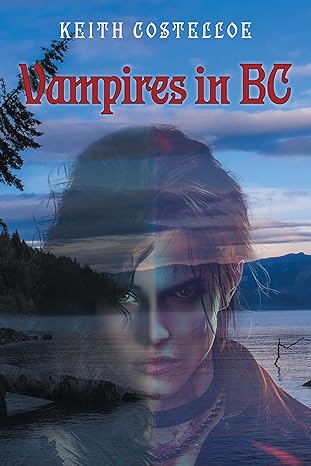
Vampires in BC, by Keith Costelloe, is a mesmerizing fantasy novel that immerses readers in a dark and atmospheric world where the lines between life and death, human and vampire, blur hauntingly. The story centers on Jude, a character partially transformed into a vampire by the enigmatic Dr. De’Ath. Jude grapples with his identity and the moral dilemmas of his new existence, all while possessing a unique ability to morph between male and female forms, which he uses to explore his fluid sexuality and seduce his victims. This shapeshifting power further complicates his internal struggle between his past human life and his present vampiric state. The novel opens with a chilling prologue set around a campfire, where Dr. De’Ath, in a sinister twist, unveils her vampiric nature to a group of unsuspecting teenagers. From there, the narrative delves into Jude’s experiences and the clandestine world of vampires living beneath a hospital. Led by Dr. De’Ath, these vampires see themselves as saviors of the Earth, destined to cull humanity and restore planetary balance.
Throughout the book, Jude wrestles with the duality of his nature—his human emotions and memories clash with the cold, predatory instincts of a vampire. As he navigates this new world, he must confront his desires and the reality of being a creature that preys on humans. The narrative is richly infused with gothic elements, exploring themes of identity, morality, and the seductive nature of power.
Vampires in BC is a thought-provoking exploration of identity and morality within a gothic horror framework. Keith Costelloe’s evocative writing, with its rich descriptions, vividly paints the eerie world Jude inhabits. One of the book’s many strengths lies in its characters. Jude is a compelling protagonist, torn between his human past and vampiric present. His ability to shift between genders adds a unique dimension to his character, allowing for a nuanced exploration of gender fluidity and sexuality. This aspect of Jude’s character is handled with sensitivity and depth, making his internal conflict all the more poignant. The pacing of the story is well-balanced, with moments of introspection and character development interspersed with intense, suspenseful scenes.
Costelloe’s writing style is both lyrical and precise, creating a haunting atmosphere that lingers long after the final page is turned. The book’s exploration of its darker themes may not be for everyone. The moral ambiguity of the characters, particularly the vampires’ justification for their actions as protectors of the Earth, challenges readers to question traditional notions of good and evil. This moral complexity is a strength but also demands readers to engage deeply with the text.
Vampires in BC is a gripping and atmospheric read that offers more than just a traditional vampire tale. It delves into the complexities of identity, the nature of power, and the consequences of our actions, all within a richly crafted gothic horror setting. Fans of the genre will appreciate the book’s depth and the fresh perspective it brings to vampire mythology.
Pages: 289 | ASIN : B0DJT1HFVS
Create Their Own Ghost Story
Gothic Revival takes some inspiration from the creation of Frankenstein. Where did the idea for your original take on this novel come from, and how did it develop over time?
I’ve always been a fan of the classic, gothic stories like Frankenstein, Dracula, Jekyll & Hyde, House of Usher and such. Sometime last year I came across a reference to Mary Shelley and the Villa Diodati and started poking around, refreshing my memory of that fascinating story.
In researching the novel, I dove into more of the genre and time period, including re-reading Frankenstein (of course!) and the collection of German stories translated to French then English, titled Fantasmagoria. This was the book Byron read to his guests that summer, inspiring them to create their own ghost stories.
My last novel is a modern-day retelling of Hamlet, so I found myself starting there. What would a retelling of this real-life event be like? Of course, Gothic Revival is not a retelling. The host character, Eric, inspires his old friends to write ghost stories, which proved to be a good set-up for my readers. I knew I could write about adults who got MFAs in Creative Writing long ago, because I’m one of them.
Was there anything from your own life that you put into the characters in your novel?
I fictionalized certain dynamics from my marriage, and I borrowed from experience when crafting the different ways the characters tackle (and procrastinate from tackling) the task of writing a short story. Also, at times Chris is a kind of a skewed exaggeration of what I know about being an independently published author.
What scene in the book did you have the most fun writing?
The one I can talk about without spoilers is the first night at the villa in which Eric reveals his obsession to his friends/guests. His plan for the weekend comes out in a creative way. (One of the other characters actually figures it out beforehand.) His pitch and everyone’s reaction to it were definitely fun to write.
What is the next book that you are working on and when will it be available?
I’m writing my next novel which is titled Owned. It’s another psychological thriller in which a poor, impulsive decision made by a group of friends attracts the attention of a serial killer the media is obsessed with. The story is based on a screenplay I wrote years ago, so the project has become a reverse adaptation of sorts. Some interesting challenges have already come up. If I could have it out by summer 2024, that would be great. But there’s really no way of telling.
Author Links: GoodReads | Twitter | Facebook | Website
Chris, Anne, Fiona, and Lauren were inseparable friends while earning MFAs in Creative Writing. Years later they’ve grown apart and are surprised to receive an invitation to a reunion from the fifth member of their group, Eric, a successful screenwriter. Eric flies them to a remote lake villa where he reveals his new obsession: their group is a modern version of the famous one from Villa Diodati in 1816, the iconic literary event during which Frankenstein was created. Chris and Anne are their Percy and Mary Shelley. The free-spirited artist Fiona is like Claire Clairmont. Instead of Dr. Polidori, they have Lauren, PhD in Victorian History. That leaves Eric, the Hollywood player, as Lord Byron. Like Byron, Eric proposes they write ghost stories, an homage to their famous predecessors. Laughter, creativity, and reminiscence are soon replaced with deceit, suspicion, and fear. What is the self-proclaimed clairvoyant Fiona seeing and hearing? Why does Eric lie? What does the creepy old housekeeper know about their host? Tensions grow as relationships are tested until a shocking discovery reveals the true intention for the reunion.
Fans of Gillian Flynn, Alex Michaelides, Lisa Jewel, and Alice Feeney will love the suspense and intrigue of Gothic Revival.



 LITERARY TITAN