Blog Archives
Ten Years of Bliss, Poems


Lisa A. Lachapelle’s Ten Years of Bliss is a sweeping and soul-baring collection of 300 poems written over a decade. The work explores spirituality, love, grief, enlightenment, intuition, and the vivid experience of being alive. Lachapelle’s writing shifts effortlessly between meditative verses and emotional bursts, forming a layered mosaic of personal growth and cosmic musings. Divided into thematic clusters, spirituality, love, identity, and time, the book feels like a quiet unfolding of the author’s inner world, told in rhythm, metaphor, and unfiltered thought.
What struck me most was how Lachapelle’s voice dances between the mystical and the matter-of-fact. Her lines are often like whispered prayers or flashes of revelation. Poems like “Greet the Morning” or “The Majesty of Trees” feel rooted in the earth yet always reaching skyward. There’s a humbling beauty in her spiritual reverence, but it never gets self-important. It’s earnest, raw, and sometimes cryptic. A few poems do drift into abstraction, where the emotion is clear but the imagery loses grip. Still, I found myself going back to those pieces, confused at first, then weirdly comforted. The book doesn’t just present poetry; it invites quiet reflection.
On the flip side, her poems on love and human connection made me ache in the best way. There’s so much longing and gentle devotion, lines that made my chest tighten or my heart flutter a little. “It Was Always You” and “Count With Me” hit like confessions. She doesn’t write romance for show. It’s the kind of love that feels lived-in, broken a bit, healed again, then handed to the reader. The style can feel meandering at times, almost like journal entries dressed up in rhyme, but that’s part of what makes it feel honest.
I’d recommend Ten Years of Bliss to anyone who finds comfort in introspective writing or enjoys poetry that blends the mystical with the mundane. If you’re someone who has sat in stillness and asked big questions with no expectation of answers, this book will meet you there. It’s not a fast read, and it’s not always easy, but it’s emotionally resonant.
Pages: 328 | ASIN : B0F5N7MWLN

Writing in the Moment

Always Something Heartfelt: Life, Love, and Heartbreak is a raw, vulnerable, and deeply personal collection of poetry and reflective prose exploring a myriad of human experiences. What inspired you to write this particular collection of poems?
Every piece in this collection was hand-stitched with everything I was feeling inside at the time of its inception. Growing up, it felt like the only time I was allowed to be sad, disappointed, hurt, etc. was at funerals. I started journaling when I was 17. It was a newfound outlet to what started to feel like a form of freedom to be able to communicate my raw emotions. Then, one near-fatal curveball in life, in the form of a car accident that physically propelled me from a vehicle, pushed me to open up to the world because life wasn’t promised. I gained the confidence to boldly articulate things I felt. Life became too short to be anything other than authentic. Through performing at spoken word events, I got feedback that showed me that my expressions were relatable. When I chose the poems from my collection to put together Always Something Heartfelt, I focused on providing my most genuine expressions. The goal was to expound on the notion that my experiences, though deeply personal, were relatable to others.
How do you approach writing about deeply personal or emotional topics?
I write what I feel in the moment with as much honesty as I can manage. I approach emotion the way I used to approach music—as therapy. Whether I’m hurting, reflecting, or just trying to understand something, I let the pen run freely. Free verse gives me the room to speak plainly and honestly, without worrying about form getting in the way of truth. I aim for clarity, and I hope that clarity resonates with people who’ve felt something similar.
Do you have a favorite poem in the book, and if so, why does it hold special meaning for you?
I do not have one particular favorite, but there are some poems I really like. That list includes poems like “She trusted Me”, “TV Failed Me”, “Maybe I never loved her”, “Windows”, “The next guy”, “Temporary insanity”, “I really wanted to”, and “Like you”. These are poems that are pivotal spaces and times in my life. To me, it’s like going through the pages of your life and marking them with a highlighter.
How has this poetry book changed you as a writer, or what did you learn about yourself through writing it?
Writing this book showed me that authentic emotions, though deeply personal, are very relatable beyond just the community that I’ve shared my expressions with over the years. These poems represent universal concepts that express how we all can feel at any given moment in life. That notion encourages me to keep writing and count myself as blessed to even have experiences to share. Though considered fleeting and temporary, emotions provide substance to your experiences and help you set, change, or stay the course in life.
Feeling of Isolation

Little Bear and the Big Hole follows a young bear struggling with his grief over the loss of his father, who sees his absence as a literal hole—vast, lonely, and invisible to others until a friend shows up and helps him process his pain. Why was this an important book for you to write for children?
I was 35 when my husband died – not a child, but at a time in my life when I knew no one like me. It felt like everyone else my age was in the blossoming of life – new marriages, having children, having fun, etc. and I was at an end of some kind. I didn’t know anyone like me – a widow in her mid-30s – and it felt very isolating. This feeling, that your world has stopped while everyone else’s around you is still joyfully spinning, made me feel so terribly alone on top of all the other heavy feelings of grief. Also, I found that most people (unless very, very close friends or family) tended to avoid talking with me about grief because I think they just didn’t know how to, which made them feel uncomfortable. Children are also at an age/life stage where it is less common to experience a profound loss, so they would very likely encounter this feeling of isolation as well. When I learned that 1 in 12 children will suffer the loss of a parent or sibling by the age of 18 I was astounded, and I wanted to write a book that would help them feel that they are not alone, that their feelings are normal and that grief will eventually transform into healing. I also wanted the book to show others how to be a friend to someone who is grieving.
The artwork in your story brings the concepts to life so that children can visualize Little Bear’s emotions. What was the collaboration process like with Mirjam Siim?
My publisher does not allow direct communication between the writer and the illustrator, but they did allow me to communicate through an art director due to the sensitive nature of this book. One of the main points of discussion was the concept of the hole, as it was very important to me that the hole appear, at least in the beginning, like it was boundless. I knew that if we didn’t get the hole right, the concept would fall flat, and I think Mirjam did a beautiful job depicting the hole and all of the big emotions in the book. Interestingly, I have since commissioned Mirjam to do the artwork for my website (so fantastic!) and a few other projects. She is a joy to work with and so very talented!
What was the most challenging part of writing Little Bear and the Big Hole?
There were so many things I wanted to convey in this book and I think the hardest part was making only the choices necessary for this story. I had to tell myself that there are so many facets of grief, and my one story cannot address them all. Even if it did (this would be a very long book), it would lessen the impact.
What do you hope is one thing readers take away from your story?
You are not alone.
Author Links: GoodReads | Website | Instagram | Amazon
Gone The Sun
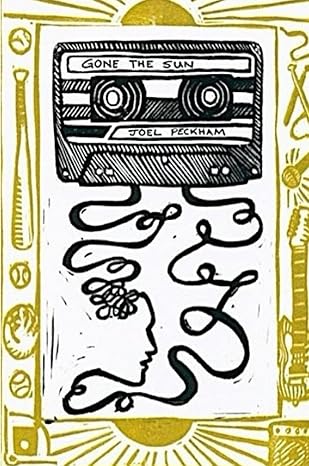
Joel Peckham’s Gone the Sun is a searing memoir wrapped in a tender love letter to his father, himself, and the complicated beauty of memory. Set mostly in the nostalgic-yet-chaotic backdrop of Camp Manitou, this book tracks Peckham’s navigation through grief, identity, generational legacies, and dementia, his father’s, and possibly his own. Through lyrical storytelling, he examines what it means to lose and find oneself in the rhythms of place, people, and pain. The memoir reads like a long conversation with an old friend, raw and honest, never trying to fix things, only to understand.
What struck me most and most powerfully was the depth of emotional vulnerability Peckham allows himself to reveal. In the opening scene, as he portrays his father’s anger as both atmospheric and oppressive, I felt a visceral sense of unease stir within me. The description of his father’s explosive moods, their routine eruptions, and the fallout that ripples through a summer camp already humming with energy, hit home. “You just don’t understand,” his father says, and suddenly, we’re in it. The first chapter is remarkable, striking a careful balance between lyricism and impact, maintaining poetic grace without sacrificing clarity or momentum. I found myself returning to certain passages, drawn by the cadence and precision of the prose.
Peckham’s integration of rhythm and sound into the structure of the narrative is both deliberate and profoundly affecting. His relationship with music serves as a form of sanctuary, a language he continues to share with his father when spoken words no longer suffice. When he writes, “Rhythm is life. Is peace,” the sentiment resonates with unmistakable weight. His descriptions of baseball drills as musical compositions and the ambient noise of camp life as a kind of symphonic backdrop elevate the prose beyond observation into something lived and embodied. The music program he builds becomes a refuge not only for himself but for the marginalized and overlooked, both campers and staff. It is not merely about music; it is about creating meaning and belonging in a world that can so often feel overwhelming and dissonant.
Peckham’s portrayal of his father’s dementia is both devastating and deeply unsettling. He captures, with unflinching clarity, the painful contradiction of witnessing someone gradually disappear while still physically present. “He doesn’t just forget things, he forgets who he is,” he writes a line that lingers long after it is read. Peckham does not exempt himself from scrutiny; his own history of trauma, brain injury, and profound personal loss permeates the narrative, often just beneath the surface. Yet he continues to persevere, showing up for his students, the camp community, and most of all, his father. At times, this devotion is marked by resentment, at others by tenderness, but it is always rendered with striking honesty. In one particularly affecting moment, he embraces his father and simply says, “I know, Dad. I know.” It is a moment of raw human truth, an acknowledgment that sometimes presence and empathy are the only answers we have.
This is not a neatly structured memoir. It is expansive, circuitous, and deliberately so, mirroring the unpredictability and complexity of lived experience. Gone the Sun resists the temptation to impose order on chaos, instead offering a narrative that embraces uncertainty and emotional truth. I would recommend this book to anyone who has cared for a loved one facing memory loss, struggled to hold a family together through sheer will and fragile hope, or turned to music as a means of survival. This is more than a tribute; it is an unflinching reckoning with grief, identity, and love.
Pages: 97 | ASIN : B0DNTQV5FS
Always Something Heartfelt Life Love and Heartbreak

Always Something Heartfelt is a raw, vulnerable, and deeply personal collection of poetry and reflective prose by Ashton Harper. Spanning multiple emotional phases of the author’s life, the book travels through love, heartbreak, fatherhood, self-doubt, spiritual resilience, depression, and healing. Divided into five parts, it weaves a nonlinear journey of introspection and reckoning, delivered through conversational yet impactful language. Harper reflects on intimate experiences and societal observations with unfiltered honesty, never shying away from emotional depth.
Reading this book felt like being invited into someone’s private journal—except the handwriting was lyrical and honest to the bone. Harper’s writing isn’t polished in the traditional literary sense, and that’s what makes it special. His language is colloquial, immediate, and unpretentious. There’s something deeply brave about the way he lays his pain bare—whether it’s about being alone, yearning for his child, or admitting where he’s gone wrong in love. He manages to ask the kind of questions we all keep buried. And when he’s angry or defeated or full of love, he lets it rip. It’s messy, but it’s real. At times, I found myself underlining lines like I was trying to hold onto pieces of someone else’s heartbreak to better understand my own.
The emotional weight can be heavy, and the lack of traditional structure might not be for everyone. But then again, that may be the point. Love, grief, identity—none of it follows rules. And Harper’s refusal to wrap his pain in bows or follow poetic conventions feels like an act of rebellion. A lot of his strongest pieces come when he shifts from personal reflection to cultural critique, challenging toxic masculinity, absentee parenting, and community disconnection. That balance of personal story and broader relevance gives the book its power.
If you’ve ever loved someone who left you, struggled to find your place in the world, or looked in the mirror unsure of what you saw, then Always Something Heartfelt Life Love and Heartbreak will feel like a conversation you didn’t know you needed. I’d recommend this book to readers who crave vulnerability and aren’t afraid to sit with discomfort. It’s soulful, heavy, and at times, beautifully healing.
Pages: 148 | ASIN : B0CTFPG56X

A Visceral Story
The Reckoning of Jason is a harrowing thriller about a grieving father-turned-hitman who uncovers he’s been a pawn in a far more personal and devastating game than he ever realized. What was the inspiration for the setup of your story?
My main inspiration for this story was my desire to see the typical ‘bad guy’ character win.
Instead of hating the bad guy, I wanted the readers to connect, understand and sympathise with the character of Jason. To feel that Jason’s justifications were the right thing to do.
Jason’s emotional and moral unraveling feels incredibly visceral. Was there a particular process or personal experience that helped you shape his descent?
When writing a visceral story, I embody each character’s personality separately. I begin by writing the complete story from Jason’s perspective before moving on to the secondary and tertiary characters.
I like to draw each character’s intense psychological aspects thoroughly before creating unexpected twists that catch readers off guard.
I like my readers to be completely immersed in the story, hanging on every word.
What drives me is the feeling of pulling someone into a world they can’t look away from, a world that stays with them long after the last page.
What were some themes that were important for you to explore in this book?
The central theme I wanted to cover in this book was how everyone can be one bad situation away from losing everything. How your life can unravel and turn you into someone you don’t recognise instantly, through no fault of your own.
I also wanted to cover loss in its many forms and how grief can control and take over every aspect of your life, from the loss of a person to the loss of a job or the loss of what you imagined your life would be. The heightened extremes of emotions that are felt are transformative.
What is the next book that you are working on, and when will it be available?
I have recently published a book called The Witch’s Name, which is based on a woman who was killed as a witch during the English witch trials in 1561. This is out now.
The past never truly dies… especially when it shares your name.
Ursula Southeil, a university student researching the English witch trials, never expected her work to feel so personal. But when she stumbles upon a centuries-old diary detailing the brutal torture of a suspected witch who shares her name—and her physical deformity—she is compelled to find out more.
Is too much knowledge a good thing?
Author Links: GoodReads | Facebook | Website | Amazon
Dark, brutal, and relentless, The Reckoning of Jason is a psychological thriller that explores morality, vengeance, and the consequences of one’s actions.
Mommy, Can Boys Also Be Doctors?: A Message to Young Scientists and Other Humans

Marlene Belfort’s Mommy, Can Boys Also Be Doctors? is a memoir as layered as the life it chronicles. At once deeply personal and sweeping in scope, it traces the author’s journey from a girl growing up in apartheid South Africa to a pioneering molecular biologist in the U.S. The book is divided into five thematic sections, each tackling different life chapters—from her immigrant upbringing and the devastating loss of her father to her rise in science, balancing motherhood, coping with depression, and reflecting on aging. Belfort writes with unflinching honesty, sharing hard-won lessons and posing tough questions about resilience, ambition, gender equity, and the messy but beautiful reality of being human.
What struck me most about this memoir was how real it felt. Belfort walks us through tragedy with grace—her father’s suicide, her battles with depression, the push-pull of ambition and parenting—without ever wallowing. Her prose has a kind of raw elegance to it. You feel her warmth and intellect, her insecurities and boldness. She calls things what they are, even when they’re ugly. There were passages that made me laugh and others that left me aching. Her reflections on scientific ambition and gender bias hit hard, especially the contradiction of being celebrated professionally and doubted personally. She talks about the guilt, the exhaustion, and the benign neglect of parenting with honesty that’s rare and needed.
There’s also an unexpected charm to the writing. Belfort’s tone is smart and vulnerable without being sentimental. She’s both a scientist and a storyteller and that dual-lens makes for something really special. The book bounces between continents, decades, and disciplines with a rhythm that kept me engaged. Her love story with her husband Georges, whom she met as a teen, is a quiet backbone throughout, and their lifelong partnership feels like a rebellion in its own right. But this book isn’t just about her life. It’s about the lives she’s touched, the systems she’s challenged, and the next generation she’s talking to. It feels like a letter, a warning, and a gift, all at once.
Belfort’s memoir is for anyone who has ever felt like an outsider, who has chased meaning in both career and family or who’s been caught between survival and growth. It’s especially for young scientists, women in academia, and anyone juggling big dreams with real-life mess. It’s not a self-help book, and it’s not a typical memoir—it’s something braver and harder to define. And that’s what makes it powerful. I recommend it without hesitation.
Pages: 243 | ASIN : B0F43DHBD1
A Story of Self-Reflection

Blood Flow is a raw, unfiltered memoir that stitches together decades of family trauma, personal ambition, health battles, and the relentless search for meaning. Why was this an important book for you to write?
I believe that almost all people endure a significant trauma at least once in their lives. Mine was the suicide death of my father, soon after I turned thirteen years old. Parent loss is trauma, especially to the young, who may lack the information or understanding of why such tragedies happen. In my case, I began interviewing family and obtaining three sets of hospitalization records when my dad was admitted for severe depression and suicidal ideation. I traveled to Trieste, Italy, where he was stationed as an army doctor, and to the Eastern European town where he was born and emigrated from with his family when he was three years old, already fatherless himself. This decades-long search provided a deep understanding of my dad’s history and an appreciation that he was in my life as long as he was.
What were some ideas that were important for you to share in this book?
Sometimes, people need to make a concerted effort to overcome trauma and see life as a great gift. It’s good for adult children to learn what they can about their parents because that knowledge will inform their understanding of their childhood. As a writer, I think that a memoir should not just be a story of victimhood and blame, but rather a story of self-reflection and knowledge, realizing that most people do the best they can with what they have.
What was the most challenging part of writing your memoir, and what was the most rewarding?
The most challenging part of writing my memoir was twofold. One was trying to stay objective while remaining compassionate and emotionally attached to events that radically changed my life. Two was repeatedly redrafting and revising the writing until I found a narrative structure, voice, pacing, and succinct narrative style to engage readers.
How has writing your memoir impacted or changed your life?
Completing my memoir and having it published brought closure to a writing project that took me decades to “get right.” Revisiting the traumatic events and aftermath of my father’s suicide eventually helped me understand and practice compassion, love, and a full appreciation of life.
Author Links: GoodReads | Facebook | Website | Amazon


