Blog Archives
Broken Alliance


Broken Alliance is a character-driven science fiction adventure that picks up right where Tracer leaves off. We follow Bex, Andre, Kat, and the rest of the Venture’s crew as they uncover a conspiracy tied to black-market thetic technology, corporate power grabs, and the lingering ghost of Sovereign. The stakes scale from street-level desperation to full political upheaval, with personal loyalty binding the whole thing together. By the time the dust settles, alliances shift, institutions crack, and the characters have to decide who they want to be in the systems they’ve helped reshape.
Author David Graham writes with a steady rhythm: some moments hit hard and fast, like the firefight in the Paramor or Bex racing across rooftops; others stretch out with quieter emotional beats, especially in the aftermath scenes near the end of the story. What I appreciated most is how the book doesn’t rush the characters’ inner shifts. Bex’s relationship with identity and agency, Andre’s weariness and stubborn hope, Kat’s complicated sense of duty, these all felt grounded. Even when the plot leaned into big sci-fi spectacle, the emotional center stayed human.
The author also makes some interesting choices about power structures and responsibility. The political hearings, the scramble over the Trelin Base project, and the moral ambiguity of the Alliance add a sharper edge to the adventure (the council scenes show this well). Sometimes the villains are overt, like Davenport, but more often the danger feels systemic, which makes the world feel authentic and messy. I liked that the story refuses a clean resolution. Even the epilogue acknowledges the work still ahead while nudging us toward future threads in the Settled Systems.
By the time I turned the last page, I felt satisfied but also curious. The ending gives the characters a breather, a moment of found-family warmth, and a hint that their fight isn’t done. It’s a good tone to leave on: hopeful but honest. If you enjoy sci-fi that balances action with character, especially stories about crews who choose each other again and again even when the galaxy keeps breaking around them, this one will land well. Fans of The Expanse, Mass Effect, or any tight-knit-crew narrative will feel right at home.
Pages: 418 | ASIN : B0DYVSVTML

Diverging Streams


Diverging Streams is a work of literary science fiction that blends time travel, alternate realities, and deeply human moments. The novel follows Haskell Yngren across multiple timelines, weaving together pivotal events from adolescence, adulthood, and parallel versions of his life. What begins as a vivid, often humorous barroom incident expands into a meditation on chance, memory, desire, and the small decisions that quietly fracture a life into many possible paths.
Author Earl L Carlson writes with a confident, old-fashioned storyteller’s rhythm, the kind that is unafraid to linger. He pauses to philosophize, to explain, to wander off briefly and then return. The prose is rich but not showy. He trusts long scenes and detailed observation, especially when he is writing about adolescence, embarrassment, longing, and those fragile moments when everything feels charged and irreversible. Some passages are genuinely funny, others almost uncomfortably intimate, and that contrast feels intentional.
The story leans into digressions and omniscient commentary, sometimes stepping well outside the action to reflect on culture, sexuality, or human cruelty. Still, those same detours are also where the book’s personality lives. The speculative elements are never flashy. This is not a fast, gadget-driven science fiction novel. Instead, the genre functions as a framework for asking what might have happened if a single moment tilted another way. The alternate timelines feel less like puzzles to solve and more like emotional echoes.
I felt that Diverging Streams is best suited for readers who enjoy reflective, character-driven speculative fiction. If you like science fiction that behaves more like literary fiction, are curious about time but deeply invested in memory, desire, and consequence, this book will likely resonate. It rewards patience and a willingness to sit with discomfort, humor, and nostalgia all at once.
Pages: 172 | ASIN : B0FP5TSF7T
Those Alien Skies

Those Alien Skies is a sharp and imaginative collection of three novellas that dive into the vast unknown of space and the strange corners of the human mind. Each story, The Hunt for Elias Weber, Few and Far Between, and Battle Lines, is a window into a galaxy thick with mystery, alien worlds, and the stubborn will of people trying to find meaning in chaos. The tales follow the aftermath of Graham’s Milijun series, exploring how humans and aliens intertwine, clash, and sometimes find common ground across unimaginable distances. It’s part science fiction, part reflection on what drives us to explore, to fight, and to survive.
I enjoyed this book more than I expected. The writing is crisp and easy to fall into. There’s no heavy technobabble or confusing jargon, just vivid storytelling that pulls you along. Graham’s imagination is wild, but he keeps his worlds grounded in emotions like grief, loyalty, guilt, and curiosity. Elias Weber, one of the central figures, feels real in his flaws and his desperation. His moral decay is slow and chilling, and I found myself both frustrated by him and oddly sympathetic. Graham balances those shades of humanity so well. Sometimes the pacing dips a little, and a few scenes run long, but the payoff always comes. There’s a rhythm to his storytelling that feels cinematic, yet somehow deeply personal.
What really got me, though, was the heart behind the words. This isn’t just about aliens and spaceships. It’s about what happens when belief and doubt collide. It’s about the need for redemption in a universe that doesn’t seem to care. I felt that in every page. Some parts made me stop and think about the way we treat truth, how easily we bend it to suit ourselves. There’s a subtle sadness that lingers underneath all the adventure, like a quiet hum of loss and hope mixed together. And when Graham lets his characters breathe, when he slows things down and lets them wrestle with their fears, that’s when his writing shines the most.
I’d recommend Those Alien Skies to readers who love thoughtful science fiction but don’t want to get buried in technical detail. It’s perfect for anyone who likes their space stories with a touch of philosophy and a pulse of real emotion. If you’ve read the Milijun trilogy, this feels like coming home; if you haven’t, it stands well enough on its own. It’s a book that makes you think and feel at the same time, and that’s a rare thing these days.
Pages: 347 | ASIN: B0FRG7VK6P

Chaos from the Cosmos

Chaos from the Cosmos is a sweeping, cinematic novel that weaves space technology, politics, and human ambition into a fast-moving geopolitical thriller. The story begins with Jackie Jill, a firebrand from rural California who rockets from small-town scandal to the U.S. vice presidency, and follows her alongside the cold genius President Bradford, the haunted astronaut Kiril, and the global powers manipulating events from behind the scenes. As nations battle over control of satellites, quantum computing, and the invisible systems that run our world, the book explores how space, a realm we often view with awe, has become the new front line of human conflict. It’s both speculative and alarmingly real, painting a future that feels close enough to touch.
The author writes with a crisp, cinematic eye for detail, making every scene, from backroom deals in Washington to drone swarms over Taiwan, pulse with tension. His prose is tight but not cold, and he has a knack for slipping big ideas into everyday moments without turning the story into a lecture. I liked that he doesn’t shy away from politics or human messiness. Jackie Jill, in particular, felt alive, loud, funny, damaged, and unapologetically herself. I found myself rooting for her even when she made questionable choices. Bradford, on the other hand, unnerved me. He’s brilliant but hollow, a mirror of our own age of clever leaders who mistake intellect for wisdom. The book never lets you relax. Every comfort in technology feels like a ticking bomb.
What struck me most was how human the book remains despite its cosmic scale. The tech and strategy are grounded in real science, but the real story is about people. Loneliness, pride, fear, ambition. I could feel the tension between progress and control, wonder and destruction. There’s a dark humor running through it, too, especially in how people justify madness as “innovation.” Sometimes I laughed, sometimes I felt sick, and sometimes I had to pause and just sit with what it said about us. The writing has a rhythm that keeps you hooked, shifting from sharp political dialogue to lyrical descriptions of space and silence. It’s smart without being pretentious, and heavy without being hopeless.
Chaos from the Cosmos hit me as both thrilling fiction and a warning. I’d recommend it to anyone who likes their science fiction tangled up with politics and human drama, or to readers who enjoy the sharp realism of Tom Clancy but crave more emotional depth. It’s not just for sci-fi fans, it’s for anyone curious about where our dependence on satellites, AI, and global systems might really lead. This book doesn’t just show chaos from the cosmos; it shows the chaos inside us, reflected right back from the stars.
Pages: 228 | ASIN : B0FCSM42MT
The Solar Current Is Nuptially Tuned

Thomas M. Miovas, Jr.’s The Solar Current Is Nuptially Tuned is a lively, old-school science fiction adventure filled with invention, romance, and a touch of satire. The story follows Spencer Harling, a fiery engineer exiled from Lunar Industries who discovers that the so-called “alien ship” that crashes on the Moon is not an alien vessel at all; it’s piloted by his lost love, Adrian Lunar, the daughter of his former employer. What starts as a mysterious space exploration tale becomes a heartfelt reunion between two brilliant minds who combine science, love, and courage to outwit bureaucracy and rediscover their shared purpose. It’s an inventive mix of hard science fiction and playful romance, framed within the optimism of human ingenuity.
Reading this book, I felt like I’d stepped into a retro sci-fi movie from the golden age of the genre. The writing has that earnest energy, long paragraphs that brim with ideas, characters who speak in grand tones, and technology that’s both ambitious and oddly personal. Spencer is a classic idealist, the kind of scientist who believes knowledge and reason can solve anything, and I found that sincerity refreshing. Miovas has a knack for building tension in quiet moments, especially when Spencer debates the nature of communication and consciousness. The reunion with Adrian felt a little melodramatic, but in a way that fit the tone, like a satisfying reveal in an old pulp serial. The story’s heart lies in its belief that exploration, both scientific and emotional, is what makes life meaningful.
Some exchanges between characters feel a bit formal, which adds a unique charm. It is worth noting that the exposition can sometimes be heavy, but there’s also charm in that thoroughness. I could tell Miovas cares deeply about the science and the philosophy behind his fiction. I liked that the story wrestles with moral ideas, authority versus curiosity, fear versus discovery, and even what it means to be human when faced with the unknown. Beneath the space battles and romance, there’s a clear message about individual thought and integrity.
I’d recommend The Solar Current Is Nuptially Tuned to readers who love classic sci-fi with a philosophical edge, or anyone who appreciates a bit of romance mixed into their cosmic adventure. It’s a thoughtful and imaginative ride through human ideals and relationships. If you enjoy stories where love, reason, and invention all share the same orbit, this one will feel like a rare find.
Pages: 38 | ASIN : B0BRGCQBMR
Pandemic Hacker 2

Pandemic Hacker 2 picks up with Martha recovering in a secretive clinic in Mexico City, her body rebuilt after brutal surgeries that make her unrecognizable. What begins as a personal transformation quickly escalates into a battle with an extortion group exploiting patients who change their identities. At her side is Zoe, the AI she created, who takes on human personas like Aunt Tilly, Angela, and Andy to shield its true nature while navigating the human world. Together, they weave through deception, hacking, and survival. The book blends the gritty details of Martha’s physical recovery with the tension of digital warfare and the looming threat of being hunted, creating a fast-paced thriller that never lets up.
The descriptions of Martha’s surgeries and recovery were raw and vivid. I could feel her pain, her frustration, and her determination bleeding through the page. The way the author wrote her interactions with Zoe was fascinating. The AI was curious, literal, and sometimes naïve, and that contrast made their conversations both touching and eerie. The hacking sequences and background-building explanations were interesting, but occasionally slowed the momentum with heavy detail.
What worked for me the most was Martha herself. She is flawed, stubborn, and relatable, yet her resilience made me root for her even when she pushed people away. I liked the dynamic with Merisel, the nurse who reluctantly became part of Martha’s world. Their relationship brought in much-needed warmth and humor. It often felt like I was catching my breath only to be thrown headfirst into the next storm. That rhythm created suspense, but it also left me wanting a deeper pause to connect with Martha beyond her mission.
Pandemic Hacker 2 is a gripping and tense continuation of the series. It’s not light reading, but it’s engaging and thought-provoking. I’d recommend it to readers who enjoy cyber-thrillers, stories of reinvention, or tales that merge high-tech intrigue with raw human grit. If you like protagonists who refuse to give up no matter how much the odds stack against them, this book will hit the mark.
Pages: 284 | ASIN : B0FNRWGBRZ
Time Lines
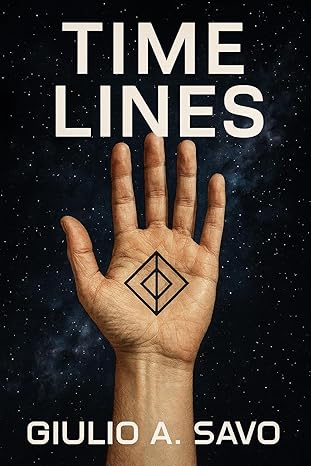
The book Time Lines by Giulio A. Savo is a sweeping and intricate story about memory, survival, and the fragile threads that connect our lives across timelines. It doesn’t just tell a straight tale. Instead, it bends and folds, presenting fractured futures, failed worlds, and the human struggle to get it right just once. Through characters like Samantha, Elly, Max, Sunita, Renée, and Andori, we move between the Nazca desert, space stations, collapsed civilizations, and alternate ages of humanity. At its core, it’s a meditation on memory, how it defines us, betrays us, and sometimes saves us. The science-fiction framework of neural resonance, timelines, and echoes is really just a way to explore grief, hope, and the longing for continuity in a fractured universe.
Reading this book felt like getting pulled into a dream. The writing is bold, lyrical at times, and not afraid to get messy. I loved how the narrative leaned into confusion rather than fighting it. Memory isn’t clean, and this story doesn’t pretend it is. I felt unsettled, even frustrated at points, but that seemed intentional. The voices of the characters lingered with me. Some chapters felt sharp and fast, almost brutal, while others slowed down into reflection, like drifting through echoes of lives I half-remembered myself. It reminded me of that strange sensation of déjà vu; familiar but haunting, like something just out of reach.
At the same time, I’ll admit there were moments where the complexity threatened to overwhelm me. The constant shifting between timelines and the weight of so many interlaced fates made it hard to follow at times. Yet, even in that chaos, I felt a strange intimacy with the story. The ideas about time as a thief and memory as both a curse and a gift hit me hard. There’s a raw humanity underneath all the science and cosmic scale, and that’s what kept me turning the pages. The book made me think about my own life, about the memories I cling to and the ones I’ve lost, and it left me feeling a little haunted in the best way.
Time Lines is a powerful and ambitious book that blends science fiction with philosophy and heart. It’s not for someone looking for a simple space adventure. It’s for readers who enjoy being challenged, who want a story that asks them to sit with uncertainty and lean into wonder. If you like novels that blur the line between speculative fiction and poetry, or if you’ve ever felt the pull of memory you can’t explain, this book will resonate deeply with you.
Pages: 399 | ASIN : B0FHHSYDDQ
Diligence and Determination

The Slide follows a brilliant but troubled scientist who discovers that a massive black hole is heading straight for Earth, leaving him to try and find a way to save humanity. What was the inspiration for the setup of your story?
I did want something PRE-apocalyptic, a disaster novel of sorts, with no way out. The idea of the failed protagonist constantly interests me, and I wanted an ending that wasn’t all hunky-dory with everything working out in the end. I had also recently watched The Fly again, and was, shall we say, reinspired. 😊
When creating Dane Currier, did you have a plan for development and character traits, or did it grow organically as you were writing the story?
They always grow organically as I write the story, really. I learn about them as I’m writing, usually.
What were some themes that were important for you to explore in this book?
Valuing human life, futility, dealing with inevitability, human relations, diligence and determination to find a way, hope, etc.
Will there be a follow-up novel to this story? If so, what aspects of the story will the next book cover?
Since it ended the way it did, probably not. A sequel would be bizarre and awkward, frankly. But I never rule anything out. You never know! 😊
Author Links: GoodReads | X (Twitter) | Facebook | Website | Amazon
His Courier3.1 operation system checked out. His teleportation chambers were state of the art, and he knew they would revolutionize the world as we knew it.
But in a cruel twist of timing, something draws near which threatens not only his dream, but humanity as a whole. A ‘supermassive’ black hole is on a collision course with the Milky Way galaxy, and there is no stopping it. Could it be that Dane was inspired to design his system for such a time as this? What do we do when we face an inescapable threat that seeks to annihilate everything we know? And most importantly, what happens when humanity loses everything that makes us human? Will Dane, Megan, Isaac and Dina discover a way for mankind to press on and survive? This one inescapable truth remains:
There is no escaping The Slide.
From the creator of the bestselling and award-winning Dissonance alien invasion saga, the Christian dystopian saga THE END, and the 9/11 historical fiction thriller Forecast comes a new genre disaster fiction tale of humanity’s struggle to survive. In the natural disaster fiction genre, The Slide will frighten and enthrall you to no end.



 LITERARY TITAN