Blog Archives
Biblical Clarity

Sacred Sexuality offers readers a raw testimony and a Scripture-centered call to return to God’s design for sex, identity, and holiness. This book blends testimony with teaching. How did you decide how much of your personal story to share?
As I’ve led Sacred Sexuality workshops and spoken publicly about God’s design for sexuality, people often asked if I would write a book that fully detailed my testimony and life journey. I previously shared portions of that journey in a public letter on my website, titled In Error to God’s Heir. That letter included deeply personal experiences—my father’s alcoholism, my parents’ divorce, the challenges my mother faced as a single parent, experiences of sexual abuse, and other formative wounds. While many readers found it helpful, it also brought tension within my family, and I eventually edited out certain details in pursuit of peace.
When it came time to write the book Sacred Sexuality, I sensed the Holy Spirit leading me in a different direction. Rather than centering the book on my full autobiography, I was called to focus on God’s revelation—His design for sexuality, identity, holiness, and redemption. My story is present, but it serves as a witness, not the foundation. Scripture is the foundation. My testimony is woven throughout.
I wanted to write a book that would speak truth and grace into a culture increasingly confused and wayward about sexuality—a book that helps readers understand what God’s Word actually says, how people drift into sexual sin, the cultural lies that deceive people, how freedom is found, and how believers can walk alongside others with both conviction and compassion. That is how Sacred Sexuality came to be.
Was there a specific verse or passage that you feel “cracked something open” for you spiritually?
Yes—Jesus’ words in Matthew 7:21–23 were deeply unsettling to me: “Many will say to Me in that day, Lord, Lord, have we not done mighty works in your name… and then I will declare to them, ‘I never knew you; depart from Me, you who practice lawlessness.’” I remember asking myself, honestly, Would that be me?
That question drove me to study everything Jesus said about sexuality and the heart. In Matthew 5:27–30, Jesus makes it unmistakably clear that sexual sin is not merely about behavior, but about the heart—desire, intent, and obedience. Later, in Matthew 15:19–20, He explains that sexual immorality flows from within and that these sins defile a person.
The apostle Paul reinforces this sobering truth in 1 Corinthians 6:9–11 with a clear warning: “Do not be deceived…” Sexual sin—like all unrepentant sin—separates us from the kingdom of God. But Paul doesn’t stop there. He proclaims the gospel hope: “And such were some of you. But you were washed, you were sanctified, you were justified in the name of the Lord Jesus Christ.”
That verse became deeply personal to me. For such was I. And by God’s grace, that is no longer who I am.
Much of the book wrestles with identity—who we are versus who God calls us to be. How did your understanding of identity shift over time?
As I immersed myself in Scripture, I began to see that God’s Word is remarkably consistent about sexual immorality—and equally consistent about redemption. My identity is not defined by my desires, temptations, past experiences, or labels given by culture.
Scripture tells us plainly that the human heart is deceitful (Jeremiah 17:9), and Jesus confirms that sexual sin flows from the heart (Matthew 15:19–20). But Scripture also tells us that Christ demonstrated His love for us while we were still sinners (Romans 5:8). His grace is not theoretical—it is powerful and sufficient (2 Corinthians 12:9).
One passage that profoundly reshaped my understanding of identity is 1 Corinthians 6:19–20: “You are not your own… You were bought at a price.” Our bodies matter to God. They are sacred because Christ paid for us with His own blood. In response, Romans 12:1–2 calls us to present ourselves as living sacrifices—transformed, not conformed.
My identity is no longer rooted in who I was or what I felt, but in who Christ is and what He has done.
Some readers may find your confidence reassuring, while others may find it challenging. How did you think about your audience while writing?
I wrote Sacred Sexuality for readers who are hungry for biblical clarity in a confusing cultural moment—and for those who long to see that clarity delivered with grace. Pastors, parents, and believers who feel overwhelmed or silenced by cultural debates will find firm convictions, careful Scripture, and practical guidance.
For readers seeking a biblical sexual ethic, this book is meant to function as a roadmap—and perhaps even a lifeline. And for those who are questioning, searching, or carrying deep pain around sexuality, my prayer is that they encounter not condemnation, but the steady, redemptive voice of God’s Word. Truth and grace are not enemies. In Christ, they meet.
This book is ultimately an invitation to repentance, to freedom, and to the life that only God’s design can give. To book is to bring God glory; none to me.
Launch dates for Sacred Sexuality:
February 10: Ebook
February 24: Printed book
Author Links: GoodReads | TikTok | Instagram | Facebook | Website | Amazon

Sacred Sexuality: Grace and Truth Revealed in a Culture of Confusion equips believers to anchor their lives in God’s sacred design for sexuality and identity. Author Mark Richard—once trapped in decades of sexual sin and confusion—shares his personal testimony alongside timeless biblical truth and pastoral guidance. With both bold conviction and tender compassion, he addresses cultural lies, confronts temptation, and provides practical tools for living in purity and grace. Readers will discover how to: understand God’s purpose for sexuality, resist the enemy’s schemes, speak truth in love, and walk in freedom through Christ. Ideal for individuals, families, pastors, small groups, and church leaders, this resource offers clarity, compassion, and hope for one of the most critical issues of our time.
Watery Eyes: Reflections of a Muslim Woman


Watery Eyes: Reflections of a Muslim Woman, by Yerusalem Work, is a wide-ranging collection of poems that moves through faith, womanhood, identity, memory, grief, and tenderness. It blends personal history with spiritual reflection and cultural pride. The book shifts from intimate whispers to big declarations, sometimes soft as prayer and sometimes sharp as truth. The themes that repeat across its many pages feel like a heartbeat. Love. Loss. Devotion. A soul trying to stay steady in a world that keeps testing it.
As I read, I felt pulled into the author’s inner world. Her writing is warm and direct, and I found myself pausing often just to sit with an image or a line. She talks about faith in a way that feels lived rather than taught, and that honesty hit me hard. I kept feeling this mix of ache and comfort. Some poems feel like opening a window after a long night. Others feel like stepping into a memory that isn’t mine, yet somehow rings familiar. Her voice rises and sinks, and I liked that the rhythm never stays still. It mirrors real emotion. Messy, surprising, sometimes contradictory. The work feels confident and vulnerable at the same time.
There were moments when the ideas felt bigger than the poem holding them, but I didn’t mind. I actually liked the looseness. It gave the book a raw edge. I loved how she writes about Ethiopia and womanhood and faith as if they’re woven into the same cloth, each thread tugging on the next until the whole thing glows. Some pieces felt playful, some mournful, and others almost like confessions. The writing invited me to consider my own ideas of belonging and purpose.
I would recommend Watery Eyes to readers who enjoy poetry that comes straight from the heart. It’s a good fit for people who like reflective writing, spiritual searching, and stories rooted in identity and culture. It would also speak to anyone who has ever carried love and loss in the same breath. This is a book for readers who want to feel close to another person’s inner life and who appreciate writing that is sincere, emotional, and alive.
Pages: 167 | ASIN : B0G6WHMTZ8

Emotional Timing

Resonance of the Soul – Flowers and Harmonics is a heartfelt and unfiltered collection of poems that dives into the human condition, exploring themes of love, identity, culture, struggle, healing, and faith. What inspired you to write this particular collection of poems?
I was inspired by a love story—one that stirred memories of what truly matters in life. That experience, along with moments spent with patients nearing the end of their lives in hospice, reminded me how fragile and sacred our time is. A mentor also nudged me to complete my writing, reminding me that unfinished words can become unfinished healing. This collection became a way to honor those stories, those lives, and the emotional truths that often go unspoken.
Did you write these poems with a specific audience in mind, or was it a more personal endeavor?
I wrote for those without a voice—those caught in the throes of indecision, those marginalized by circumstance, and even those who seem entitled or indifferent but are quietly searching for meaning. While the journey began as personal, it quickly became communal. I wanted these poems to reach anyone who’s ever felt unseen, unheard, or underestimated. It’s a companion for the lonely, the faithful, and the quietly resilient.
What was the biggest challenge you faced in putting together this poetry collection?
Time. Not just the literal hours needed to write and revise, but the emotional timing—knowing when I was ready to revisit certain memories, and when the world might be ready to receive them. Balancing my clinical responsibilities with the vulnerability required to write was also a challenge. But I learned that when something truly matters, you make time for it.
How has this poetry book changed you as a writer, or what did you learn about yourself through writing it?
I’ve come to appreciate the effort and emotional discipline it takes to create something meaningful. Writing this book taught me that poetry isn’t just about language—it’s about listening, about honoring silence, and about crafting space for others to feel seen. I learned that my voice carries weight not because it’s loud, but because it’s rooted in truth. And I discovered that healing—whether clinical or poetic—requires presence, patience, and grace.
Author Links: GoodReads | Amazon
Each poem reflects the delicate interplay of life’s harmonics—the highs and lows, struggles and triumphs—capturing its essence with thought-provoking depth and emotional resonance. With a voice that is both evocative and intimate, the anthology invites readers to embark on a transformative journey through the intricate beauty and complexity of existence.
“Resonance of the Soul – Flowers and Harmonics” showcases Dr. Edwards’ ability to infuse profound truths into his work, creating moments of reflection and celebration that resonate universally. It is a collection that bridges the personal and the universal, making it an unforgettable literary experience.
JewGirl
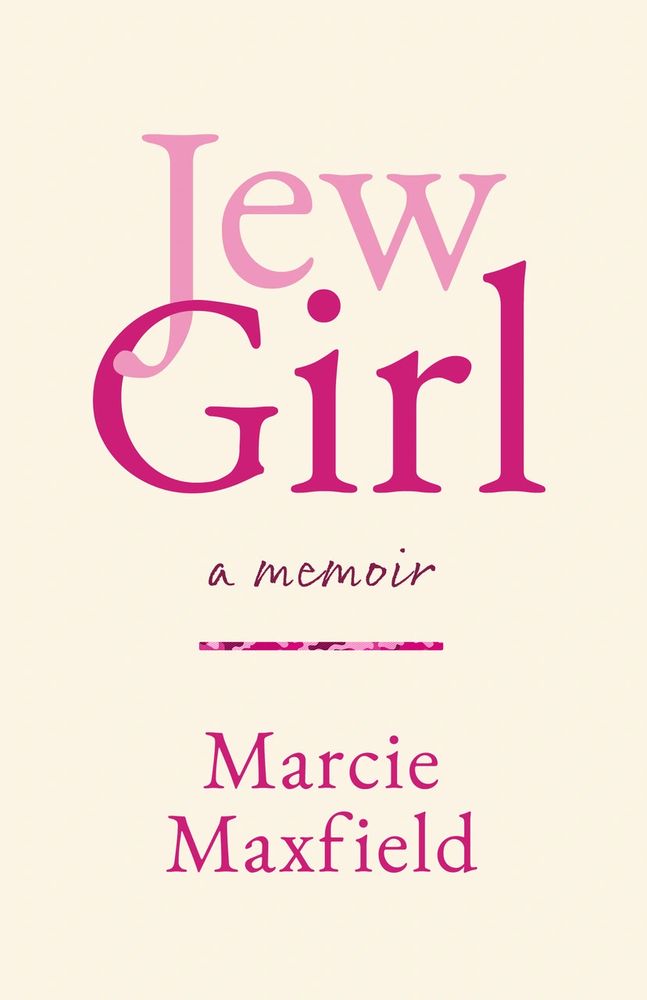

The book is a memoir about identity, family, and the messy, often contradictory ways of belonging. Marcie Maxfield weaves together her childhood in Detroit, her encounters with antisemitism, her complicated relationship with religion, and her adult life as a Jewish American woman. She writes about the boxes society asks us to check, about being pushed into identities that don’t fit, and about the tension between privilege and persecution. The stories are intimate and raw, often funny, sometimes heartbreaking, and always threaded with her determination to make sense of what it means to be Jewish in America today.
Reading this book felt like sitting across from a friend who’s decided to tell you everything without a filter. I loved the way Maxfield blends humor with pain. One moment I was laughing at her sharp one-liners, the next I felt a knot in my stomach from the ugliness of the prejudice she describes. What I liked most was her honesty. She doesn’t pretend to have neat answers, and that made the book feel real. The writing isn’t polished in a “perfect” way, but that’s part of its charm. It rambles sometimes, it jumps tracks, it circles back. Life is messy, and her style matches that chaos. I found myself leaning into the voice, trusting it, even when it got uncomfortable.
Some chapters felt like she was emptying a lifetime of stories onto the page. There were sections where I wanted more reflection and less rapid-fire memory. But even in those moments, the energy carried me forward. She writes with urgency, as if she knows these stories need to be told now, before they’re forgotten or drowned out by louder voices. That urgency gave the book a pulse, and I couldn’t put it down for long.
JewGirl isn’t a neat narrative, it’s a lived one, and that’s what makes it powerful. I’d recommend it to anyone who has ever felt out of place, anyone curious about the lived experience of American Jews, and anyone who likes memoirs that aren’t afraid to be messy and sharp and tender all at once. It’s not a book that holds your hand. It’s a book that looks you in the eye and says, This is how it is.
Words Are Powerful

WORDS TO THINK. OR TO SING. is a collection of poetic meditations delivered in short verses, reflections, and fragments resembling journal entries. What inspired you to write this particular collection of poems?
Words to Think. Or to Sing. was created to connect pop music lovers, curious minds, thoughtful people, and poetic souls through sonorous art, right from its earliest stage. Music artists usually keep their process mostly private while creating, maybe occasionally sharing some behind-the-scenes after everything is ready and available to stream. I wanted to offer a glimpse into my mind and soul from the beginning of the story in an original, special manner instead, and thought that poetic parts of my pop songs in progress, paired with little insights about their meanings, would be a great way to introduce myself.
What was the biggest challenge you faced in putting together this poetry collection?
This publication actually consists of lyric excerpts from pop songs I plan to release one at a time, so it can’t be considered a traditional, classic poetry collection. Modern poetry felt like the closest category to classify it. The biggest challenge lay exactly in this multifaceted nature. Although my songwriting style in general could be described as minimalistic, poetic, and relatable, I had to choose which passages worked well as stand-alone excerpts that could best support this concept of teasing songs while inspiring self-reflection and conversations through selected snippets.
How do you approach writing about deeply personal or emotional topics?
When something catches my attention longer than usual, whether positive or not, I often start to play with words to describe what the situation means to me. It feels like processing or closure, which then, when explored further, can become tuneful. From there, some of these ideas might turn into song concepts, lyric excerpts, and one day, songs to stream. In doing so, I like to use deep but accessible metaphors which come from living life with an open heart and mind. That is my biggest inspiration. For instance, in the excerpt called VANISH, which is about unfulfilled, fading written promises, you can find a delicate interplay between light and rain symbolizing the alternating moments of healing or relief and the recurring storm inside. While both sunlight and tempests consume that piece of paper keeping those promises present and alive, time passes and the words fade as the mind finds its peace. I don’t want to spoil too much, but I hope you will get the chance to read it and maybe one day, even sing some of your favorite lines together with me at the top of our lungs. I think it’s a pretty cool perspective to know that the book is not the end, but just the beginning. Other authors write sequels. I do songs and artistic multimedia concepts from the shared fragments of this work.
How has this collection changed you as a writer, or what did you learn about yourself through writing it?
Deciding to curate and publish this book first, instead of following the usual song-release model, is another testament that I’m not the type for those rushed rides the industry is used to, nor to support a fast-food art approach. That’s why I’m inviting everyone interested to join me in this unique evolving music journey instead. Words are powerful, and if set to music, they become even more memorable and emotional. I want them to linger a little longer and deeply connect with those resonating with all this. Music has always been profoundly meaningful and empowering to me. I would be more than glad and truly honored to become a long-time companion to the readers.
Author Links: GoodReads | Websites
Not with the words, not with the melody, but with a feeling.
Becoming a vision, becoming lines, becoming a complete piece of sonorous truth meant to be shared to unite people who resonate with it.
A mystical, fascinating process you can now be part of.
INTENSIA, a new heartfelt, poetic singer songwriter likely to belong with your favorite pop music companions, is turning the traditional release model upside down, inviting you to look into her soul and mind before anyone else.
Be among the first to witness this spark before her distinctive voice echoes through the world. This unique approach offers an unprecedented glimpse into evolving art, so you can feel and enjoy the essence of her songs before they are even complete.
Dive into this curated collection of lyric excerpts and emotional snapshots from pop songs in progress. Each piece stands on its own as a modern, poetic message, paired with brief reflections about the meaning or emotions behind the words.
It is more than something to read. It is a space to pause, reflect, and connect, with room for your thoughts and reflections too. Write what moves you, what you feel, what you dream. This book and its songs to be are meant to accompany you wherever you go.
For even more space to express yourself, the companion notebook PLACE TO THINK. OR TO WRITE. (ISBN 978-3-911445-02-3) is available as a dedicated space.
WORDS TO THINK. OR TO SING. out 26 June 2025 on Amazon. Paperback (ISBN 978-3-911445-00-9), eBook (ISBN 978-3-911445-01-6).
Join INTENSIA’s free Intense Inside Club at http://www.intensia.music and discover this special music developing experience as it unfolds, where connection begins as songs come to life.
#intensiawords
WORDS TO THINK. OR TO SING.
Intensia’s Words to Think. Or to Sing. is a collection of poetic meditations that bounce between philosophy, humor, identity, and raw emotion. Structured as a notebook of short verses, reflections, and fleeting thoughts, the book offers a tapestry of lyrical fragments that read like journal entries or inner monologues caught mid-thought. It doesn’t follow a clear narrative. Instead, it invites the reader to wander, pause, laugh, and ponder. The voice shifts freely, sometimes abstract, sometimes punchy, often surprising. At its heart, this book is a dance between the silly and the sacred, the vulnerable and the absurd.
I enjoyed how unfiltered it all felt. There’s this wild honesty in the way the author jumps from introspective sadness to cheeky self-mockery. One line made me laugh. Another hit me hard. And somehow, they sat right next to each other like old friends. I love when a book doesn’t try to be tidy. This one doesn’t even pretend. It’s messy in a good way. It feels like real thought, like someone actually thinking on the page instead of crafting perfect poetry. That made it feel alive. The kind of alive that’s a little chaotic and a little beautiful.
Some bits felt so random I had to reread them three times to decide if they meant something. And I liked that feeling, though I imagine it could drive other readers nuts. There’s no clear plot, no through-line, and the tone switches gears fast. I personally enjoy that kind of unpredictability. It reminded me of flipping through a notebook someone left behind on a park bench, strange, funny, haunting, and kind of thrilling.
I’d recommend this book to people who like their literature weird and personal and a little rough around the edges. If you’re into poetry that feels more like a whisper or a smirk than a polished performance, you’ll probably love this. Artists, songwriters, or anyone who finds inspiration in broken lines and passing moods will find gold in here.
Pages: 104 | ASIN : B0F9RR5TK9
Just Be You
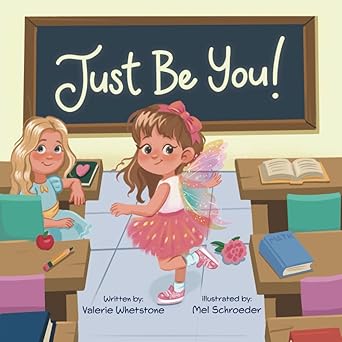
In Just Be You, Valerie Whetstone introduces readers to Pixie, a young fairy whose life is turned upside down when her parents announce they’re leaving the comfort of Fairy Town for the unfamiliar world of Humanville. For Pixie, this news is more than unsettling; it’s earth-shattering. Fairy Town is where she belongs, where she’s free to be herself without fear of judgment. In Humanville, she must conceal her wings and blend in with human children, a task that proves far more complicated than she expects.
Once relocated, Pixie begins attending a new school, and the struggle to hide her true identity intensifies. Every attempt to mask her wings ends in disappointment. Despite her best efforts, nothing seems to work. But Pixie isn’t ready to give up; she tries one final solution. Will it succeed? Readers will find themselves eagerly turning the pages to discover whether Pixie’s bold move brings the acceptance she longs for or something even greater.
This charming tale is not only captivating but also imparts a resonant message. As Pixie wrestles with the pressure to conform, young readers are gently reminded of the power of authenticity. Her journey encourages children to embrace what makes them unique, reinforcing that trying to change who you are for others rarely brings true happiness. Instead, the story champions self-acceptance and honesty as the most empowering path.
The book’s back matter adds depth and interactivity that further enriches the reading experience. Whetstone includes a “Mirror Exercise” that encourages children to speak kind affirmations to themselves, an empowering activity that nurtures self-esteem. A whimsical recipe for Sprinkled Fairy Pancakes, introduced earlier in the story, adds a touch of fun and magic. Additionally, a Journal/Affirmations section invites young readers to reflect, draw, and express gratitude, promoting emotional awareness and self-love. Children can also create lists of “power words” to reinforce their inner strength.
The illustrations by Mel Schroeder are nothing short of enchanting. Every page bursts with warmth and color, pulling readers further into Pixie’s world. Schroeder’s talent shines through in each vibrant, full-page spread, harmonizing beautifully with the narrative.
Just Be You is a heartfelt and empowering picture book that encourages children to stand tall in their individuality. It’s an engaging, thoughtful read with endearing characters and stunning visuals, an excellent resource for parents and educators alike. A truly uplifting story with a timeless message.
Pages: 34 | ASIN : B0DNQHFTTG
No Sugarcoating

Real Aussies: John’s Heartbreak follows a man struggling with family drama and his identity, who finds himself questioning his life choices and their impact on who he is now. What was the inspiration for the setup of your story?
There are plenty of brilliant authors out there, each exploring their own genre, offering their own lens. But something’s always struck me: as readers, we usually watch a story unfold. Whether it’s first or third person, there’s still a barrier — you’re seeing the world through someone else.
My work shifts that. I don’t want you watching. I want you inside it. I want you experiencing everything as if it were your life. No inner monologue distractions. No cinematic distance. Just you, immersed. That’s the goal — that the life unfolding on the page feels indistinguishable from your own.
Where many authors focus on plot, I focus on consequence. Cause and effect. The way people stay stuck in self-inflicted nightmares because it’s all they know. My job is to make it real. That’s why it hits hard. It’s confronting. And yes, it’s designed to be. Not for shock — but to surface what’s buried. I write to draw out the emotional junk most people never look at.
Call me a literary exorcist, if you like. My job isn’t to write pretty metaphors that need decoding — that’s useless to someone having a breakdown at 3 AM. My job is to make a reader feel, viscerally, so they process. It’s therapy without the label. Even Beatrice — when she speaks to John, she’s really speaking to the reader. “Good to see you.” That’s intentional.
The inspiration wasn’t John. It was the reader. My intention was always to unearth something in them — to bring them face-to-face with the parts of themselves they’ve ignored. That’s why the novel has a warning up front, why the blurb literally tells you to have tissues ready. It’s not a story about you… until it is.
That’s also why the novel ends with a poem. By the final page, I shift focus directly back onto the reader. Verse-by-verse, I hold up the mirror. You realise it was never about John. It was always about you. The choices you’ve made. The patterns you repeat. But there’s solace in that. You get to use John’s story as a scaffold — a safe space — to unravel what’s unresolved in your own story.
So far, every review echoes the same thing: “It lingers.” “It hit me harder than I expected.” It’s not a light read, by design. If you’re lying to yourself, this book won’t let you. It’ll show you — cracked mirror and all.
I didn’t write this to win awards. I wrote it for the people who didn’t know they needed it. And the most unexpected part? The reviews don’t reflect me or the book. They reflect the readers themselves. You can watch the healing (or resistance) play out in the reviews. One star, five stars — it’s not about John at all. That’s the art.
Is there anything about John that came from you or your life experiences?
Absolutely — but it’s not about facts, it’s about feeling. Every emotion in the novel is real. I don’t want readers to witness John’s feelings or mine — I want them to sit inside their own. That’s the point. I’ve spent years deconstructing emotion — peeling away the polite language and self-protective narratives we use — until I could write it raw, in its unfiltered form. That rawness is what bleeds through John.
Love, hate, despair, anxiety, disbelief, torture, horror, hope, humour — it’s all there. These aren’t just themes. They’re mine. I’ve lived them in one form or another, and instead of dressing them up in literary robes, I hand them to the reader as they are: messy, confusing, overwhelming. That’s what makes the novel so confronting.
My writing isn’t about literary awards or clever turns of phrase. It’s about impact. I write for people who don’t usually read. People who’ve been through real pain. People who are emotionally constipated and don’t even know it. That’s my audience. That’s who I care about reaching. My job is to make sure the work remains readable in 20 years — 50 years. That means: no sugarcoating. Just as I’ve never had the luxury of a sugarcoated life, as someone who grew up autistic, dyslexic, and an outcast — this work had to be just as honest.
Setting the novel in the past wasn’t just for the killer music (although — quote me — it is the best). I wanted to lull the reader into a false sense of nostalgia. That dream-state safety net. Then — rip — pull them deep into emotional terrain they weren’t expecting. That’s how real healing begins. When you’re least prepared.
The Real Aussies series isn’t fiction in the traditional sense. These are my emotional truths, fictionalised just enough to get under your skin. I make them yours. That’s the goal.
What were some themes that were important for you to explore in this book?
If you’re Australian, you’ll know the complexity of Australian men. From the outside, we’re seen as fun-loving, relaxed, and some of the friendliest people in the world. But scratch the surface, and you’ll find men are often expected to fit one of two emotional lanes: the hard-working provider, or the larrikin who cracks jokes over beers to mask the pain.
That’s the irony of Australia. Real emotional depth is often hidden. Having any feelings outside the intimacy of your bedroom — with your wife, your child, or your closest mate — is quietly forbidden. For me, it was time to show who the Australian man really is. Setting the story in the past allowed me to amplify that unspoken, strictly enforced social code: once you’re boxed in, you’re rarely reclassified. This limits potential — and creates internal chaos when your truth no longer fits the label.
Another core theme is beauty in pain. We don’t always reflect on the quiet glimmers in our darkest moments — the friend who helped, the stranger who saw us. Life can feel like one storm after another, but if we slow down and look closely, we’ll often find there was always a guardrail. Even in disaster, there’s something beautiful — that’s what carries us forward. This was true for John. For Chris. For Stew. For all of them, their “Refuge” was a club full of misfits — a symbol of chosen family in a world that rejected them.
I also wanted to preserve and spotlight community. Specifically, the LGBTQ+ community in Sydney during the 70s and 80s. It really was as intense as I depicted. The violence, the tension, the desperate need for a safe space — it was all real. Today, as society becomes more tolerant, we risk forgetting what community used to mean. I wanted this novel to capture that moment in time, so we remember how people found belonging through pain.
Finally, I wanted to confront the reader with the consequences of accumulated choice. The novel stretches through John’s twenties, showing how each decision either aligns him — or derails him. Life doesn’t punish. It doesn’t reward. It just stacks up your choices until the result is undeniable. You get what you build. If you live for others, lie to yourself, or compromise your truth — that stack eventually collapses. The novel reminds us: we’re born alone, we die alone. Everything in the middle is experience — but how we carry it determines who we become.
Is this the first book in the series? If so, when is the next book coming out, and what can your fans expect in the next story?
Yes, this is the first novel in the Real Aussies series — and also the first novel I’ve ever written. Quite the mountain, especially when you’re someone who reads words wrong, flips similar-sounding ones in your head and constantly fights to stay on the line. It’s exhausting. But I persisted. Because I had to.
The next novel is Peter’s Nightmare. If John’s Heartbreak was about how our choices align or unravel over time, then Peter’s Nightmare is about when you never had a choice at all. When your identity isn’t something you built — but something constructed for you through trauma, projection, and other people’s pain.
It explores what happens when the lessons you’re forced to carry don’t belong to you — childhood burdens, family shame, expectations you never agreed to. It’s a story about how we unconsciously repeat what we hated. How we become the bully, even when all we ever wanted was kindness. Peter’s story doesn’t hold back. It goes into territory most people avoid.
The schoolyard bully who wrecked you? He was likely wrecked too. This novel digs into that truth — that intergenerational cycles of pain can be broken, but not if we stay in victimhood. Not if we keep pretending we’re not part of the problem.
You’ll finally understand who Peter really was in John’s story. What shaped him. Why he was the way he was. And by the end of it, just like with John, you’ll be holding a mirror — not to Peter, but to yourself.
This is a novel about the parts of life we don’t speak of. The moments society can’t language properly. Peter’s Nightmare will give readers that language. And with that, maybe the power to finally change.
I’m aiming to release Peter’s Nightmare in early 2026. I’ve got a few other projects on the go that need to clear first — it’s a bit of a juggling act (especially when you’re navigating it all with disability compensation!) — but hey, that’s life. 🙂
Author Links: GoodReads | X (Twitter) | Website | Amazon
Sydney is thrown back to the late 70s and early 80s in this Aussie epic that sees John navigate the explosive consequences of his ill-thought actions, his wife’s destructive wake, and the unexpected feelings he has for his nurse; his male nurse… oh crap!
Amid drag queens, nightclubs, drugs, and iconic decade-defining music, John struggles with his identity, whilst trying to secure the custody of his two sons. With a batshit crazy family and a chaotic trip to Kiama, John’s life spirals out of control.
This rich multi-decade LGBT quasi-hetero romantic drama, written by an Aussie nomad, is layered with deep emotion and complex relationships. Profound, soul-touching, and reflective, this novel opens questioning the impact of all life’s choices.
Perfect for that weekend curled up in bed with a box of tissues, chocolates, and ice cream.


