Blog Archives
Strange Inheritance at River’s Edge
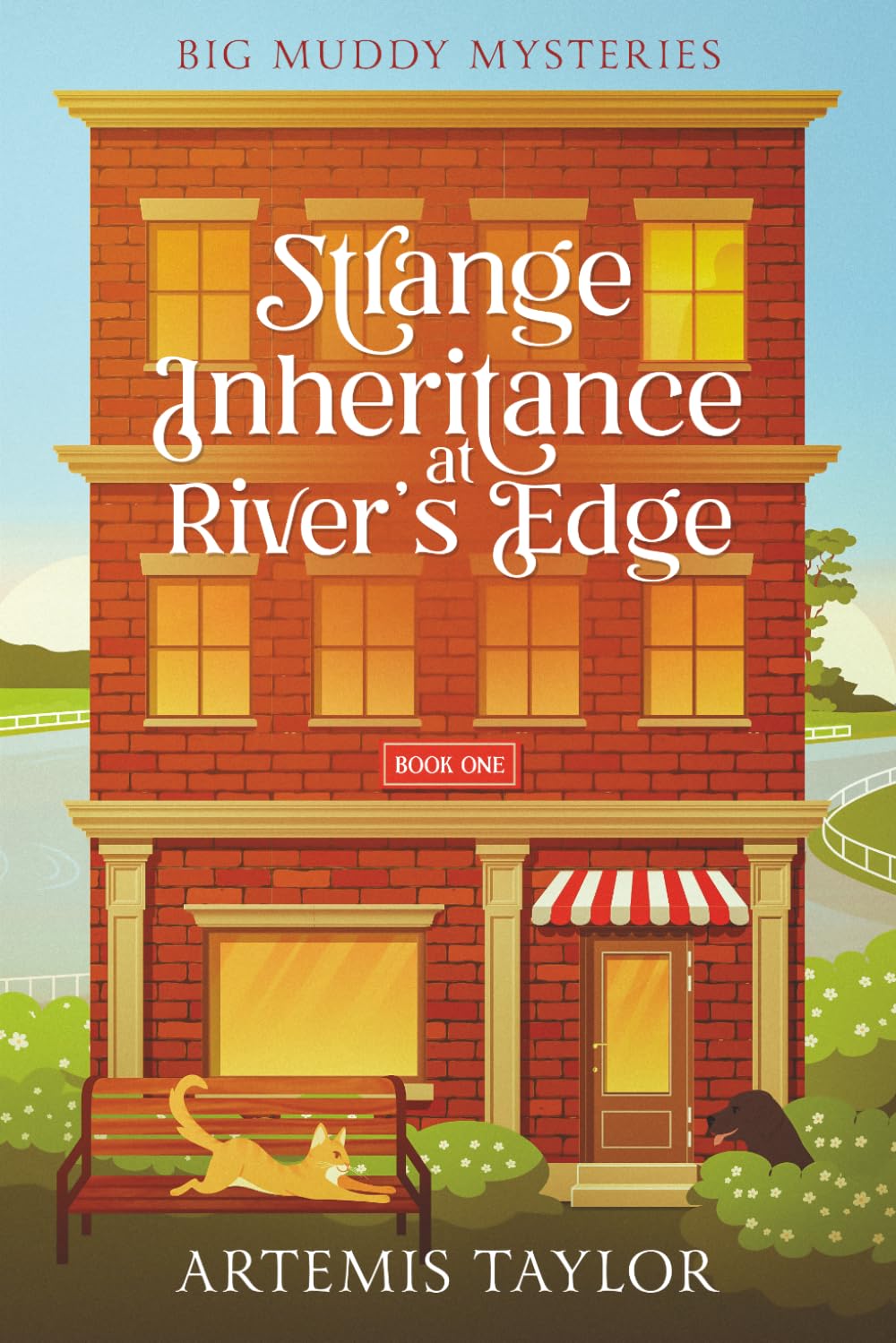

Strange Inheritance at River’s Edge follows Rebecca “Becky” Whitmore, a wounded veteran and former security professional who returns to Hannibal, Missouri, after inheriting her missing Aunt Iris’s strange old magic shop. What begins as a practical errand, settle the taxes, assess the building, maybe sell it, turns into a reckoning with family history, grief, buried secrets, and an Emporium that seems to have its own will. With a black Lab, a regal cat, a watchful river, and a town full of sharp tongues and soft loyalties, the novel opens a mystery that feels both supernatural and deeply personal.
I liked the way the book lets Becky be formidable without making her emotionally invulnerable. She can read a room like a threat map, handle herself under pressure, and still be undone by an old letter, a remembered recipe, or the ache of being called “Becky” by people who knew her before war and loss remade her. The story’s tenderness has grit in it. It’s splintered, wary, and earned. The Emporium’s magic works best when it feels less like spectacle and more like inheritance, objects remembering, rooms holding their breath, the past refusing to stay politely boxed.
I also enjoyed the texture of Hannibal as a living community rather than a postcard backdrop. The banter is brash, funny, and sometimes wonderfully cantankerous, with Rita, Delilah, Tessa, Jake, and the others giving the book a noisy human pulse. The novel lingers in emotional aftermath more than a conventional mystery might, but for me that patience became part of its identity. This isn’t only a whodunit or a haunted-shop tale; it’s a story about what protection costs, what mercy means, and whether a broken person can still become a shelter for others.
I would recommend Strange Inheritance at River’s Edge to readers who enjoy cozy mystery, magical realism, and veteran-centered women’s fiction with a supernatural edge. Fans of Sarah Addison Allen’s warm, uncanny small-town atmosphere may feel at home here, though Artemis Taylor brings more scars, more river mud, and a sharper sense of danger to the table. Strange Inheritance at River’s Edge is a tender, haunted mystery about coming home to a place that has been waiting, not to save you, but to ask you to stay.
Pages: 254 | ASIN: B0H56SWMPL

Silver Lady: Travels Along the River Road


Silver Lady, by Susan E. Sage, is a literary work of magical realism with dystopian and protopian elements, following Cassie Navrone as she pilots a luxury houseboat downriver in the near future after the Great Collapse and the mysterious Vanishing. Art, people, places, and memory itself seem unstable, and Cassie’s journey with a small group of passengers becomes far more than a delivery job. It turns into a strange, searching voyage through grief, fear, beauty, connection, and the question of what is worth saving when the world no longer follows familiar rules.
What I appreciated most about the book is how personal it feels. Cassie’s voice has a warm, wandering quality, and I often felt as if I were sitting across from her while she tried to make sense of each odd bend in the river. The captain’s log format works well because it lets the story move between daily details and larger reflections without feeling stiff. A meal, a storm, a disappearing poem, a troubling town, a strange animal encounter, and a memory of love can all sit beside each other in the same current. That looseness may not appeal to readers who want a tight, plot-driven dystopian novel, but for me, it gave the book its emotional texture. It feels less like a race toward answers and more like drifting through a world where answers keep changing shape.
Sage makes some bold choices, especially in the way she blends social collapse with wonder. The book is candid about violence, isolation, illness, and cultural fear, but it does not sink into despair. That is where the protopian side of the story comes through. Cassie isn’t trying to save the world in some grand, heroic way. She’s simply refusing to look away. She notices people. She mourns what disappears. She keeps moving. I liked that the magical realism is not treated as a puzzle to be solved neatly. The sentience of the Silver Lady, the unstable towns, the vanishing art, and the river’s almost spiritual pull all ask the reader to accept mystery as part of the experience. The book is about living when the ground, or in this case, the water, refuses to stay still.
I would recommend Silver Lady to readers who enjoy reflective literary fiction, magical realism, and softer dystopian stories that care more about inner change than spectacle. It will especially appeal to those who like character-driven journeys, older protagonists, symbolic landscapes, and books that leave room for wonder. This is a thoughtful novel that stays engaging because its strange moments and underlying tension give the journey real weight.
Pages: 235 | ASIN : B0DH9CJGXM
The Wonders of the Adirondacks

A Postcard From the Adirondacks follows a man who embarks on a strange Adirondack adventure where journalism, folklore, philosophy, and canine loyalty collide. Where did the idea for this novel come from?
The novel began with the experience of canine companionship amidst the wonders of the Adirondacks, both real and as imagined. It is a place where you do talk with your dog and where the sasquatch exists. Both things being matters of belief, like any religion. The novel purports to be true fiction, and makes an effort to explain to the reader the foundations for such truth, and a reason to believe.
The novel blends adventure, satire, folklore, philosophy, and fantasy. Did you always envision it as a genre-crossing story?
Yes. The truth of fiction is the truth of imagination, and that blending of literaturary styles is the source of that truth. That is why you often hear it said that the truth is stranger than fiction.
Why do you think the bond between humans and dogs is so powerful in literature and life?
The simple, scientific answer is oxytocin. As explained in the chapter that discusses the domestication of dogs, oxytocin functions as a neurotransmitter. It modifies neural circuits to increase feelings of trust, empathy, and social connection. Those things are what the relationship between humans and dogs is all about, especially to the extent that they embody affection. Snuggle with a puppy and experience that symbiotic relationship. You will be glad that you did.
If readers could carry away one idea from the novel, what would you most hope it would be?
To keep on believing in the world of imagination.
Beyond Superhero School

Beyond Superhero School, by Gracie Dix, is a middle-grade superhero fantasy adventure about a group of young heroes trying to survive normal school while hiding powers that are anything but normal. After leaving Superhero School behind, the students land at Lily Flower High, where bullies, awkward classes, emotional wounds, and secret dangers follow them through the halls. Underneath the school drama is a much larger threat: VORK, an evil organization determined to destroy people with powers. The story grows from first-day chaos into a bigger battle involving friendship, fear, family, and what it means to protect each other when the world feels stacked against you.
This book moves fast. Sometimes it feels like the characters barely get a second to breathe before the next problem crashes into them, whether it is a teacher being unfair, a friend disappearing, or a villain stepping out of the shadows. That pace gives the story a lively, comic-book feel, which fits the genre well. I also liked how Dix lets the characters sound young. They argue, tease, panic, overreact, and make jokes at exactly the wrong time. It is messy, but it feels alive. I appreciated the character list at the beginning because the large cast can be a lot to keep track of, especially because so many characters have multiple powers and emotional storylines.
The author’s choices are interesting because the book is not only about superpowers. In fact, some of the strongest parts are about what the powers cannot fix. Nick’s trauma, Spencer’s fear of leaving his friends, Rachel’s anxiety, Will’s struggle to stand up for himself, and the pressure everyone feels to stay hidden give the story a more serious center than the playful title might suggest. I liked that contrast. One moment, the book is goofy and loud, and the next, it is dealing with PTSD, loss, loyalty, or the ache of feeling different. That is a hard balance to pull off, and while the tone can shift suddenly, I found that honesty refreshing. It reminded me that superhero fantasy works best when the powers are not just flashy tools, but extensions of what the characters are feeling inside.
I recommend Beyond Superhero School most to readers who enjoy fast-paced middle-grade fantasy, superhero teams, and stories where friendship is treated like a superpower of its own. Fans who like their adventure loud, emotional, and packed with twists will have a lot to enjoy here. Readers who prefer quieter, tightly focused stories may find the pace intense, but for someone looking for a colorful superhero adventure with heart, humor, and high stakes, this book delivers a spirited next chapter in The Vork Chronicles.
Pages: 543 | ASIN : B0F7MPV4Y5
Whispers of Love
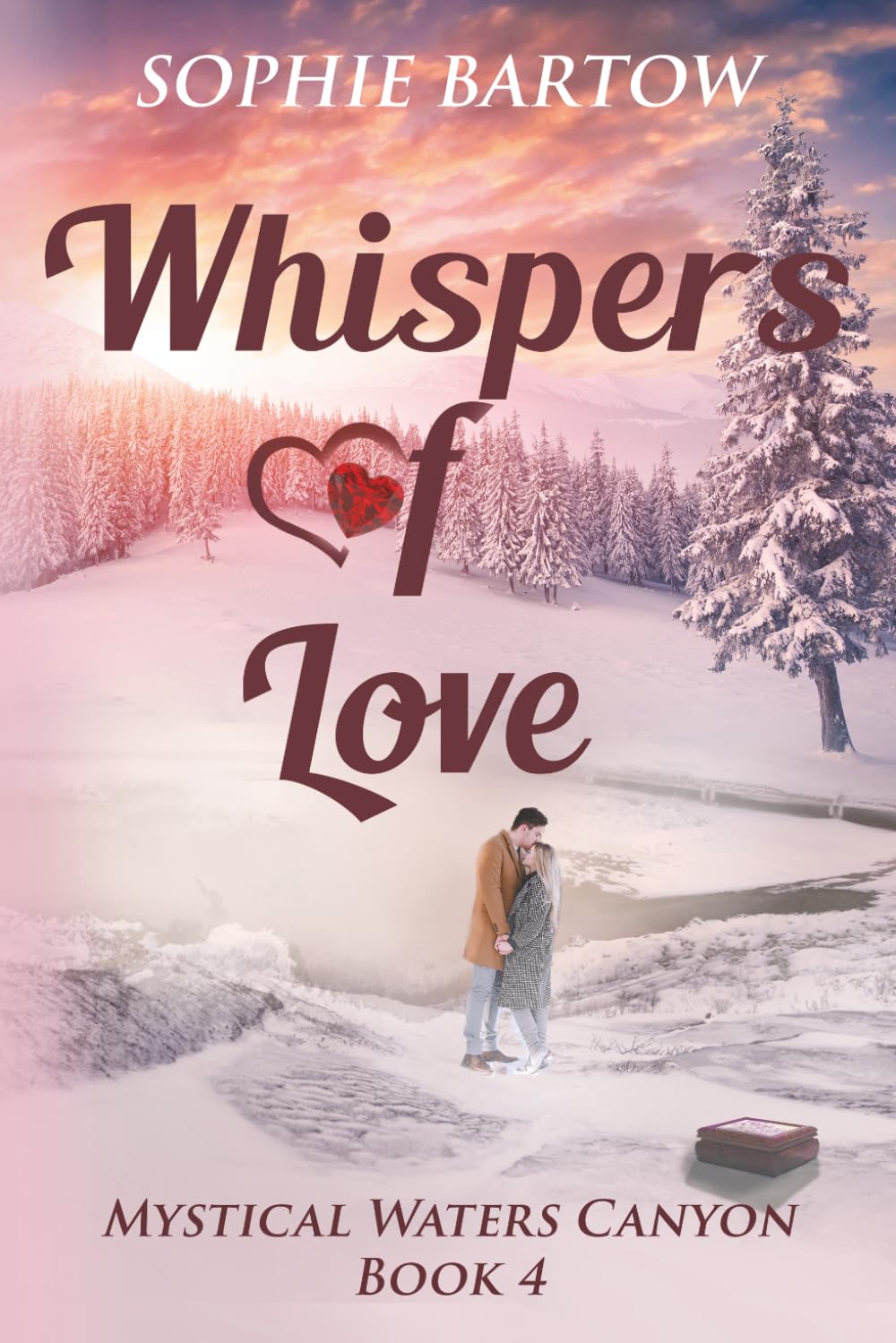
Sophie Bartow’s Whispers of Love is a small-town mystical romance centered on Amy Simpson and Gabe Ricci, two people who already feel woven into Swan Harbor long before they understand what they mean to each other. Amy begins the story engaged to Shawn, but her unease grows until she has to admit that the life she’s moving toward doesn’t fit. Gabe, meanwhile, has been pulled into Swan Harbor’s orbit through his work with The Agency and his friendships with the Simpson family, but his connection to Amy feels more personal, more rooted, and harder to ignore.
The romance works because Amy and Gabe don’t feel like strangers dropped into a love story. They have history, banter, family ties, and a believable awareness of the complications around them. Gabe’s patience with Amy is one of the book’s strongest pieces. He doesn’t push her to become someone else. He notices who she is, especially the restless, airy parts of her, and helps her feel safe enough to listen to herself. When the book says, “You are Air. Your heart’s speaking. Listen to it,” it captures Amy’s whole journey in one neat line.
Around the romance, Bartow builds a busy world full of family dinners, gossip, friendships, old journals, mystical signs, and an ongoing suspense thread involving The Agency, the Lazarus file, and danger connected to Swan Harbor. There’s a lot happening, but the book’s center stays clear: Amy is learning how to choose love without losing herself. The mystical element gives the story a sense of destiny, but the emotional choices still feel human. Amy has to be honest with Shawn, honest with Gabe, and, most of all, honest with herself.
Swan Harbor itself feels like one of the main characters. The town is nosy, warm, funny, and deeply invested in everyone’s happiness, sometimes before they’re ready for that kind of attention. The Simpson family brings a lot of humor and tenderness, especially in the way they circle Amy while still letting her make her own decisions. The old lore about the Canyon, the veil, the clover, and the elements adds a generational layer that gives Amy and Gabe’s romance more texture than a simple friends-to-lovers setup.
Whispers of Love is a romance about listening, choosing, and letting love become steady instead of scary. Amy and Gabe’s story has flirtation, heat, family chaos, mystery, and a strong sense of belonging. By the end, the idea that “Love was a man who could steady her … nothing more, nothing less” feels earned because the book has shown that steadiness in small moments, not just big declarations. It’s a cozy, emotional, and very Swan Harbor kind of love story, perfect for fans of slow-burn romances with a touch of mysticism.
Pages: 390 | ASIN : B0H3DQV3G3
A Postcard From the Adirondacks


A Postcard from the Adirondacks begins with a mysterious postcard bearing one word, “Come,” and sends its narrator, Edward Storie, into a strange Adirondack adventure where journalism, folklore, philosophy, and canine loyalty collide. Ed, a cub reporter and aspiring fiction writer, is drawn into the orbit of Dr. Zorba Kildeere, a pseudo-scientific visionary whose plans for chemically pacifying humanity come with one monstrous condition: a future without dogs. When Melony Noon escapes Kildeere’s Rookery, Ed and his talking dog, Skipper, enter a wilderness populated by cryptids, phantoms, tricksters, and old mountain magic in a rescue mission that becomes far larger than one missing woman.
What I enjoyed most about this book is its refusal to behave. It’s part tall tale, part backwoods quest, part satire of scientific hubris, and part love letter to the Adirondacks. Pontacoloni writes the forest as if it has a pulse, a private vocabulary, and a sly sense of humor. The narrative wanders, but often in the way a wooded trail wanders: taking detours toward local lore, odd taxonomy, old literary ghosts, and the metaphysics of dogs. Skipper is the book’s great engine of charm. He’s funny, learned, prickly, brave, and exactly the kind of dog who could make a reader accept the impossible before breakfast.
Readers who want a clean and swift plot may find themselves occasionally caught in the underbrush of digression. Yet I came to appreciate that abundance as part of the book’s peculiar spell. Pontacoloni isn’t merely telling a rescue story; he’s building a private Adirondack cosmology where Sasquatch, tarot phantoms, oxytocin, Emily Dickinson, James Fenimore Cooper, and a French Brittany can all share narrative oxygen. The prose can be playful and philosophical, but beneath the whimsy is a sincere moral center: a world that loses its dogs has already misplaced its soul.
This book will best suit readers who enjoy fantasy adventure, cryptid fiction, magical realism, satirical science fiction, talking-animal stories, and folklore-infused literary quests. It reminded me at times of Douglas Adams filtered through James Fenimore Cooper, with a dash of Christopher Moore’s comic irreverence and a muddy pawprint all its own. A Postcard from the Adirondacks is a strange and spirited romp through myth and mountain shadow, carried by the kind of loyalty only a good dog can teach.
Pages: 229
Sacred Crossroads: The Path Appears When You Take The First Step

Sacred Crossroads, by Mitch Russo, is a metaphysical fantasy novel about Noble Manning, a practical hardware store owner in Cedar Springs, Massachusetts, whose carefully ordered life begins to crack open when the family store reveals itself as something far more mysterious than a small-town business. Through Noble, his daughter Sarah, Jenny Martinez, Rosa’s legacy, and the strange pull of Manning’s Hardware, the book explores grief, family inheritance, spiritual awakening, and the courage it takes to step into a larger truth.
What I liked most is that the novel treats transformation as both magical and deeply human. Noble’s resistance feels familiar. He wants numbers, ledgers, systems, and proof. Honestly, I understood him. There is comfort in shelves being labeled and life behaving itself. But the book keeps pressing against that comfort, asking what happens when the world is bigger than the tools we use to measure it. The hardware store is a smart central image because it keeps the story grounded. Hammers, keys, wood, registers, and old ledgers. Ordinary things. Then Russo lets them hum with meaning. That mix gives the book its strongest texture.
The writing leans into wonder, sometimes so much that the message comes through very clearly. This is not a quiet literary novel that hides its themes in the shadows. It wants to talk about awakening, purpose, fear, and becoming. Still, there is sincerity here, and that counts for a lot. I was especially drawn to Jenny and Rosa’s thread because their wisdom feels lived-in rather than abstract. Their story gives the novel heart and history, and it helps balance Noble’s more internal struggle with a wider sense of community and inheritance.
As spiritual or visionary fantasy, Sacred Crossroads will most appeal to readers who like fiction with an open heart and a clear sense of purpose. It’s a good fit for people drawn to stories about awakening after loss, small towns with hidden magic, family legacies, and the idea that everyday places can become thresholds. Readers who enjoy reflective, meaning-driven fiction will likely appreciate its warmth and invitation. I’d recommend it to anyone standing at a personal crossroads, especially someone who wants a novel that feels less like an escape and more like a nudge toward courage.
Pages: 218 | ASIN : B0GGNRK2TC
A Sacred Hunger
Two Hearts Within One Soul, Volume 2 follows a woman in her fifties whose quiet life in Hampshire opens into love, grief, faith, and self-discovery after her connection with a man she meets over a book changes how she sees herself. What was the inspiration for the setup of your story?
Layla was inspired by the transformative power of an unforgettable courtship. I wanted to explore the moment someone truly loves you enough to mirror your own worth back to you before you even recognize it yourself. This story is about being introduced to a world of passion and purpose—a world that encourages you to reclaim your identity rather than letting it be consumed by the rules and standards of society.
Your book is as much about Layla reclaiming her own worth as it is about the romance with Mate’O. How do you write a love story where the most important relationship is the one the protagonist has with herself?
Layla represents the many souls who have endured loss and simply surrendered to the life they were given. I wrote her journey to show that when a love is truly pure, it acts as a catalyst. Mate’O doesn’t just offer romance; he challenges the status quo of her heart. Being “in love” creates a sacred hunger for more—more growth, more understanding, and more life. Her relationship with herself changes because his love gives her the courage to explore the parts of her soul she didn’t know existed.
The invisible red thread is the book’s central symbol. Where did that image come from, and how did you develop it?
The image is a bridge between East and West. It draws from the Southeast Asian legend of the “Red Thread of Fate,” which may stretch or tangle but can never break. I wove this together with the Greek myth of the original “split soul”—the idea that we were once whole and are now destined to find our other half. Across the series, the thread evolves from a mere symbol into a living, mathematical heartbeat. It is the literal weaving of a mirror soul searching for its counterpart across time and geography.
The book treats love almost as a sacred force. What does “soul recognition” mean to you as a storyteller?
To me, soul recognition is the ultimate cosmic memory. It is the moment two souls, bound across every lifetime, fulfill the promise to meet again with the same depth, passion, and desire. As a storyteller, it is the most haunting theme I can explore: the idea that if these two do not find one another, the soul will continue to yearn with a “cosmic ache” until breath finally departs from flesh and bone.
Author Links: GoodReads | Website | Amazon
After World War II, Layla, an orphan and former maid in Versailles, France, lives a quiet life in a Tudor cottage in Hampshire, England. In her early fifties, she has made peace with a solitary life-until fate intervenes.
In the quiet corners of an old bookstore, Layla’s fingers brush a weathered Jane Austen novel and the hand of Mate’O Conti Amatto. A man of high society, hazel eyes, and Italian good looks, Mate’O awakens an echo of lifetimes lived, a love long destined. That brief encounter shakes Layla to her core, unraveling everything she thought she knew about love, destiny, and herself.
Mate’O may lie silent, but the invisible red thread connecting their souls tightens, pulling her toward a deeper truth in a story not of second chances, but of remembering, of love that transcends time and a woman who dares to rise from heartbreak to reclaim her worth.
Would you stay in the safety of what’s known-or pull the thread?


