Blog Archives
The Secret Rise, book 3
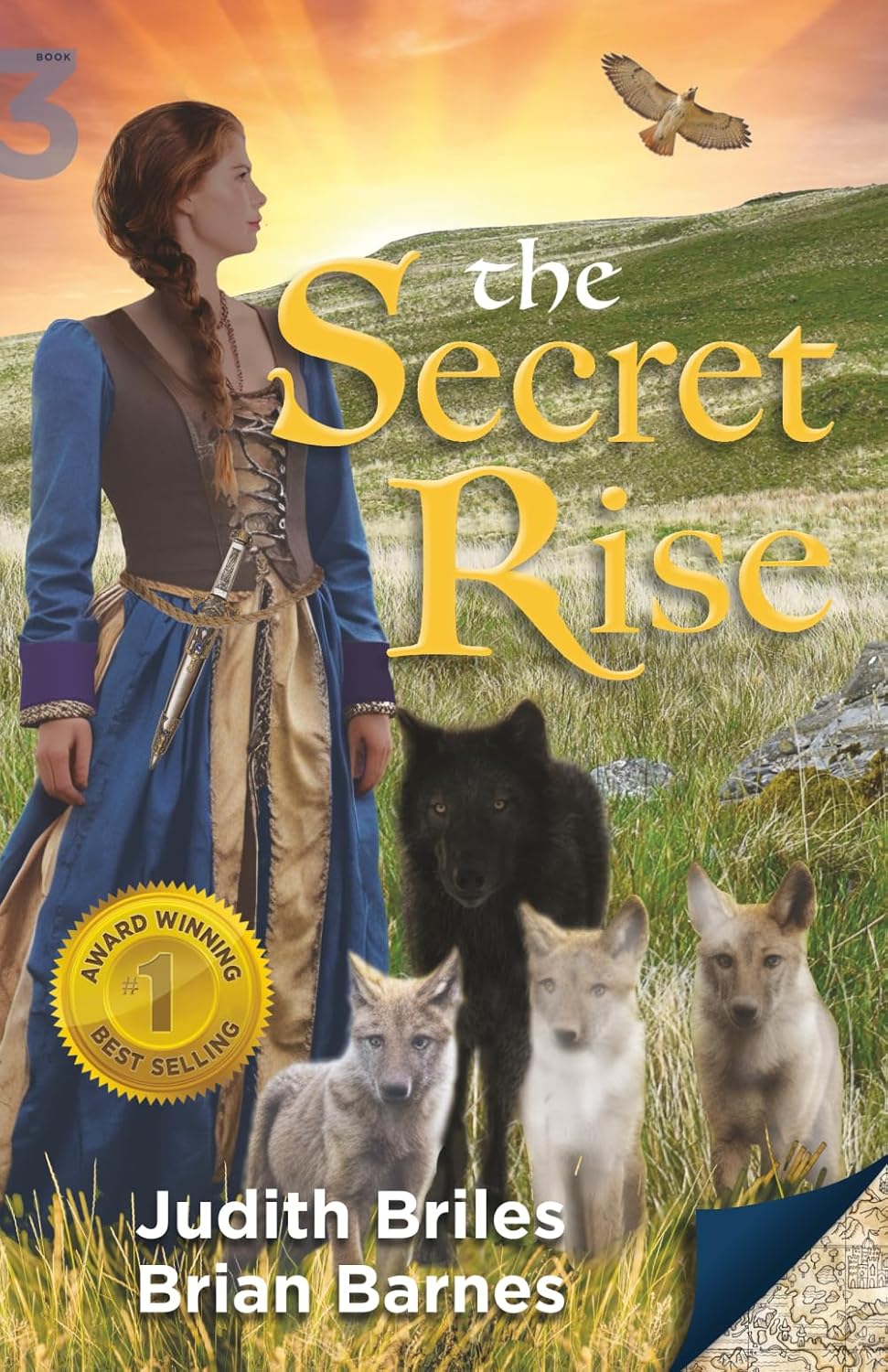

The Secret Rise is a sweeping tale set in medieval Normandy and England, where Nichol, once a girl betrayed by her family, becomes the guiding light of a hidden hamlet called Harmonie. Now a wife and mother, she carries the weight of leadership, navigating danger from enemies old and new, forging bonds with Queen Emma of England, and testing the limits of her own strength and foresight. The book follows Nichol, her family, and allies as they face betrayal, curses, prophecy, and the unrelenting pressure of survival, all while a mysterious guiding presence known as the Lady shadows her path. It is both a story of individual courage and of how a community holds together when secrecy is no longer an option.
I found myself swept up by the writing. It has a rhythm that shifts between tenderness and suspense, sometimes almost too swiftly, but that kept me hooked. The dialogue feels earnest, and the authors have a knack for describing how ordinary moments, like a meal, a walk with children, or the hush before a dangerous meeting, carry enormous weight when survival is always at risk. The prose leaned on repetition of themes like destiny and trust, yet I also caught myself underlining sentences because they had that raw, heartfelt punch that lingers. What struck me most was how alive Nichol feels. She is fierce, protective, flawed, and burdened, and that combination made me root for her every step of the way.
What surprised me was the warmth threaded through the peril. This isn’t just about battles and politics; it is about mothers feeding babies, children inventing secret languages, and villagers laughing together after fear has passed. Those touches gave me chills in the best way. I will admit, at nearly five hundred pages, the book sometimes meanders. Still, I never truly wanted to put it down. The presence of the Lady, that mysterious spiritual force, added a quiet shimmer to the narrative, and I liked how it blurred the line between faith, fate, and imagination. It made me question whether strength comes from within or from something greater that whispers in the dark.
I closed the book feeling both satisfied and a little restless, already curious about the next installment. I would recommend The Secret Rise to readers who enjoy historical fiction with a hint of the mystical, especially those who like stories centered on strong women navigating impossible choices. It’s a book for anyone who wants to be pulled into another time and place, not just through action, but through the intimacy of family and the resilience of community.
Pages: 540 | ASIN : B0FDV29WWF

And It Sinks In

Bobby, Lord of Acton Waters is the story of an entitled young ruler who learns a valuable lesson in human decency when he travels the country alongside a minstrel. Where did the idea for this story come from?
When I started this story I wasn’t thinking of teaching any lessons. I thought it would be funny to imagine the naughtiest kid in the world. I myself had been so conventional that I envied kids who couldn’t spell. But after the first chapter Bobby’s outrageousness got less and less amusing. I found myself wondering, “Could a kid find out for himself, without prompting, why it makes sense to be grateful to your parents and considerate to everyone else?” Bobby does have teachers, of course — the people he meets on the road. But all of their teaching is done by example. And it sinks in.
What were some driving ideals behind young Bobby’ character’s development?
As the story progressed it taught me what I care about most. Spelled out this would be horribly corny, the kind of thing that is carved over the doorways of public buildings. But within the dynamic of the story, delivered with a smile, it sounds pretty convincing.
Do you have a favorite scene from this story? One that was especially enjoyable to write?
My favorite scenes involve the villain of the story, the highway robber Rembert the Ruthless. Although his actions are cruel he is in many ways an innocent baby. His faithful girlfriend Florizel appreciates this, and my protagonists use it to defeat him.
Can young readers look forward to more from you soon? What are you currently working on?
I have written a sequel, not yet in print. Bobby, now 12, serves as a secret conduit between King Stephen and the common people of London, helping to push England toward democracy. It has far more action than Bobby, Lord of Acton Waters, more danger and suspense. If that sequel attracts readers I am thinking about the next one: At 13 Bobby has been rewarded by the King with more power and responsibility. He has to bring the special insights of a teenager to this new role.
One thing eludes Bobby. He can’t order people to like him. One day a wandering minstrel comes to town – Fahd, from faraway North Africa. He sings for small change and cures minor ailments. He has no possessions, but he quickly acquires a hundred fans and friends. What’s his secret?
Bobby vows to find out. He hits the road, destination unknown, as Fahd’s assistant. Travelers, as they walk along, tell about their lives, and Bobby starts to feel a new sympathy for his fellow humans. He and Fahd then quit the music business and launch a grand risky scheme to make the world a better place.
Bobby, Lord of Acton Waters

Set against the backdrop of medieval England, Bobby: Lord of Acton Waters, by William Smock, narrates the tale of a young, noble brat named Bobby. Initially defined by his self-centeredness and disregard for others, Bobby’s world is turned upside down following an intriguing encounter with Fahd, a Tunisian minstrel. This meeting marks the start of an epic journey that challenges Bobby’s character and values.
The book adeptly paints a picture of Bobby’s transformation from a petulant earl to an empathetic leader, spurred by his adventures and the diverse people he meets along the way. While the story is peppered with humor and irreverence, reminiscent of works like Shrek or The Princess Bride, it thoughtfully navigates Bobby’s growth. This transition is not instantaneous but is portrayed as a gradual, realistic change influenced by his experiences and newfound knowledge. Embracing the creative liberties taken with historical accuracy allowed me to immerse myself fully in the engaging narrative.
The story’s approach to religion, an essential part of the plot, provides an interesting perspective, albeit one that I feel might be further enriched with a more nuanced treatment. The novel bravely explores a range of provocative themes, from the ethics of its characters to their complex relationships, adding depth and offering thought-provoking content that will intrigue a diverse audience. The novel’s central theme — the importance of seeing others as individuals rather than mere means to an end — resonates strongly. Bobby’s journey, fraught with challenges, including a bandit threat and tyrannical rule, showcases his development into a true noble.
Geared towards young adults, Bobby: Lord of Acton Waters is suitable for readers aged 13 and up. It combines elements of mild language, humor, and action, making it an entertaining read for those who appreciate a light-hearted yet meaningful adventure. The book’s ability to blend humor with a message about personal growth and leadership makes it a noteworthy read in the genre of historical fiction.
Pages: 190 | ASIN : B0CW5MNW7D

What is Redemption?

The Redemption of Jarek follows a man struggling to find his place in the world following his banishment from the only home he has ever known and the throne he was destined to occupy. What was the inspiration for the setup of your story?
Readers of my previous material with long memories might recall when Alathea mentioned one of the fights in this book, or perhaps that goes too far back. More recent is how Jarek shows up in The Fate of Lenn, takes a beating, slinks away, and is never seen or heard from again in that book. His whereabouts near the end of that book may have even been mentioned in passing, but with no explanation given. In short, I have set the table for this story since way back, and it was waiting for me to be ready.
A personal challenge was to explore the redemption of an already introduced character who could be considered a minor antagonist during his first appearance. I have written pure villains who were killed, and some who were stopped without having to die. I have written a sympathetic book about a villain who genuinely wishes to save her world from suffering and loss she had to feel, and I hoped readers picked up on the toxic forces teaching her toxic lessons from the beginning of her life, her inability to be better than them, and how this could apply to some people in our world. I had yet to write about anyone who faced that antagonist’s defeat and, when offered a slim opportunity to do something different, successfully took what they learned and became their own kind of hero.
I find that authors sometimes ask themselves questions and let their characters answer them. Do you think this is true for your characters?
When composing the early drafts of the story, everything progresses a certain way because I have certain things in mind that I wish to happen. I couldn’t leave it like that. Over the course of revisions, trying to see the world as these characters do, I think I develop a better idea of how some things should go based on my improved understanding of what these characters would say/do. Some of the “discussion” scenes of this book retained a necessary goal given their purpose in the story, but how the characters arrive at that goal shifts to better fit the personalities involved. How do they argue with each other in the most in-character manner? It’s also important to determine how Jarek would handle his “council”, a glorified band of powerful criminals who once had royal patronage/sanction for their actions. Can he take for granted that they are on board with any plan he makes just because they didn’t have an immediately better option for a leader when they found themselves outlawed?
There tends to be an in-character answer to these questions. While the story at the top level didn’t stray far from my plan (and can’t, because it’s a prequel and certain events are canon to existing works), the way it arrives at this destination is much more fitting.
Is there any moral or idea that you hope readers take away from the story?
I often write about leadership figures because I like to contrast duty and responsibility with entitlement, but that’s just one dimension of things. I have a few things I hope the reader considers in case they haven’t before:
1. What does redemption mean? How do you arrive at it when there’s no culturally specific rite, no rubric handed to you, yet strange circumstances give you an opportunity to continue to act after your terrible failure? And what if those who have the most right to dictate your path to redemption are no longer available for guidance?
2. Some might perceive Jarek as broken by the end of his adventure, but others will see him as transformed. The path of redemption may begin with deep resentment, but by the end of it, you may resemble those you hated and wronged the most.
3. Sometimes, those who insist everyone must perceive them as absolutely powerful, absolutely dominant, those who display a need for absolute control of everyone and everything around them, they are the most broken and insecure people of all. The meaning of an imperial mask in this story has not changed at all since I wrote about Alathea. You are meant to ask what it’s there to hide. After all, this is a story about her first ancestor to insist on wearing one, and he, too, insists on being perceived as fearless, indomitable, and wise. How desperately far he feels he must take this act poses a greater long term threat to him (and by extension his people) than most of his enemies.
Also, while the current leadership of the Russian Federation didn’t invent using prisoners/captives to bloat an army to intimidating size, or to have more lives to throw at a bloodbath, I was thinking specifically of them and to some extent their mercenary partners when I wrote the chapter “Debtors and Prisoners”. Elcimer, too, must not waver or compromise, nor must anyone ever see him afraid. I wish despotic villains were relegated to historical and speculative fiction, but here we are. The archetype lives on for a reason.
What is the next book you are working on, and when will it be available?
My decision to release this book so soon after the last might not have surprised anyone more than me. In my initial view, I had an original trilogy, and a prequel trilogy, and that was that until I had some other idea beyond this series. Yet, to finish this interview with one of the facts that started it, I laid the groundwork for this story in its predecessors. I have the strangest feeling I am running out of time, and I trusted no one else to finish this for me.
Time will tell if I’m going to surprise myself again.
Author Links: GoodReads | Facebook | Website
Much of Jarek’s youth revolved around making him fit for the throne, but one terrible day in adulthood finds him defeated, humiliated, and banned from the capital. He may only return upon complete surrender. Once home, he faces a trial by his commanders, though they are also fugitives by decree. Their land is a former province cut off from royal support, only kept free by the number of soldiers loyal to Jarek; but he swore to uphold the terms of his defeat, never to attack the capital.
As every illusion Jarek lived under is falling apart, he receives a visitor who tells him how people have suffered under his oblivious leadership. He faces a choice: drink himself to death while everything falls apart or change his land for the better. The latter might be impossible.
Just as he makes his choice, strangers arrive from a part of the world unknown to him, seeking a free and peaceful life, warning of a tyrant who pursues them. The story of their homeland is also told.
What is Jarek willing to do? And will anything ever be enough?
(Contains medieval violence/combat)
The Redemption of Jarek


In Dylan Madeley’s The Redemption of Jarek, readers are plunged into a multifaceted world of political intrigue and high-stakes power games. The tale masterfully interweaves the repercussions of unchecked emotions and the weight of legacy. At its heart is Jarek, a once esteemed duke of Wancyrik, teetering on the precipice of disgrace and facing the looming threat of banishment. His egregious actions, particularly against revered elders including his own uncle and king, paint a picture of a man grappling with his place in the world.
King Elcimer, embroiled in his own storm of anger and betrayal, finds himself countering the treachery of a failed assassination by an ally, leading the realm into a war that sends its inhabitants scrambling for safety. Yet, amid this chaos, shadowy figures are orchestrating moves that could determine the fate of all, Jarek included.
Madeley’s rich world-building is commendable. As a reader, I was transported to Wancyrik, visualizing its societal intricacies and pondering the implications of a society where one’s status could dictate their likelihood of survival.
Jarek’s tumultuous journey toward redemption is engrossing. His internal conflicts, interspersed with moments of hope and despair, create a riveting narrative. Equally compelling are the villagers, whose sheer tenacity and courage against seemingly insurmountable odds represent the resilency of the human spirit.
The plot’s relentless pace ensures there’s never a dull moment. Madeley adeptly navigates a labyrinth of characters, motivations, and subplots, steadily escalating the tension. There’s a palpable sense of danger, especially during intense combat sequences, with daggers and swords at play, heightening the novel’s allure.
While I enjoyed the story, I would have enjoyed the story more if the characters in the story were developed further, as I was left wanting more insight into their emotions and passions. I feel that a deeper dive into their emotions and motivations would have added another layer of complexity to an already rich tapestry.
The Redemption of Jarek is a strategically-layered odyssey that captivates from start to finish. It’s a treat for enthusiasts of war-centric narratives and those who revel in tales of kings, subterfuge, and power dynamics. An absolute must-read for those in search of an immersive literary experience.
Pages: 334 | ASIN : B0BQ5M5Y6H
Never Give Up On Yourself

Soul Scepter: Time Marauders follows two friends from Idaho who are transported through time to medieval England and have to stop history from being changed. What was the inspiration for the setup of your story?
I grew up in Idaho near the area where the book begins and toured the Idaho National Laboratory when studying physics in college. I’ve always loved all things medieval and have been to all of the historical locations in England referenced in the book. The book is the product of a series of daydreams and the desire to provide young adults with inspirational fiction to help foster confidence and emotional resilience.
Did you plan the tone and direction of the novel before writing or did it come out organically as you were writing?
The tone evolved since the first draft. Some of the combat scenes started out as too mature for a younger audience and some of the teen interactions were probably too juvenile for an adult audience. I was fortunate to have many adult and teen beta readers which helped in striking a maturity balance that satisfied me and readers across an age spectrum.
The middle of the book changed from draft to draft, while the beginning and ending stayed consistent. An aspect that didn’t change was the importance of never giving up on yourself or the people you care about.
What were some themes that were important for you to explore in this book?
I sought to incorporate elements of characters digging deep to pull through desperate circumstances and sprinkle in nuggets of ways to find hope and resist self-harm. Some reasons this is important to me is that I’m an Air Force veteran, and a veteran commits suicide in the US every 65 minutes. Someone commits suicide in the US every 11 minutes, and a study estimated that there is a suicide attempt every 31 seconds. I wanted to be a part of the solution as much as I could. Most individuals taking their lives probably weren’t reading dry textbooks on techniques for overcoming suicidal ideations—but many people do turn to fictional entertainment when they want to escape.
Can you tell us where the book goes and where we’ll see the characters in the next book?
In the next book, the characters need to time travel to the future to find the solution to the havoc that the Dreizack has unleashed on the world. When they arrive in the future, they discover a Dreizack-ruled dystopian world where they struggle to survive as they search for answers.
Author Links: GoodReads | Twitter | Facebook | Website
A militant organization attacks Will’s friends, sending him, a girl named Celeste, and their assailants time-traveling to medieval England. As a cunning modern-military commander plots a global conquest to rewrite history, Will and Celeste struggle to navigate the perils of 1345 while being hunted by the modern men.
With every heartbeat, the stakes grow higher as Will races against time to avert disaster—a challenge made more complicated by his growing feelings for Celeste and his uncanny link to the Soul Scepter.
Soul Scepter

Eric Westergard’s Soul Scepter: Time Marauders transports readers on a thrilling adventure that seamlessly blends history and fantasy. The story follows Will Donovan and his friend, who find themselves in the midst of a battle for a powerful scepter while playing paintball in Idaho. After being chased by a militant organization, they suddenly find themselves transported to medieval England. In this new world, they must navigate through history without altering the course of events.
The book is a captivating page-turner, with action-packed scenes around every corner. The author’s ability to set the scene and develop the characters will leave readers in awe from the opening chapters. From the first page, readers will be drawn into the non-stop action, adventure, and plot twists that keep going throughout the entire novel.
Westergard’s writing style and attention to historical accuracy are admirable, making it feel as though the reader is transported back in time. I could vividly imagine the battle scenes, smell the stench of England, and picture the grandeur of The Tower of London. The more I read, the more invested I became in the characters’ emotions and experiences. The author’s inclusion of themes surrounding depression and mental health is commendable and adds another layer of depth to the story. This is a story of self-discovery as much as a quest to stop evil from altering history. Will’s journey is one that teens will be able to relate to while rooting for him.
Overall, Soul Scepter: Time Marauders is a gripping action and adventure novel through time and medieval England. This excellent book is a must-read for teens and young adults with a passion for fantasy and history. I look forward to reading the next installment in this series and continuing the adventure with Will and his friends.
Pages: 390 | ASIN : B0C2GBTLRH
The Legend of the Three Roses

Jason Hubbard’s new series starts out with The Legend of the Three Roses. This story puts on display the fascinating journey of a young magician’s apprentice named Kane and a female assassin named Callie. Callie has been hired to assassinate the insane king Hugo who is planning to start a war. Callie fails to assassinate the king but manages to escape dragging Kane with her as ransom. After an unfortunate turn of events Kane ends up on the king’s most wanted list. Callie meanwhile has her own troubles running from a crazy assassin. Together they end up narrowly escaping death more than once.
One of the most fascinating and enthralling aspects about this book was the setting. It was a captivating reinvention of a medieval city. The old city structure with the different rings based on class, the description of the towers, streets and shops, all keep in line with traditional medieval style. I enjoy fantasy involving magic that is believable, so getting details on how mages worked in this story was fascinating and lends a bit of realism to the story. Hubbard goes into detail explaining the potions that mages need to consume in order to do magic.
Kane and Callie’s characters, while a bit flat in the beginning, develop into dynamic characters that you connect with after the first half of the novel. Both went from immature and impulsive to strong, reliable, and determined. There was a definitively dark streak in the book while dealing with some of the inner rim crime rings that I found fascinating as a contrast to Kane’s more puritan attitude.
One thing that was odd for me was how vague the point of the story is. The title is The Legend of the Three Roses however aside from the mystery of trying to figure out what they are, we learn nothing about them. But this being the first in the series, I’m sure we’ll be learning more about this in future novels.
Overall The Legend of the Three Roses by Jason Hubbard is an enchanting and gripping introduction to what I suspect is going to be a riveting series. Having read other works by Hubbard I think this will live up to my expectations in the next novel.
Pages: 509 | ASIN: B072MFGJLM



 LITERARY TITAN