Blog Archives
I Can Play Drums
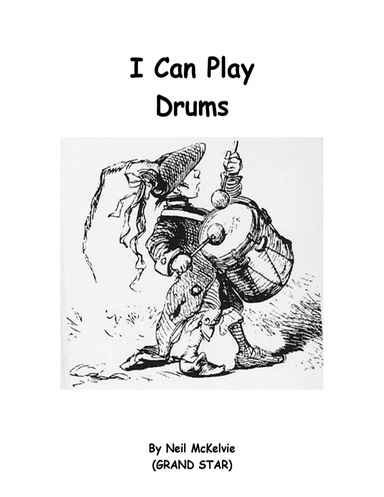

I Can Play Drums is a friendly beginner’s guide that walks the reader through the basics of drumming in simple steps. It starts with listening and feeling the beat, then moves into coordination, timing, practice methods, stick control, tuning, kit setup, and all the little things a new drummer needs to know. It keeps the language light and direct, and it focuses on helping anyone learn rhythm by breaking ideas into small actions that can be practiced anywhere.
The book talks to you like a coach who actually wants you to enjoy the journey. I appreciated how the book treats drumming as something playful, something almost childlike at times. The little challenges, like patting your head while circling your tummy, made me smile. The tone feels encouraging in a way that pulls down the fear that beginners often carry. I liked how it keeps telling you to slow down, relax, and have fun. That landed with me because learning an instrument can feel stressful. This book leans the other way, and that gave me a sense of relief.
I also liked the ideas in the sections about gear and tuning, even though they are simple. The author keeps the advice practical and almost homespun, which made the book feel grounded. There were good reminders to loosen your grip on the sticks and to avoid chasing fancy drum parts before you can hold a steady beat. The honesty there felt refreshing. Some parts did feel long and a bit repetitive, although I get why the author wanted to reinforce certain habits. Even so, the informal tone kept me reading, and I never felt talked down to.
I think I Can Play Drums works best for new drummers, younger learners, or anyone who feels nervous about starting. The writing is easy to understand, and the hands-on exercises make rhythm feel reachable. If you want a book that takes you by the hand and makes drumming feel simple and fun, this one will suit you well.
Pages: 76 | ISBN : 9781105931598

The Meteor Symphony: Stories and Poems
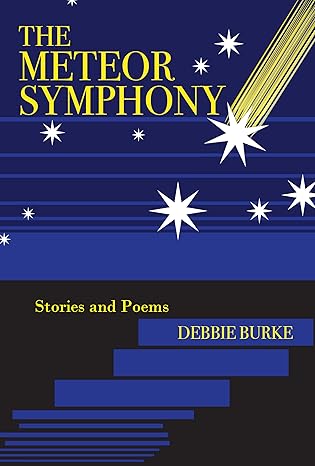
The Meteor Symphony is a colorful mix of short stories, poems, and microfiction, stitched together with music, humor, grief, and hope. It moves from tales of jazz musicians and stolen saxophones to intimate portraits of aging, love, heartbreak, and resilience. Some pieces lean into whimsy, others lean into sorrow, and many hover in the strange, honest space in between. The title story ties it all together with an imaginative search for a lost symphony, but the book itself feels like a symphony of voices, moods, and rhythms.
I enjoyed the range in this book. One page had me laughing at the absurdity of a sax heist, and the next had me sitting with the weight of a widow’s quiet grief. Burke writes with sharp clarity, yet there’s also a looseness in her storytelling that feels natural, like listening to a friend talk late into the night. I loved that she didn’t try to polish away the odd details. People misstep, conversations derail, feelings clash, and it all feels real. At times, the jumps between stories and poems felt a little jarring, but in a way, that’s what made it lively. The collection refuses to settle into one mood.
I also found myself connecting with her fascination with ordinary people. She doesn’t write grand heroes or villains, but flawed, funny, messy people. That resonated with me. Her style is direct but not cold, and she doesn’t shy away from emotions. Some of the poems hit me harder than the stories, brief as they were, because they carried that distilled punch of truth.
I’d say this book is best for readers who like variety, who don’t mind skipping from lighthearted banter to heavier reflections, and who enjoy the intimacy of short-form writing. If you’re open to being surprised, amused, and sometimes gutted all in one sitting, Burke’s collection is worth your time. I’d recommend it to anyone who loves music, who has wrestled with family, or who has ever paused at sunset and felt the ache of beauty and loss in the same breath.
Pages: 114 | ASIN : B0DTJ37FVK

Prodigal Song: A Gen X Memoir of Excess and Obsession in Pursuit of the Rock ‘n’ Roll Dream
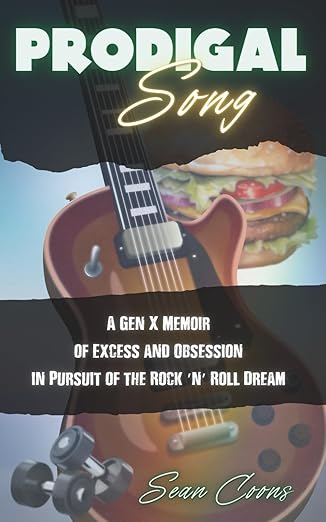
Prodigal Song is a deeply personal and wildly entertaining memoir chronicling Sean Coons’ journey from a chubby, music-obsessed kid in 1980s Los Angeles to a struggling rock guitarist trying to make it in the heart of Hollywood. The book traces Coons’ obsession with rock stardom, his battles with body image and compulsive eating, and the wild misadventures with his band, Song Unsung. It’s a raw look at the pursuit of artistic dreams, the trappings of self-indulgence, and the eventual pull toward redemption and meaning. Coons mixes humor with brutal honesty, all set against a vivid backdrop of ’80s and ’90s pop culture.
Coons’ writing is funny, sharp, and full of heart. He doesn’t try to make himself look cool or mysterious or tragic. He just tells the truth, warts and all. I loved how he could pivot from describing an embarrassing childhood moment to riffing on Van Halen lyrics or unraveling the twisted ethics of rock culture with surprising insight. I found myself rooting for him, even as he made bad choices or spiraled into food binges and self-doubt. It’s rare to find a memoir that’s this self-aware without being self-important.
What hit me hardest, though, were the moments where the glamor faded, and the raw stuff came through. When Coons realizes he’s eaten himself into obesity while chasing his dream, it’s not played for pity or laughs, it’s just sad and real. The way he weaves in spirituality, guilt, and the need for grace without ever getting preachy or stiff made the book resonate on a deeper level. He never quite gives up on his dream, but he learns that the real victory might not be fame at all. That really stuck with me. It made me think about my own ambitions and the things I’ve let define me, for better or worse.
If you’re someone who grew up loving rock ’n’ roll, or if you’ve ever felt out of place chasing a dream in a world that doesn’t seem to care, Prodigal Song will speak to you. It’s perfect for fans of memoirs like Rob Sheffield’s Love Is a Mix Tape or anyone who likes their nostalgia with a side of truth. You don’t need to be a musician to appreciate this story, you just need to have wanted something badly enough to lose yourself in the process.
Pages: 215 | ASIN : B0FG2PFXNT

Words Are Powerful

WORDS TO THINK. OR TO SING. is a collection of poetic meditations delivered in short verses, reflections, and fragments resembling journal entries. What inspired you to write this particular collection of poems?
Words to Think. Or to Sing. was created to connect pop music lovers, curious minds, thoughtful people, and poetic souls through sonorous art, right from its earliest stage. Music artists usually keep their process mostly private while creating, maybe occasionally sharing some behind-the-scenes after everything is ready and available to stream. I wanted to offer a glimpse into my mind and soul from the beginning of the story in an original, special manner instead, and thought that poetic parts of my pop songs in progress, paired with little insights about their meanings, would be a great way to introduce myself.
What was the biggest challenge you faced in putting together this poetry collection?
This publication actually consists of lyric excerpts from pop songs I plan to release one at a time, so it can’t be considered a traditional, classic poetry collection. Modern poetry felt like the closest category to classify it. The biggest challenge lay exactly in this multifaceted nature. Although my songwriting style in general could be described as minimalistic, poetic, and relatable, I had to choose which passages worked well as stand-alone excerpts that could best support this concept of teasing songs while inspiring self-reflection and conversations through selected snippets.
How do you approach writing about deeply personal or emotional topics?
When something catches my attention longer than usual, whether positive or not, I often start to play with words to describe what the situation means to me. It feels like processing or closure, which then, when explored further, can become tuneful. From there, some of these ideas might turn into song concepts, lyric excerpts, and one day, songs to stream. In doing so, I like to use deep but accessible metaphors which come from living life with an open heart and mind. That is my biggest inspiration. For instance, in the excerpt called VANISH, which is about unfulfilled, fading written promises, you can find a delicate interplay between light and rain symbolizing the alternating moments of healing or relief and the recurring storm inside. While both sunlight and tempests consume that piece of paper keeping those promises present and alive, time passes and the words fade as the mind finds its peace. I don’t want to spoil too much, but I hope you will get the chance to read it and maybe one day, even sing some of your favorite lines together with me at the top of our lungs. I think it’s a pretty cool perspective to know that the book is not the end, but just the beginning. Other authors write sequels. I do songs and artistic multimedia concepts from the shared fragments of this work.
How has this collection changed you as a writer, or what did you learn about yourself through writing it?
Deciding to curate and publish this book first, instead of following the usual song-release model, is another testament that I’m not the type for those rushed rides the industry is used to, nor to support a fast-food art approach. That’s why I’m inviting everyone interested to join me in this unique evolving music journey instead. Words are powerful, and if set to music, they become even more memorable and emotional. I want them to linger a little longer and deeply connect with those resonating with all this. Music has always been profoundly meaningful and empowering to me. I would be more than glad and truly honored to become a long-time companion to the readers.
Author Links: GoodReads | Websites
Not with the words, not with the melody, but with a feeling.
Becoming a vision, becoming lines, becoming a complete piece of sonorous truth meant to be shared to unite people who resonate with it.
A mystical, fascinating process you can now be part of.
INTENSIA, a new heartfelt, poetic singer songwriter likely to belong with your favorite pop music companions, is turning the traditional release model upside down, inviting you to look into her soul and mind before anyone else.
Be among the first to witness this spark before her distinctive voice echoes through the world. This unique approach offers an unprecedented glimpse into evolving art, so you can feel and enjoy the essence of her songs before they are even complete.
Dive into this curated collection of lyric excerpts and emotional snapshots from pop songs in progress. Each piece stands on its own as a modern, poetic message, paired with brief reflections about the meaning or emotions behind the words.
It is more than something to read. It is a space to pause, reflect, and connect, with room for your thoughts and reflections too. Write what moves you, what you feel, what you dream. This book and its songs to be are meant to accompany you wherever you go.
For even more space to express yourself, the companion notebook PLACE TO THINK. OR TO WRITE. (ISBN 978-3-911445-02-3) is available as a dedicated space.
WORDS TO THINK. OR TO SING. out 26 June 2025 on Amazon. Paperback (ISBN 978-3-911445-00-9), eBook (ISBN 978-3-911445-01-6).
Join INTENSIA’s free Intense Inside Club at http://www.intensia.music and discover this special music developing experience as it unfolds, where connection begins as songs come to life.
#intensiawords
WORDS TO THINK. OR TO SING.
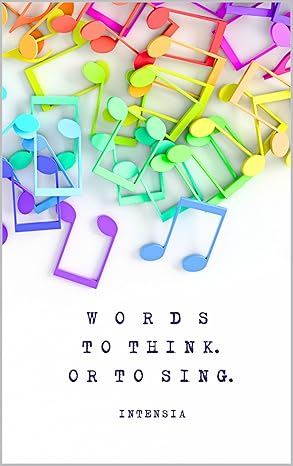
Intensia’s Words to Think. Or to Sing. is a collection of poetic meditations that bounce between philosophy, humor, identity, and raw emotion. Structured as a notebook of short verses, reflections, and fleeting thoughts, the book offers a tapestry of lyrical fragments that read like journal entries or inner monologues caught mid-thought. It doesn’t follow a clear narrative. Instead, it invites the reader to wander, pause, laugh, and ponder. The voice shifts freely, sometimes abstract, sometimes punchy, often surprising. At its heart, this book is a dance between the silly and the sacred, the vulnerable and the absurd.
I enjoyed how unfiltered it all felt. There’s this wild honesty in the way the author jumps from introspective sadness to cheeky self-mockery. One line made me laugh. Another hit me hard. And somehow, they sat right next to each other like old friends. I love when a book doesn’t try to be tidy. This one doesn’t even pretend. It’s messy in a good way. It feels like real thought, like someone actually thinking on the page instead of crafting perfect poetry. That made it feel alive. The kind of alive that’s a little chaotic and a little beautiful.
Some bits felt so random I had to reread them three times to decide if they meant something. And I liked that feeling, though I imagine it could drive other readers nuts. There’s no clear plot, no through-line, and the tone switches gears fast. I personally enjoy that kind of unpredictability. It reminded me of flipping through a notebook someone left behind on a park bench, strange, funny, haunting, and kind of thrilling.
I’d recommend this book to people who like their literature weird and personal and a little rough around the edges. If you’re into poetry that feels more like a whisper or a smirk than a polished performance, you’ll probably love this. Artists, songwriters, or anyone who finds inspiration in broken lines and passing moods will find gold in here.
Pages: 104 | ASIN : B0F9RR5TK9
Wonderment

Animals are Great is a playful, rhythmic children’s picture book, structured like a song, that invites young readers on an imaginative journey through the animal kingdom. What was the inspiration for your story?
The inspiration started with a silly song that was interactive for children. We wanted to explore different parts of the voice by using animal sounds and thought it would be fun to have Animals Are Great as a book that kids could read and listen to at the same time.
What were some educational aspects that were important for you to include in this children’s book?
We are real-life musicians and teachers. Teaching kids voice and movement while pretending to be an animal is a great way to explore different parts of their voice.
What scene in the book did you have the most fun writing?
“Walking through the woods thinking all the time, animals are great, they really blow my mind. Some are furry, some are big, and some are kind of small, animals, oh animals, I like them all.” We love the silliness of this verse and the wonderment it creates.
What is the next book that you are working on and when will it be available?
We are actually working on 2 more sing-along books — I Love That Train and No More Sugar. Also, we are excited to share that the audio track for Animals Are Great is available on Spotify, iTunes, etc. as a single. I Love That Train and No More Sugar song tracks will also be available when the books come out.
Author Links: GoodReads | Website | Instagram | Facebook | Amazon
Literary Titan Book Award: Nonfiction

The Literary Titan Book Award recognizes outstanding nonfiction books that demonstrate exceptional quality in writing, research, and presentation. This award is dedicated to authors who excel in creating informative, enlightening, and engaging works that offer valuable insights. Recipients of this award are commended for their ability to transform complex topics into accessible and compelling narratives that captivate readers and enhance our understanding.
Award Recipients
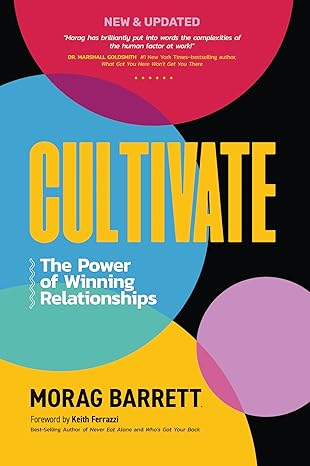

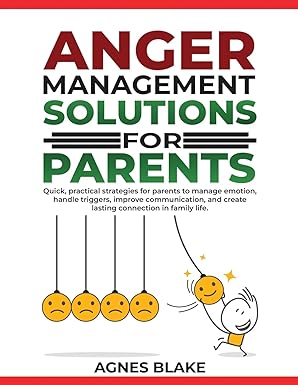

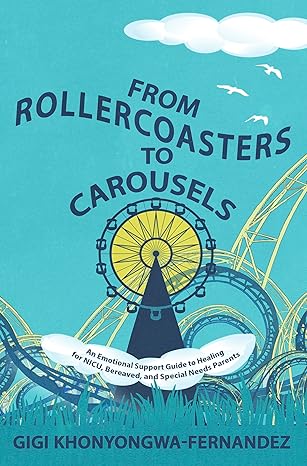



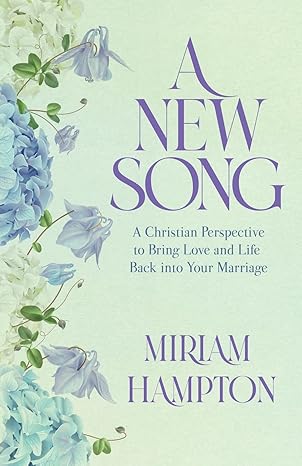











Mythical Creatures: The Worldbuilding Guide to Korean Fantasy by Huck Kahng
Visit the Literary Titan Book Awards page to see award information.
Jazz Crazy

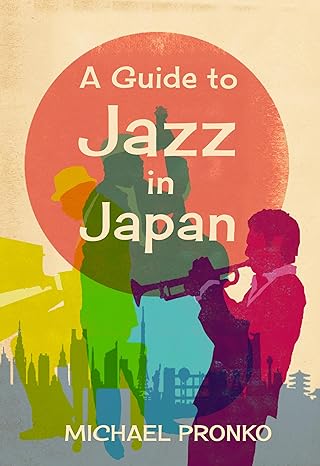
A Guide to Jazz in Japan maps out the complex, pulsing scene of Japanese jazz with detailed entries on clubs, musicians, jam spots, and the culture that surrounds them. Why was this an important book for you to write?
I’ve spent a lot of time at jazz clubs in Tokyo and Yokohama and have always found it fascinating. After writing for various publications, including my own website, I wanted to consolidate the most important information, opinions, and recommendations to share with others. It’s an exciting world, and a side of Japanese culture that most people usually don’t experience. I also find it a real contrast with some other parts of Japanese arts, but in very interesting ways. For me, it’s a culmination of my writing and reporting over many years, as well as my passion for not just jazz, but music in general.
What were some ideas that were important for you to share in this book?
I wanted to share how big the jazz scene is. I focused mainly on Tokyo and Yokohama, but the whole of Japan is quite jazz-crazy. I always thought the jazz scene would gradually disappear as people stayed home to watch TV. I worried the pandemic would wipe out the clubs. However, overall, it has been resilient and is at its most vibrant ever now. I also wanted to show how the character of the jazz scene has changed. It used to be for whiskey-drinking, cigarette-smoking salarymen, but now jazz clubs are filled with all kinds of people, all ages, various interests. Having more women musicians is another significant change. And all the players are better than ever. Japanese culture can sometimes seem imitatively creative, and jazz is certainly an African American invention. However, Japanese jazz improvisation shows a deeply creative spirit that surprises me every time I see it in action.
What makes the jazz scene unique in Japan compared to other countries?
It’s bigger. I’ve been to many large cities around the world, and all of them have a jazz scene, but Tokyo and Yokohama have over a hundred clubs with live jazz every evening. The scale is immense. There are also numerous local neighborhood clubs, which you’d mainly go to if you live close by. Distances are large in Tokyo, too, so having a club near the station where you live is welcome. There is tremendous variation, with all styles and forms of jazz represented in different clubs. Many of them are very inventive, while others are progressive, and a core group remains very traditional. That makes for a great mix and great variety on any given evening. Japanese culture has a traditional undertwo to it, so that forms of expression, music, art, cuisine, film, or whatever, have staying power. Luckily, that applies to jazz too, so you often hear very traditional jazz. However, younger players, and some of the stalwarts from the 1960s, play very cutting-edge jazz. It’s that tension that makes it unique.
What do you hope is one thing readers take away from your book?
I think the book serves as a guidebook, but it’s also filled with observations about the relationship between jazz and Japanese culture. Even if you’re not visiting, there’s a lot in there. As an observer and writer for so many years, there are many things I love here, a few I really can’t stand, but a lot more I find fascinating. I hope the book will provide visitors with an opportunity to explore beyond the usual tourist spots (which are often great, albeit crowded at times) and gain a deeper understanding of the culture from a different perspective. I want readers to understand the creative spirit that’s packed inside Japanese jazz. It’s an interesting side of Japan that’s not exactly hidden, but wonderful to discover.
Author Links: GoodReads | X | Facebook | Website Author | Website Book
With bonus essays on Japan’s unique jazz history, culture, and community, A Guide to Jazz in Japan helps you explore and understand one of the largest and most vibrant jazz scenes in the world. From hip backstreet clubs to talented musicians, the practical information and informed suggestions help make your trip—or your life—in Japan more interesting, fun, informed—and jazzier.



 LITERARY TITAN