Blog Archives
Last of the Pops


Skylar Chase. A rising musician on the brink of stardom, until he vanished without a trace. Legally declared dead a decade later, his disappearance remains one of music’s great unsolved mysteries. Yet his limited body of work didn’t fade into obscurity. Instead, it evolved into legend. Even while he was still alive, his songs hinted at something timeless. Long after he was gone, they continued to inspire, to unite, to heal. Through melody, he created a legacy that outlived him, a legacy rooted in the enduring, transformative power of music.
Last of the Pops is a stunning collaborative graphic novel written by Adam Wilson, with illustrations by Dr. Demus, Dapit Jamus, and Erika Paratore. Subtitled A Mixtape for the Death of Radio, the book operates on multiple levels. At first glance, it’s a meditation on the fleeting nature of technology and how innovation renders even the most revolutionary ideas obsolete. But dig deeper, and it reveals a much more intimate reflection on the emotional resonance of music and the invisible threads it weaves between people.
Centered on the mythos of the fictional Skylar Chase, the story unfolds through a constellation of characters whose lives, at first seemingly disconnected, begin to intersect in unexpected, profound ways. What begins as individual narratives coalesces into a larger, more intricate tapestry. The pacing is deliberate, the writing precise, and the structure artfully cyclical, bringing the reader back to where it all began, but with renewed clarity.
True to the spirit of a mixtape, the novel is eclectic and layered. It blends poetic introspection with visual storytelling, balancing narrative complexity with emotional sincerity. At its heart, it’s about family, identity, belonging, and, above all, the shared experience of sound. Each chapter shifts perspective, and with it, both the visual and written style adapt accordingly. This shifting framework gives the book a dynamic rhythm, mirroring the diverse influences that shape each character’s journey.
More than just a tribute to music, Last of the Pops is a dialogue between artist and audience. It explores the deep, often invisible impact musicians have on the lives of their listeners. The artwork throughout amplifies this emotional depth, enhancing the tone of each scene with thoughtful variation and artistic flair. The visual transitions are not just aesthetic choices; they reflect the evolving inner worlds of the characters.
As a lifelong believer in music’s power to connect, heal, and transform, I found Last of the Pops to be a deeply moving experience. The narrative avoided sentimentality, instead grounding its emotional moments in authenticity. What I expected to be a series of fragmented vignettes emerged as a unified, resonant story. That cohesion made all the difference.
This graphic novel isn’t just about the mysterious Skylar Chase. It’s about all of us, the ways we connect, the memories we hold in song, and the legacies we carry forward through the art we love.
Pages: 234 | ISBN : 978-1960869081

Dylan Dover: Orion’s Quest

Dylan Dover: Orion’s Quest is the second book in a fantastical middle-grade series that continues the story of Dylan, a twelve-year-old warlock who finds himself part of an ancient prophecy tied to the fate of an immortal realm. In this sequel, Dylan and his twin Remy, along with their friend Thea and newly found sibling Seth, try to uncover the mystery of their origins and the powerful forces seeking to control them. It’s a high-stakes magical adventure filled with secret societies, time rifts, magical creatures, and the looming threat of a vampire named Baltazar who’s bent on domination. The story blends the mundane human world with a richly imagined supernatural dimension, making for a fast-paced and emotionally engaging ride.
What I liked was the smooth way Lynne Howard mixes heart and suspense. The opening chapter had me hooked—Reus trembling in front of Baltazar, trapped in a cage, hopeless, and yet somehow clinging to the idea of redemption. It’s grim, but not overly dark. Howard knows her audience. Her writing walks that fine line between magical fantasy and grounded emotion.
Howard also shines in how she handles character dynamics. Dylan, Remy, Seth, and Thea each have distinct voices and believable relationships. One of my favorite parts was when the kids return to Dylan’s old neighborhood.
There’s a lot of dialogue unpacking backstory and prophecy details. It doesn’t drag exactly, but I found myself wanting more action or surprises in those parts. That said, the scene where the kids build an invisible cabin in the forest was very cool. Also, Dylan conjuring up a warm coat and diamond-studded boots for his cat was adorable and imaginative. I loved how the magic was practical, emotional, and at times, pretty funny too.
Dylan Dover: Orion’s Quest is a blast. It’s clever, warm, and packed with both heart and high fantasy. It’s perfect for middle-grade readers who love Percy Jackson, Harry Potter, or Keeper of the Lost Cities. I’d even recommend it to grown-up fantasy fans looking for something sweet, mysterious, and a little nostalgic. If you like magical prophecies, talking animals, and the power of found family, this one’s for you.
Pages: 336 | ISBN : 978-1916966673
What Does Normal Look Like?

The Art Collector’s Wife follows a grandmother and survivor of Auschwitz raising her seventeen-year-old granddaughter, who is desperate to know the truth about her parents, while her grandmother struggles to deal with her grief from the past.
What were some themes that were important for you to explore in this book?
One of the main themes I explored in my book was the idea of what it’s like for a family to survive a world-wide tragedy and somehow come out intact on the other side. What does that new normal look like and how does a young survivor find the old nearly-erased story of her family while writing a new story for herself at the same time? The theme of feeling “othered” as a minority living in a dominant culture was also an intrinsic theme and informed the main characters’ point of view throughout. This is the idea that as a minority you don’t quite fit into the dominant culture but you must strive to assimilate nonetheless, even as you feel the pull of your own culture and identity calling and often coming into conflict with the majority’s influence.
What were some goals you set for yourself as a writer in this book?
I wanted to construct the sound structure of a thriller, but one with a literary voice and a historical context in which the characters were lively and three dimensional, flawed but mostly lovable. I wanted the story to have high stakes and the tension to be palpable and taut with nothing extraneous to the central tension.
What is the next book that you are working on and when can your fans expect it to be out?
I am working on writing a reincarnation crime thriller with aspects of magical realism in four sections, each one of the four elements. It’s in the early rough draft stage and will take at least up to 12 months to finish.
Author Links: GoodReads | Facebook | Instagram | Website
A Fistful of Feathers
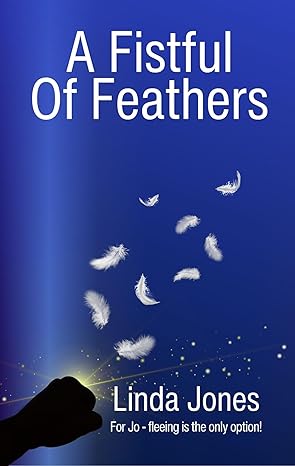
This book hooked me fast. A Fistful of Feathers is a gripping YA fantasy that blends suspense, mystery, and a slow-burning sci-fi twist. It follows Jo Ranson, a kid in a care system that’s more sinister than supportive. Jo is stuck in a brutal cycle of neglect, pain, and confusion, all while dealing with a weird swelling on his neck and he’s not the only one. As the story unfolds, Jo discovers he’s part of something much bigger, and definitely more dangerous, than he ever imagined. With an unrelenting pace and a heavy dose of heart, this first installment of the Fraser Chronicles throws you into a world that feels just a little too close to reality.
The writing is sharp and gutsy without being flashy. The dialogue feels natural, especially between Jo and Dan, his best friend and ride-or-die. There’s a solid rhythm to how the scenes build, each chapter ending just edgy enough to keep you turning pages. I loved the way Jones captures Jo’s voice—sarcastic, wary, and raw. In Chapter One, the way Jo describes the Clinic’s tiles (“eight-hundred-and-twenty-three dingy grey tiles… Seven of them were broken”) instantly shows you he’s observant, stuck, and a little obsessive. It’s those little details that make him feel real. Also, the first interaction with Amy, where they bond over their shared condition, is subtle, sad, and full of the kind of resilience that sneaks up on you.
Without spoiling too much, there’s something growing inside Jo. Something literally. And the scenes where his back shifts and the pain surges, it’s not just body horror, it’s metaphor. You feel the panic. One of the standout moments for me was when Jo, after fleeing the Clinic and hiding in a cave, wakes up to find something fluttering under his skin. It’s terrifying and kind of beautiful, which is a weird combo that Jones pulls off well. And then there’s Dan, the friend we all wish we had. Funny, smart, and fiercely loyal. His plan to disguise Jo as an old woman to escape was ridiculous but genius.
If you like fast-paced reads with a gritty edge and a beating heart, this one’s for you. It’s perfect for teens who love stories that flirt with dystopia but stay grounded in human connection. Think Miss Peregrine’s Home for Peculiar Children meets The Maze Runner with a pinch of British grit. Adults who like YA with real stakes and emotional depth will enjoy it too. I can’t wait to see where this series goes next.
Pages: 257 | ASIN : B0DCSFQXVP
Raven’s Legacy (A Jonah St. Clair Mystery)


Raven’s Legacy is an atmospheric mystery set in the remote Alaskan village of Koloshan in 1980. At the center is Jonah St. Clair, a war veteran and former LAPD officer turned village cop, who’s suddenly tasked with investigating the shocking theft of sacred Tlingit artifacts from the local Native Arts Center. The heart of the mystery is the missing Raven House screen—a symbol of cultural pride and community history—setting off a tense clash between tradition, greed, and the ghosts of the past. As Jonah digs deeper, he uncovers more than just clues; he finds tangled loyalties, unresolved grief, and a reckoning with cultural identity that makes this story far more than your average whodunit.
The opening prologue, where a young Jonah first lays eyes on the Raven House screen, is quietly haunting. That scene stayed with me, not because of flashy writing but because of the reverence and weight Stuart gives to culture and memory. There’s this moment where elders stand around naming each missing artifact in Tlingit—“Káa yooka.όot’ x’όow,” “Naaxein,”—like they’re reading names off a memorial. It’s a grief not just for stolen objects, but for a fading culture being ripped away in broad daylight.
Stuart’s writing is sharp but not showy. It flows easy, like a local telling a story over coffee—personal, thoughtful, no wasted words. I loved how she grounded everything in real place and texture. Koloshan doesn’t feel like a backdrop—it’s a character. The muddy roads, the rusting buildings, the church steeples clashing with old totems. It all feels lived-in and complicated. Stuart also gets small-town politics and family dynamics just right—the way gossip travels faster than police radios, and how history never stays buried. Especially when we get to the elder characters like Harold and Ray, each with their own ideas about what the artifacts “should” mean. It’s not just mystery—it’s a debate about identity, and who gets to decide what legacy survives.
The pacing drags a bit midway through Jonah’s hunt for leads, especially during the logistics-heavy stretch in Juneau. But even then, there’s always an emotional undercurrent. She writes with empathy. There’s tension, yeah, but also a real sense of stakes for these quiet, ordinary people caught in something bigger than them. Jonah himself is a standout. He’s tough, sure, but there’s a vulnerability there—he feels things deeply, and that gives the story its soul.
Raven’s Legacy is a thoughtful, rich, and emotional mystery with a lot of heart. If you’re looking for a mystery with real depth, layered characters, and a powerful sense of place, you’ll get a lot out of this one. I’d especially recommend it to fans of Dana Stabenow or those who love stories that blend culture, community, and quiet suspense.
Pages: 305 | ASIN : B0F3M8VPPP
A Haunting Mix
The Light of Faded Stars follows a retired detective on his deathbed who is reflecting on his final, unsolved case—the brutal murder of a young woman. What was the inspiration for the setup of your story?
The setup for The Light of Faded Stars emerged from a blend of literary influences, personal observations, and a deep sense of duty to honor my friends’ experiences. Stylistically, I was heavily inspired by the works of American writers like Cormac McCarthy, William Faulkner, Jack Kerouac, Ernest Hemingway, F. Scott Fitzgerald, John Fante, J.D. Salinger, and Jack London. Their mastery of raw, evocative prose and their ability to portray the complexities of the human spirit left a lasting impression on me and shaped the tone and style of my novel.
The idea for a crime story took root as I explored Saint John, often called Fog City. Its streets, steeped in a haunting mix of faded grandeur and lost promises, struck me as the perfect setting for a noir narrative. Despite its challenges, Saint John is a city on the cusp of renewal, and that tension between its past and its potential added depth to the story’s backdrop. In this place, shadows conceal untold stories, yet hope flickers on the horizon.
I also wanted to weave in a backstory about Afghanistan as a tribute to my friends who served there. While I served in the military, I didn’t deploy to Afghanistan, but I witnessed its profound impact on those who did. Including this element felt like a duty to honor their sacrifices and to explore how such experiences ripple through lives and communities. Together, these threads—the literary influences, the atmospheric setting of Saint John, and the Afghanistan backstory—formed the foundation for a tale of mystery, reflection, and remembrance.
What are some things that you find interesting about the human condition that you think make for great fiction?
The human condition offers endless inspiration for fiction, particularly in its messiness and contradictions. One aspect I find compelling is how people wrestle with their pasts—how regret and unresolved questions can linger like ghosts. In The Light of Faded Stars, the retired detective, facing his final days, is consumed by his last case with Marcel, his partner: the brutal murder of a young woman with such promise. This allowed me to explore the human yearning for closure and the burden of carrying unfinished business to the grave, and to tie it all together with the unfulfilled promise of the city.
Another fascinating element is the tension between memory and truth. As the detective revisits his life, he grapples with his recollections of the case, questioning what’s real and what’s colored by his biases. This mirrors a universal struggle—how we reshape our stories over time, often blurring the line between fact and perception, and how many things fall in the cracks of unremembered time. I think it ties well with the life of small-town folks. There are whispers and stories about everyone, and people’s reputations become more real than the real person sometimes. I wanted my narrator to be from a village like mine, where memory and truth can be two separate things.
Finally, the enduring impact of trauma captivates me. Whether it’s the detective’s decades-long career in law enforcement or the Afghanistan backstory reflecting my friends’ service, trauma shapes people in profound, often invisible ways. It influences their choices, relationships, and sense of self, making it a powerful lens for fiction that resonates with readers on a visceral level. And I wanted to explore the gritty outlook of hard-boiled characters in a philosophical and poetic way, which the reviewer noted and truly appreciated.
What were some themes that were important for you to explore in this book?
In The Light of Faded Stars, I wanted to explore themes that reflect the weight of a life fully lived. Regret stands at the forefront. The detective’s curse is that he meets the body before the person and only uncovers the humanity of his victim as he goes along. Basically, he is always too late, and that has to affect his psyche and outlook.
Another key theme is the passage of time. On his deathbed, the detective feels time slipping away, heightening his urgency to make sense of his past. Time is a palpable force in the story, underscoring how fleeting opportunities for resolution can be. Aging is a universal reality, and by exploring that subtheme, I wanted to offer an answer as to the best way to approach it. In my book, I did not shy away from darker themes, since literary fiction is not just there to entertain but also to help us confront real problems.
The search for closure ties closely to this. The case is an open wound—not just for the detective but for everyone touched by the crime. It extends itself like dominoes in multiple directions and affects various characters. I wanted to explore how people chase that elusive sense of completion and what happens when it remains out of reach. In real life, a detective investigation does not necessarily meet a resolution for all its threads. I read and researched about the experiences of real detectives to help me integrate a sense of realism into my investigation narrative.
Lastly, the impact of trauma runs through the narrative. From the detective’s years confronting violence to the Afghanistan backstory, the story examines how such experiences leave lasting marks. These themes—regret, time, closure, and trauma—intertwine to create a portrait of a man seeking meaning at the end of his journey. It makes it an existential novel at the core, but, as the reviewer mentioned, there is some humour, entertainment, and poetry to keep the reader positive and engaged.
What is the next book that you are working on and when can your fans expect it to be out?
My next project is a collection of short stories about the people of Saint John. It will be a fresque of the colorful people of the Maritimes—a vibrant tapestry of characters who embody the region’s spirit, struggles, and resilience. I’ve already written many short stories for this collection and aim to publish it in 2025 or early 2026. One is currently competing in a literary competition in New Brunswick, which is an exciting step forward. I’ll keep my readers updated on progress through my social media, and I’m eager to share these tales with them!
Author Links: GoodReads | Indigo | FriesenPress | YouTube | Amazon
Other Realms

Whispers from the Grave follows a black witch/half-demon and her partner, a homicide detective/necromancer, who are working to navigate otherworldly threats while also trying to raise a child. What was the inspiration for the setup of your story?
When I was writing this book, my niece Aria had just been born (this is where I got the name) and I had already decided by the end of book 3 – Eternity, that Victor and Olivia were going to have a child. Having followed Molly through the whole saga to date, she was always going to continue (and will continue as long as I write in this Saga) As Whispers from the Grave is book 4 in this Saga, the characters have grown within each other. So to answer the question I would have to go back to Sekhet, the 1st in the Saga.
Born and reared in Ireland, I grew up within the folklore of ghosts, witches, entities from other realms, and yes heaven and hell. My inspiration came from my want to create a world within our own, which to some is a real thing. I wanted to delve into a world of supernatural beings while navigating through it in a way I believe it would be. My fear of hell from a young age allowed me to really imagine what it is to be there, those holy crap moments that test your resolve.
Whispers from the Grave allowed me to concentrate on some of my favourite characters, and branch out beyond what they have already brought to the table.
What character did you enjoy writing for? Was there one that was more challenging to write for?
My favourite character to write is Joe, since the beginning he has been the one to lighten the mood. The hardest in Whispers from the Grave was actually Olivia. As a human caught up in Victor’s world, trying to bring her into his supernatural life was in some ways tricky. I wanted her to keep her human side, the side that refused to accept anything out of the ordinary, especially the knowledge that Victor not only seen ghosts but could speak with them. Something as a human and not of his world leaves her terrified for her daughter.
In fantasy novels, it’s easy to get carried away by the magical powers of characters. How did you balance the use of supernatural powers?
Balancing was easy. The idea that a supernatural is simply just a powerful being is just that – an idea. Werewolves, witches, necromancers, seers, and vampires all have a human side. It is keeping that side of them alive within their characters and that in itself is not difficult.
Where do you see your characters after the book ends?
I see them in book 5 🙂
Author Links: GoodReads | Amazon | X (Twitter) | Facebook | Website
In a world of supernatural beings where boundaries are pushed beyond the realms, Victor (a homicide detective and necromancer) and Olivia grapple with the revelation that their newborn daughter is not without reach. With the aid of his childhood friend Molly, a black witch with demon bloodlines, Victor has no choice but to allow and support her taking control in a bid to fight off Lilith and a black witch from the land of Fairies. The Glaistig, an ambivalent figure both malicious and benign in nature, sees Molly tapping into her powers, although fearful for Aria’s safety, is always excited to delve into ancient spells and rituals.
News of a teenage witch’s demise at the hands of a vampire, leaves tension and mistrust the Coven feel in their connections, within the supernatural world.


 LITERARY TITAN