Blog Archives
A Deeply Personal Look

Nothing So Broken is a heartfelt memoir that weaves together family, friendship, and the long-lasting effects of war across generations. Why was this an important book for you to write?
This is a deeply personal book for me on multiple levels. My father was a Vietnam Veteran, and for most of my life I had little understanding of what he—and so many others—had endured. They rarely spoke about their experiences. Instead, they carried their trauma quietly, doing their best to protect their families and communities from the weight of it. It wasn’t until I began writing this story that I realized just how profoundly the Vietnam War had shaped my father’s life and, in turn, my own. With the remaining Vietnam Veterans now reaching their final years, preserving their stories feels more urgent than ever. We need to remember, to bear witness, and to ensure we never repeat the same mistakes as a nation.
I also wrote this book to honor a family that has been part of my life for as long as I can remember. The father served three tours in Vietnam and one in Korea, while the mother raised five boys at home. I still don’t know which of them had the harder job. During my turbulent adolescence, the second youngest son became like a big brother to me. When he was twenty-one, he was crippled in an industrial accident, a tragedy that shook their family and our entire community. His life, and the lives of his parents, were forever changed. This book is my way of honoring their resilience, sacrifice, and the decades-long struggle they’ve carried with grace. I hope this memoir gives them the recognition they deserve.
What were some ideas that were important for you to share in this book?
I wanted to show that wars don’t end with treaties or proclamations. They end in living rooms, hospitals, and family histories and their consequences echo through generations. The Vietnam War is a powerful example of this because of the long-lasting physical effects of Agent Orange. Even fifty years after the war officially ended, it still shapes my life every single day.
I also wanted to explore what perseverance looks like in its most extreme forms. Traumatic Brain Injury. Agent Orange poisoning. These aren’t the kinds of challenges most people encounter, and yet some individuals face them head-on. While writing the book, I was dealing with my own struggles and found myself constantly thinking about my father and my friend—how they managed to survive, and even rebuild, despite profound and permanent disabilities. Their resilience continues to inspire me, and I hoped to share that strength with readers.
What was the most challenging part of writing your memoir, and what was the most rewarding?
The most challenging part of writing my memoir was weaving together three stories across three different timelines. Abigail Thomas’s brilliant memoir, A Three Dog Life showed me that I didn’t need to be rigid about time or sequence. I could move back and forth between moments in each story to create a natural rhythm for the reader. Narrative flow mattered far more than strict chronology. Still, when the book came out, I worried that the shifts in time might confuse readers. So far, no one has had trouble following it.
The most rewarding part has been the response from my family, friends, and community. Many readers now see the love and respect I have for my father and my childhood neighbors. On a broader level, it has also been rewarding to hear from folks who are learning about the Vietnam War, and how poorly our veterans were treated for decades afterward. Being able to help share their plight—and to honor my father’s experiences in particular—has been profoundly gratifying. I’m very grateful that he trusted me with his story.
What do you hope is one thing readers take away from your story?
I hope readers come away with a deeper understanding of resilience. We all face challenges. Most are the everyday struggles that, in their own way, help us grow and move forward. But every so often, life hits harder than we can withstand. Something breaks. Our plans are demolished, our sense of self is shaken, and we’re left standing in the wreckage asking, “What now?”
I hope my story offers a meaningful look at how two people confronted that moment and found their way through it.
Author Links: Facebook | Website
In the fall of 1990, Steven Bott was finishing up a day at work when the unthinkable happened. Several weeks later he woke up in a hospital bed with no memory, physically and cognitively crippled. He was 21 years old.
These stories are connected through Chris Richards, Larry’s oldest son and Steven’s close childhood friend. The immense challenges that followed both men would haunt Chris, shaping his life. It wouldn’t be until many years later, when faced with his own crisis, that he would be able to look past his fears and grief and find inspiration within their broken lives.
Recommended by US Review of Books
Literary Titan gold award
The Path from Hell to Heaven: The 2 Sided Spiral of the Ego
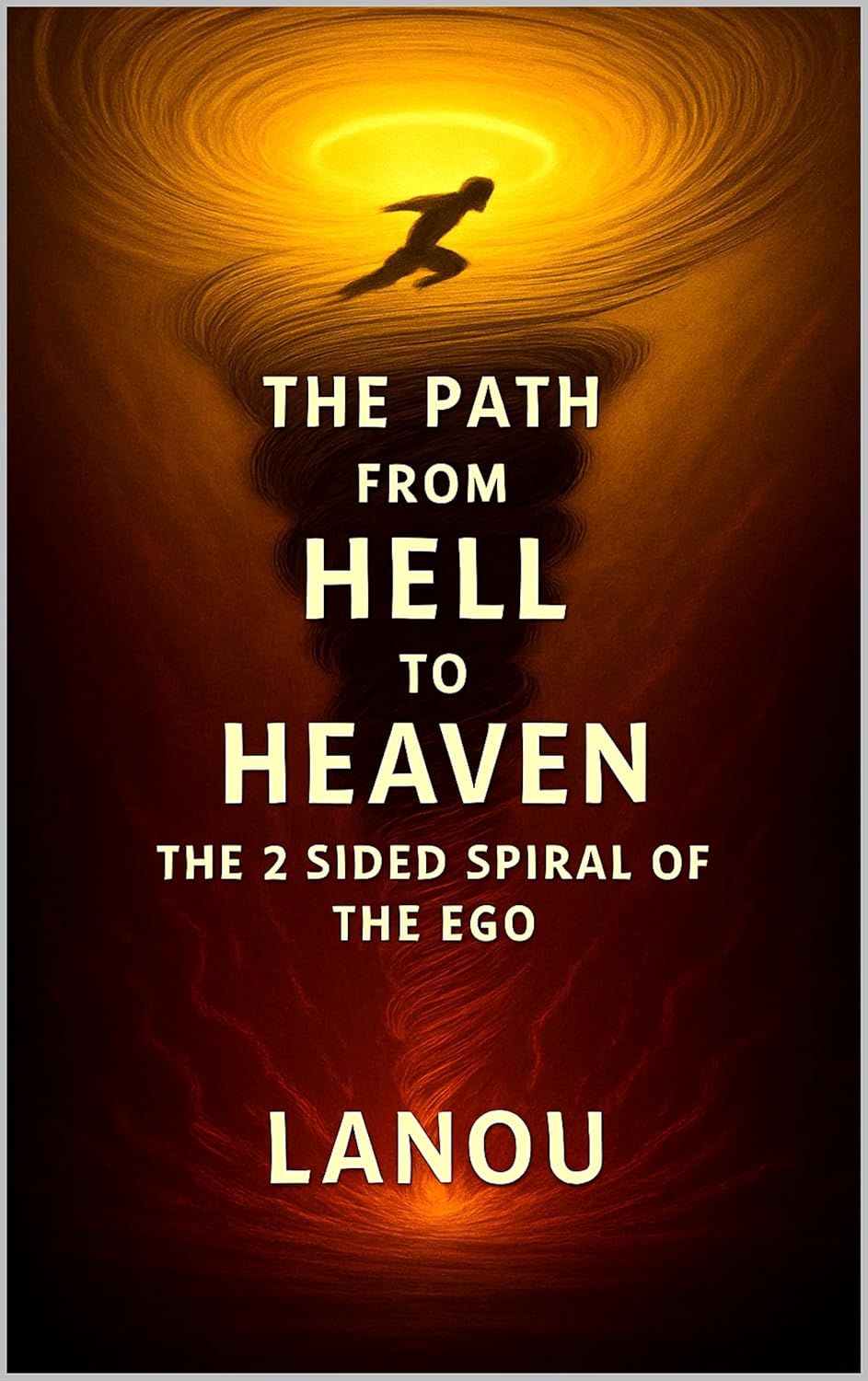

This book is a philosophical and psychological map of the ego, tracing how individuals, groups, and societies spiral downward into “Hell” through fear, shame, and denial, and how they rise toward “Heaven” through trust, openness, and renewal. It’s written like a guide for self-awareness, where the ego’s descent, wound, shell, mask, illusion, collapse, and denial are mirrored by its ascent through trust, openness, adulthood, mastery, and renewal. Each section builds on the last, connecting personal trauma to collective dysfunction and, finally, to global healing. The language is clear and rhythmic, sometimes poetic, and the structure moves like a spiral itself, repeating ideas but deepening them each time.
I liked how direct this book is and how it pointed to familiar pain without drowning in theory. The writing style blends psychology and spirituality without turning preachy. I could feel the author’s intention: to wake readers up, not to comfort them. Sometimes the simplicity of the prose makes it cut deeper than expected. It’s not a book that flatters, it exposes. At points, it felt like being called out and held at the same time. The “spiral” metaphor worked for me; it explained so much of what people repeat in life, from personal self-sabotage to entire societies collapsing under pride and denial.
The book’s tone is confident, almost absolute, which can feel heavy when you’re already raw. The ideas are strong, but their repetition across individual, group, and world scales sometimes blurs the freshness. Yet even then, I found myself underlining lines, rereading them, and thinking of people I know who live both spirals at once. The message that Heaven and Hell are not destinations but daily states of ego, sticks.
I’d recommend The Path from Hell to Heaven to people who crave clarity more than comfort. It’s for readers who think deeply about healing, leadership, and the way our inner wounds ripple into culture and politics. Therapists, activists, or anyone burned out on shallow self-help would probably find it bracing. It doesn’t tell you what to do; it shows you what you’re already doing. And if you’re willing to face that, it can be liberating.
Pages: 151 | ASIN : B0FT5HM9RS

Garden Quartz and Paper Flowers
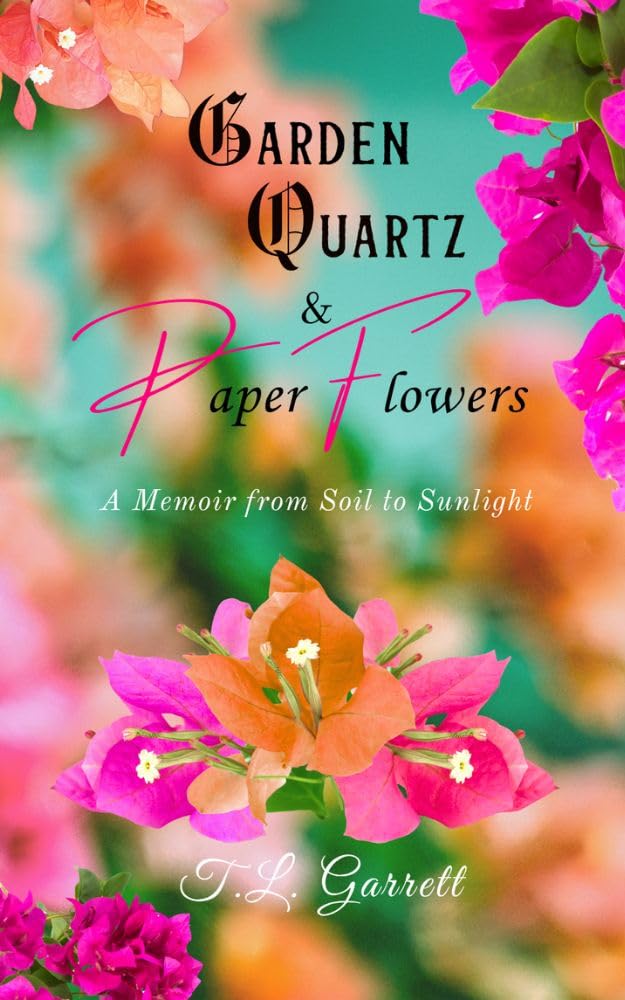
T.L. Garrett’s Garden Quartz & Paper Flowers is a raw and unflinching collection of stories and poems that trace the life of Calla, a girl navigating the deep scars of trauma, abuse, and healing. The book reads like a patchwork of memory. Each chapter a petal torn from her past, revealing a life marked by generational pain, silence, and survival. Garrett writes in a style that blends memoir and fiction, pulling readers into scenes that feel heartbreakingly real. The imagery of flowers, roots, and stones threads through the work, symbolizing growth from ruin and the fragile beauty that comes from endurance.
The writing is heavy with emotion, but there’s a strange softness to it too. A tenderness that lingers even in the ugliest moments. Garrett doesn’t hold back, and it shows. The prose feels like a scream written into poetry. I found myself pausing often, sometimes just to process. There’s a rhythm in her storytelling that’s both jarring and intimate. Her voice feels lived-in, like someone telling a truth they carried for too long. Some passages are uncomfortable to read, not because of how they’re written, but because of how real they are. You can feel the child’s confusion, the teenager’s anger, and the adult’s reckoning all colliding in one soul. It’s unsettling. It’s human.
What struck me most was Garrett’s way of turning pain into purpose. She doesn’t ask for pity. She asks for understanding. The book dives into spiritual themes like healing, intuition, and forgiveness, but never in a way that feels forced. Her honesty feels sacred. I loved how she wove resilience through the narrative like a vine wrapping around broken glass. It’s not a perfect book in a technical sense, but that’s exactly what makes it so powerful. Her writing feels like it’s bleeding onto the page, and yet, there’s beauty in every wound.
Garden Quartz & Paper Flowers isn’t for the faint of heart. It’s for readers who have lived through darkness and clawed their way toward light, or for those who want to understand what that fight looks like. It’s for anyone who believes survival itself is an art form. If you want something real, something that cracks you open and reminds you what it means to be alive, this book is worth every page.
Pages: 258 | ASIN : B0FJ4XM2JL
First-Hand Knowledge

Reach Out with Acts of Kindness is a heartfelt and practical guide offering compassionate, straightforward advice on how to support people facing illness, grief, or crisis. Why was this an important book for you to write?
After going through a traumatic time, I felt called to write this book. I could not not write this resource in which I share my passion for reaching out to others in hardship. We will all face obstacles and hurdles throughout life, and support from family, friends, acquaintances, coworkers, etc., is vital for those hurting attempting to move forward.
I appreciated the candid nature with which you told your story. What was the hardest thing for you to write about?
I am a private person, so sharing my feelings with readers was the hardest part of writing the book. Those who are deeply entrenched in a troubling period or have gone through a tumultuous time can relate to the many mixed emotions I express in the book and that anyone in crisis may experience. There were many dark, unsettling instances too personal to include that were left out, in respect for my family.
What were some ideas that were important for you to share in this book?
I share first-hand knowledge of what may help and what may not help those struggling, and also include examples from others who endured trauma, regardless of the circumstance or predicament. Specific ideas and suggestions to lend support are featured. I’m a firm believer that everyone has a gift, whether it’s picking up the phone to touch base, sending a thinking-of-you card, delivering a meal, completing an errand, mowing the grass, etc. I emphasize lending support in an area that is most comfortable and easy for the giver. Readers are invited to consider what their gift may be.
Could you tell me what one thing you hope readers take away from Reach Out with Kindness?
The goal of Reach Out is for readers to understand the importance of reaching out and connecting with anyone struggling with simple acts of kindness.
Author Links: GoodReads | Website | Instagram | Amazon
At some point in life, everyone will face a roadblock, obstacle, or will be touched by someone experiencing a challenging, tumultuous period. No one is immune to struggles, but outsiders are often unsure how to best offer comfort and support.
Reach Out is a call to action for creating a culture of compassion and empathy by illuminating how to be there for others when they need it the most. This relatable resource highlights specific ways to help others in crisis as well as the aftermath. Everyone has a gift to offer, whether it is just picking up the phone to touch base, sending a card of concern, delivering a meal, mowing the grass, or other helpful acts. What is your gift?
The Art of an Enlightened Woman
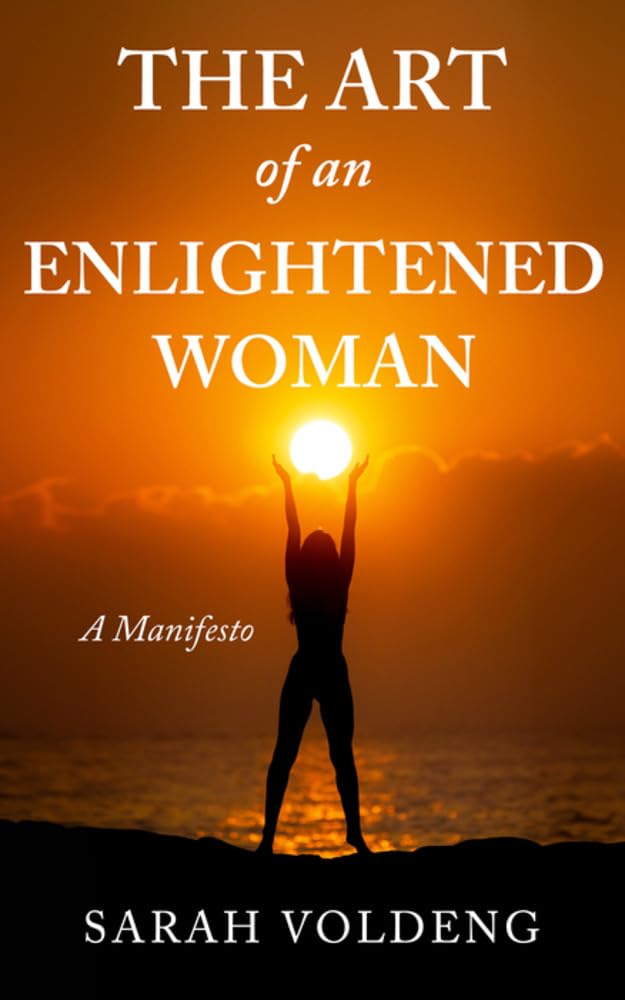

Sarah Voldeng’s The Art of an Enlightened Woman: A Manifesto is both a guidebook and a mirror. It reflects back to the reader the quiet strength and potential buried beneath layers of fear, expectation, and self-doubt. Through chapters like The Art of Empowerment, The Art of Boundaries, and The Art of Independence, Voldeng weaves philosophy, psychology, and personal insight into a tapestry of wisdom designed to awaken self-awareness. The book reads like a conversation with a mentor who knows when to challenge and when to comfort. It’s about rediscovering the self, what it means to be whole, to live with purpose, and to carry both grace and grit into every part of life.
The writing feels personal, not preachy, as if Voldeng were speaking from her own experience rather than theory. She connects ideas from ancient philosophy to modern struggles with a rare clarity. I found myself pausing often, not because the prose was heavy but because the ideas were. Her blend of compassion and accountability resonated with me. When she writes about responsibility and choice, I felt a kind of uncomfortable recognition. She doesn’t let the reader hide behind excuses, yet she never shames. There’s an honesty that feels refreshing. The mantras at the end of each chapter linger in the mind like quiet prayers, simple but powerful reminders of who we want to become.
At times, the tone leans toward the instructional, but it’s balanced by warmth and sincerity. Voldeng’s background in holistic health and psychology shows in her structure; she builds each chapter like a progression, a series of practices for the soul. What moved me most was her insistence that enlightenment isn’t something you find in a temple or through perfection, it’s in how you live, how you treat yourself, how you take ownership of your choices. The mixture of ancient wisdom and modern sensibility feels grounding. I could sense her belief that empowerment isn’t loud; it’s steady.
The Art of an Enlightened Woman left me both calm and stirred up. It’s the kind of book you return to when you’ve lost your footing, or when you need to remember your worth without apology. I’d recommend it to anyone, especially women, who feel stuck between who they are and who they want to be. It’s not just for readers interested in self-help; it’s for anyone craving a deeper connection to themselves.
Pages: 149 | ASIN : B0F5RPXP59
I Love the Me I See In You
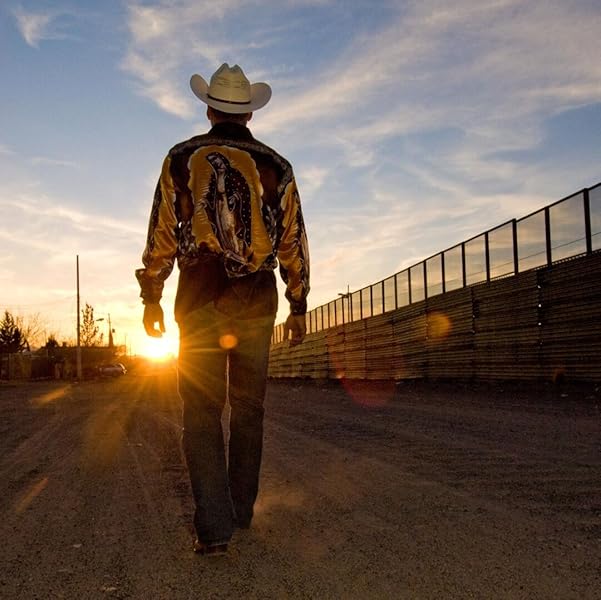
In Hope on the Border, you address existing misconceptions surrounding the US–Mexico border and offer an honest look at life in this perilous area. Why was this an important book for you to write?
America is in trouble. We are more divided and unhappy than ever. In the 2024 World Happiness Report, people under 30 in the U.S. ranked 62nd globally out of 143 countries in happiness and life satisfaction. And this abysmal ranking is plummeting. Suicide is now one of the leading causes of death for American preteens (ages 8–12). How can this be when roughly 95% of the planet is financially worse off than the average American?
(Of interest, Mexico ranked 25th in the 2024 World Happiness Report.)
At our four-decade-old Rancho Feliz Charitable Foundation, Inc., we have a proven solution, and America needs to know what we have to offer. So I decided to write a book.
Ensnared in technology’s frenetic pace, many youth and young adults in America are experiencing a poverty of purpose, meaning, and connection in an environment of unparalleled abundance. Paradoxically, this poverty fosters the same primal fear, alienation, loneliness and emptiness that haunt the poor and underprivileged in Mexico, on the U.S. southern border. In fact, both have the same negative symptoms, just on opposite ends of the socioeconomic spectrum.
Rancho Feliz’s volunteer program allows both sides of the charitable transaction to be simultaneously donors and recipients, thereby thriving in tandem. In a very real sense, the volunteers feed the stomachs of the poor and, in turn, the poor feed the souls of the volunteers. It’s an equal exchange of energy with no logical end—and it transforms the lives of everyone.
This two-pronged approach of serving the poor and creating purpose for the privileged fosters a symbiotic relationship—one in which givers become receivers and receivers become givers. Everyone benefits equally from the same service transaction. We call this reciprocal giving. Under this operating mandate, we have changed thousands of lives on both sides of the border.
To run a successful volunteer-based charity, the greed of human nature must be recognized and harnessed. In other words, service work is foremost in your best interest, and the recipient benefits as a result.
10,000 years of failed religious teachings have taught us that presenting charity as a sacrifice, an action grounded in lack, doesn’t work.
Rather, Rancho Feliz appeals to the driving force of basic human self-interest. Out of selfishness, a form of altruism blossoms.
This isn’t about helping Mexicans – it’s about helping ourselves (by which the Mexicans get helped in the process). This is a true win-win.
In light of our current situation, Americans need to hear this message now more than ever.
How long did it take to research and put this book together?
“Hope on the Border” is a collection of lessons and experiences I gleaned over 38 years of volunteering on the Mexican border, coupled with a lifetime interest in the workings of the mind. My interest in the mind led me to five expeditions into Tibet’s Himalayan “Hidden Lands of the Blossoming Lotus” A.K.A. “Beyul Pemakö” where I studied with several learned Buddhist monks and indigenous ascetics. I firmly believe that in the arena of the mind, what we believe to be true is.
To this end, I also had an early interest in hypnosis and visualization. In the late 1970’s this fascination led me to the Institute of Noetic Sciences which, in turn, led me to studying eastern philosopher Paramahansa Yogananda and his self-realization teachings. Though Yogananda was a Hindu, this study led me to a profound interest in Tibetan Buddhism. In 1993, I took my Bodhisattva Vow of Compassion directly from His Holiness the 14th Dalai Lama. This experience further strengthened my resolve to help others as a path to a rich and full life.
I attended Buddhist meditation master Chögyam Trungpa’s “Shambhala: The Sacred Path of the Warrior” classes in Boulder, Colorado, and completed all 12 levels of the meditation teachings in 1998. It’s important to me to note that I do not consider myself a Buddhist – rather I am a student of Buddhism and how our minds work.
It has been my experience that meditation changes us. It changes our brains. It changes the way we think and relate to our world and to each other. It breaks down the hard boundaries that separate us. As a life-long meditator, I have experienced this firsthand. Likewise, when I am in service, the distinction between me and you is blurred. I see myself in others.
At Rancho Feliz we have created a venue where our volunteers can see themselves in others less-fortunate. When this true view is mastered, the only logical conclusion is to serve – for in serving others you are serving yourself.
Both meditation and serving others unveil the interconnected nature of all things. This awareness further strengthens one’s resolve to help others as a path to a rich and full life.
And this is what led me to start Rancho Feliz. I began seeing myself in others. I could no longer default to ‘empathic blindness’ as I realized that the only difference between me and the poor on the border was ‘luck’ – just blind luck.”
Did you learn anything in the course of writing Hope on the Border that surprised you?
Yes. I came to understand the difference between the statements, Love thy neighbor as thyself and I love the me I see in you. I learned that the worn-out and ineffectual statement Love thy neighbor as thyself is a gullible and simply impossible moral imperative that doesn’t work. It goes against our basic instincts of self-interest. To love a stranger is treacherous. It’s a dualistic love. It assumes a separateness, a distinction between you and your neighbor. And all divisions invite conflict. All I had to do was look at our border wall for proof of that.
I love the me I see in you, on the other handis the “true view”(as the Buddhists would say) of our human condition. We are not separate and independent from each other. Rather we only exist in relation to, and are dependent upon, everything else as strands in a universal web of cause and effect.
I love the me I see in you is personal and reflective. It concentrates on unity and shared being. It’s about recognition and connection. It’s self-referential – focused on how the other person reflects you back to you. It suggests that when you look at another human being, you see yourself – echoing the same emotions, wants, needs, hopes, joys, and vulnerability of our shared experience. And you love them because they mirror what is familiar in you.
This is love based on recognizing our “oneness” – the sense that you and I are not truly separate. Love here comes from seeing ourselves in the other and recognizing our shared existence – our shared humanity. We’re all in this together. None of us knows exactly why we’re here, yet we’re all doing the best we can with the circumstances we were born into. This is a non-dual love – a love that dissolves the boundary between self and other.
In writing “Hope on the Border” I was forced to define what made Rancho Feliz different from other charities and religions. Working in one of the most divisive atmospheres on earth – the U.S./MX border – made me contemplate deeply what approach to charity is in sync with our basic human nature and what approaches are not. I attribute much of Rancho Feliz’s success to this simple but all-powerful understanding.
What is one thing you hope readers take away from this book?
We all have a hand in the maladies that plague our southern border. And the pain, suffering, desperation, misunderstanding and divisive contempt will continue until such time as we truly take to heart the fact that you can best serve yourself by serving others.
Author Links: GoodReads | Facebook-Author | Facebook-Book | Website-Author | Website-Book | Instagram
The U.S.–México border is more than a line on a map. It’s a place of hardship and resilience, inequity and generosity, division and connection. In Hope on the Border, Gil Gillenwater draws on nearly four decades of firsthand experience to bring readers face-to-face with the realities of the world’s most dangerous migrant corridor—and the hope that still thrives there.
Through vivid storytelling and dramatic photography, Gillenwater reveals the heartache and humanity that define life on both sides of the border. His unflinching accounts expose the shared responsibilities of two nations, while his insights point to a deeper truth: Mexico’s material poverty and America’s spiritual poverty are intertwined.
Readers will discover:
Authentic border experiences free from partisan narratives and media distortion.
Stories and photography capturing resilience and humanity.
Insights into poverty on both sides of the border.
A blueprint for hope through reciprocal giving.
A challenge to reflect on personal responsibility.
Hope on the Border won’t just inform you—it will transform how you see division, compassion, and your own capacity for change. If you’re willing to move beyond comfortable assumptions and discover what truly has the power to unite us, this book will be your guide.
Join the movement. Start reading Hope on the Border today.
$5 of each book’s proceeds will support Rancho Feliz’s life-changing work on the U.S.–México border.
You Can Thrive

Sociomom is a raw and gut-wrenching memoir about surviving a childhood dominated by abuse, manipulation, and the long road toward emotional healing. Why was this an important book for you to write?
It was important to me to author this book not to share my story, but to illustrate that no matter what your past is, where you come from or what your current circumstances are, you can overcome and thrive.
What were some ideas that were important for you to share in this book?
There are several:
- You are not alone in your struggles.
- If you want something different and better in your life you have to try different and better options to heal.
- No matter how hard you try, you can not and are not meant to do it on your own.
- There is no one size fits all approach but you have to lean into physical, mental and spiritual health options to move forward.
- Overcoming trauma and mental health challenges is a journey not a destination.
What was the most challenging part of writing your memoir, and what was the most rewarding?
The most challenging part was having to relive my journey and put all of my “stuff” out there for the world to see.
The most rewarding was the validations from reviews and other feedback how the book has helped others be seen and be inspired to move forward in their journey.
What do you hope is one thing readers take away from your story?
It is never too late, and you are not too broken to move forward and change your path to healing.
Author Links: Website | GoodReads | Instagram | Facebook | Tik Tok | YouTube | LikedIn
A Guide for Reclaiming Clarity

In The Cathedral of Quiet Power, you share with readers your advice for quietly rebelling in order to survive in a world whose systems of power rely on our dependence. Why was this an important book for you to write?
Because most people don’t realize how deeply they’ve been programmed — not by machines, but by systems built to keep them anxious, productive, and compliant. I wrote The Cathedral of Quiet Power for anyone who’s ever felt that quiet dread of “doing everything right” and still feeling lost. It’s a rebellion against that conditioning — and a guide for reclaiming clarity, strength, and self-sovereignty.
I appreciate the candid nature with which you tell your story. What was the hardest thing for you to write about?
The moments when I had to admit I was complicit in my own burnout. It’s easy to blame the system, but much harder to face how ambition, ego, and fear made me play along. Writing those parts felt like stripping myself bare on the page.
Did you learn anything about yourself while writing this book?
That peace isn’t found in control — it’s found in surrender. I used to think strength meant domination: of time, people, or outcomes. Through this process, I learned that real strength is quiet, unshakable, and inward-facing.
What is one thing you hope readers take away from The Cathedral of Quiet Power?
That you don’t need to burn out to wake up. The book is a map for building a life that feels powerful without being loud — grounded, sovereign, and free from the machinery of performance.
Author Links: GoodReads | Amazon
“Raw, poetic, and brutally honest. A manifesto for anyone tired of being managed by the machine.” — Editorial Review
“Bracing, honest, and not for the faint of heart.” — Verified Reader
“Bold, raw, and deeply restorative—a lifeline for anyone burned by the grind.” — Verified Reader
“It’s not self-help—it’s a system override.” — Verified Reader
“A thoughtful roadmap for resilience in chaotic times.” — Verified Reader
THE CATHEDRAL OF QUIET POWER
How to Build an Unshakable Life in a World Designed to Break You
You did everything right.
Followed the rules. Hit the milestones. Played the game.
So why do you still feel restless, anxious, and quietly trapped?
Because the system isn’t broken—it was built to break you.
It rewards noise over depth, compliance over clarity, and performance over peace.
This book isn’t motivation—it’s liberation.
Part memoir, part manifesto, The Cathedral of Quiet Power is the field manual for thinkers, builders, and survivors who refuse to be owned by the machine.
Evan Yoh takes you through the journey from collapse to clarity—
from sleeping in a leaking car to building a sovereign, grounded life on his own terms.
Inside, you’ll learn how to:
See through the illusions that keep you grinding for nothing.
Reclaim clarity in a world addicted to distraction.
Build quiet power—strength without noise, peace without permission.
Live sovereignly, free from systems designed to feed on your weakness.
Readers call it:
“A powerful blend of stillness and strength.”
“A quiet revolution for anyone tired of living on autopilot.”
“Transformational—more truth than most self-help books dare to tell.”
If you’ve ever felt like success came at the cost of yourself,
this book will help you remember who you were before the noise.
It’s not about winning.
It’s about walking free.


 LITERARY TITAN