Blog Archives
Death in the Long Shadows


Death in the Long Shadows is a slow-burn, immersive novel that follows Paul Thayer, an American hunter on safari in Namibia, as he confronts dangerous game, personal fear, and the moral weight of killing. What begins as a traditional African hunting story steadily deepens into a psychological and ethical reckoning. The plot moves through camp politics, tense stalks, and encounters with buffalo, crocodiles, and men who hunt for the wrong reasons. By the end, the book feels less about trophies and more about identity, restraint, and the thin line between respect and destruction.
What I noticed right away was the way Flavin takes his time on the page. He doesn’t rush anything. He sits with moments longer than most writers would, and surprisingly, it worked for me. The opening scene under the baobab tree, with the shadows stretching across camp and the obnoxious hunter bragging by the fire, immediately sets the mood. The prose is dense but deliberate. You can smell dust and gun oil. You can hear insects and distant lions. At times, the descriptions run long, especially during travel scenes or landscape passages, yet they also ground the story in place. Africa here isn’t romantic wallpaper. It feels watchful and indifferent. I found myself slowing down as a reader, which felt intentional, like the book was forcing me to adopt safari time instead of rushing ahead.
The characters are where the book really clicks for me. Paul Thayer is not a swaggering hero. He doubts himself constantly. He second-guesses shots. He reflects on past hunts and missed kills. That internal tension made him feel real. The contrast with Dirk, the loud, cruel client who shoots a tame lechwe named Rufus, is sharp and effective. That scene bothered me in a good way. The casual cruelty of it sticks. Johan, the professional hunter, is another standout. He balances patience, anger, and duty in a way that feels earned. His quiet disgust after the hippo incident and his reaction to Rufus’s death say more than any speech could. I felt frustration alongside him.
The ideas in the book stayed with me longer than the action. Flavin keeps circling the difference between hunting and killing. He does it through dialogue, memory, and comparison. Paul’s reflection on the Idaho deer that eat human-salted grass is a small moment, but sticks with you. So does the recurring discomfort around buffalo, the so-called Black Death. The buffalo are not monsters, yet they are not symbols either. They are just there. Dangerous. Alive. When Paul finally faces them, the tension feels earned because of all the buildup, fear, and hesitation layered before that point. I appreciated that the book never rushes the moral questions or tries to tidy them up.
By the end, I felt quiet rather than thrilled. That feels right. This book isn’t for readers looking for nonstop action or easy heroics. It’s best for people who like reflective fiction, ethical gray areas, and vivid settings. Hunters will recognize the details. Non-hunters who are open-minded will still find a lot to chew on. If you enjoy novels that take their time, ask uncomfortable questions, and let landscapes shape the story, this one is worth the read.
Pages: 98 | ASIN : B0G5LFMBXG

Teach Me How to Die. A Novella and Other Stories


Teach Me How to Die opens with a quiet but striking premise. A small group of strangers gather in a New York rehearsal studio to attend a master class on writing suicide notes. Their teacher, Professor Scott Mirrormord, runs the class with a mix of dry humor, unsettling calm, and sudden flashes of emotion. Each character carries a private storm. The Violinist trembles under his own sensitivity, the Hunter bristles at the world that has rejected him, the Accountant clings to order like a life raft, the Poet aches for beauty, the Loser sinks under the weight of lifelong disappointment, and the Philosopher hovers above them all with cool detachment. Across several sessions, their stories unravel in ways that feel surreal, funny, raw, and sometimes painfully honest. The novella blends this unusual setup with short stories that explore gender identity, empathy, loneliness, and the strange ways people hold themselves together when the world feels inverted.
The writing feels theatrical in the best sense. Scenes move with quick beats, like spotlights snapping on and off, and the dialogue carries a rhythm that made me imagine the characters speaking just inches away. Sometimes the tone shifts fast. One moment I laughed at Scott’s odd habits. The next I felt a sharp ache when the Poet revealed the quiet desperation behind her romantic bravado. The emotions hit hard because author Lisa Monde does not overcomplicate them. She keeps them human. There were times I wanted the prose to hurry because the tension between characters felt so tight it made me restless. Still, that uneven pulse worked. It mirrored the way real people think when they are standing at the edge of something dark and trying to talk themselves back toward the light.
The book treats suicide with seriousness and compassion. It does not glamorize it. It does not trivialize it. Instead, it asks why a person might arrive at such a thought and what might pull them away from it. The Poet’s loneliness shook me the hardest. She sees beauty everywhere, yet cannot see herself reflected in anyone else. I also found myself oddly moved by the Accountant, who tries so hard to appear composed while cracking open from the inside. Even the humor carries weight. It softens the darkness without hiding it. The stories that follow the novella expand the book’s themes in unexpected directions. Some felt warm. Some felt strange. All of them carried a heartbeat that stayed with me after I closed the pages.
Teach Me How to Die would be a meaningful read for anyone who enjoys character-driven stories that ask real questions about why people suffer and how they heal. It is also a good fit for readers who appreciate theater and intimate ensemble pieces. For readers willing to sit with tough emotions and still look for hope, this book will land with force.
Pages: 216 | ASIN : B0FXNNRLR3

True Prosperity and Abundance

Son of Osivirius follows a young pilot who crashes near a rebel base and forms a connection with the family that saves him, leaving him to decide what side of the battle he wants to be a part of. What was the inspiration for the setup of your story?
It was one of those serendipity moments. I was struggling to come up with an idea for a scene writing exercise where the prompt was ‘three characters, all with different goals’. I was getting super frustrated, beginning and discarding idea after idea. Imagine a ‘rip the paper out of the typewriter, scrunch it into a ball, then toss it into the pile littering the floor’ scenario. I’d actually given up for the day and was cooking dinner when I suddenly remembered a short story idea I’d jotted down months before:
“A helicopter pilot in a WWIII scenario crash-lands near a valley belonging to some people who are a bit like the Amish and refuse to be a part of the war effort, but the government is trying to force them into it. They look after him, and when the government eventually comes to their valley, he has to decide what to do.”
Suddenly, neurons were firing in all directions. I combined that premise with the vibes of Avatar, and boom! I had my scene mapped out. Not only my scene, but almost the entire book.
I find the world you created in this novel brimming with possibilities, especially the Masu. Where did the inspiration for the setting come from, and how did it change as you were writing?
I live in a rainforest, and have always been drawn to forest settings, and although I LOVE dragons, I wanted to do something a bit different. Big cats have always fascinated me–their power, elegance, and how they seem to stare into your soul–so giving them wings just seemed like the perfect choice. The intricacies of the world-building took several drafts to refine, but the Masu were the foundation for all the other elements.
I tend to discover things in the process of writing, and it was during the drafting of some dialogue in what was then chapter threed that I had Jayden ask, “How did you tame them?” In that moment, I knew what kind of creatures these were, and I had Flint respond, “We didn’t. They tamed us.” It was definitely not part of my original plan, but it just felt so right, and with those two lines of dialogue, my climax became crystal clear.
The dead zones evolved over the course of drafting. They were there from the start, but I encountered logic problems as I went along. At first, I ‘patch-fixed’ them, but that became more and more convoluted and complicated, which is never a good thing. It was during the beta reader stage that I talked to my daughter about the issues I was having, and that conversation opened up the simple, elegant solution that really brought the world alive.
What were some themes that were important for you to explore in this book?
It was really important to me to highlight a more connected way of living with the world, and letting it be our teacher. We tend to prioritise our comfort above all else, but that comes at great cost. So I really wanted to explore the idea of contentment, and what true prosperity and abundance look like.
I also wanted to explore how fear can subconsciously control us, and that it manifests in different ways depending on things like status, childhood trauma, and personality. Exploration of fear responses also naturally led into exploration of trust and betrayal.
The idea of worthiness was an interesting thing that came up in the process of writing. I know a lot of people struggle with thinking they’re not worthy, but I discovered my characters were acting from a belief that they did deserve more, but their worthiness was unrecognised. That seems to me how all revolutions begin.
Is this the first book in the series? If so, when is the next book coming out, and what can your fans expect in the next story?
There is potential there for a series, but I don’t have any clear plans yet. Right now, I’m switching my focus to a romantic fantasy trilogy. The world-building there also has a great emphasis on connection with the natural world and features a musical magic system.
Author Links: GoodReads | Facebook | Website | Amazon
Fledgling pilot Jayden is one of the first generation to be born on the newly colonised planet of Osivirius. Now he’s determined to get his family out of ‘Wormsville’, the part of the colony where people are little more than numbers. So when Commander Tun offers a huge reward for finding the location of the rebel base, he jumps at the chance.
Nettle hates everything to do with the colony-especially the military arm-and is fiercely protective of the simple, grounded ways of the rebels. So when she and her brother Flint discover Jayden after he crash-lands, she’s ready to slit his throat without a second thought. But as Flint nurses him back to health, Nettle’s antipathy turns to empathy, and then an unwanted attraction.
Jayden, meanwhile, has made secret plans to escape on a Masu, one of the giant flying cats the rebels ride, but when his chance to escape presents itself, he feels torn. His blood family still need him, but the lure of the valley might just prove stronger.
The connection to nature of Avatar and the dystopian political struggle of The Hunger Games meet in this action-packed and thought-provoking science fantasy novella.
Victim and Villain
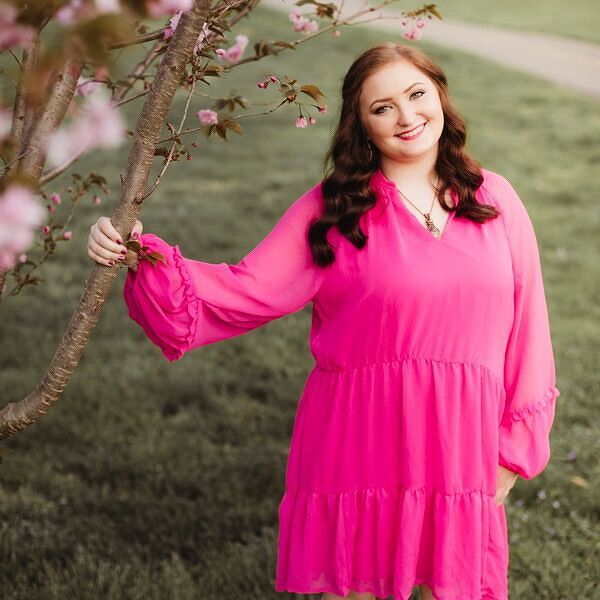
Raven follows a deeply flawed woman whose love affair leads her down a road of dangerous secrets, obsession, and self-destruction. Where did the idea for this novella come from?
Raven is one of, if not the most, intense books I’ve ever written. Delilah was first introduced in EverGreen, the first book in the EverGreen Trilogy, years ago. At that point, she was kind of a classic mean girl character. But even then, I knew that she had a troubled background. Raven is a companion novella that gives the reader some insight as to what was happening to Delilah before the events of Fallen Snow, the last book in the trilogy. It sounds a bit cliché, but sometimes my characters play a part in writing their own stories. Delilah knew what her backstory was, and she led me down the path of writing Raven.
I always take a lot of inspiration from my personal life. Raven is no exception. Abuse and sexual violence are topics that are very close to my heart. Unlike in Fallen Snow, I wanted Raven to feature an imperfect victim that was also a villain. However, I wanted to make it clear to the reader that Delilah’s actions and the way she treated others do not justify or excuse what happened to her. As the saying goes, hurt people hurt people. Like I said, I’m not necessarily trying to make the reader feel sympathy for Delilah or make them view her as less evil. At the same time, I do want to reflect that victims of abuse and sexual violence aren’t always (or even usually) perfect, and that’s completely normal. We can acknowledge that what happens to Delilah in Raven is a tragedy without revoking her status as an antagonist in the EverGreen Trilogy.
Delilah is an incredibly well-crafted character. What was your inspiration for her traits and dialogue?
I am extremely proud of being able to create a character that is as complex as Delilah. The more I wrote and planned the storyline, the more fleshed out and fascinating her character became. As I said before, she started out as your typical high school bully that took things way too far. But as I kept writing, I continued to follow her journey and realized where that ultimately led her. In Raven, we see Delilah at the lowest points in her life. Throughout the story, she thinks that her choices are acts of self-preservation, but they’re actually the opposite. She’s typically a very calculated individual, but her obsession with Silas (which I will make clear is an obsession, not real love) completely throws her off. In Silas, she’s met her match in terms of ability to manipulate. The two of them being in a relationship was never going to work, no matter how hard they tried. In a relationship, there has to be concern and respect for the other person. Neither of them had that. Her traits are those I imagine a person diagnosed with an extreme case of psychopathy, or antisocial personality disorder, would exhibit. All of her dialogue stems from that. Similarly, Silas is a malignant narcissist. Neither of them should be in a relationship, and certainly not with each other.
What do you find to be the most challenging aspect of writing a trilogy? What is the most rewarding?
The most challenging part of writing a trilogy is remembering little details. This can be something as simple as a character’s eye color, etc. The most rewarding is being able to watch them grow. I love seeing my characters transform into what is typically a better version of themselves. Obviously, that wasn’t the case for Silas or Delilah.
Can we look forward to more work from you soon? What are you currently working on?
I recently completed my first adult romance, titled Crazy For You. It’s a clean billionaire romance with an antihero MMC (main male character) and a sweet female protagonist with a heart of gold. They are actually one of my favorite couples I’ve ever written. I’ve never encountered a clean billionaire romance before, so when the story came to me, I decided it was definitely worth writing. I’m currently contemplating a sequel focusing on some of the side characters from Crazy For You and getting an idea of what that might look like. It’s definitely something I see myself writing in the future, but no promises.
Author Links: GoodReads | Facebook | Website
Delilah Banks was never the type of girl to let herself be manipulated by a man. But when she becomes involved with a tempting stranger, Silas, everything changes. Between the events of Moonlit Skies and Fallen Snow, Delilah discovers that no one is above having their heart broken. After all, we are each the hero in our own story.
Raven

The book follows Delilah, a striking and deeply flawed woman whose tangled love affair with Silas drags her into a spiral of obsession, violence, and dangerous secrets. Set between Moonlit Skies and Fallen Snow from the EverGreen Trilogy, the novella shows events through the eyes of a character who is more often the villain than the victim. What makes the story gripping is the way it refuses to soften Delilah. She is not portrayed as misunderstood or redeemed but as fully aware of her own dark choices. Through pregnancy, manipulation, and power games, we see her fight to hold on to Silas while also grappling with her own sense of control, vulnerability, and twisted love.
Reading this book felt unsettling and fascinating at the same time. I found myself both repelled by Delilah and unable to look away from her story. The writing style is sharp and vivid. I could practically hear the click of her stilettos on the floor or feel the electric crackle of her faerie power humming under her skin. The tension in her relationship with Silas is raw, messy, and at times horrifying. I appreciated how the author leaned into that darkness rather than pulling back. It made the whole experience feel more honest, even when it was uncomfortable. At times, I caught myself feeling sympathy for Delilah, only to be reminded moments later of just how ruthless she could be. That push and pull kept me hooked.
What struck me most was how much the book made me reflect on the nature of love, control, and power. There were moments where the drama felt almost theatrical, yet the emotions behind it rang true. The writing doesn’t dress up Delilah’s cruelty with excuses, and that made her inner conflicts more powerful to watch. The pacing leaned on confrontation and spectacle, which left me craving a deeper look at the cracks in Delilah’s armor. But maybe that was the point. She doesn’t allow herself to be fully exposed, even to the reader.
Raven is an intense and dramatic read that doesn’t shy away from the darker corners of human desire and obsession. It’s not a comfortable book, and I don’t think it’s meant to be. I would recommend it to readers who enjoy morally complex characters, stories that blur the line between villain and protagonist, and tales that pulse with danger and passion.
Pages: 158 | ASIN : B0F4RR5L5M
The New Hunger

The New Hunger is a dystopian novella that explores a near-future society fractured by a mysterious event called the Quickening, which mutates certain young people into “Eaters,” who survive on human flesh, and “Healers,” whose flesh regenerates. Narrated by Nora, a haunted young woman hiding her monstrous truth while caught between guilt, revolution, and survival, the book dives into a queer, post-apocalyptic world full of genetic mutation, political unrest, and intimate, blood-soaked trauma. Through hallucinatory parties, whispered conspiracies, and quiet heartbreaks, Margariti crafts a narrative that is equal parts bodily horror and queer resilience.
The writing is visceral, poetic, and strangely intimate, like being let into someone’s dreams. Margariti builds a lush world. The prose is vivid, sometimes dizzying, sometimes raw. The dialogue crackles, the pacing is slow but deliberate, and the emotional stakes feel earned. I felt the hunger, the confusion, the shame, and the aching tenderness in every page. At times, it reminded me of Annihilation and Never Let Me Go, but queerer, weirder, and more guttural.
What stands out most is how boldly The New Hunger leans into its disorientation. The worldbuilding is lush and dreamlike, full of sensory detail and strange beauty, and it embraces a kind of narrative chaos that mirrors the crumbling society it depicts. The mystery around the Virus, the shifting power dynamics, and the blurred lines between friend and enemy all add to the story’s surreal, feverish tone. Rather than laying everything out neatly, Margariti trusts the reader to navigate the confusion alongside the characters. The revolution subplot, though more hinted at than spelled out, adds to this atmosphere of uncertainty. I felt it was deliberate, immersive, and true to the experience of living through upheaval. It left me curious, unsettled, and eager to know more.
The New Hunger was equal parts entertaining and emotionally stirring. It’s a queer, mutant fever dream with a pulse. I’d recommend this book to fans of body horror, speculative fiction, or anyone who’s felt alien in their own skin. If you liked Gideon the Ninth, Black Mirror, or even Euphoria with teeth, this might be for you.
Pages: 156 | ISBN : 9781590217818
The Last Defense: The Fight for Epsilon
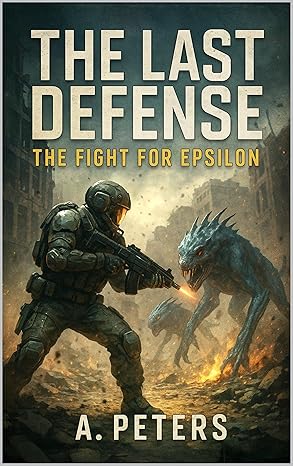
The Last Defense drops us straight into a brutal, crumbling world where Earth’s last hope rests in the hands of worn-out soldiers trying to fend off an overwhelming alien invasion. Major Jonas Cross, our gritty and deeply human lead, fights not just for survival but for family, memory, and something that feels a lot like hope. The story unfolds across the wreckage of Epsilon City, blending desperate last stands, gut-wrenching rescues, and shaky alliances into a tense, high-stakes battle for humanity’s future.
Right from the first chapter, A. Peters pulled me in with raw, vivid imagery. The opening scene where Jonas is crouched behind a slab of concrete, breathing smoke and fear, while Nightfangs hunt the ruins, slammed the urgency into my chest like a hammer. I loved how Peters didn’t waste time with long setups; you’re thrown straight into the fire. When Jonas reflects on his late wife Anna while hiding from monsters, it doesn’t feel forced or preachy. It feels real, like the kind of memory that guts you when you least need it. Peters has a knack for giving action scenes an emotional spine, and that’s a rare trick.
There were moments, though, where the pacing buckled a little under all the world-building. For instance, the section in the starport had so much tactical briefing that it almost felt like I was reading mission notes instead of a novel. I wanted to get back to Jonas, Ethan, and Selina fighting their way through the city ruins. That said, when the story veers into darker territory, like the prisoner experiments Jonas stumbles upon in the factories, it hits like a punch to the throat. That part genuinely made my skin crawl, and that’s a good thing.
What really stuck with me was the relationship between Jonas and Ethan. Their bond isn’t syrupy or melodramatic; it’s stubborn and bruised and heartbreakingly real. When Jonas risks everything to find his captured brother, dragging himself and a whole squad through hell, it made every firefight and every narrow escape count for more. And the moment Jonas finally finds Ethan, broken but alive, was pure gold. Peters writes brotherhood the way it feels: messy, guilt-ridden, and absolutely necessary.
The Last Defense is a grim, relentless ride, but it’s also filled with tiny flickers of hope that feel all the more precious because they’re so hard-won. I’d recommend it to anyone who loves gritty sci-fi war stories that don’t skimp on heart. Readers who appreciate the intense, character-driven science fiction of The Expanse or Halo: Fall of Reach will find much to admire here. Prepare for a gripping experience that demands both attention and emotional investment until the very last page.
Pages: 169 | ASIN : B0DY386H36
Redemption

Heavy Weight of Darkness follows a disgraced former officer given one last chance to redeem himself by hunting down a once-privileged woman turned revolutionary who has become a symbol of the uprising across colonies.What was the inspiration for the setup of your story?
The story continues the story of the Endless Fall of Night from the perspective of Captain Willard Bennett, former captain of the Jefferson Davis where our heroin, Cassandra Kurtz, escaped and started of movement on Mars to rid the fledging colony of imperialism, racist patriarch. In a desperate act to curb insurrection on Earth, space command’s admiralty and tribunal branch offers him redemption in the form of a new mission: track, find and kill Cassandra Kurtz. In return, he will receive his freedom, commission, life extending health care and a return to his former glory. He does find redemption but not in the way he expects.
I find the world you created in this novel gripping and immersive. Where did the inspiration for the setting come from, and how did it change as you were writing?
Drawing inspiration from Joseph Conrad’s Heart of Darkness, the Heavy Weight of Darkness is the sequel to the Endless Fall of Night where questions are answered, lives are altered, and truths come out in the final confrontation between Acting Captain Willard Bennett and the infamous disrupter, Cassandra Kurtz.
What were some themes that were important for you to explore in this book?
Heavy Weight of Darkness takes a look at Dietrich Bonhoeffer’s work that found stupidity to be the driving force of heinous crimes against humanity. It was not mere evil or malice that convinced an educated population in an industrialized, cultured society in the 21st century in the middle of a “civilized” Europe to embrace genocide, accept racism and to practice wholesale fascism, but rather it was good people who suspended critical thinking, believed one small lie after another until the “truth,” irrefutable facts became inconsequential, irrelevant and incidental. Bonhoeffer’s work is cautionary postscript of one of the darkest periods of human history while Heavy Weight of Darkness is a tale of how history can rhyme when it doesn’t repeat.
Will there be a follow-up novel to this story? If so, what aspects of the story will the next book cover?
There is another chapter in the works that will return to Casandra’s world as a new instrument of destruction, XO Robert Lee VI of the Robert E Lee, picks up her trail and is tasked with completing the mission that Captain Bennett abandoned.
Author Links: GoodReads | Instagram | Website | Blog | Second Website
In a desperate act to curb insurrection on Earth, space command’s admiralty and tribunal branch offers him redemption in the form of a new mission: track, find and kill Cassandra Kurtz. In return, he will receive his freedom, commission, life extending health care and a return to his former glory.
Originally enthused, he researches Cassandra’s origins, the once first class, full citizen from the oldest family of the Third Republic turned insurrectionist on Earth and a full-blown terrorist on Mars. But it’s after his investigation of the Delta Quarter, where it all started for Cassandra, that Bennett’s resolve diminishes.
Drawing inspiration from Joseph Conrad’s Heart of Darkness, the Heavy Weight of Darkness is the sequel to the Endless Fall of Night where questions are answered, lives are altered, and truths come out in the final confrontation between Acting Captain Willard Bennett and the infamous disrupter, Cassandra Kurtz.


