Blog Archives
Stoic Empathy: The Road Map to a Life of Influence, Self-Leadership, and Integrity
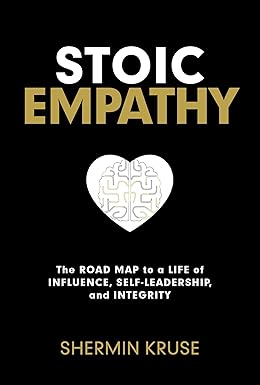

Shermin Kruse’s Stoic Empathy is a sharp and heartfelt exploration of how two seemingly opposing traits, stoicism and empathy, can be merged into a potent tool for influence, resilience, and personal growth. The book mixes personal history, ancient philosophy, neuroscience, and practical advice to introduce the concept of “Stoic Empathy,” the intentional blend of emotional awareness and emotional control. Kruse breaks down cognitive and emotional empathy, offers techniques from both domains, and delivers them through compelling stories, case studies, and reflections from her own turbulent journey from Iran to North America. The message is clear: you can be strong without being cold, and kind without being soft.
What struck me right away was Kruse’s voice. She doesn’t hide behind academic detachment or preach from a mountaintop. Instead, she lays her life bare—stories of war, immigration, trauma, injustice, love, and ambition. And she does it in prose that is raw but composed, often poetic but never indulgent. I felt moved, more than once, not just because of what she lived through, but how she translated those scars into strength. Her writing is both precise and deeply emotional, a difficult balance she pulls off with skill. Kruse somehow made a guidebook feel like a memoir.
Now, in terms of the ideas, some of them hit like a lightning bolt. The way she differentiates cognitive and emotional empathy, then teaches you when to use each, is flat-out brilliant. I’ve read plenty of books on leadership and emotional intelligence, but few are this actionable and easily understood. She doesn’t just give you theory, she shows how it plays out in hard rooms with high stakes. There’s pain in this book. There’s injustice. But Kruse doesn’t wallow. She’s honest about the ugliness in the world, but relentless in her belief that we can navigate it ethically, if we keep both a cool head and a warm heart.
I’d recommend Stoic Empathy to anyone who leads, whether that’s in a boardroom, a classroom, a household, or a movement. It’s especially relevant for folks juggling high-pressure decisions with a desire to stay kind and ethical. But more than that, it’s for anyone who’s ever felt torn between being tough and being tender. Kruse shows you how to be both, and more importantly, how to use that combination to change your world.
Pages: 288 | ASIN : B0D3YVPRX6

Hacking the Hologram: Challenging Age-Old Beliefs & Behaviors on a Journey Through the Illusions of Reality


Stephen Davis’s Hacking the Hologram is a bold and mind-bending exploration into the idea that our reality might not be real at all. Davis doesn’t attempt to prove the theory that we live in a holographic universe; instead, he walks readers through what life would mean if that theory were true. Drawing on quantum physics, spiritual philosophy, religious critique, and personal anecdotes, Davis invites us to question everything—from our sense of self to the very existence of God. It’s part science speculation, part spiritual unraveling, and part rebel manifesto.
Davis writes with the kind of no-holds-barred energy that demands attention, and I found myself nodding, frowning, and occasionally muttering, “Wait, what?” His writing is clear, but his ideas are anything but simple. He’s got guts, taking shots at organized religion, childhood trauma, and New Age optimism with the same irreverence. At times, the bluntness felt refreshing, even freeing. Still, the questions he raises—about whether our suffering has meaning, or whether God is even necessary—are real and raw. He’s not trying to impress physicists; he’s trying to wake you up.
The book sometimes drifts into a swirl of speculation that felt emotionally driven. I admire Davis’s conviction. Some arguments rely on personal pain or pop culture parallels (like The Truman Show), which can be engaging. The narrative loops through theories of simulation, critiques of the Christian God, and the mysterious Demiurge as the possible director of our lives, which is fascinating.
I think Hacking the Hologram is best suited for readers who aren’t afraid to have their worldviews shaken. If you like your spiritual inquiries laced with attitude, doubt, and a wild blend of science fiction and soul-searching, you might find this book exhilarating. For those willing to question what’s real, it’s a trip worth taking.
Pages: 205 | ASIN : B0F7GSCVWJ

Mind Your Growth
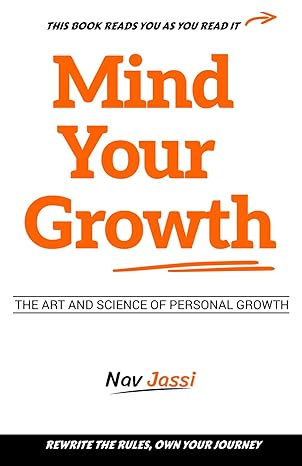
Mind Your Growth is a bold, no-nonsense guide to personal evolution that blends science, philosophy, and some deeply introspective storytelling. The structure is built around five clear phases: understanding yourself, decoding your decisions, defining growth, attracting it, and finally—transcending. It’s not here to pat you on the back. It’s here to shake you awake. Nav Jassi doesn’t hold your hand—he hands you the mirror, points, and says, “Now fix it.”
What got me hooked was how direct and raw Jassi’s writing feels. The preface pulls no punches. It’s basically Jassi saying, “Look, nobody’s coming to save you. Growth? That’s your job.” There’s an unapologetic urgency that runs through every page. I’ve read a ton of growth books, but few have made me stop mid-page and reevaluate my excuses. It’s like the author knows when you’re skimming and slaps your focus back on the text.
Then there’s the section on identity illusion, which I wasn’t expecting to hit as hard as it did. Jassi rips into labels—religion, education, politics—and how we wear them like name tags instead of exploring who we really are. He says, “You are not your title,” and goes on to show how blindly clinging to these labels traps us in other people’s scripts. There’s a moment where he writes, “You must take charge of your own development… not follow someone else’s path.” It reminded me that I’ve been coasting in areas of my life just because it’s what’s expected.
The voice of this book is what really makes it work. It’s not preachy. It’s conversational, weirdly funny, and sometimes poetic. One standout moment? The mind-as-jazz-band analogy, describing thoughts as a chaotic 3 a.m. solo was genius. There’s humor, there’s grit, and there’s soul. I also loved how Jassi connects modern science with ancient wisdom, especially when discussing the spirit as the “quiet engine” that keeps pulling us toward purpose even when life is wrecking us. “Growth by Action” cuts through all the theory and gets real about the one thing most people avoid—doing the actual work. Jassi says that growth isn’t in thinking or planning, it’s in movement, and that resonated with me personally. The chapter’s energy is pure momentum—no fluff, just fire.
I’d say this book is for anyone who’s tired of sugarcoated advice. If you’re in a place where life feels too busy, too noisy, or just kind of stuck—and you want something that pushes you to grow from the inside out—Mind Your Growth is your wake-up call. It’s not just a read. It’s a reset.
Pages: 305 | ISBN : 978-1738347308
What Does It Mean To Be Free?

Russell Chappell’s What Does It Mean To Be Free? is a deeply personal exploration of what freedom truly means, not just in the literal sense, but as a way of living, thinking, and experiencing the world. Through a mix of personal anecdotes, reflections, and philosophical musings, Chappell breaks down the elusive concept of freedom, touching on self-expression, fear, personal growth, and the courage to embrace life fully. Whether recounting his skydiving adventure, childhood dreams, or moments of struggle, he weaves a narrative that is both unique and relatable.
Chappell’s writing style is conversational, almost like a long heart-to-heart with a friend who’s figuring things out as he goes. This makes the book easy to engage with but some passages feel repetitive, circling around ideas that were already well-explored a few pages earlier. His storytelling, however, shines in sections like his skydiving experience. You can feel the nervous anticipation, the rush of the freefall, and the emotional release when his feet touch the ground. These moments are where the book really comes alive, when Chappell isn’t just talking about freedom but living it.
One of the strongest aspects of the book is its honesty. Chappell doesn’t try to present himself as a self-help guru who’s figured it all out. Instead, he openly wrestles with his past mistakes, like the tension with his family over his choices, his fixation on costumes, and the realization that some of his pursuits weren’t about freedom at all, but escapism. The way he gradually pieces together a more grounded understanding of freedom, one that’s less about external thrills and more about internal growth is compelling. The chapter where he compares his obsession with wearing a Morphsuit to his dream of skydiving is particularly insightful. He realizes that while the suit gave him a temporary sense of detachment, true freedom comes from facing fears, not hiding from them.
At times, the narrative meanders, with certain points being hammered home repeatedly. The structure also feels loose, as if Chappell is thinking out loud rather than building a clear, progressing argument. This isn’t necessarily a flaw if you enjoy a stream-of-consciousness style, but if you prefer a more structured philosophical or self-help book, you might find yourself wanting more focus.
In the end, What Does It Mean To Be Free? is for those who enjoy reflective, deeply personal narratives about self-discovery. If you’ve ever felt stuck in life, struggled with self-doubt, or searched for meaning beyond the daily grind, you might find parts of Chappell’s journey speaking directly to you. It’s not a book that hands you a neatly packaged definition of freedom, but rather an invitation to explore what it means for you. And that, in itself, feels like a step toward the kind of freedom he’s trying to define.
Pages: 157 | ASIN : B0CFM7RBJT
Cleave the Sparrow
Some books tell a story. Others drag you into a chaotic, unrelenting experience that scrambles your brain and leaves you questioning everything. Cleave the Sparrow is the latter. It’s a fever dream wrapped in satire, political absurdity, existential horror, and bursts of unfiltered genius. The plot follows Tom, a hapless nobody turned political pawn, as he stumbles through a world of cults, conspiracies, and reality-shattering revelations. With a cast of characters that includes a lizard-skinned scientist, a woman who smells fantastic but may or may not be leading a revolution, and a man hell-bent on proving existence itself is a lie, the book barrels forward like a runaway train powered by hallucinogens and bad decisions.
There’s something hypnotic about the way the book is written. The dialogue is rapid-fire, the narration drips with cynicism, and the absurdity is turned up to eleven. One moment, Tom is navigating political disaster control for a debate where his candidate is outed for a romantic relationship with a coffee machine, and the next, he’s deep in a cave listening to a ten-year-old mutant threaten to cut off his genitals. The pacing doesn’t just keep you engaged, it holds you hostage. The prose shifts between sharp, witty banter and sprawling, mind-bending monologues about the nature of perception and reality. And yet, it never loses its bite. The humor is dark, the satire is ruthless, and the commentary on politics, media, and human nature is as unsettling as it is hilarious.
The concept of tetrachromats (people who can see more colors than the rest of us) expands into an existential metaphor about perception and control. The idea that we only see what we need to survive, and that our understanding of reality is inherently flawed, becomes a driving force behind the book’s most unsettling moments. Tom is thrown into a world where people want to break the system, not by fixing it, but by blowing it up, sometimes literally. And, disturbingly, the book makes a compelling argument for why they might be right. One of the best moments is when Wilder Crick, a lunatic or a prophet (or maybe both), lays out his plan to destroy the cosmic projector that creates our false reality. It’s so ridiculous that it loops back around to being plausible. The book constantly dares you to laugh at its insanity only to make you realize, with a sickening twist, that the joke is on you.
That being said, Cleave the Sparrow is not for the faint of heart. It revels in discomfort. It gets grotesque. It crosses lines, sometimes gleefully. The Howitzer House sequence, where people willingly undergo extreme psychological torture as an entertainment experience, is a stomach-churning look at human masochism and our obsession with “real” horror. It’s sick. It’s fascinating. It’s also an extreme version of things that already exist. And that’s what makes this book so effective. It takes absurdity and stretches it just far enough that you can still see its roots in our own world.
Cleave The Sparrow is for people who enjoy satire so sharp it draws blood, philosophy so deep it makes your head hurt, and humor so dark you feel guilty laughing. It’s for fans of Catch-22, Infinite Jest, and Dr. Strangelove. It’s for anyone who has ever looked at the world and thought, this can’t be real. Because maybe, just maybe, it isn’t.
Pages 300
Unquestioned Wisdom

More Sticks and Stones Falling From the Sky is a collection of poetic musings and prose taking readers on a journey filled with emotions, memories, and philosophical ponderings, all woven into lyrical storytelling. What inspired you to write this particular collection of poems?
I was inspired to write this collection of poems by writing down the things I have wondered about, maybe even the things I have questioned from a philosopher’s point of view. My curiosity got the better of me as I dived deep into my own heart and subconscious mind to find the answers to my questions, I then cleverly crafted these answers into poetry, 33 poems of unquestioned wisdom as I challenge the reader to unravel the mysterious meaning of my words.
How did you go about organizing the poems in the book? Was there a specific flow or structure you were aiming for?
The organization of my poems is not random, I just try to make it seem that way to catch the reader off guard when they read one poem and then turn the page. I made sure that my first poem in my book was something simple enough for most people to relate to, the season of autumn.
The reader has to decide for themself if I am talking about the autumn season or actually talking about a beautiful woman named Autumn. The reader must make a choice because I give them a choice.
How do you strike a balance between clarity and ambiguity in your poetry?
The line between clarity and ambiguity is tricky, I am very careful with how I balance my poems so the reader intentionally feels confused at times, but they slowly begin to understand the deeper meaning of my stories as their curiosity gets the better of them. I balance clarity and ambiguity similar to an acrobat crossing a wire with their feet. As I lead the reader on a dangerous journey, I throw a stick into their hands to help them across.
What is the next book that you are working on and when can your fans expect it to be out?
The next book I am working on is called Waves From a Mermaid’s Violin and it should be available to my fans by sometime next year in 2026.
Author Links: GoodReads | Amazon
As you read the 33 poems Andrew has crafted for years in this fine collection, you will see the illustrations behind his poems, illustrations drawn and painted by various talented artists.
You will face sunshine, rain, storms, wind and dangerous ideas until you reach the island where fact and fiction live in harmony, but only you can take the first step on this adventure by reading MORE STICKS AND STONES FALLING FROM THE SKY by Andrew Daniels.
The Science of the Afterlife
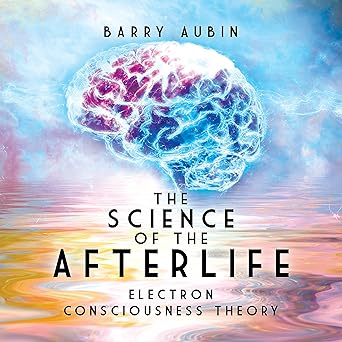
Barry Aubin’s The Science of the Afterlife is a bold attempt to merge science, religion, and philosophy into a single cohesive theory of existence beyond death. He introduces the “Electron Consciousness Theory,” arguing that human souls are made of electrons and that our consciousness persists after death as an electrical presence in the universe. Through a mix of scientific speculation, religious references, and personal insights, Aubin builds a case that the afterlife is not just a matter of faith but of physics. He challenges readers to rethink what it means to exist and whether death is truly the end.
Aubin’s writing is both ambitious, which makes the book engaging yet, at times, overwhelming. He presents compelling questions, like if energy cannot be destroyed, then where does our consciousness go? And he supports them with theories drawn from thermodynamics and neuroscience. One of the most intriguing parts of the book is his exploration of how electrons store memory, suggesting that our thoughts and experiences may survive in a form beyond our physical bodies. This idea resonates with my own beliefs about the afterlife. If souls are energy, and energy continues to exist, then it seems only natural that we persist in some way. His discussion on how electrons might disperse and communicate after death made me pause and reflect on the idea of spiritual presence.
While I appreciate his effort to explain the afterlife through physics, there were moments when his reasoning seemed more intuitive than evidence-based. The connection between morality and the electrical charge of a soul was an interesting concept and left me wondering. Still, his passion for understanding the spiritual world through scientific means is admirable.
One of the most thought-provoking aspects of the book was its discussion on telepathy and spiritual communication. Aubin suggests that electrons within the brain may allow for an exchange of thoughts beyond death, potentially explaining ghostly encounters, divine voices, or even prayer. The idea that we are all part of a vast electrical network, constantly interacting on some unseen level, aligns with many religious and spiritual beliefs. While mainstream science may dismiss such claims, I found comfort in his argument that just because something is not fully understood does not mean it is not real.
The Science of the Afterlife is a thought-provoking read for those who are open to unconventional ideas about existence beyond death. It is not a traditional religious text, nor is it a rigorously scientific one, but it is an imaginative and heartfelt exploration of what might lie beyond. While some of his theories may be difficult to accept, his core message is one of hope: that life, in some form, continues. And for those of us who already believe in an afterlife, that is a comforting thought indeed.
Pages: 34 | ASIN : B09F197Z6M
AI Today: OI Tomorrow – The Dawn of Organoid Intelligence: Opportunities, Ethics, and the Future of Humanity

AI Today: OI Tomorrow offers a fascinating exploration of the cutting-edge advancements in brain organoid technology and the emerging field of organoid intelligence (OI). With precision and clarity, Edmund J.B. White chronicles pivotal breakthroughs—beginning with brain cells learning to play Pong—and examines the implications of these lab-grown neural networks. The book delves into their potential to revolutionize biological computing, model neurological diseases, and ignite crucial ethical debates about the nature of intelligence and consciousness.
The book tackles themes of innovation, ethics, and human essence with a dual focus on opportunity and risk. White emphasizes the transformative potential of brain organoids to enhance industries and improve lives while warning of their possible misuse. By weaving philosophical questions into the narrative, he compels readers to ponder the meaning of thought, emotion, and existence in a world where the line between natural and artificial intelligence grows increasingly indistinct. The author’s writing strikes a remarkable balance between accessibility and intellectual depth. Complex scientific concepts are rendered comprehensible without oversimplification, inviting readers of varying expertise to engage fully with the material. The prose shifts effortlessly from awe-inspiring depictions of groundbreaking discoveries to measured discussions of the ethical and existential dilemmas they raise.
Vivid imagery, such as a dystopian vision of a totalitarian regime exploiting brain organoid technology, provokes both fascination and unease. Drawing from cutting-edge research, including Cortical Labs’ 2022 milestone, White offers a thorough account of brain organoid development and its implications. The inclusion of philosophical musings on intelligence and consciousness elevates the discussion, sometimes leaving readers with more questions than answers but the kind that linger and spark further thought.
AI Today: OI Tomorrow is both a scientific chronicle and a philosophical guide, presenting an extraordinary advancement that challenges fundamental notions of intelligence and humanity. White’s ability to distill intricate ideas into an engaging, thought-provoking narrative makes this book an essential read for scientists, ethicists, and curious minds. It is a compelling exploration of a transformative frontier one that demands attention, reflection, and action.
Pages: 260 | ASIN : B0D2Z24L2L



 LITERARY TITAN