Blog Archives
The Truth of Who You Are: A Story About Belonging


The Truth of Who You Are follows a lonely girl who escapes into the forest after being bullied at school. She meets a wise owl and a whole crew of woodland animals who each explain how their unique traits help the world. Bit by bit, the girl learns that her own differences matter too, and by the end, she heads home feeling seen, valued, and a whole lot lighter. It is a simple story, warm and gentle, about belonging and self-worth.
Reading it, I felt myself softening. The writing has this sweet, rhyming flow that pulled me in, and I kept smiling at the funny little moments, like the squirrel admitting he loses half his acorns. The message hit me in the chest because it feels true in a very human way. I liked that the story never talks down to kids. It actually treats the girl’s feelings seriously, and that makes the comfort she finds feel real. I also enjoyed the forest setting. It felt safe and kind and almost magical without trying too hard.
The story nudged me to think about how much pressure we all feel to fit in. The animals showing off their quirks made me weirdly emotional. It reminded me of times when I felt out of place and just needed someone to tell me I was okay. The illustrations made this picture book even better. They are artistic, and the characters are expressive, and the owl, in particular, looks kind and charming with his little vest on. I caught myself lingering on the pages, taking in the little details.
I really enjoyed this children’s book. I think it would be great for kids who are dealing with teasing or just feeling different, and honestly it works for grown ups too. It is the kind of story you keep on a shelf for bedtime or for rough days when you need a soft reminder that you matter just as you are.
The Trouble With Hector

The Trouble with Hector, by Bonnie Denmark, is a playful children’s book about a boy who spends his carefully saved $3.98 on a lizard who has already been returned to the pet shop nineteen times. Hector quickly proves to be affectionate, unusual, and a little combustible. When he’s worried, hungry, or sad, his breath heats up until sparks and flames start flying, which turns ordinary moments at home and school into escalating comic disasters. The story moves at a lively pace, and Denmark’s rhyming text gives it the kind of bounce that should work especially well when read aloud.
What gives the story some emotional weight is the boy’s loyalty to Hector. He doesn’t give up on his pet when things get difficult. Instead, he tries meditation and yoga with him, comforts him after he’s sent out of the classroom, sneaks him food, and eventually builds him a cozy treehouse when Hector can’t stay indoors anymore. That relationship keeps the book warm even while the jokes get bigger and smokier. There’s also a nice childlike logic to the whole setup: of course a bargain-bin mystery lizard might breathe fire, and of course the kid who bought him would still think he was worth every cent.
Mina Sešek’s illustrations are a major part of the picture book’s personality. Hector’s bulging eyes, curled tail, purplish-and-green markings, and increasingly sooty face make him expressive even before the text tells us what he’s feeling. The images also carry plenty of visual humor, from the pet-shop sign warning customers to “BUY AT YOUR OWN RISK” to the burned curtain, smoking seesaw, and school-lunch chaos. The soft, hand-drawn look and generous use of pinks, greens, oranges, and muted pastels give the book a friendly visual warmth that keeps Hector’s fire-breathing from ever feeling threatening. I especially like how the later treehouse scenes open up the setting and give the story a cozy, almost storybook-hideaway feeling.
The ending gives Hector’s fiery problem an unexpectedly sweet solution when he meets a girl lizard and immediately settles down. From there, the book closes on an affectionate joke: Hector may be calm now, but he’s still occasionally useful for roasting marshmallows. It’s a charming finish that fits the book’s lighthearted tone and brings the story back to the bond between the boy and his very strange pet. The Trouble with Hector is an energetic and funny picture book with a memorable creature at its center, a warm sense of friendship, and illustrations that give kids plenty to notice beyond the words.
Pages: 32 | ASIN : B0GSSLG3HF

One Inch at a Time

One Inch at a Time, by Alyssa Herrera, is a tender children’s book about developmental progress, disability, and the many ways children communicate, move, and grow. Built around the idea of “inchstones,” it treats a wiggle, blink, sign, step, or brave attempt as an occasion worth noticing. The opening contrast between a caped child taking off and a baby taking their time quickly establishes the book’s generous outlook: each child follows an individual path, and each bit of progress carries meaning.
Herrera’s short, rhyming lines make this picture book easy to share aloud. The repeated “some kids” phrasing creates a reassuring rhythm while introducing speech, gestures, communication aids, mobility equipment, and physical support in language young readers can understand. Phrases such as “almosts,” “not yets,” and “nearlys” give families an encouraging vocabulary for the long stretches between milestones. The text gradually expands from individual achievements to a wider invitation for patience, kindness, and inclusion.
Mayssa Kennouche’s bright, softly textured illustrations carry much of the emotional storytelling. Children appear using wheelchairs, braces, orthotics, medical tubing, signs, sounds, and other forms of communication, surrounded by attentive families, classmates, teachers, and friends. Mobility aids and medical equipment are presented as familiar parts of everyday life. Spacious character vignettes focus attention on small actions, while fuller scenes at the playground, pool, track, classroom, and birthday table show the joy of belonging to a community. The varied faces, bodies, cultures, and abilities give the book’s message real visual substance.
One Inch at a Time offers a cheerful and practical way to talk with children about growth that happens at different speeds and in different forms. Its final pages bring everyone together in celebration, then close with a personal note from the parents of Mack and Mila, grounding the idea of inchstones in lived family experience. Parents, teachers, therapists, and caregivers will find plenty here to begin conversations, but children receive the most important message directly: their efforts matter, their way of growing belongs, and even the tiniest win deserves a cheer.
Good Intentions

Glee the Christmas Goblin follows a group of mischievous goblins who set out to save Christmas after Santa’s elves hide the children’s presents, discovering the joy of giving along the way. What draws you to write children’s literature?
Jones: Children’s stories are often where our earliest ideas about courage, kindness, and identity begin. Before children can explain those values, they can already recognize them in the characters they love.
Olivo: We wanted to create a story that encourages positive behavior without using threats, shame, or fear. Glee is mischievous, imperfect, and still learning, which makes his growth more meaningful. Children do not need perfect heroes. They need heroes who show them that making a mistake does not define you, but what you choose to do next can.
The elves hide the presents because they’re tired of watching children receive gifts. What inspired this unusual twist on the traditional Christmas story?
Olivo: We began with a question: What if the people responsible for giving Christmas presents became convinced that children had forgotten how to give? That allowed us to reverse the traditional roles. The elves, usually seen as Christmas heroes, create the problem because their disappointment leads them to make the wrong choice. Meanwhile, the goblins, who are expected to take and cause trouble, become the unlikely characters capable of putting things right. That reversal reflects something we deeply believe: people are more complex than the labels placed on them. Good intentions can still lead to poor decisions, and someone with an imperfect past can choose to do something extraordinary. In our story, Christmas is not saved by the characters who appear to be the best. It is saved by those willing to change.
How did you develop the personalities and relationships among Glee and the other goblins?
Jones: We approached the goblins as a group of imperfect friends rather than as a collection of moral examples. They have different instincts, fears, strengths, and definitions of what it means to do the right thing. Those differences naturally create humor and conflict, but they also make the group stronger. Glee became the emotional center because he is caught between the goblin he has always been and the person he is discovering he can become. His friends challenge that transformation in different ways. Some encourage him, some question him, and others would be perfectly happy returning to ordinary goblin mischief. Their relationships reflect a lesson we wanted to explore honestly: change rarely happens in isolation. The people around us can resist our growth, complicate it, or help make it possible. Friendship does not require everyone to be the same. It asks them to keep choosing one another while they learn how to become better.
If Glee could return for another adventure, what kind of Christmas or holiday trouble might he find himself in?
Olivo: Glee would probably learn the right lesson and then apply it in the most spectacularly wrong way. Perhaps he decides that if giving brings joy, the answer is to give everyone everything they could possibly want.
Jones: Soon, the workshop is empty, the sleigh is dangerously overloaded, and Christmas has become complete chaos. Glee would then have to discover that generosity is not measured by how much we give, but by how carefully we understand what another person truly needs. That feels like the heart of any future Glee adventure: a well-intentioned mistake, plenty of goblin-sized chaos, and a deeper lesson hidden somewhere inside the trouble.
Author Links: Facebook | Website | Instagram | YouTube | TikTok

Glee the Christmas Goblin
Glee the Christmas Goblin, by Emily Jones and Fernando Olivo, gives the familiar Christmas Eve rescue story a playful twist. When Santa’s elves hide the presents because they’re tired of watching children receive gifts, Santa turns to Glee and his fellow goblins for help. The goblins initially eye the toys as treasure for themselves, but reading about the children on the Nice List changes their thinking. It’s an easy-to-follow setup with enough mischief to make this children’s book feel lively from the start.
The story’s real appeal is Glee’s change of heart. Generosity becomes something he experiences, and the other goblins make that discovery alongside him. Their delight in building toys, fulfilling wishes, and traveling with Santa gives the message a cheerful sense of momentum. Young readers can see how doing something kind creates its own kind of happiness, while the goblins’ impulsive personalities keep the lesson lighthearted.
The rhyming text is simple and direct, with short passages that should work well when read aloud. Santa’s worried reindeer, the rebellious elves, and the arrival of whole hordes of goblins give the plot an entertaining storybook bustle. The language places the theme front and center, particularly in the closing idea that taking fills pockets while giving fills hearts. That’s a memorable way to sum up the book’s view of generosity.
Rodrigo Magella’s illustrations make this picture book bright, busy, and warmly comic. Saturated reds, greens, and blues create a strong Christmas atmosphere, while the characters’ enormous shining eyes and exaggerated expressions make every emotion immediately clear. Fun background details, including scattered presents, toy-making goblins, cookie jars, and reindeer wearing name collars, reward a closer look. The parchment-style text panels also keep the rhymes readable without separating them from the action, giving the whole book the feel of an animated holiday special.
Grief and Loss

Pablo follows a beloved dog who is separated from his family and embarks on an unexpected journey home, forming an unlikely friendship and discovering the meaning of love, courage, and belonging along the way. What was the inspiration for the setup of your story?
The inspiration for the setup of Pablo’s story was one that just hit me all at once in a flash! A good friend of mine challenged me to write something, and I had long pondered that conversation – even debating with myself on what I wanted to write. Then the idea for Pablo hit me like a lightning bolt. I literally had the entire story laid out in my head in a flash of creative sorcery. It was remarkable! As I started flushing the idea out further, and being that PABLO is a Mexican dog, I had the idea to write PABLO in English with Spanish words and phrases. So children can learn some Spanish while reading the book. Then, when my mother suddenly passed away, I was grieving and had the idea to incorporate the Five Stages of Grief into the book to help parents and educators openly discuss grief and loss with children. I thought to myself, “If I can help one child deal with what I’m dealing with right now, it will all be worth it”. The response has been amazing. The grief component is really resonating with librarians and parents alike, and I’m very thankful for that.
The story combines comedy, adventure, and moments of grief. How did you balance those very different emotional tones for young readers?
The comedic and adventure components of PABLO can naturally flow while flushing out the story. The grief component was far more challenging. I wanted to subtly weave the Five Stages of grief into the book without forcing the Five Stages down readers’ throats. I wanted to make sure I handled all the stages of grief properly, but subtly, to make sure each stage was easily accessible to children and parents/educators. The lesson plan at the back of the book encourages open discussion about grief and loss with children, and the work Missy did with us on that is invaluable. There are also further lesson plan materials on our website at www.kidstori.com
How did you and illustrator Irvin Walkes work together to develop the visual world of Pablo?
Irvin did a remarkable job with the art on PABLO. It took almost three years to complete, as every page was hand-drawn and painted. Our process was not unlike Disney films of old, with the art. I always wanted to create a 1070’s throwback feel with a modern twist, and Irvin accomplished all that and more! There was Irvin the artist, Jason (Publisher), Rob (designer), and I getting together weekly to review and work on all the art. Some panels magically worked right away, while others took years of revisions. Irvin would board the panel, and we would tweak the art tirelessly to make sure it was perfect before we advanced to color or texture. If we did not like something, even the smallest little detail, Irvin went back to the drawing board, starting the panel from scratch until we all felt it was just right. We have thousands of iterations of the different panels of art in the book.
Do you see more adventures ahead for Pablo and his family?
Well… There may just be an easter egg in PABLO setting up a sequel… See if you can find it. 🙂
OH! – And when you finish reading PABLO, don’t forget to play PABLO: The Video Game! We spent three years working on that as well, and we feel it is a wonderful complement to the book!
PABLO

Pablo, written by Mar Andersons and illustrated by Irvin Walkes, is a lively children’s adventure about a beach-town dog in Mexico whose life suddenly takes an unexpected turn. Pablo is excited about becoming a father, but a trip to a resort leads to him being mistaken for a stray, taken away, and eventually transported all the way to Seattle. From there, the story becomes a cross-country journey as Pablo tries to get back to Arianna and their new puppies. Along the way, he meets Grandma Joan, a lonely widow traveling in an RV, and their separate stories gradually come together in a way that gives the book more emotional weight than its wild opening might suggest.
The story moves quickly and has a playful sense of humor. Pablo is dramatic, expressive, and constantly reacting to whatever bizarre situation he lands in next, whether he’s wearing a pink dress, escaping through a backyard, flying toward a highway, or helping Joan change a flat tire. The rhyming text keeps the pace energetic, and the Spanish words scattered throughout the story give Pablo a distinctive voice while also introducing young readers to simple vocabulary. A Spanish-to-English glossary near the end helps readers understand words such as amor, familia, gracias, and corazón. The humor and action make the book fun to read aloud, while Pablo’s determination to get home gives all that chaos a clear purpose.
The illustrations are fantastic. Walkes uses bold colors, exaggerated expressions, dramatic perspectives, and almost cinematic scenes to make Pablo’s journey feel big. Some pages are bright and cartoonish, such as the resort scenes with the mischievous twins, while others become darker and more atmospheric when Pablo is frightened or lost. The scene with the enormous cat Buttons feels almost like a suspense movie, while later pages showing Pablo and Joan traveling down the coast become warmer and calmer. The final beach scenes are especially striking, with soft sunset colors and the whole family gathered together by the water. The pictures don’t simply repeat what the text says. They add jokes, emotion, movement, and small visual details that give readers more to notice each time through the book.
What gives Pablo its heart is the way the adventure becomes a story about family, grief, companionship, and finding your way home. Pablo spends most of the book trying to return to Arianna, while Joan is quietly trying to cope with losing her husband. Their friendship helps both of them move forward. By the time they reach Mexico, Pablo is reunited with his family, and Joan finds a new sense of connection with them as well. The book even includes a section for adults about talking to children about grief, connecting Joan’s experiences to the stages of grief shown throughout the story. Pablo packs comedy, action, Spanish vocabulary, and some tender moments into one energetic story, making it a colorful read that can entertain kids while also opening the door to conversations about love, loss, responsibility, and belonging.
Pages: 53 | ISBN : 978-1-7381704-0-1
The Story of You
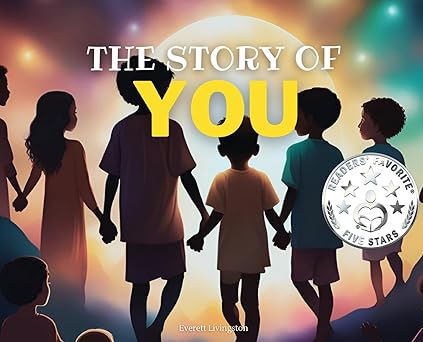
The Story of You is a heartfelt ode to human interconnectedness, identity, and the profound beauty within each of us. Through rhythmic prose and lyrical imagery, the author takes readers on a poetic journey that delves deep into our shared lineage, our cosmic origins, and the unending beauty of individuality. It speaks directly to the reader, offering a perspective that blends wonder, spirituality, and self-reflection. The narrative’s consistent themes of unity, boundlessness, and inner strength are a source of comfort and inspiration.
One thing I deeply appreciated was how the writing invited me to pause and reflect. Phrases like “You are one with All That Is and All That Was and Will Be” felt like gentle reminders of our vastness and significance. The author’s ability to weave simplicity with depth left me in awe. At times, the lines carried the soothing weight of a mantra, making me want to reread them out loud. The way the book connects humanity to the cosmos is nothing short of mesmerizing. Statements such as “We are enormous, we are small, we are a part of All” struck me deeply. I found myself pondering the infinite while simultaneously appreciating the mundane, like the microbes and atoms that make us up.
It’s rare for a book to simultaneously evoke feelings of humility and grandeur. What stayed with me most was the celebration of individuality as a symphony of collective history. “Galaxies, Geographies, and Peoples unique. Made up of countless stories you are.” This imagery resonated powerfully, making me feel both connected to others and wonderfully distinct. The metaphors of rivers and melodies painted vivid pictures, but the rhythm sometimes leaned too heavily into its song-like cadence, which may not work for every reader. For me, though, the book’s musicality was a highlight.
The Story of You is for dreamers and thinkers, for those seeking affirmation of their place in the universe. It’s perfect for anyone yearning to feel both connected to humanity and rooted in their individuality. If you enjoy poetic works that are equal parts meditation and celebration, this book will sing to your soul. I closed it feeling lighter, more expansive, and more in tune with the “Lovely Mystery” of being human.
Pages: 24 | ASIN : B0DMHL91J7