Blog Archives
How A Dictatorship Can Fall
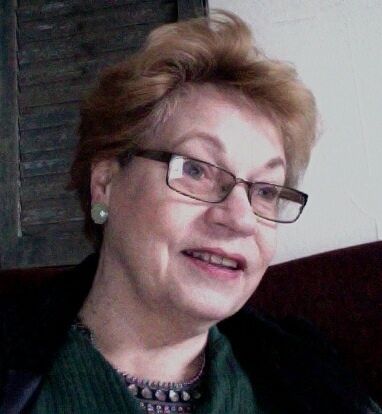
Home Rule is an intriguing Science Fiction novel that has a lot of real-world themes blended into this fictional world. Why was it important for you to write this book?
HOME RULE pulls together the threads for the trilogy. The story has two male narrators, Hershel Henry and Jessup Chandliss who reviewers seem to really like. We see characters grow into adult roles, especially at the wedding of Rufus and Kelly. And we see how a dictatorship can fall on the strength or failure of one personality.
I wanted the final sequence to be operatic and show outcomes for several characters. They experience a moment in their history together and are forever changed.
It seemed like you took your time in building the characters and the story to great emotional effect. How did you manage the pacing of the story while keeping readers engaged?
Pacing was a puzzle with a pantheon of characters. I added a character list at the end for the reader’s convenience, but I feel that the story is easy to follow since we tend to choose favorites and wait for their action scenes.
For the writing part, I had a chart for character location. Each needed to be on the right planet for her big scene. LOL

What were some themes that were important for you to explore in this book?
The story is science fiction for entertainment, of course. If we learn something about our lives along the way, then that’s a plus. I just wanted to show multi-dimensional women rather than the stiff archetypes of formula sci-fi stories. I hope that part is satisfying to the reader.
Where does the story go in the next book and where do you see it going in the future?
In book 4 titled CYLAY GAZETTE (slated for a January 2024 release), Jesse Hartley jumps back to Dolvia from Paris France, just like Brianna Miller had but with different consequences. Hershel Henry carries the middle part of the story, and then we hear from Bybiis the beastmaster who is traveling with Jesse.
Author Links: GoodReads | Twitter | Facebook | Website
The Secrets of the Moon


Secrets of the Moon by R.J. Schwartz and Sebastian J. Schwartz is an extraordinary story set in the near future, 2033, where there is a high demand for minerals due to scarcity on Earth, driving billionaires to invest heavily in space exploration and mining. The book opens ambitiously, moving through the earlier stages of this shift in intergalactic mineral exploration. As it becomes clear that big businesses are acutely focused on expansion, at such an extreme that they propel their plans quickly, launching into space without question.
Once Orbit Mining launches the Comet spacecraft, the plot abruptly shifts into a chaotic, unpredictable journey that leads to suspense, action, and secrecy. As technology becomes more advanced and corporations grow overconfident, this quickly escalates to a new height of disaster in a world that is already vulnerable and on the brink of apocalyptic collapse.
R.J. Schwartz and Sebastian J. Schwartz do an incredible job of painting the background of the story, panning across all the developments that lead up to 2033, including the launching station, the key players, and corporate decision-making that ultimately sets up the initial mission. It’s a fast-paced but well-narrated story that pulls the reader in from the very beginning, with just enough description and atmosphere to highlight the dreariness of a futuristic world, combined with excitement and anticipation for the unknown.
Secrets of the Moon by R.J. Schwartz and Sebastian J. Schwartz is a gripping story that sheds light on the possibilities of our own world and how we must deal with the challenges that lie ahead. It’s a great novel with solid, well-developed characters and a robust storyline that will keep you turning one page after the other. The authors have given readers a creative, original take on the current state of our planet’s resources and the potential for disaster in the future. I look forward to reading more from these authors!
Pages: 337 | ASIN : B0BWBK6F96

Isn’t that why any of us write?

The Intrepid: Dawn of the Interstellar Age follows two space crews investigating a potential planet for colonization who discovers a mystery that could alter the course of the human race. What was the inspiration for your story?
It is a big challenge, sitting down to construct a story world and a plot that are not only compelling and fresh but that also have something meaningful to say. My initial inspiration was not for the story itself; it was to write a story that could express the ideas that I believe are the most important for us to be thinking and talking about, as Earthlings. Of course, I then had to find inspiration for the actual story.
I wanted to write hard sci-fi that was as scientifically accurate as possible because, as a scientist, it often bothers me how Han Solo and Captain Kirk manage to avoid the effects that Relativity should have on their relationships with everyone in their lives who is not traveling with them — or aging at the same rate.
I am also passionate about science and believe in promoting scientific literacy. While my background does include the entertainment and technology industries, I was also a science teacher for over a decade, teaching Chemistry and Environmental Science. I am also the co-founder of an international scientific think-tank called The Quantum Bicycle Society (Quicycle.com), where we are making interesting progress in understanding the electron and magnetism at the sub-quantum level. So I wanted my science fiction to reflect the most up-to-date scientific concepts, as well as to show how cool, interesting, and intuitive so many aspects of real science and engineering can be. In fact, I sometimes like to call this S.T.E.M. fiction rather than science fiction.
When it came to the story itself, I wanted one that was not only fun, surprising, and compelling, but that also spoke loudly to many of the central issues surrounding our humanity and the global socio-economic and geo-political interactions that shape our world — today and moving into the future. Human nature and the state of our race is something I have been contemplating for many years. It is the subject of a non-fiction book that I hope to release soon, called The Animal In The Mirror. In it, I seek to unmask our instinctive nature and the way that our fears and emotions govern our thoughts and actions. It is the precise cause of all of our individual and societal dysfunction, and creating a story world provides a wonderful opportunity to present such a message exactly the way I want to say it. In my estimation, the truth of our biological nature is the single most important message about humanity that humanity needs to hear. It is the reason I am writing The Animal In The Mirror, and it is also the reason I wrote this novel.
Although I had not intended to write novels at all, I very much do intend to put these ideas out into the world. A novel seemed like one more logical avenue to employ for the purpose. It also allows these ideas to be presented to those who might not pick up a non-fiction book about human behavior and its evolution as soon as they would an interesting sci-fi novel.
I wanted my story world to bring together some of my favorite sci-fi elements, to write the kind of sci-fi that I would enjoy to read (or watch). I’m a big fan of Asimov, of movies like Contact or Passengers, and shows like The Expanse. My main concern was that it is difficult to approach story elements like the existence of extra-terrestrial civilizations or space colonization without it becoming cliched, cheesy, or implausible, and I really wanted to avoid that if I could.
That is why I decided to write about what our world might be like in 50 years from now, what might be in store for us en route to that future, and how we might react as we reach towards the stars. In reality, how will we humans approach such an interstellar step? Will we manage to achieve and to maintain a stable and peaceful world order? Or will our biological nature get the better of us?
And what if, on our journey, we encountered something REALLY unexpected?
The science inserted in the fiction, I felt, was well-balanced. How did you manage to keep it grounded while still providing the fantastic edge science fiction stories usually provide?
Firstly, thank you. I appreciate you describing it like that. I think a gripping story can occur in the context of any level of science or technology. As a long-time fan of NASA, I wanted to explore what it might be like — what it might really be like — on the first manned mission of exploration to the closest star system — Proxima Centauri, and without employing any ‘fantastical’ science. (Except for one or two story details, like the propulsion speed, for example, but even that I attempted to base upon real physics concepts.)
As I mentioned before, one of the reasons for writing this book was not only to promote scientific literacy but also to bring more attention to the scientific breakthroughs made by members of our Quicycle group. In addition, as a science teacher, I always prided myself on being able to convey scientific concepts in an intuitive and compelling way, making them accessible even to those who don’t see themselves as the ‘science type.’ Science is, after all, a description of the universe around us, and the cosmos is nothing if not super interesting. And science should be intuitive; our own experiences of the world should enable us to relate to the concepts. The fact that many people don’t know the parametric equations that describe a sphere does not mean that they do not have a clear understanding of exactly what a sphere is.
So I don’t think sci-fi needs to dumb down the science in order to be compelling. I think, science is so cool that, if it is incorporated correctly, it can make the story even more compelling. That was my hope. The fact that you asked how I managed to keep it grounded and well-balanced makes me very happy that, at least in your estimation, I succeeded.
What were some themes that were important for you to explore in this book?
The most important theme was how we humans must evolve our behavior and consciousness in spite of our biology — in spite of the fear-based emotional imperatives that hold us back and slow our (psychological) progress, no matter our technological advances. If we choose to, we can evolve our society far more quickly and far less painfully than our instinctive nature would otherwise cause us to endure. But in order to choose it, we must first recognize and accept it.
There are also many misconceptions and unscientific ideas that pervade popular culture regarding important scientific ideas. One example is the Big Bang. It is an idea that violates many basic laws of physics, yet has become a fixed idea — dare I say, a dogma — in the minds of many scientists, and as a result, in the minds of the layman. Fortunately, observations of the James Webb Space Telescope are helping to change that. I also believe it is important that we all understand that our instinctive nature affects our science as much as it affects any other arena of human thought and interaction. It affects our biases and perspectives, and when money or influence are at stake, they corrupt the efficacy of our science. It would be naive to pretend otherwise.
To me, one of the most important things to be concerned with in this life is our deeper purpose. In this book, I try to explore that question on a larger scale. Is it about biological evolution, the evolution of consciousness, or even the idea of galactic community?
It is my deepest hope that, after finishing this book, the reader will continue thinking about it for a long time to come.
Isn’t that why any of us write?
Will this novel be the start of a series or are you working on a different story?
I am very pleased with the way this story world came out. It presents many possible opportunities for sequels and prequels. I have started putting some ideas together for a sequel, and I find the prequel idea also quite compelling. As I mentioned above, I am also working on the non-fiction book about human behavior, The Animal In The Mirror, and I hope to have that finished soon. (I have never found it easy to focus on only one thing. There are just far too many fascinating things out there!)
Author Links: Website | GoodReads | Facebook | Twitter
3rd place Winner, 2023 London Book Festival Awards (Science Fiction)
When crews on the first two interstellar missions confront the same confounding mystery, their dispute over what it means could alter the trajectory of the entire human race.
Thirty years after the last war, in a world of plentiful energy, Lunar and Mars bases, and a global federation of nations, an international crew of exceptional men and women sets out to explore the closest potentially habitable planet in the Alpha Centauri star system.
The stakes become elevated by the unexplained presence of another ship from the solar system, a ship with weapons. When the two crews interpret a perplexing find on the surface quite differently, it brings them into a conflict that threatens to lead to a nuclear showdown — with consequences more far-reaching than they could have imagined.
They may be over 4 light years from Earth, but the implications could not hit closer to home.
And they are too far away for two-way communication.
More than just another space saga, this wild, hard sci-fi ensemble drama (with a touch of romance) digs deep into human nature and the animal instinct that keeps us from elevating our existence. The only question left — is humanity doomed to repeat its mistakes, or are we ready to take the next crucial step?
It’s The End, But Not Goodbye

Boone and Jacque: Sahon follows two friends who are separated from everyone they love and are trying to return to Earth. Where did the idea for this novel come from, and how did it develop over time?
For starters, thank you for a wonderful review that reduced me to tears of pride and joy. Secondly, this was a hard book to write, not just because it was the last one of the series, but because I wasn’t in good health. For most of the writing, which was around six months, I had chronic tension headaches and dizzy spells due to pinched and strained muscles in my back, neck, and shoulder that was putting immense pressure on my nerves. Also, I was in a car accident with a commercial freight truck and had some inner demons that festered in my head. All of which I implemented into the story. Please know no one was hurt in the accident.
To properly close Boone and Jacque’s arcs, I had to isolate them as much as possible before bringing them back together and then return to their loved ones. Furthermore, they had to be exposed to emotions they have repressed for quite sometime.
As for how the idea for the novel developed over time, it started from when I first worked on book four, Boone and Jacque: Cytrus Moonlight. I knew that book five would be the final one because any further extension of the series would tarnish the richness of the conclusive nature of their arc. To which I had much to cover in the final leg of their journey.
I thought about how we as human beings are decision makers. Some more active than others. As in we don’t all act on our emotions all the time. We have responsibilities to uphold, people to care for, a job to go to, hurdles to overcome, endure nightmares, goals to achieve, secrets to keep for the sake of loyalty or self preservation, and many other things that occupy and complicate our minds. Therefore, getting in the way of understanding who we are. What our purpose is and what we do to get the most out of it.
Sometimes, the love we have for others is so strong, we forget to love and understand ourselves. Sometimes the ones we love see how broken and depleted we are. They try to help us but it’s not always enough.
So though Boone and Jacque have been on many adventures, it was always together. In addition, because they were so focused on surviving and keeping each other alive, while also dealing with interpersonal issues and enduring the complexities of life without parental or peer guidance, they never had a true opportunity to find themselves in a more holistic way that solidified their fate as human beings. Where they go in life as adults is up to them.
That’s why the series is complete. Because even though they have much longer to live and endure other chapters in their lives, I can’t spend my entire career obsessing over them. When I will include them in other novels, their may be a few things for them to grow from, but it wouldn’t be enough for another segment of the series. Enough as secondary characters or passersby, but not primary characters.
One thing that stands out in this series is the bond the characters form with each other, not just Boone and Jacque. What was your process in writing the characters’ interactions to develop the bond they have?
One thing I always ask of myself as a writer, is to create strong bonds or chemistry between enemies, lovers, and friends. Because how others act around us or in our world, can have a strong effect on us. Especially when we meddle or have any part in their lives. Take for example Mayor Gander and Myamirah. Those two were meant to be secondary characters and antagonist that kept the interludes in the story active and engaging. So what I did was see how the ripping and tearing of their marriage, caused by a need for more power than the other, could create a continuing need for Boone and Jacque to grow. To forget about themselves once they’ve had a sense of who they are and therefore protect others before it’s too late.
I did all this by intriguing myself in dynamics outside of my own. In the real world, people in power don’t bother getting personal or violent with the public. But what if they had the gall to do so with those that could tarnish their position and ambitions? That’s the question I asked when creating that type of relationship.
As for Xantia and Shammy, I followed the natural progression of their relationship and the weight Xantia carried with her as she did her best to accomplish many things. Help take care of children even though she had no practice in being a caretaker. Unraveling the truth Myamirah kept secret then teased Xantia when she saw how close she was getting. I saw the relationship between Xantia and Shammy as a good counterbalance to Boone and Jacque’s need to find purpose and protect the ones they love as heroes, fathers, husbands, and humans desperate for sense of stability and undying love. Their wives are striving for the similar goals but because they had no idea of the when or if they’d see their husbands again, they became territorial and valiant warriors protecting their home base and children.
In a nutshell, I love characters and intersecting relationships to make a cohesive story. Because if I had Boone and Jacque come home to no conflict, I’m saying that the world stops living until they come back. Which is not realistic and would make the story fall flat. That’s why the interludes were implemented. To show the readers that while we are fighting for the life we want, the world is doing the same in different ways. We may not see it because it doesn’t affect us directly, but that doesn’t mean it’s not happening all around us. More importantly, when it involves the ones we love, the ones we are interconnected with, it’s even more important to put our need to pick up our pieces by ourselves down and help them. Lastly, when we fight for freedom, peace, and love on our own, we forget that others can help us as well. More importantly, that they may be struggling as well. We must learn to drop our baggage and help someone let go of theirs.
What was one of the hardest parts in Boone and Jacque: Sahon for you to write?
The final chapter because I drew from my experience with my mother’s passing. We never had a wake, so I imagined what it would’ve been like. I knew I had to have something raw and powerful to finish the series. And I knew it was going to be hard for me. So, despite being exhausted, scared of the series ending, being overwhelmed, I wrote the last chapter in two days. Total four hours. Because if I took any longer, I would’ve watered down the emotion and dragged it out. I couldn’t do that to Boone and Jacque. Certainly not to myself as an emotional person.
Where do you see your characters after the book ends?
Boone will be a secondary character in a stand-alone novel called Red Widow Waltz. As for the premise, that is still up in the air. All I can tell you is there are three things. A seedy government agency, widowers, and a boogeyman. Jacque and Xantia will have an important role in a book called Tar. In which a dark entity from the depths of a desert spawn from earth’s core seeps into a grungy town called Barlocke.
As a bonus for the readers here, once Tar is complete, I will be working on another fantasy series I’ve been meaning to write. In which for now it will be called Zephutra. Which is inspired by my sister and I’s relationship as brother and sister.
Author Links: GoodReads | Twitter | Facebook | Tiktok | Youtube
Enduring pain on an endless, chaotic, gut-wrenching, and mind-altering voyage
that will bring them back home. But the certainty of a blissful reunion and peace on earth
is as much of an enigma as their purpose.
Boone and Jacque: Sahon

A.G. Flitcher masterfully guides us on an enthralling odyssey with Boone and Jacque in Boone and Jacque: Sahon, an exhilarating conclusion to their captivating saga. Unforeseen circumstances have mercilessly torn them apart from their loved ones, compelling them to embark on a transformative journey of self-discovery. Jacque, renowned for his methodical and rational nature, undergoes a profound realization, recognizing the inherent value of embracing emotions when logic falls short. Meanwhile, Boone learns the delicate art of relinquishing attachments over time, understanding that powerful emotions require a graceful release. Yet, the revelation of their true selves merely marks their extraordinary expedition’s inception. To reunite with their cherished families and secure a life of tranquility, they must valiantly confront haunting memories and malevolent entities.
The personal growth of Boone and Jacque, depicted with utmost finesse by A.G. Flitcher, evoked a profound admiration within me. Their arduous voyage was an unsettling ordeal, yet it served as an enlightening experience for both protagonists. Empathy surged through me as I empathized with their plight, for the anguish of being separated from their families endured for an agonizing five years. Regrettably, their homecoming in Cytrus proved to be anything but straightforward, thrusting them into an additional expedition—this time, a quest to locate Boone’s long-lost kin. During Boone and Jacque’s absence, Xantia courageously assumed a more significant role in supporting Shammy as she grappled with a medical predicament. Witnessing Xantia’s character blossoming further since the previous installment was a delight. She admirably persisted in her inquiry into the mayor’s wife, exhibiting an unwavering dedication to unraveling the truth. Personally, I found her character to be captivating and multifaceted.
Meanwhile, Shammy exhibited unwavering strength, steadfastly protecting her children amidst their trials. Introducing Sahon as a new character injected an intriguing element into the narrative, captivating my imagination as I delved into their intricate backstory. A.G. Flitcher’s imaginative prowess shines brightly, solidifying his status as a visionary author. With each turn of the page, the author propels readers into a world teeming with enchantment and peril—Therenosita, the planet that forcibly ensnares Boone and Jacque. Within its mystical realms lie an abundance of captivating wonders and untold dangers. Amongst the remarkable creatures inhabiting this extraordinary realm, the silver trees are my favorite. Their very existence conjures images of resplendent beauty, painting an indelible portrait in my mind.
The final chapter of Boone and Jacque: Sahon left me awash in a torrent of emotions. Tears cascaded down my cheeks as I journeyed through its poignant pages. Yet, while the ending carried a tinge of sorrow, it also emanated a profound sense of fulfillment. For those searching for a series that will ignite the fires of imagination, this extraordinary opus by A.G. Flitcher is an absolute must-read. Prepare to be swept away on a magnificent escapade where the boundaries of your mind are shattered, and your imagination roams free.
Pages: 478 | ASIN : B0C1DQW5DL
Insurrection

The third installment of Michael J. Farlow’s sci-fi series, Insurrection: Records of the Argos, is a thrilling and intelligently written story that will capture the attention of any sci-fi fan. The crew of the Argos finds themselves in an unexpected predicament as they suddenly find themselves trapped in the middle of a war between the Brintal and the Furlong on the continent of Elisi. Unfortunately, the only aid is the AI Agnes, who is currently not functioning, leaving Nick and his crew to fend for themselves.
Farlow has done an exceptional job of crafting a new and exciting story while avoiding over-reliance on the previous books. The fast-paced action will keep readers on the edge of their seats as they navigate the war-torn continent with Nick and his crew. Furthermore, the political intrigue woven into the story adds a layer of realism that is often missing from sci-fi stories. It is refreshing to see that Farlow’s focus is not solely on action but rather on the well-thought-out plans and tactics that are utilized by Nick and his team. This is a welcome departure from the typical sci-fi story that is filled with endless battles. Instead, the story takes the time to develop characters and create a realistic world, which adds depth to the overall narrative.
Insurrection: Records of the Argos is a fantastic addition to the series, and it is easy to see why it has been so well received by fans. Farlow has once again crafted a story that goes beyond what is expected of the genre and is a breath of fresh air. I highly recommend this book to anyone who enjoys sci-fi, and I hope to see Nick and his crew in future installments.
Pages: 364 | ASIN : B0BTY5FGCT.
Make My Readers Question That Norm

The Cycle of Eden: The Young Revolution follows a young hero in a land of darkness who is destined to restore light to his world. What was the inspiration for the setup of your story?
The concept of Light vs Dark typically revolves around Good vs. Evil. The Young Revolution sets this up to be the usual case, but there are aspects involved in the first chapters involving Seth’s mother and later on in the series that will make my readers question that norm. Maybe there is a place, a reason, for Darkness in the world? Maybe the Light is too good to be true? Lady Eve, Seth’s mother, representing the “Moon with a Dark side” has a lot of meaning readers will catch on to as the series progresses. This part in the setup was what I had planned for a while. The vagueness behind the essences of Light and Darkness match with the fact that Seth is still a growing hero who has much to learn. The readers will learn more about Eden at the same pace Seth and his companions do which leads to many twists and turns in the plot.
Seth is filled with doubts about his abilities to carry on his mother’s legacy and save Eden from the darkness. What were some driving ideals behind your character’s development?
Throughout the series, I never wanted to portray Seth as the typical hero that simply saves the day because “that is his destiny/purpose.” Seth very much has to rely on others, even from the very beginning of the book. He may be the “main” protagonist, but that doesn’t mean he is better or more important than any of the other brave and talented souls he meets along his journey. He never could do this alone, and that is the point I make with his character. There is nothing wrong with getting help, because together, we as people can achieve anything no matter who we are.
What were some themes that were important for you to explore in this book?
There are many positive messages that relate to our own world that I hope my readers take away from The Cycle of Eden. In many ways, Eden is obviously a representation of our own Earth and the moral dilemmas we as humans put it through. A major lesson in The Young Revolution is “…the best way to find kindness is by sharing your own.” No matter how dark and lonely the world feels, kindness will always be the unifier, for we all seek it and deserve it. In general, the major message I discuss as the series goes on is the importance of history. As long as we learn from our past mistakes, the hope for changing for the betterment of the world will always exist. There are also some dark moments, but another relevant theme in The Young Revolution is finding the strength to survive. Any reason to keep getting up after we are hit down, big or small, is worth it. Self-Discovery and character growth are big components that were important to me as well, the ability to have relatability with the characters. Understanding why certain characters are the way they are and why they find a reason to change gives us perspective for people in our own world.
Where does the story go in the next book and where do you see it going in the future?
A fun fact is that the entire Cycle of Eden series is already written and completed, so its future is quite clear to me. The fast-paced action will always be a huge staple in the Cycle of Eden series; however, book #2 gives us a special focus on Internal Conflict whereas The Young Revolution was heavy on External Conflict. There will be a lot more emotional turmoil and desperation in Seth’s destiny. In The Young Revolution, we saw that the Neo God is physically and spiritually powerful in the ways of using Darkness. In Book #2, we will see a whole other side to his deviousness, the mental torture he can inflict on the heroes. I can assure that those who enjoyed The Young Revolution will love this next book, because we will be entering a sequel where trust is put on a wobbly pedestal ready to fall at any moment, and I am very excited for it to be published.
There are a lot of vague hints I drop at the start of the series, especially in Book #1 and #2, that readers aren’t supposed to understand until they finish the series or read through it again. I love the moment in storytelling where I go back and notice/recognize an aspect I didn’t or couldn’t realize before. Those moments of “Ohhhh, that’s why this was written.” or “Ohhhh, the author was referencing this the entire time!” are both rewarding for the readers and the author. That’s what I’m hoping to give my readers in the future as this series goes on.
Author Links: GoodReads | Twitter | Facebook | Website
The Darkness cursing Eden’s history has festered long enough. The time for change, a Young Revolution, has come.
Eden is a world of unrecognized history and potential, potential that is found in the heart of this cycle’s prophesied hero, Seth. His mother was historically important to Eden’s previous rebirth. So, when this monarch of good is murdered before Seth’s eyes by his older brother, the young hero is left alone in an Eden spiraling into darkness. Yet, unknown to Seth, there is a gift his mother passed on to him, one that allows the candle of hope to burn ever so dimly. Can this charismatic goofball reclaim Eden like his mother did in the past? However, the Age of Light she created failed. Maybe Darkness is the true path for Eden after all?
In The Cycle of Eden: The Young Revolution we experience the beginning of a fantasy series with many growing characters and intense action sequences that interchange between sighs of relief to heartbreaking tragedies. Daniel Varona’s fast paced style keeps your fingertips eager to turn the next page as you dive into Eden’s intricate storylines that affect the series till the end.
The Cycle of Eden

The Cycle of Eden: The Young Revolution by Daniel Varona is a riveting tale that transports readers to the world of Eden – a land engulfed by darkness and in dire need of a savior. At the center of this epic adventure is Seth, a young hero who must rise to the challenge of restoring light to Eden before it’s too late. As the son of a legendary figurehead who once guided the prosperous state of Eden, Seth is burdened with the daunting task of living up to his mother’s legacy. However, his tactical skills pale in comparison to his mother’s, and he is left to navigate this treacherous landscape alone.
Varona’s prose takes readers on an exhilarating ride as Seth and his companions encounter a host of creatively written monsters and face a variety of challenges that are both well-described and original. One of the most enjoyable aspects of the book is the inner dialogue of the characters, particularly Seth, whose thoughts are laugh-out-loud funny and offer a lightness to the otherwise tense situations they find themselves in. The world-building and plot are intricately woven, and readers will appreciate the vivid descriptions of the various landscapes and characters that populate this richly imagined universe.
One of the standout characters in the story is Chase, Seth’s loyal animal companion whose unwavering friendship is a testament to the age-old adage that dogs are indeed man’s best friend. Their bond is heartwarming and adds a relatable quality to the story that will resonate with readers of all ages. Varona’s writing is clever and full of unexpected twists that keep readers on the edge of their seats. This novel is a page-turner from start to finish, with recurring themes such as self-discovery woven throughout Seth’s journey as he navigates the choices he must make to restore Eden and its people.
Overall, The Cycle of Eden: The Young Revolution is a highly engaging and imaginative space opera. I highly recommend it to anyone looking for a thrilling science-fiction adventure that combines action, creativity, and a touch of humor.
Pages: 598 | ASIN : B0BT7VNMQ9



 LITERARY TITAN