Blog Archives
A Story of Self-Reflection

Blood Flow is a raw, unfiltered memoir that stitches together decades of family trauma, personal ambition, health battles, and the relentless search for meaning. Why was this an important book for you to write?
I believe that almost all people endure a significant trauma at least once in their lives. Mine was the suicide death of my father, soon after I turned thirteen years old. Parent loss is trauma, especially to the young, who may lack the information or understanding of why such tragedies happen. In my case, I began interviewing family and obtaining three sets of hospitalization records when my dad was admitted for severe depression and suicidal ideation. I traveled to Trieste, Italy, where he was stationed as an army doctor, and to the Eastern European town where he was born and emigrated from with his family when he was three years old, already fatherless himself. This decades-long search provided a deep understanding of my dad’s history and an appreciation that he was in my life as long as he was.
What were some ideas that were important for you to share in this book?
Sometimes, people need to make a concerted effort to overcome trauma and see life as a great gift. It’s good for adult children to learn what they can about their parents because that knowledge will inform their understanding of their childhood. As a writer, I think that a memoir should not just be a story of victimhood and blame, but rather a story of self-reflection and knowledge, realizing that most people do the best they can with what they have.
What was the most challenging part of writing your memoir, and what was the most rewarding?
The most challenging part of writing my memoir was twofold. One was trying to stay objective while remaining compassionate and emotionally attached to events that radically changed my life. Two was repeatedly redrafting and revising the writing until I found a narrative structure, voice, pacing, and succinct narrative style to engage readers.
How has writing your memoir impacted or changed your life?
Completing my memoir and having it published brought closure to a writing project that took me decades to “get right.” Revisiting the traumatic events and aftermath of my father’s suicide eventually helped me understand and practice compassion, love, and a full appreciation of life.
Author Links: GoodReads | Facebook | Website | Amazon
The Suicide Prevention Family Handbook
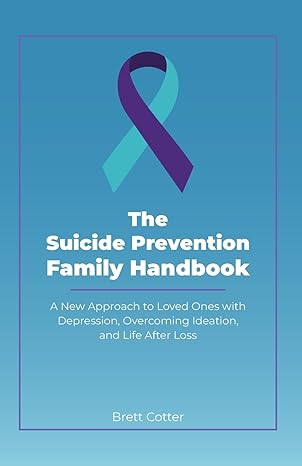

The Suicide Prevention Family Handbook, by Brett Cotter, is a deeply compassionate and practical guide for those facing the realities of depression, suicidal ideation, and grief. The book serves as a roadmap for families and individuals navigating these challenges, offering step-by-step techniques to provide support, regain emotional balance, and rebuild life after loss. While it does not replace professional medical or psychological treatment, it complements traditional approaches by focusing on mindfulness, emotional release, and effective communication strategies.
One of the most powerful aspects of this book is its emphasis on the role of emotional pain in suicidal ideation. Cotter explains that emotional pain is seeking to be “seen, heard, and loved.” This perspective shifts the focus from simply preventing suicide to addressing its emotional root causes. The techniques he provides, such as the 5 Prompts, which encourage open-ended, compassionate listening, are practical and immediately useful. His step-by-step breakdown of how to hold space for a loved one, particularly the sections on body language and tone, make this guide stand out. It’s not just about what to say but how to be with someone in pain, and that nuance is essential.
Cotter’s personal anecdotes make the book feel intimate and real. His description of working with veterans struggling with PTSD and suicidal ideation, along with his own past experiences with emotional pain, add authenticity to his methods. The story of how he guided someone out of suicidal ideation in 2003 by simply listening, grounding himself, and asking, “Please tell me more,” is a striking example of how small shifts in approach can make a life-saving difference. It’s one thing to discuss theories of emotional healing, but Cotter’s book is packed with real-life examples that prove the effectiveness of his techniques.
Another strong point is his approach to grief. He acknowledges that loss, especially from suicide, can be overwhelming, but he doesn’t offer empty platitudes. Instead, he provides tangible exercises, like the Letting Go with Love Visualization and Calling Loved Ones Into Our Dreams, which allow people to continue their relationship with lost loved ones in a meaningful way. His insight that guilt after a loved one’s suicide is a natural survival mechanism, rather than an indicator of personal failure, is a revelation that could provide comfort to many struggling with loss.
The Suicide Prevention Family Handbook is for anyone who has a loved one struggling with depression, those dealing with their own suicidal thoughts, and individuals grieving a tragic loss. It’s not just for mental health professionals; it’s written for everyday people who want to learn how to truly support those in pain. Cotter’s writing is clear, heartfelt, and filled with empathy, making it an accessible and invaluable resource. If you’re looking for practical tools to help yourself or someone you care about, this book is well worth the read.
Pages: 58 | ASIN : B0DPJKWXDT

Journey With Grief and Healing

Invisible Sun follows a man grappling with painful memories as he reels from grief following his brother’s suicide. What was the inspiration for the setup of your story?
I lost a brother to suicide many years ago and was intrigued by the way everyone, including myself, who was impacted by his death, managed the incident differently. Often, it’s only when we are confronted with death that we stop to consider life. Invisible Sun is a conversation about the perspective of what life is and less about death.
I enjoyed the depth of the main character, Ian. What was your process to bring that character to life?
While this story is NOT autobiographical, I did reach into my own history for inspiration. I needed Ian to be a flawed but curious human who digs deep to ask difficult questions about his existence. I jokingly told a friend that Ian was my whipping boy. I constructed a dark, heavy, almost impossible world with extreme situations for him to explore in this novel. I asked him to make hard decisions and choices that were the opposite of what I would choose in my life. In the process of writing Invisible Sun, I learned a lot about my own journey with grief and healing.
Are there any emotions or memories from your own life that you put into your characters’ lives?
Vulnerability. While this is not an emotion per se, it is a state of emotional exposure that involves a willingness to accept the risk that comes from being open and willing to give and accept love.
What is one thing you hope readers can take away from Invisible Sun?
In the novel, a homeless man on the bike tells Ian, “Don’t waste your life! It’s a gift.” Life is not complete without its ups and downs, but learning to find contentment in this life is the most important thing we can do.
Author Links: GoodReads | Twitter | Facebook | Website | Amazon
In Invisible Sun, Andrew H. Housley probes mental illness and the painful consequences of choice. He questions brotherly bonds, belief systems, and interconnectedness with profound intricacy, immersing readers in a world where reality blurs. Housley’s storytelling peels back the human psyche, exposing raw emotions. This haunting tale captivates as a broken soul seeks solace and understanding, diving deep into a reflection on resilience and choices.
Will Ian find the truth he seeks, or will he be consumed by the shadows that threaten to swallow him whole?
Start Communicating Again
In If I Could Wish, a teenager’s final suicide letter reveals the personal struggles and immense anguish leading up to their suicide. Why was this an important story for you to share with readers?
I would say it’s always important to discuss how us humans handle and react to situations and or chains of them. However, it is far more important to me to discuss suicide as it is a very prominent issue in our world. I feel like this topic can be seen as taboo or unacceptable to talk about where it really mustn’t be: these are human lives we’re talking about, mental states, families. How can we just sit back and turn a blind eye to the issue all because it can be seen as too gloomy or depressing? I say we should take these dark & depressing subjects and create an open dialogue about them so we can make progress and help each other instead of becoming more isolated with the world. Many of my teenage peers are falling victim to mental health issues due to an abundance of reasons, I am Scottish, and we are very lucky to have our own national health service which covers mental health too, but the way the UK is being run is leaving our NHS with no adequate funding and therefore, we have a crippled NHS. So if we can’t fund services, if we can’t afford services, then we should at least change our international or national mindsets on the matter and start communicating again. Not through our phones, but through our humanity.
What is one thing that you hope readers take away from If I Could Wish?
I personally hope that readers are able to take away the fact that stories like these aren’t too far off from reality and we need to start being communal again rather than plainly individualistic. We really do need to speak up on this matter and speak to people who may be struggling, even people who we don’t think are struggling very well could be. We ought to look out for one another more often, we really never know how far that goes.
What is a common misconception you feel people have about mental health, especially as it relates to teenagers?
I think that the common misconception about teenagers’ mental health issues is that it’s ALL due to social media. It’s really not. Today’s teenagers are in a predicament of the likes our species has never seen before. Personally, I even say that we have progressed too fast without thinking about the effects. However, although some of the issues stem from social media and digital use, the other issues stem from social situations, economic situations, and national attitudes towards teenagers. I’ll break them down a bit more. Social situations meaning a workplace or school, friends even. Sometimes we’re not always in the healthiest relationships with our schools or workplaces or friends. Economical situations meaning the state of the country’s economy: if the nation isn’t financially strong then how will one seek the help one deserves? How will one get the job one needs? How will one see the light? And national attitude meaning how other age groups view teenagers, most of the time in UK media recently: it’s not great. There needs to be realisation that these issues of the digital world are unprecedented, and the real world affects everything. 2 worlds conflicting, 1 mind trying to manage both.
Can readers look forward to more stories from you soon? What are you currently working on?
Oh absolutely! More stories with variety are on their way. At the moment I believe I have 5 currently being fully conceptualized. However, I am a third of the way through working on a new short story I’ve named: Burning Memory. I won’t get too much into it but just know it is another philosophical perspective on life. I plan to write short stories for a while, I’m not entirely sure how I would handle a full novel but I have 2 ideas for them which I will eventually finish: but as for the moment, short philosophy will be my niche.
Author Links: Goodreads | Amazon
Peer into the downfalls of the human condition and the gloom that follows you. Ponder the bigger picture, ask the questions of purpose, learn from the life of despair. But most importantly: how will you help your fellow humans?
When You Go Through Dark Times

A Study in Terminal follows a young man who has faced many hardships and is forced to realize that life won’t always follow the path you laid. What was the inspiration for the setup to your story?
One inspiration was working with at-risk youth when I was just out of high school. I particularly remember watching this fifteen year old boy who was basically a father to his younger siblings. And it hit me that there weren’t many YA books for him — a boy who was forced to grow up early and was faced with adult situations at a young age.
Another inspiration was personal mental health battles in my own life and realizing how life is hard and dark and broken, but there is still light and the brokenness still has a chance to become beautiful.
Sean Brogan is an intriguing and well developed character. What were some driving ideals behind his character’s
Development? First off, thank you for being so kind! I love Sean. He’s my baby. I wanted him to come to terms with facing his own humanity but realize he wasn’t alone in the first place. When you go through dark times you can be deceived into thinking you’re alone — which is so far from the truth. There’s a moment in ASIT when Sean is hit with the realization there was someone who was walking alongside him, and it was a very powerful moment for me personally. I’m always writing to answer my own questions, and that’s what happened with Sean’s character — to direct a broken character who has felt alone all his life to suddenly realize that there was someone who understood.
What were some themes that were important for you to explore in this book?
You are never alone. That there is beauty in brokenness. That healing is possible. That sometimes you have to let people meet you in your darkness. Oftentimes we hide our brokenness out of shame or fear, and I wanted people to realize that to heal sometimes means admitting how human we are.
What is the next book that you are working on and when will it be available?
Haha, I wish I knew. Life has been insane for me, but I’m working on two different books — one being the second book following ASIT. So we shall see…
Author Links: GoodReads | Twitter | Facebook | Website
He plans to slip into the sleepy town of Lake Fort, West Virginia as quietly as he did ten years before, but his life has never gone as planned. Sean never expects to see Rina, the blue-haired sister of his childhood best friend who makes it her mission to rescue the lost things. A hopeful dreamer who sits on the roof and watches the sunset, she represents all the things that he has lost. As Sean spends time in the lakeside town that has haunted his dreams since he was a little boy, he has no choice but to face the pain that he buried from a life cut off too soon. In the blink of an eye, with a gun to his head, Sean is forced to confront what it means to fight for the will to live when your world has gone dark.
An anthem for those of us who have been left behind, A Study in Terminal is a vulnerable story about the human condition that reminds us that to beat your past, you first must turn around and face it.
Look Inside Yourself for Healing

Authentic Power: Give Yourself Permission to Feel offers science-based facts and solutions that help readers start their personal journey towards healing. Why was this an important book for you to write?
This is the book I wish I had when I was going through my health crisis of Lyme disease and postpartum depression. I also felt called to write this in the early days of the pandemic when I found myself faced with familiar feelings: Anxiety, grief, confusion, despair, and more. Yet this time around, I gave myself permission to feel all of those messy critters, and felt called to write about my healing journey in hopes to inspire others to move through and process their feelings in healthy ways. The pandemic was a collective trauma for our world, and we as humans need to give ourselves permission to feel all of the feelings from these past two years because that is where healing and transformation will happen.
I appreciated all the references and research that went into this book. Was there anything that surprised you during your own research?
I interviewed several experts about the science behind stress and how chronic stress takes a toll on the body. Dr. Marianne Teitelbaum, an ayurvedic practitioner, discussed that stress particularly takes a toll on the immune system. Stress was a constant element in my life as a journalist, and when I look back now, it’s no surprise that the stress on my body from my career and previous life circumstances such as witnessing my father’s death later continued to my impacting my immune system, leaving my body unable to fight Lyme disease.
What were some themes that were important for you to explore in this book?
There are so many important themes that the book explored, including grief, connection, feelings, spirituality, empathy, and more.
The theme of grief was a very important subject for me to explore because I had spent most of my life burying the loss from my father at the young age of eleven years old. In chapter 6, I interviewed renowned grief therapist Edy Nathan, discussed how we can lean into the power of grief. When Lyme disease hit me on the head and death felt near, I began to revisit losing my father in a way I never had before. Instead of ignoring my feelings of grief as I had done so for more than twenty years, this was the first time I allowed myself to feel, process, and move through my grief. What I discovered was profound healing, peace, and discovery of a way to have a relationship with my father, even in death.
Another theme I felt very important to address was the importance of the power of connection to heal our lives. When I was in the throes of my health crisis, I was isolated and alone, and preferred to stay that way. But something called me to reach out to my loved ones and friends and get vulnerable about what I was experiencing. What happened next will forever be with me: I was met with open arms of compassion, love, and understanding. My connections with people deepened. I found that when you get honest and vulnerable with what you are experiencing and how you are feeling in your life, you open yourself up to deeper and more powerful connections with others.
What do you hope is one thing readers take away from your book?
As a society and culture, we are taught to look outside of ourselves for answers, especially when it comes to healing. Yet my hope is that by reading Authentic Power, readers will feel empowered and inspired to discover that we already hold those answers inside of us. We are the experts of our own lives, and when we get quiet and still, and turn off the outside noise, therein lies our Authentic Power, which is the wisdom we have within each of us. We need to learn to trust that wisdom and once we do, profound healing and transformation happens. My story and journey is a testament to that.
Author Links: GoodReads | Instagram | Facebook | Website
Whether it’s grief, despair, or anxiety, society will always find a way to label feelings as “messy.” But burying these reactions only leads to greater emotional turmoil. In the past, we have looked to self-help gurus like Gary Zukav, whose Seat of the Soul inspired Oprah Winfrey to help America process trauma. So why did that book resonate with her, and what does everyone still love about Oprah? It’s not that she’s rich or that she’s successful…it’s her authenticity. She taps into what she has described in her SuperSoul Sundays as Authentic Power: uniting all the pieces of herself so that she’s always bringing her whole self to everything she does. Oprah didn’t ignore her messy feelings: she shared them with America, and she processed and integrated them in order to tap into her own authentic power. She became her authentic self, which exudes from her in every second that you see her.
In Authentic Power: Give Yourself Permission to Feel, accomplished entrepreneur, journalist, publicist, and award-winning podcaster Ashley Bernardi continues the brave work of these great thought leaders by teaching you that your darkest hours are disguised opportunities to uncover and process, feel, heal, and grow.
Bernardi’s personal journey began when she witnessed her father’s sudden death at age eleven. Years later, a mysterious illness began a personal quest toward healing and taught her that trauma and adversity can be sources of strength and self-discovery. Through daily affirmations and writing prompts, you will discover Ashley Bernardi’s F.E.E.L. Framework:
Focus
Enter
Experience
Learn
You will explore chapters such as:
Embrace the Waves of Emotions
Lift the Emotional Fog
Make Space for the Brave Conversations
The F.E.E.L. Framework
Balanced Body, Balanced Heart
Discover Your Deeper, Powerful, Self
Exercise Your Empathy
As the founder of a national media relations and publicity firm, Ashley has the privilege of access to many of the world’s leading experts in health and wellness who offered healing and hope with her personal challenges—a rich collection of top doctors, neurologists, psychologists, nutritionists, coaches, spiritualists, and others. She shares their profound wisdom so that you can build hope during your times of struggle.
Bernardi searched for true healing and growth for more than twenty years; Authentic Power equips you with the tools to ignite your own journey now.
A Study in Terminal


At only 19, Sean Brogan already knew more than his fair share of hardships. Childhood trauma, poor life choices, and the burning need to just feel loved had led him down a path that twisted and turned until it became a maze he could no longer escape. Now, faced with the tenth anniversary of the event that had shaped every current facet of his life, Sean makes the decision to face the demons he’s always avoided in a battle he has no expectations of winning. As he rides into a home he hasn’t seen in years, he is forced to realize all over again that life won’t always follow the path you laid.
A Study in Terminal by Kara Linaburg is a story about lost childhood, guilt, regret, depression, and the redemption that can possibly come from confronting each of them head on. The book pulls no punches from the very first page, opening with Sean as he prepares himself for death, then continues on to illuminate his journey to that point, often in a tone of gut-wrenching honesty. Linaburg uses frequent flashbacks to build tension and mystery about Sean’s life, teasing the events that have brought him to the present moment in time and giving the book an air of intrigue that makes the heavy subject matter take less of a mental toll.
At its core, A Study in Terminal explores the theme of death and all the associated traumas that come with one that is both unexpected and violent. However, it doesn’t neglect to shine a light on the other side of the coin and eventually also touches on ideas of self-love, acceptance, and the power that comes from forgiveness. It manages to pack a lot of layers into its pages without creating confusion or slowing down the action. As a result, Linaburg has created a tightly wound and efficient story where even the most minor characters play an important role to the plot progression and have an impactful place in Sean’s life.
If I have any criticism of the book, it’s only that Linaburg was so good at building tension and pacing her reveals that I almost expected something more nefarious and scandalous to be in Sean’s past. I loved the references to his famous, distant family relation and I would have enjoyed more of an exploration into that, although I completely understand why it would not have made sense in the context of the narrative. This book gets a an easy recommendation from me!
Pages: 211 | ASIN : B09PMK43V7
Authentic Power
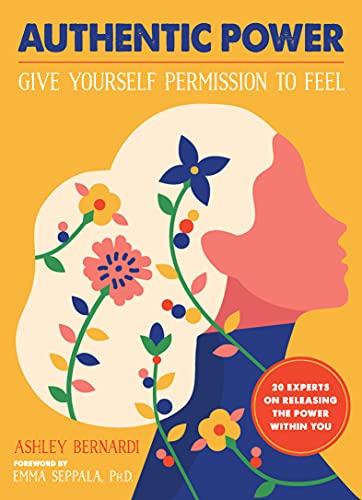
Authentic Power: Give Yourself Permission to Feel, is a thought-provoking self-help book by author Ashley Bernardi. This inspirational collection of anecdotes and affirmations is compiled in a book that is part journal and part self-help, providing information on how to handle trauma and the overwhelming emotions that go with it.
The author draws on her hurtful past experiences of witnessing her father lose his life to a fulminating heart attack when she was nine years old. She also opens up about the long process of searching for a diagnosis for a mysterious chronic illness that left her severely debilitated. Bernardi offers readers different insights and strategies that they can use to navigate stress and trauma in their lives.
This helpful book is a unique work that is different from traditional self-help books. The layout is in the form of a journal, where each chapter begins with a small introductory text and includes a paragraph with a positive affirmation to be said aloud, a quote, and a blank space where the reader is encouraged to put into practice the proposed exercise. Some examples of the exercises included are to make a list of objects for a self-care kit or to express their thoughts after their first attempts at meditation. This organization and structure makes for a safe environment where anyone can express their emotions freely, away from third-party judgments.
It should be noted that the author’s strategies and tips are validated with evidence-based data, and she makes sure to cite the sources in between pages. This makes her work stand out from other self-help books that might rely more on religious doctrine and be as adamant about following scientific guidelines.
The book includes approaches to challenges that have arisen amidst COVID-19. This updated work is another differential that will lend a hand to those struggling with social distancing and losing loved ones during the pandemic.
Authentic Power: Give Yourself Permission to Feel is a secular, science-based self-help book for those that are looking for a fresh approach to dealing with grief and trauma. Readers will learn how to build emotional wellness through the steps set forth in this well-researched book.
Pages: 195 | ASIN : B09FTLLSLM



 LITERARY TITAN