Blog Archives
Vandella

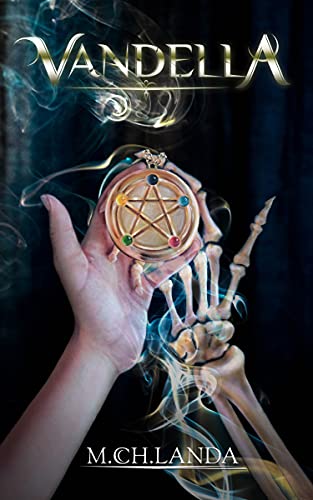
Vandella by M. Ch. Landa is an interesting book about a girl facing certain death after a cancer diagnosis. When she’s presented with an opportunity to trade her cancer-ridden life for her grandmother’s soul, she embarks on a supernatural journey through the world of the undead. However, once she begins this new path, many obstacles lie ahead, and unexpected encounters with famous personalities and people from her life have passed onto the afterlife.
I enjoyed the worldbuilding and landscapes created by the author, which are expansive and innovative. While the concept of this tale is common, the author explores it with new twists and intriguing characters. While I found the theme a bit simplistic at times, it’s a refreshing, gentle read that explores human connection and the will to survive. When Maia discovers her cancer, previously in remission, returns, she must decide whether to face her illness or take another journey that will plunge her into a world of mystery and the unknown.
As the reader delves into this new world, Maia discovers there are many obstacles to explore, from a train that takes passengers into the sky to a vibrant ballroom and an abandoned, haunted country residence. It’s a tale that ignites a sense of survival and a quest for another chance. As Maia is faced with saving a close relative, only to risk her own life in the process.
The author creates great character development who must face difficult situations while questioning the value of their existence. For example, Maia must decide if Sidney is in love with her or whether there is hope for them. I enjoyed the overall story and Landa’s take on a unique romance story while tackling themes of uncertainties in life and mortality.
Vandella by M. Ch. Landa is a teen and young adult magical realism novel. There are themes of dark fantasy and some romance throughout the original writing style and enjoyable storyline.
Pages: 303 | ASIN: B09GK557PF

Where the Magic Lies
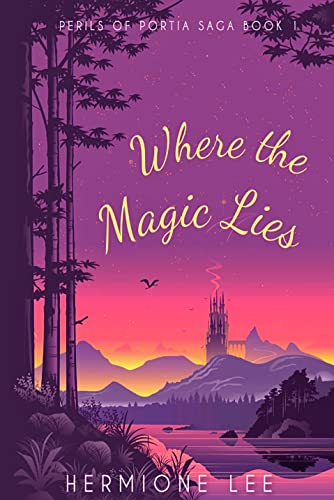

Where the Magic Lies is the beginning of an imaginative fairytale series following Amethyst Quartz, who collects logs with her mother in the forest. When they discover one of the logs is an important artifact that belongs to a king from another world, their lives change forever. In this world of fairies, Amethyst’s acquiring this special artifact is forbidden and punishable by death, and her mother, as the adult responsible for retrieving the item, faces this fatal end unless there is a way to save her.
To save her mother from certain death, Amethyst agrees to follow the fairies in Portia, the name of their kingdom, and marry their prince, who is eagerly searching for a bride. Facing the frightening challenges of this new life, homesickness, brutal assassinations, and a new romance, Amethyst must decide how to navigate this strange world and find herself.
The author brings a refreshing vibrance to the classic fairytale narrative, with solid character development, intriguing magic, and the abrupt changes that a person must face in life without warning. Amethyst must think and act quickly if she wants to escape, as her position of isolation and scrutiny is a form of imprisonment. She learns who she cannot trust and how every decision she makes has a ripple effect on her life and the outcome of the situation.
I enjoyed the visual writing in this book and the author’s talent for detailed storytelling that painted a vivid image of the world and its inhabitants. I recommend Where the Magic Lies for its overall great story development, the heroine’s triumphant nature, and her commitment to survival and fighting for love. It’s an artistic fantasy novel with a meaningful storyline that combines elements of traditional fantasy themes and nostalgia with realistic characters.
Pages: 245 | ASIN: B0B9M7HNBY
To Create My Own Earthsea

The Last War follows five heroes as they embark on dangerous quest to rediscover the secret of the Elder Song. What was the inspiration for the setup to your story?
Strange as it may seem, I found out about the Elder Song a bare moment before Loremaster Aneirin did. I knew from the start that the five were going to summon the power of the Dragonkin using the Shrines, but how they were going to achieve that – i.e. the setup – was a mystery to me until a heartbeat before Aneirin heard of the Elder Song. However, while the setup came organically in that sense, the Cynnahu Saga itself is directly inspired by the late Ursula K. Le Guin’s Earthsea Cycle; in short, her Archipelago inspired me to create my own.
I remember first reading The Earthsea Cycle in elementary school, hearing the mage Ogion of Re Albi say “To hear, one must be silent.” And I still remembered those words when I took the series up for a second and third time, years later. While the rest of my generation went to Hogwarts with Harry, I traveled by ship to the School of Roke with Ged.
Isn’t that interesting? I openly and sincerely adored Middle-earth and idolized the wizard Gandalf, but it was Ogion the Silent who I related to: “He spoke seldom, ate little, slept less. His eyes and ears were very keen, and often there was a listening look on his face.” I also remember being struck with the fact that Earthsea was an Archipelago, the first I had ever encountered in a Fantasy, with no true main continent to journey across; rather the journeying was done by ship, in the soul, and on different Isles each of which had a special distinction – its own personality, if you will. I was so struck that even at so young an age I decided that if I were ever to write a Fantasy book then it would take place upon an Archipelago. I knew I wanted a mages’ school, a ruling Archmage, and ships. Interesting is it not? I idolize The Lord of the Rings, yet never felt the need to create my own Middle-earth.
Your characters are all unique and detailed. What were some driving ideals behind your character’s development?
Most simply came to me, cliche as that sounds. However, I tried to have them represent something I felt needed a voice. Archmage Hoth is my idea of an ideal leader. Myrriden is a single father who is not afraid to show how much he loves his son and surrogate daughter. He represents rank, power and skill coupled with humility. Emrys is not unlike myself at his age, nervous and following the rules fervently, yet possessing an inner flame and smarts. He is not the stereotypical brash “boys will be boys” hothead and is instead deeply thoughtful. Sakura is a girl who had everything she loved taken from her in an instant, and now seethes with a need for vengeance. She represents trauma that takes time to heal but is smart and would fight to the death to defend her still living friends. Volcan is the mysterious and unwillingly funny figure you can utterly trust and who keeps surprising you, because every good Fantasy needs such a character.
Stormlady Mica leads the blue warriors because I have noticed that, in Fantasy, women tend to use their wits and magic while the men lead the actual glorious cavalry charge; women have the special powers while the men use swords. This is hardly an ironclad rule and, even if it were, there is nothing wrong with it – indeed I love countless books that employ this storyline tactic. But I wanted to flip the coin. I wanted a woman wearing armor and leading the land’s most elite warriors into white-hot battle while the men wrestled with matters of magery.
Loremaster Aneirin in the scholar in me, for I love historical research and adore archeology. Yet just as much he – and the grey nobles in general – portray my firm belief that the best societies are deeply aware of their own history and learn from their past. Instead of trying to gloss over or justify the genocide of the Dragonkin, most modern Cynnahu folk – thanks to the Loremasters – are appalled by their ancestors’ deeds. Furthermore, I prefer wars won in ways beyond mere military tactics and/or magic as otherwise it is boring. Which is why Aneirin uses his scholar’s training to unravel ancient mysteries, his work being crucial to the war effort and the quest for the Elder Song despite never fighting.
Did you plan the story before writing or did it develop organically while writing?
A bit of both. I had what I like to call beacons – major events I wanted to happen because they were turning points in the story – but getting there was up to me. I was like a ship captain sailing unknown waters towards the distant lighthouse then, upon reaching it, setting out for the next. So I planned the story insofar as the beacons went, but everything in between developed organically while writing.
This is book one of The Cynnahu Saga. What can readers expect in book two?
Book two, Dragon Guardians, will hopefully be out by this time next year. Hopefully. I am making no promises as life has a horrid habit of getting in the way, but the book is fully written – meaning all that remains to be done is editing. Indeed, even the rough draft of book three, Mages’ Legacy is complete.
Author Links: GoodReads | Twitter | Facebook | Website
Only they are not heroes. They are Myrriden, the footsore mage and single father; Sakura, an orphaned and homeless girl seeking vengeance; Volcan Darkrod, the enigmatic Fire Mage; Emrys, Myrriden’s nervous son; and Archmage Hoth, the unflappable Leader of the Cynnahu folk.
Guided by an ancient riddle recently uncovered by the famed Loremaster Aneirin, these chosen five must a run a race of swords, spells, and dusty scrolls – for while the Elder Song was crafted to summon the primeval power of the Dragonkin to save the Isles, it has, down to its very name, been forgotten. Will the courage and wits of two eleven-year-olds and three vastly different mages be enough to free purposefully hidden secrets from forces older than the Isles themselves and reunite the scattered Song while fighting a desperate war on land and sea? Only two things are certain: where swords fail scrolls may prevail, and that humanity stands at doom’s edge and time is against them.
What if I could have her back?
Life is Inevitable follows two teens who commit suicide and accidentally switch bodies on their way back and are forced to fix their mistake. What was the inspiration for the setup to your story?
The inspiration of this story spawned from the Death of a good friend of mine. She died by her own hand before my high school graduation and I always asked myself, “What if I could have her back?” That first question is what gave this story its idea of being given a second chance, and the body switch aspect came to mind when I kept wondering what life was like from her perspective.
Brennan and Olivia are interesting and well developed characters. What were some driving ideals behind your character’s development?
For most of my characters I want to make sure that they represent a certain idea or philosophy. In fact, even the names Brennan and Olivia have their own meaning in different cultures. For example the name “Brennan” is a name of Gaelic decent meaning “sorrow”. I wanted him to be the embodiment of the quote “A child who is not embraced by the village will burn it down to feel its warmth.” He shows the idea that hurt children will grow to hurt others. On the other Olivia is a very different person and her name means “Peace”. This name is a perfect representation of her personality because even though she is hurt by the world, she shows compassion to everyone. I got the idea by giving her traits I wish I had, as well as traits I see many religious figures show.
What were some themes that were important for you to explore in this book?
The theme of nature versus nurture was one of the important things I wanted to explore in this book. While it’s not the only theme, it’s definitely one that fuels the other topics of suicide, death, and despair.
What is the next book that you are working on and when will it be available?
The next book I’m working on will complete the series Life is Inevitable and will be available at the beginning of 2023 at the earliest, or during the middle of 2023 at the latest.
Author Links: GoodReads | Twitter | Website
rage escalates until he can see only one escape route. – Independent Book Review
Olivia has spent her life tormented by those around her. She’s constantly trying to shrink
herself in the hopes that people will stop noticing her. When making herself smaller
doesn’t work, she realizes the only other option is to stop existing. – Independent Book Review
A story about trauma, abuse, and mental health, Life is Inevitable is about Eighteen-year-old boy Brennan, and seventeen-year-old girl Olivia, who have their entire lives and worldview changed when they commit suicide on the same day. In this world, the dead are brought to a train station where they receive tickets that send them to heaven or hell. However, Olivia and Brennan are given a second chance. An angel gives them train tickets that will send them back to their bodies, but a new problem emerges when they accidentally switch their tickets. In the world of the living, they wake up in each other’s bodies and are now forced to undo the mistake they just made while living the other person’s life.
High Clowder Cats
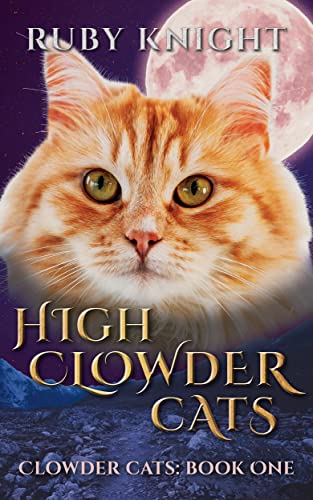
Life as a feral cat is not easy. When you are alone without a colony, surviving is even harder. Bushytail is determined to have a territory and family of his own. So he sets off to find a territory away from humans where he can meet other tom cats. He finds a home with a group of toms, and they have great adventures together. That is until one of the tom cats, Watcher, Bushytail’s friend, meets a tragic end. Bushytail is shocked and sad that his friend has died. He decides to set off for another territory, hoping to start over. On his way, he is joined by Bristle, a wise, secretive, and strong tom cat. This chance meeting is the beginning of a story of hope, love, sacrifice, and adventure.
Ruby Knight has written an incredible fantasy story for teens and young adult readers that will also entertain and captivate adult readers. The protagonist Bushytail is resilient, sweet, and has hidden leadership qualities that are revealed as the story unfolds. He does, however, have some fascinating weaknesses that provide additional depth to his character. Bristle, Bushytail’s mentor, is a medicine cat; he is mysterious and reveals his knowledge and teachings to Bushytail whether he wants these lessons or not. The other characters in the story are detailed and add an additional layer to the overall story as you get to know them. Readers will find themselves cheering for them and frantically turning the pages, wondering what they’ll get up to next.
The pace of the story never lets up; readers are kept on edge, waiting to see what happens next to this band of cats. The drama in the novel is well done and commendable; readers can easily visualize the dynamics between the characters. The story’s setting is well written and makes for a pleasant reading experience as the reader can visualize the environment and feel like they are there with this colony of cats. The world-building is expertly woven with extra attention paid to the small details making for a memorable and immersive experience.
High Clowder Cats by Ruby Knight is a captivating young adult fantasy novel. The storyline is original, interesting, and easy to get lost in. This is a fantastic start to this new series about a group of feral cats and the struggles they face in order to survive.
Pages: 235 | ASIN : B0B62NSBFB
Based On My Own Experience

About a Girl follows one young man’s journey of self-discovery while growing up in California in the 90’s as he navigates love, friendship and betrayal. What was the inspiration for the setup to your story?
The inspiration for About a Girl was based on my own experience in high school.
Will is a compelling character. What were some driving ideals behind his character’s development?
I wanted Will to represent the average teenager in the 1990’s. I also wanted the reader to see Will’s motivation with numerous flashbacks.
What were some themes that were important for you to explore in this book?
Trust, loyalty, friendship, and forgiveness.
What is the next book that you are working on and when will it be available?
I’m currently writing Hannah, (working title) a hybrid prequel/sequel to About a Girl told from Hannah’s point of view. It will be available in the summer of 2023.
Author Links: Twitter | Facebook | Website
Coming of age in Visalia, California was simple for Will; it was always about a girl. There was one girl in particular, though, that monopolized his thoughts. Her name was Hannah, and she was the most beautiful girl that Will had ever seen.
Will played in a band with his friends, Rob and Chris. They had been jamming together for two years but were reaching a point where they differed about the direction the band should take. Will wanted to branch out musically, but Rob wanted to keep everything the same. It was a struggle. The focus changed, however, when Hannah moved down the street from Chris.
Follow Will on his journey of self-discovery, friendship, love, and betrayal to find out if life is indeed, simply, about a girl.
Demon’s Land
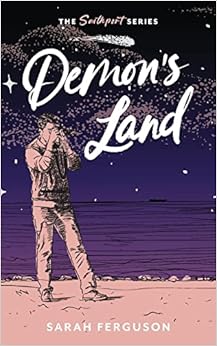
Sixteen year old Jude is just trying to get through life while using photography as an outlet. He faces many hardships that a teenager shouldn’t have to face, from his mother leaving to a father who doesn’t understand him. Along with his only friends CeCe and Abel, they are just trying to make it and find their way through life. Jude struggles with telling CeCe how he really feels about her while CeCe tries to help Abel and Jude keep it together. On top of it all Abel has to deal with school bullies because he is gay and considered not normal. How will the three friends overcome the obstacles that life has given them?
Demon’s Land by Sarah Ferguson is an emotionally-charged coming-of-age story that utilizes sharp writing to elevate a contemporary literature story into something that is sentimental but powerful. Jude’s character is dark and brooding. He just wants someone to love him. I found his character to be well-crafted, relatable and endearing. His character gives hope to those who are going through hard times as he channels the same worries that we all have, but the author conveys those emotions in a way that feels sophisticated. I appreciated that CeCe’s character is the voice of reason and she genuinely cared for Abel and Jude. I enjoyed Abel’s character because he is not ashamed of being gay and Jude accepts him for who he is. This makes the novel a fantastically uplifting LGBT novel that feels authentic.
Fergusons is a fantastic storyteller with impactful writing. Her way with writing tells so much in such a short read that I didn’t have questions even though the ending leaves the reader hanging. There are serious topics that are explored throughout the story, but the author handles it beautifully. I felt the isolation and hopelessness that the characters felt and I was rooting for them the entire time.
Demon’s Land is a heart-felt and inspiring coming-of-age novel. I recommend this book to readers who are looking for a profound young adult story that deals with trauma in a way that feels grounded and poetic.
Pages: 120 | ASIN: 0645355992
Was the online world occupied by ghosts?

End Man follows a man who hunts people pretending to be dead. On his next case, he unearths the secrets of his own phobia-plagued life and the inner workings of the company he works for. What was the inspiration for the setup to your story?
The idea for End Man came from an online experience. I’d been trading pages with a fellow writer. We’d been in this relationship for months, and we thought the swapping beneficial. I emailed her some new chapters and asked her to send her material. She didn’t get back to me acknowledging my new chapters or sending hers. I sent several messages, which also got no response. In her story, her main character was battling an incurable disease. Had she fictionalized her own ailment? Could she be hospitalized—or worse? I checked her Facebook and Goodreads pages, but I found nothing to explain her silence. As I reviewed more of her online haunts, I realized if she had succumbed to an illness, everything she had posted online would remain intact. She would still get likes; people would continue to comment on her posts, friend her, spam her. As if her life went on. How many internet users was this already true of? Was the online world occupied by ghosts? This seemed to be the stuff of a speculative novel. As I developed the plot, I recalled Gogol’s novel Dead Souls in which the main character figures out how to profit off of dead serfs (Gogol gets a shout-out in End Man). Now I had to come up with a contemporary (2030s) business plan to match the Russian author’s slick scam. Over many drafts, I recognized I had to provide details sufficient to raise venture capital if I were pitching Norval Corporation in the real world. As to my missing writer, I discovered that—ironically—she was “ghosting” me, a term that came into play while I was writing the novel. To that point, yesterday, Linkedin invited me to congratulate a former colleague on his work anniversary. The man is five years dead.
Raphael Lennon is an intriguing and well-developed character. What were some driving ideas behind your character’s development?
In early drafts, I had two POV characters: Raphael Lennon and Clark Ramfree. Clark was a middle-aged former journalist who lived the good life abroad; Raphael was a 26-year-old IT worker with a lifelong phobia that made it impossible for him to leave his Los Angeles neighborhood. Clark was free, and Raphael unfree. I wanted to explore how Raphael’s phobic prison affected every aspect of his life to produce a shy, self-conscious person whose boundaries occupied him. With Clark, I wanted to see what would happen if his freedom proved illusory. Unable to weave the two character threads, I extracted Clark from the novel, leaving Raphael alone to explore the notions of freedom and imprisonment. Raphael suffers from dromophobia, the fear of crossing streets, but he has a rare form. It’s only four streets that he can’t cross, but the four intersect to form a rectangle of about one square mile. Each of the four streets holds its own terror. Because his phobia is so unrelatable to others, he has hidden it, making far-fetched excuses why he can’t go to the beach at Malibu or the class trip to Magic Mountain. In his own eyes, he is weird, and believes others view him similarly (crank up Radiohead). Saddling Raphael with this heavy load, I lightened it a bit by making him an expert skateboarder, which provides physical exhilaration. I also gave him a love of music, which I view as transcendent. Guided by his mother, a museum curator who died young, Raphy also loves art and is a painter himself. He works on a canvas that stretches across his living room ceiling, and may be the key to his freedom. He resembles David Bowie, but his name is Raphael Winston Lennon, and there are parallels with both artists in his character. John Lennon’s mother, Julia, was killed by a car at age 44. Her death devastated Lennon, and he wrote several songs about her, reflecting his grief. In End Man, Raphael’s mother, at about the same age as Julia, dies of a horrible disease that turns her to stone; Her memory and suffering haunt Raphael. End Man is a dystopia in the making. Winston is the protagonist in Orwell’s 1984. It’s also John Lennon’s middle name. David Bowie’s favorite book? 1984. David Bowie created his last album around the theme of death.
What were some themes that were important for you to explore in this book?
Our appointment with death, and our refusal to accept it, which isn’t necessarily a bad thing. The eroding of death’s meaning. Stalin said, “One death is a tragedy; one million deaths is a statistic.” I’m not sure that one death remains a tragedy. We get numb. We can’t keep count of all the mass shootings. The extent to which our personal data is accumulated and the ends to which it is being put. What is consciousness? Can a machine (AI) become conscious? Our frames (the rectangles not found in nature): cell phones, computers, coffins.
What is the next book that you are working on and when will it be available?
The publisher has asked me to write a sequel. I’ve been mulling ideas for the plot. In End Man, I set up a new pantheon of minor gods, influencers, and I’m sure they’ve been up to mischief. I’m also finishing a rewrite on a realistic novel called Blood Marriage about a young woman who escapes an arranged marriage in Pakistan. The novel has been up on Radish, but its second half is a mess. The beat goes on.
Author Links: GoodReads | Twitter | Facebook | LibraryThing
Afflicted with dromophobia, the fear of crossing streets, 26-year-old Raphael Lennon must live out his life within the four thoroughfares that border his Los Angeles neighborhood. Luckily, he found a fulfilling job within his space as an End Man at Norval Portals where Raphael is the best possum hunter in the company. He hunts the dead who live, people hiding under the guise of death. He doesn’t want to bring these “possums” to justice but to keep them out of his firm’s necrology database so their presence doesn’t crash the whole system.
When the company founder assigns Raphael a fresh case, he sets aside all other work to investigate Jason Klaes, a maverick physicist with boundary-pushing theories that may have attracted unwanted and sinister attention. Raphael soon discovers messages sent by Klaes after his supposed death—threats to people who have subsequently died. As he digs deeper, he receives his own message from Klaes, a baffling command to pursue the truth.
As he unravels the mystery, he unearths the secrets of his own phobia-plagued life and the inner workings of Norval, whose corporate ambitions include a nightmarish spin-off of its product. Raphael must stop them or he’ll never be free and neither will anyone else.



 LITERARY TITAN