Author Archives: Literary Titan
A Bit of a Crazy Event

Book 5 – The Lions follows a frightened but kind-hearted hero as she navigates a dangerous wilderness, forms unlikely alliances, and discovers that courage can exist even when fear never fully fades. What were some sources that informed this book’s development?
The Lions is the 5th book in a 10 book series, all written whilst I was travelling through Africa in a camper van with my husband. The lion’s story developed from a bit of a crazy event we experienced ourselves. We were on a guided walk in the Botswana Delta with a guide we later discovered was really quite inexperienced. We were aware there had been a lion kill that morning, as we had all heard it from our tent, and we stumbled upon a pride of lions just about to start their buffalo breakfast. It was a huge buffalo (particularly compared to us – we literally would have been a side of chips in comparison), and the lions had fought hard for it, The male roared so loudly at us that I think my heart stopped for a minute or two. We had a bit of a stare off for a minute, us and them, until both parties left – us walking backwards slowly, they walking in the long grass, quite quickly, in the opposite direction. It was that moment that inspired Book 5, particularly how the lions all scoff at Casper, a teeny weeny house cat, worried that they’d bother eating something that was smaller than the average hairball they cough up every now and then.
What inspired Casper’s personality? Especially the choice to let her stay scared while still being brave?
I think Casper is all of us, brave and scared all the time. Anxious and confident. I mean, I know I’m anxious, and I know so many of my friends and family are too, but nobody ever really knows that, because we are confident too. We spend our life navigating new waters; whether it’s a new job or a new school or a new friend or a new town – how can we not be scared and anxious? But we have to do it, we have to get through, or wouldn’t we just be a shivering wreck all the time? Never leave home? I ran a film school for some years, back in Australia, and so many of my students were so, so anxious, and they thought they were the only one. But here they were, at a university, far from home, learning to become a filmmaker. I realised then that just about everyone is anxious, the most talented, the most beautiful, the most weird, wonderful, crazy – it doesn’t matter who we are, we’re all anxious and we should know that we are all anxious, and we are also all brave, and that it’s perfectly normal to be that way.
Was there a particular animal character (or group of animals) you had the most fun writing, and why?
In this book I loved writing about the lion brothers. These huge, beautiful, confident (and a little arrogant) animals, kings of the jungle, who don’t have to do much but swagger around all day long while the lionesses hunt and care for the kids, and here they are, being yelled at by a tiny house cat (no bigger than a chip). But at the end of the day, the minute they hear their family is in danger, they jump up with no thought but to protect them, regardless of the danger. I enjoyed the brotherly love they had, the easy conversation between them, the confidence in their kingliness.
In other books, one of my absolute favourites was the baby elephant, Bugle, in Book 2, The Elephants, because he reminded me of so many young boys (I have 4 younger brothers), and their obsession with things like poop and farting. I loved writing him because I found him funny and I probably was missing my brothers at the time!
The story emphasizes cooperation across different creatures. Was that message something you planned from the start?
The entire series came about because I’ve always wondered if cats and dogs that get lost and then find their way home, sometimes hundreds of miles away, asked other animals for directions. And why wouldn’t they? And the world is so terribly chaotic at the moment, I just wanted to create a world where there is peace and kindness and no hatred for someone who is not like you. I know that my little Casperverse is all love and cooperation and gentleness in a harsh world, and maybe it’s unrealistic, but I find it peaceful and I want to live there, and I hope that when kids are reading my books they ‘live’ there too, if only for the few hours it takes to read. Maybe this behaviour, this cooperation can be as learned as bigotry is, and maybe, in the end, enough books like this will win the battle for the next generation so that it isn’t just wishful thinking anymore.
Author Links: Website | Facebook | Instagram | LinkedIn |TikTok | YouTube | Pinterest | Goodreads
After leaving the noisy baboons behind, Casper wakes up beneath a tree full of chattering guinea fowl, only to stumble straight into the path of two enormous lions. But Hasani and Harry aren’t quite what she expected. Between their royal-sized egos, jump-scares, and thunderous laughs, Casper soon discovers that being king of the jungle comes with its own set of problems—especially when poachers return to the savannah.
Joined by an army of surprising new allies—spiders, scorpions, and even antlions—Casper helps the pride turn the hunters into the hunted, proving once again that courage doesn’t always come with claws and fangs.
Perfect for readers ages 5–10, The Lions is a beautifully illustrated chapter book packed with:
• Exciting animal adventures and laugh-out-loud surprises
• Big-hearted themes of courage, teamwork, and protecting others
• Real wildlife facts woven seamlessly into the story
Written by award-winning filmmaker Jennifer Ussi and illustrated by Lekshmi Bose, this thrilling 7,000-word tale roars with adventure, humor, and heart—reminding readers that even the smallest voice can make a mighty difference.
Genluminati


D. T. Levy’s Genluminati is a nervy “what-if” thriller disguised as a confessional novel. What if a handful of clever, disillusioned grad-school types decided, half as satire, half as experiment, to manufacture a faith based on science, and then discovered that belief is a force you don’t get to control once you’ve unleashed it?
The story is framed by Matt, the narrator, hiding in the Mayan jungle in Chiapas, running a small B&B, and trying to write down everything before the past catches up with him. This structure works well. The jungle calm gives the book a haunted stillness, and Matt’s voice, at once analytical and self-justifying, keeps the reader in that uneasy space between confession and rationalization.
At the center are five friends whose intimacy becomes both their strength and their blind spot. The early chapters capture the particular chemistry of smart young scientists who feel allergic to inherited dogma, bonded by private jokes and a shared disdain for proselytizers. That anti-religious posture isn’t just characterization, it’s the novel’s ignition source. Their contempt for fanaticism curdles into a challenge: if people will believe anything, why not prove it?
The spark comes after they encounter protests outside a research institute: anti–stem cell rhetoric mixed with mystical claims about souls, punishment, and “reincarnated scientists.” From there, in a boozy, half-serious brainstorm, Matt blurts the idea that becomes the book’s central sin: “We should create a new religion… A religion based on scientific data.” The author nails the moment when irony crosses into commitment: everyone laughs, but the laughter is the mask that lets them move forward without admitting what they’re doing.
As a concept, I think Genluminati is deliciously contemporary. A pseudo-spiritual path built on DNA as scripture, with techniques that blend meditation, chanting sequences, and guided fantasy, self-help language with a biotech sheen. The novel’s best satirical bite comes from how plausible the packaging feels. The author understands that modern devotion often arrives wearing the costume of wellness, optimization, and insider knowledge.
But the book refuses to stay a satire. Once Daniel is in the mix, the project gains the one ingredient that turns a movement into a religion: a charismatic figure. The text makes his function explicit; he becomes “Our Guide,” the “Spiritual Leader,” the centerpiece of gatherings marketed to followers hungry for an embodied authority. This is where the story’s interpersonal dynamics matter. Emma and Daniel appear as a couple for a time, and that relationship becomes a fault line inside the founding group. Meanwhile, Ben’s long-simmering love for Emma and Daniel’s possessive reaction create a pressure-cooker atmosphere that threatens not just friendships but the stability of the religion itself.
I think the author’s sharpest insight is that power doesn’t only corrupt through greed. Here, the founders insist they aren’t driven by ambition. They claim it began as “a confrontation against fanaticism… a joke, to see how far people would go, how far we would go.” That “how far we would go” is the chilling part. The experiment becomes a mirror, revealing their own appetite for influence.
And then come the consequences. The book’s darker, more urgent second life. Daniel begins to believe his role on a deeper level. Matt and the others start talking about him as someone who thinks he’s a prophet, and the group’s fear shifts from embarrassment or exposure to real-world harm. Matt voices the dread plainly: it’s not only about Daniel’s mental health, but what he might do “with his followers.”
That fear culminates in an extreme act: they remove Daniel from the movement, effectively holding him in captivity, with the stated aim of protecting him and protecting the public from him. The ethical knot here is the novel’s most provocative tangle. The founders started by playing at gods of meaning; by the time they’re isolating their own “prophet,” they’ve drifted into the logic of authoritarian control, deciding who gets freedom, who gets silenced, and what risks justify coercion. Even their strategic calculus has an eerie realism: will Daniel’s disappearance weaken the faith, or make him a martyr and strengthen it?
The book also widens its lens to show collateral damage. Followers spinning theories, offices overwhelmed by calls, people unsure how to proceed without someone “dictating the agenda.” In other words, belief doesn’t evaporate when the founders panic. It mutates, decentralizes, and keeps moving.
Genluminati succeeds most when it leans into that escalation from witty premise to grim inevitability. The friendships feel textured and messy, the Boston-to-jungle framing gives the narrative urgency, and Daniel’s transformation into a focal point of devotion is handled with believable menace. The novel sometimes explains its themes as directly as it dramatizes them. Matt can be self-aware in ways that smooth over ambiguity. Still, that’s also consistent with a narrator trying to justify himself while confessing.
Genluminati is a cautionary tale for an era addicted to viral ideas. You can invent a religion as a prank, but you can’t prank people into believing. Belief is already waiting for a container. Levy’s five friends build that container, and the novel’s sting comes from watching them realize, too late, that they’ve built something that can build back. If you like the morally fraught, idea-driven suspense of Dan Brown’s The Da Vinci Code, the philosophical sci-fi edge of Blake Crouch, or the cultish social unease of Dave Eggers’ The Circle, you’ll find Genluminati a smart, darkly propulsive read, and an easy recommendation for anyone drawn to stories about belief, influence, and the dangerous consequences of playing with power.
Pages: 480 | ASIN : B0FZ998JBT

A Motif of Connection

Passages follows a man from his childhood in Greece through the challenges of his family’s history to his career as a physician caring for veterans. What was the inspiration for the setup of your story?
The factual history of a naval combat vessel active in the Vietnam conflict provided a motif of connection between principal characters, neatly laying down a plot line that would intertwine their rites of passage. The aging naval combat veteran and the young psychiatrist encounter one another under duress at parallel crossroads in their lives as their therapeutic relationship unfolds.
Can you share with us a little about the research that went into shaping your storyline?
My own training in medicine and the military provided a firm floor for a realistic representation of the formative milieu of the two protagonists. Structured interviews with sailors who were in the fight provided supportive resources on events, equipment, and tactics, and helped sharpen the context of combat events as well as the personal aftermath on the return to civilian life. Drawing on contemporaneous events in the news of Tulsa, Oklahoma served up a scenario for the make-or-break challenge that sets the story line in motion.
What was one scene in the novel that you felt captured the morals and message you were trying to deliver to readers?
Of many scenes that make a statement of conviction, an epiphany for many readers will arise from AJ’s description of the ramifications that the hyperfocus of battle can have on a young man much later in life.
What is the next book you are working on, and when will it be available?
The likely next release involves four women growing up together on Staten Island and lessons of empathy learned through their deep bonds. Look again in 6-12 months for Four Corners!
Author Links: GoodReads | Facebook
Miko, the precocious son of a Greek fisherman, has weathered an indecisive path to adulthood in medicine and psychiatry. . . or has he? Dormant in his soul is a muse for writing and a smoldering guilt of abandoning his father. His training trajectory finds him in Tulsa, USA, of all places, where a 2 a.m. hospital admission, the aging, drunk, and potentially violent Vietnam veteran AJ becomes the young physician’s patient. A metaphysical quirk awaits them.
Unwitting confidants in the quest to understand what each is missing, the two trade insights best borne from meeting the other where he is. AJ is a prisoner of the exhilarating echoes of a confusing war; Miko suppresses his own psychological turmoil while exposing that of others.
A chance meeting of their wives leads to a bond kept hidden under norms of confidentiality. Each woman finds something of themselves in the other and the moxie to withstand battles in their own marriages, on their own terms.
Why AJ was brought to the hospital by the police that night pits a sense of duty against self-destruction. Why was there but a single round in his Luger that night?
In Passages, the author takes aim at our enigmatic humanity. Each of us is the hero in his or her own life, a contrast of magnificence and flaws, navigating the complexity of principles and barriers as best one can.
At once philosophical and deeply human, Passages explores identity, trauma, loyalty, and the invisible threads that tether us to the people we least expect. With poignancy and grit, it reminds us that healing often comes not from having the answers, but from simply being seen.
I Always Knew We Were Meant For You

I Always Knew We Were Meant for You is a warm, dreamy picture book that follows two loving bear parents as they hope, pray, imagine, and prepare for the children they know are meant to join their family. Each page shows a new moment in their journey, from bright blooming flowers to snowy messages drawn in the winter, from sweet notes written to their future kids to daydreams of treats and adventures. It is a gentle walk through seasons and signs and longing and joy, all building toward the moment their family becomes complete.
The book carries this steady heartbeat of hope that is surprisingly emotional. Every line starts in the same way, which works like a lullaby. I found myself leaning into the rhythm without even noticing. The idea of looking for clues in everyday beauty made me smile, because it felt so honest, like something someone waiting for a child would really do. The illustrations are really lovely as well. They are bright and sweet and just a little sentimental in a way that pulled me in.
I also loved how the story keeps circling back to love. Not flashy love. Just steady, patient love that grows with time. There is a soft faith woven into the wording. Not over the top. Just enough to show how deeply these parents hoped. Sometimes it gave me a tiny lump in my throat. I could almost feel their excitement when they imagined pictures of future little ones or when they wrote letters about favorite places they wanted to share. It all felt personal and tender and kind of universal at the same time.
I think this children’s book is perfect for adoptive families or families waiting to grow in any way. It would be lovely for kids who want to hear how loved they were even before they arrived. It is gentle enough for bedtime and heartfelt enough for special moments, and I would happily hand it to anyone who wants a cozy story that glows with love.
Pages: 29 | ASIN : B0FH67JWLY
Beyond These Walls

Beyond These Walls tells the story of personal renewal after adversity. It blends memoir and guidance as author Matilde Hernandez reflects on her journey through separation, incarceration, healing, and reintegration. She walks the reader through the power of personal narrative, the weight of shame, the courage of forgiveness, and the long road toward rebuilding a meaningful life. Her chapters mix personal stories with advice, exercises, and reflections that invite readers to look at their own past, release old wounds, and step into a future shaped by resilience rather than regret.
As I read, I was pulled in by the honesty of her voice. The writing has an openhearted simplicity, and I found myself pausing often because something she said hit a little too close. She talks about the moments when you look around and wonder how life shifted under your feet, and that struck me. Her stories feel authentic, not polished for effect. At times, I wanted a bit more tension or texture, but the plainness also made the ideas easy to hold. I appreciated how she talked about reframing your story. It’s such a simple idea, yet the way she describes taking ownership of your narrative made me sit with my own thoughts longer than I expected.
When she writes about separation and the confusion of losing daily life with family, I felt a knot in my chest. She doesn’t dramatize the pain; she just lays it there, and somehow that makes it heavier. I liked the encouragement woven through the book. Her emphasis on self-forgiveness really resonated with me personally. It made me think about how often we wait for permission to move on when she argues you can give that permission to yourself.
By the end, I saw the book less as a step-by-step guide and more as a companion for people rebuilding from something that broke them open. Hernandez speaks to anyone who has lived through shame, confusion, or a hard reset in life. I’d recommend this book to readers who appreciate gentle encouragement, personal faith, and emotional honesty. It’s especially fitting for people navigating re-entry, major life transitions, or periods of deep self-reflection.
Pages: 124 | ASIN : B0DV7Q87MX
The Surf Kidz Riding Waves
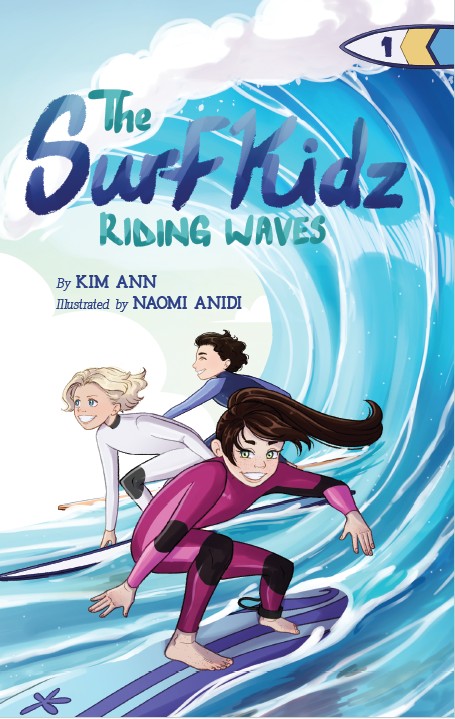
The Surf Kidz: Riding Waves, written by Kim Ann and illustrated by Naomi Anidi, is a lively, fast-moving, and emotionally resonant chapter book that immerses readers in a world shaped by salt air, rolling waves, and the intensity of childhood friendships. From the opening pages, the story carries readers straight into the ocean alongside Maya, Oliver, and Jack, better known as the Surf Kidz, three lifelong friends who have grown up on surfboards and in the water. Surfing defines who they are. Life, however, demands more than waves alone. School responsibilities, family pressure, and an escalating rivalry test their balance and resolve. When a high-stakes surfing competition is announced, the Surf Kidz finally have a chance to prove themselves, particularly against rivals determined to undermine them at every opportunity.
One of the book’s greatest strengths is its accessibility and relatability for its intended audience. The language feels natural and engaging, allowing young readers to connect easily with the characters and move through the story with confidence. Short, well-structured chapters maintain a strong sense of momentum, making the book especially welcoming for readers who are new to chapter books. Naomi Anidi’s illustrations appear throughout the text, adding visual energy and emotional depth. Surf sessions feel dynamic. School scenes feel familiar. Rival encounters carry real tension.
Beyond the action on the waves, the story thoughtfully explores challenges many children face in their own lives. Maya’s struggle to juggle academic expectations with her passion for surfing feels grounded and believable. Pressure comes from multiple directions, creating conflict without feeling exaggerated. At the heart of the story is the friendship between Maya, Oliver, and Jack. Their bond anchors every chapter. They study together. They train together. They support one another through disappointment and doubt. Time and again, they demonstrate what it means to stand united when confronted with rivalry or bullying. The message is clear and powerful: teamwork, loyalty, and encouragement matter, both in competition and beyond it.
The rivalry with the Wave Warriors adds excitement while never overpowering the book’s positive core. Conflict serves a purpose. It challenges the Surf Kidz to stay focused, confident, and compassionate, even when faced with negativity. The story builds steadily toward a thrilling conclusion and closes on a cliffhanger that leaves readers eager for more, inviting them to imagine what lies ahead as they await the next installment.
The Surf Kidz: Riding Waves encourages young readers to chase what they love, stand by their friends, and believe in their own abilities. It may even inspire them to try something new, whether that means catching a wave or finding the courage to ride through challenges of their own.
Pages: 52 | ISBN: 978-1-953774-56-9
Sacrificial Lambs

Keith A. Thomas, Jr.’s Sacrificial Lambs is an audacious blend of religious thriller, apocalyptic fantasy, and supernatural war story, anchored in Vatican City and propelled by a “sacred key” described as the Trinity’s “secret recipe…a genetic code” for creating supernatural beings, now stolen and in the wrong hands. The premise is immediately grand in scale. A dark figure, Natas Christopher, rallies monstrous followers under prophecy and the shadow of the fallen angel Nero.
The novel’s most distinctive feature is its voice. The story leans into elevated, scripture-inflected diction. Characters speak in ceremonial rhythms (“ye,” “thou,” proclamations, edicts), which gives the story an operatic, mythic flavor that feels intentionally larger than life. For readers who enjoy biblical cadence and high-stakes spiritual conflict, that tone is a feature, not a bug. It makes the world feel governed by rules older than humanity.
Sacrificial Lambs moves with the momentum of a cinematic set-piece sequence. Divine warnings, secret councils, strange portals, and escalating confrontations that repeatedly widen the scope from personal peril to world-ending consequence. Darr, the archangel sent to intervene, provides a powerful structural spine, functioning as both protector and relentless timekeeper, pushing the Pope and selected clergy toward action. The Vatican setting, paired with supernatural intrusions, creates a satisfying pressure cooker. Faith becomes less an abstract institution and more a battlefield.
Where the book lands most strongly is in its imagery and spectacle. The author has a talent for staging moments that feel designed for a screen. The sense of “prophecy” made physical, and the feeling that sacred spaces can become arenas without losing their awe. The climax delivers on that promise, with Darr and throne guards arriving as judgment is rendered, and Natas Christopher’s threat forcibly contained. The closing beat is also intriguingly sharp. After the supernatural crisis, the story pivots back to human accountability. That final turn reframes the title in a pointed way, suggesting that “sacrifice” is not only cosmic, but institutional and moral.
For fans of theological horror, end-times fantasy, and Vatican-centered intrigue, Sacrificial Lambs offers a confident commitment to its big ideas and an unapologetically maximalist style. I would recommend this book to readers who enjoy supernatural/religious epics with prophecy, angels and demons, and high-drama moral reckonings, especially those who like their thrillers soaked in mythic language and spiritual stakes.
Pages: 356 | ASIN : B0DLDFZ7P1



 LITERARY TITAN