Author Archives: Literary Titan
Indra’s Net: A SEEKER’S Guide to the Human Experience


Indra’s Net, by Indra Rinzler, is a spiritual guide built from seventy-eight themes that weave stories, reflections, and practices into a single tapestry of awakening. The book blends personal experience, Tarot-inspired structure, mythic symbolism, and grounded spiritual lessons. It invites readers to look inward, release old patterns, and explore consciousness with curiosity. The author draws from decades of study, travel, meditation, and teaching to create a kind of living manual that meets readers wherever they are. The effect is a blend of memoir, parable, and spiritual toolkit.
Reading the book, I kept feeling a mix of surprise and comfort. The writing carries a warm, almost conversational honesty that makes even the heavier ideas feel approachable. I liked how the author refuses to separate the mystical from ordinary life. A simple bowl of oatmeal becomes a miracle. A long walk in Thailand becomes a spiritual dilemma. A beggar’s smile becomes a master class in grace. The stories feel loose and unforced. I found myself nodding along, then stopping, then looking up from the page because something landed in my chest. The rhythm moves from personal anecdote to broad spiritual teaching so quickly that it left me slightly off balance in a good way. It reminded me that understanding rarely arrives in a straight line. It sneaks up on you.
At the same time, the ideas stirred up a strange mix of awe and restlessness. The author talks a lot about surrender, intuition, and letting life unfold. Some moments felt so gentle that I relaxed into them. Other moments poked at me. The theme of impermanence, for example, made me strangely uneasy. I felt myself push back, even as I knew the point was to soften. That emotional tug made the book stick with me. I appreciated how the stories never try to be perfect teaching moments. They wander and land where they land. The book feels authentic, and that gave it a texture that pulled me deeper.
By the last pages, I felt a quiet gratitude for the way the Rinzler uses imagery and structure. The Tarot framework, the themes, and the practices are presented at the end of each chapter. It all creates a rhythm that feels like a long walk with someone who has been on the road a while and wants you to see the scenery with fresh eyes. I would recommend Indra’s Net to readers who enjoy reflective, spiritually curious writing and who like books that offer small, steady insights rather than big proclamations. It is especially good for people who want a companion on their inward journey. Someone who wants to feel less alone and more connected to something larger and kinder than their own thoughts.
Pages: 286 | ASIN : B0FX65LB69

Letters From the Sand

Reading Letters from the Sand, by Scott G.A. Metcalf, felt like sitting down with someone just back from deployment and asking, “So what was it really like?” It is a military memoir that follows one soldier from the shock of stepping off the C-130 into the brutal desert heat, through the daily grind of patrols, life in canvas tents and crowded barracks, cultural encounters with Iraqi civilians, holidays spent far from home, and finally the uneasy process of coming back. The book moves in clear stages, from arrival and adjustment to stress and resilience, and then into reflection and return, so by the end I felt like I had walked the full arc of a tour alongside the narrator.
What stood out to me first was the writing. It is vivid. The heat, the dust in your teeth, the smell of jet fuel and sweat and canvas, the cramped bunks and noisy mess hall, all of it is described in careful detail that pulls you into the space rather than just telling you what happened. The style leans toward long, rolling sentences that mirror the drag of long days on base and on the road, then suddenly there is a short, sharp line that hits like a snapped command. The first-person voice helps a lot. It feels controlled and thoughtful, not like a raw journal dump, which gives the whole memoir a steady, grounded feel.
I also appreciated the way the author handles choices and ideas rather than just scenes. There is a lot here about routine and discipline, but underneath that is a constant question about what all of this is doing to the people involved. The book lingers on small human moments in the barracks, late-night conversations, card games, letters home, the way guys arrange their bunks with photos and little bits of home to hang on to who they are. It also pays attention to the civilians around them, the awkwardness of brief meetings in villages, and the mix of suspicion, fear, and curiosity on both sides. The memoir never turns into a big political argument, which I actually liked. Instead, it lets you sit with the tension between duty and doubt, pride and fatigue, connection and distance. By the time you get to the later reflections, the early scenes of arrival and “mission talk” feel heavier, because you have watched what that environment does to people over months, not days.
Letters from the Sand is a good fit for readers who like reflective, character-focused military memoirs rather than pure action stories. If you are a veteran or close to someone who has served, a lot of this will ring painfully true and might give you language for things that are hard to explain. If you have never been near this world but want to understand what “deployment” really feels like on a day-to-day, human level, this book is a patient, honest guide.
Pages: 201 | ASIN : B0G2335VNQ
The Split

The Split gathers the voices of women who faced the unraveling of marriages, families, identities, and long-held beliefs. Across these stories, the writers look directly at pain, loss, and the complicated paths toward freedom. Instead of treating divorce or separation as a collapse, the book reframes each ending as a turning point where women choose themselves, rebuild their lives, and honor the truth that wholeness can follow even the hardest breaks. By the final pages, the collection stitches together a message that is steady and hopeful. These women are not broken, and they are becoming something stronger.
Reading their words, I felt an ache in my chest more than once. The writing is striking in its honesty, and the stories breathe with real life. Brandee Melcher’s chapter opens with the raw confusion of childhood and grows into a powerful reclaiming of self, and her voice shook me because of how clear and grounded it becomes. Her journey from chaos to confidence made me root for her, and it reminded me how childhood patterns can shadow adulthood until we finally name them. I also found myself lingering on Sierra Melcher’s reflections on choosing peace over performance. Her reminder that children do not need perfect homes, they need healthy adults, resonated with me personally. The stories impact in different ways, but all of them bring a unique emotional punch.
Some chapters hit harder than others, and the shifts in tone from one writer to the next made the book feel unpredictable in a way I genuinely enjoyed. That variety gave the collection its energy. I especially appreciated the moments when the authors stepped back from the trauma and wrote about joy creeping in again. Those small wins felt huge. They made the book less about loss and more about rebuilding something real. At times, I wished a few stories went deeper into the “after” rather than the “during,” but even that unevenness felt honest. Healing rarely moves in a straight line, and the structure of the book mirrors that reality.
The Split would be a meaningful read for anyone standing at the edge of a major life change, especially women navigating separation, divorce, or the quiet breaking points that do not always have names. It would also help friends, partners, and professionals who want to understand what these experiences actually feel like from the inside. The book sits with the hard parts, and it also leaves space for light. I would gladly recommend it to anyone who needs a reminder that endings do not mean failure. They mean a new chapter is ready for you, and you get to decide what it becomes.
Pages: 144 | ASIN : B0G274WVFH
Soul of the Saviour

Soul of the Saviour drops you into a wild mix of brutal training grounds, smoky alleys, ancient magic, and the strange heat of Hell itself. The book follows Saxon Payne as he crawls back into life after years in a mystical retreat. It weaves through his past, the rise of lethally gifted assassins, demonic lovers, grim prisons, tender memories, and the looming clash between Heaven, Hell, and everything in between. It moves fast and swings between action, horror, and raw intimacy. Sometimes it feels like half spiritual odyssey and half grindhouse myth. I found myself swept up in the momentum because the story rarely slows down enough for you to catch your breath.
The writing goes for broke. Scenes in Hell’s kitchens shimmer with disgusting brilliance, and scenes of training in the mountains bristle with physical grit and stillness. There is a real commitment to showing bodies under strain and souls under pressure. The prose jumps from grim to tender in a heartbeat, and it gave me that sense of watching someone flip through different emotional filters just to see what hits hardest. The violence is bold. The sensuality is bold. The humor sneaks in with a wink. I liked how messy it all felt, because it made the characters feel lived-in and not staged.
The whole thread around becoming more than human through suffering made me uneasy and fascinated at the same time. I found myself rooting for characters who should have terrified me and shaking my head at choices that were obviously doomed. The story loves duality. Hope beside despair. Faith beside hunger. Love beside something darker and stranger. Sometimes it veers into excess, and sometimes the emotional beats come so fast I had to take a moment to reorient. But even then, I felt drawn along by the sheer confidence of the storytelling. It feels like the author trusts you to surf the chaos, and I liked that.
By the end, I felt satisfied and also curious because the book leaves a lot of questions humming under the surface. I would recommend Soul of the Saviour to readers who enjoy high-energy dark fantasy, intense character arcs, sharp edges, and worlds that bend myth with modern grit. If you like stories that mix heart with horror and beauty with brutality, this one will keep you turning pages long after you planned to stop.
Pages: 325 | ASIN : B0FCDT2J11
Delaware at Christmas: The First State in a Merry State


Delaware at Christmas is a richly illustrated tour of how one small state has celebrated the holiday across four centuries. Author Dave Tabler moves from early Scandinavian and Dutch settlers to later British, German, Irish, Italian, Polish, Black, and Hispanic communities and shows how each group brought its own Christmas customs into Delaware life. The book then shifts to 19th-century practices like eggnog, sleigh bells, mumming, and plum pudding, before moving into the Victorian period with holly-wreath factories, Christmas seals, and toy trains. Finally, it lands in the late 20th and 21st centuries with house tours, IBM punch-card wreaths, handbell choirs, Kwanzaa, and even Christmas in July, then closes with a reflective postscript on technology and sustainability. The structure feels like a guided walk through time, with short thematic chapters, archival photographs, and clear, accessible explanations that keep the focus on place, people, and memory.
I found the writing warm, steady, and very readable. The tone stays careful and professional, yet it feels like a neighbor telling stories over coffee, not a distant professor. I appreciated the way Tabler anchors each chapter in a concrete detail, such as the Sankta Lucia procession at Old Swedes Church, the Feast of the Seven Fishes in Wilmington’s Little Italy, or the oplatek bread on Polish Christmas Eve, and then pulls back to show how that custom grew from older roots. The references to specific churches, festivals, and streets gave me a sense of real neighborhoods, real people, real weather in December. The short chapter format keeps the pace brisk, and I rarely felt bogged down, although now and then I wished for a touch more narrative glue between topics, especially when the book jumps from one ethnic group to another in quick succession. Overall, though, the style carries a lot of research without feeling heavy, and that balance impressed me.
Emotionally, the book hit me in a quiet but lasting way. It is worth noting that Tabler does not treat Christmas as a simple feel-good backdrop; he lets harder stories in, such as Antebellum Black Christmas and the rise of independent Black churches, and he gives those sections space and dignity instead of pushing them to the margins. At the same time, there is a playful curiosity in chapters on holly wreath factories, punch-card decorations, and Christmas savings clubs, and I caught myself grinning at the sheer oddity of some of those details.
The closing pages, with their focus on Delawareans adapting to online services, digital cards, and greener holiday habits, felt surprisingly tender; they invite the reader to think about their own family rituals and how those might change, or already have changed, over time. I finished the book with a mix of nostalgia, respect, and a little itch to go hunt down a local church festival and hear handbells in person.
I would recommend Delaware at Christmas to readers who love regional history, to Delaware locals and expats who want to see their home through a festive lens, and to anyone who collects books on Christmas customs and folk traditions. It will likely appeal to genealogists, church groups, and teachers who need strong, specific examples of how culture, faith, and migration shape a holiday over time. If you enjoy dipping into short, well-researched vignettes that together build a larger picture, this will be a very satisfying read.
Pages: 130 | ASIN : B0F4NJ2KTZ
Seasons of Life and Love

Seasons of Life and Love is a wide-ranging collection of poems that moves through weather, memory, loss, longing, regret, and joy as if each emotion were its own season. The book ties nature to human feeling in simple, steady language. Storms mimic sorrow. Sunlight lifts the spirit. Quiet evenings bring reflection. The poet uses these images to guide the reader through moments of love, heartbreak, aging, family, and the slow unraveling and rebuilding that we all face. It is a gentle collection, and it lingers on the enduring hope that tomorrow may feel lighter than today.
I found myself pulled in by how honest the poems felt. The writing is plain and open. I kept thinking how the poet reaches for everyday scenes and somehow makes them feel personal. A shift in weather becomes a shift in the heart. A walk at dusk feels like a confession. Sometimes the rhymes tighten the lines in a way that made me smile. Other times they made the sadness feel sharper. I liked that the book never hid from pain. It met it head-on, almost with a kind of calm acceptance. I felt the weight of past loves, old mistakes, and long memories, and I found myself slowing down to take it in.
I also enjoyed the way the poet moves from the small to the big and back again. One poem sits quietly with a single moment. Another sweeps across years in only a few lines. The tone stays warm even when the subject turns dark. There were points where the sentiment leaned a bit heavy, but I could tell it came from a real place. The emotional sincerity is the glue of the book. I liked how the speaker often steps back to reflect on the choices they made. Those moments felt tender, sometimes even vulnerable. I could feel the author trying to make sense of life as it rushes by.
I feel that Seasons of Life and Love is written for readers who want poetry that speaks plainly yet feels deeply. It will appeal to anyone who loves nature imagery, reflections on love and time, or poems that read like diary entries set to rhythm. If you want something gentle, emotional, and rooted in real human experience, this poetry collection will be a good fit for you.
Pages: 126 | ASIN : B0DXR4YLLT
The Arts Council

When I finished The Arts Council, a satirical novel by Dolly Gray Landon, I felt like I’d been dropped into a carnival mirror version of the arts world. The book follows Honorée Oinkbladder, a gifted young artist raised inside a family business that quietly manufactures the physical tokens of achievement for institutions everywhere. Through her eyes, we watch a small city’s arts ecosystem twist itself into a tangle of ego, corruption, favoritism, and theatrical self-importance. Her tense rivalry with Modesty Greedance unfolds against a backdrop of inflated awards, misused donor funds, and a once-noble arts council that has drifted far from its original ideals. The result is a story that sits squarely in the literary satire genre, though it often reads like a character-driven dramedy with teeth.
The writing is lush, verbose in a way that feels deliberate, like Landon wants the excess itself to be part of the joke. There are long, winding sentences loaded with wordplay and invented terms, and then sudden needle pricks of clarity. It’s funny, but also strange, because the humor is threaded through moments that cut close to the bone: the way Honorée hides her beauty so she won’t attract the wrong kind of attention, or the way Modesty relies on spectacle instead of craft because spectacle is what the system rewards. The satire bites hardest when the book peels back the arts council’s history, revealing how a once-merit-driven institution slowly rotted after a leadership collapse. The contrast between past ideals and current dysfunction is one of the book’s most memorable tensions.
What I liked most was how much the novel asks us to think about value. Who gets to decide what counts as art. Who benefits from the illusion of fairness. Who learns to play the game and who refuses. Even the absurd elements feel purposeful: Honorée’s family literally manufactures the symbols that feed inflated egos, yet they see through them more clearly than anyone else. That irony gives the book a reflective core I didn’t expect. The novel also manages to be playful without losing its edge. It mocks the arts world, yes, but it also mourns what the arts can become when honesty gives way to self-interest. I found myself chuckling at one page and nodding in recognition on the next.
The Arts Council is a bold, brainy satire with a lot on its mind. I’d recommend it to readers who enjoy literary fiction that doesn’t mind being a little unruly, especially anyone curious about the messy intersection of art, ego, and institutions. If you like stories that mix humor with critique and aren’t afraid of dense, stylized prose, this one will keep you thinking. For readers who enjoy sharp, offbeat takes on creative culture, it’s a fascinating ride.
Pages: 558 | ASIN : B0G2TFBLHZ
Mulberries In The Rain: Permaculture Plants For Food And Friendship
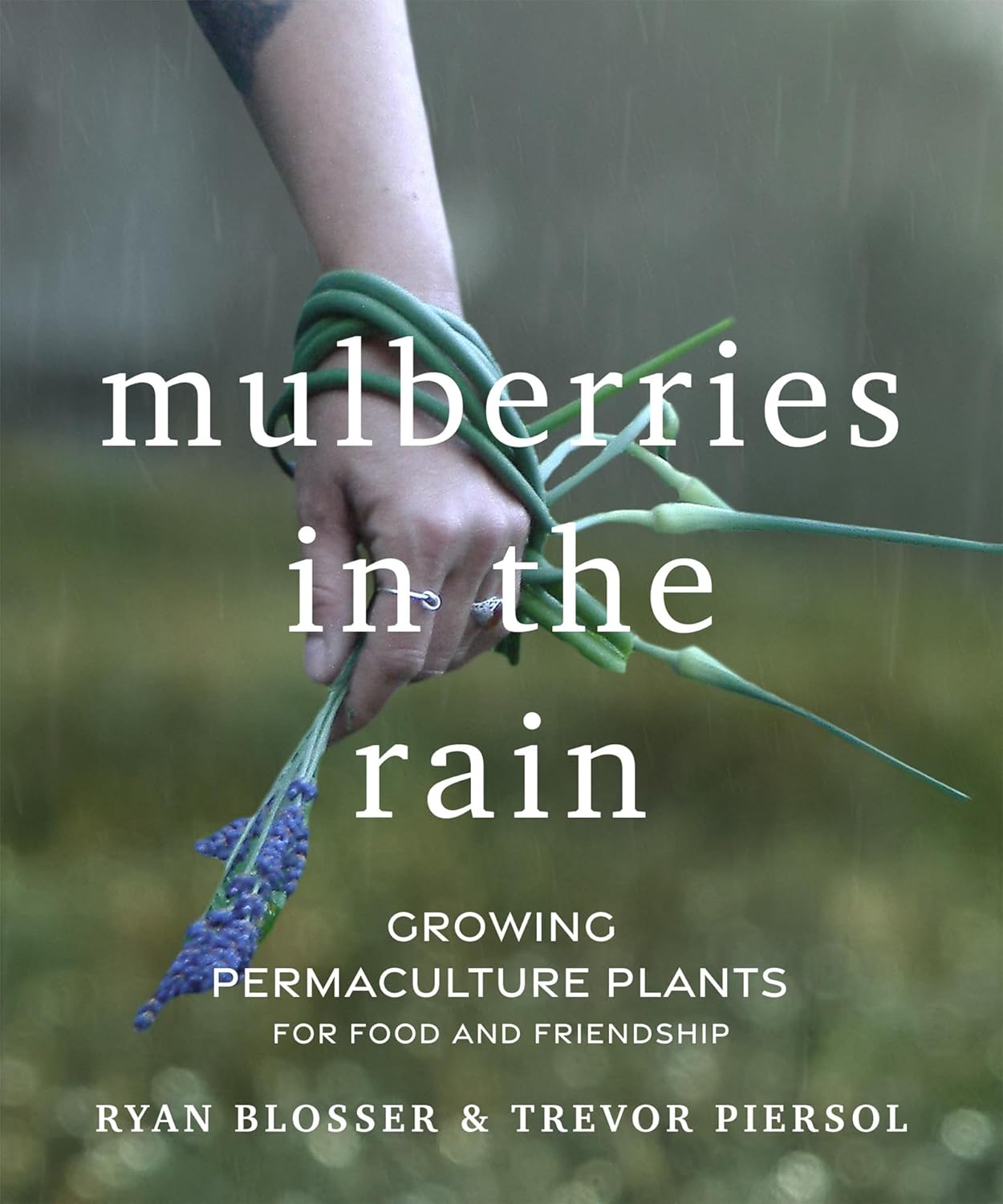
Mulberries in the Rain, is part memoir, part teaching guide, part love letter to plants. It follows two friends, Ryan Blosser and Trevor Piersol, as they build farms, communities, and a shared life of learning through Permaculture. The book blends personal stories with practical frameworks, from the Human Sector to food forests to plant guilds. It paints a picture of people shaped by land and relationships, and it shows how plants become characters in their lives. The authors invite readers to see plants this way, too, and the book moves between narrative, reflection, and guidance on growing dozens of species. It feels like an invitation to slow down and see plants as teachers.
I found myself caught up in the warmth of the storytelling. The tone is friendly. It is confident without trying to sound authoritative. I liked how the writers move between humor and sincerity. One moment, they poke fun at themselves. The next moment, they share something tender about belonging, failure, or learning to listen to land. Their voices feel lived-in and honest, and that drew me in. I also appreciated how deeply human the book is. For a book about plants, it spends a lot of time sitting with the mess and beauty of people, which surprised me in a good way. The Human Sector section especially resonated with me. It made me stop and think about how much our internal stories shape the landscapes we touch.
The loose, talky rhythm of the book has its own charm, and I enjoyed it most when the authors told personal stories. Every time they step into teaching mode, the tone shifts and the pacing slows. That said, the teaching sections still have heart. The reworked Scale of Permanence is thoughtful. The LUV triangle feels like something I could use tomorrow. The 8 Forms of Capital section is full of moments that made me smile, especially the groundhog au vin story. I caught myself nodding at the idea that recipes and jokes and small daily acts can hold entire forms of wealth. The book shines whenever it grounds big ideas in real people doing real work.
I would recommend Mulberries in the Rain to anyone who wants a different way to think about growing things. It is great for new growers who feel overwhelmed and want a gentler entry point or for longtime gardeners who crave a more personal, relational approach. It is also a strong fit for people who work in community spaces or who feel curious about Permaculture but are tired of dry instruction. Blosser and Piersol speak to folks who want stories, feelings, and a sense of connection as much as they want plant lists and guild diagrams.
Pages: 216 | ISBN : 978-1774060032



 LITERARY TITAN