Category Archives: Five Stars
The Making, the Rise, and the Future of the Speakingman-Seventh Edition


Dan M. Mrejeru’s The Making, the Rise, and the Future of the Speakingman is, in its seventh edition, an ambitious work that joins paleoanthropology, neuroscience, climatology, geomagnetism, and civilizational theory into a single interpretive design. Its architecture matters. The book moves from prelinguistic hominin development through migration, cognition, and symbolic culture, then turns toward the future, planetary thermal cooling, and finally the emergence of the Information Society. That breadth gives the volume its proper scale. This isn’t a monograph in the narrow academic sense. It’s a speculative system, a long argument about what kind of creature the human being became, what forces shaped that becoming, and what mental regime may be arriving next.
What gives the book its peculiar identity is the author’s insistence that human evolution can’t be understood by anatomy alone. Mrejeru treats the brain as a structure formed under planetary pressures, especially cooling cycles and geomagnetic disturbances, and he frames the human story around two decisive cerebral transformations: one that differentiates late hominins from apes, and another that produces the “modern brain.” Even the title term, “Speakingman,” is revealing. It presents humanity less as a biological species than as a being constituted by language, cognition, and collective adaptation. The result is a work that reads as both grand hypothesis and metaphysical anthropology, a theory of how matter, environment, and mind coevolve.
I think the book’s most interesting intellectual gesture lies in its contrast between nonlinear and linear modes of thought. Mrejeru isn’t content to narrate the emergence of Homo sapiens. He explains shifts in consciousness, the rise of quantification, the growth of individualism, and the possible need for a future “hybrid thinking approach.” That conceptual range lets the book travel unusually far, from cerebellar development to the political psychology of modernity. At one point, it distills its civilizational unease into the sentence, “This linear way of thinking produced many things,” and the line carries more weight than its plainness first suggests, because the entire book is wrestling with the achievements and costs of linearity as a cultural form.
Mrejeru writes like someone trying to assemble a total picture before the fragments drift apart. The book’s real subject is not only human origins. It’s the author’s attempt to think of origins and destiny within one continuum. That’s why a phrase from the dedication, “I am a nonlinear person,” feels more than autobiographical. It reads as a key to the entire enterprise: the book is shaped by a mind that values cross-domain association, recursive analogy, and large explanatory arcs over disciplinary restraint.
As a five-hundred-page intellectual construction, this seventh edition is best read for the pattern it proposes rather than for any single conclusion. Its scale is its argument. By the time it reaches the Information Society, the book has made clear that it sees humanity as an unfinished cognitive project, still being reorganized by environment, technology, and forms of thought. What remains most memorable to me is the seriousness of that wager. Mrejeru believes that the history of the human mind is inseparable from the history of the planet, and he writes as though both histories are entering another phase together. Whether one accepts every step of the argument or not, the book presents itself as a comprehensive anthropology of becoming, and that’s what makes it a singular, intellectually provocative work.
Pages: 542

The Devil Pulls the Strings

The Devil Pulls the Strings is a dark fantasy novel with the pulse of a supernatural thriller and the sweep of an adventure story. It follows Boone Daniels, a Missouri musician and Ren Faire jouster who has spent twelve years trying to prove that his parents did not simply vanish, but were taken by something monstrous and tied to cursed Paganini music. When Boone is pulled from his small-town life into New York, secret societies, occult history, Slavic myth, and a dangerous search involving three pieces of forbidden music, the book turns into a chase through music, memory, grief, and fate.
The author writes like he wants every chapter to move, and they do. Boone’s voice has an authentic roughness that makes the story feel immediate, especially because the novel leans into his synesthesia, eidetic memory, panic, and stubborn need to be believed. That choice gives the book its identity. Music isn’t just background here. It becomes texture, pressure, color, taste, and threat. I liked that a lot. It makes the fantasy feel embodied instead of decorative. At times, the novel throws a huge amount at the reader, with lore, organizations, artifacts, and side characters arriving fast, but I also think that abundance is part of its charm. It feels like opening a big old trunk and finding it packed with strange objects, scraps of legend, and one more story than you expected.
The mix of themes is bold. Slavic mythology, Paganini lore, fairy tale logic, secret archives, vampire assassins, Renaissance fairs, and a hero from a trailer park should not fit together this smoothly, and yet a surprising amount of it does because Boone is such a sincere center of gravity. He’s bruised, funny, desperate, and often overwhelmed, which gives the story heart. The romance thread with Sapphire and the idea of cursed music could have tipped into melodrama, but the book usually keeps itself grounded by returning to Boone’s grief and his need to make sense of what happened when he was six. That gave the bigger fantasy machinery some emotional weight. I was especially interested in how the novel treats talent as both a gift and a burden. Music opens doors here, but it also asks for blood.
I would recommend this most to readers who enjoy genre fiction that is earnest, busy, imaginative, and unafraid to go big. If you like dark fantasy, occult thrillers, myth-soaked adventures, or stories where music itself becomes dangerous, there is a lot here to enjoy. I think readers who want ultra-minimal prose or a very restrained plot may not click with it in the same way. But readers who are happy to follow a wounded, sharp-edged hero into a world of cursed art, hidden histories, and supernatural conflict will probably have a very good time with this one. It feels like a book written by someone who loves stories enough to pack in everything that fascinates him.
Pages: 252 | ISBN : 978-1736401309
The Original Human Beings
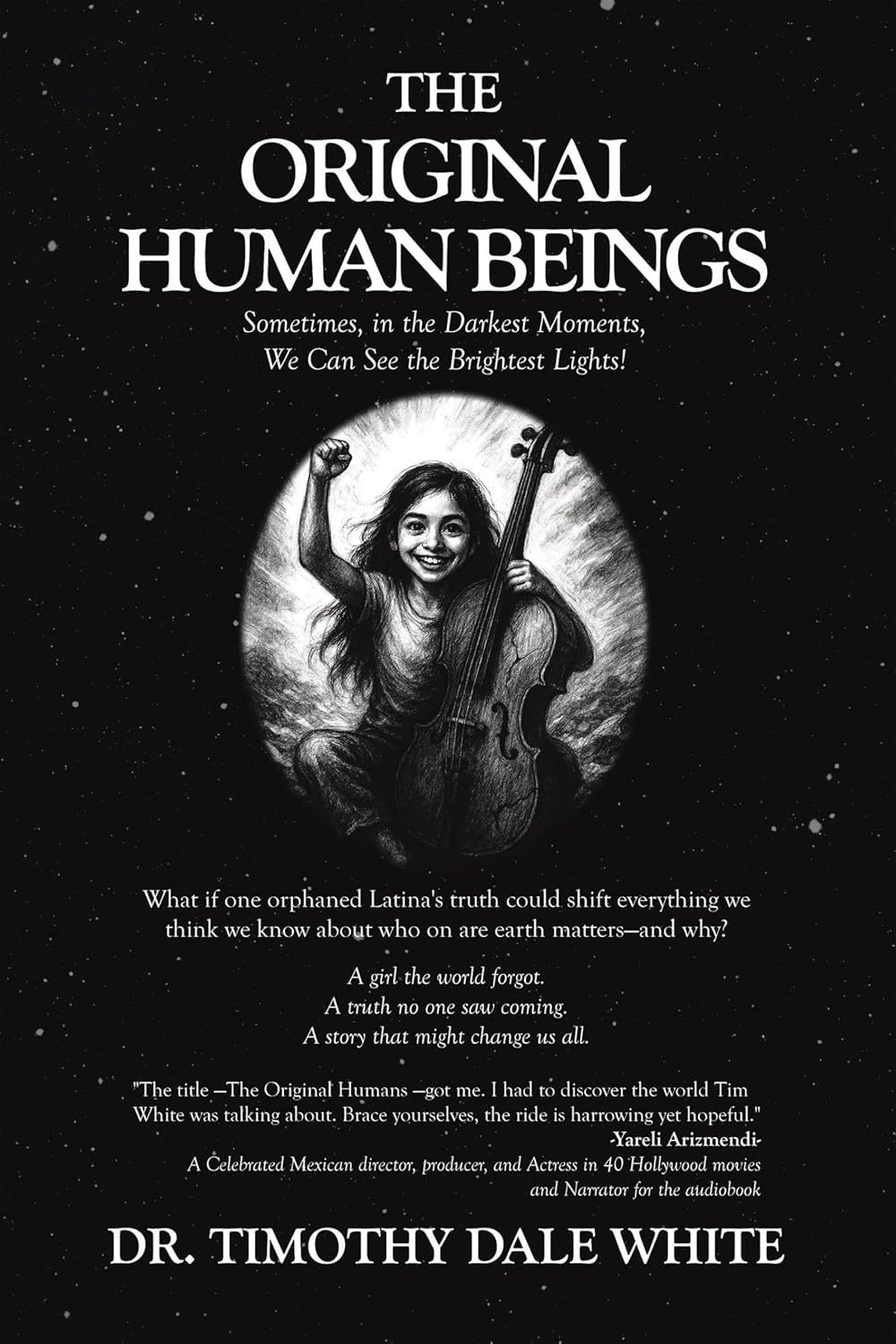
The Original Human Beings doesn’t introduce pain politely. It slams the door open and says: look. The early chapters carry the stench of the Tegucigalpa dump and the constant calculus of threat, who can be trusted, who can be bought, who will vanish. When music appears, it isn’t decorative; it’s defiance made audible, played on a soccer field that no safe child would touch.
The tenderness that surprised me most is how the novel treats naming, not as branding, but as breath. Sister Rosa’s speech about names carrying “history, hope, and resilience” is one of those scenes that feels personal. “Never” lands not as a gimmick but as a vow with splinters in it.
I also didn’t expect the book to be funny in its own way. It has moments where absurdity slips in, people being people even while the plot keeps sharpening its knives, and that contrast makes the grief hit harder. Later, when the story pivots toward chosen family and the messy work of becoming “something new,” it doesn’t pretend restoration is clean. It shows care arriving through awkward neighbors, unlikely protectors, and the weird grace of second chances.
And then there’s the part where a father figure tells Never, plainly, to stop hunting for a rescuer: “You are already enough.” It’s not self-help; it’s a hard-earned verdict delivered without sentimentality. I’ll remember this novel less for plot twists than for the way it insists, again and again, that love isn’t a soft thing. It’s a muscle. It’s practice.
If you like novels where survival isn’t just plot but a pressure that shapes every sentence, and where music becomes a second language for what can’t be said, The Original Human Beings is for you. It’s especially good for readers drawn to immigration stories that refuse tidy uplift, and for anyone curious about how Indigenous cosmology can widen a personal narrative into something elemental. Expect grit, grace, and a kind of hard-won beauty that doesn’t ask permission.
Pages: 356 | ASIN : B0G42BPC2T
Shadows in the Creek (A Dante Villehart Novel)

In Shadows in the Creek, author Michael H. Balfour drops Dante Villehart, a disgraced former journalist, into Edenvale, a polished small town with rot under the lacquer, then sets him on the trail of Lila Summers’s murder. What begins as a local mystery widens into a tangle of money, family grievance, civic theater, and buried loyalties, with Dante trying to solve the crime while also confronting the damage of his own past. The novel’s real engine is not just the question of who killed Lila, but whether truth can survive in a place that has spent years learning how to dress a lie in respectable clothes.
I liked this book most when it leaned into atmosphere and moral abrasion. Edenvale has that unnerving neatness some towns wear like a church coat, and Balfour is good at making its diners, archives, lawns, and charity rituals feel faintly accusatory. Dante is a strong center for this world: bruised, observant, self-distrusting, and just vain enough to be human. I never felt I was reading a puzzle assembled by machinery; I felt I was following a man whose conscience kept snagging on the same nail. The prose often reaches for a sentence with a little burr on it, and I appreciated that. It wants texture, not just speed.
What stayed with me, though, was the book’s earnestness. This is a murder mystery, but it’s also a story about reputations, class insulation, and the almost liturgical way communities protect their own mythology. The novel can be a touch melodramatic. But even then, the book kept its grip on me because it believes in the stakes of telling the truth, and that belief gives it voltage. I found myself reading less for the neatness of the solution than for the emotional weather around it, the guilt, the vigilance, the old humiliations, the sense that one dead young woman is exposing an entire social ecosystem.
I’d hand this to readers who like small-town murder mystery, amateur sleuth, crime thriller, investigative mystery, and domestic noir elements with a strong atmospheric streak. Readers who enjoy Tana French, or who liked the social unease and layered suspicion of Big Little Lies, will probably find familiar pleasures here, though Balfour’s book is more straight-faced. Its best audience is the reader who wants secrets, class tension, grief, and a damaged narrator with a notebook and unfinished business.
Pages: 361 | ASIN : B0FSCLFMK2

The Skin You’re In!

The Skin You’re In! is a thoughtful and gently instructive picture book that introduces children to the skin as both a body part and a daily companion. It moves through the basics with a clear, friendly rhythm, explaining that skin helps us feel, protects us when we get hurt, comes in many beautiful shades, and even has layers with names like epidermis, dermis, and hypodermis. What I appreciated most is that the book doesn’t stop at bare facts. It ties those ideas to a child’s lived world: sunlight on the face, a scraped knee, freckles after time outdoors, the comfort of lotion after a bath, the ordinary miracle of being held together by something so familiar we hardly notice it.
There’s a lovely instinct at its center: to teach science without draining it of tenderness. I could feel that in lines about skin being “a superhero suit you wear every day,” and in the recurring reminder that every shade is a gift, “like colors in art.” As someone who spends a lot of time thinking about how children absorb both knowledge and self-image, I found that especially meaningful. The writing is simple and heavily rhymed, which makes it accessible for younger listeners. I liked that it treats the body with respect rather than squeamishness, and that it folds practical health habits into the reading experience without turning preachy. Even the closing “Skin Hero Promise” feels less like a gimmick than an earnest invitation to notice and care for oneself.
The illustrations are a large part of the book’s charm. Illustrator Bonnie Lemaire gives the pages an open, welcoming brightness that feels well-suited to classroom read-alouds and bedtime reading alike. The children are expressive and varied, and the visual world is cheerful. I was particularly taken with the little box-shaped skin character, who appears as a kind of mascot, sometimes heroic, sometimes instructive, sometimes simply companionable. It gives the book a playful through-line. I also thought the illustrations handled the educational material wisely. The spread showing the three skin layers makes anatomy feel approachable, and the scenes of cuts healing, sunscreen being applied, handwashing, and seasonal care ground the science in recognizable childhood experiences. Even the later pages with the glossary, melanoma ABCDE guide, and certificate keep the tone reassuring rather than alarming, which is not an easy balance to strike.
This is a caring, useful, and genuinely engaging picture book that respects children’s curiosity while affirming their bodies. It has a real desire to help children understand themselves a little better. I’d especially recommend it for preschool and early elementary classrooms, family read-alouds, health units, and for children who love asking how their bodies work. It’s the sort of children’s book that can start a conversation and, just as importantly, make that conversation feel safe.
Pages: 30 | ISBN: 1637658877
Mission: The Figueroa Cipher

Mission: The Figueroa Cipher is a young adult espionage thriller with a strong adventure streak, and it opens with a sharp hook: two teenage agents, James Vagus and Dakota Walker, go from a seemingly easy surveillance job in Rio to a race against time after stolen nuclear launch codes set off a Cold War scavenger hunt. What follows is a globe-trotting mission shaped by riddles, shifting alliances, and a moral argument about power, peace, and who gets to play god with the fate of millions.
What I liked most is that the book understands that spy fiction lives or dies on chemistry, and James and Dakota have it. Their banter gives the story a pulse. James is quick, polished, and a little theatrical, while Dakota feels more instinctive and grounded, and that contrast keeps even the exposition moving. I also appreciated how author C.W. James leans into old-school espionage pleasures without making the book feel dusty. There are coded messages, hidden gadgets, hostile pursuers, and puzzle-box clues, but the writing stays readable and direct. It never feels like the author is trying to impress me with complexity for its own sake. It feels like he wants to tell a good story and keep me turning pages.
I also enjoyed the book’s focus on ideas, especially once Eduardo Figueroa enters the picture and turns the mission into more than just a chase. His argument with James gives the novel a harder edge. Beneath the action, the book keeps circling a real question: what does moral certainty look like in a world built on mutually assured destruction? It wears its themes openly. Sometimes that makes the dialogue feel a touch staged, yet it also gives the story conviction. Later hints of uneasy cooperation across Cold War lines gave the book a wider emotional range than I expected, and I found that genuinely interesting.
Mission: The Figueroa Cipher is a brisk, puzzle-driven spy adventure with youthful energy, clear stakes, and just enough philosophical friction to keep it from feeling disposable. I would recommend it most to readers who enjoy Cold War thrillers, YA adventure fiction, and stories where friendship and wit matter as much as danger. Anyone who likes clever clues, international settings, and a more classic, clean-lined style of suspense will have a good time with this one.
Pages: 208 | ASIN : B0GL4L3K5N
A Sky Full of Dreams

Amy C. Childs’ A Sky Full of Dreams, beautifully illustrated by Marta Maszkiewicz, is a moving story about faith, family, and the quiet courage required to keep pursuing a dream. Told from a mother’s perspective, the book follows her son, Luke, as he grows from a wide-eyed, curious child into someone determined to reach for the sky.
From the start, Luke’s fascination with flying feels immediate and genuine. As a baby, he gazes upward, points to airplanes, and imagines himself among them. One of the book’s greatest strengths is the way this dream develops so organically over time. It unfolds through meaningful moments, flying a kite, discovering how airplanes work, taking lessons, and inching ever closer to what once seemed far away. The progression feels natural, never forced.
The story also does not shy away from struggle. Setbacks appear. Doubt creeps in. There are moments when Luke wants to quit. Even so, his mother remains a steady, reassuring presence. She encourages him. She reminds him to persevere. She anchors his journey in faith, which gives the narrative both tenderness and emotional depth.
Some of the most memorable scenes come when Luke joins the parachute team and begins working toward major milestones, including jumping into a stadium and performing at an air show. These moments are exciting, but what makes them especially satisfying is that they feel fully earned. The book takes care to show the discipline, patience, and determination behind every success. By the end, when Luke is inspiring other children to dream boldly, the story arrives at a deeply rewarding full-circle moment.
Its message is straightforward, yet deeply meaningful. Believe in yourself. Trust God. Keep working toward your dreams, even when the path becomes difficult. The book emphasizes that dreams are not achieved through wishing alone; they demand daily effort, resilience, and heart. Still, that message never feels heavy-handed. Warmth runs through every page.
Maszkiewicz’s illustrations add even more life to the story. They create visual softness, break up the text well, and help make Luke’s journey feel vivid and inviting, especially for younger readers who are ready for slightly longer books.
I also especially appreciated the “Reflection Time” section at the end. It invites children to think about their own dreams, consider what may be standing in their way, and imagine the small steps they can take to move forward. That addition makes the book feel not only inspiring but personal and interactive as well.
Thoughtful, uplifting, and sincere, A Sky Full of Dreams is an inspiring read at any age. It is especially well-suited for children beginning to imagine their future and wondering what it truly takes to make a dream possible.
Pages: 28 | ASIN : B0GHTDQZ6Z
Abigail Trench
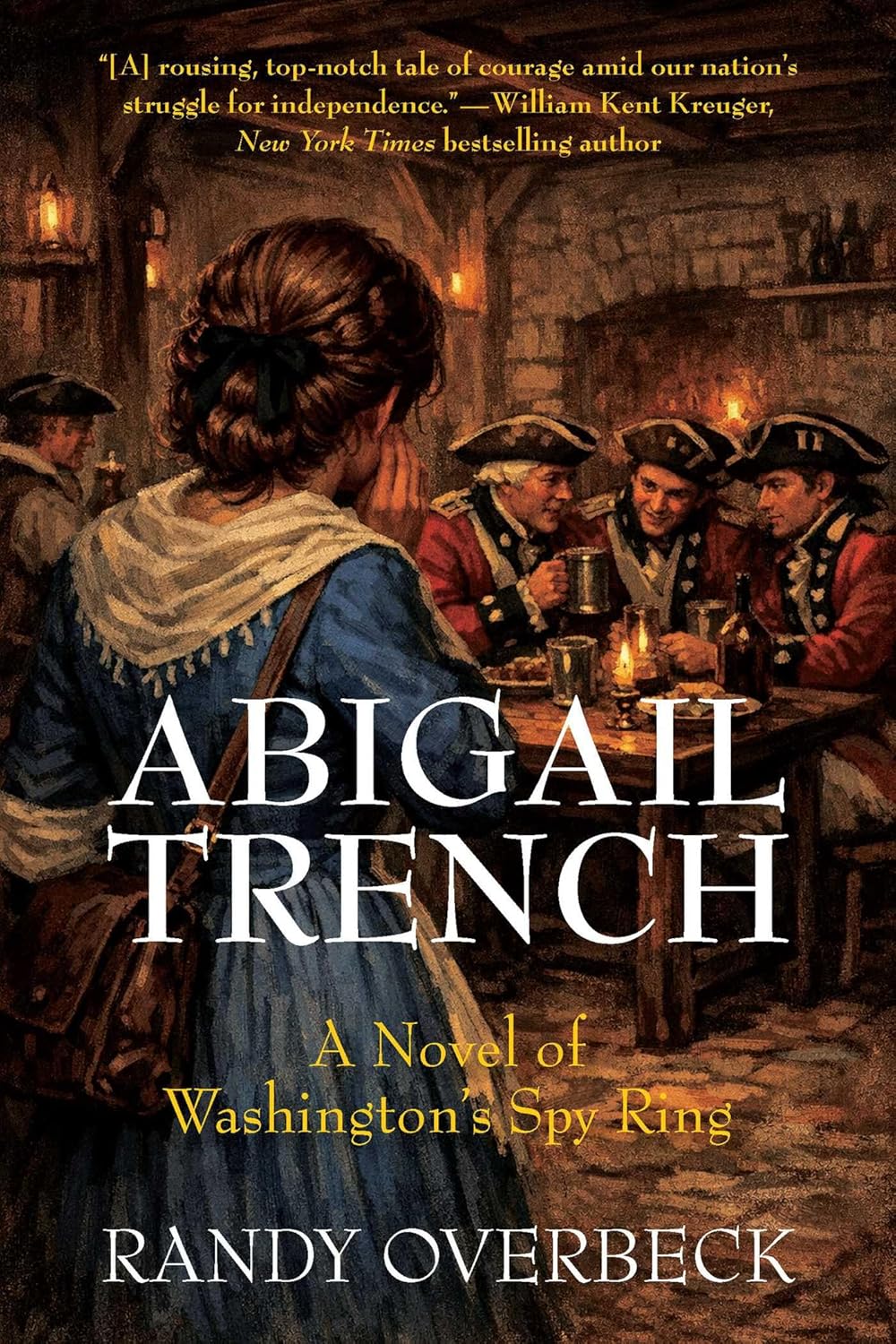
Abigail Trench is a historical spy novel that starts in the muck, noise, and cruelty of Revolutionary-era New York and never really lets you forget how precarious daily life is there. The opening makes that clear right away, with Abigail arriving in the city looking for work and instead finding herself in a crowd watching a public hanging. When Molly tells her, “Your first hangin’, huh? Ya get used to it,” the line works as both character detail and mission statement: this is a book about what people get forced to live with, and what it costs them to keep going.
What the author does well is build the novel from the ground up. Abigail isn’t introduced as a ready-made legend. She’s a teacher, recently uprooted, trying to earn a living, carrying trauma she can’t fully speak aloud, and learning the city through its taverns, dockyards, drawing rooms, and alleys. That gives the book a strong sense of texture. It feels interested in work, class, danger, and the small negotiations people make just to get through the day. The result is a story that treats espionage not as glamour, but as something stitched out of observation, nerve, timing, and need.
The novel is also a character-driven account of political awakening. Abigail’s path into the world of Nathan Hale, Robert Townsend, and the wider intelligence struggle grows naturally from who she is, rather than from plot machinery alone. One of the book’s strongest ideas is that the Revolution isn’t only being shaped by officers and generals. It’s also being shaped by tutors, servants, laborers, sex workers, hustlers, and merchants, all of whom move through spaces the powerful don’t fully control. When Nathan says, “Men and women need to decide if they are willing to knuckle under to the crown’s tyranny or . . . do something about it,” the novel’s real interest comes into focus. It’s not just telling a spy story. It’s telling a story about civic courage spreading through ordinary lives.
I also liked that the book keeps its emotional center close to Abigail even as the historical stakes widen. The friendships with Molly and Jamie give the story warmth and rough humor. The shifts from Nathan Hale to Robert Townsend add different shades of intimacy, grief, and trust. And the espionage plot works best when it grows out of those relationships, especially in scenes where Abigail has to listen, improvise, and hold her nerve while moving through British-controlled spaces. By the later sections, the novel has become a portrait of a woman learning how to make herself legible in one world and invisible in another.
Abigail Trench is an accessible, vivid piece of historical fiction that blends Revolutionary War intrigue with a personal story of survival and self-invention. What I liked most wasn’t just the spy-ring premise, though that’s a strong hook. It was the book’s sense that history is lived at street level by people who are frightened, resourceful, wounded, stubborn, and often underestimated. Abigail’s journey from displaced schoolteacher to someone capable of operating inside a dangerous political world gives the novel its pulse. It’s a story with grit, momentum, and real affection for the people history usually leaves at the edges.
Pages: 384 | ASIN: B0G93VFZTD


