Category Archives: Interviews
The Mysteries of the Sea

Stone of Faith follows a sea captain searching for a legendary stone of faith, who comes across the siren of the sea, and he realizes he has found his fated love, but she is held captive by a monster unwilling to release her. What was the inspiration for the setup of your story?
The inspiration came from my love of Celtic Lore and the sea’s timeless mysteries. I’ve always loved stories of sirens, but I chose to make her something other than the usual temptress. I imagined her as the one imprisoned—longing for freedom. The sea captain grew from Scottish maritime history, where men risked everything on storm-tossed waters, often carrying the weight of legacy and loss. Bringing the two together allowed me to explore how love and faith can become the greatest treasures of all—more powerful than magic or curses.
I found Captain Ewan MacDougall to be an interesting character. What was your inspiration for that character and his role in the story?
Captain Ewan MacDougall springs from my fascination with Scotland’s seafaring past and the resilience of men who live by the sea—bound by duty yet longing for freedom. I wanted him to carry the weight of his family’s legacy, threaded with both honor and tragedy —a man haunted by ghosts but still clinging to hope. His role as captain gave him not only authority but also isolation—he commands the sea, yet his heart yearns for connection. Meeting the siren forces him to confront what he’s been missing: faith in love and in himself. Ewan became the bridge between the mortal world and the mystical one, demonstrating how courage and devotion can even break the strongest chains.
I felt that there were a lot of great twists and turns throughout the novel. Did you plan this before writing the novel, or did the twists develop organically while writing?
Most of the twists and turns I planned—I’m very much a plotter—but some still developed organically as the story unfolded. The seafaring theme of Stone of Faith actually grew directly from Stone of Lust, which ends with the stone slipping into the sea and vanishing beneath the waves. That loss became the natural bridge into Ewan’s world, driving both the maritime setting and his quest. While I had the major arcs mapped out, I always leave room for discovery, and a few surprising turns surfaced as I outlined and wrote. Those moments of spontaneity often bring the most magic to the page.
I hope the series continues in other books. If so, where will the story take readers?
Next in the series:
Highlander’s Holly and Ivy, a Christmas companion book coming December 1st, 2025. Features Alex MacDougall, Mary, and Roderick from Thistle in the Mistletoe son. A forbidden love between a Highlander and an English lady intertwines with magic, betrayal, and the fate of a nation as they fight to unite their worlds and reclaim Scotland’s legacy.
Stone of Destiny, book 7. Kathryn MacArthur, Evie’s BFF, love story. The exciting conclusion to the Stones of Iona Series, where a woman torn between fate and forbidden love must defy a Fae prophecy and battle dark forces to reclaim her future—and the heart of the Fae warrior she can’t forget. Look for this one early 2026.
This series leads into another connected series, Dragons of Tantallon, a dragon-shapeshifter series revolving around the magic Iona Stones.
Author Links: GoodReads | X | Facebook | Website
Anything Can Be Denied
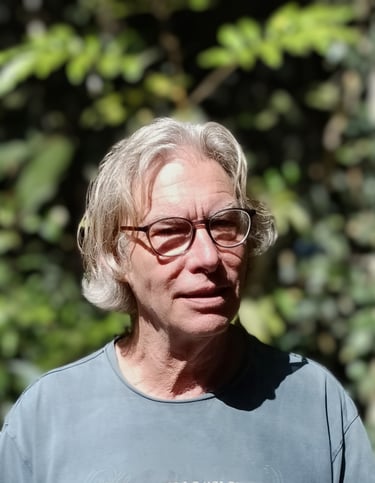
Shaking the Trees follows Jake, an environmental activist, who is pushed to sabotage a coal rail line in a desperate act of protest that sets off a chain of events that can threaten his future. What was the inspiration for the setup of your story?
There were two inspirations: the first was climate change itself and specifically a coral reef scientist telling me how little time the Great Barrier Reef had to survive. The Reef has had a profound influence on me. That news sent me into a prolonged depression shadowed by both grief and anger. From there, the book’s initial scene of sabotage took hold.
The second was less an inspiration than an epiphany – I wanted a shadow story for the story of Jake and climate change. Out of some deep recess in my subconscious, I said, ‘The Siege of Sarajevo’. Literally, I stopped and said aloud, ‘but Jeremy, you don’t know anything about the Siege of Sarajevo.’ And that turned out to be, in good part, the point. It was a war ignored not only by those who could have stopped it, but those, like me, who thought I was paying attention. I began to realise that anything can be denied.
A significant amount of time was spent crafting the character traits in this novel. What was the most important factor for you to get right in your characters?
Two factors stand out: the need to integrate the political and the personal. Activists don’t see these as separate, for anyone. They are intimately linked even when they are not always easy to reconcile and even when the relationship between one’s personal life and political life isn’t always clear. Even withdrawal from the plethora of events in our lives that are political, is a direct and political response to a society that feels too brutal, ugly or cold.
The characters wanted to show me how much of what we face or are forced to face in the world is entangled not only in politics but in our own histories and even histories older than we are – family and community histories. Excavating these histories is not a simple or rapid task. Like an archaeologist who finds an object deeply buried, we must gently remove a lifetime of encrustations and then – equally hard – try to make sense of what this strange object from our past is, what it signifies, whether it is only a small part of a larger whole.
I began to realise that the characters, forced by circumstances and choices none of the characters could entirely control, were living out their psychological histories in new and often damaging ways. I had to listen closely to the characters, to explore how histories of love and lovelessness, trauma, fear, ambition, repression, denial were still alive in them as the story unfolded. I often had no idea what the characters would show me.
What themes were particularly important for you to explore in this book?
1 – The various faces and types of denial. Denial can be personal and a useful form of self -protection. Often, when the need for self-protection is gone the behaviour remains. Like an auto-immune disease the brain responds in destructive ways to news or information it desperately wants to be untrue. Sometimes, particularly, amongst our leaders denial has no excuse, no value except in serving the interests, usually pecuniary, of themselves or other members of their privileged class. I was particularly interested in how we – individually and as a society navigate between the necessary and the destructive? How do we face the reality that anything can be denied, just as anything can be believed? How to think about faith? Is it destructive, protective, or simply a kind of disappearing from the world? And is love, too, a kind of faith?
2 – I didn’t know when I started the novel how important the theme of love would be – its many faces, its profound power and profound capacity, if love is lost, to tear us from our moorings. I also didn’t know when I started that I would find the heart of the book to be the effort of Jake to try and reconcile his love for the planet and his love for Julie, loves perhaps too large for any single person to hold.
3 – Finally, I wanted to explore activism. How people choose to face conflicts that can radically subvert their ideas of democracy, community and shared ideals. How activists struggle with a life’s work primarily characterised by failure and in a system that at every turn makes activism and change harder. Watching a political system treat activists like criminals and corporate criminals like friends is the kind of stark reality that activists experience throughout their working lives. It’s confronting work. So many activists leave this work in order to do something more immediately rewarding and kind. That said, young activists keep coming into activism, with new energy, new ideas, and old ideas they think are new. They give of themselves in ways impossible not to admire.
What is the next book that you are working on, and when will it be available?
I am completing a last edit on a manuscript that was shortlisted in 2024 for the Dorothy Hewett award in Australia. The book is called Vanishment, the story of a young man who fights to protect a species threatened with extinction. It is loosely based on the true story of the extinction of the Christmas Island Pipistrelle and loosely based on Christmas Island, often called the ‘Galapagos of the Indian Ocean’ but also an island subject to a dismal history of misery industries – phosphate mining, a massive casino for high rollers from Jakarta and finally a detention centre carved out of the Island’s unique rainforest. Love and loss are the dominant themes and like Shaking the Trees, both those themes have many faces.
I don’t have a publisher yet so I’m not sure when it will be available, but I hope next year.
Author Links: GoodReads | Facebook | Website
When Jake, a passionate environmental activist, desperate for action on climate change, starts to take drastic action, he sets off a chain of events that threatens everything he holds dear—his freedom, his future, and the woman he loves. As the storm he ignited grows more violent, Jake loses control even over his own life.
Meanwhile, his father Ian—an aging academic and firm climate sceptic—faces a reckoning of his own. With the death of his wife comes the uncovering of long-buried truths, including a cache of unopened letters from his sister lost to war and trauma. Letters that speak of survival, betrayal, and a city under siege.
Spanning continents and generations, Shaking the Trees is a gripping novel about the legacies we inherit and the choices that shape us. It asks how far we’re willing to go for what we believe—and whether love can endure the fallout.
A Parody Turned Novel

The Eye of Osiris follows a Mexican American woman working at a law firm whose boss turns up dead, and her being accused of murder, while an ancient Egyptian curse is the real cause. What was the inspiration for the setup of your story?
As regaled in my introduction to this book series, it was a way of survival while working in a toxic environment. I’m a workaholic and I need to be busy. I had run out of work while my creepy, abusive boss was out of town. So my fingers started moving vigorously typing a story about how he got murdered! Yes, it was like a parody that turned into a novel. That is definitely a happy ending to a bad job. (No, he did not die – only in my mind.) And, it still makes me giggle.
I found Moriah Maizon to be an intriguing character. What was your inspiration for this character?
This was my first book; inspired by my circumstances of that time in my life. In many ways, Moriah is a reflection of me. Although Moriah is in many ways much more serious than I ever hope to be. However, I did go through some life changing events reflected in Moriah’s story, such as losing a brother. I have a great deal of passion about life and through this character, I was able to express it.
There is one huge difference, I was born in El Paso, Texas where almost every Mexican American speaks both English and Spanish. I was very surprised at how little many Mexican Americans in Northern California didn’t speak Spanish and how little they knew about our wonderful culture. Of course, as time went by I realized how much racism there was against us and why many did not want to open that can of worms.
Speaking of worms, I am very lucky to be living in Mexico today where I can speak any language I wish without fear of unlawful detainment by the American Nazi-like Gestapo now known as Ice Agents. Why, you might ask, would I compare these armed soldiers to worms? Because they are people who oppress by means of unfair opposition (gangs) and threats of violence. In the end, they will crawl away, just like a worm, in shame.
Can you tell us where the book goes and where we’ll see the characters in the next book?
In the next book, Osiris the Second Coming, Moriah is married to Luis Mendoza who is now an attorney. They have a son, Thomas and their life is perfect. Then, the evil cult starts up all over again in San Francisco. The city is under siege and the Osiris cult is on a new mission to get to her and her family. Through Luis’s family who has an extensive library and knowledge of all things ancient, they search for the key. When the Heliacal rising of Sirius arrives, Moriah is ready for the trip into an unknown world and another dimension.
In Osiris 333, she returns to San Francisco along with her son and best friend Veronica; while Luis and family continue with their research. Still, the cult is in hot pursuit and on the trail of Moriah, their long, lost, reincarnated princess. They take refuge in Florida. A major clue is found by a couple in San Francisco after purchasing a home in the Sunset District. Their find is a unique Mayan Codex written in three languages. From that, they travel to Chichen Itza.
The Osiris Trilogy Mystery series is an adventure about cultural history, challenges, family, friendship, and the glue that holds it all together, love.
Author Links: GoodReads | X | Facebook | Instagram | Website Books | Website Author | Scrib Intel
Disturbing the dead is never a good idea. Stealing from the dead is even worse. Importing ill-gotten goods from the sands of Egypt; that is definitely the road to hell. Unsuspecting beneficiaries of a sacred Egyptian papyrus had no idea this gift was the result of an unholy theft.The curse started with donor, Jim Patton, partner at a law firm located in the Pyramid Building in San Francisco. When news of the sacred papyrus gets out, the Eye of Osiris cutl emerges on a mission.
Moriah Maizon, his legal assistant, was next. She suddenly finds herself in jail for Jim Patton’s gruesome murder. And that, was just the beginning.
The Osiris Mystery Trilogy Series is about a Mexican American family on a mission to stop an Egyptian curse.
Be Clear and Intentional
Communicate Like a Champion provides straightforward advice for enhancing professional communication, along with strategies that emphasize clarity and empathy. Why was this an important book for you to write?
This book was important for me to write because I’ve seen time and again that the success or failure of projects, teams, and even careers often comes down to communication. As a leader in telecommunications and during my doctoral studies, I recognized how often components of communications, such as clarity and empathy, were missing in professional exchanges. I wanted to create something concise, practical, and easy to use, something people could apply immediately in their workplace, whether they’re leading teams, collaborating across departments, or simply trying to be better understood.
What is one misconception you believe many people may have regarding effective communication in the workplace?
One of the biggest misconceptions is that communication means more words. People often think that long emails or detailed presentations equal effectiveness. In reality, effective communication is about being clear and intentional, saying the right thing, not everything. Another misconception is assuming silence means agreement. “No questions” doesn’t always mean understanding or alignment, and that’s where leaders need to confirm, follow up, and create space for feedback.
Did you learn anything that surprised you while you were researching and writing Communicate Like a Champion?
What surprised me most was how consistently small actions can create significant results. It wasn’t the grand speeches or high-stakes presentations that made the most significant difference; it was the everyday habits that mattered most. Things like summarizing a meeting in a single clear sentence, asking one good clarifying question, or pausing to reflect before responding. Those small, consistent habits are what transform someone into a “champion communicator.”
What is one thing you hope readers take away from this book?
If there’s one thing I want readers to take away, it’s that communication is a skill you can practice and improve. It’s not just for extroverts, executives, or “natural speakers.” With small, intentional steps clarifying intent, listening actively, and following up, you can become the kind of communicator who builds trust, fosters collaboration, and leads with confidence. That’s what “communicating like a champion” is all about.
Whether you’re a new professional, a seasoned leader, or someone navigating the complexities of hybrid teams, Communicate Like a Champion offers practical, proven strategies for improving your connection, leadership, and collaboration in the workplace.
This concise and actionable guide walks you through the core elements of strong communication—from clarifying your intentions to using empathy and follow-up effectively. With relatable examples, reflection prompts, and a 28-day challenge to build habits over time, this book helps you go beyond just “getting your point across.”
You’ll learn how to:
Communicate clearly across departments, hierarchies, and mediums
Recognize internal and external factors that influence every message
Use tone, clarity, and follow-up to earn trust and foster collaboration
Apply tools and tech that elevate your tone and clarity
Lead conversations with empathy, even when conflict is unavoidable
Whether you’re sending an email, running a meeting, or managing change, this book provides a reliable framework for ensuring your message lands and builds stronger relationships.
Patterns of Finance and War

Prophets Of War follows a young financial advisor who stumbles onto a horrifying truth: his own father has created a shadowy business empire that bankrolls Russia’s invasion of Ukraine. What was the inspiration for the setup of your story?
I didn’t sit down one day and decide, ‘I’m going to write a novel.’ Prophets of War came to me gradually, one breadcrumb at a time. For about a year, I carried around the seed of an idea for a compelling story, but it wasn’t until I was working on my Master’s thesis about the origins of national debt that I had my ‘aha’ moment. A thousand years ago, European monarchs borrowed from banks to wage profitable wars — and in many ways, that was the birth of public debt. I began connecting those historical dots to more recent examples and realized I wanted to explore the idea of war as a business model. The Russian invasion of Ukraine became a natural setting, especially since so many of the mechanics — shell companies, offshore secrecy, private military contractors — are real-world systems.
From there, tone became just as important as plot. When I finally read The Wolf of Wall Street (after seeing the film multiple times), I loved its darkly funny, irreverent voice and knew I wanted to channel some of that energy. Tom Wolfe’s Bonfire of the Vanities was another stylistic touchstone. So the book grew out of both history and literature — from centuries-old patterns of finance and war to the sharp, satirical voices of modern storytelling.
What inspired your characters’ interactions and backstories?
Alex is probably the most personal character — he’s a reflection of me, but exaggerated. I gave him many of the same questions I’ve wrestled with in my own life, then pushed them further to see how far they could go under pressure. The other characters came from a mix of real experiences and public figures I’ve studied. Some are composites — Lena, for example, was inspired by several real women, but I wanted her to embody duality: someone magnetic and vulnerable, yet someone you can never fully trust. Devil Bill, on the other hand, was meant to be the incarnation of corruption and power without conscience. And Langston was my chance to write a parody president — larger than life, full of contradictions, but all too familiar.
Some events in the book were chillingly similar to real-life events. Did you take any inspiration from real life when developing this book?
Absolutely — I drew inspiration from real events, but Prophets of War is still very much a work of fiction. You can’t write about finance, politics, or war without noticing the patterns that repeat throughout history. Shell companies, corruption, shadow networks — these things are in the news all the time, but fiction gives me the freedom to connect the dots in ways that journalism can’t. My goal wasn’t to retell any specific headline, but to create a story that feels uncomfortably close to the world we live in. Readers should come away thinking, ‘This could happen… maybe it already is.’ But at the end of the day, it’s still a novel — a thriller built to both entertain and provoke thought
Will there be a follow-up novel to this story? If so, what aspects of the story will the next book cover?
I’ve been asked that a few times now, which is exciting in itself. I do have ideas for where the story could go next. If Prophets of War is about uncovering the financial machinery behind conflict, then the follow-up might explore how those same hidden networks shape politics — through propaganda, dark money, and campaign donations where no one really knows who’s footing the bill. I could see a storyline where a presidential candidate is backed entirely by the business of war. That said, whether I actually write it will depend on how this first book resonates with readers. If there’s demand for more, I’d consider it.
There will also be a podcast coming out soon that you can listen to. I am featured on Read, Beat (…And Repeat) on Spotify but it has not come out yet. It will be posted to my website once it’s live.
Author Links: GoodReads | Instagram | Facebook | Website | X (Twitter) | Amazon
When Alex Morgan, a rising star in wealth management, stumbles onto a trail of cryptic financial clues, he doesn’t just uncover corruption—he unmasks a global conspiracy.
Behind the headlines of the war in Ukraine lies something far more chilling: a private empire of shell companies, black-market trades, and political operatives turning global conflict into personal profit.
The deeper Alex digs, the more dangerous the truth becomes. His own father may be at the center of the scheme. His mentors may be funding both sides of the battlefield. And the woman he trusts most might be the key to it all—or the final betrayal.
From Caribbean tax havens to Wall Street boardrooms to shadowy Zoom calls between oligarchs and ex-presidents, Prophets of War is a pulse-pounding political thriller that rips into the machinery of modern power. Inspired by real systems, real tactics, and real moral failures, it asks a question no one wants answered:
What if the next world war is already on the balance sheet?
Invisible Tragedy

Driven follows a woman recovering from the brink of madness who discovers a man is searching for unammi survivors to experiment on, and humans are being kidnapped, leaving her determined to find a way to save them all. What was the inspiration for the setup of your story?
Our own world is beset with social issues. I wanted to take these two—slavery and medical experimentation on living beings (humans and animals)—and kind of push them into the reader’s face, so that they couldn’t be ignored. Slavery, also known as “human trafficking” or “sex trafficking,” takes place every day, but for those of us who are insulated in privilege, it’s an invisible tragedy and easy to overlook.
It’s the same with the experimentation; though that’s a bit harder to see in contemporary civilization, it’s definitely there, hidden behind closed doors and shuttered windows. Because we don’t see these problems, it’s easy to pretend they don’t exist.
There are many ways to fight these issues, not all of which are as bold as Alira’s choices. But here’s the thing: if we don’t face them with unflinching outrage, they will never stop.
Regardless of the methods we choose with which to fight, no one person can solve all these problems. Not alone. Yet even though one person can’t save everyone, they can help a few. And that can start a larger movement.
Alira is that person, the one who saves those she can reach. She’s already gone through so much; she is the unflinching (okay, she does flinch on occasion, but it doesn’t stop her from moving forward) individual who says, “If not me, then who?”
Alira is a fascinating character. What scene was the most interesting to write for that character?
That’s a tough choice. Alira’s whole character arc is so tightly woven that choosing a single scene as “most interesting” is like trying to choose a single favorite thread in a completed tapestry. And Alira has her peak moments in each book in this trilogy.
For Driven, I lean toward one of Alira’s “rescue” scenes—either of Bika (which has two parts, the rescue and the aftermath), the ikanne harvesters, or the brothel slaves. Each of those times gave Alira’s spur-of-the-moment creative problem-solving skills room to shine.
I find that authors sometimes ask themselves questions and let their characters answer them. Do you think this is true for your characters?
Definitely. Sometimes, their answers surprise me.
But at least one major focus of my writing is to ask big questions, sometimes even the ones we don’t want to face. I think The Founder’s Seed trilogy manages to do that. I feel like Alira’s answers to those questions came from a courageous heart and a strong spirit.
Where do you see your characters after the book ends?
Oh, their story continues in the coming follow-up trilogy, tentatively titled Nexus. That trilogy will be told through the eyes of non-POV characters that were introduced in The Founder’s Seed, but Alira, Botha, and Galen/Thrace will all be there. We see the start of that at the end of Driven, in the new secret colony Alira and Kilbee have established.
Stay tuned.
Author Links: GoodReads | Facebook | BlueSky | Website | Niveym Arts | Amazon
On Danua, acting Clan Admiral Knøfa experiments on his unammi prisoner. Except the squib isn’t healing any longer, and the medics aren’t working fast enough to save her. Knøfa starts searching for another unammi—maybe a male this time, so he can create all the test subjects he wants.
Stopping the Cartel is enough to keep Alira’s hands full. She doesn’t want to fight the Clan, too. Yet, when she learns Knøfa is searching for the unammi survivors, she races to warn them. As Knøfa’s ship approaches them on Earth, the council tries to force it to leave. But Alira knows that if the humans escape, the unammi are doomed. Knøfa’s “experiments” will escalate, and other humans will follow his example. To protect her people’s secrets, she must stop that ship. Her only hope is to attempt something no Founder’s Daughter has ever done.
Governance in the Quantum Era

Quantularity: A Quantum Framework for the Human Experience challenges the theory of Singularity by hypothesizing that, instead of one super-intelligence consuming everything, there is a world where many minds —human, artificial, cultural, and even biological —intertwine without collapsing into sameness. Where did the idea for this book come from?
The idea for Quantularity emerged from years of questioning whether the dominant narrative of Singularity truly captures the future we are heading toward. Ray Kurzweil’s vision of one all-consuming super-intelligence felt incomplete. I began exploring an alternative, a framework where many minds, whether human, artificial, cultural, or even biological, remain distinct yet interconnected. Instead of collapsing into sameness, they amplify one another through entanglement. That seed of thought became the foundation for this book.
In your book, you cover philosophy to technology to governance, weaving stories of history, myth, neuroscience, and quantum theory into a vision that feels both speculative and strangely practical. How did you approach researching this book, and what was your process for compiling it?
My research was intentionally multidisciplinary. I drew from neuroscience (especially work on the neocortex), philosophy of mind, cultural studies, and quantum physics. I also leaned heavily into myth, religion, and history. I believe meaning arises at the intersections. The process itself was nonlinear, much like the ideas I write about. I journaled, drafted essays, debated with colleagues, and mapped connections across fields until a coherent framework emerged. The writing then became an act of stitching these threads together into a narrative that feels both visionary and grounded.
What were some ideas that were important for you to share in this book?
Several core ideas guided me:
That cooperation and entanglement, not domination, are the forces driving the next chapter of human and technological evolution.
That consciousness is not limited to humans or machines, but can emerge across networks, cultures, and even ecosystems.
That governance in the quantum era must be decentralized, transparent, and adaptive, designed for multiplicity, not centralization.
And most importantly, that our humanity is not diminished by technology. Instead, it can be expanded if we build with intention.
What is one thing that you hope readers take away from Quantularity?
I want readers to leave with a sense of possibility. We do not have to accept a future of either machine domination or human obsolescence. Instead, we can imagine and design a world where multiplicity thrives, where diversity of thought and being is preserved, and where our interconnectedness becomes a source of resilience and creativity.
Author Links: GoodReads | X (Twitter) | Website | Amazon
In Quantularity: A Quantum Framework for the Human Experience, visionary thinker and technologist John Wingate dismantles the myth of the Singularity—that moment when artificial intelligence eclipses human thought—and offers a bold alternative: a future where intelligence doesn’t converge into one mind, but expands into many. A future defined not by domination, but by connection.
Spanning quantum physics, AI, distributed systems, neuroscience, and spirituality, this groundbreaking book explores the emergence of a new kind of consciousness—layered, networked, and co-created between humans and machines. Wingate weaves deep science with poetic insight, challenging readers to rethink intelligence, identity, value, and the very architecture of reality.
Inside, you’ll explore:
Why the Singularity is a flawed and incomplete vision of the future
How consciousness may be fractal, recursive, and quantum in nature
The role of AI as a mirror—not a master—of human dreams
How distributed ledgers can serve as society’s new trust fabric
The shift from scarcity economics to coherence economics
New models of education, governance, and collective memory
Why choice—not control—is the foundation of reality’s unfolding
This isn’t science fiction. It’s a blueprint for what’s already emerging.
With 20 thought-provoking chapters, Quantularity is a guide for leaders, technologists, spiritual seekers, and anyone who senses that something deeper is awakening in our relationship with intelligence—human or otherwise.
Wingate calls us to remember that we are not passive travelers in this next era. We are co-creators, resonant nodes in a conscious, evolving universe. As we move beyond mechanistic systems into fields of entangled awareness, the most important question isn’t “Will AI surpass us?”—it’s “Who do we become when we remember what we are?”
Whether you’re a futurist, founder, developer, or philosopher, Quantularity offers a bold new lens—and a call to action.
This is not the end of our story.
This is the beginning of our remembering.
Alive and Forgotten

The Lights of Greyfare follows a burned-out journalist who goes to a small seaside town on assignment, and she discovers the small town is hiding terrifying secrets. What was the inspiration for the setup of your story?
Greyfare began as a place in my imagination long before it had a name. I’ve always been fascinated by towns that seem both alive and forgotten, where the fog feels like another resident and silence carries its own folklore. I wanted a setting that could reflect Katherine Calder’s unraveling, a place where her grief and addiction would meet an environment that seemed to breathe and press back against her. Maine’s coastal isolation gave me the perfect canvas for that tension, where a story about strange lights could spiral into something much darker.
What intrigues you about the horror and paranormal genres that led you to write this book?
Horror has always been about intimacy, about getting uncomfortably close to the things we would rather avoid. The paranormal allows those inner struggles to manifest outward, in ways that are unsettling but true. Kat’s sarcasm, self-destruction, and longing all take shape in Greyfare’s uncanny atmosphere. I love that horror lets us put grief, obsession, and identity into forms that are at once monstrous and heartbreakingly human. It’s not about shock alone, it’s about resonance… leaving the reader haunted in ways they didn’t expect.
Were you able to achieve everything you wanted with the characters in the novel?
Kat fought me every step of the way. She’s painfully real. I wanted her inner spirals, her addictions, and her sharp humor to feel unvarnished, and I think that comes through. Some of the townspeople surprised me, too, especially in how their secrets entwined with hers. I don’t believe in tying everything up neatly. I prefer characters who linger with you after the last page.
What is the next book that you are working on, and when can your fans expect it to be out?
I’m currently in the early stages of my next novel. It will return to the gothic tradition, a story shaped by architecture, community, and the way hidden histories leave their mark on the living. While it won’t be set in Greyfare, it will share that same interest in place as a character. I hope to share more in the coming year. In the meantime, readers can follow updates and join my mailing list through my website, https://junoguadalupe.com/.
Author Links: GoodReads | Website | Amazon
A gothic horror novel about grief, obsession, and the monsters we become when the sea calls our name.
After a brutal divorce and the loss of everything she thought she was, journalist Katherine Calder is on assignment to the fog-drenched town of Greyfare. She’s come to write, to recover, and to disappear for a little while. But Greyfare has other plans.
The town is strange. Too quiet. Full of faces that seem familiar, even when they shouldn’t be. At night, something walks the shore—a reflection of Kat that mimics her, imperfectly. The harbor groans with secrets, and the townspeople cling to ancient traditions they won’t talk about.
When Kat meets Dean, a reclusive widower with a weather-beaten boat and a haunted past, she feels herself unraveling in ways that are both terrifying and intoxicating. Their bond deepens, even as Kat uncovers hints of a centuries-old pact—one that demands sacrifice to keep the devils in the deep.
But the sea is waking.
And Kat may already be part of the offering.
Darkly lyrical and emotionally charged, The Lights of Greyfare is a supernatural descent into love, memory, and the terror of losing yourself to something older than the tide. Perfect for fans of The Haunting of Hill House, this is a horror novel that lingers long after the last page



 LITERARY TITAN