Blog Archives
You May Conquer: Facing What Others Have Met

You May Conquer tells story after story about people who faced hardship that could have crushed them, yet they rose anyway. The book moves from biblical figures to modern leaders and shows how adversity becomes a teacher rather than a punishment. It blends faith, history, and personal reflection in a way that feels steady and grounded. The whole message circles one big idea. We gain real authority only when we walk through fire and come out changed.
As I read, I felt myself pulled into the rhythm of the writing. It is direct. It is serious. It carries a calm confidence. Sometimes I wanted more softness. Other times, the sharp edges felt right because the stories themselves carry weight. I liked how the authors didn’t try to polish hardship into something pretty. They just showed it for what it is and let the lessons rise from the ashes. The mix of scripture and history worked for me. It gave the book a wide lens and made the message feel universal.
I also found myself reacting to the ideas more than the prose. The writing is clear and steady, but the ideas hit like steady waves. The book pushes you to look inward, sometimes more deeply than you expected. It doesn’t yell its point. It just keeps nudging you to ask better questions about pain, about response, about what shapes character. I appreciated that. It made me feel both challenged and comforted. And honestly, it reminded me that authority is something we grow into. It is not a badge. It is a scar that healed well.
I’d recommend it to readers who want strength more than inspiration, readers who enjoy reflection, readers who welcome faith-based themes, and readers who appreciate stories that stretch across centuries to show a single truth. If you’re carrying something heavy and want a book that doesn’t pretend life is easy but still believes you can rise, this one is for you.
Pages: 207 | ASIN : B0FXJ9941M

Re-Crafting the Relationship

Beneficial Economics examines history, political theory, and constitutional design to equip readers with the critical information they need to combat the growing ideological divide in America and rebuild a stable and moral society. Why was this an important book to publish at this time?
We provide red state citizens with the constitutional framework of 4 essential functions of the national government:
1. The protective state, which protects citizen liberty and freedoms from coercion and exploitation.
2. The productive state, which creates the fair rules for citizen freedom to produce and obtain the future value of their production.
3. The entrepreneurial state, which decentralizes economic activity to the most local regional metro level to allow citizens maximum ability to innovate.
4. The sovereign state, which protects the sovereignty of citizens and the nation from outside threats from other nations and from inside threats from anti-national forces.
At this time in the nation’s history, the government has strayed from its initial purpose, and is untethered to Madison’s constitution.
The government has failed the citizens, and the citizens have a natural right to abolish this government and start over, with the principles of 1776, which is what the book’s four functions are designed to create.
In your book, you sketch a new political architecture —a “Democratic Republic of American States” — built on state sovereignty, fair economic rules, and resistance to “predatory state capitalism.” Can you give a high-level explanation of what this would look like?
The new architecture of the national government offers two forms of decentralization, intended to overcome the flaws of centralization in Madison’s constitution.
First, the new constitution aims at geographic political decentralization, intended to return authority and government power to citizens at the most local levels of government.
We cite Jefferson’s phrase,
“That which governs the best, governs the least, and closest to the people.”
The book proposes re-crafting the relationship between states and the national government by limiting the national government powers to those “expressly delegated” to the national government, by the states, in the constitution.
Second, the book describes the economic relationship between decentralized entrepreneurial innovation, in metro regions, to the freedom and liberty of citizens to obtain the future prosperity that they are imagining for themselves.
This economic future would look very much like what Adam Smith described for British society in his 1776 book, The Wealth of Nations.
This future economy, in the Democratic Republic of American States, would look like free citizens making free financial and economic decisions which leads society to beneficial outcomes for all citizens.
After reading your book, what steps can the average citizen take to start making meaningful change in their own communities?
In the current two-party, first-past-the post political system, red state citizens do not have a political party or political movement that aims to champion their liberty and financial interests.
The book is designed to promote a red state citizen consciousness of their own class interests, which depends on the creation of a coherent ideology of freedom.
As the political polarization intensifies, and as the Democrat Marxist seek to impose a communist solution, red state citizens will use their state legislatures to implement citizen-led study commissions to recommend changes to the state-national relationship.
Those citizen study commissions become the launching pad for a new constitution.
What is one thing that people point out after reading your book that surprises you?
I am surprised at how alien the notion of citizen liberty and economic freedom has become for red state citizens.
Part of the intent of the book is to use the notion of quantitative physics to explain to red state citizens that nothing bad will happen if citizens are free to make their own decisions.
We extend the notion of Adam Smith to describe that something good will emerge in society when citizens have the greatest ability to obtain the future that their brains are imagining, for themselves, and their families.
Author Links: X | Website | Rumble | YouTube | Substack | Gettr
At this point in American history, middle and working class citizens in red states are confronted with two paths.
Red state citizens could do nothing, and accept the path of blue state Democrat Marxism, that increases the power of the central government over the lives of citizens.
That path leads to a global police state of citizen surveillance and a social credit system controlled by central banks, private corporations, and tech companies.
Alternatively, citizens in red states could restore the original 1776 principles of liberty that animated the first American Revolution, by implementing a decentralized political system, based upon a metro-decentralized entrepreneurial capitalist economic system.
We wrote about the irreconcilable cultural and moral differences between citizens in red and blues states, leading up to a political civil dissolution, at this point in history. (Laurie Thomas Vass, A Civil Dissolution: The Best Solution to America’s Irreconcilable Ideological Conflict, 2023).
In this book, we extend our analysis, that after a political civil dissolution, what comes next for citizens in the red states is creating a new, better constitution.
Our book explores how red state citizens might craft a more fair constitution that puts political power back in the hands of ordinary people, at the state and local levels of government.
We combine a political dissolution with a constitutional dissolution that aims at creating fair economic rules.
Political geographical dissolution – the cultural/geographic separation along red/blue state lines that is inevitable.
Constitutional dissolution – the fundamental redesign of economic rules and institutional structures, moving away from Madison’s system that enabled the original ruling class aristocracy, that eventually turned into a global predatory state capitalism.
Benefical Economics: A Red State Citizens Guide to Crafting A Better Constitution When the Govrnment Fails The Citizens

Laurie Thomas Vass’s Beneficial Economics dives headfirst into the chasm of America’s growing ideological divide. It lays out a detailed case for why, in the author’s view, “red state citizens” must abandon what’s left of Madison’s Constitution and rebuild a new one that decentralizes power and restores liberty. The book mixes history, political theory, and constitutional design, using thinkers like Adam Smith, James Buchanan, and Immanuel Kant to argue that liberty, trust, and decentralized economics are the keys to a stable and moral society. Across its dense chapters, Vass sketches a new political architecture, a “Democratic Republic of American States,” built on state sovereignty, fair economic rules, and resistance to what she calls “predatory state capitalism.”
Reading this book felt like a deep plunge into one person’s grand blueprint for reimagining America. I admired the sheer audacity of it. Vass writes like someone convinced of their mission, and that conviction gives the prose a pulse. Their tone is urgent, sometimes fiery, and often unapologetic. The author mixes scholarly arguments with plainspoken outrage, and that combination keeps the reader hooked even through pages of constitutional draft language. I don’t agree with all their conclusions, but I couldn’t help respecting the clarity of their beliefs. The author connects economics, morality, and governance in ways that made me stop and think. There’s a spark of rebellion in every sentence, and I found myself drawn to the raw energy of that.
The book swings between philosophy, constitutional text, and economic diagrams with little warning. Sometimes I felt like I was in a civics lecture, then suddenly in a manifesto. The passionate tone sometimes leads the underlying reasoning, but underneath all that, there’s a real idea here, a longing for fairness, for a government that listens to people, for communities that grow from trust instead of control. When Vass ties Adam Smith’s “invisible hand” to quantum theory and self-organizing order, it’s wild and fascinating. The author is trying to link economics to physics, politics to morality, and citizens to cosmic principles of order. That ambition alone makes the book worth wrestling with.
I’d recommend Beneficial Economics to readers who enjoy bold political thought experiments, especially those skeptical of centralized government or curious about alternative constitutional models. It’s not an easy read, and it’s not neutral, but it’s brimming with conviction and intellectual fire. People who feel alienated by modern politics might find it empowering, and those who don’t agree with Vass will still find it thought-provoking.
Resilience and Mystery

Seeking Yesterday unfolds as both a personal quest and a sweeping historical account, blending memoir, genealogy, and local history into a seamless narrative. Why was this an important book for you to write?
The drive to understand our roots is a primal human need, and this book began with my husband, Bob’s, quiet desire to reclaim his. After over 50 years of marriage, I knew he wouldn’t write an autobiography, so my initial mission was simple: to create a family scrapbook of a 7-day ancestral journey.
But what started as a small, personal commemoration grew into something far grander.
The deeper we delved, a passion ignited in me. The focus shifted from merely collecting facts to understanding how history shaped these lives. Relying on family recall left too many tantalizing questions:
Why did a WWI veteran choose to homestead in the unforgiving desert?
Where did they find the grit to persevere through the Great Depression and a second World War?
What were the final, crucial details of the WWII pilot shot down in action?
The untold answers transformed a simple family record into a fascinating tale of resilience and mystery. My ultimate decision was to write the book in Bob’s voice—to impersonate his perspective and make his silent story heard. While unique to one family, I believe the powerful quest for identity, the perseverance through hardship, and the secrets unearthed resonate with anyone seeking their own vital connection to the past.
What were some ideas that were important for you to share in this book?
Ancestry is more than a list of names; it is a profound journey of discovery. While we may feel our own lives fall short of “extraordinary,” the tales of our forebears often sound instantly intriguing. Why?
The answer lies in the dynamic and vital intersection of two forces: individual personality and historical context.
This book is dedicated to exploring that very synthesis: the idea that character is not innate, but forged in the fires of world events. The questions that propelled my research became the essential themes I needed to share:
What is the true cost of global conflict on a single family’s spirit?
What does real resilience look like when played out against the backdrop of the Great Depression?
How are the universal qualities of grit, love, and loss magnified when they intersect with military service, homesteading, or personal tragedy?
My goal is to show how the seemingly “ordinary” lives of these ancestors were, in fact, extraordinary products of their time, and to demonstrate that understanding their story is the key to understanding the enduring identity—and resilience—of the generations that followed.
How has writing your family’s memoir impacted or changed your life?
Writing this book—stepping into my husband’s character to pen his family’s memoir—did more than create a historical record; it fundamentally deepened my relationship with him.
After 53 years of marriage, Bob and I have always been “joined at the hip,” but this project provided an unprecedented path to understanding. By immersing myself in his ancestry, struggles, and triumphs, I gained a profound, intimate appreciation for the forces that shaped the man I love. It served to reinforce the already strong bonds, continuing the love affair by giving it a rich, historical dimension.
Beyond the personal growth, the book offers an unexpected, yet deeply humbling, value: the chance to resonate with and help others on their own quest for roots. The fact that my personal labor of love is being met with accolades and can serve as a catalyst for other families is a rewarding bonus that extends the book’s personal legacy.
What advice do you have for aspiring memoir writers?
Begin with familiar family stories and traditions, imagine how your ancestors may have lived, review world events as it was during their lives, research important milestones, and ask questions… many questions! The secret is in the answers.
Author Links: GoodReads | Website | Amazon
A file of old documents, including a 1922 desert homestead land claim for 160 acres, copies of war commendations and World War II medals, a Purple Heart, and fading memories ignited Bob’s compelling quest to rediscover his roots. What prompted his grandparents to become homesteaders in the unforgiving desert? The deeper he looked, the broader a story unfolded as global and regional history interceded, shaping their lives and decisions. He discovers how a devastating World War II loss redefined the family, how another tragic accident cast its own long shadow on their lives, and how the true resilient spirit of “Grandma R” emerged through it all.
Told from Bob’s perspective, Seeking Yesterday is a testament to the enduring bonds of family, the profound impact of shared experiences, and a journey that reveals how yesterday’s echoes can illuminate today’s path and forge an unbreakable legacy for future generations.
More than a memoir, the book weaves a microcosm of American history by using one family’s experiences to illustrate broader events and social changes, including homesteading, WWI, the Great Depression, WWII, land development, community building, and the evolving American Dream. It is a tale that highlights the strength, resilience, perseverance, and adaptability of ordinary people in the face of extraordinary challenges.
Seeking Yesterday

Seeking Yesterday tells the story of a family’s journey into the past, sparked by the discovery of a 1922 land claim in the California desert. Richardson traces the lives of her grandparents Ralph and Emma, who dared to homestead on 160 acres of harsh desert terrain, while weaving in broader history from the Homestead Act to World War I, the rise of Palm Desert, and the fading dreams of pioneers. The book unfolds as both a personal quest and a sweeping historical account, blending memoir, genealogy, and local history into one. It is at once intimate and expansive, grounded in dusty documents and vivid imagination, pulling the reader into the struggles and resilience of people who shaped not just one family but part of the American West.
I felt the writing had a quiet warmth. Author Lis Richardson doesn’t hide her own longing to connect with the people who came before her, and that vulnerability made the book feel human. At times, the detail was immense, but I appreciated the effort to bring texture to landscapes and lives that could otherwise slip away into silence. The desert, especially, comes alive here.
What struck me most was the honesty in confronting both pride and pain. The book doesn’t gloss over the failures, the heartbreak, or the reality that the “empty” land was once home to Indigenous peoples. I admired that acknowledgment, and it deepened the story beyond one family’s nostalgia. Some sections leaned heavily on research and read more like a history text than a personal reflection. The strongest passages were the ones where her personal yearning met the historical record.
I’d recommend Seeking Yesterday to readers who enjoy family memoirs, regional histories, or stories of resilience in unforgiving places. It’s a book for those who’ve wondered about the lives hidden behind old photographs or land deeds. If you like the mix of memory and history, with a bit of grit and dust clinging to the edges, this one is worth your time.
Pages: 351 | ASIN : B0FMJQV8GQ

A Promise I Made

Avoiding Muddy Foxholes: A Story of an American Bombardier recounts the life and military service of your father, Richard “Dick” Loveless, a young man from Washington, D.C., who joins the Army Air Corps during World War II to avoid the muddy foxholes of infantry life. Why was this an important book for you to write?
Like many boys growing up in the 1950s and ’60s, we were completely captivated by our fathers’ involvement in World War II. They were our heroes, and playing army was how we tried to be like them. As we got older, we began to understand that war wasn’t a game. Fighting and dying for your country was serious business. Like many veterans of that war, it was something they wanted to forget, but as kids who didn’t know any better, we pressed them for their stories.
My father didn’t talk much about the war, not because of any psychological issues. He just believed back then that he was doing his job, and that wasn’t something anyone would find interesting. Little did he know that, over time, I would come to see that this man, who was my father, was a true hero, and his story needed to be told. It became a promise I made to him on Father’s Day in 1972, and I vowed that his story would always be remembered.
What were some ideas that were important for you to share in this book?
One main idea I wanted readers to understand was how my father overcame the many fears he had to face during his experiences in the war. He relied on his strong faith to get through everything and believed that if he could handle the things he knew he could control, God would take care of the things he couldn’t.
Also, it is important to know that the people of the town in France, Champigny, honor the five crew members who died on each anniversary of the day their plane was shot down over their town.
What was the most challenging part of writing your father’s story, and what was the most rewarding?
The most challenging part of writing my father’s story was that by the time I was able to write it, everyone who was a part of it had passed away. In many cases, I had to rely on my familiarity with those I knew to create the dialogue. Also, my knowledge of history and the many events that made up the story helped me with trying to piece everything together. What was most rewarding was that almost every incident I had to speculate on, hoping it was correct, turned out to be spot on. It was particularly rewarding that I was able to convey a nearly one-hundred-percent accurate account of his story.
What do you hope is one thing readers take away from your dad’s story?
My hope is that readers will gain an understanding through the story of one man what those of the Greatest Generation did to help preserve the freedoms we take for granted today.
Author Links: GoodReads | Facebook | Website | Amazon
Though neither really discussed it, marriage was undoubtedly on the horizon. Unfortunately, a war got in the way. He was forced to decide between being drafted into the Army or enlisting so he could choose what branch of the service he would serve. Dick enlisted. Regrettably, enlisting didn’t matter; he wound up in the coastal artillery. As luck would have it, an opportunity to join the Air Corps presented itself, and Dick took it.
Thus, the adventure began for Dick. From boot camp and flight school to flying bombing missions over Germany for the 388th Bombardment Group, things never got easier. But it was only in his sixth mission over Stuttgart, Germany, that his strength, courage, and faith were put to the ultimate test. No training could prepare him for what lay ahead.
Eighty years later, Dicks oldest son finally made good on a promise he made him. He vowed never to let his father’s remarkable story go untold, so “Avoiding Muddy Foxholes” is his story.
River Town: Wellsville Ohio
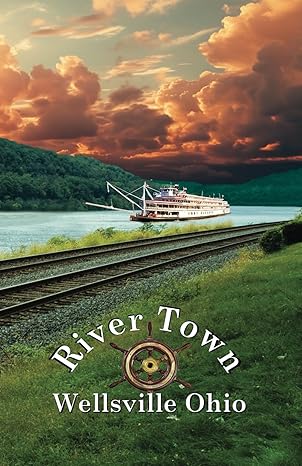
River Town: Wellsville Ohio, by David Navarria, is a multi-generational historical narrative set in a small industrial river town that was essential to America’s growth. Based on his mother’s memoirs, diaries, and dictations, Navarria chronicles the lives of various families in Wellsville, Ohio, with a focus on themes of survival, war, and humanity’s darker side. The book spans pivotal moments in American history, from the town’s contributions to two world wars to the struggles of settlers and immigrants. The story moves between personal accounts, romance, crime, and war, shedding light on the human condition and the costs of building a nation.
What stands out to me is the sincerity and passion Navarria pours into recounting his family’s history. The writing, especially in the early chapters, does an excellent job of capturing the grim realities of life in a small industrial town, with vivid descriptions of Wellsville’s growth, its atmosphere, and its people. For example, in the opening scene, the fog-covered streets and the interaction between Pip and the towering Irishman McElhenny evoke an eerie, mysterious mood. Navarria’s style can be heavy at times, but the detail adds richness to the setting, pulling readers into the life of this river town.
Navarria shifts between narrative styles, sometimes diving into lengthy historical exposition, then moving to personal anecdotes, like Luigi Massaro’s escape from a vengeful duel in Sicily. While the historical context is interesting, I found myself more drawn to the personal, emotional stories of individual characters than the broader history of Wellsville.
One of the book’s strongest aspects is its portrayal of complex characters and their moral struggles. The violence, especially in the context of war and survival, is unflinchingly depicted. Navarria doesn’t shy away from showing how brutal life could be for both men and women, as seen through the brutal duels and raw family conflicts. I appreciated that the author remained true to his mother’s accounts, not sugarcoating the harsher aspects of life. While the book is filled with darkness and hardship, there is also a strong undercurrent of redemption and resilience, particularly in the characters who are fighting for survival.
River Town: Wellsville Ohio is a heartfelt and dense historical account that would appeal to readers interested in American history, family sagas, and personal stories of redemption. The historical accuracy combined with the emotional weight of the personal narratives makes this book particularly meaningful for anyone with a love of family history or small-town America.
Pages: 562 | ASIN : B0DBKJ9719
Joy in Sorrow, Hope for Tomorrow: Homecoming

In Joy in Sorrow, Hope for Tomorrow, Vonnetta Mayo tenderly reveals the brutal reality of slavery in America. With a sensitive yet compelling approach, Mayo crafts a narrative that highlights the innate human desire for freedom and the pivotal role of religion as a beacon of hope for those enduring desperate circumstances. The book is concise and accessible, aiming to shed light on the inhuman treatment faced by slaves. Central to the story is Betsy, a cheerful young girl who shares her days with her three brothers, her mother, and her mother’s three friends. Despite the harsh realities of their existence, the children find solace and distraction in each other’s company, while the adults toil under oppressive and abusive conditions on a plantation. Through unwavering faith and constant prayer, they cling to hope, trusting in God’s plan and longing for the day they will be free.
Mayo’s straightforward and easy-to-read prose draws readers into the daily lives of the plantation’s inhabitants. Each chapter lays bare the grueling labor and the systemic oppression they endure. As the narrative unfolds, readers are gripped by a sense of foreboding about the future of these individuals, yet the innocence and resilience of the children provide a glimmer of hope. This hope is sustained by the recurring theme of prayer, imbuing the story with a sense of faith that persists even in the bleakest of situations. The structure of the book reinforces the monotony and inescapability of the slaves’ routine, characterized by scarce resources and distant dreams of freedom. Despite these harsh conditions, what unites and sustains this small community is their unwavering faith in God. The narrative invites readers to ponder whether their fervent prayers will ever be answered, and whether they will finally attain the freedom they so ardently seek.
Joy in Sorrow, Hope for Tomorrow stands as a moving short story that humanizes the experiences of those subjected to the atrocities of slavery, while simultaneously celebrating the resilience and spirit of Black communities. Mayo brings to light the harsh truths of American history, while also revealing the profound beauty found in family, hope, faith, and religion. This book not only illuminates the past but also underscores the enduring power of faith and the unbreakable spirit of those who, despite facing unimaginable hardships, continued to dream of a better tomorrow.
Pages: 32 | ASIN : B09VWR3S4K



 LITERARY TITAN